
The Nick Shaylor peony is a favorite of both novice and experienced gardeners. Growing it doesn't require much time or effort. Following basic gardening practices ensures good growth, strong immunity, and colorful "terry caps" of flowers.
Who developed the variety and when?
The variety, developed under Alison's direction, was introduced to the United States in 1931.
Description of the appearance of the plant and flowers
A characteristic feature is its wide, tall, branched bushes, reaching heights of 70-90 cm. It has upright stems capable of withstanding significant weight during flowering. The leaves are elongated and richly green.
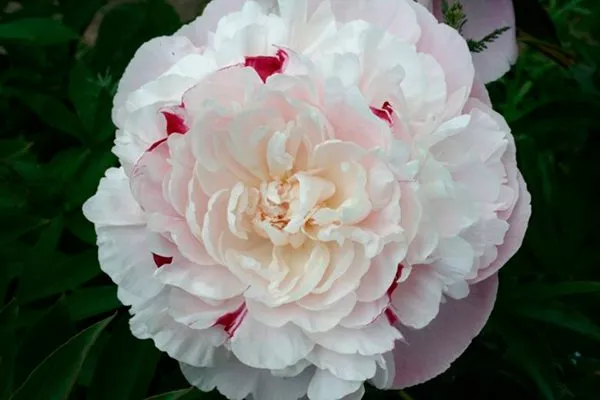
Large double flowers reach 20 to 25 cm in diameter. The dense petals are primarily a nude pink, with occasional white and reddish hues.
- ✓ Wind resistance due to upright shoots.
- ✓ Ability to self-heal after damage.
Timing and characteristics of flowering
Belongs to the large, double, rose-shaped, and herbaceous peony categories. Buds open in late June and last for approximately 10 days.
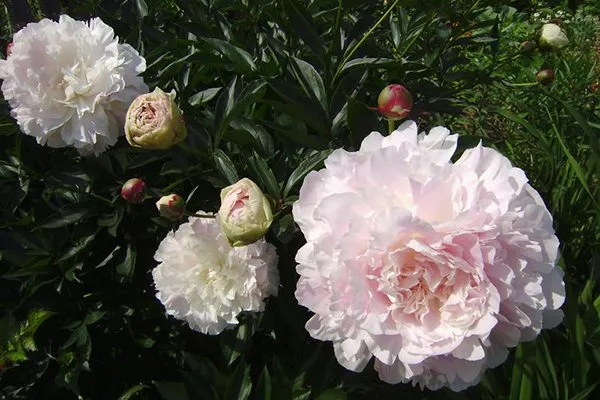
Sometimes the flowers develop a gradual change in color from the periphery to the center: the large petals at the edges can be milky white, while the smaller ones in the center are a delicate cream. A single plant can produce 7 to 12 flowers.
Use cases
It's used in a variety of landscape compositions. If using peonies exclusively, choose varieties with different blooming periods. Alternating blooms maintain the decorative appeal of the composition for several months.
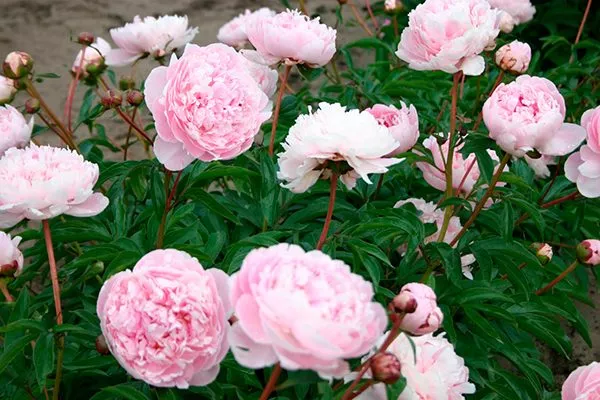
Nick Shaylor pairs well with other flowers, such as roses, irises, phlox, and astilbe. It's planted alongside tree-like varieties, creating a striking contrast, especially in alpine gardens or rockeries. Combining it with other species allows for beautiful landscapes.
Landscape designers combine this plant with dwarf conifers and shrubs of various shapes and shades: small arborvitaes, dwarf blue spruces, and globe pines. Peonies add lushness and structure to flowerbeds, framing paths, lawns, and terraces.
How and when to plant?
Plant from late April to May or in August. The planting hole should be approximately 60 cm deep. When planting in groups, leave 1 m between plants.
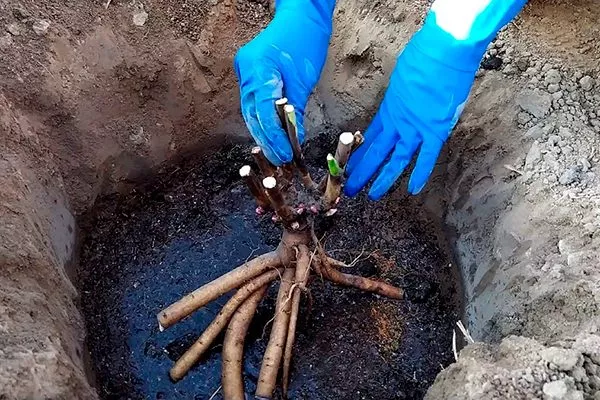
Step-by-step instructions:
- Add a small amount of fertilized soil mixture consisting of crushed clay, humus and black soil to the prepared hole.
- To improve the plant's adaptation and survival, add superphosphate and wood ash to the hole. Then fill with the mixture, leaving approximately 12 cm to the top.
- In the center of the hole, form a small mound of earth on which to place the seedling with its root system spread out.
- Carefully cover the roots with soil, while burying the buds 3-6 cm below the soil surface.
After planting, water the seedling, add soil, and mulch. The mulch layer should be 2-4 cm thick; non-acidic peat, sawdust, or moss can be used.
- ✓ Soil pH should be between 6.5-7.5 for optimal growth.
- ✓ It is essential to have drainage in the planting hole to prevent water stagnation.
Requirements for planting site and soil
Thrives in sunny areas with clay soil. If the soil is heavy and clayey, improve its quality by adding humus, peat, and sand.
Agricultural technology for cultivation and care
It's easy to grow, but regular care is required to achieve high-quality flowering and the formation of beautiful, branched buds. Create optimal growing conditions for the plants.
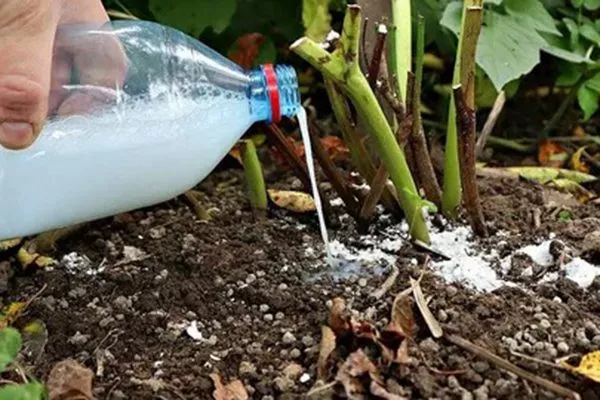
Helpful tips:
- The plant prefers moisture. Water it once a week.
- For each plant, use approximately 30 liters of water per watering.
- Avoid getting moisture on the stems and leaves to prevent the development of rot diseases. Moisture coming into contact with the buds can cause them to turn black and fall off.
- To ensure effective growth and development of flowers, feed them with fertilizers high in potassium and phosphorus.
In spring, apply a comprehensive mineral fertilizer, applying half a cup of the mixture per bush. This helps provide the necessary nutrients for healthy and beautiful flowering.
Frost resistance and preparation for winter
To prepare for winter, prune the bushes, preferably at the end of September or a little earlier. Cut the bushes back almost to the ground, leaving stumps 2-3 cm above the ground if necessary.
Remove cut sections from the area or burn them. In colder climates, cover the plant. Before covering, apply a 5-10 cm layer of sawdust. Do not use cut stems or organic material for mulch. Cover with spruce branches.
Resistance to diseases and pests
Botrytis, or gray mold, is the most dangerous disease for peonies. Its occurrence is caused by several factors:
- Rainy and cool summer.
- Acidic soils with poor aeration.
- Mulching using cut stems.
The symptoms of gray mold are noticeable and characteristic. Flower buds take on a brownish tint and stop developing. Brown spots spread to the stems and leaves, and they begin to dry out and die.
Reproduction
The only method of propagation is vegetative propagation, which involves layering, root cuttings, or division. This method is most often used due to its simplicity and effectiveness. Seed propagation is rarely successful for this variety.
Division is performed using two methods: complete or partial plant digging. The first method is suitable for young plants, while partial digging is used for older and larger plants to rejuvenate them.
Reviews of the Nick Shaylor peony
The Nick Shaylor peony holds a special place among both novice and experienced gardeners. It is characterized by frost resistance and low maintenance. This variety boasts numerous characteristics and features. Proper care is essential to ensure beautiful blooms.