
The Miss America peony is an herbaceous plant. This variety remains popular among gardeners due to its long and abundant flowering period. This perennial is becoming an integral part of landscape design due to its long-lasting decorative qualities.
Peony Miss America - what kind of variety is it?
The hybrid was developed by two American breeders, John R. Mann and Julius J. van Steen. Their efforts resulted in the development of this variety in 1936. Despite its origins in the United States, the products of this crop are represented on the flower market by the Dutch organization Greenworks.
Brief description, characteristics
This mid-season perennial grows up to 90 cm in height. It features powerful roots and sturdy stems that rarely branch. It forms a compact, hemispherical bush covered with dark green, glossy leaves.
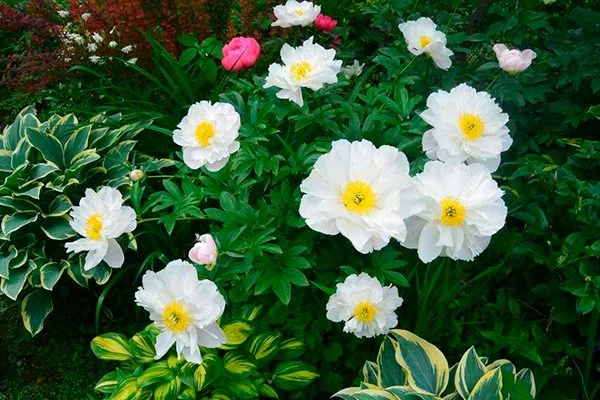
- ✓ Flowers change color from soft pink to snow-white during flowering.
- ✓ The stems do not require support due to their strength.
The sturdy stems require no support, as they are stable and do not bend toward the ground during flowering. It attracts attention with its beautiful snow-white flowers, which begin with a soft pink hue.
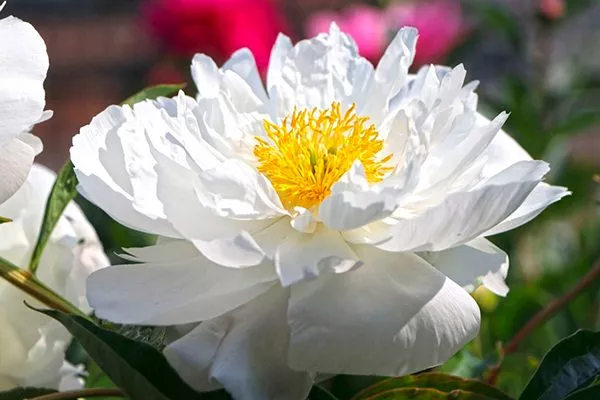
The buds are large and feature pleated petals. When fully open, the flowers become pure white, resembling large cups with golden-yellow stamens and green pistils.
Miss America Peony Blooms
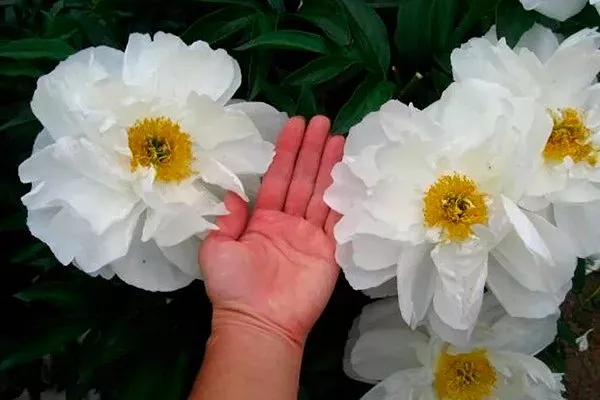
This semi-double variety produces light, airy flowers 20-25 cm in diameter. At the time of bloom, the buds are a delicate pink, gradually turning to a snow-white hue. They have a pleasant, refined aroma.
Period of activity and rest
The second half of May or early June, depending on the region, marks the beginning of its flowering period. The process continues for 1.5 to 2 months, creating a long and colorful show. Afterward, the attractive appearance remains thanks to the beautiful foliage.
The aboveground portion of the bush begins to die back only with the onset of frost. It remains dormant until the end of March, after which the active growing season begins.
Care during and after flowering
Care requires attention throughout its development. Maintain slightly moist soil, as this affects the growth of current and future shoots and buds. Regular watering is especially important to ensure healthy growth.
Fertilize regularly during and after the flowering period. Loosen the soil around the base of the plant and, if necessary, take measures to prevent diseases and pests. These procedures will help maintain the plant's health and aesthetic appearance.
What to do if it doesn't bloom, possible reasons
Lack of or scant flowering may be due to failure to meet certain care requirements. Here are some possible causes:
- Planting in a shaded area. Peonies generally require bright sunlight. Shade can negatively impact their growth.
- Drying out of roots. Insufficient moisture can lead to root dehydration and weakening. Regular and moderate watering is important to maintain optimal soil moisture.
- Lack of nutrition. The plant requires nutrients to ensure healthy growth and abundant flowering. Regular fertilization during the period of active growth and bud opening is essential.
- Rejuvenation of the bush. If flowering problems have begun over time, rejuvenation may be necessary. Dividing or repotting can help stimulate new growth and flowering.
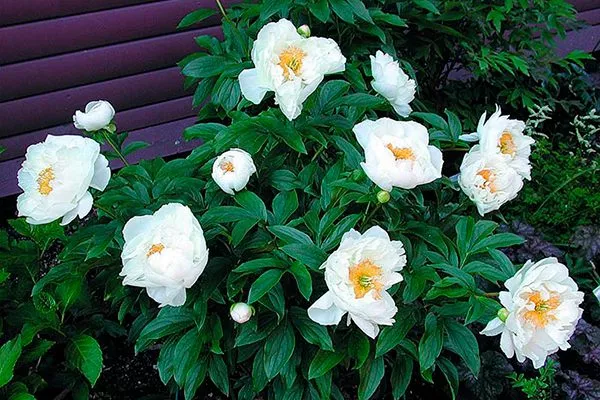
With careful care and optimal conditions, Miss America will reveal its full beauty and ensure beautiful blooms.
Advantages and disadvantages of the variety
It has numerous advantages, but also has several disadvantages that should be considered when choosing it. The main advantages of this variety:
Decoration in landscape design
It's a wonderful choice for decorating garden plots. It can be grown as individual flowers, placed on lawns, or used to create multi-layered arrangements using shrubs.
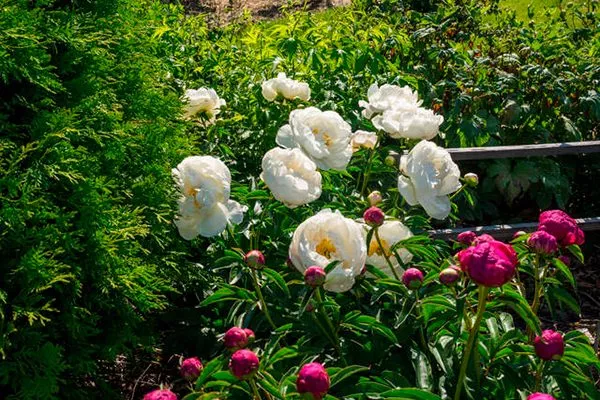
The variety is also attractive when paired with other ornamental plants, especially those with wine-red or bright red blooms. Some of the best partners for Miss America include:
- tulips;
- Heucheras;
- carnations;
- primroses;
- daffodils;
- lilies;
- bells;
- irises.
Keep in mind that when planted next to other plants, it requires sufficient space to fully develop.
How and when to plant?
Plant seedlings in April, leaving approximately 1 meter between each planting. Begin preparing the planting site 14 days before planting. Thoroughly dig the soil to a depth of 20 cm, removing any weed roots.
Dig a hole 60 cm deep and 24 inches in diameter, and line the bottom with crushed bricks for drainage. Fill the rest of the hole with nutritious soil. To prepare this, mix peat moss with turf, humus, and sand. Add 30 g of potassium sulfide and 40 g of superphosphate.
Step-by-step algorithm:
- Place the seedling in the center of the hole so that the buds are 3 cm below ground level.
- Carefully straighten the roots.
- Fill the voids with soil.
- Compact the surface and water generously.
- Mulch the soil if necessary.
- ✓ The optimal soil acidity for the Miss America peony should be within the pH range of 6.5-7.5.
- ✓ The planting depth of renewal buds should not exceed 3 cm from the soil level to avoid lack of flowering.
How to care for the plant?
For successful cultivation, follow standard care guidelines. Follow these basic agricultural practices:
- Watering. Peonies don't tolerate dry roots, so keep the soil slightly moist. During dry periods, water the plant 1-2 times a week using a sprinkler system, pouring 30 liters of water under the bush.
- Fertilizers. Apply fertilizer starting at the age of three, using nitrogen and organic fertilizers during the period of active shoot growth, then move on to phosphorus-potassium compounds before and after flowering.
- Mulching and loosening. Regularly loosening the soil around the roots to a depth of 2-3 cm will improve air permeability. During dry periods, apply a 3 cm thick mulch to reduce moisture evaporation.
It has high immunity to diseases. To prevent possible problems, treat the crop twice a season with fungicides: Skor or Strobi.
Preparing for winter
After the buds have faded, cut them off to prevent the plant from wasting energy on seed formation. Leave the shoots with leaves to grow until late fall to ensure normal photosynthesis and the development of replacement buds.
In late autumn and before frost, trim the stems back to ground level. Add wood ash and bone meal to the area around the trunk, then cover with loose garden soil or a compost mixture.
Diseases, pests and their control
It is rarely attacked by pests and diseases, but if optimal conditions are not met, its immunity may weaken, which can lead to the development of the following diseases: gray mold, powdery mildew and rust.
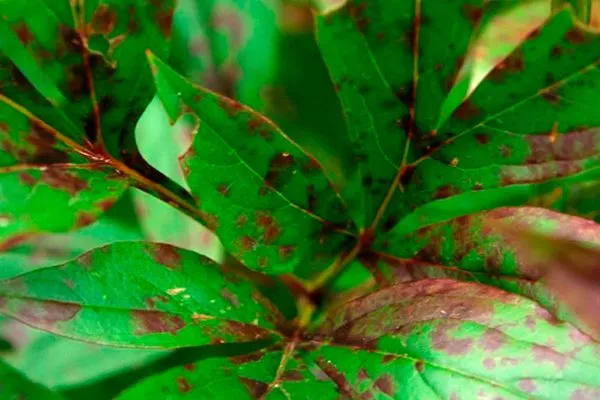
To prevent damage, regularly remove weeds from the tree trunk area throughout the season, and in the fall, clear away leaves and stems from the area. Treat young shoots with fungicides in the spring.
Reproduction options
There are several methods of flower propagation: vegetative and generative. Seed propagation takes considerable time and requires patience, and is typically used to develop new varieties. Such plants will not retain the varietal appeal of the parent plants.
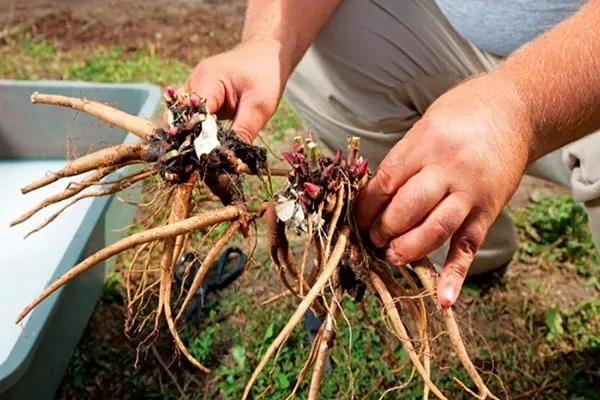
Reproduction methods:
- Seeds. Use fully ripe seeds, collected directly from the plants. Mature seed pods have thin, brownish walls, and the seeds inside are glossy and dark brown.
Sow seeds immediately after harvesting in August in a pre-prepared area. Plant them 1-2 cm deep. After sowing, water and cover the area with non-woven fabric until the first frost. - Dividing the bush. The rhizomes of mature plants (5-6 years old) are divided into sections, leaving several strong roots with growth buds in each section. This ensures successful adaptation and development of the new bushes. Replant them in separate holes.
- Rhizome cuttings. After cleaning and rinsing the root system, cut thick cuttings with renewal buds, sprinkle them with charcoal, and plant them in the soil. Water.
Each of these methods has its own characteristics and advantages, suitable for specific breeding conditions.
Growing recommendations
To ensure abundant blooms, it's important to follow certain guidelines. Helpful growing tips:
- Plant the seedlings in suitable soil and in a well-lit place.
- In autumn, mulch the soil.
- If the quality of flowering noticeably decreases, consider replanting, especially if the peony has been growing in the same place for more than 7 years, or check that the watering is correct to avoid drying out or rotting the roots due to high humidity.
- If the bush does not form buds in the third year after planting the seedling, check the acidity of the soil, as this may be the cause.
Regularly remove wilted buds from the bush, as they can negatively affect further development.
Peony Reviews
The Miss America peony is a magnificent, snow-white flower that will be the pride of any gardener. It's easy to care for, and any effort will be rewarded with a regal bloom in your garden.