
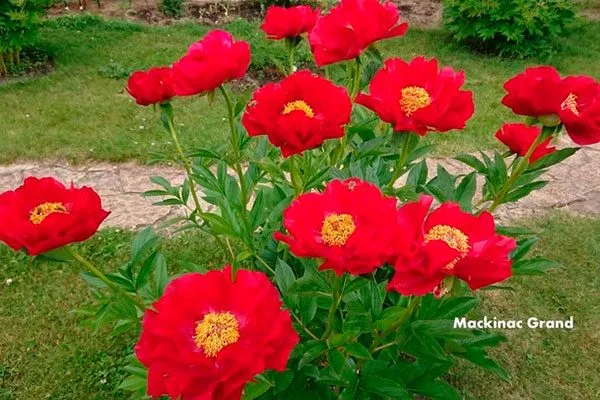
The Mackinac Grand peony attracts attention with its large, vibrant, deep red flowers and pleasant fragrance. The bushes are compact and robust, making them versatile for a variety of garden arrangements. Early flowering and high disease resistance allow for spectacular decorative results with minimal effort.
History of appearance
The Mackinac Grand peony was bred in the United States in 1992 by Reath breeders. Eleven years after its introduction, the variety received a prestigious award from the American Heuchera and Hosta Society (AHS).
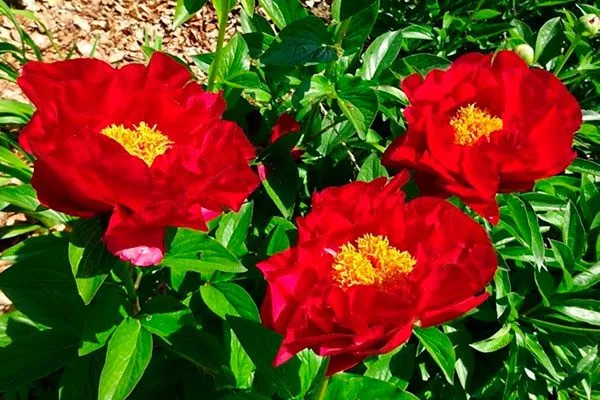
Description of the Mackinac Grand peony
The plant forms spreading bushes up to 90 cm tall with straight, strong stems. Key features:
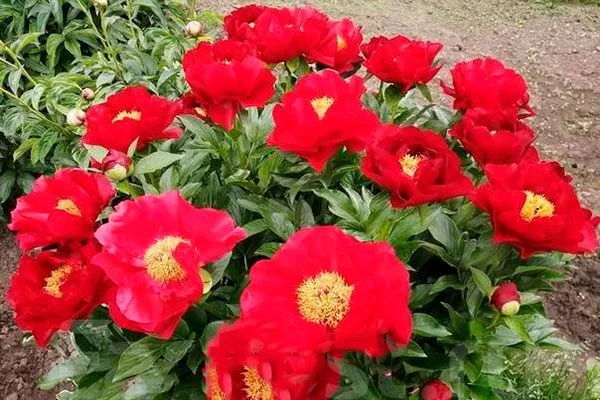
- The plant is distinguished by its high shoot-forming capacity – up to 50 flowering shoots can form on one bush.
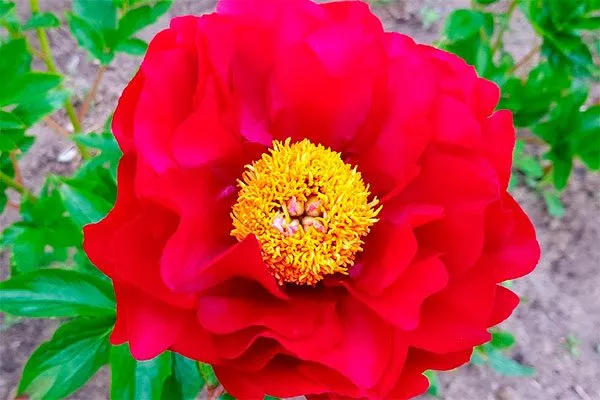
- The flowers are semi-double, rich red, and reach about 18 cm in diameter.

- The variety is valued for its distinct yet pleasant aroma, which makes it particularly attractive to lovers of ornamental plants.
Flowering time and period
The Mackinac Grand peony delights with its spectacular blooms in the first half of June. The bloom period is short—about two weeks—but cut flowers remain fresh in a vase for a long time, up to 10 days, making this variety popular with florists.
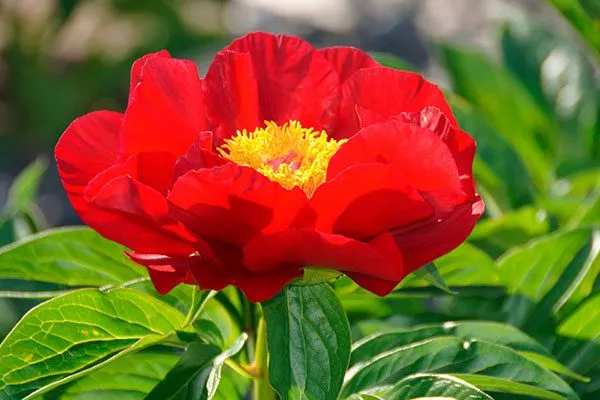
The buds are large, with golden stamens in the center that stand out brightly against the foliage. On average, a single bush can produce up to 60 flowers. When grown in sunny areas, the coloring becomes especially rich, while in shaded areas, it becomes darker.
When and how to plant?
Plant from early spring to mid-autumn. Pay special attention to preparing the planting hole: the optimal size is 80x80 cm, but you can increase it to 100x100 cm if necessary. It's best to prepare the holes in advance to allow time for any added fertilizer to decompose.
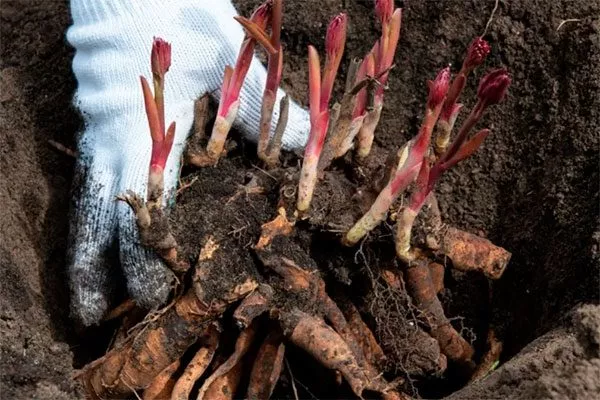
To fertilize the soil, use a mixture of the following components:
- humus;
- nitrogen fertilizers;
- compost;
- peat.
Mix all ingredients thoroughly with garden soil and level the area.
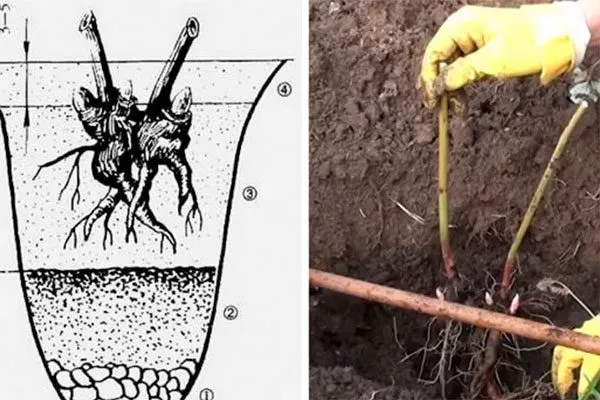
Basic requirements:
- On the day of planting, dig the prepared area again. Since this variety is sensitive to waterlogging, lay several 5 cm layers of drainage material at the bottom.
- The buds should not be buried deep – it is optimal to place them at a depth of 4-5 cm below ground level.
- If the root system is strong and has long shoots, lay them at an angle, carefully filling and compacting the soil by hand so as not to damage the young roots.
Care instructions
The Mackinac Grand peony is easy to care for and low maintenance. To ensure bushy and decorative growth, pay attention to the following:
- watering;
- weeding;
- loosening;
- top dressing.
Follow these recommendations:
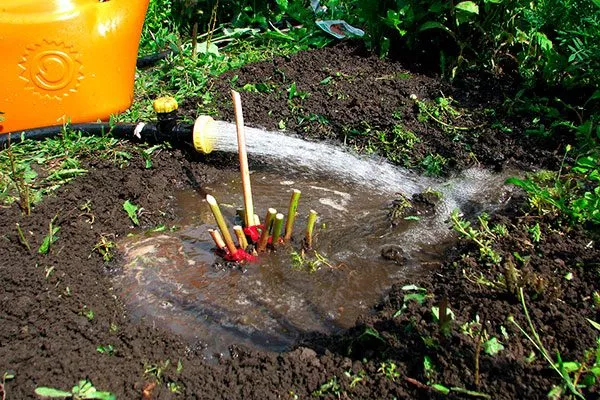
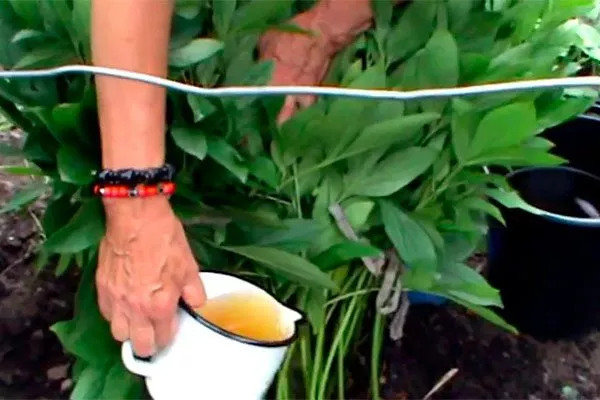
- Water the plant irregularly but generously: in spring, as the top layer of soil (up to 4 cm) dries out; in summer, more frequently, applying water directly to the roots. Stop watering in September. One mature plant requires up to 25 liters of water, and up to 30 liters in hot weather.
The plant can tolerate short-term drought, but overwatering can lead to root rot. - After each watering, carefully loosen the soil and weed. Regular care promotes vigorous plant growth.
- Apply fertilizers in both liquid and dry form. Mineral fertilizers in capsules are more easily absorbed. Use organic matter containing ammonia sparingly.
- Apply the first fertilizer in September of the following year after planting. Start with a potassium-phosphorus fertilizer to stimulate growth. After two weeks, apply organic matter, such as a rotted manure solution. Apply the third fertilizer in the spring, after the stems and leaves emerge.
Preparing for winter
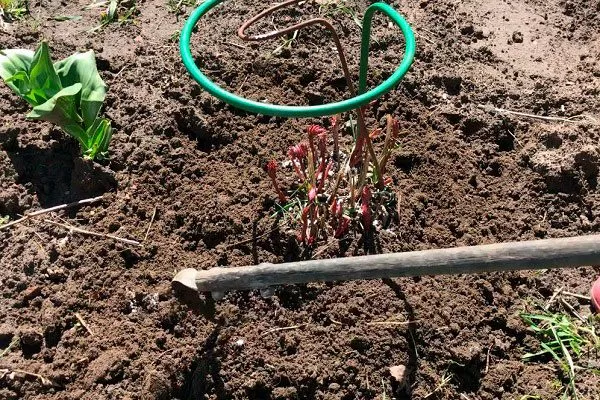
When frost sets in, the mulch needs to be renewed. For a successful wintering during the first year, it's best to use a mixture of spruce branches and peat – this mixture provides optimal protection from the cold. Increase the mulch layer to 20 cm.
Reproduction methods
The plant is propagated by cuttings, division, and layering. The last two methods are the most effective: they preserve the varietal qualities and promote earlier flowering.
Propagation by cuttings is carried out in the summer, after the petals have fallen:
- Select strong shoots with several leaves.
- Shorten the leaf part by 2/3, then cut the cuttings 10-15 cm long.
- Treat the lower cut with a root formation stimulator.
- Plant the cuttings at an angle in containers with nutrient soil and cover with plastic cups to create a greenhouse effect.
- When the leaves appear, remove the covering.
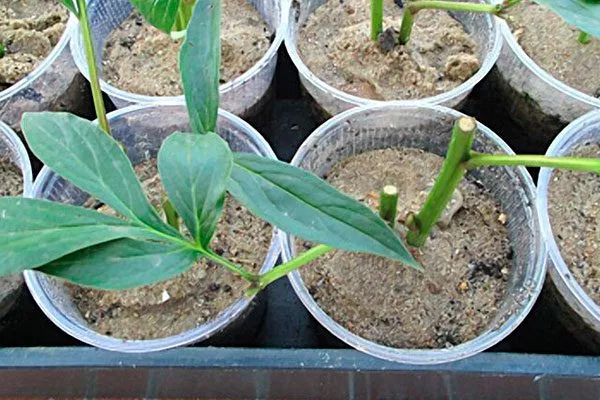
The following year, plant the rooted cuttings in open ground.
Use division of the bush for plants older than five years:
- Carefully dig up the roots and dry them.
- Select a fragment with renewal buds, make a cut and sprinkle with charcoal.
- Plant the resulting division in fertile soil.
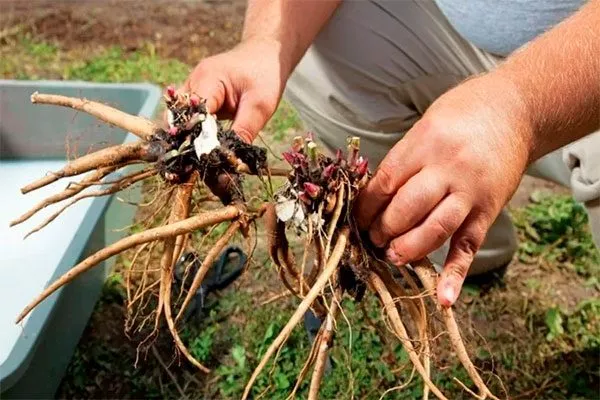
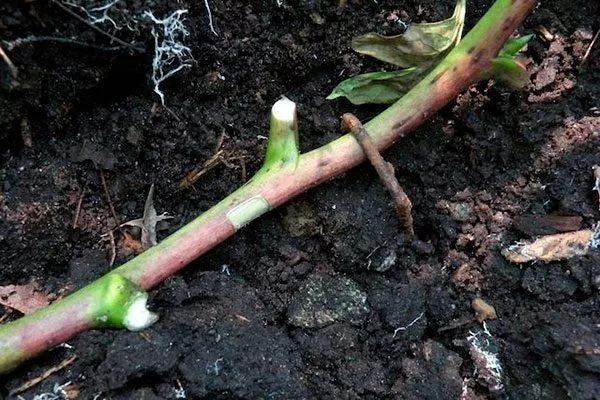
Propagation by layering is the easiest method. Do this in early spring, before the growing season begins:
- Bend healthy shoots to the ground, cover with soil, leaving the leaves on the surface.
- After the plant has formed its own roots, separate the stem from the mother bush.
- After a year, transplant the young plant to a permanent location.
Diseases and pests
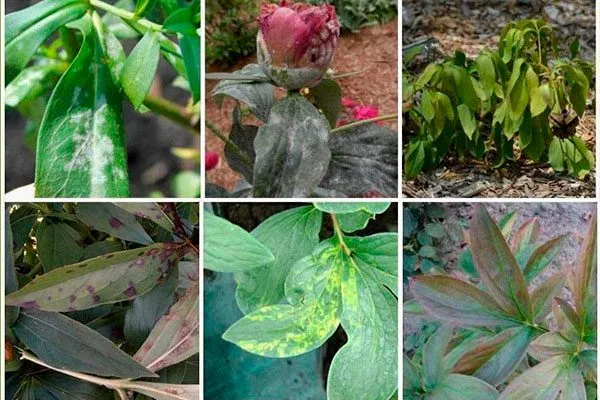
Hybrid peonies, including the Mackinac Grand variety, are susceptible to a number of fungal diseases, particularly powdery mildew, rust, and gray mold. For prevention, treat the bushes annually with Fitosporin, which has a complex effect and prevents fungal growth.
During flowering, peonies emit a rich, sweet aroma that attracts ants. They climb onto the buds and feed on the plant sap, causing damage. To repel insects, use Fitoverm or Actellic—these products help get rid of aphids that feed on young foliage.
Application in landscape
This variety, with its expressive semi-double flowers and decorative foliage, is widely used in landscape design. Main varieties:
- Solitary plantings – A large bush with bright flowers looks spectacular in the center of a lawn or in an open clearing.
- Group compositions – Combines well with other varieties of peonies, as well as with irises, delphiniums, and geraniums.
- Mixborders – It is placed in the middle ground, where its rich colours and dense foliage create an accent.
- Living borders – Along paths or near fences, the peony forms a picturesque edge.
- Flower beds at the entrance area – The variety is attractive during flowering and retains its decorative qualities thanks to its foliage afterwards.
- Floristry – Due to its durability when cut (up to 10 days), it is used for bouquets and holiday arrangements.
Pros and cons
This plant requires little care, making it suitable even for novice gardeners. Besides its ease of cultivation, this variety boasts a number of significant advantages. One of its key advantages is its compact size, which is especially convenient for landscaping.
Reviews
The Mackinac Grand peony combines beauty and ease of maintenance, making it an excellent choice for gardens. It boasts rapid growth, consistent blooms, and resistance to adverse conditions. Its long-lasting cut flowers and versatile planting options make it a popular choice among peony varieties.