
The Lorelei peony is considered a profusely flowering plant, belonging to the lactiflora interspecific hybrid. It has a unique, chameleon-like coloring and is considered an easy-to-grow and frost-resistant plant. Its Latin name is Lorelei.
History of creation
Lorelei was developed in 1996 at the American breeding center "Hollingsworth." Good Chir and Lactiflora were used for hybridization.
Description of the appearance of the plant and flowers
Lorelei belongs to the dicotyledonous class, the saxifrage order, is part of the semi-dwarf peonies group, and is distinguished by the following characteristic features:
- Bush. Height – approximately 70 cm, ornamental type. The crown is formed by strong shoots that have a single inflorescence, but there are also specimens with 3-4 flowers. The leaves are a classic green, but with numerous light green veins. The shape is pointed, the type is upright (leaves never droop). Foliage is dense.
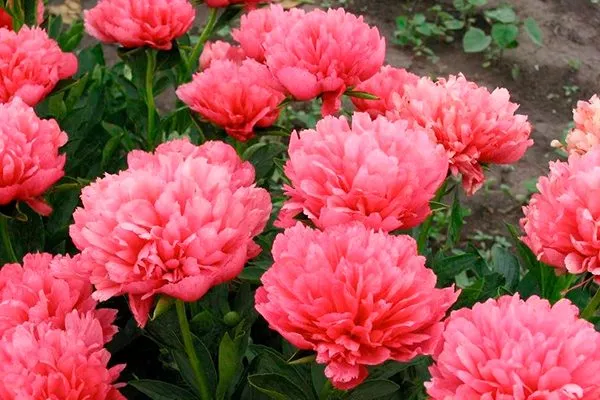
- Buds. Large in size, 13-15 cm in diameter. Bomb-shaped, no stamens or pistils.
- Color and smell. The aroma has sweet notes. The base color is a rich, tomato-orange. The petals are pink at the base. Over time, the hue becomes orange-apricot, and when grown in full sun, it becomes peach.
Other indicators:
- high resistance to diseases and pests;
- the bushes easily tolerate short-term drought;
- can be used for cutting - it will last about 10 days in a vase with water;
- the petals fade in the sun;
- maintaining decorative appearance without replanting for at least 6 years, maximum 20 years.
Lorelei has good frost resistance – without cover, shoots do not freeze at temperatures of -34-40 degrees.
Timing and characteristics of flowering
Budding begins early – in early May, and in early spring, after April 20. Double buds open by June 10, but flowering is short-lived – 10 to 15 days, or 3 weeks with intensive care.
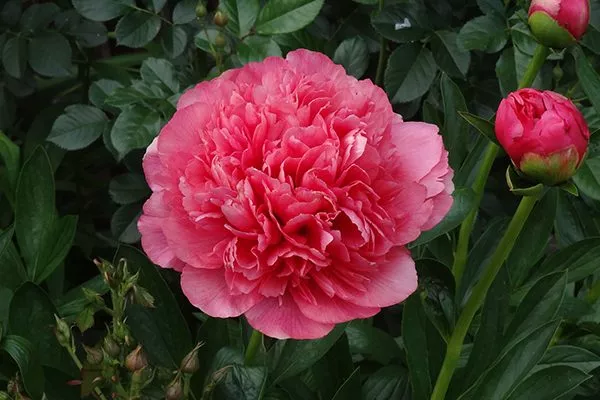
Blooming occurs slowly, but even at the beginning of budding, the buds look unusual—the petals are neatly arranged and curled in a wave-like pattern. The first flowering begins in the second year after planting, peaking at least in the third year.
Application in design
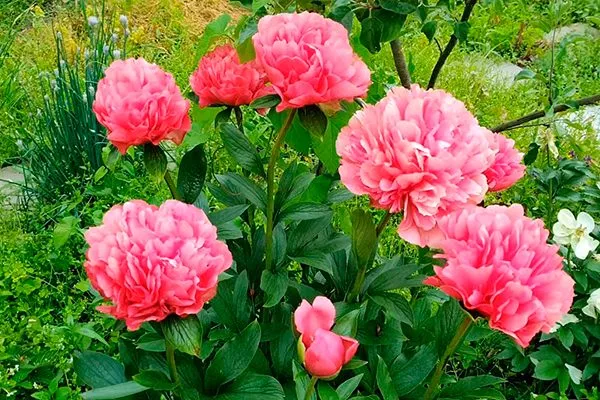
Lorelei is versatile—peonies are used not only in floristry to create beautiful formal bouquets, but also in landscape design. The bushes can be planted individually or in combination with other flowers and plants. However, their combinations are limited. They only pair harmoniously with the following plants:
- asters;
- roses;
- tulips;
- lilies;
- daylilies;
- zinnias;
- godets;
- chrysanthemums.
Pulsatilla, hellebore, anemone and adonis are absolutely not suitable - they absorb all the nutrients from the soil.
Landing rules
Unlike other varieties, which typically prefer sunny locations, Lorelei prefers shade and partial shade; otherwise, the petals will become very faded and the buds unattractive. There are other varietal characteristics to consider when planting:
- the hybrid is not at all capricious regarding the type of soil, but it must be nutritious;
- the depth of the planting hole is 60 cm, as is the diameter;
- the composition of the substrate in the soil is equal parts garden soil, peat and humus, for each hole - 500 g of wood ash (preferably from birch) and 200-250 g of superphosphate;
- The root system of the seedling must be treated with Heteroauxin - 1 tablet of biostimulant and 25 g of copper sulfate per 5 liters of water.
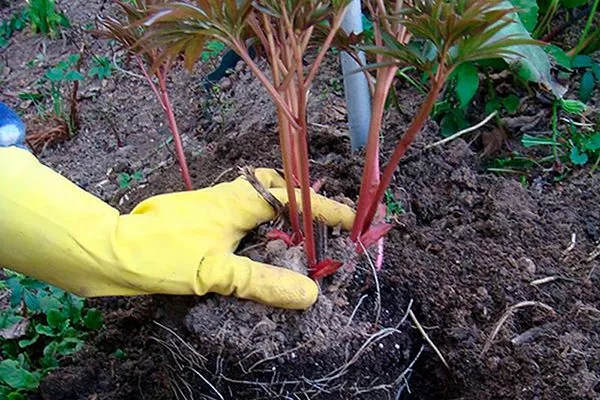
The planting period is either autumn or spring. However, the former is preferable, as flowering will begin in the spring.
Aftercare
For the Lorelei peony, several aspects of care are important, in addition to the standard ones:
- when planting in autumn, before frost, you need to water the bushes three times;
- in the future, watering should be abundant - 20 liters per bush, but not too frequent - once every 9-10 days;
- It is enough to apply fertilizers once a year - in mid-August you need to apply a mineral complex for peonies;
- In early spring, when the buds begin to swell, the bushes are treated with Fitosporin.
Feeding schedule
| Period | Fertilizer | Norm |
|---|---|---|
| Early spring | Ammonium nitrate | 15 g/m² |
| Budding | Nitrophoska | 20 g/m² |
| After flowering | Superphosphate + potassium salt | 25+15 g/m² |
| August | Bone meal | 100 g/bush |
| Once every 3 years | Rotted manure | 5 kg/m² |
What to do if it doesn't bloom: possible reasons
The hybrid is characterized by lush and abundant flowering, but sometimes gardeners encounter a lack of budding. There are several reasons for this:
- lack of fertility;
- excess nitrogen;
- incorrect landing technique;
- too dry soil.
To solve the problem, first determine the exact cause, and then normalize the watering and fertilizing regimen; if necessary, transplant the bush to a new location.
What to do after flowering?
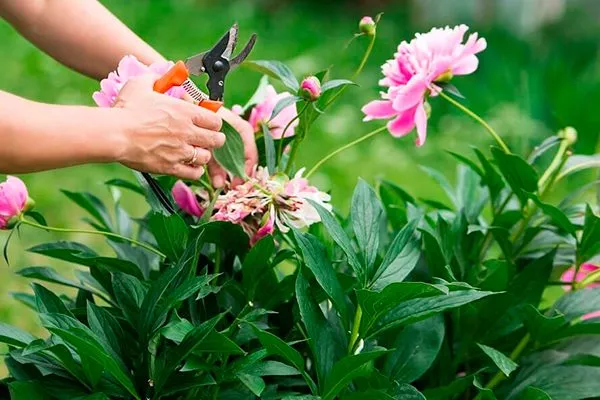
Flowers fade gradually – they should be cut off with a 2-3 cm piece of stem. What else should you do:
- pluck off 2-3 pairs of upper leaves;
- gradually reduce the frequency and amount of watering;
- feed.
Preparing for winter
Shelter periods by region
| Region | Deadlines | Shelter material |
|---|---|---|
| Southern regions | Until November 15th | Peat + spruce branches |
| Middle zone | End of October | Agrotex 60 g/m² |
| Northwest | Mid-October | Double layer of spunbond |
| Urals, Siberia | Early October | Frame shelter + foam plastic |
Despite Lorelei peonies' frost resistance, they require some preparatory work before winter. Here's what to do:
- a couple of weeks before the expected frost, shorten the shoots;
- mulch the tree trunk area with peat, layer – 5 cm;
- Place humus mixed with wood ash on top in a layer up to 3 cm thick, and sprinkle dry grass even higher.
Pests and diseases
The hybrid is resistant to all fungal and infectious diseases, with one exception: gray mold. It manifests itself as moldy patches on the above-ground parts and stem rot. To avoid this disease, pay attention to the main causes:
- excess nitrogen in the soil;
- increased air humidity during prolonged rains;
- the presence of infected plants nearby;
- stagnation of water due to excessive watering;
- lack of phosphorus, potassium, manganese and other microelements.
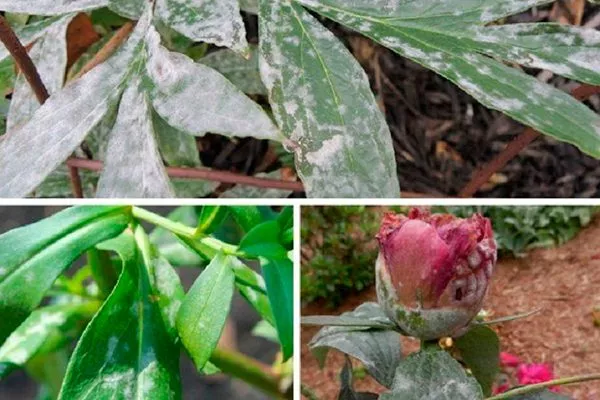
Copper sulfate is used for treatment: 50 g of the substance per 10 liters of water. The plant is treated after removing the affected parts. Pests to beware of include bronze beetles, turf ants, and nematodes.
Protective equipment
| Problem | Preparation | Concentration | Processing |
|---|---|---|---|
| Gray mold | Fundazol | 0.2% | 2 times with an interval of 10 days |
| Bronze beetle | Aktara | 4 g/10 l | 1 time upon appearance |
| Ants | Ant-eater | 1 ml/10 l | Watering anthills |
| Nematodes | Nematophagin | 100 ml/m² | Application to soil in spring |
Methods of reproduction
Comparison of reproduction methods
| Parameter | Dividing the bush | Cuttings |
|---|---|---|
| Deadlines | August-September | June-July |
| Plant age | From 4 years old | From 3 years old |
| Yield of planting material | 2-5 divisions | 10-20 cuttings |
| Beginning of flowering | For the 2nd year | For 3-4 years |
| Survival rate | 85-90% | 60-70% |
Lorelei peony seeds are very expensive and rarely available commercially, so not every gardener can afford them. Collecting your own seeds is pointless, as the characteristics of the mother plant are not preserved (due to their hybrid origin). Therefore, only two techniques are used for propagation:
- Dividing the peony rhizome. This is the fastest and most effective method, as the rhizome has powerful appendages and a large number of renewal buds. The root division period is from August 20th to the end of September, but if the weather is still hot, the timing should be slightly delayed.
- Using stem cuttings. Another suitable method, but flowering won't occur the following year after propagation, but rather in the third or fourth. However, you can simultaneously obtain a huge number of cuttings.
Reviews
The Lorelei peony is considered a popular and expensive plant, so when growing it, it's important to think about increasing the number of bushes in your front garden early. Its survival rate is high; the key is choosing the right method. Growing flowers with unusual colors is quite easy.