
The Lemon Chiffon peony is a frost-hardy hybrid, resistant to diseases and pests. Although it was bred relatively recently, it has already attracted the attention of gardeners with its unusual petal hue. With proper care and minimal attention, you can grow a plant with a strong immune system and lush blooms.
History of creation
The variety was developed by Dutch breeders in 1981. The crop is grown both in garden plots and in greenhouses for cutting.
Description of the peony Lemon Chiffon
It has a unique appearance that draws attention with its elegance and unusual colors. It has recognizable characteristics:
- The bushes grow vigorously and tall, with strong, flexible, and well-branched shoots. Heights reach 80 to 105 cm.
- The stems develop quickly and, due to their strong structure, are able to withstand the weight of large double buds.
- The shoots are covered with large, oval leaves, light green in color, held on short petioles.
- The flowers are large, their diameter is approximately 20-23 cm, they are double and are formed 3-4 at a time on one peduncle.
- The base color of the petals is lemon or light yellow, sometimes with thin silver stripes on the surface of the buds.
- The stamens are large, yellow and noticeable.
- The scent of the flowers is pleasant, light and unobtrusive.
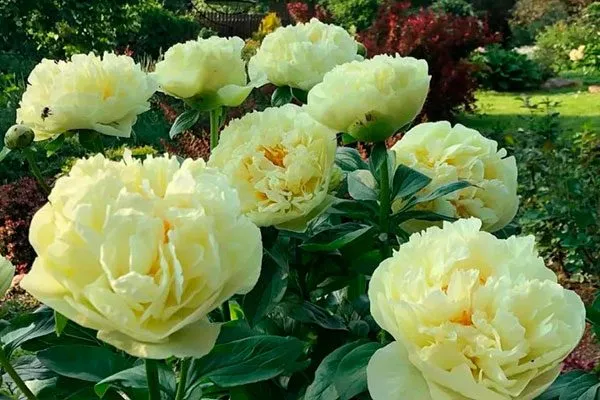
Peony Lemon Chiffon's flowering characteristics
It's an ornamental plant with large flowers of unusual color. To ensure long-lasting and beautiful blooms, it requires optimal care.
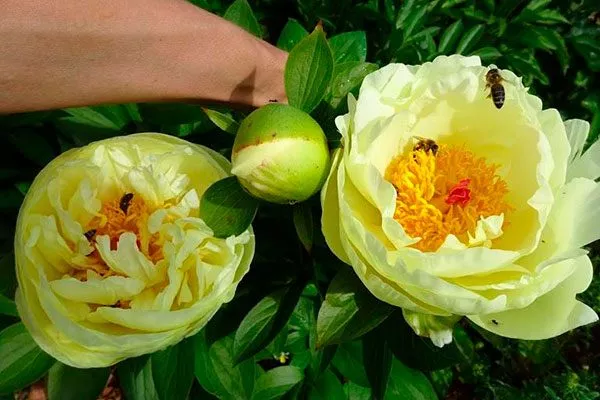
Period of vegetation, flowering and dormancy
Active growth begins in early spring after the snow melts. The bush begins to develop foliage, then the first buds appear. Flowering typically occurs in two stages:
- The first wave occurs in late May or early June and lasts about 30 days.
- The second phase begins in early August and continues until September. After this, a dormant period begins in late autumn and continues until spring.

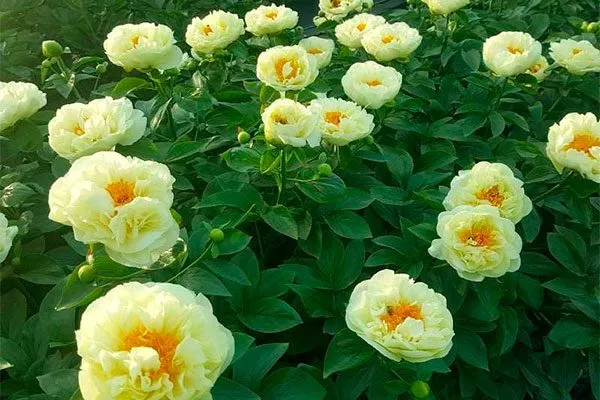
Care during and after flowering
During the summer, it's important to provide ample watering to prevent the soil surface from drying out. Fertilizing is not necessary, but it's advisable to apply fertilizer in the spring. After the flowers fade, reduce the frequency and intensity of watering.
To maintain health for next year, add fertilizer containing potassium and phosphorus to the soil in the fall. This will encourage abundant budding in the coming season.
What to do if a peony doesn't bloom, possible reasons
It usually blooms profusely without any problems. If it suddenly refuses to bloom, the following may be the cause:
- Growing in a shady place where there is not enough sunlight.
- Planting too deep prevents flower buds from forming.
- Cessation of flowering due to age-related changes - plants that are more than 10 years old no longer bloom as profusely or do not produce buds at all.
Taking these factors into account and following care recommendations, you can stimulate flowering.
Application in design
There are many options for placement in a garden plot. Interesting design ideas:
- The flowerbed can be located 2-3 meters from trees. An ideal option would be organic planting next to low-growing fruit trees: pears, rowan, and apple.
- The culture goes well with thuja, juniper and boxwood, creating a bright contrast with deutzia, jasmine, mock orange and honeysuckle.
- In one flowerbed they can be combined with other ornamental plants: panicle hydrangea, chrysanthemums, phlox, daylilies, lilies and irises.
- Astilbe with its bright lemon flowers will be an attractive accent.
- A woody flowering vine can serve as an excellent background for a hybrid.
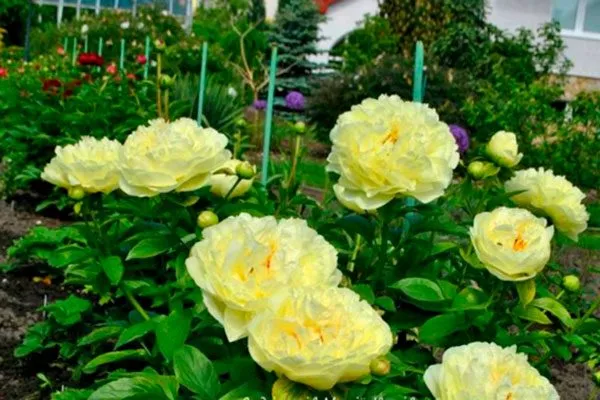
Methods of reproduction
Reproduction is possible in several ways. Choose the appropriate one:
- Division of rhizome. This is a common propagation method. The bush is divided into sections, preserving the roots, and planted separately, ensuring each section has access to nutrients.
- Layers. They are obtained in early spring by burying healthy stems in the soil near the mother plant. After roots form, the cuttings are cut off and grown separately, being transferred to the ground the following year.
- Cuttings. The procedure involves cutting off a stem with an unformed bud and replanting it in prepared soil or a container. After rooting, the cutting becomes an independent plant.
The most effective method for preserving varietal characteristics is rhizome division. This method allows for the complete preservation of the mother plant's characteristics.
Planting Guidelines for Lemon Chiffon Peonies
Plant in the fall before frost, around early September. This period allows the seedlings to establish roots before winter sets in, which promotes better growth. Choose a well-lit area before planting. The soil should be moist and well-drained.
- ✓ Optimum soil temperature for rooting: 10-15°C.
- ✓ Required soil acidity: pH 6.0-7.0.
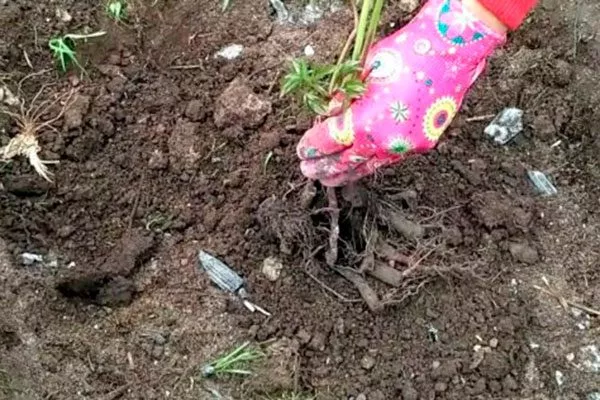
Step-by-step algorithm:
- Prepare a planting hole measuring 60x60 cm.
- Place a drainage layer at the bottom of the hole, which can consist of broken brick, expanded clay or stones with a diameter of 1-2 cm.
- Fill the hole with a mixture of sand, peat, sawdust, ash and garden soil.
- Place the seedling in the center of the hole and carefully spread out the roots.
- Water the plant, cover with soil and compact it carefully.
- The maximum planting depth should not exceed 12 cm. Add an additional layer of fertile soil (1-3 cm) to ensure adequate nutrition and protection of the root system.
Before planting, treat the rhizomes of the seedlings with a weak solution of potassium permanganate to protect against diseases.
Aftercare
This plant requires simple but attentive care to ensure proper growth and development, ensuring long-lasting, annual flowering. Key aspects of caring for this hybrid:
- Watering. This variety doesn't like moisture, but avoid allowing the soil to dry out, as this can lead to the plant's death. Water the bushes regularly, but not excessively. Water when the top layer of soil beneath the bush has dried out.
- Top dressing. The hybrid doesn't require frequent fertilizing. Apply nitrogen fertilizers and potassium-phosphorus compounds in spring and early fall. Overfeeding is not recommended, as it can damage the root system.
- Loosening and mulching. After each watering, carefully loosen the soil to avoid damaging the roots. Do not mulch the soil after watering, except for young plants before the onset of cold weather, when they can be covered with sawdust and a cloth.
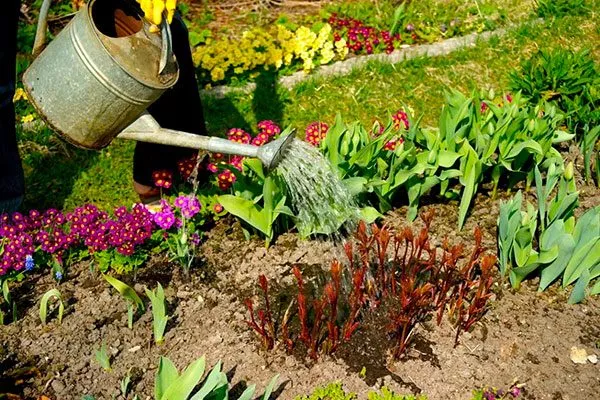
- Early spring: treat the soil with a solution of potassium permanganate.
- 7-10 days after the first treatment: spray with Bordeaux mixture.
- In autumn: application of potassium-phosphorus fertilizers.
In early spring, prevent pests and infections by watering the soil with a solution of potassium permanganate, and after 7-10 days, spray the peonies with Bordeaux mixture to protect against fungal infections.
Preparing for winter
Preparing a young bush for winter involves several basic steps. Provide adequate water to ensure the roots are moist before the onset of frost. Then, remove any plant debris and leaves around the area to prevent potential disease and rot.
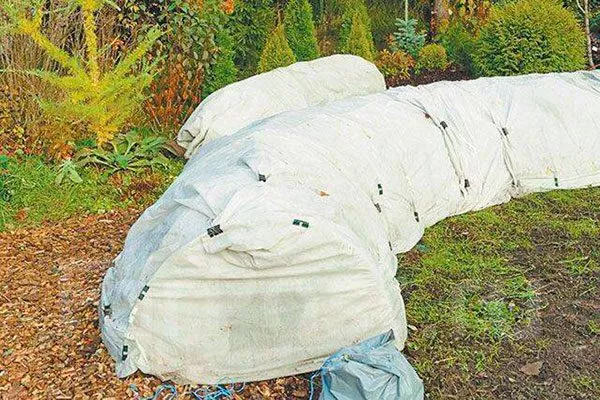
Cover the soil around the stems with dry leaves, straw, or agrofibre to protect from frost and temperature fluctuations. The covering should be lightweight and breathable to avoid creating a greenhouse effect and prevent plant rot.
Pests and diseases
The crop is highly resistant to external factors and rarely suffers from diseases. With proper care, cultivation is straightforward. In some cases, the hybrid may suffer from the following diseases:
- Rust. It manifests itself as brown spots on the upper surface of leaves and orange growths on the underside. Bordeaux mixture, Topaz, and HOM are effective in controlling the disease.
- Botrytis. This is a mold that affects the entire above-ground part of the peony. The product HOM is effective against it.
- Ants. They can feed on plant leaves and petals. Ants can be controlled with insecticides. Use Muravied.
- Spider mites. These are small parasites that can be identified by the webbing on the leaves. Actellic is effective against these insects.
If it is necessary to use chemicals, strictly follow the instructions for their use and safety.
Advantages and disadvantages
Lemon Chiffon, winner of the prestigious Grand Champion 2000 award, has both positive and negative qualities. The hybrid's advantages include:
Among the disadvantages, flower growers note the short period of bud opening, the need for space due to the size of the bush, and the importance of drainage to prevent stagnant water.
Reviews of the Lemon Chiffon peony
The Lemon Chiffon peony is an invaluable landscape design element, perfect for decorating gardens and parks. Its appeal lies in its long bloom period, and the cut flowers retain their freshness and fragrance for a long time. It is a frost-hardy hybrid and disease-resistant, but requires careful care.