
Peonies are deservedly popular due to their high ornamental value and ability to beautify a garden. Among the many varieties, Coral Sunset stands out for its abundant blooms and low maintenance requirements. It is a popular choice among gardeners, who appreciate its resistance to winter frosts.
History of creation
The hybrid first appeared in the United States in 1981 thanks to the work of experienced breeder Samuel E. Wissing, who spent over 26 years developing coral peonies. The variety was created by crossing the single-flowering red-orange Otto Froebel with the semi-double, snow-white Minni Shaylor.
Characteristics
Gardeners choose peonies for their unique shape and vibrant petal colors. Coral Sunset is one of the most popular varieties, boasting numerous positive characteristics.
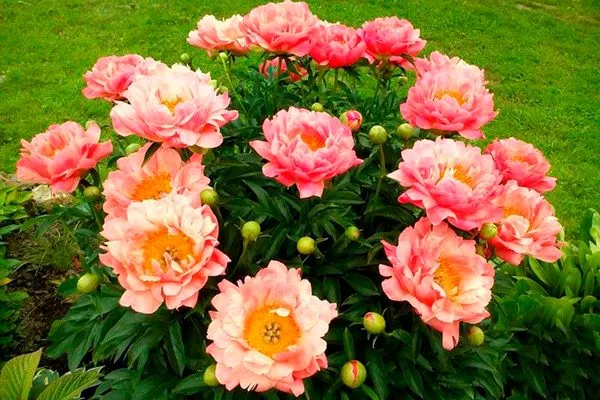
Description of the appearance of the plant and flowers
The plant is vigorous, neat, and upright, with slender but strong shoots that easily support the weight of flowering. Appearance:
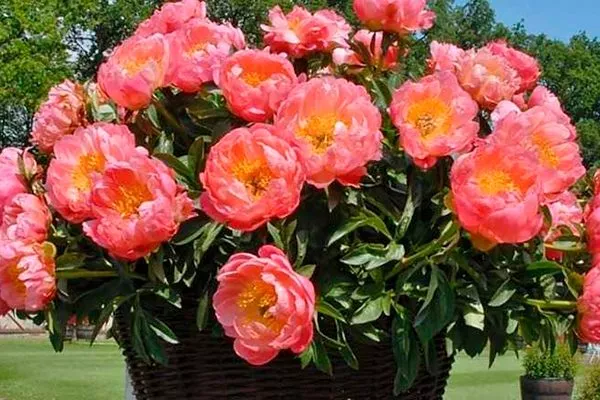
- The perennial reaches a height of 90 to 110 cm and spreads out to a width of about 70 cm.
- The leaves are large, unpaired, deep green, pinnately dissected, forming narrow lobes and shaped like a boat. The dense foliage persists until late autumn.
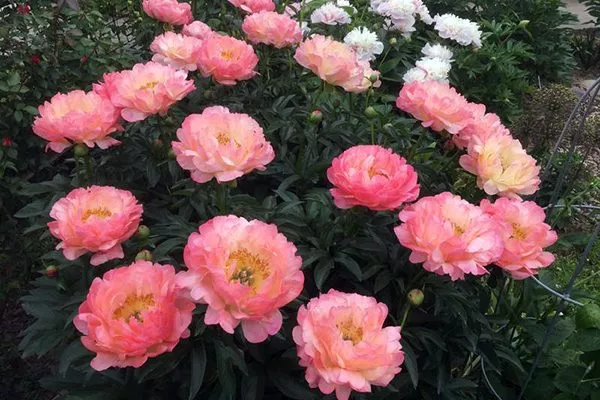
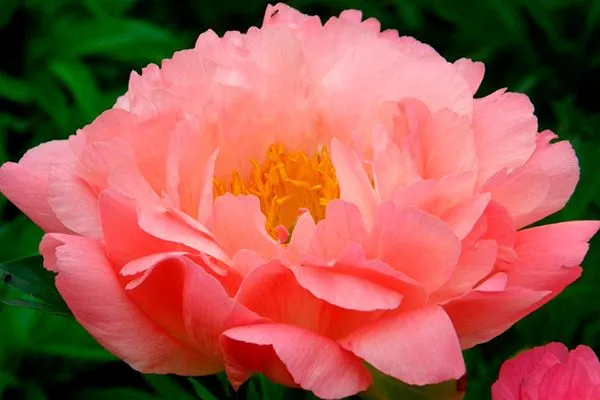
- Double and semi-double flowers with a diameter of 18 cm are located on strong stems. They have a flat, hemispherical shape.
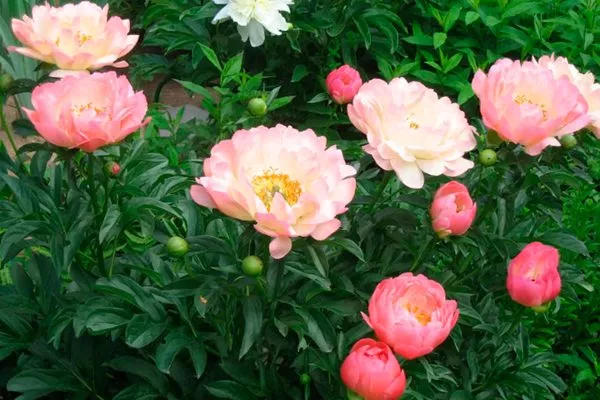
- It attracts attention with its bright peachy-pink color, which in the sun creates a variety of shades, including greenish-cream tones and the color of baked milk.
- The middle, filaments and stamens are colored yellow.
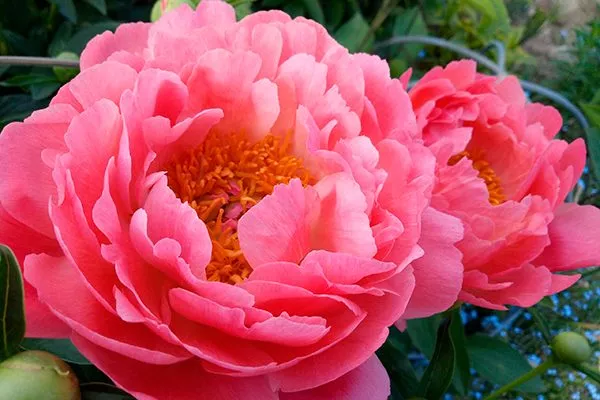
The flower emits a strong and pleasant aroma.
Features of flowering
The first buds may appear as early as a year after planting, but abundant flowering begins in the third year. A mature bush produces a significant number of buds.
Frost resistance
It has high frost resistance and can withstand temperatures down to -34-40°C. This perennial is suitable for growing in various regions of Russia, including the southern and central parts, Siberia, the Urals, and central Russia. In warmer regions, it does not require winter protection.
Where is the best place to plant?
Coral Sunset performs best when grown in well-lit areas. Because petals are prone to fading, sunlight helps maintain the vibrant color of the buds for a long time.
Avoid planting in low-lying areas where rainwater can accumulate to prevent excessive waterlogging of the root system. Choose a site protected from strong drafts to ensure favorable conditions for growth and flowering.
Do I need to tie it up?
During rainy seasons, especially if the flowers are outdoors, the inflorescences may become too heavy due to humidity, so staking may be necessary. In areas with frequent winds, support prevents damage to the plant and inflorescences.
How does the Coral Sunset peony differ from the Coral Charm variety?
The varieties belong to the same series and share some similarities in their characteristics. The flowers of both species are semi-double, open almost simultaneously, and are orange-pink in color.
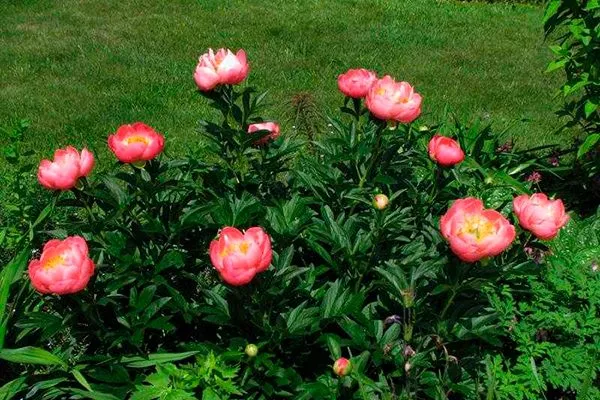
Coral Charm has more petals, while Coral Sunset begins blooming 5-7 days earlier. Coral Charm is a dark pink, gradually lightening to a white edge on the petals. The hybrids are almost identical in height.
Application in design
It pairs beautifully with low-growing varieties of conifers and evergreens, creating harmonious garden ensembles. Beautiful compositions are achieved when paired with clematis or roses. It is recommended to plant them in group arrangements with other varieties of this plant or mix them with other perennials, paying attention to the selection of varieties so that they do not grow taller than the peonies.
The possibilities for use in landscape design are very diverse:
- for compositions with decorative deciduous trees;
- for mixborders;
- as single plantings;
- to fill the middle level in multi-tiered flower beds;
- as a dividing hedge on a site;
- to decorate a path in the garden;
- for decorating Japanese stone flower beds;
- for making bouquets.
Advantages and disadvantages of the variety
Characterized by numerous virtues, the culture has a number of positive qualities:
Landing
When growing Coral Sunset, it's important to follow several key points to ensure a healthy plant with abundant buds. Follow these recommendations:
- Time. Plant from late summer to early October. Temperatures below 12°C (55°F) encourage root formation, facilitating successful adaptation after planting. Spring planting is possible, but young seedlings will have a harder time establishing themselves in hot weather.
- Priming. Loamy soil with adequate drainage is suitable. The soil should be loose and permeable. Replace or amend clayey or heavy soil by adding the necessary components.
Replacement involves removing a 50 cm layer of soil and filling the void with one part sand and two parts turf soil, with the addition of compost or humus in two parts. - Plot. The site should not be exposed to strong gusts of wind, and it's best to avoid deep shade, which can negatively affect the color and size of the buds. Allow sufficient distance between the wall of the house or garage and the planting site.
- Preparing the seedling. Before planting, carefully inspect the plant, trim off any overly long shoots, and remove any diseased or dry roots. Soak the seedling in a growth stimulant solution for 3-4 hours before planting.
- The landing process. Prepare a 60x60 cm hole. Place a drainage layer of crushed stone or finely crushed brick at the bottom, and fill the top half with a soil mixture of turf, compost, sand, and peat.
Place the seedling in the center of the hole and carefully spread the roots outward. Cover the root with soil, burying the root collar 3-5 cm deep.
- ✓ Soil pH should be between 6.5-7.5 for optimal nutrient absorption.
- ✓ The depth of groundwater is at least 1.5 m to prevent rotting of the root system.
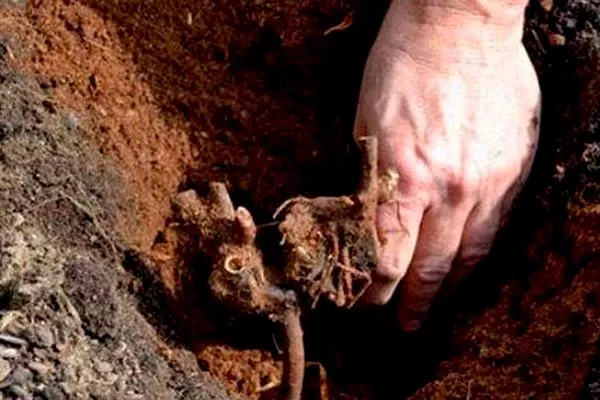
After planting, water the bush with 20 liters of water.
Reproduction
Several propagation methods are possible. Most often, gardeners choose cuttings and division, but other methods for increasing the number of seedlings are equally effective. Choose the appropriate option:
- Seeds. Disinfect the planting material in potassium permanganate, deepen it into loose soil and leave it under a film with regular moisture at a temperature of +25-28°C for 2-3 months.
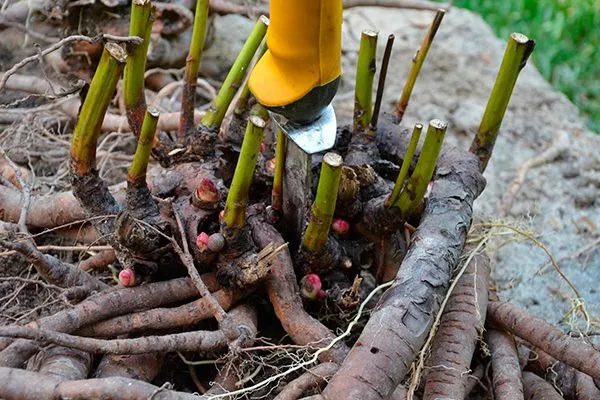
- By dividing the bush. Suitable for mature peonies over 5-8 years old. In early September, dig up a healthy bush, divide it into several sections, disinfect it, and plant them in separate holes.
- By cuttings. Cut a strong, healthy shoot from a 3-year-old bush, remove the lower leaves, treat the cutting with a growth stimulant, and place it in loose soil, covering it with plastic wrap or a bottle. The cutting should form roots within 2-3 weeks.
- By layering. Vertical layering is recommended. Select a strong shoot at the base of a mature bush, place a box or earth it up, then water and pick off any emerging buds.
When choosing a propagation method, consider its reliability and suitability for growing conditions.
Care
It's highly decorative and requires minimal care. Follow these basic cultivation techniques:
- Watering. To ensure optimal growing conditions, water thoroughly and regularly. Young seedlings require more moisture than mature plants. Each plant requires 10 to 20 liters of water.
When watering, use soft, settled water. The water should be at room temperature. Monitor the soil to ensure it doesn't dry out. - Top dressing. Apply the first fertilizer after the snow melts, using nitroammophoska, urea, or mullein infusion. At the beginning of flowering, apply a phosphorus-potassium mixture. Use the same fertilizers after the flowering period ends.
- Mulching. This is not mandatory. Covering the top layer of soil is only permissible in the fall, during preparation for winter. Use dried grass, sawdust, straw, or compost.
- Loosening. It promotes air permeability, which is an essential part of care. Loosen the soil after watering, using garden tools carefully to avoid damaging the plant's root system.
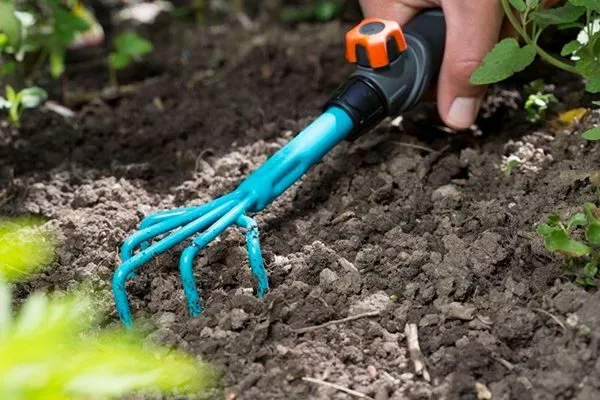
Take care to remove weeds when cultivating the crop.
What to do after flowering?
Flowering ends by midsummer. After this, potassium salt and superphosphate should be added. Mineral fertilizers help restore resources. Otherwise, care is minimal:
- Transfer. It can grow in one place for up to 15 years, but repotting is recommended every eight years. The repotting procedure involves pruning the stems, removing the bush from the soil, cleaning the roots, and immersing them in a solution of potassium permanganate and a growth stimulant. After this, repot the plant in its new location.
- Trimming. Requires annual pruning before the onset of cold weather. Do this in late fall, after the foliage has naturally faded. Shorten the stems to 2-3 cm.
- Preparing for winter. In regions with harsh climates and in the central part of the country, winter protection is recommended. Mulch the tree trunk area with dry leaves to a thickness of 10 cm and cover it with agrofibre or lutrasil.
In central, southern and similar regions, covering is not required; dense mulching is sufficient.
Pests and diseases
Under unfavorable conditions and with improper care, the crop is susceptible to disease and pest attacks. These pose a particular threat to the hybrid:
- Ants. They are attracted by the sweet nectar of unopened flower buds. The presence of insects is often accompanied by the appearance of aphids. Use sticky traps and insecticides such as Iskra and Muravin.
- Nematode. It colonizes roots, interfering with nutritional processes. If this pest is detected, destroy the affected bush and treat the soil with formalin.
- Root rot. The disease develops in high humidity. The roots become soft, the leaves curl and fall off. The stem usually turns black at the base. Remove affected plants from the area.
- Verticillium wilt. The disease causes wilting and death. Dig up the affected plant from the area and burn it.
- Viral mosaic. Viral mosaic is not treatable, so destroy the affected flower.
- In early spring, before the leaves appear, treat the bushes with a 3% solution of Bordeaux mixture to prevent fungal diseases.
- During the budding period, treat with a broad-spectrum insecticide to protect against aphids and ants.
Problems with growing the Coral Sunset peony
Serious problems can only arise if the planting site is chosen incorrectly and basic care recommendations are ignored. Ensure the plant receives suitable conditions.
The peony does not bloom and does not grow.
Sometimes bushes appear robust, but for a long time they remain inactive and fail to produce buds. Even more rarely, a peony may produce single, weak shoots.
If the rootstock is healthy and shows no signs of disease, problems may be due to improper planting or inadequate care. One cause is excessive planting, where the root collar and growth buds are 5-6 cm below the soil. If the bush is planted too deeply, it needs to be replanted.
Other factors that contribute to slow growth and lack of flowering include planting in deep shade, areas with a high water table, competition for nutrients, poor drainage, and poor, acidic, or compacted soils.
Why doesn't the Coral Sunset peony hold a flower?
In damp and rainy weather, annual stems are often weighed down by the weight of the inflorescences, causing them to droop toward the ground. This problem becomes especially acute in such weather conditions, which shorten the flowering period, and petals can fall off in just 5-7 days.
To address this problem during rainy periods, remove mulch, frequently loosen the soil, and install drainage systems. These measures will help reduce the impact of excess moisture on the stems and flowers.
Tips and recommendations for growing
Experienced gardeners rarely encounter difficulties when growing this plant. Here are some tips and recommendations for care:
- During the first two years after planting, the plant may appear weak, which is normal. It develops its root system first, then turns its attention to the aboveground part.
- When planting, amend the soil with a nutrient-rich mixture containing a small amount of fertilizer. This will allow you to avoid fertilizing for the next two years.
- Apply preventative treatments with insecticides and fungicides twice a season.
- Cover young bushes for the winter using spruce branches or other suitable material.
- To prevent root rot, soak the roots of seedlings in a solution of Vitaros or Maxim for 2-3 hours before planting.
- Make the acidic soil in the area less aggressive by scattering limestone flour or dolomite around the bush at a rate of 500 g per 1 sq. m.
- After the leaves fall in the fall, treat the plantings with a 2-3% solution of Bordeaux mixture powder to protect against fungal diseases.
Reviews
The creation of the Coral Sunset peony required years of breeding efforts, but the results were well worth it. The plant boasts striking bud coloring, which, combined with its sturdy stems, has made it one of the most sought-after hybrids.