
The Coral Charm peony, a semi-double, herbaceous variety bred in America, is rightfully considered one of the most beautiful interspecific hybrids. This flower has an unusual feature: its pearly coral blooms lighten as they open, gradually changing color.
History of the variety's creation
The Coral Charm peony was bred by American breeder Samuel Wissing in 1964. Other names: Coral Charm. In 1986, this peony received a gold medal from the American Peony Society for the beauty and elegance of its flowers.
The Coral Charm variety was used to develop the peonies Pastel Rose, Christina and Coral Reef.
Description of the peony Coral Charm
The Coral Charm variety is a milky-flowered, herbaceous peony that is an interspecific hybrid. This peony grows to a medium height, reaching 95-100 cm. Its shoots are erect and its stems are sturdy, reddish in color. The leaves are dark green, odd-pinnate or trifoliate, with narrow lobes.
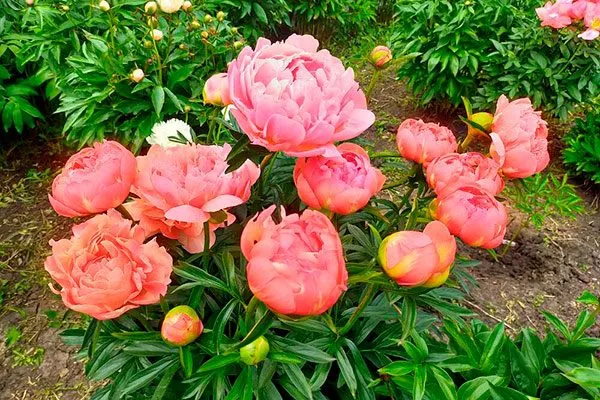
Flower description:
- Classification by structure: semidouble.
- Size: large.
- Diameter: 15-17 cm.
- Color: pearl-coral, with time the petals become lighter, acquiring a white-pink hue.
- Stamens: light yellow.
- Aroma: medium intensity.
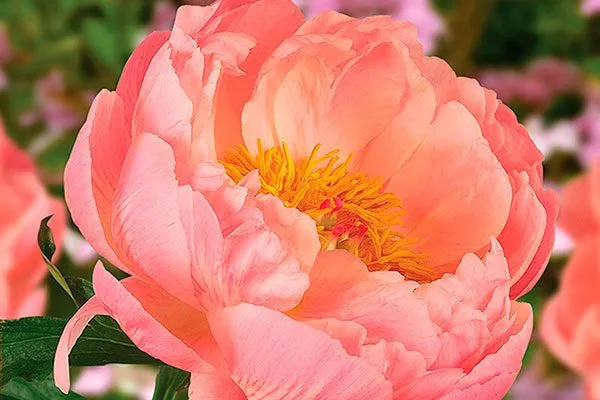
Features of flowering
Large, lush flowers open to reveal coral-hued petals, initially rich in color and tinged with dark orange. Gradually, the petals turn a coral-peach, then even lighter—a pale creamy beige.
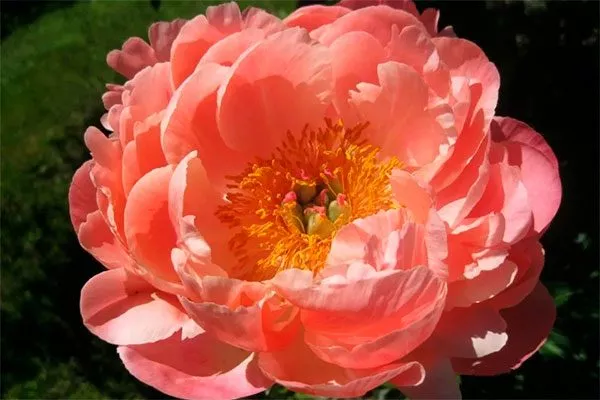
The flower consists of several layers of cup-shaped petals that taper toward the center. Surrounding them are numerous light yellow stamens. When the flowers fully open, the stems begin to bend toward the ground.
Characteristics
The Coral Charm peony has excellent characteristics that allow it to be grown in a variety of climatic conditions.
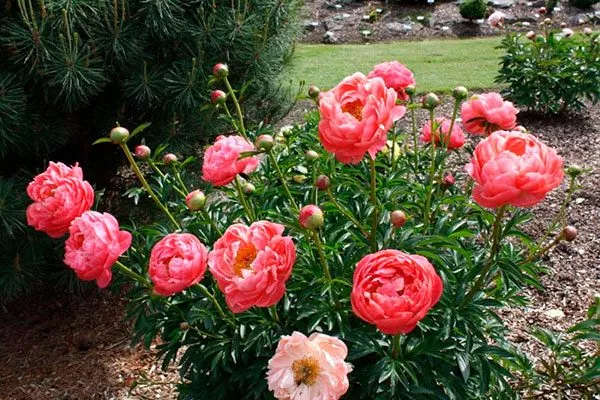
Main characteristics:
- Flowering time: early, June-July.
- Winter hardiness: high, designed for frost resistance zone 4 (from –34° to –29°).
- Disease resistance: average.
- Drought tolerance: good resistance to moderate drought.
Pros and cons
The Coral Charm peony is deservedly popular among flower lovers. This perennial has many advantages that completely outweigh its few shortcomings.
Landing
Flowers, like most garden plants, require specific growing conditions. If peonies don't have enough light and space, or if the soil is poor, they will bloom poorly or even die. To prevent this, it's important to choose a good location for the peony and plant it correctly.
Planting material
To plant the Coral Charm peony, use divisions. These are shoots from the bush, each with 2-3 renewal buds and a rhizome section at least 10-15 cm long. Divisions are performed between mid-August and the end of September.
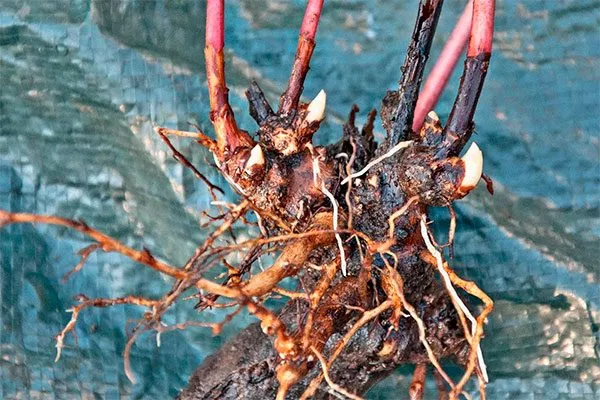
If planting material is purchased in advance, during the winter, it must be stored in one of the following ways:
- Dormant rhizomes are stored in perforated bags in a dark room at a temperature of 0 to +4°C. The condition of the roots is checked weekly.
- Rhizomes whose buds have awakened are planted in pots, having been previously treated with a fungicide.
Preparing the cuttings
To ensure that the cuttings take root well and quickly, they must be properly prepared before planting.
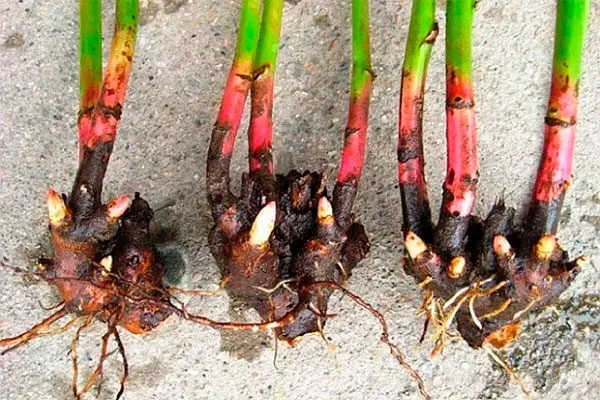
Preparation stages:
- Inspection. If damaged areas are found on the rhizome, they should be removed using pruning shears or a garden knife. The cuts should be disinfected, for example, with a potassium permanganate solution (1 g per 10 liters of water) or a fungicide.
- Germination. This procedure helps speed up rooting after planting. You can germinate the rhizome:
- In the water — only the lower part is immersed in it. The water is changed once every 2-3 days.
- In the substrate. It should be kept moist. The rhizome is placed in moist sand, peat, or sawdust. The optimal temperature for germination is +10…+15 °C.
- Pre-planting treatment. The rhizomes are placed in a solution of a stimulant - "Kornevin" or "Heteroauxin" - for 2-3 hours to stimulate root formation and increase survival.
- Pest control. The rhizomes are treated with an insecticide, such as "Aktara", to protect them from pests living in the soil.
Selecting a site
The Coral Charm peony prefers sunny locations but can also thrive in partial shade. Shade during midday can be beneficial, especially in southern regions. The peony blooms best in locations that receive direct sunlight from morning to midday. If the plant is placed in shade, it will not bloom.
The Coral Charm peony requires ample space—no other plants should be growing within a 1-meter radius of the bush. It should avoid stagnant water, drafts, or strong winds. A flat or slightly elevated site is best.
The Coral Charm peony should not be planted near shrubs or tall trees, nor should it be placed near aggressive plants with creeping roots. The best soil for this flower is loose, fertile loam with good air permeability and acidity (pH 7–7.5).
Planting in the ground
Peony Coral Charm is planted in a permanent location in the spring - from early April to mid-May, before the arrival of stable warmth, or in the fall - from late August to mid-October, 3-4 weeks before the onset of frost.
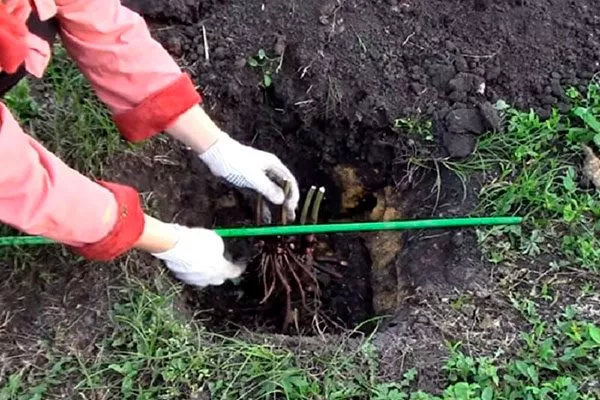
Before planting, the soil is dug over, adding components to improve the soil structure or adjust its acidity. Sand is added to heavy and clayey soils, and clay to sandy soils. Acidic soils are deacidified by adding slaked lime at a rate of 200-400 g per square meter.
Prepare a hole for planting:
- Diameter: 60-80 cm. Depth: 60-70 cm. Distance between adjacent holes: 70 cm.
- A drainage layer (crushed stone or coarse sand) 5-7 cm thick is poured into the holes. The drainage thickness is 15 cm.
- To fill the hole, prepare a soil mixture from:
- fertile soil - 20 l;
- humus or compost - 10 l;
- river sand - 10 l;
- wood ash - 200 g;
- superphosphate - 100 g.
- Mix all ingredients thoroughly. Fill the hole with the prepared mixture to approximately half its depth.
- About 5-6 liters of water are poured into the holes and left for several days to allow the soil to settle.
- Place the rhizome in the center of the hole. Add soil so that the rhizome buds are positioned 4-5 cm below the soil level. After planting, water the rhizome with warm, settled water. 7-8 liters of water is sufficient.
Care
To ensure the Coral Charm peony blooms well, it requires care—watering, loosening the soil, and spraying for preventative purposes. In some regions, this flower will also need winter protection.
Watering
The Coral Charm peony requires regular watering. This is especially important during the period of active growth and flowering.
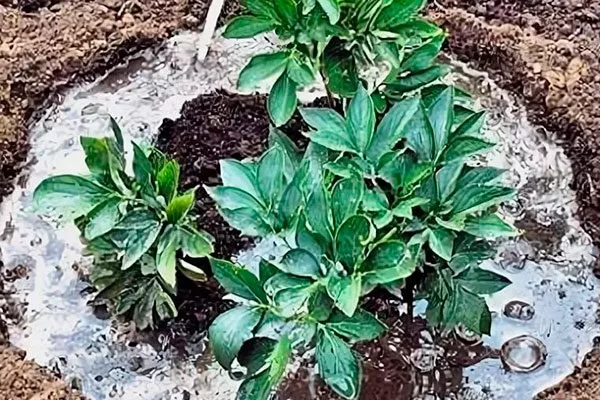
Features of watering the Coral Charm peony:
- Water is poured not into the center of the root zone of the bush, but at a distance of 20-40 cm.
- The best time for watering is morning and evening.
- The water requirement for a young plant is 10 liters, for an adult plant – 20-30 liters.
- Use warm, settled water for irrigation.
- Water the bushes as the soil dries. The average frequency is twice a week. In hot weather, watering frequency increases; in rainy weather, additional watering is not required.
Loosening
The soil under peony bushes is regularly loosened to prevent a hard crust from forming and to improve root aeration. Loosening should be done carefully to avoid damaging the root system. The maximum depth around the perimeter is 10 cm, and near the stems, 5-7 cm.
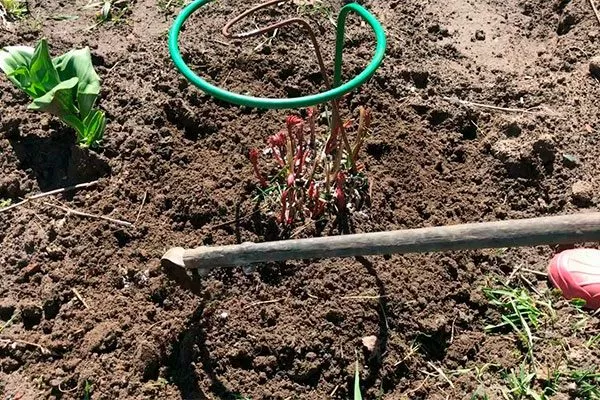
Loosening the soil is usually done after watering or rain. It is recommended to loosen the soil with a narrow rake with sharp, long teeth.
It's recommended not only to loosen the soil but also to mulch it. This simple agricultural technique helps slow moisture evaporation and weed growth.
Top dressing
To ensure long and lush blooms, peonies need to be fed, and the plant requires nutrients throughout the entire season. Both organic and mineral fertilizers are used for this purpose.
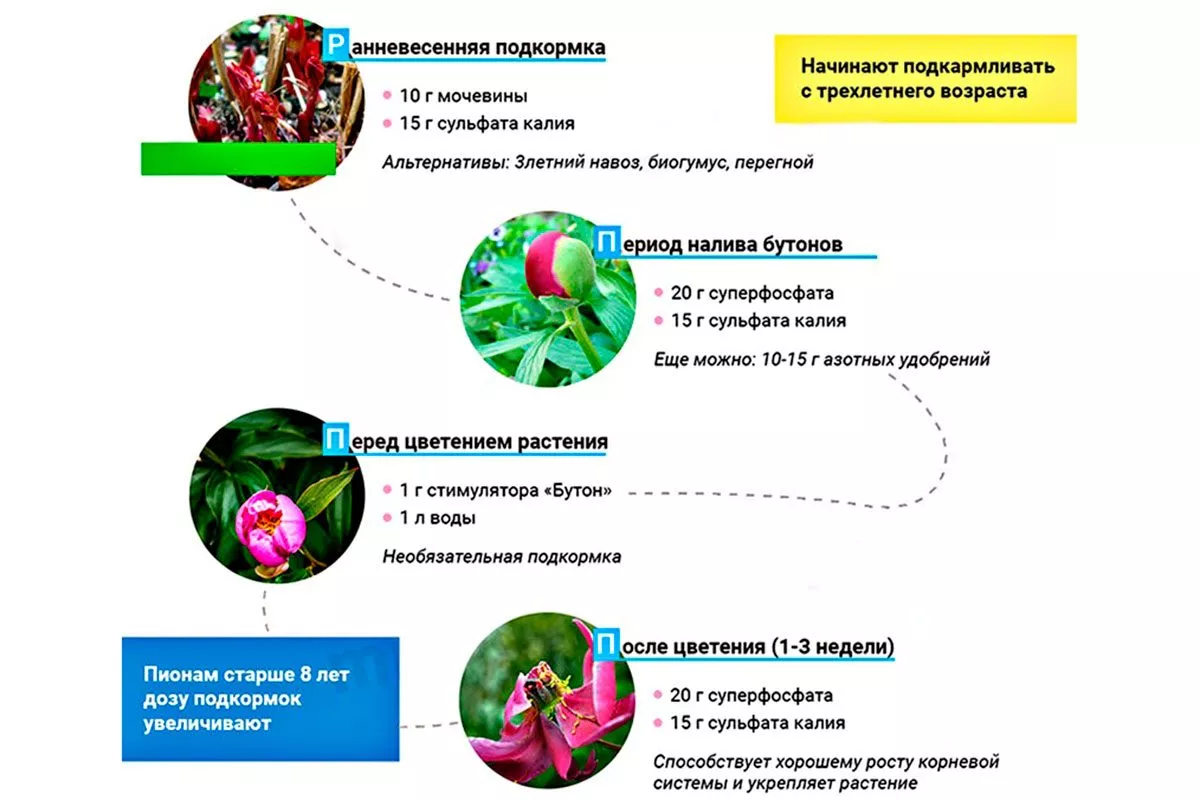
Approximate feeding regime:
- The first one Fertilizer is applied immediately after the snow melts. Apply urea, ammonium nitrate, or nitroammophoska at a rate of 1.5-2 tablespoons per bush.
- The second one Fertilize during the budding period to improve flowering. You can add, for example, humus, compost, or double superphosphate—dissolve 2 tablespoons of granules in 10 liters of water. You can also water the bush with a wood ash infusion—infuse 300 ml of the powder in 5 liters of water for a week.
- The last one Fertilizing is done two weeks after flowering ends. During this period, peonies require phosphorus and potassium to help the bushes recover and set buds for next year. Nitrogen is contraindicated at this stage. You can apply, for example, superphosphate and potassium sulfate (15-20 g each) per bush, or organic matter (300 ml of wood ash and 30-40 g of bone meal).
Preparing for winter
To ensure the Coral Charm peony survives the winter safely and blooms profusely next season, it must be properly prepared for winter.
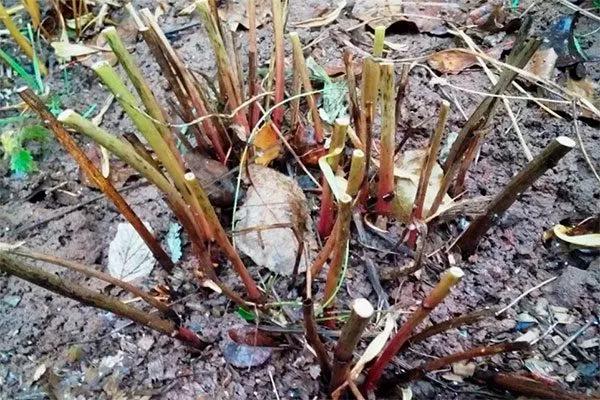
Features of preparing the Coral Charm peony for the winter period:
- When cold weather sets in and shoots and leaves begin to gradually wither, the entire above-ground portion is pruned, leaving no more than 3-4 cm above ground. The cuts are sprinkled with wood ash.
- The bushes are hilled high with earth, and then the root zone is sprinkled with mulch - high-moor peat, humus, straw, and spruce branches.
In many regions of the country, especially in the southern ones, the Coral Charm peony overwinters perfectly without cover. In the Urals, Siberia, and the central part of the country, the plant is covered with humus or a layer of dry leaves, covered with non-woven material, and then covered with snow in winter.
Pest and disease control
The Coral Charm peony has a strong immune system, so with proper care, it's virtually disease-free. However, under unfavorable conditions, the flower can be susceptible to certain diseases.
The greatest dangers for the Coral Charm peony are:
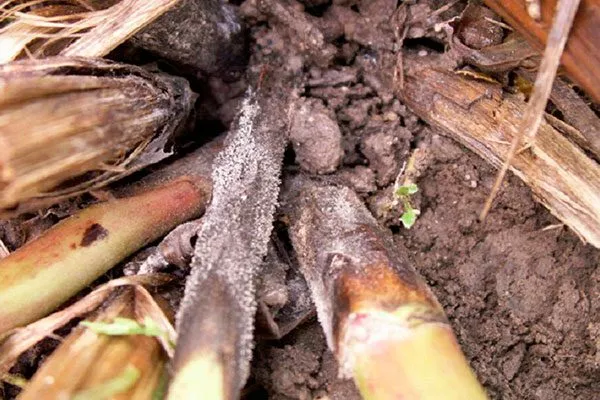
- Gray moldIt is accompanied by the appearance of a grayish coating, causing the plant to wither and die. To combat the rot, use 3% copper sulfate.

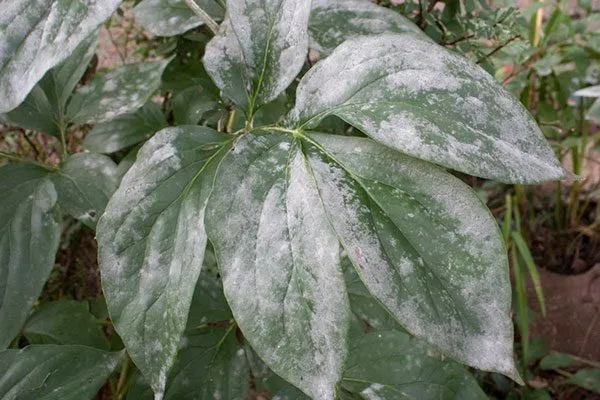
- Powdery mildew dewThis disease causes a white coating to appear on leaves and flower buds. Copper oxychloride helps treat the disease.
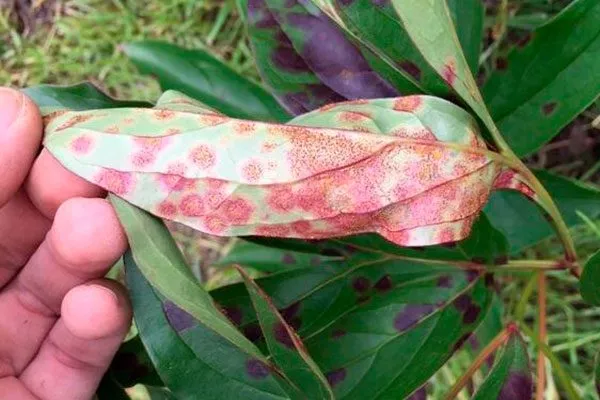
- RustIt causes brownish spots to appear. Bordeaux mixture is used to combat it.
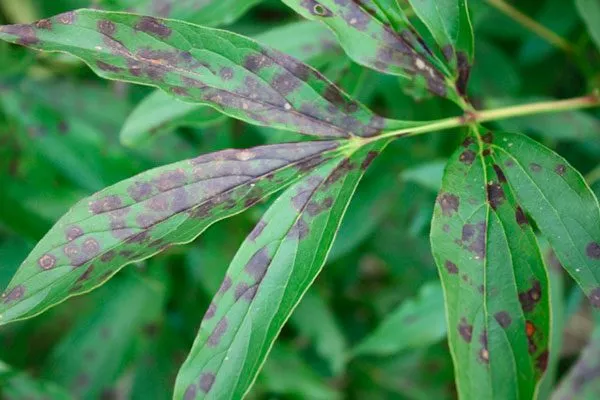
- CladosporiosisThis disease causes dark spots with a purple border to appear on the leaves, which eventually develop into holes. "Fitosporin-M" is used to treat this disease.
The Coral Charm variety, like all peonies, can be affected by ants and aphids. Ant repellents, such as "Muravyed," help combat the former. Various insecticides, such as "Actellic," are used against aphids.
If there are only a few aphids, they can be washed away with a strong stream of water or soapy water. Peony bushes can also be attacked by rose chafers—beetles that feed on peony petals, leaves, and stems. These pests can be collected by hand in the morning when they are motionless on the flowers, or destroyed with insecticides such as Iskra, Kinmiks, or Confidor.
Use in landscape design
The Coral Charm peony, thanks to its decorative qualities combined with its relative unpretentiousness, is widely used in landscape design.
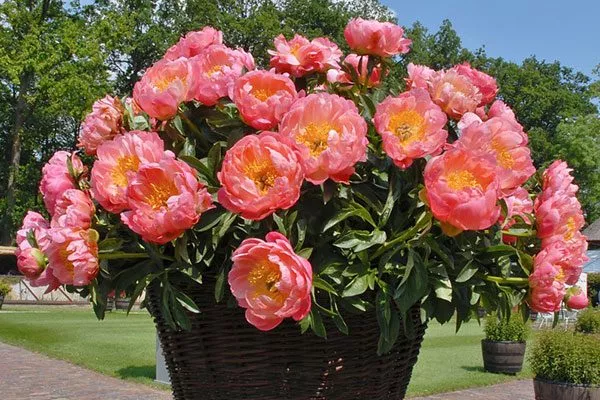
Peony Coral Charm can be used for:
- design of flower beds on the facade;
- creation of single and group plantings against the background of lawns;
- decorating the space near the fences;
- creation of borders;
- mixborders - as a central plant.
Reviews
The Coral Charm peony is an exceptionally beautiful flower that will perfectly complement any garden. Moreover, it can easily become the centerpiece of a flower arrangement. This semi-double variety looks wonderful both in the garden and in bouquets.