
Peonies are flowers that evoke powerful emotions in everyone who sees them. Their vibrant colors, rich blooms, and pleasant fragrance instantly attract attention. They are popular among gardeners due to their low maintenance: they can grow in the same place for many years and require little care.
Name
The Latin name was given in honor of the god of healing Paean (or Paeon, or Paean), who was known for his ability to heal gods and people from wounds received in battle.
Origin
Peonies are over 2,000 years old, native to Asia (including China), southern Europe, and western North America. In China, tree peonies adorned imperial gardens 1,500 years ago and were considered the embodiment of beauty.
Distribution and ecology
Species of this family grow in the subtropics and temperate regions of Eurasia and North America. They prefer well-lit and sunny sites but can tolerate some shade during the day. The best time for planting is August-September.
Botanical description
Herbaceous perennials grow up to 100 cm in height. They have thick, succulent roots that store nutrients and water. These roots can live for many years and be large, sometimes weighing several kilograms.
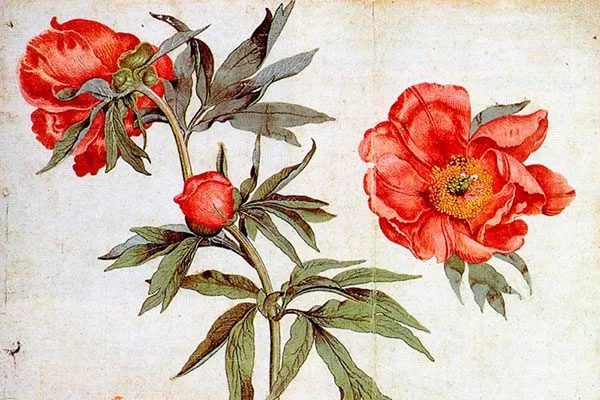
The stems are smooth, rounded, and very strong, capable of supporting the weight of large flowers. The leaves are large, lobed, and bright green, arranged alternately along the stem. The flowers are voluminous and expressive. The fruit is a small woody capsule containing several seeds.
Meaning and Application
Peonies are a symbol of love, wealth, and honor. In Western culture, they are associated with good luck, happiness, and a successful marriage. A bouquet of these flowers is considered one of the best gifts. They are popular in landscape design and for their ease of care.
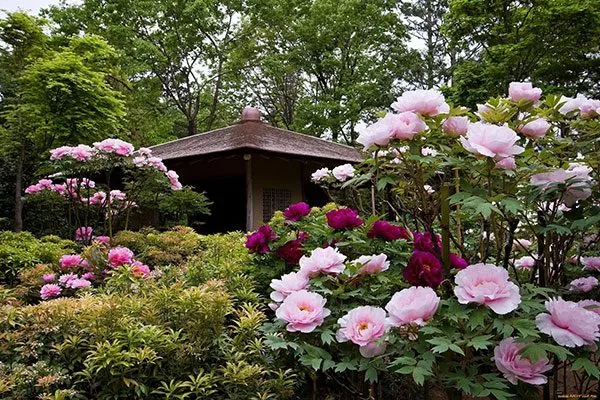
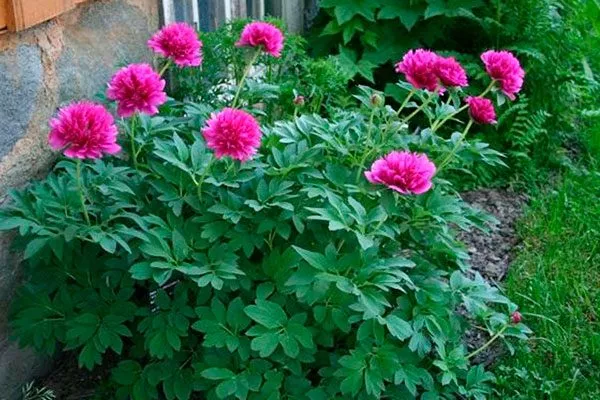
They are planted in garden beds and borders as a vibrant accent or as part of mixed plantings. They pair well with other perennials, such as irises, daylilies, and salvias. They can be planted in groups or to create low hedges.
In which countries and climate zones does it grow?
Herbaceous peonies are widespread over a wide area: from the Mediterranean to the temperate and subtropical zones of Asia, and some species are found in western North America.
Tree peonies have a limited distribution and are typically found in deciduous forests and shrublands of East Asia (such as China, Japan, Eastern Himalayas) at altitudes up to 4000 m.
In Europe, they are commonly grown in countries such as France, Italy, the Netherlands, and the United Kingdom. These plants thrive in a variety of climates and adapt well to a variety of soil types.
Timing and characteristics of flowering
They typically bloom in late spring and early summer, lasting several weeks. The exact blooming period may vary depending on the variety and the climate in which it is grown.
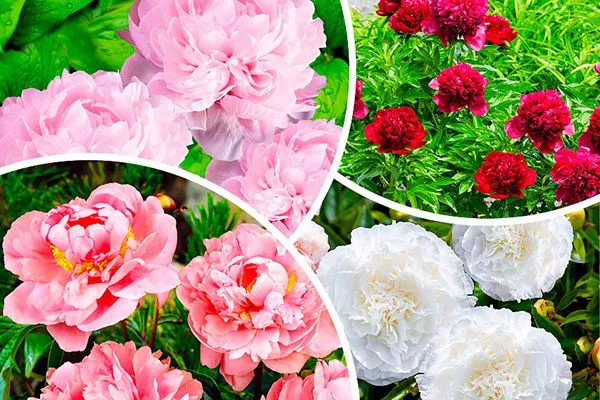
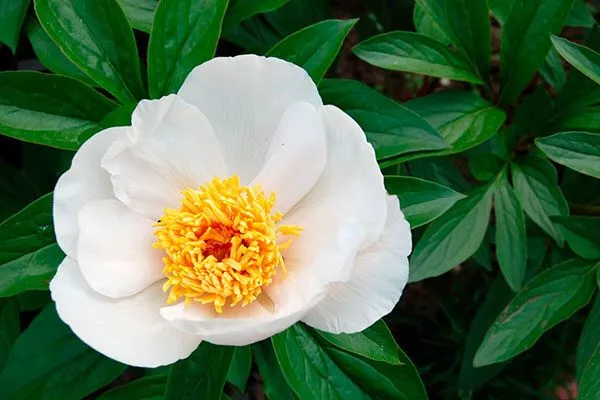
The flowers are large and impressive. They can be single, semi-double, or double, with multi-layered petals giving them a lush and complete appearance. The petals can be white, pink, red, or yellow, and some varieties have two-tone or variegated petals.
The flowers have a distinctive shape with a cup-shaped center and wide, overlapping petals surrounding it. They have a pleasant fragrance that attracts bees, butterflies, and other pollinators.
Classification
The classification of peonies is quite complex and controversial. Flowers from China are less adapted to the cold climates of northern regions. The European system differs from the Chinese one due to the presence of more frost-resistant varieties with improved characteristics.
What are the different groups and sections of peonies?
Distinguishing between wild peonies and cultivars can be difficult. Plants of the genus Peony are divided into three main groups: herbaceous, arborescent (shrub-like), and intersectional, or ITO hybrids, which possess characteristics of both the first groups.
What species are included in the section Paeonia?
| Name | Plant height (cm) | Flowering period | Flower color |
|---|---|---|---|
| Paeonia arietina | 60 | May-June | pink |
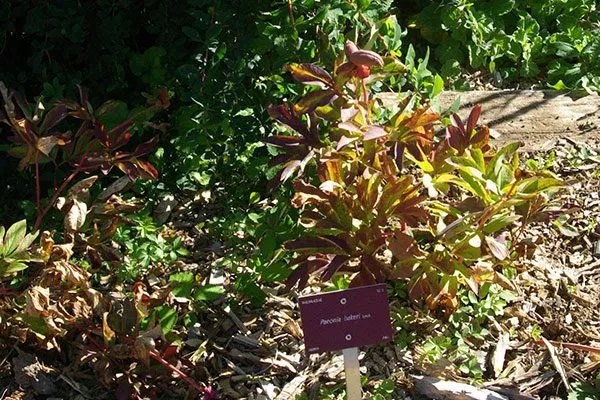
| Paeonia bakeri | 50 | May | red |
| Paeonia banatica | 70 | June | white |
| Paeonia broteri | 65 | May-June | pink |
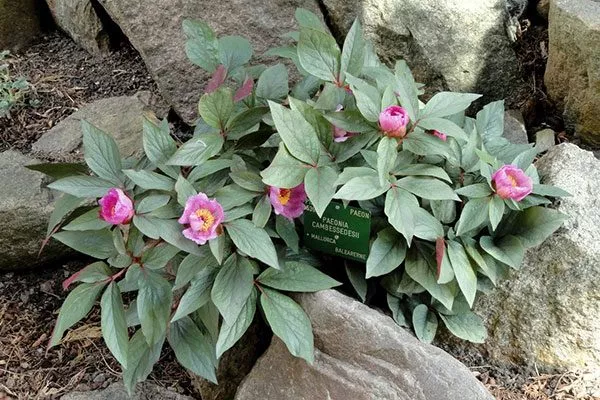
| Paeonia cambessedesii | 55 | May | pink |
| Paeonia caucasica | 60 | May-June | pink |
| Paeonia clusii | 50 | May | white |
| Paeonia coriacea | 70 | June | red |
| Paeonia peregrine | 65 | May-June | red |
| Paeonia emodi | 60 | May | white |
| Paeonia humilis | 50 | May-June | pink |
| Paeonia japonica | 55 | May | white |
| Paeonia kesrouanensis | 60 | May-June | pink |
| Paeonia lagodechiana | 70 | June | red |
| Paeonia mairei | 65 | May-June | pink |
| Paeonia mascula | 60 | May | red |
| Paeonia obovata | 50 | May-June | white |
| Paeonia oxypetala | 55 | May | pink |
| Paeonia paradoxa | 60 | May-June | red |
| Paeonia ruprhechtiana | 70 | June | white |
| Paeonia rhodia | 65 | May-June | pink |
| Paeonia russoi | 60 | May | red |
| Paeonia taurica | 50 | May-June | white |
| Paeonia triternata | 55 | May | pink |
| Paeonia veitchii | 60 | May-June | red |
| Paeonia vernalis | 70 | June | white |
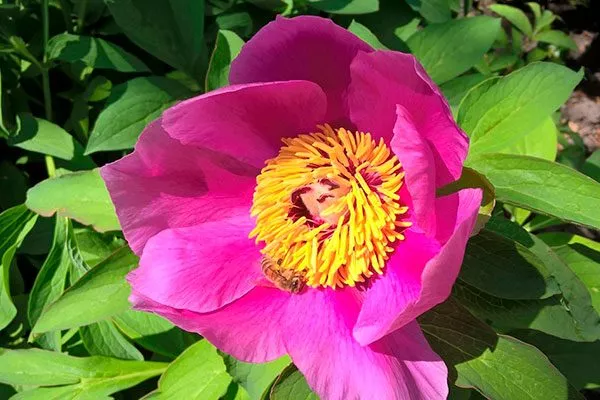
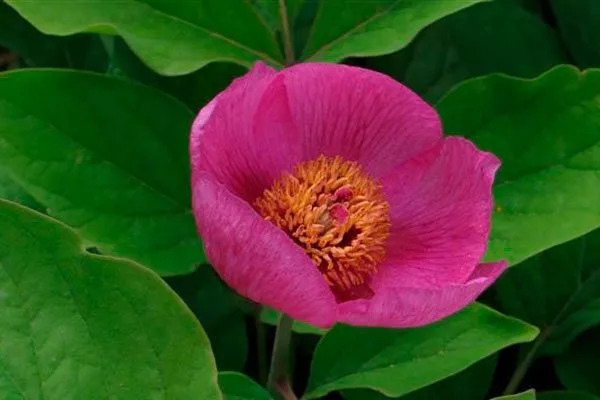
This family includes 26 species of herbaceous peonies. These species are united by their leaf structure, which is bi- or tripartite. The flowers come in a variety of colors, including deep pink, pinkish-purple, red, and purple.
The Paeonia section includes the following species of peonies:
- Lamb (Paeonia arietina);

- Bakery (Paeonia bakeri);
- Banatsky (Paeonia banatica);
- Broteri (Paeonia broteri);
- Cambessedes (Paeonia cambessedesii);
- Caucasian (Paeonia caucasica);
- Clusius (Paeonia clusii);
- Leatherback (Paeonia coriacea);
- Foreign (Paeonia peregrine);
- Emoda, or Himalayan (Paeonia emodi);
- Small (Paeonia humilis);
- Japanese (Paeonia japonica);
- Kesrouanensis (Paeonia kesrouanensis);
- Lagodekhi, or Lagodekhiana (Paeonia lagodechiana);
- Mairei (Paeonia mairei);
- Male (Paeonia mascula);
- Obovate (Paeonia obovata);
- Single-petal (Paeonia oxypetala);
- Paradoxical (Paeonia paradoxa);
- Ruprecht (Paeonia ruprhechtiana);
- Rhodes (Paeonia rhodia);
- Russa (Paeonia russoi);
- Crimean (Paeonia taurica, or daurica);
- Three-fold ternate (Paeonia triternata);
- Vicha (Paeonia veitchii);
- Spring (Paeonia vernalis).
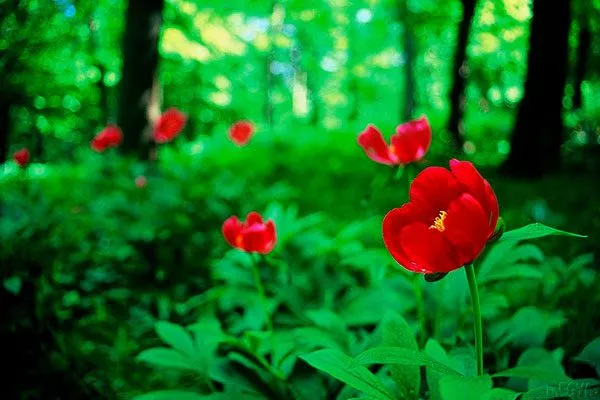
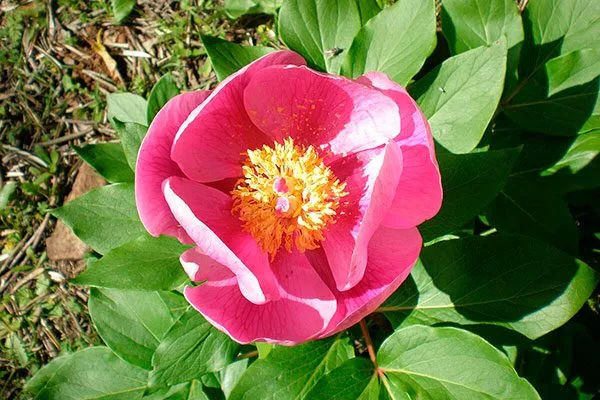
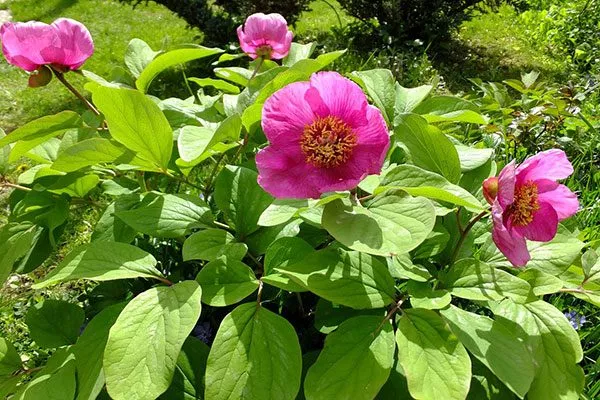
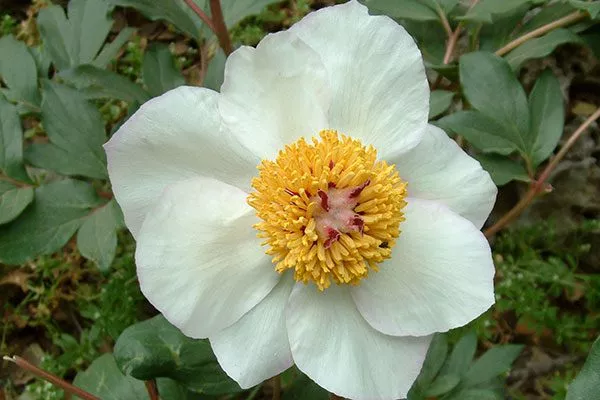
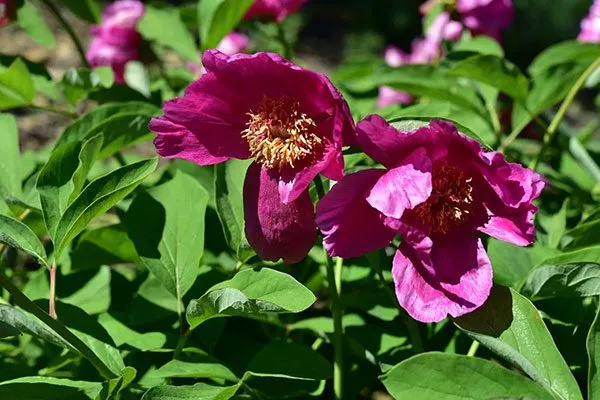
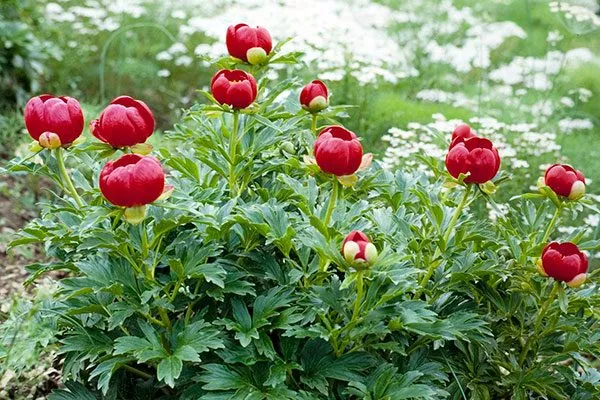
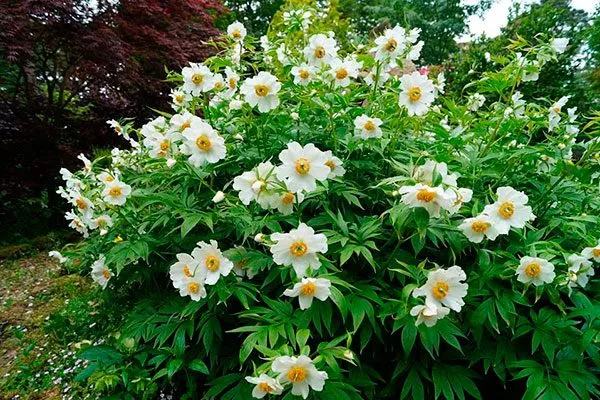
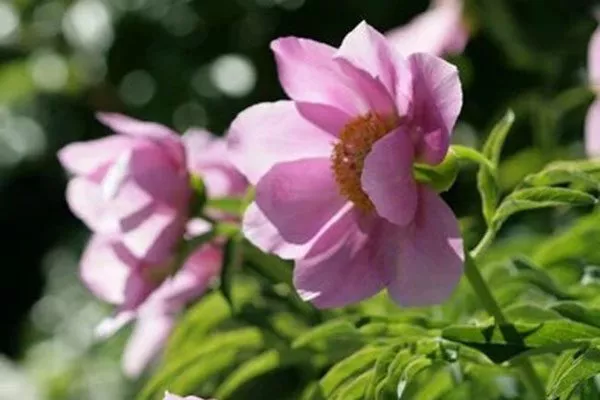
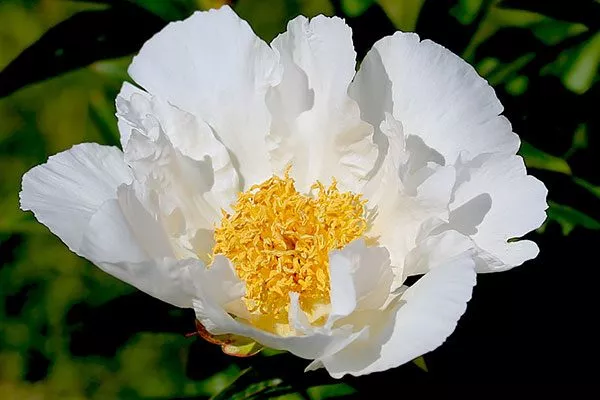
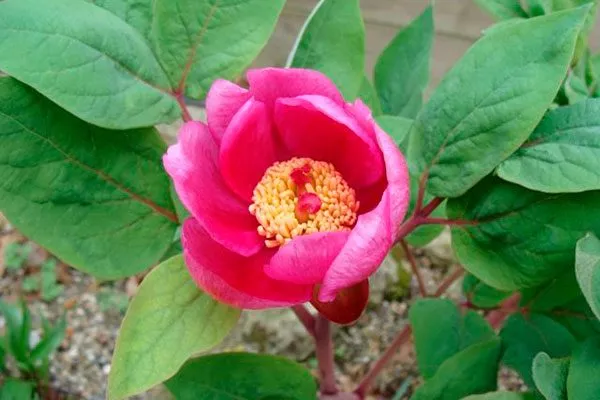
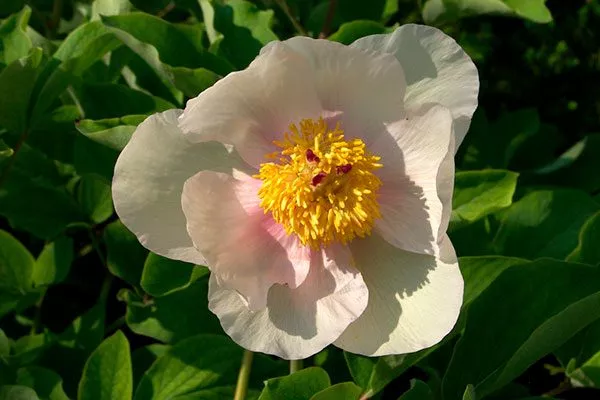
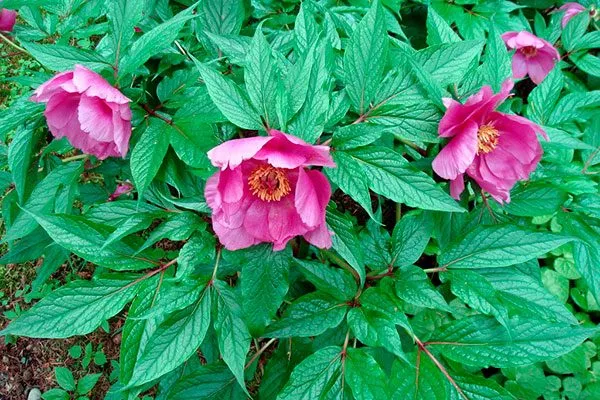
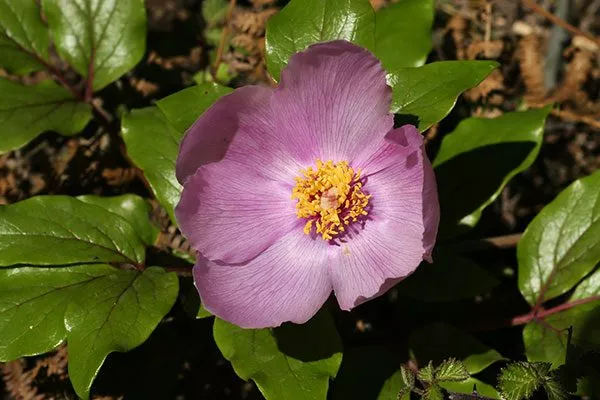
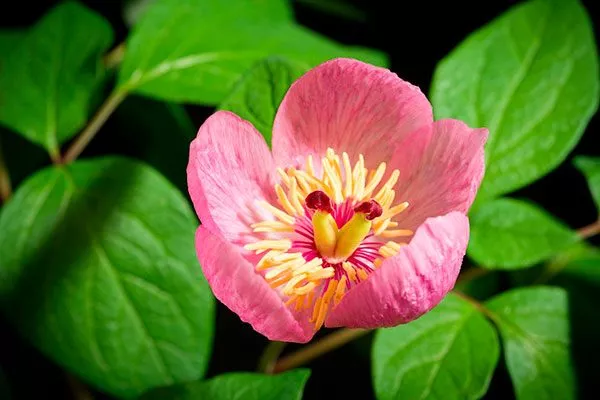
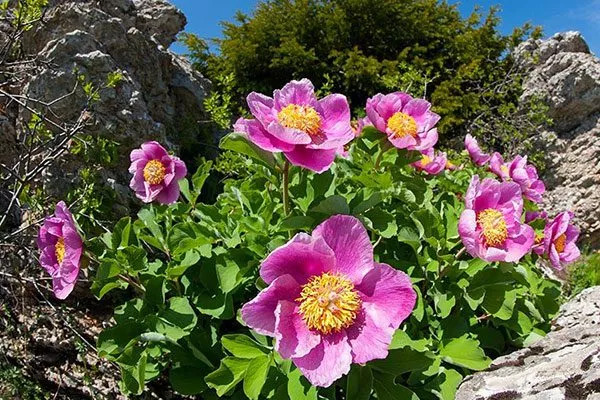
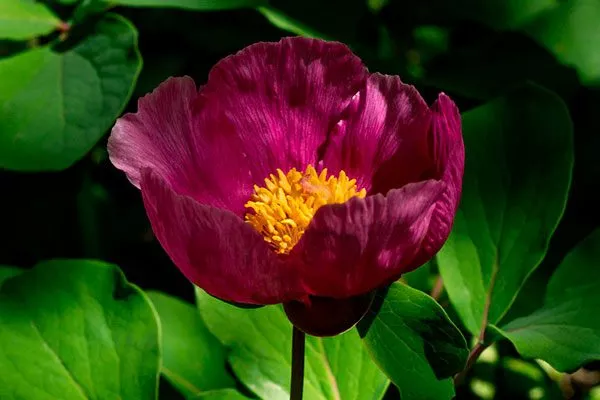
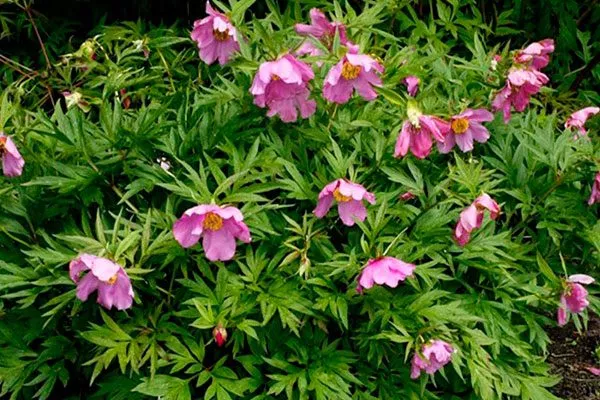
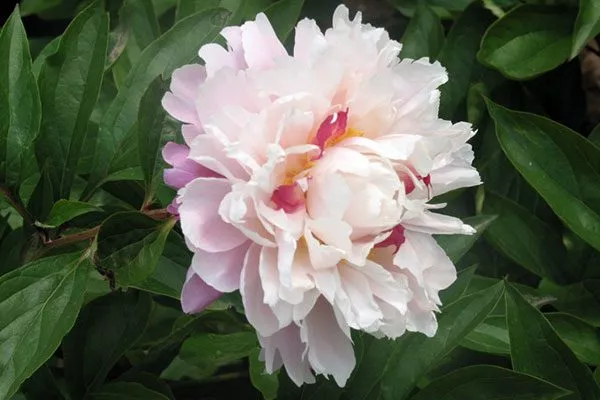
The Western classification includes the following types of peonies: Algerian, Sauery, Parnassica, Sanders, Corsican, Sterniana.
Types of peonies in the Moutan section
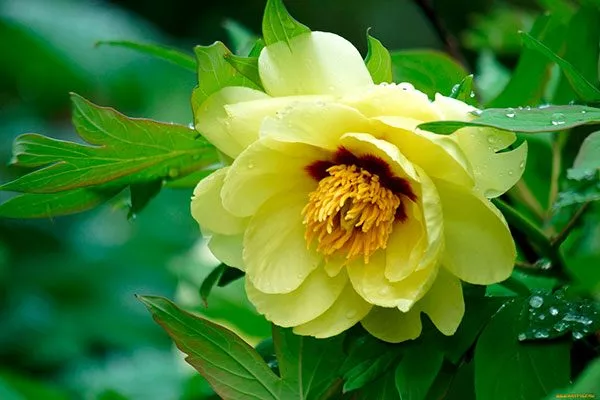
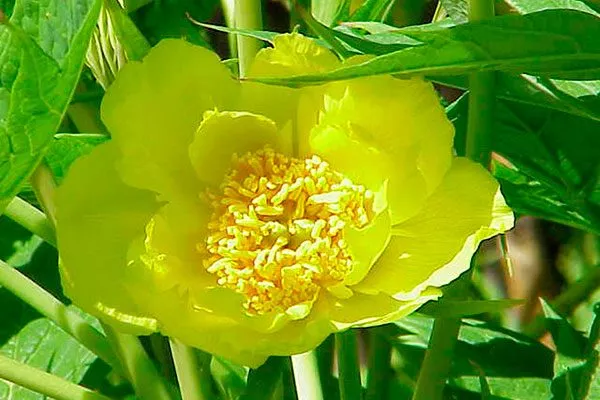
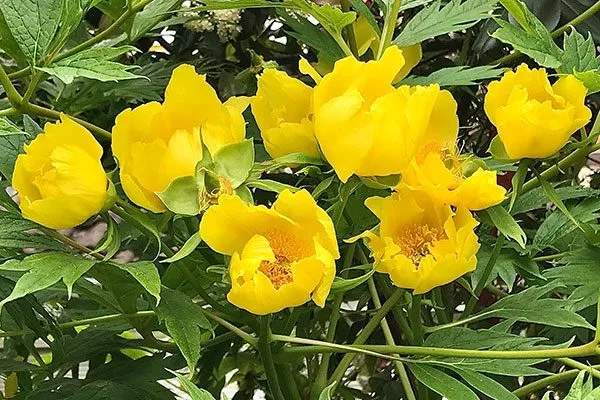
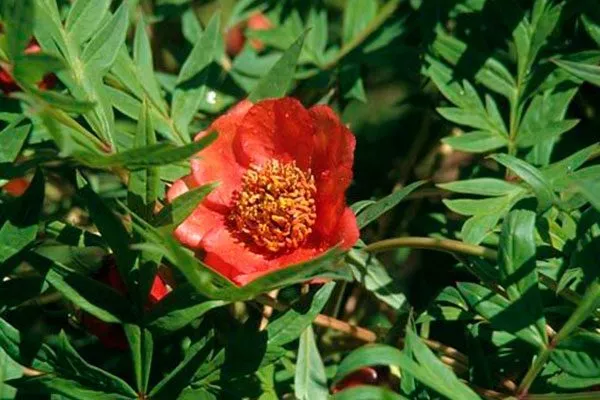
Moutan is represented by tree peonies with woody stems. The taxonomy of this section is controversial due to the rarity and insufficient study of many species in the wild. The section includes two subdivisions: Delavayanae (peonies with dissected leaves) and Vaginatae (plants with rounded leaves).
The Delavayanae subsection includes 4 types:
- Delavay (Paeonia delavayi);
- yellow (Paeonia lutea);
- Ludlow's (Paeonia ludlowii);
- Potanin (Paeonia potaninii).
The subsection Vaginatae includes 4 species:
- tree-like, or shrubby (Paeonia×suffruticosa);
- ost (Paeonia ostii);
- Paeonia qiui;
- Rock (Paeonia Rockii).
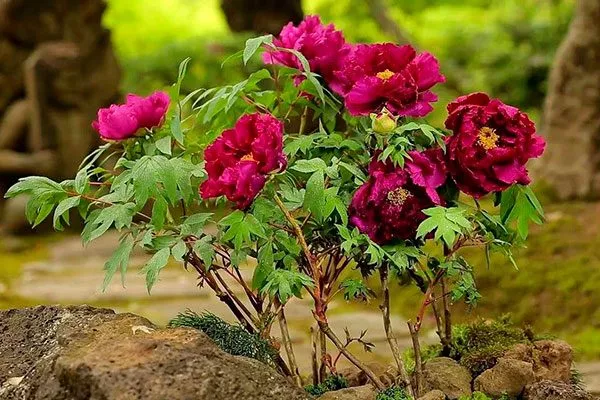
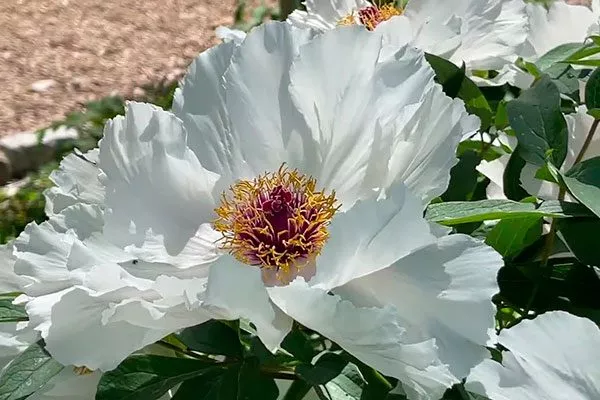
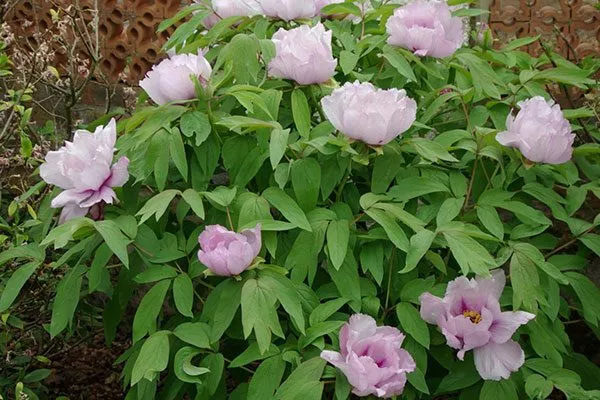
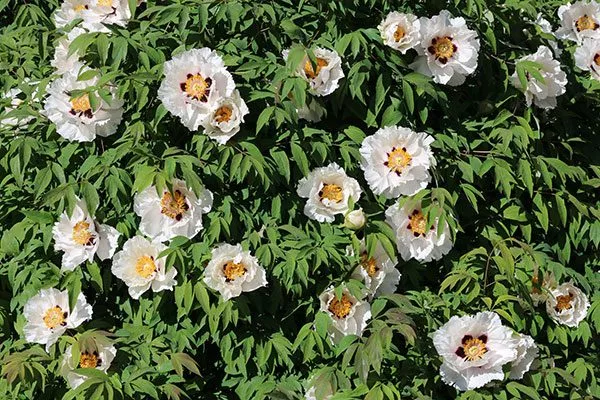
According to Western researchers, the Moutan section also includes other species: Paeonia cathayana, Paeonia decomposita, Paeonia jishanensis, Paeonia×yananensis, Paeonia×baokangensis.
Peonies of the Flavonia section
The Flavonia section includes eight species of herbaceous peonies. The flowers of these plants contain flavone, a coloring pigment that gives the petals a pale yellow or beige hue. These species are not officially listed.
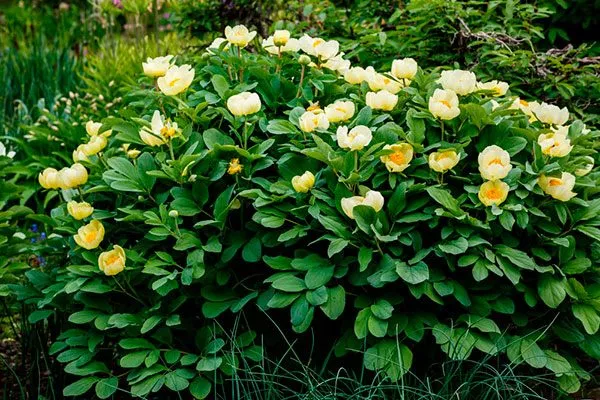
This section includes the following peonies: Abkhazian, milk-flowered, large-leaved, Mlokosevich, mountain, Steven, felt, Wittmann.
Section Sternia
According to Western tradition, peonies in this section are classified as belonging to the Paeonia section. Russian researchers classify eight species into a separate list. These plants are characterized by tripartite, deeply dissected leaves and flowers in shades of purple, deep red, or black-burgundy.
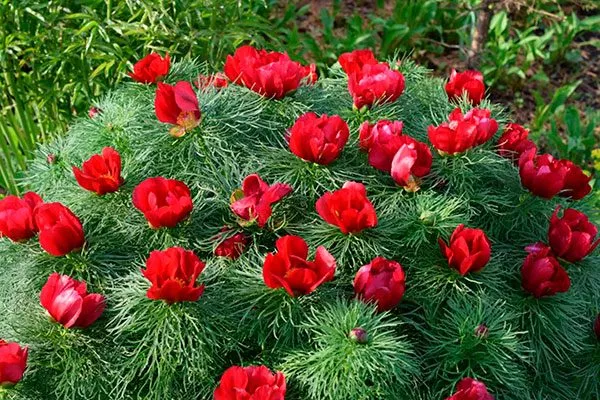
The Sternia section includes the following species: evasive, Birberstein, Kartalinsky, hybrid (steppe), stone-loving, Maiko, medicinal and thin-leaved.
What are ITO hybrids?
The plants were created by Japanese breeder Toichi Ito, who sought the impossible—crossing herbaceous and tree peonies. Ito made tens of thousands of attempts to pollinate the milky-flowered herbaceous peony with pollen from the yellow tree peony, but all efforts were in vain.
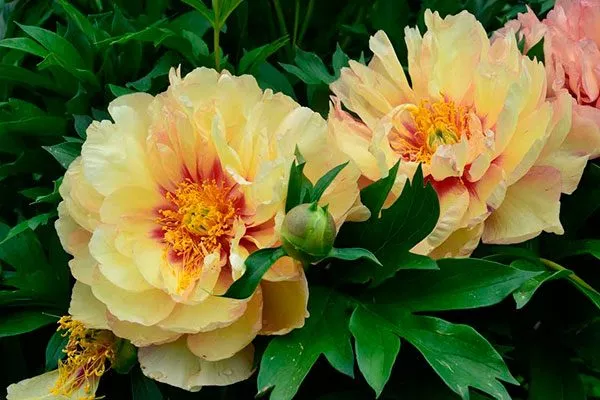
The long-awaited, delicate yellow flower, with the unique properties of both groups, blossomed after the death of Master Ito. The Ito hybrids inherited the following traits from their parent plants:
| Herbaceous peonies | Tree-like "brothers" |
| Annual dying off of the above-ground part | Appearance of the bush and leaves |
| Flowering on the current year's shoots | Size, structure and appearance of buds |
| Propagation by division of rhizomes | Renewal buds are located in the lower parts of shoots and leaf axils. |
| Partial or complete lignification of roots |
Among the main advantages of hybrids, gardeners note the robust and compact shrubs covered with lacy, indented leaves. The flowers of intersectional hybrids are very large, with a bright red spot in the center. Their diameter can reach 20 cm. The plant produces up to fifty buds during the flowering period.
- ✓ Disease resistance: Some varieties are more resistant to fungal infections.
- ✓ Flowering period: Choose varieties with different flowering periods for long-lasting blooms in the garden.
Main types and varieties
All peonies are divided into two categories: tree peonies and herbaceous peonies. Tree peonies thicken over time, their stems becoming woody. Herbaceous varieties are the most common. They are classified by various characteristics, including the structure of the bud.
Early varieties
When planted in a warm southern climate, this early variety will begin blooming as early as June. There are several varieties:
- Le Xin;
- Adolphe Russo;
- Edulis Superba;
- Maximus Festival;
- Dr. H. Barnsby.
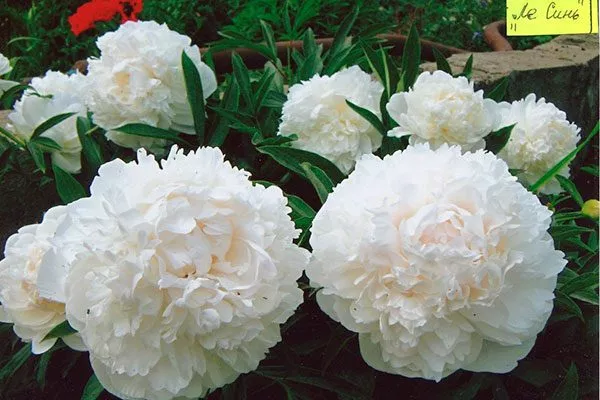
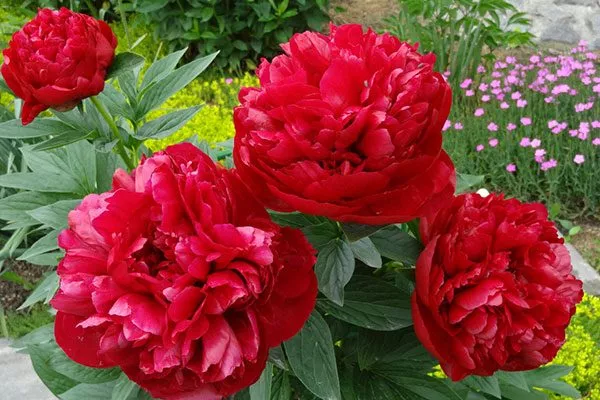
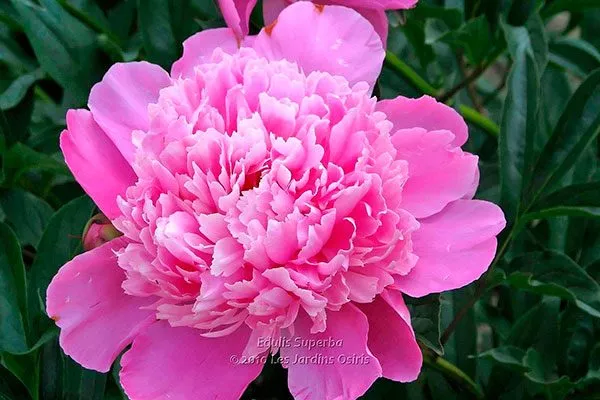
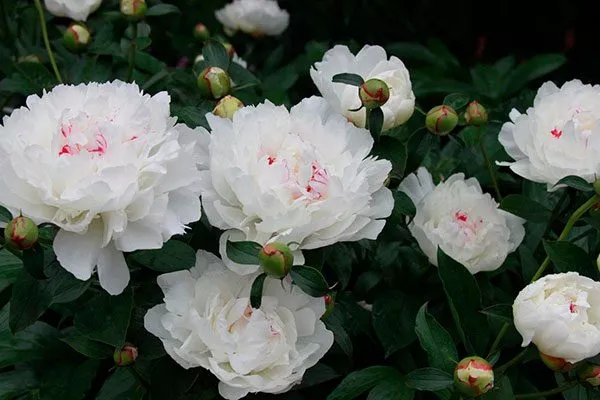
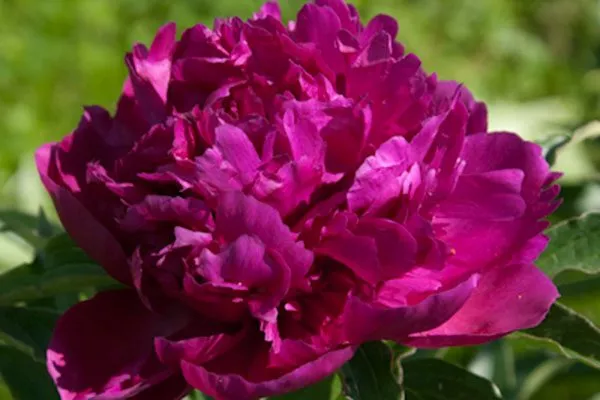
There are early hybrid varieties: Ballerina,
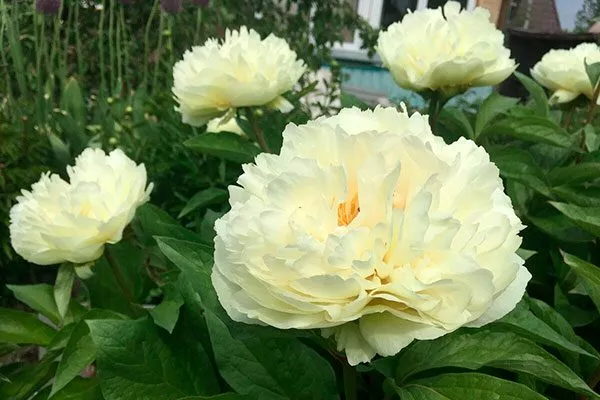
Louis Choice.
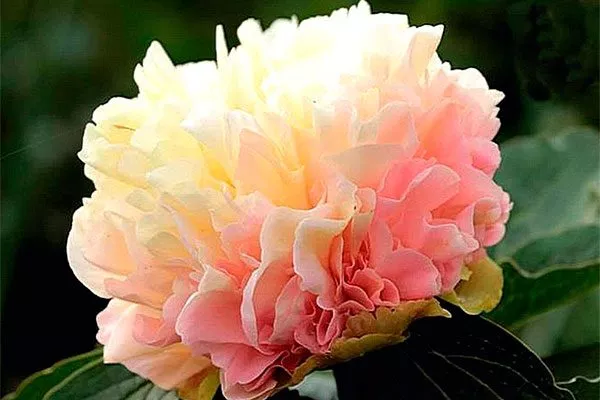
Their buds have an original spherical shape, and the flowers resemble chrysanthemums.
Medium grades
This group includes species that begin blooming in the Russian climate closer to mid-summer. Popular varieties include:
- Longfellow;
- Bayadere;
- Arkady Gaidar;
- Germain Bigot;
- Princess Margaret.
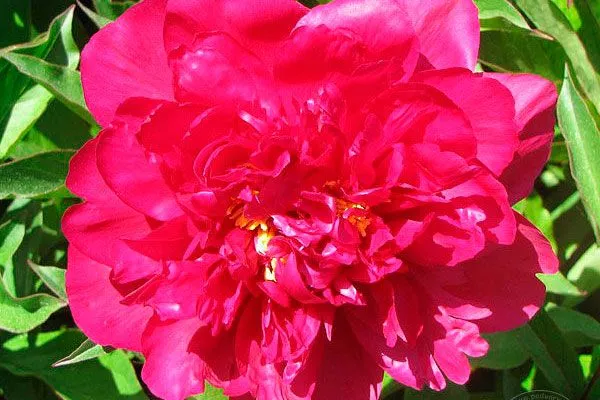
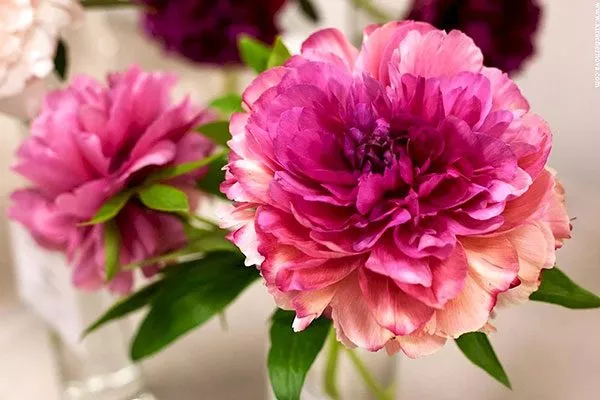
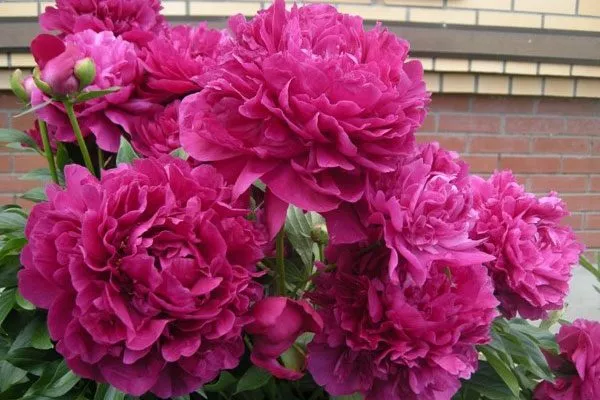
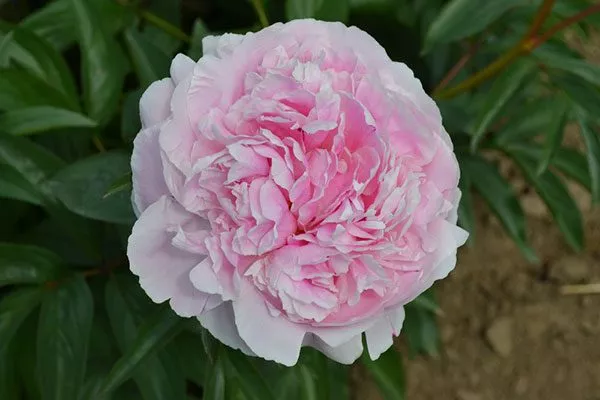
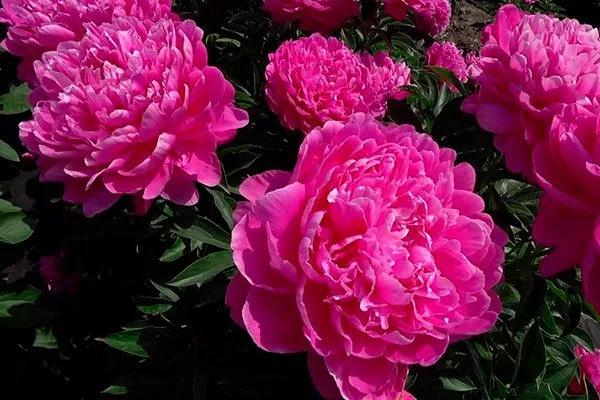
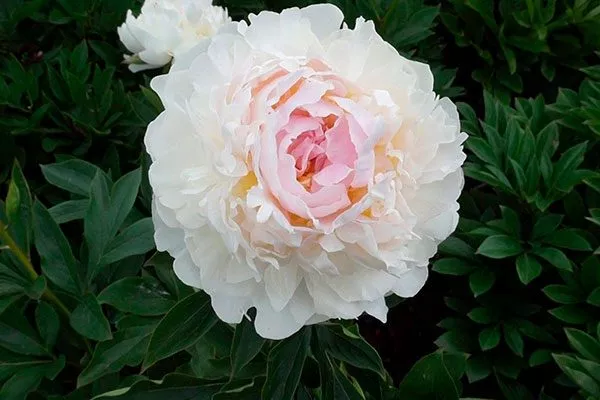
Particularly popular is the Blush Queen variety with snow-white flowers with possible yellow and golden shades on the petals.
Late varieties
Late-blooming peony varieties, popular in Russia, begin blooming in mid- to late summer. Among the various varieties, the following stand out:
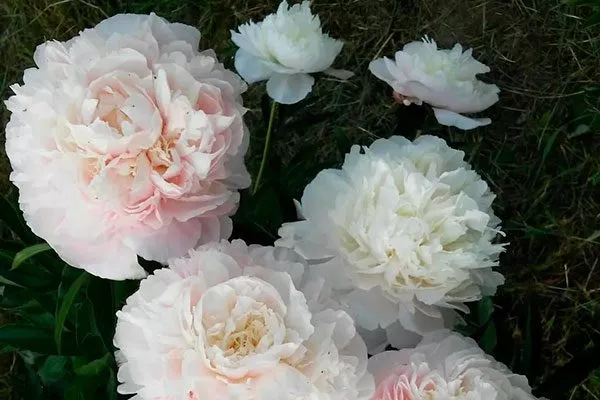
Anchantress,
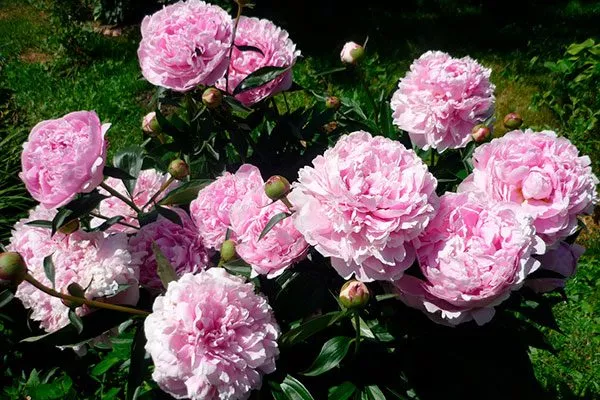
Sarah Bernhardt,
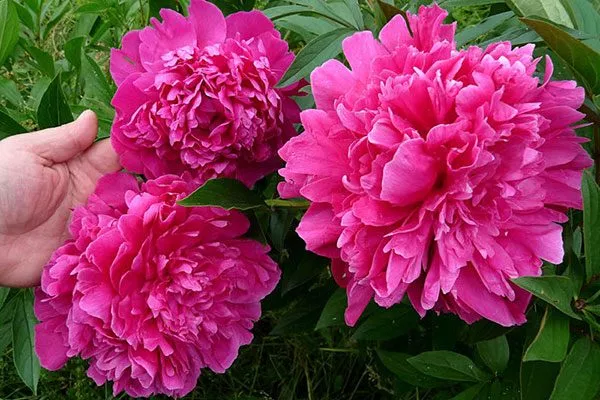
Marshal MacMahon,
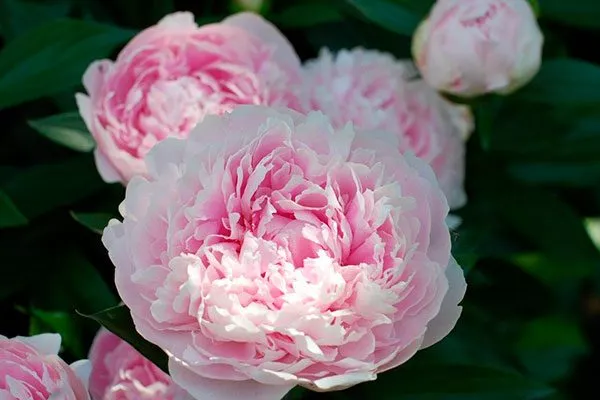
Nancy Nora.
Indoor varieties (patio peonies)
Intended for indoor cultivation, these strains belong to a separate category known as patio strains. They are characterized by their compact size and short height of up to 25 cm. The buds are not as large, but have a pleasant, light aroma.
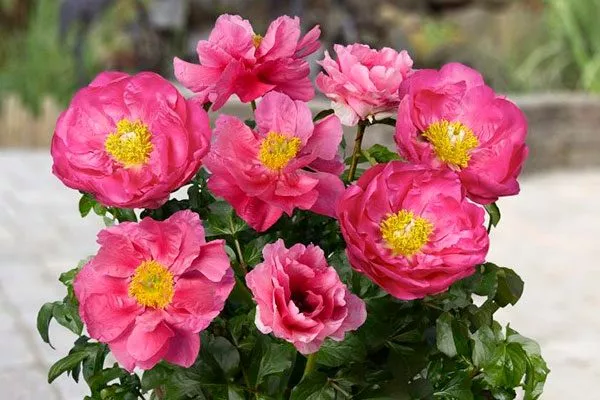
The color range ranges from burgundy and red to pink and white. The buds can be semi-double, single, or double. Among the most common varieties of indoor peonies are:
Rome,
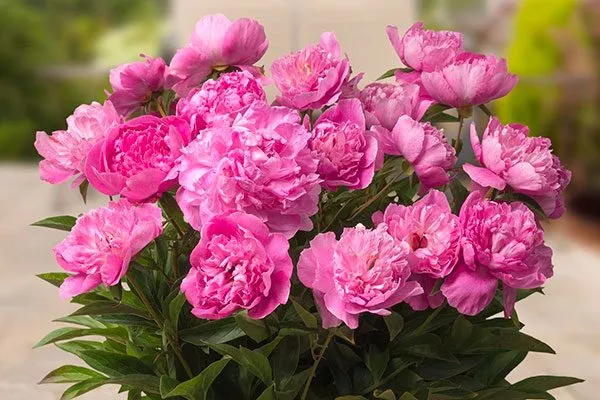
Moscow,
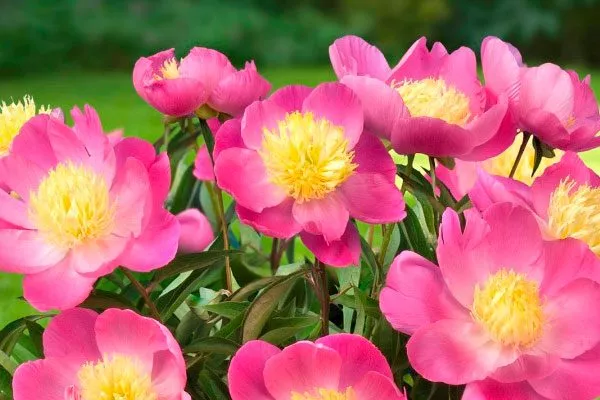
Oslo.
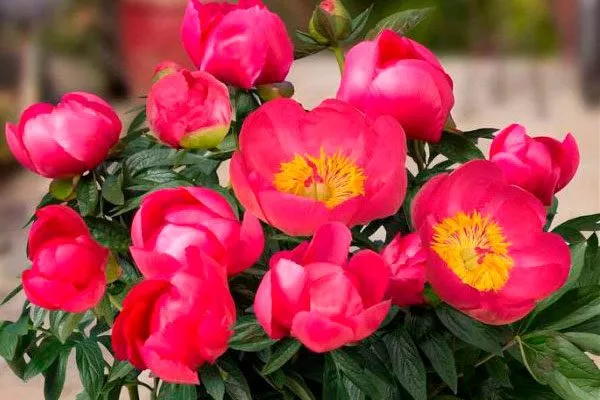
London peonies, with their dense leaves and straight, sturdy stems, are ideal for indoor growing. They bloom profusely and lushly, and over time, their petals can develop a beautiful burgundy hue.
Non-double
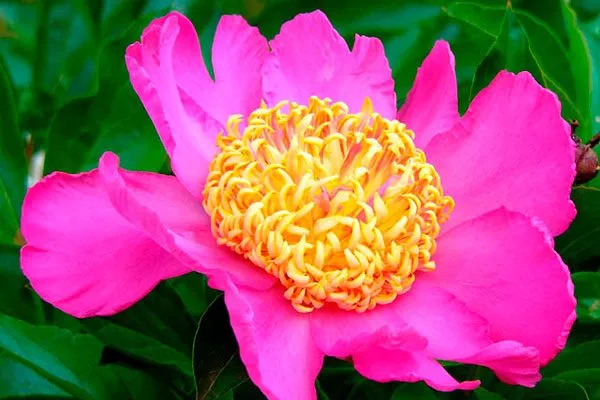
Characterized by the presence of multiple petals (usually more than two rows), creating more lush flowers. Numerous stamens are located in the center. Corrugated leaf blades are sometimes found in some species, such as Nadya and Golden Glow.
Semi-double
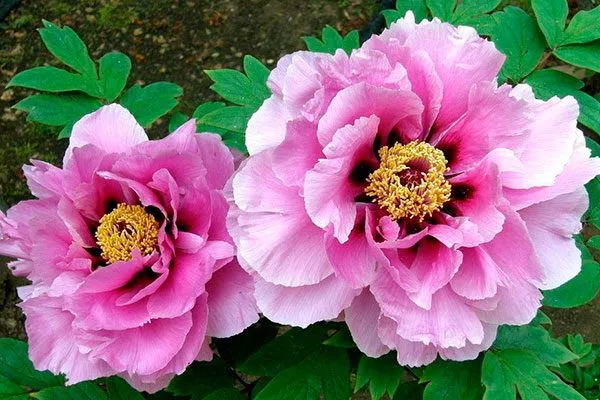
Flowers in this category are typically quite large and light. Stamens can be located either in the center of the flower or between the petals. They typically have about seven rows of petals. This category includes two popular varieties: Miss America and Ann Berry Cousins.
Japanese
At the center of each flower are modified stamens, forming something resembling a pompom.
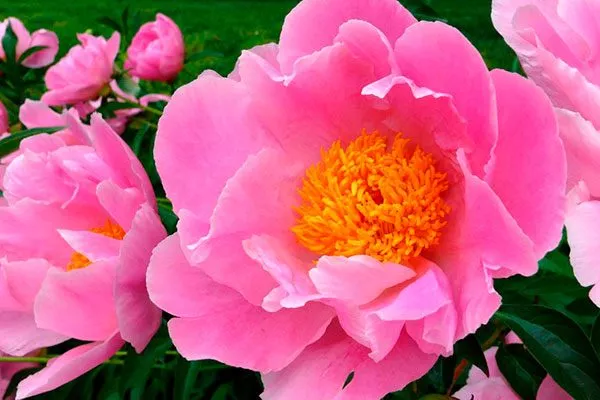
Petals can be arranged in one or several rows.
Carrara
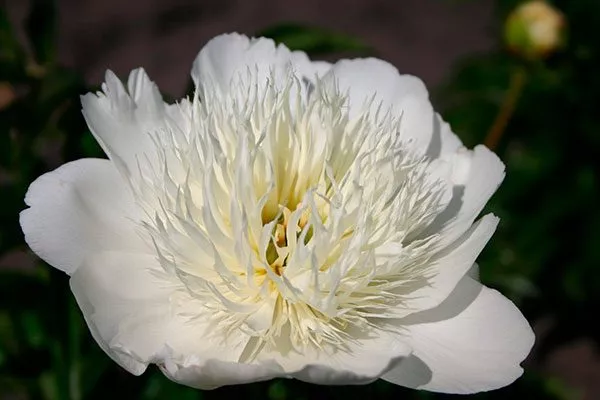
and Hot Chocolate are popular Japanese peonies.
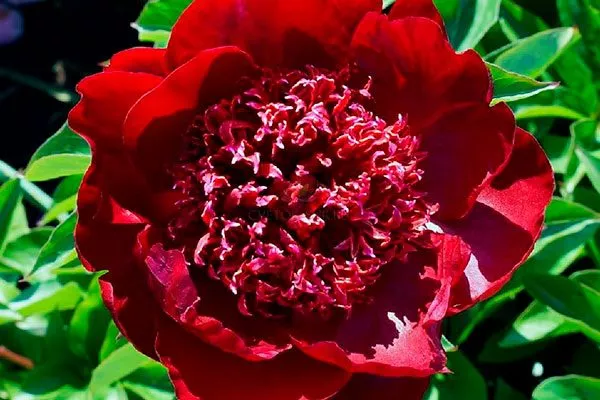
Anemone-like
They represent a transitional form between Japanese peonies and double peonies. The wide petals at the bottom are usually arranged in two rows and have a rounded shape, while the central petals are shorter and form a spherical structure.
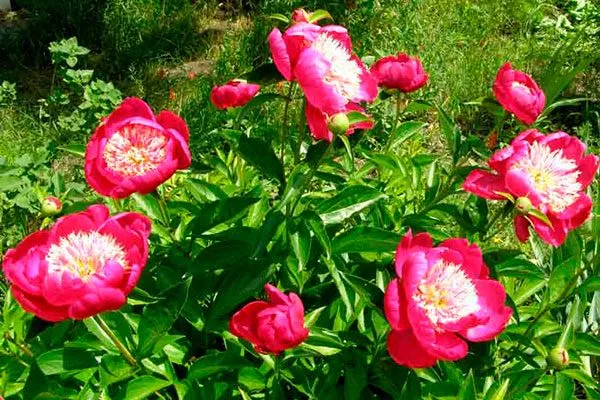
Rhapsody peonies are popular
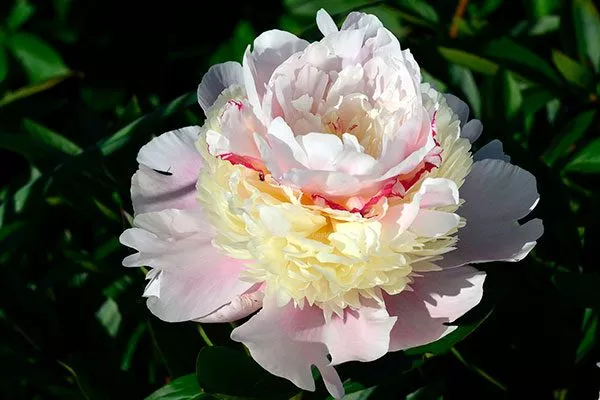
and Snow Mountain.
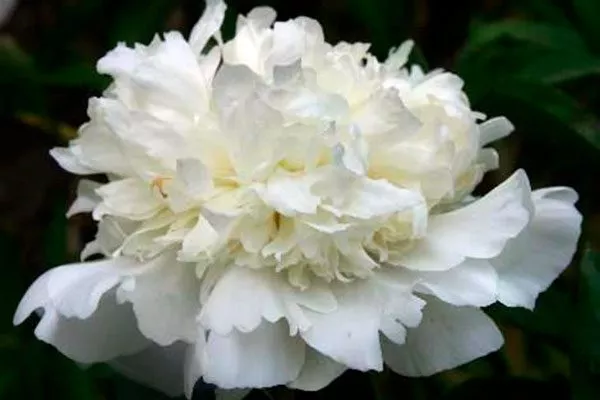
Terry bomb-shaped, hemispherical, spherical
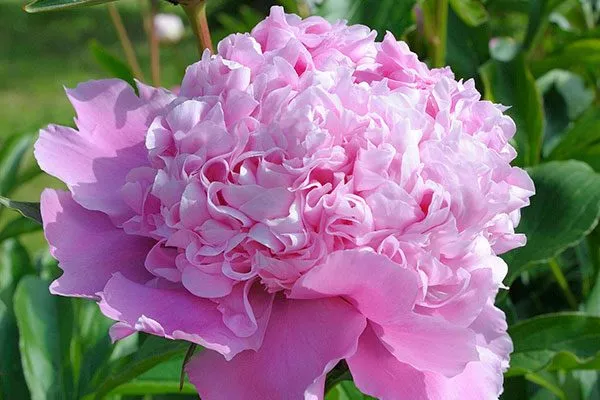
The petals join to form a hemisphere, which, when fully opened, transforms into a spherical flower. This category includes varieties
Pink Cameo
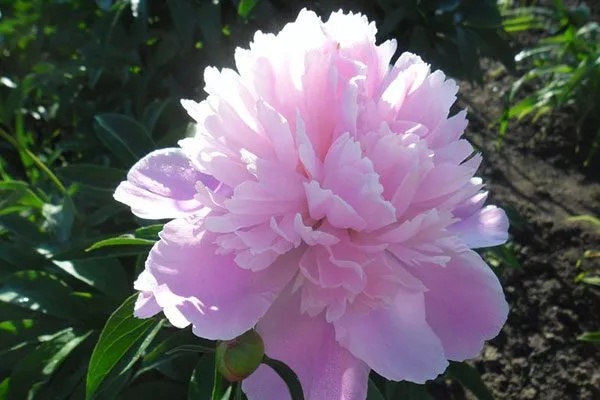
and Monsieur Jules Elie.
Rose-shaped
They resemble rose petals in both size and shape. They are wide, large, and rounded.
Popular varieties – Solange
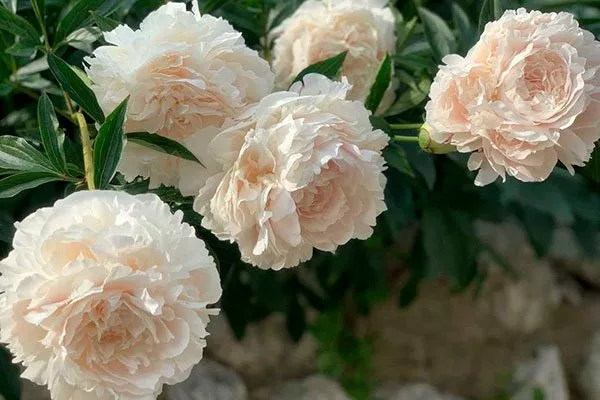
and Henry Boxstocks.
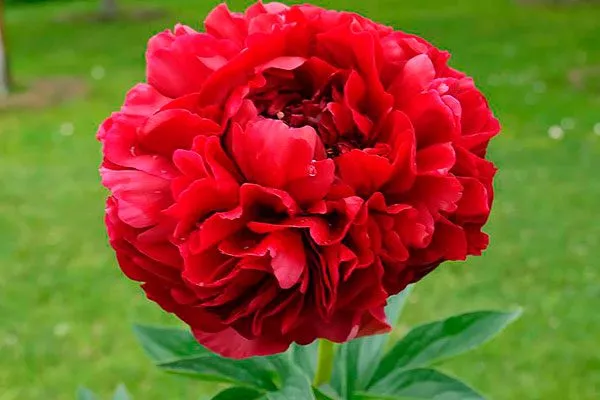
The subgroup of semi-pink-shaped includes two species – Ballerina
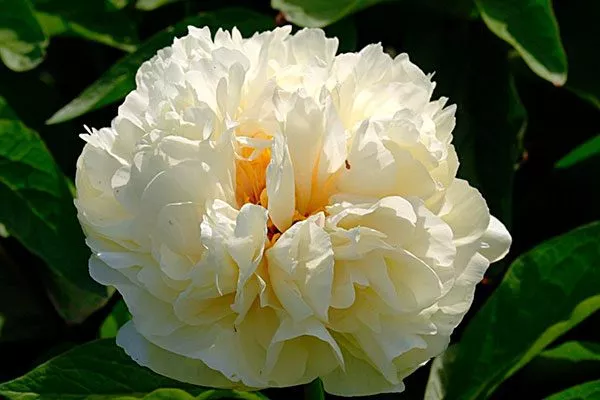
and Goody.
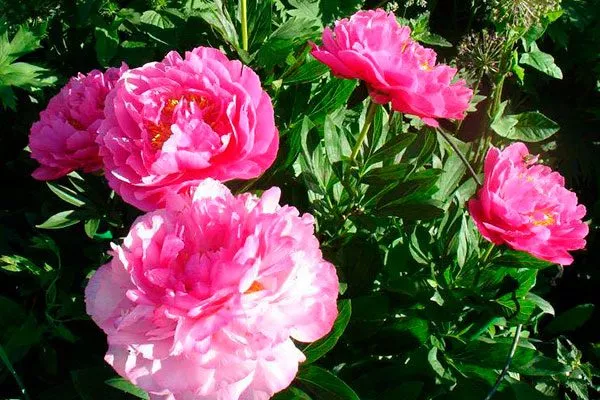
Crowned spherical and hemispherical
The petals are arranged in three tiers: the top tier forms a ring, while the middle tier contains narrow petals, smaller in width than the lower and upper tiers. The petals of the lower and upper tiers are usually the same color, while the middle tier may vary in color.
Popular varieties – Nancy
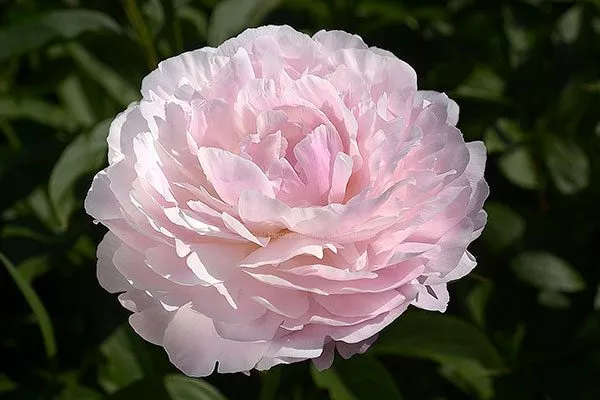
and Aritina Nozen Gloria.
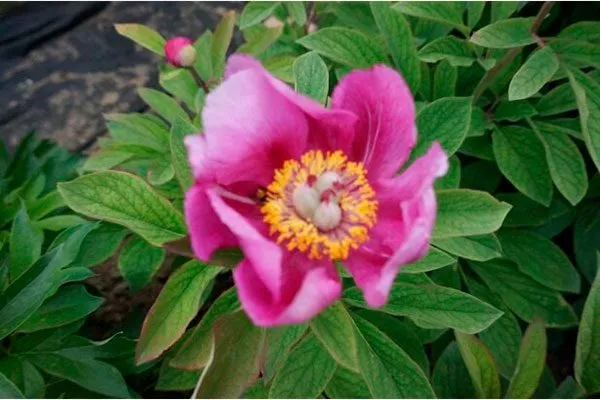
Planting a peony in open ground
This is a simple task that doesn't require much time. Pay special attention to choosing a suitable site, as the plants will bloom for a long time there.
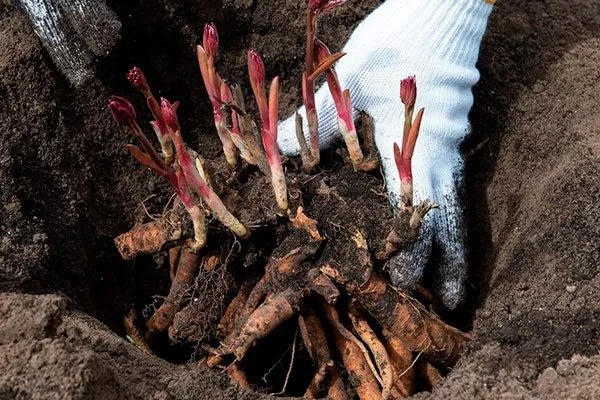
- ✓ The soil should be well-drained, with a pH of 6.5 to 7.5.
- ✓ The planting site should receive at least 6 hours of direct sunlight per day.
Autumn planting:
- Choose a location with good sunlight and fertile soil.
- Dig a hole about 50 cm deep and wide.
- Add compost or humus to the hole to improve the soil.
- Plant the peony so that the root collar is at a depth of 5 cm from the soil surface.
- Water the plant and compact the soil around it.
When planting in spring, follow the same steps, but ensure regular watering and fertilization to stimulate growth. After planting, monitor the plant and follow proper gardening procedures.
Caring for peonies in open ground
Autumn peony care includes repotting. If repotting is not necessary, remove wilted leaves and shoots. Discard any removed parts, as they may harbor viruses, pests, and bacteria. Sprinkle the remaining shoots with wood ash, using 2-3 handfuls per bush.
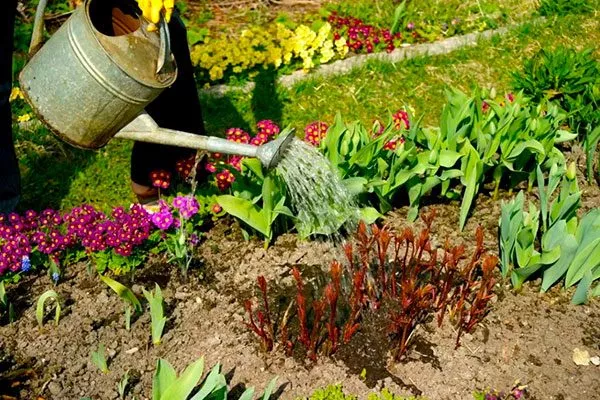
In spring, moderate watering is important. One mature plant requires 20-30 liters of water to moisten the deep soil layers where the root system is located. Water the plants in early spring during active growth, during bud formation and flowering, and in August-September, when new buds begin to form.
Preparing for winter
Plants overwinter in the open ground. Mature specimens are highly frost-resistant, while young plants need to be covered for the winter. As yellowing appears on the peony leaves and shoots, gradually reduce watering.
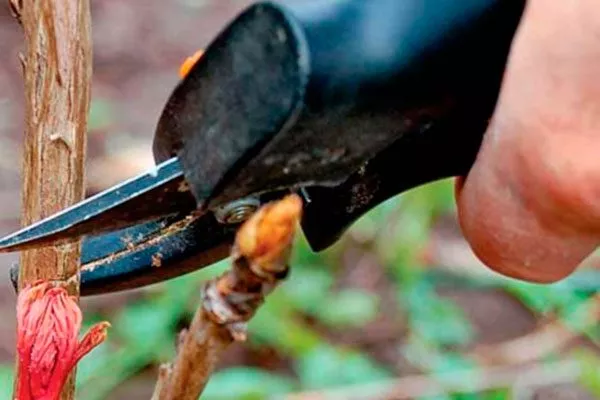
When frost sets in, trim back the portion of the plant that protrudes above the soil surface so that the stems are barely visible. Cover the peony root zone with mulch, such as fallen leaves, straw, or bark. This will help keep the soil warm and protect it from frost.
Pests and diseases
Peonies are susceptible to various diseases and pests. Some of the most common problems that can affect the growth of this plant include:
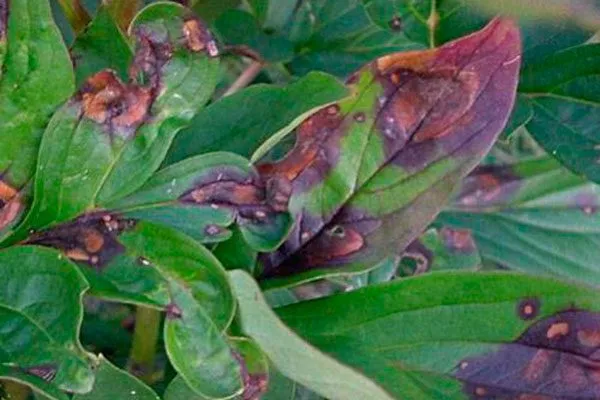
- Fungal infections. They can be susceptible to botrytis, powdery mildew, and leaf spot. These diseases cause discoloration of leaves and flowers, spots, and wilting.
To prevent infection, ensure good air circulation, avoid getting leaves wet, and promptly remove infected plant debris. - Viral infections. May be susceptible to ring spot and mosaic virus. Symptoms include spots or veins on leaves and stunted growth. Destroy infected plants to prevent the spread of the virus. There is no cure for viral infections.
Transplanting peonies
In the wild, these plants can grow in the same place for over 50 years. Hybrid varieties created using the medicinal peony can only grow in the same place for up to 10 years. After this, the bush should be dug up, divided, and replanted.
Older plants have more robust and branched rhizomes. Therefore, experienced gardeners recommend repotting and dividing bushes every 3-4 years to simplify the repotting process and maintain the quality of their blooms. The best time to repot is during the first month of autumn.
When replanting in the fall, carefully dig up the plant, moving it 25 cm away from the rhizome. Then, carefully remove it from the soil. Clean the root system of soil, rinse, and trim off the green part almost to the root. Plant the cuttings as you would regular plants, then cover them with a layer of mulch for protection.
Methods of propagating peonies
Peonies are propagated by division or seed. Choose the method that best suits your needs:
- Division. This is the most common method of propagation. It involves dividing a rooted plant into several smaller pieces. This process is usually carried out in the fall or early spring, when the peony is dormant.
Carefully dig up the plant and separate the roots into segments, ensuring each segment has at least one healthy bud. Then transplant the segments to a new location or into separate containers.
- Seeds. Peonies can be propagated by seed, but this method is less reliable and may take several years to produce a mature plant. To collect seeds, allow the seed pods to develop until they open, revealing the seeds inside. In the fall, plant the seeds in a container or garden bed, lightly covering them with soil.
Keep the soil moist and watch for seed germination in the spring.
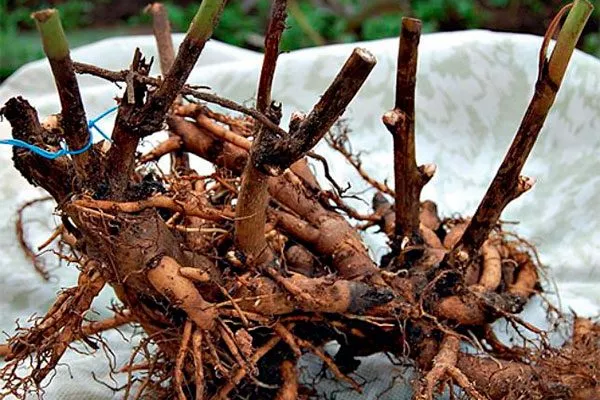
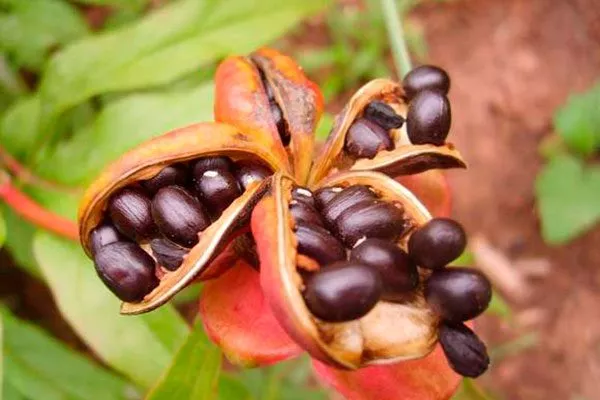
Flowers grown from seed may differ from the parent plant and may take several years to mature and bloom. For most gardeners, division is the preferred method of propagating peonies.
Benefits, symbols and rituals
In Chinese culture, the peony is known as the "imperial flower" and the "20-day flower." This is due to several characteristics:
- Luxurious and long-lasting flowering, which lasts about three weeks.
- Elite origins, associated with the aristocracy (in Ancient China, only aristocrats were allowed to grow peonies).
- A special aesthetic and spiritual energy associated with sacred geometry (a bud in the shape of a ball, an inflorescence in the form of a Buddhist mandala).
- Powerful medicinal properties: peony root tincture calms the nervous system, improves sleep, and restores the functioning of the digestive and reproductive systems.
In China, bouquets of peonies are traditionally given to newlyweds at weddings, and various objects are decorated with images of these flowers to attract good luck. Peony bushes are planted near the home for long-term protection from "dark forces."
In Greece, the peony has long been considered a symbol of health and longevity. Beads made from pieces of the flower's roots were believed to have protective powers. In the Mediterranean, the peony is closely associated with ideas of healing and with myths of love and immortality.
Peonies or 3 Secrets of Love and Immortality
Since ancient times, the splendor of blooming peonies and their healing properties have evoked a sense of mystical awe, inspiring myths and legends about their origins. Interestingly, in various parts of the world, myths about peonies have always been associated with the mysteries of love and immortality.
Peonies in the mythology of different cultures:
- Greek myth. Paean was a healer who worked both on Earth and on Olympus, helping the gods recover from injuries. The secret of his cures was believed to lie in substances derived from peonies. A grateful Hades transformed Paean into a peony, granting him eternal life.
- Chinese myth. The immortal goddess Gejin fell in love with a human and took the form of an earthly woman. After her true origins were revealed, she returned to heaven, leaving two enormous peonies—one white and one purple—in her husband's garden, which became the symbol of her children.
- Japanese legend. A girl rescued by a young samurai wearing a peony-embossed robe was restored to health by the flower. She subsequently became known as the "Peony Princess," and her story became a symbol of love and salvation.
These peony myths reflect various aspects of mystery, love, immortality, healing and revenge, intricately intertwined across different cultures of the world.
Peonies are among the most beautiful and delightful flowers, capable of evoking delight. Their undemanding nature and ability to grow and thrive for many years make them especially prized by gardening enthusiasts.