
Candy Stripe is a striking herbaceous peony with large, double flowers adorned with white petals striped with raspberry and pink. This variety is distinguished by its high frost resistance, low maintenance, and consistent, abundant blooms. Its decorative foliage and vibrant buds make it a true highlight in any garden.
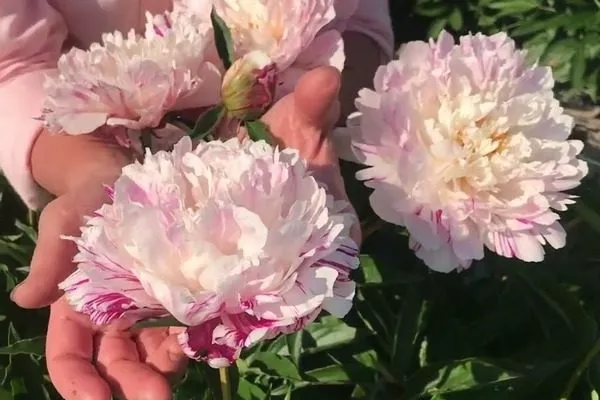
Characteristics of the Candy Stripe peony
Candy Stripe attracts attention with its unusual blooms. The plant is renowned for its resilience to weather fluctuations, easily surviving both winter frosts and dry periods. It's an easy-to-grow plant and requires little attention.
History of selection
Peonies are extremely popular in the United States, and many famous varieties originate there. Candy Stripe is no exception. This spectacular variety was bred in 1992, during a period of rapid growth in interest in the plants, when they were rapidly spreading throughout Europe and beyond.
The company's breeders introduce numerous new varieties and other ornamental plants annually, making a significant contribution to the development of horticulture. You can find information on the classification and characteristics of peonies here. Here.
Description of the appearance of the plant and flowers
A herbaceous perennial with expressive, lacy foliage and active vegetation, it reaches about 80 cm in height and is characterized by strong, erect shoots.
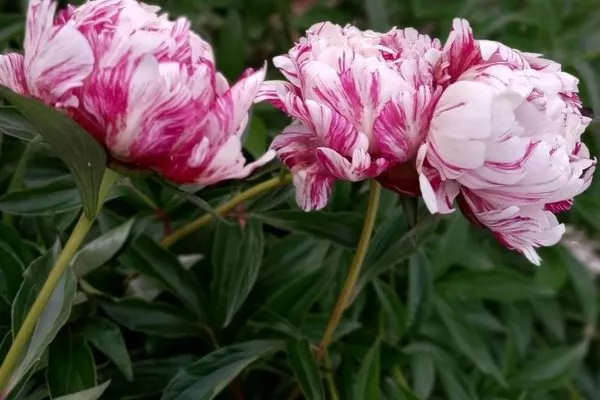
Main distinguishing features:
- The variety is distinguished by its longevity: a bush can grow in one place for 25-30 years, maintaining its decorative appearance and abundant flowering.
- The flowers are double, large, up to 18 cm in diameter, which makes the variety especially attractive for decorative landscaping.
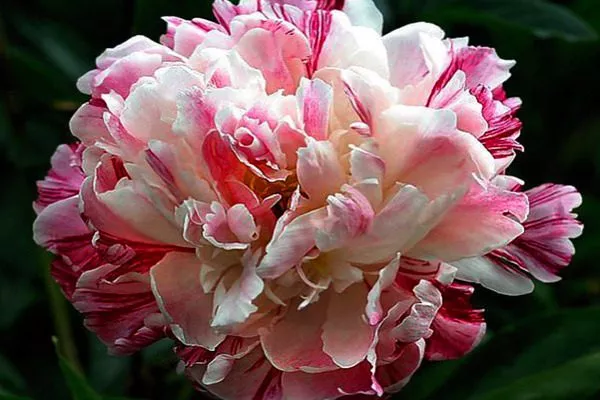
- Candy Stripe's main feature is its unusual petal coloring. The base color is white, but crimson-red stripes of varying width and intensity are scattered across the surface. This variegated pattern is unique and depends largely on the weather.
Features of flowering
The flower is a double European type and delights with its large size. The buds are red before opening, and the stamens are thin, long, and orange. The flower exudes a faint but pleasant fragrance.
The variety blooms mid-late—in the second half of summer. The first full varietal characteristics become visible 2-3 years after planting.

Although a single bush produces only a few buds, each one is vibrant and impressively large. The lushness and abundance of blooms directly depend on growing conditions:
- preference is given to light, well-drained soils;
- the area should be sunny and open, without shading;
- watering is carried out as needed;
- top dressing – three times per season: in spring, during the budding period and after flowering.
Application in design
The Candy Stripe peony is perfect for single plantings, and it looks especially striking when planted in a row against a well-kept lawn. Thanks to the vibrant and unusual color of its flowers, such plantings become a true eye-catcher and a true highlight.
This variety is also suitable for decorative compositions:
- at the entrance to the house or next to the path;
- on the shore of a pond or artificial reservoir;
- surrounded by lower-growing plants;
- in combination with hostas, provided that they do not shade the bushes.
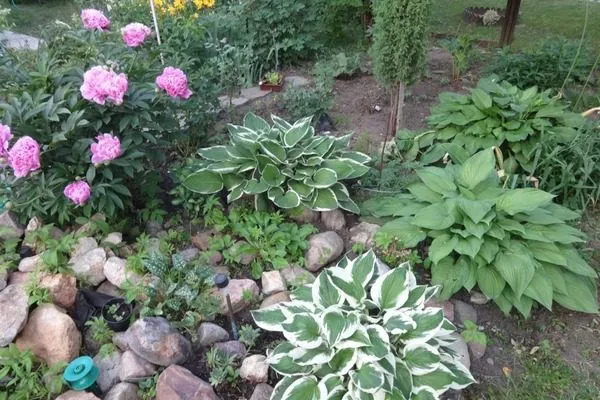
Good neighbors for this variety would be:
- forget-me-nots;
- petunias;
- daisies;
- lilies;
- irises;
- astilbe;
- hydrangeas;
- pelargoniums;
- low-growing conifers, including dwarf spruce.
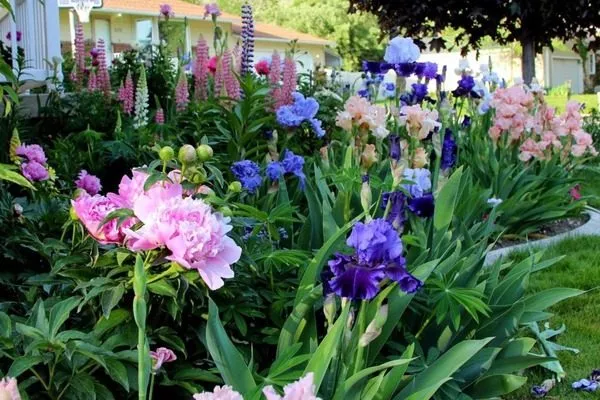
Peonies can be used to decorate flowerbeds, mixed borders, rock gardens, and can also be planted near benches or gazebos to create a cozy relaxation area.
Methods of reproduction
There are several methods for increasing the number of seedlings at home. In practice, gardeners most often choose division as the simplest and most reliable option. It's optimal to propagate mature plants aged 4-5 years.
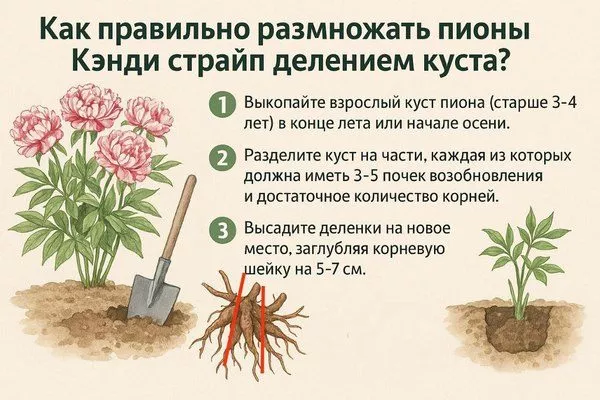
Carry out the work in the second half of summer or in the fall – 4-6 weeks before the expected frost. The step-by-step plan includes the following stages:
- Use pruning shears to shorten the lower stems by a third of their length so that they are not damaged along with the buds.
- Carefully dig around the bush with a sharpened shovel on all sides, lifting it up with a lump of earth.
- Remove the peony by holding it by the thick stems, being careful not to damage the root system.
- Rinse the roots with water to remove any remaining soil.
- Using a sharp knife, divide the rhizome into pieces – each should contain 3-5 buds and at least two healthy, fleshy roots.
- Plant the divisions in prepared holes, keeping them at the same depth as the mother plant.
- Moisturize generously.
- For the winter, mulch the plantings with humus or peat. In cold regions, in late autumn, cover them additionally with straw, hay, or spruce branches.
Landing rules
It's recommended to purchase Candy Stripe peony seedlings only from reputable nurseries or specialty stores. It's best to plant them directly in their permanent location. The best time is late August, and in southern regions, this can be done until mid-September.
Landing site requirements:
- the site must comply with the landscape plan;
- be open, well-lit by the sun;
- If possible, locate on a small elevation to avoid stagnant water.
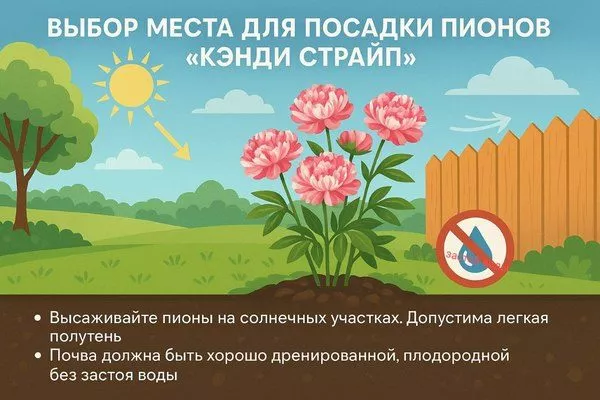
The soil should be fertile, with a neutral or slightly acidic pH (pH 5.5 to 7). A month before planting, clear the area of weeds and dig it to the depth of a spade. Then, dig planting holes 50 cm deep and in diameter, spaced 50-60 cm apart.
Add the nutrient mixture to each hole:
- 1 part garden (vegetable) soil;
- 2 parts compost or rotted humus;
- 200 g Superphosphate;
- 60 g potassium sulfate.
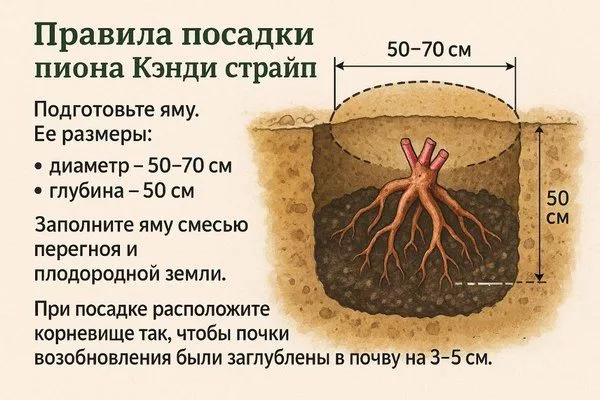
Place 5-7 cm of drainage material (crushed rock or broken brick) at the bottom of the hole, add the nutrient mixture, and place the seedling in it. After planting, thoroughly water the bush and mulch with peat or humus. Mulch helps retain moisture and simultaneously provides nutrients.
Aftercare
The Candy Stripe peony does not require complex care, but adherence to basic agricultural practices is necessary for its full growth and abundant flowering.
Main events:
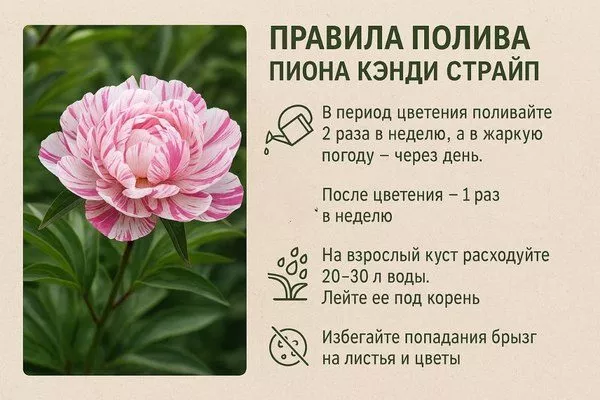
- Already in the first year after planting, seedlings need regular watering, especially in hot weather. On dry days, pour 20 liters of water under each bush. If it rains, additional irrigation is not necessary. The day after watering, loosen the soil to improve root aeration. For more information on how to properly water peonies for good growth and lush blooms, read Here.
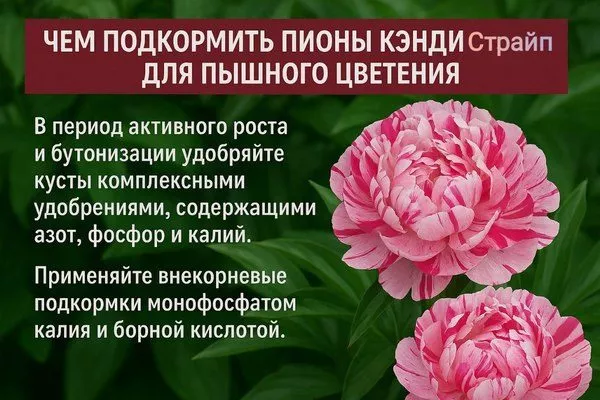
- During the first season after planting, do not fertilize the plant—all the necessary nutrients are already included in the planting hole. Starting in the second year, fertilize the plant regularly, at least three times per season:
- April (beginning of the growing season) - Apply nitrogen fertilizer, such as ammonium nitrate, to promote active growth of green mass and rapid recovery after winter;
- June (budding phase) - use a complex mineral composition containing nitrogen, phosphorus and potassium;
- July (after the beginning of flowering) - add superphosphate and potassium sulfate to support flowering and bud formation for next year.
You can repeat the same feeding at the end of August to strengthen the plant before winter.
Preparing for winter
In the fall, prune the Candy Stripe peony almost to the ground, leaving only small stumps. This pruning stimulates the formation of new shoots and promotes abundant flowering next season. After removing the stems, treat the soil around the bush with a fungicide to prevent fungal infections.
Additional fertilizing before winter is not required – the last application of fertilizers (superphosphate and potassium salt) should be done at the end of summer.

Mature bushes don't require winter protection. However, young seedlings should be mulched with humus, peat, hay, straw, or other natural material.
Pests and diseases
The variety is characterized by good resistance to most diseases and insects, but under unfavorable conditions it can suffer from gray mold.
Characteristic signs of the disease:
- sudden wilting of the lower leaves at the ground surface;
- weakening and drooping of stems;
- stopping the growth of buds;
- scanty or absent flowering.
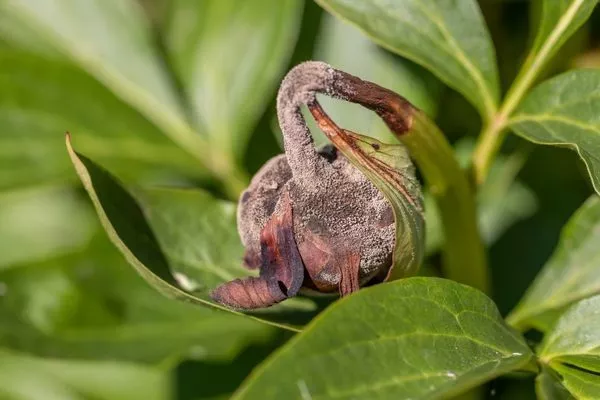
At the first symptoms, act without delay:
- Remove and destroy all affected plant parts away from the area.
- Treat the bush with a fungicide - Bordeaux mixture, Topaz or other similar products will do.
- Install supports to maintain the shape of the plant and reduce the load on weakened shoots.
Candy Stripe can be susceptible to pests, including aphids, ants, thrips, and nematodes. To combat these, use insecticides such as Biotlin, Confidor, and Karate.
At an early stage, folk remedies are effective. Suitable solutions include:
- baking soda;
- ammonia;
- grated laundry soap;
- infusion of onion peel or garlic tops.
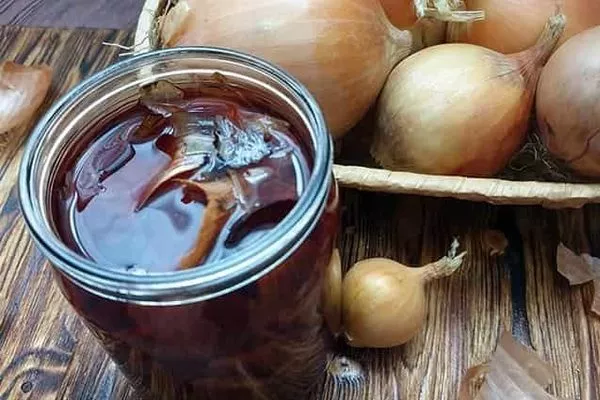
Such methods are safe and can be used for preventive purposes.
Pros and cons
Advantages:
The variety has no serious shortcomings.
Reviews
The Candy Stripe peony combines attractive appearance with ease of care. Its striking bush, resistance to adverse conditions, and ability to retain flowers for a long time after cutting make it an ideal choice for gardening. With proper cultivation, it will delight you with its strong immunity and vibrant blooms.