
The peony is one of the true kings of perennials, and the 'Karl Rosenfeld' variety is particularly noteworthy. This exquisite flower, with its vibrant blooms and pleasant fragrance, is a true gem in gardens and homesteads. Proper care is essential.
History of selection
Information about the milky-flowered herbaceous peony often indicates its origins in southern China, but some claim it was created in the United States. According to many sources, it was bred back in 1908 by Rosenfield.
Description of the Karl Rosenfield peony
Peonies are popular perennials that thrive in a variety of climates. They can maintain their beauty in one location for decades.
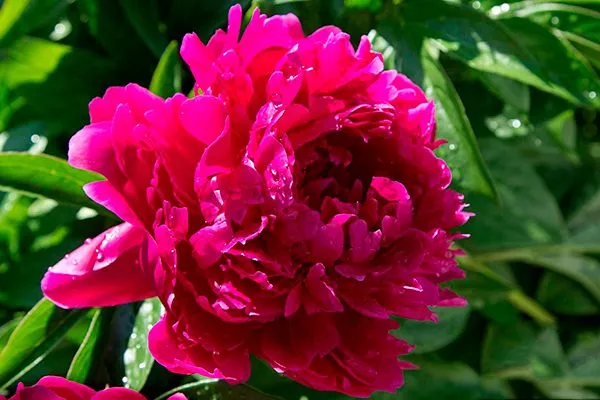
Appearance of the plant and flowers
The bushes grow robust, up to 90 cm tall, with beautiful dark green leaves on strong stems. With the arrival of autumn, the foliage takes on a crimson hue, giving the plant a decorative appearance that lasts until frost.
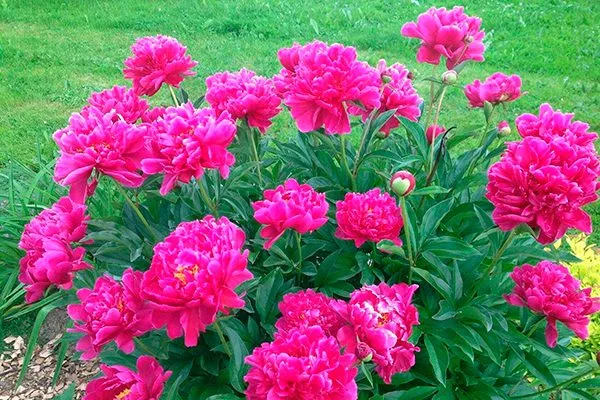
- ✓ The flowers have a unique dark ruby color, which is rare among other peony varieties.
- ✓ The scent of the flowers is particularly attractive to butterflies and bees, making this variety valuable for pollinators.
The main advantage is the dark ruby-red rose-shaped flowers, the buds of which can reach 18 cm in diameter. Each flower is represented by numerous double petals, creating an expressive volume.
Features of flowering
The herbaceous peony belongs to the mid-season group of species. Its flowering period begins in early July and lasts for about 14 days. The inflorescences are composed of single flowers, which can be either double or single.
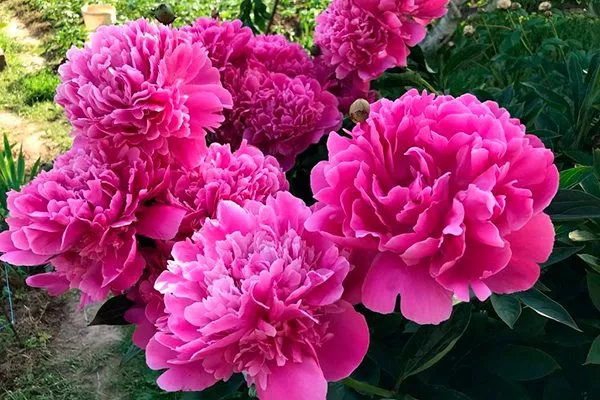
The structure is dense, the petals are large, with curved edges that create a wavy outline. The scent is sweet, attracting butterflies and pollinating insects.
Application in design
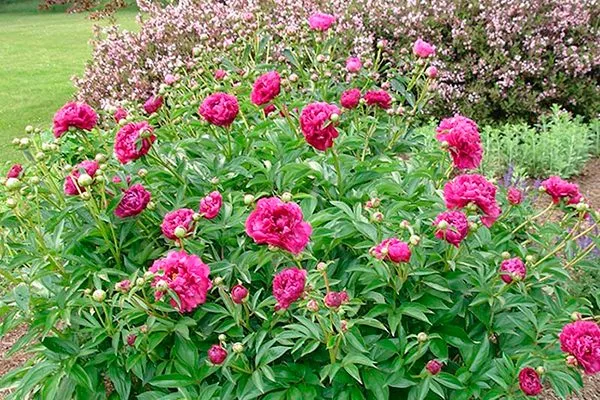
It offers ideal opportunities for creative flowerbed design. Before you begin, it's important to know which plants this variety pairs well with.
Planting pattern:
- 3-4 peonies are planted in the center of the flowerbed, surrounded by herbaceous or groundcover plants.
- Pairs beautifully with hybrid tea roses. While the buds are forming, Karl Rosenfeld is already in full bloom. After the peony finishes blooming, the rose opens up, creating a harmonious contrast against the green foliage.
- Ideal for creating mixed borders, where it can be combined with garden geraniums, alchemilla, ornamental onions and columbine.
- For long-lasting flowering, the crop is combined with Siberian iris, large-rhizome geranium, sedum, yarrow and common echinops.
Growth characteristics
It reaches a height of up to 85 cm. Flowers are borne on sturdy stems. Sometimes the bushes need to be supported with staking, as their buds can bend toward the ground.
Climate conditions
It has high frost resistance and can tolerate low temperatures. To prevent possible damage during cold periods, it sometimes requires shelter. It is classified as winter hardy for zone 3 and can withstand temperatures from -34 to -40°C.
In warm southern regions, winter cover is not necessary—simply mulching the pruned bushes is sufficient. In central and northern Russia, additional protection is essential.
Where is the best place to plant?
Thrives in full sun. It doesn't overheat or fade in direct sunlight. It can be planted in light shade, provided it's well-drained and provides good light penetration.
Does it require support?
Strong, upright stems are usually stable and don't succumb to the weight of the flowers. They don't require staking, as they can withstand the weight without additional support. If grown in an open, windy area, they can be secured to a support.
- ✓ The pH level should be strictly within 6-6.5, deviations can lead to poor absorption of nutrients.
- ✓ The soil must have high drainage capacity, as stagnant water, even for a short time, can cause root rot.
What kind of soil do you need?
Optimal conditions for thriving are moderately fertile loams with a pH of 6-6.5. The plant prefers slightly acidic to slightly alkaline soils. Planting in heavy clay, light sandy soils, or marshy areas is not recommended.
Selecting the right soil promotes healthy growth and development. The soil should be well-drained. In low-lying or waterlogged areas, roots can rot, leading to death.
Landing rules
Plant peonies in late summer, taking into account the regional climate. Before planting, select healthy tubers with four or more buds to ensure early and colorful blooms. Planting involves digging a hole, placing the tuber in the center of the hole, covering it with soil, then firming it down and watering.

After planting, apply mulch to the soil. Proper planting depth is crucial for future flowering, so flower buds should be buried 3-5 cm deep. Planting too deeply may result in a lack of flowering, while planting too shallow will not provide sufficient frost protection.
Aftercare
It's low-maintenance, but to achieve large, beautiful blooms, it's important to follow certain guidelines. Follow these basic gardening practices:
- Watering. Given the plant's moisture-loving nature, ensure regular and abundant watering. During dry weather, water weekly, using approximately 10-15 liters of warm, settled water per bush. Insufficient moisture can result in smaller, less attractive flowers.
- Trimming. Regular pruning promotes large, beautiful blooms. Remove spent blooms throughout the blooming period. This will help focus the plant's energy on forming new stems.
In the fall, a month before the onset of frost, carry out radical pruning, shortening all shoots and leaving stumps 20 cm high. - Top dressing. In the second year after planting, apply various types of fertilizers: nitrogen fertilizers in April, mullein or bird droppings infusion during the period of bud formation, a mineral complex after the inflorescences have faded, and humus with superphosphate in September during the formation of flower buds.
Following these simple care rules will allow you to enjoy flowering for many years.
Preparing for winter
Even with good frost resistance, insulation is recommended in temperate climates and in the north. Follow these recommendations:
- After cutting the stems, cover the remains with a layer of dry leaves about 10 cm thick.
- When cold weather sets in, stretch materials (lutrasil or agrofibre) over the flowerbed for additional protection from low temperatures.
- During snowy winters, form snowdrifts over the flowerbed – they provide reliable protection from severe frosts and cold winds.
Pests and diseases
It has high immunity to fungal and viral diseases. If not properly cared for, the plant may develop the following problems:
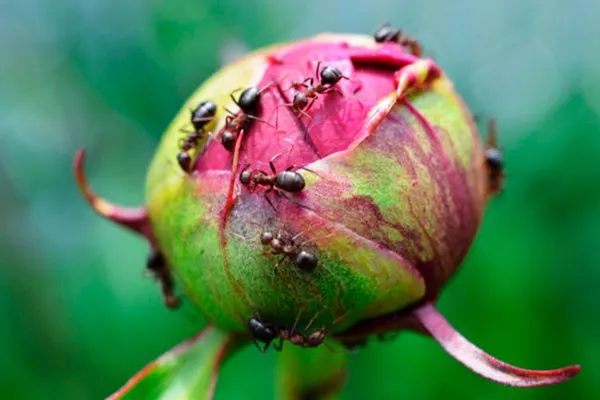
- Gray rot. Occurs during periods of rain. The fungus attacks all above-ground parts of the plant, causing brown spots on the foliage, blackening of the stems, and brittle, drying flower buds.
Apply broad-spectrum fungicides. Remove and destroy infected shoots to prevent infection of neighboring crops. - Rust. It thrives in warm, humid weather. If left untreated, the fungus can quickly spread to neighboring plants. The disease can be recognized by wilting foliage and reduced growth and development. To combat rust, use copper-containing products.
Reproduction
There are several ways to propagate: by seeds, rhizome division, and stem cuttings. Vegetative propagation is most often preferred, as it promotes better survival and preserves all varietal characteristics.
Division
Apply this treatment to 8-10 year old plants in late August or September. The process is simple:
- Cut the peony stems to about 10 cm.
- Dig up the rhizome, clean it from soil and wash it with water.
- Divide the bush into parts so that each bush has 3-5 buds.
- Dry the divisions, treat them with a solution of potassium permanganate and plant them in separate holes.
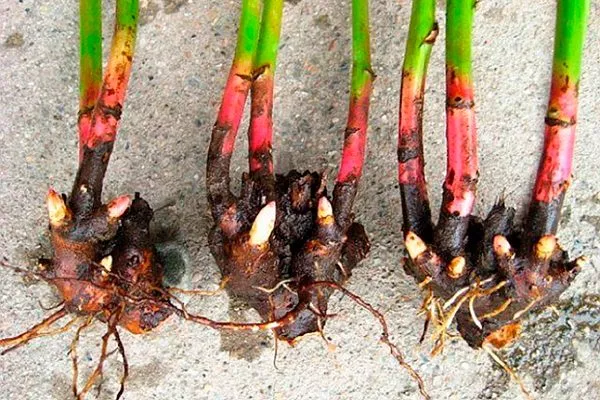
After such propagation, Karl Rosenfeld will begin to bloom in 2-3 years.
Seeds
Propagating by seed carries the risk of losing the variety's unique characteristics, but some still use this method. Follow these steps:
- Soak the seeds in a solution of potassium permanganate for disinfection.
- Sow them in a moist substrate with the addition of sand.
- Cover the container with film and keep at +25-28°C for two months.
- Afterwards, transplant the seedlings into more fertile soil with peat and place in the refrigerator.
- After the first leaf has formed, move it indoors.
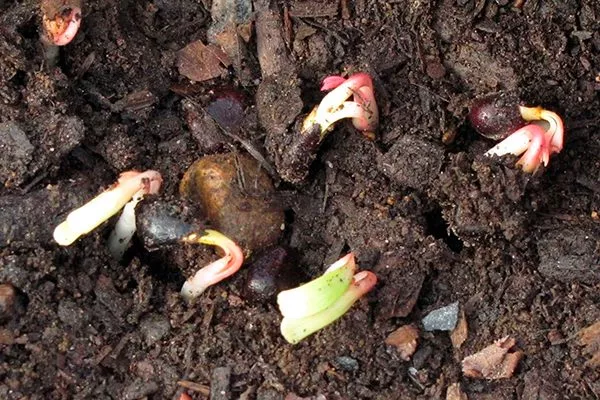
At a temperature of +18-22°C, germinate peonies until August, then transfer them to open ground.
Stem cuttings
In July, prune a shoot with 3-4 leafy branches from a healthy bush. Then follow these instructions:
- Trim the two bottom leaves and shorten the top leaves.
- Place the cutting in a growth stimulator and install it in loose substrate at an angle.
- Moisten and cover with a bottle or film.
- By September, the plant should produce new buds, after which you should carefully insulate it for the winter.
- At the end of next summer, transplant the seedlings to a permanent location, having first added fertilizer.
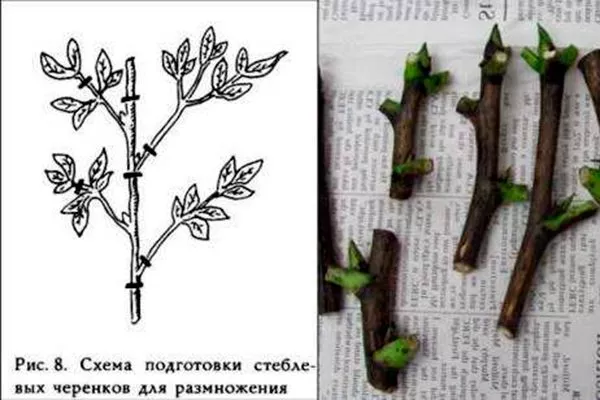
When planting, use complex fertilizers in the hole to provide the plant with everything it needs.
Reviews of the peony variety Karl Rosenfeld
The Karl Rosenfeld peony, which has proven itself over time, has a pleasant, delicate fragrance. It retains its decorative qualities for a long time and is suitable for growing in cold regions. It is important to provide the plant with proper care to strengthen its immune system.