
To preserve the health and beauty of peonies for many years, dividing and replanting them is recommended. This procedure rejuvenates the bushes and improves their decorative appearance. The key to success is observing the optimal timing and using the correct replanting technique. This will ensure rapid establishment, stronger plants, and abundant flowering.
Why divide and replant peonies?
Before moving a plant, it's important to clearly understand the purpose of the procedure. There are important reasons why repotting is necessary:
- Improving growing conditions. If a peony is growing in an unfavorable environment, such as shade or poorly drained soil, relocating it provides the opportunity to select a more suitable location for vigorous growth and abundant blooms.
- Rejuvenation of old bushes. Over time (usually after 10-15 years), plants lose their appeal: flowering becomes sparse, and the stems become thin and weak. Repotting with rhizome division promotes renewal and stimulates growth.
- Plant propagation. Dividing during replanting is the main way to increase the number of peonies from one mature plant.
- Pest and disease control. If a bush is affected by fungus or pests, replanting with removal of the affected areas and treatment of healthy parts can help save the plant.
- Garden design update. Repotting allows you to change the appearance of a flowerbed, create new compositions, or move peonies to a more suitable location.
- Preservation of plants during construction. When redeveloping a site or undergoing construction work, relocating peonies may be the only way to save valuable bushes.
- Correction of planting depth. Incorrect root planting depth can slow growth and flowering. Repotting helps correct the planting and ensure proper bud placement.
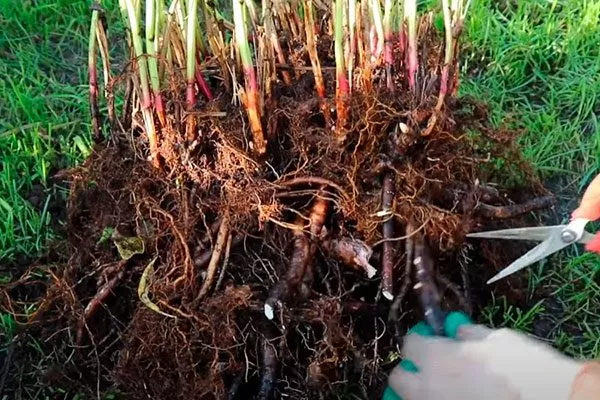
Relocating peonies is not just a maintenance activity, but a significant agricultural practice that will help ensure the plant remains healthy and attractive for many years to come.
When to divide and replant peonies?
Choosing the right time for replanting is one of the key factors for successful peonies rooting. Let's look at the optimal timing for different regions:
- Moscow region. The best time is spring and fall. Replant the plant in late April to early May (before shoots appear) or in late August to mid-September (after flowering, before frost).
- Middle zone. The optimal time is spring, mid-to-late April (after the soil has thawed) and autumn – late August-early September (to allow rooting to occur before frost).
- Siberia. Start the event in early to mid-May when the soil has warmed up sufficiently.
- South of Russia. Transplantation can be carried out in spring - in March-early April (before the heat sets in) and in autumn - in September-early October (after the heat subsides).
- Ural. Here, moving the bush is not recommended in the fall and summer, but in the spring, at the end of April - beginning of May, when the snow melts, the procedure is successful.
- Far East. Begin dividing and relocating the peony in spring or fall. Ideally, planting occurs in mid- to late April or late August to early September.
Which bushes should be divided?
Peonies' roots and shoots grow rapidly, and if the plant is too dense, the flowers become smaller and lose their color saturation. Peonies are best suited for division and replanting when they are 4-5 years old. Subsequently, it is recommended to replant the bushes every 3-4 years.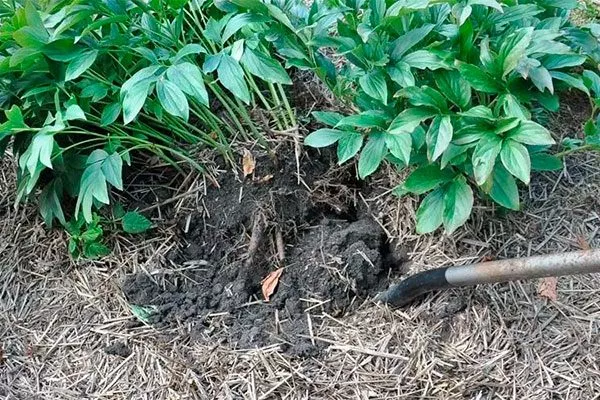
Tree peonies require repotting much less frequently—approximately every 5-6 years. In some cases, repotting every 10 years is acceptable, but at this age, dividing the large and extensive root system will be significantly more difficult.
What do you need for division?
Before beginning the transplant, it's important to prepare everything you need in advance. You'll need the following equipment:
- shovel or garden fork;

- wooden stake;
- hammer;
- garden knife;
- pruning shears;
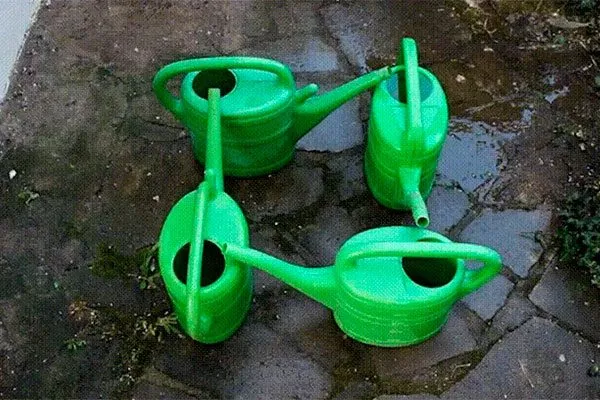
- watering can with water.
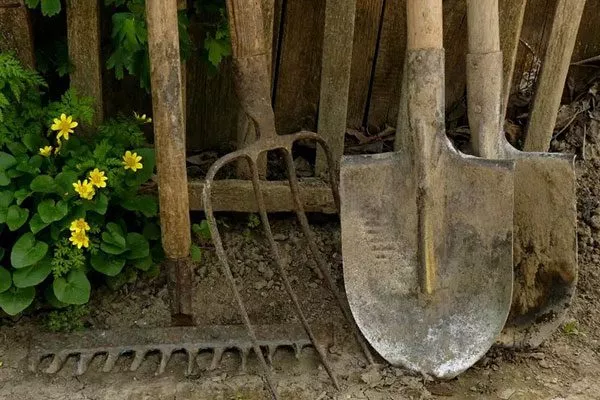
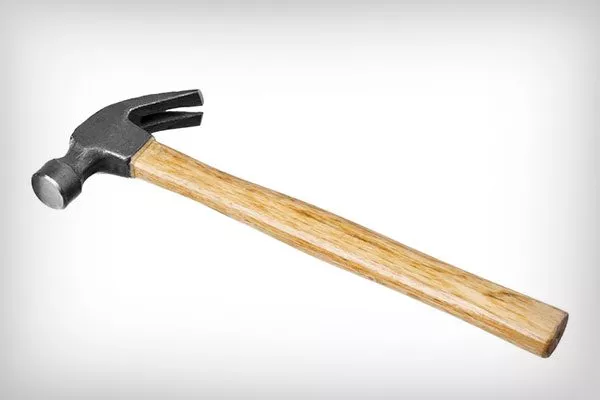


Pay special attention to the cleanliness of your tools: all cutting surfaces should be disinfected using an alcohol mixture or a strong potassium permanganate solution. This will help prevent contamination of the cuttings with pathogenic microorganisms.
At what distance should the divisions be planted?
When planting peonies, it's important to maintain the correct distance between bushes to ensure they don't interfere with each other's growth and to ensure adequate ventilation. For tree peonies, the distance between seedlings should be 130 to 180 cm.
For herbaceous varieties:
- short – 70-80 cm;
- medium-sized – 90-110 cm;
- tall – 130-180 cm.
This planting scheme will provide plants with enough light, air and nutrition.
Step-by-step algorithm for replanting peonies
By following this step-by-step procedure, relocating this ornamental plant will be easy. The key is to create conditions conducive to vigorous growth and long-lasting flowering.
Choosing a new location
Selecting a suitable site is a key step when replanting peonies. The site's conditions largely determine how quickly the plant will establish itself, bloom profusely, and provide long-lasting beauty.
Follow these recommendations:
- Give preference to sunny or slightly shaded places - peonies do not bloom well in deep shade.
- The soil must have good drainage: plants do not tolerate stagnant water.
- Avoid planting peonies in low-lying areas where moisture and cold air accumulate.
- The plant does not respond well to frequent replanting, so choose a permanent location for at least 10-15 years.
- The groundwater level should not be higher than 1 m from the surface.
- It is better if the area is protected from strong winds.
We dig up the plant
This procedure is complex and requires careful attention. Follow these instructions:
- Shorten the shoots, leaving 10-15 cm above the ground - this will make further work with the plant easier.
- Carefully dig up the plant, making a circle 25-30 cm from its center to minimize damage to the root system.
- Dig up the roots from all sides, trying to capture the entire root ball.
- Carefully lift the bush from below with a shovel to remove it from the soil.
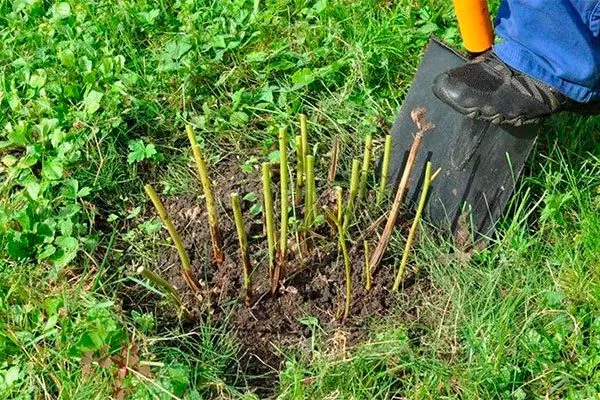
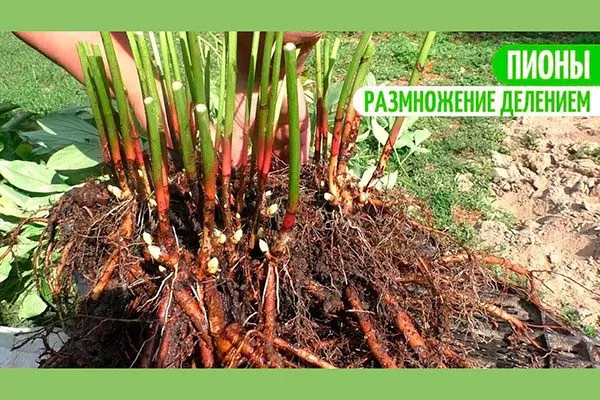
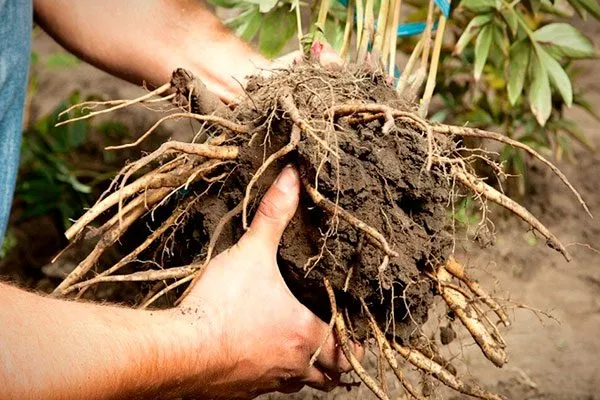
Try to preserve as many roots as possible, avoiding breaking or damaging them.
Dividing the bush
After digging up the bush, an important step begins: preparing and dividing the rhizome. Correctly performing this procedure will help maintain the plant's health and ensure the successful rooting of the new cuttings.
The step-by-step process is as follows:
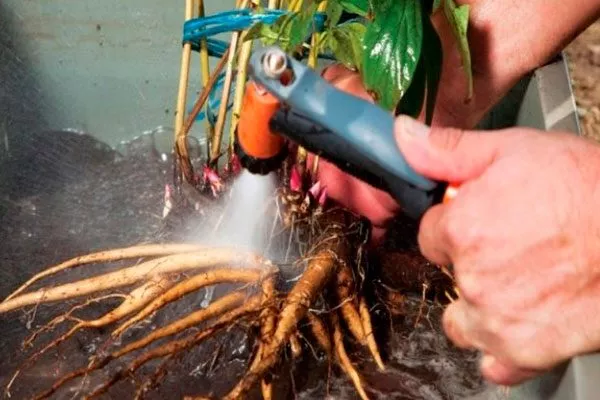
- Gently shake off most of the soil from the roots to better examine the rhizome structure. Rinse it with water from a hose—this will make inspection and separation easier.
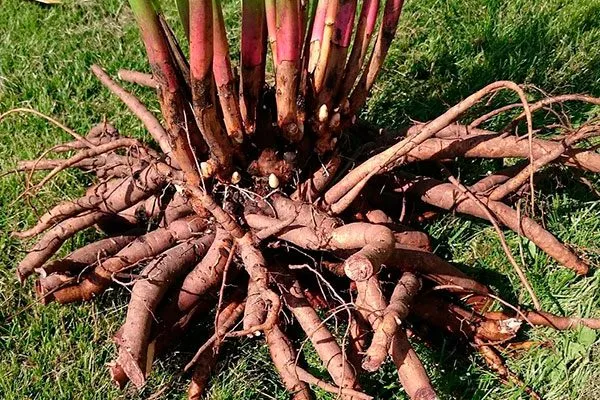
- Carefully inspect the roots for damage or signs of disease.
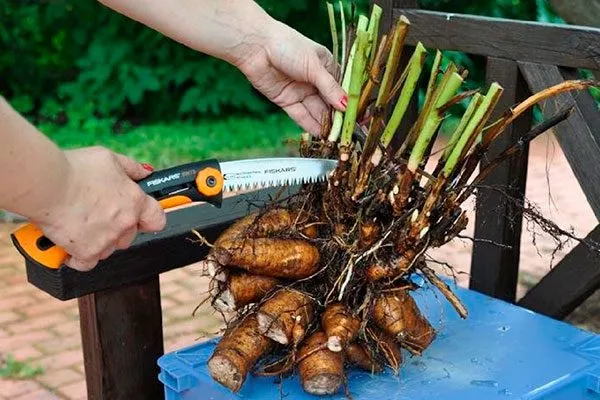
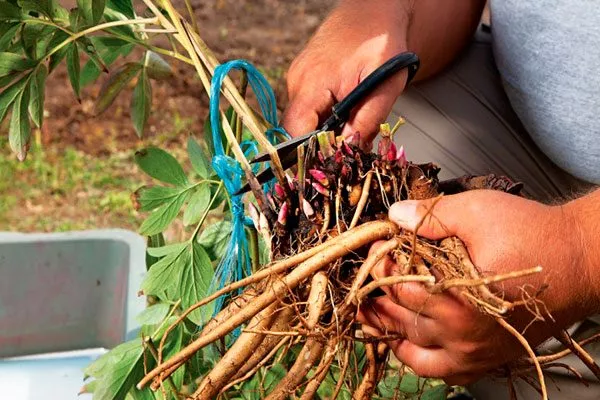
- Divide the bush into sections using a sharp, pre-disinfected knife or shovel. Each section should have 3 to 5 healthy buds and roots at least 15 cm long.
- Remove any damaged, diseased or overly old parts of the rhizome.
- Treat cuts with powdered charcoal or fungicide to prevent infection.
We process the rhizome
The cuttings should be disinfected by soaking them for 30 minutes in a pink solution of potassium permanganate or Fitosporin. Afterwards, they should be dried, and the cut areas should be sprinkled with crushed charcoal.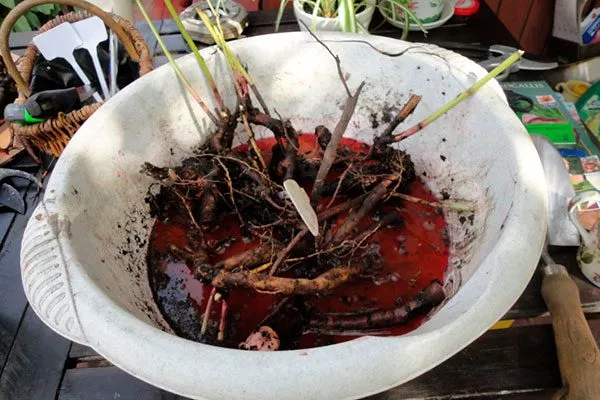
Preparing the planting hole
Once all the steps are completed, you can begin preparing the hole for relocating the bush. Follow these instructions:
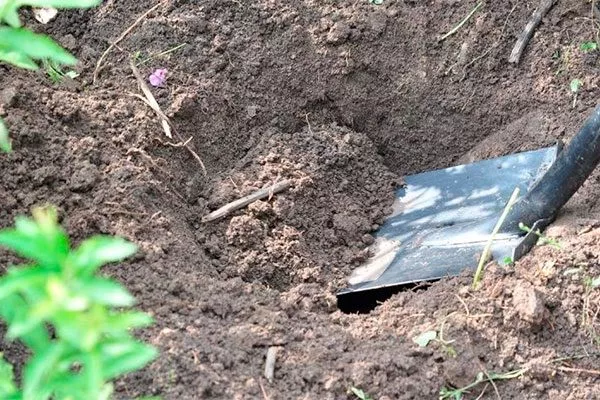
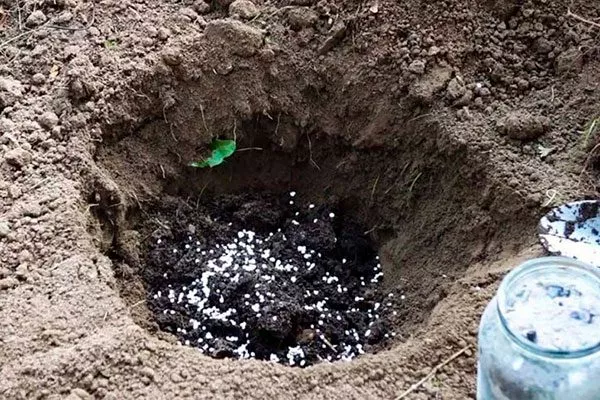
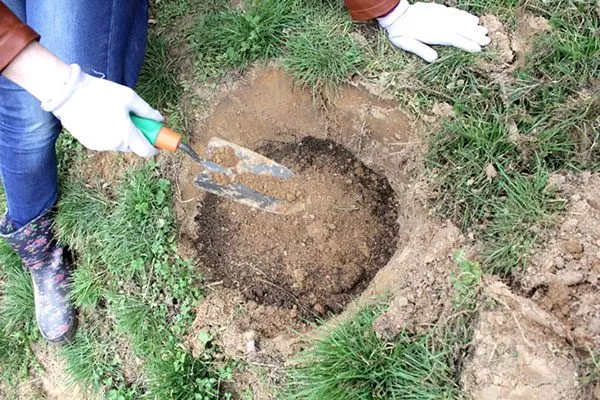
- Dig a planting hole 50-60 cm deep and 60-70 cm wide.
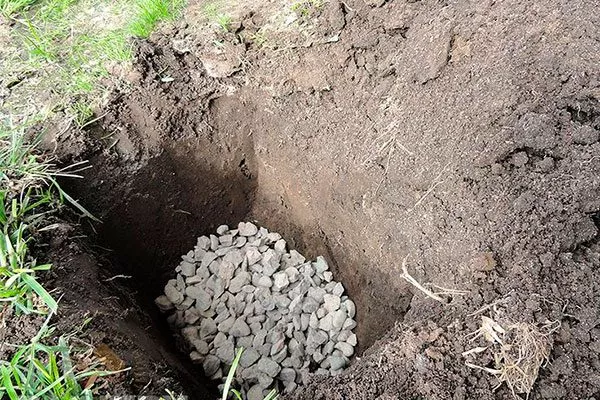
- If the soil is heavy, place a 10-15 cm layer of gravel or broken brick on the bottom for drainage.
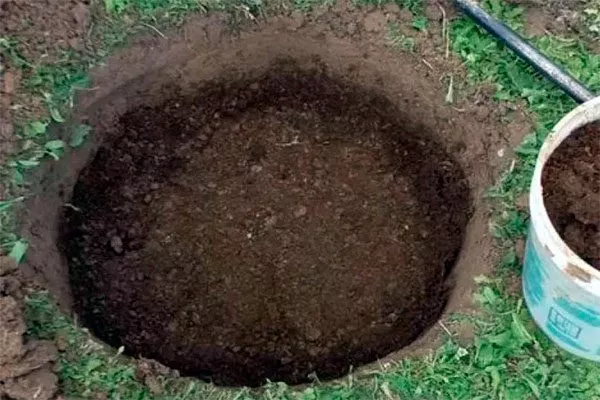
- Fill the hole with fertile soil mixed with compost or humus in a 2:1 ratio.
- Add superphosphate (100-150 g) and potassium fertilizers (50-70 g) to the soil mixture.
- If the soil is acidic, add wood ash or dolomite flour to deacidify it.
- In the center of the hole, form a small mound on which to place the plant's rhizome.
We plant the divisions in a new place
Now let's get started on the most important step – moving to another site. Here's a step-by-step guide:
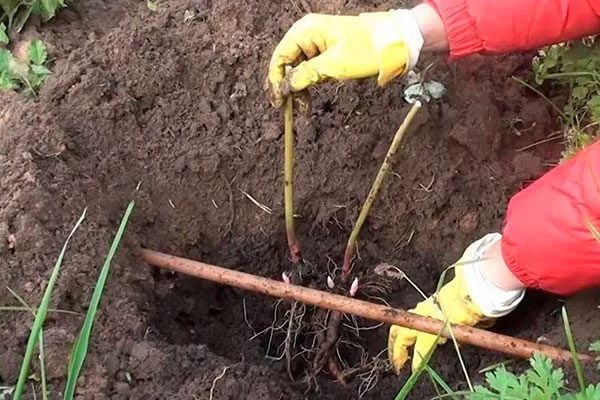
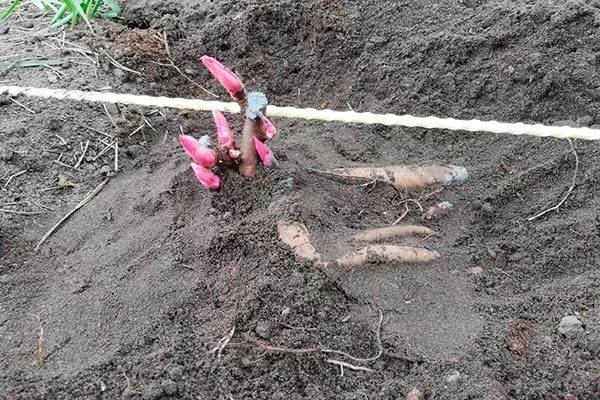
- Place the division on the mound, carefully spreading the roots in all directions.
- Cover the roots with soil, compacting it lightly with your hands to eliminate air pockets. Make sure the renewal buds are 3-5 cm below the soil surface. Be careful with the planting depth: too deep can result in a lack of flowering, while too shallow increases the risk of root freezing in winter.
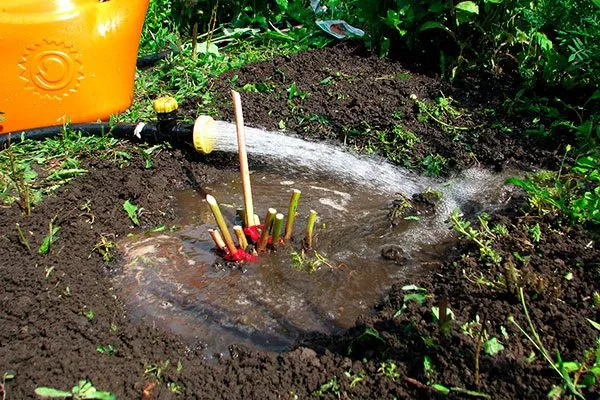
- Water each hole generously, using at least 10-15 liters of water.
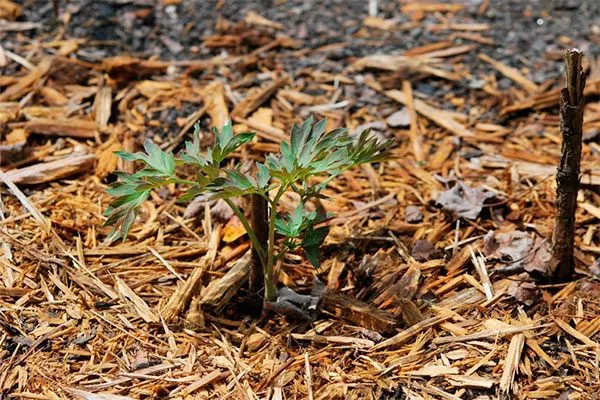
- Mulch the tree trunk circle with a 5-7 cm layer of peat, compost or small wood chips.
Basic rules for caring for peonies after transplantation
Caring for your plants after transplanting will help them quickly establish themselves in their new location and prepare for winter. Follow standard agricultural practices:
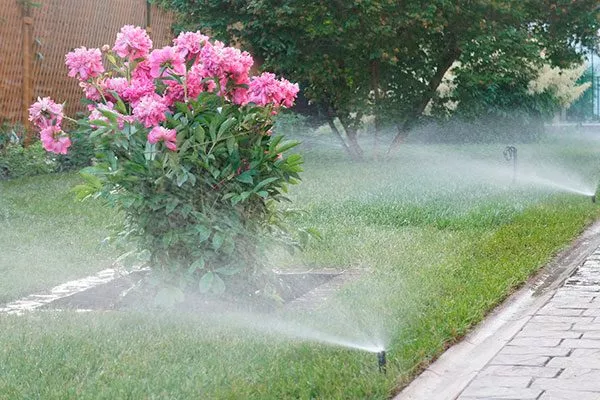
- Watering. Moisten the soil regularly, preventing it from drying out. During the first two weeks after transplanting, water more frequently—2-3 times a week, especially in dry weather. Later, reduce watering to 1-2 times a week, depending on conditions.
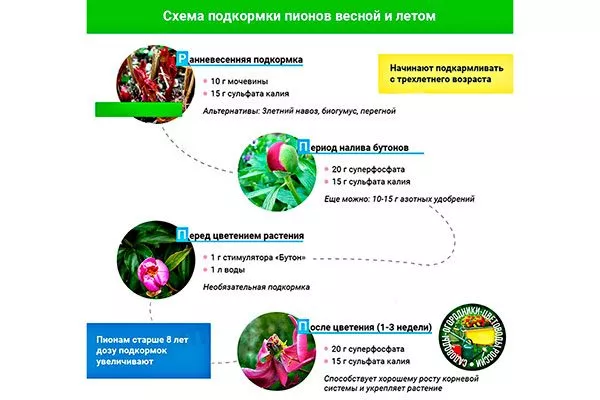
Avoid both drought and waterlogging. Water in the morning or evening to avoid dripping onto the leaves. - Top dressing. Avoid fertilizing during the first month after repotting—this will help the plant focus on rooting rather than foliage growth. In the spring of the following year, apply a complete fertilizer for flowering plants, high in phosphorus and potassium.
Use nitrogen fertilizers sparingly to avoid excessive foliage growth at the expense of flowering. - Mulching. Mulch the tree's trunk with a 5-7 cm layer of humus, compost, or pine needles. This soil cover will retain moisture, prevent weed growth, and protect the roots from overheating in the summer and freezing in the winter. Renew the mulch as it decomposes.
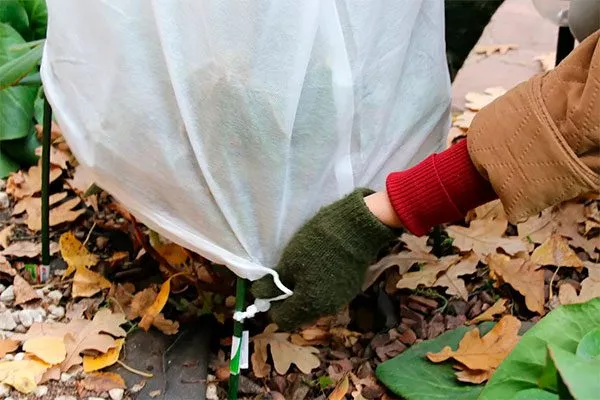
- Frost protection. In cold regions, cover peonies with spruce branches or dry leaves after the first frost to protect them from frost. In the spring, as soon as the snow melts, remove the covering to prevent rot.
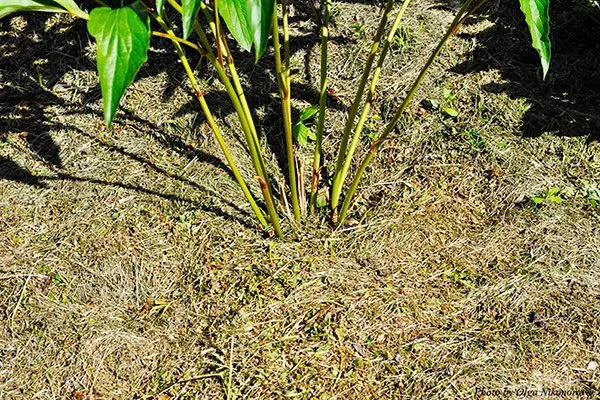
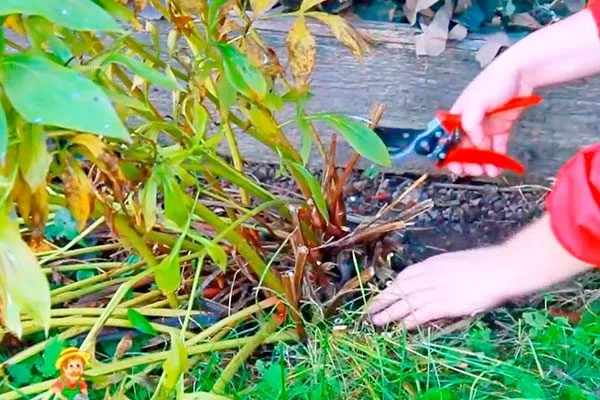
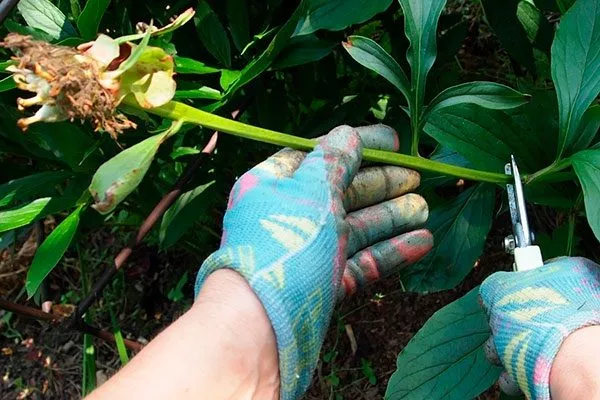
- Trimming. In the spring of the following year, remove all dry and damaged shoots. Don't cut back green stems until they naturally wither in the fall—they allow the roots to store nutrients. After the first autumn frosts, prune the above-ground portion to a height of 5-10 cm.
- Disease prevention. Check your bushes regularly for diseases. Use fungicides if necessary, especially in damp, rainy weather, to prevent fungal infections.
- Formation of a bush. In the first year after repotting, remove all emerging flower buds to allow the plant to focus its energy on rooting and strengthening the bush. Beginning in the second year, allow flowering, but limit the number of flowers to 3-5 per bush to maintain vigor.
Common mistakes when replanting peonies
To ensure successful replanting of peonies, it's important to avoid common mistakes. The most common problems gardeners encounter are:
- Inappropriate time for transplant. For example, moving during flowering or active growth threatens to increase the plant's vulnerability.
- Planting too deep. Deepening the renewal buds more than 5 cm often results in a lack of flowering.
- Incorrect division of the bush. Very small divisions take root poorly, and too large ones may develop with difficulty.
- Neglect of soil preparation. Peonies are demanding of soil and lack of proper preparation will lead to poor growth.
- Insufficient watering after transplanting. In the first weeks this can lead to the death of the plant.
- Too early application of nitrogen fertilizers. They stimulate foliage growth at the expense of root development.
- Trimming all green mass before natural wilting. This deprives the peony of the opportunity to accumulate nutrients in the rhizome.
- Lack of drainage. In heavy soils, stagnant water will lead to root rot.
- Plant in a dark, shaded place. Lack of light negatively affects flowering.
- Frequent transfers. Peonies do not tolerate regular disturbance well and may become weakened.
Over time, old peony bushes lose their former decorative appeal and abundant blooms. To restore their health and beauty, it's important to properly divide and replant them. This procedure not only rejuvenates the plant but also allows you to propagate your favorite varieties. The key is to follow the optimal timing and technique for division, and consider the specific care requirements for the flowers after replanting.