
Peonies are among the most popular and beloved garden flowers. They are prized for their lush blooms, low maintenance, and longevity. Among the many varieties, the Henry Bockstos hybrid stands out. With proper care, you can achieve beautiful blooms and a pleasant fragrance that will fill your garden throughout the spring and summer.
Who developed the variety and when?
Developed in Canada under the direction of William S. Bockstos, it was named after its originator and introduced in 1955, quickly gaining popularity and spreading worldwide.
Description of the peony Henry Boxtos
A medium-sized shrub with upright shoots and sturdy stems, it reaches a height of 90 cm. The leaves are dark green, twice trifoliate, and pointed. It bears double, rose-shaped, spherical flowers up to 20 cm in diameter.
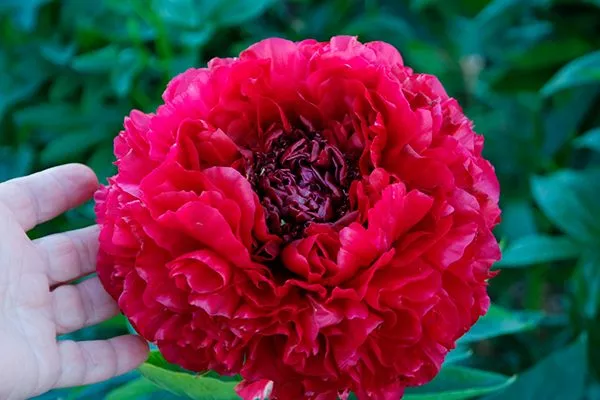
The buds are dark red, dense, and glossy. The petals are firm, wide, and satin-like, curling inward and tightly pressed together. The flowers are sterile, lacking stamens and pistils. They have a faint, pleasant aroma.
Features of flowering
It begins to bloom fully in the third year after planting. The timing is determined by the early period, which is sensitive to climatic conditions. The buds typically open in late May, and even as they fade, they retain their petals.
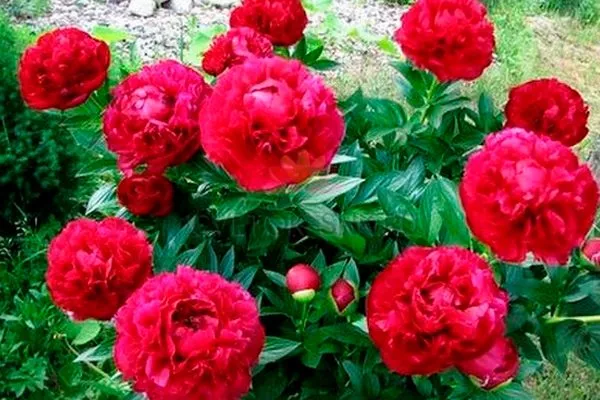
The formation period extends until the first half of June, usually lasting about four weeks. It blooms only once per season. In bright sunlight, the inflorescences may fade slightly.
Resistance to diseases and pests
There is a risk of gray mold, rust, spotting, botrytis, powdery mildew, and mosaic. Among pests, beware of ants, nematodes, and caterpillars, as they can pose a threat to the plant.
Growth characteristics
It reaches a height of 90 to 100 cm, forming sturdy stems that support the flowers. Supporting the bushes is sometimes necessary, as the buds can bend the stems toward the ground.
Climate conditions and frost resistance
They demonstrate frost resistance down to -34°C, but gardeners provide protection as a precaution. The hybrid grows successfully in urban conditions.
Application in design
It pairs beautifully with roses, clematis, and phlox, making an attractive addition to any flowerbed. Its large, vibrant flowers can enhance a gazebo, lawn, or garden bed. It's attractive in mixed borders, as a specimen, or against a backdrop of conifers.
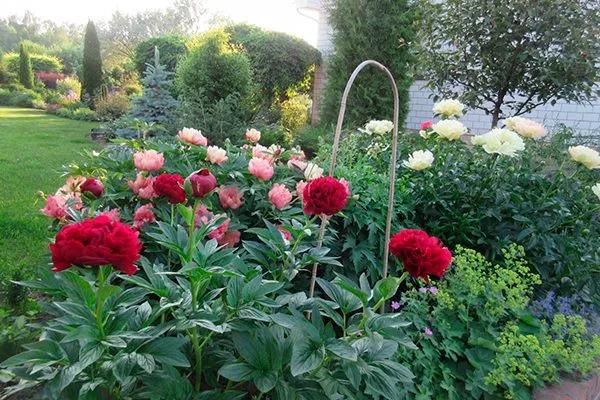
The milky-flowered varieties Duchesse de Nemours and Festival Maxima combine beautifully with the hybrid, creating a magnificent composition accessible even to novice gardeners. The red varieties pair well with white and pink ones, adding variety to the garden's color palette.
The hybrid requires ample space, so it's important to consider its size when planting. Placing it in a pot that restricts root growth will negatively impact flowering. Peonies don't prefer acidic soil, so avoid planting them near rhododendrons.
Advantages and disadvantages of the variety
It can transform any area. This perennial impresses with its exquisite beauty and abundant buds. It is considered a highly decorative plant, characterized by its ease of maintenance and resilience. It is important to explore the pros and cons of this hybrid.
It is widely used in landscape design and floral arrangements, providing a unique contribution to the beauty of the surrounding space.
Reproduction
Florists generally prefer rhizome division. Under certain conditions and for certain purposes, propagation methods using seeds and stem cuttings are used, especially when preserving varietal characteristics is not required.
Seeds
Sowing seeds is a common practice for growing seedlings, which involves transitioning from warm to cold conditions. Step-by-step instructions:
- 2-3 days before sowing, place the seeds in a growth stimulator (for example, Epin), a weak solution of potassium permanganate or settled water.
- Plant them in shallow containers half filled with damp, warm sand mixed with soil.
- Cover the container with plastic film to create a greenhouse effect. The optimal temperature is 25-28°C during the day and 15°C at night. Ventilate the container once a week.
- Once the sprouts appear (after about two months), remove the plastic wrap, thin out the plants, pinching off the tips, and transplant them into separate containers with fertile soil. The temperature during this period should be between 6 and 12°C.
- After 3-4 months, when the leaves appear, transfer the seedlings to a room with a temperature of +18-22°C, cover with film again and maintain these conditions until planting in the ground.
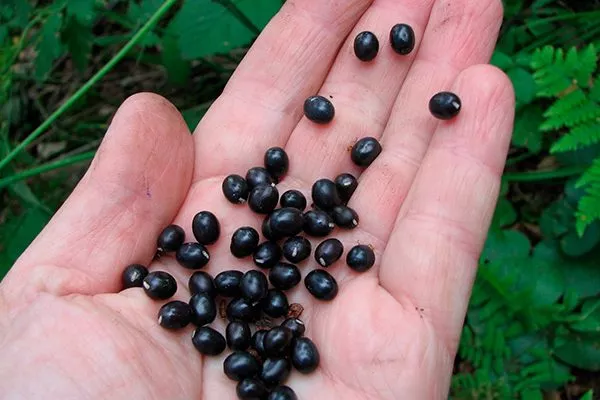
The optimal time for planting is early August. Time your seeding so that you have the seedlings ready by then.
Cuttings
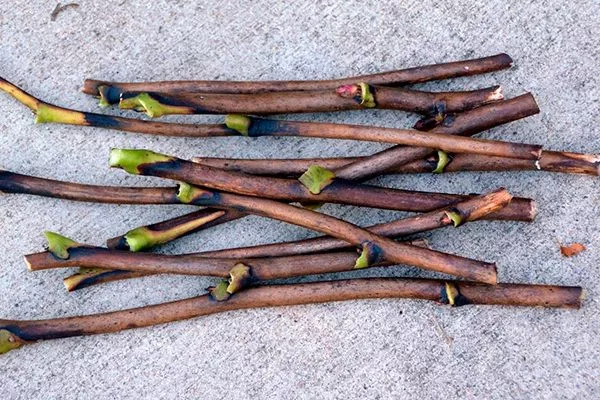
Not the most popular method, as it requires more effort. Follow these instructions:
- Select a stem with an undeveloped bud in the middle of the bush.
- Use pruning shears to cut off the shoot.
- Transform it into a cutting by shortening it diagonally, remove the leaves, leaving stumps no more than 10 cm long.
- Apply Kornevin to the cut site and place in a pot with good drainage, placing the oblique cut downwards at a 45-degree angle.
- Cover the cutting with a bottle to create a greenhouse effect.
- ✓ Soil temperature should be at least +15°C for optimal root formation.
- ✓ Using only healthy, non-flowering shoots increases the chances of successful rooting.
Landing rules
In temperate climates, the optimal time for planting and transplanting is between August 20 and September 20. This allows the plant to establish roots before the cold weather sets in. In northern regions, plant earlier. Spring planting is also possible, but this may negatively impact development.
Helpful tips:
- First, inspect the rhizome and remove any damaged areas. Treat the cut areas with wood ash after rinsing with water.
- Each division should have at least 2-3 renewal buds. Shorten long roots to 10-15 cm.
- To protect against diseases, immerse the material in a solution of potassium permanganate or Fundazol for an hour, then in water with a root formation stimulator for three hours.
- Choose a sunny area with light shade during midday hours.
- The planting hole should be sized to accommodate the root system. Place renewal buds at a depth of 5 cm. Planting deeper may result in shoots freezing, while shallower pits may hinder germination.
Henry Boxtos prefers neutral or slightly acidic soil. If the site has black soil, additional fertilizers may not be necessary when planting. Excess nutrients can negatively impact flowering.

Place a 5-7 cm layer of sand or expanded clay at the bottom of the planting hole to prevent waterlogging. Top with a nutritious soil mixture consisting of:
- non-acidic peat - 1 handful;
- sand (for heavy soil);
- rotted compost;
- Superphosphate – 70-100 g;
The soil should be loose and well-drained. Prepare the planting hole 2-3 weeks before planting and water thoroughly to settle the soil.
Step-by-step algorithm:
- At the bottom of the hole, form a mound on which to place the root of the seedling.
- Place the division at the required depth, cover with soil and compact lightly with your hands.
- Carefully straighten the roots of the seedling when planting.
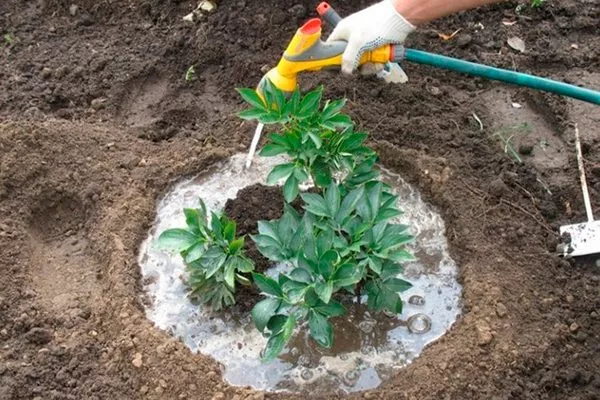
- Water and mulch with peat or compost. Using manure is not recommended, as it can promote fungal diseases.
- Make a circular trench around the bush to prevent water from spreading.
Plant the broken roots horizontally at a depth of 6-7 cm. They will bloom in 3-4 years.
Aftercare
Caring for Henry Boxtos peonies is simple and requires following a few basic rules. Be sure to follow proper cultivation practices:
- Watering. The plant prefers moderate watering, but requires abundant moisture during flowering.
- Top dressing. During the first year after planting, fertilize with mineral fertilizers to establish a healthy root system. After flowering, add potassium and phosphorus to the water for strengthening.
- Weeding and loosening. Regularly remove weeds around the bushes, especially between shoots. The root system tends to grow upward, so loosen the soil around the bushes carefully. Add soil closer to the shoots.
What to do after flowering?
After flowering, several care steps are necessary. Ensure watering and fertilizing, remove faded flowers, and trim the stems to a height of 10-15 cm. Mulch the area around the trunk with peat or compost.
In the fall, after the first frost, when the leaves turn yellow and dry out, prune. Cut off all above-ground parts of the plant, leaving stumps 5-7 cm high. Remove all dry and damaged leaves and stems. Collect and destroy plant debris.
Preparing for winter
Pruning is essential for a lush bloom next season. Avoid pruning too early in the fall, as this will deprive the plant of nutrients. Wait until the first frost, when the foliage has drooped.
14-15 days before the onset of sustained cold weather, apply a phosphorus-potassium fertilizer—monoposite phosphate or superphosphate. In rainy weather, scatter the dry fertilizer around the bush. In dry weather, it's better to use liquid fertilizer.
- ✓ The presence of a mulch layer at least 10 cm thick protects the root system from freezing.
- ✓ Not pruning the stems until the first frost provides the plant with additional nutrients.
Cut the stems back to 3-5 cm from the ground. Remove all cut leaves from the flowerbed and burn or remove them from the area. Mulch with compost or peat. In northern regions, it is recommended to cover first-year plants with an additional 15 cm of mulch.
Pests and diseases
Under unfavorable conditions, the crop can be susceptible to various diseases and pests. Prevention requires removing weeds and spraying plants with fungicides and insecticides.
Diseases:
- Gray rot.Affects dense plantings and manifests itself as shoot drying.
- Root rot.The fungus affects the root system, manifesting itself as a white coating on the roots and their rotting.
- Rust. It appears as brown spots, dark borders and swellings on the underside of the leaves.
- Mosaic.A viral disease that affects leaves. It appears as a marbled pattern.
To treat diseases, treat the plant with fungicides three times per season. Use clean gardening tools and promptly remove dead leaves and buds.
Pests:
- Aphid.Insects feed on the sap of buds and leaves, causing the plant to wilt. To control aphids, use insecticides such as Aktara, Confidor, or Iskra.
- Bronze beetle.Brightly colored insects that eat flowers. To control these pests, use Grom or Medvetoks.
- Root-knot nematodes.Root worms. Use insecticides to control these pests. Remove the pests by hand or apply insecticides to the shrub.
Reviews of the Henry Boxtos peony
Henry Boxtos is a magnificent peony that will grace any garden. Its luxurious blooms, low maintenance, and disease resistance make this variety an ideal choice for gardeners of all skill levels.