
The Gardenia peony remains popular among gardeners. Its beauty rivals that of roses, yet it's less demanding in terms of growing conditions. This resilient plant graces the garden with its delicate crown not only during flowering but also at other times.
Who developed the variety and when?
In 1955, a new variety was created in the United States, which was subsequently added to the Russian State Register in 1994. It was developed by the renowned breeder Lins. The cultivar actively participated in various championships and events, where it repeatedly won well-deserved awards.
Description of the appearance of the plant and flowers
Gardenias form strong stems and flower stalks that provide stability even during heavy blooms, requiring no additional support. Reaching heights of up to 90 cm and widths of up to 50 cm, they maintain their shape thanks to their sturdy stems.
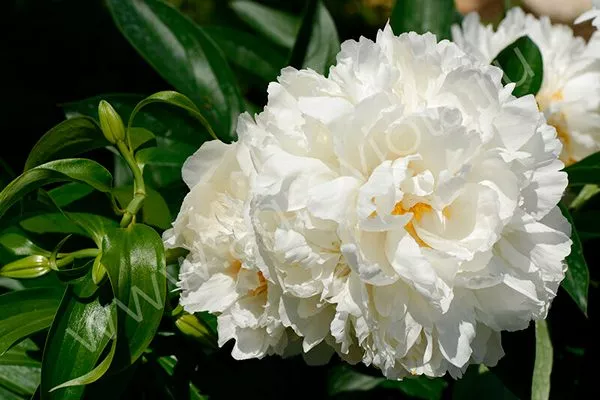
It grows relatively quickly, but doesn't begin to bloom until three years after planting, as the root system is actively developing during the first few years. The bush is covered with large, pinnately dissected leaves. The foliage is dark green, turning crimson in the fall.
Characteristics
This plant prefers sunny locations – only in open areas will it bloom profusely and for a long time. This variety is highly frost-resistant and can withstand extreme temperatures down to -40°C.
The variety has high drought tolerance, making it an excellent choice not only for the southern and central regions of Russia, but also for Siberia and Transbaikal.
Timing and characteristics of flowering
Belongs to the category of double rose-shaped peonies. It is characterized by large (up to 22 cm), hemispherical single flowers consisting of numerous concave petals. The shape is reminiscent of gardenias, which inspired the name.
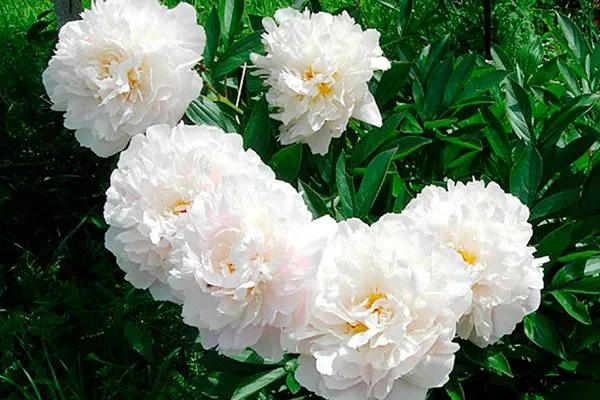
The petals are initially white with a slight pinkish tint, which matures to a creamy color. The flowers are pleasantly scented. A distinctive feature of this cultivar is the abundance of lateral buds, ensuring a long and abundant bloom from late spring to midsummer.
Application in design
Gardenia peonies are popular for decorating gardens and are used in a variety of arrangements. The bushes look stunning both individually and in groups, pairing beautifully with a variety of plants blooming in shades of pale yellow, deep red, and crimson.
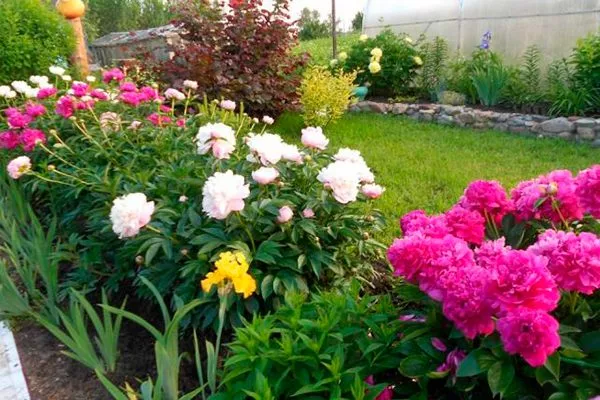
Gardeners often combine perennials with irises, delphiniums, asters, carnations, phlox, bellflowers, daylilies, lupines, catnip, and geraniums. They look great against conifers such as pines, arborvitaes, and junipers.
These flowers fit beautifully into flowerbeds, mixed borders, and rabatki. They look attractive near wrought iron fences, on lawns and flowerbeds, in rockeries, and as part of borders, creating a well-kept and colorful landscape.
Methods of reproduction
There are several ways to increase the number of seedlings at home. Gardenias are propagated by seeds, top cuttings, and division.
Seeds
Propagation by seed is possible, but it requires patience and time. Step-by-step instructions:
- Wait until flowering ends and seeds appear. They form in capsules after the flower has faded.
- Collect the seeds and clean them from the pulp, dry them.
- To promote germination, cold stratify the seeds. Place them in a container with damp sand or peat, then place them in a plastic bag and refrigerate. This process takes anywhere from several weeks to two months.
- Plant the seeds in prepared soil to a depth of approximately 1-2 cm. Make sure the soil is well-drained.
- Provide a consistently moist but not overwatered environment. As the plants grow, transplant them into individual pots or to a permanent location in the garden.
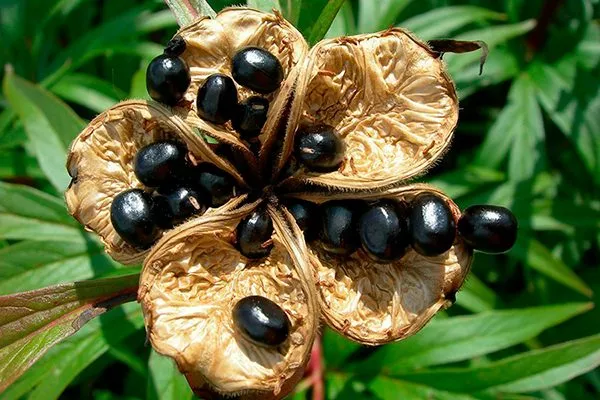
Seedlings may take several years to reach sufficient maturity and bloom. Be aware that plants grown from seed may not retain all the characteristics of the parent plant.
Upper cuttings
In the fall or spring, when pruning shoots, select cuttings 8-9 cm long. Plant the cuttings in a substrate containing peat and river sand. To prevent fungal diseases and kill pests, treat the cuttings with a pale pink solution of potassium permanganate before planting.
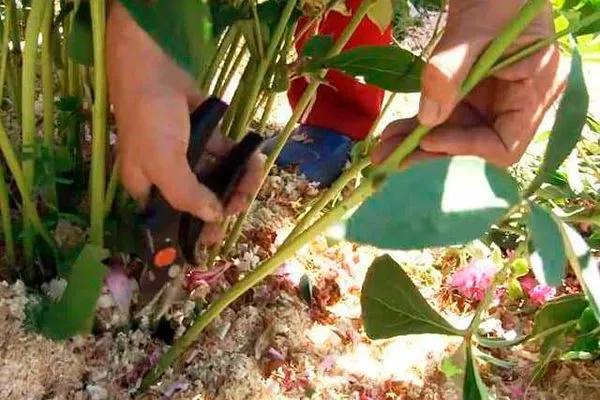
- ✓ The optimal length of the cuttings should be at least 10 cm to ensure sufficient nutrients.
- ✓ The substrate temperature should be maintained at 20-22°C to accelerate root formation.
To provide optimal conditions for the cuttings, create a greenhouse in a pot: plant them and cover them with plastic wrap or a jar. Regularly ventilate the cuttings and mist them with warm, soft water. After 3-4 weeks, transplant the seedlings into a substrate consisting of sand, peat, and humus.
By dividing the bush
A common propagation method is division. Mature plants with extensive root systems are divided into several sections and replanted. This propagation process is suitable for any healthy, mature plant with good development.
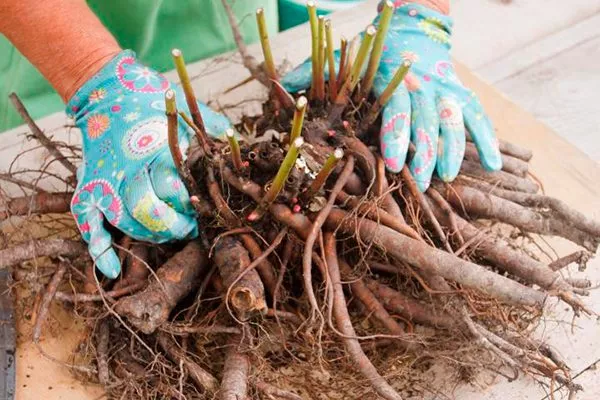
The procedure step by step:
- Trim the shoots by more than half. Tie the remaining parts to prevent breakage of the stems and buds.
- Dig around the bush in a circle, 20-30 cm from the growing point. Be careful not to damage the rhizomes.
- Water the dug up plant until the soil is washed away and the buds on the cone-shaped roots are exposed.
- If the rhizomes are dense, drive a wooden stake into the center to divide it into several parts.
- Trim off damaged and rotten areas, shorten thin roots to 15-20 cm.
- Using a sharp knife, divide the resulting sections into planting units consisting of 3-5 buds and 1-2 large, intact roots. Trim the remaining stems down to the buds.
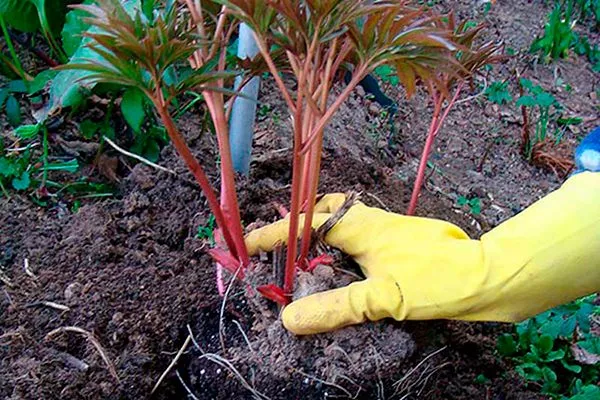
Plant the prepared seedlings in pre-dug holes. The top root bud should be buried 3-5 cm deep.
Landing rules
Choose areas with good sun exposure or some shade during the day. In the shade, the plant may survive, but flowering will be weak or even absent. It's best to plant flowers away from buildings to ensure good air circulation. Maintain a distance of at least 1 meter between plants.
- ✓ Soil pH should be in the range of 6.0-7.0 to ensure nutrient availability.
- ✓ The distance between bushes is at least 1.5 m to ensure sufficient air circulation.
Fertile, loose loams with a slightly acidic texture are preferred. If the soil is too acidic, lime it; add sand to heavy clay soils. Improve sandy soils by adding clay. Avoid areas with a high water table.
The seedling's root system should be well-developed, with 3-5 buds. Avoid planting if the cuttings are damp, rotten, or have plaque, growths, or knotty growths on the roots. It's best to plant in the fall to avoid potential complications before the spring growing season begins.
Step-by-step algorithm:
- 25-30 days before the expected planting date, dig a hole about 60 cm in diameter and depth.
- Prepare a nutritious soil mixture from leaf soil, peat, humus and sand, adding wood ash and superphosphate.
- Fill the planting holes 2/3 full with the nutrient mixture.
- Place the seedling so that the buds are buried 4-5 cm deep.
Water thoroughly and mulch the soil with peat.
Aftercare
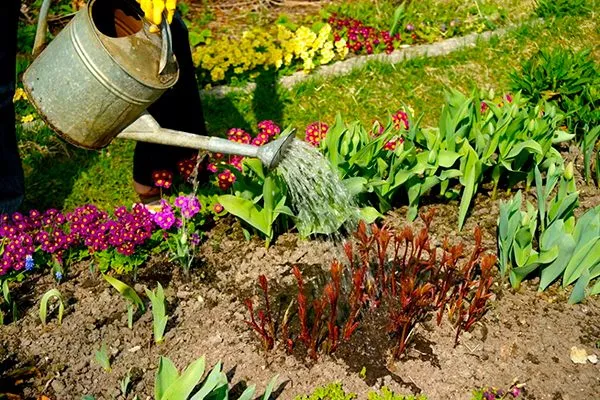
Caring for this flowering plant is a task even a novice gardener can handle. Regular watering is essential. Despite its high drought tolerance, ensure the soil remains moist during bud formation, during flowering, and during bud set in the fall. Requires 20-30 liters of water per plant.
Young peonies that haven't yet begun to bloom should be fed foliarly. Fertilize mature plants with mineral fertilizers three times a season: in early spring, during bud formation, and after flowering.
Regularly loosen the soil to oxygenate the roots. Consider mulching—this makes planting much easier by preventing weed growth, preventing soil compaction after watering, improving the quality of the soil layer, and retaining moisture.
Preparing for winter
Preparing for winter is a simple process. After the first frost, trim dead stems back to the soil surface and water the root system thoroughly. This is usually sufficient, but in northern regions, additionally mulch the planting area with compost, peat, or spruce branches.
Pests and diseases
It has low susceptibility to pests and diseases, which more often affect weakened and diseased plants. The key to prevention is proper plant care.
The following pests can attack the crop:
- Aphid. A small insect that forms colonies and sucks plant sap. It is often attracted to ants, which, by taking nectar from flowers, promote aphid infestation. Use insecticides to control it. Actellic is considered the best treatment.
- Thrips. These are small pests that live on the undersides of leaves and suck out the juices. Use standard products such as Fitoverm or Antithrips.
The variety is resistant to botrytis, but if not properly cared for, it may become infected with the following diseases:
- Powdery mildew. It manifests itself as a white, powdery coating on the leaves, which then turns black, causing deformation and drying out. Use chemicals to combat powdery mildew, such as Hom, Skor, or Quadris.
- Rust. Bright yellow or brown spots appear on the upper surface of the leaf. Combat rust with Fitosporin-M and Ordan.
- Brown spot (cladosporiosis). Large brown or dark red spots on leaves that enlarge and turn black. Effective treatments include Abiga-Peak, Bravo, and Kaptan.
- Ring mosaic. This is a viral disease that cannot be cured. If detected, dig up and destroy infected bushes.
Possible problems
Growing flowers can be challenging. Let's look at the main issues:
- During the formation of buds and flowers, the plant does not tolerate sudden temperature fluctuations.
- Insufficient light can cause the plant to stop flowering, become elongated, have smaller leaves, and the lower parts of the shoots become exposed.
- Irregular watering causes buds to fall off during the period of bud formation.
- During the opening of the buds, it is undesirable to change the position of the flower.
- Yellowing of leaves may be a result of using hard water.
- Leaf discoloration can occur when temperatures drop.
Reviews of the Gardenia peony
The Gardenia peony is a vibrant member of the peony family. Its beautiful bushes, covered in large white flowers, are especially attractive to gardeners. Its disease resistance, ability to withstand harsh winters, and ease of care make it one of the best varieties for planting in the garden.