
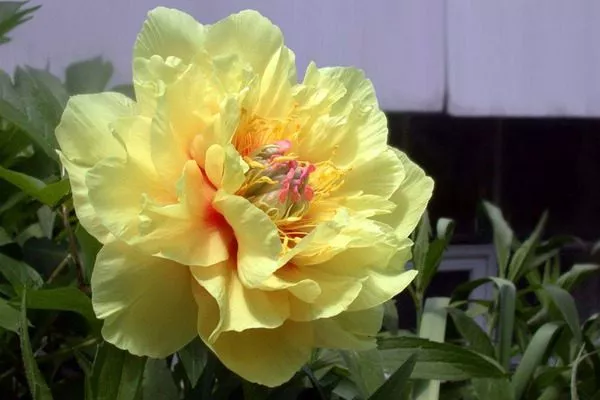
The Garden Treasure peony stands out with its vibrant two-tone coloring and large, lush blooms with a rich fragrance. This hybrid combines frost resistance and high adaptability, making it suitable for growing in a variety of regions. The bushes have a neat, spreading form, and blooms last for several weeks, filling the garden with an exquisite fragrance.
History of selection
The Itoh hybrid Garden Treasure was developed by American breeders by crossing tree and herbaceous peonies. This perennial was officially registered in 1984, and its creator is Hollingsworth.
Description of the peony Garden Treasure
A medium-sized bush peony grows up to 80-90 cm. Distinguishing characteristics:
- The bush forms strong, straight stems of a light green hue, resistant to the load from large flowers.
- The foliage is dark emerald, pinnately lobed, and densely covers the shoots.
- The flower stalks are slender, and the root system is well developed. With age, the bush takes on a spreading form.
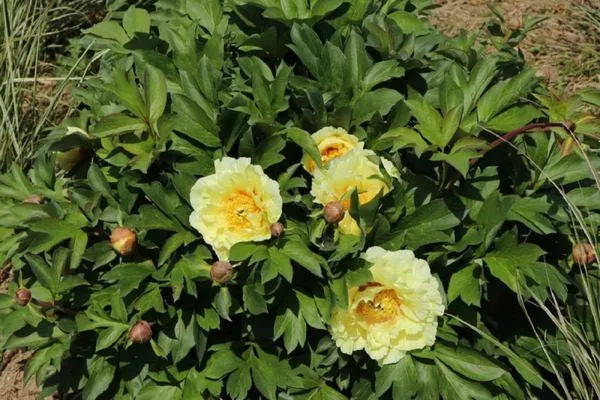
- Despite its moderate growth rate, the plant quickly increases in volume – the diameter of an adult bush reaches 75-90 cm.
- A peony can grow in one place for over 10 years.
- In spring, single buds appear at the tops of the stems, developing into lush flowers. Over the course of a season, up to 50 large inflorescences, 22-24 cm in diameter, are formed.
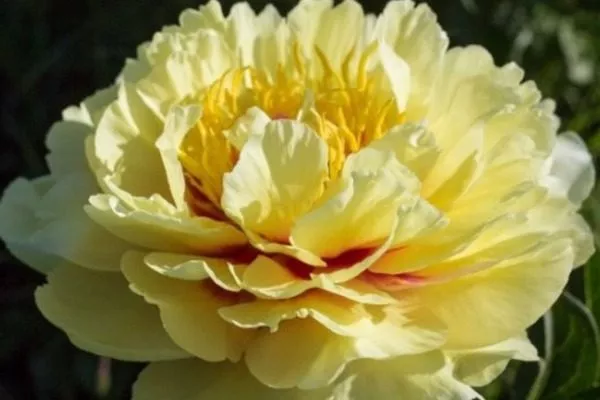
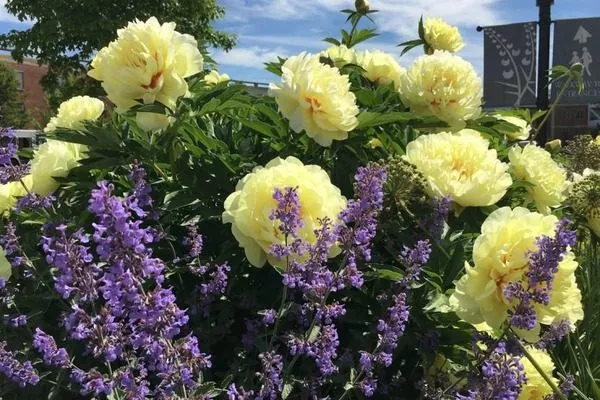
- The flowers are semi-double, rounded, with wavy petals that fit tightly together. The base color is a rich yellow, with scarlet spots visible at the base of the petals.
- The aroma of the flowers is expressive, with fragrant shades.
Features of flowering
American-bred peonies are mid- to mid-late-blooming varieties. The first buds usually appear in the second or third year after planting. Flowering begins in late May or June, sometimes extending to early July, depending on weather conditions.
The flowering period lasts approximately four weeks. It is characterized by its brightness, abundance, and wave-like, continuous dynamics.
Application in design
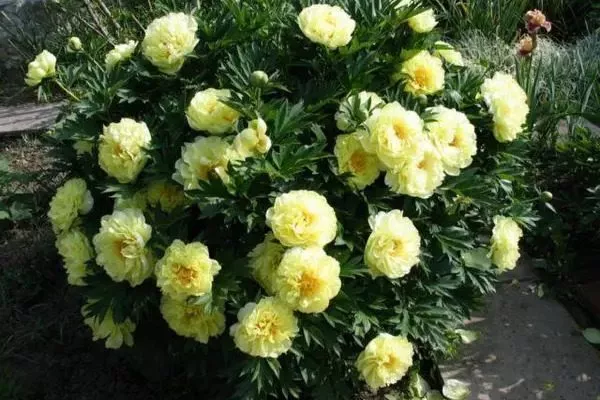
Bright yellow peonies with scarlet accents are a real find for any gardener. This perennial looks beautiful both planted alone and in flower arrangements. They are planted in the following locations:
- flower beds;
- flower beds;
- parks;
- summer cottages and garden plots.
The American hybrid harmonizes with a variety of crops:
- phloxes;
- sedums;
- lilies;
- lavender;
- petunias;
- hydrangeas;
- delphiniums;
- daisies.
The flower combines with low-growing conifers such as thuja, juniper and dwarf spruce.
Methods of reproduction
Since the Garden Treasure variety is a hybrid, seed propagation is impossible. Vegetative propagation methods include division, cuttings, or layering. Cuttings are considered the least traumatic method and are performed when the plant is at least five years old.
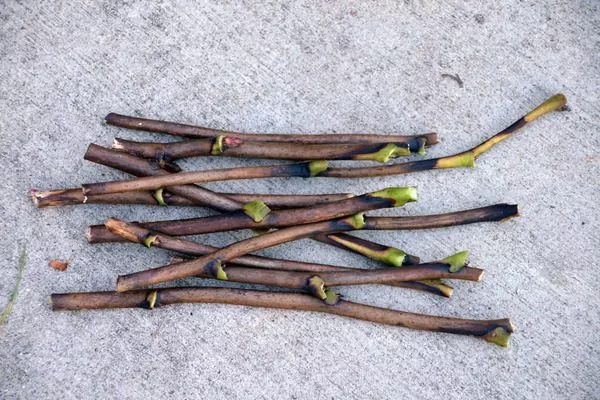
Step-by-step instructions for propagation by cuttings:
- In early June, take cuttings from the middle portion of the shoots—each should have two internodes. Make the top cut 2 cm above the last leaf, and the bottom cut just below the leaf cushion.
- Soak the cuttings for several hours in a solution of a rooting stimulator, such as Kornevin.
- Prepare a soil mixture of equal parts turf soil and humus, add 5-6 cm of wet sand on top.
- Plant the cuttings at a 45° angle in open ground, water thoroughly and cover with film.
- Rooting takes place in a greenhouse for a month. Then harden off the plants by regularly airing them.
- At the end of August, remove the cover for a few days, after which mulch the area for the winter – use straw, sawdust, pine needles or peat.
In early spring, after the snow melts, it's important to remove the mulch as soon as possible to prevent the seedlings from rotting. Transplant young plants to their permanent location after 2-3 years.
Growing rules
Even novice gardeners can plant the Garden Treasure peony. It requires little care, establishes itself well, and thrives when simple gardening practices are followed.
Selecting a site
When growing peonies, choosing the right location is especially important, as it determines the bush's growth rate and its decorative appeal. This variety thrives in full sun, so the site should be open and well-lit throughout the day.

Basic requirements:
- Avoid placing the plant near tall trees, dense shrubs, and buildings—they create shade and impede air circulation. In such conditions, the peony may grow, but it won't bloom.
- Consider the groundwater level: if it is close to the surface, it is better not to plant in this place, otherwise the roots will begin to rot and the plant may die.
Soil preparation
Peonies are best planted in fertile or pre-enriched soil – the following factors depend on its quality:
- splendor of flowers;
- number of formed buds;
- brightness of aroma.
Cultivated, slightly acidic soil is optimal for growing.
Landing
Autumn is a good time to grow peonies. It's time to start preparing the plot as early as early August. Helpful tips:
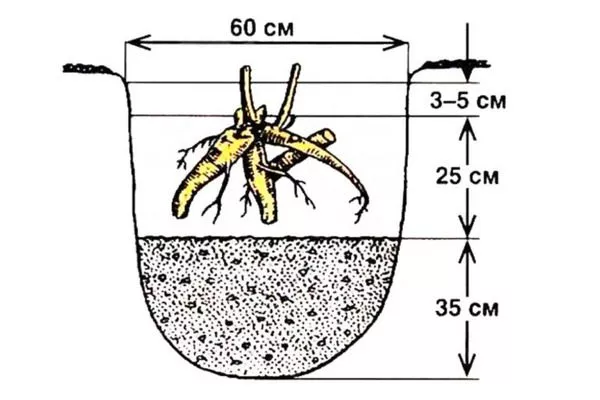
- For good plant development, plant it in planting holes measuring approximately 60×60×60 cm.
- Fill the hole two-thirds full with a nutrient mixture of peat, humus and sand; if desired, add a liter jar of wood ash to enrich the soil.
- Place the rhizomes 3-5 cm deep from the soil level.
The first bloom usually occurs in the second year after planting. If buds don't appear, don't panic – the main thing is that the number of stems increases. This means the peony has successfully established itself and will delight you with lush blooms next season.
Aftercare
Garden Treasure doesn't require frequent watering—moderate moisture is sufficient. If there's no rain, water the mature plant 2-3 times a month, using 20-30 liters of water per plant.
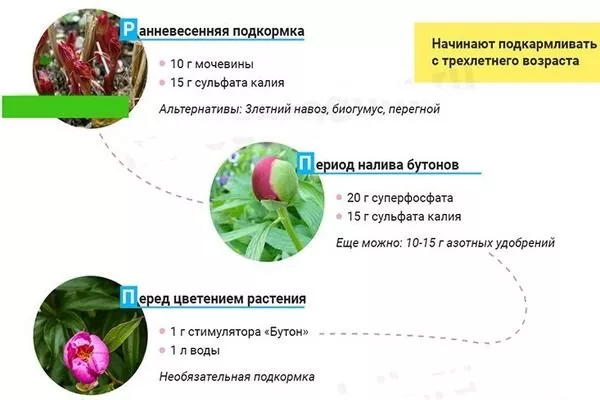
Feed the bush several times per season:
- after the snow melts – watering with a solution of potassium permanganate (2 g per 5 l of water);
- in April, with the beginning of growth – application of nitrogen fertilizers;
- in mid-May – use of complex mineral supplements;
- during the period of bud formation – use of a mixture of ammonium nitrate, superphosphate and potassium substances;
- after flowering, at the beginning of August – Phosphorus-potassium fertilizer (superphosphate and potassium) is effective.
Till the soil regularly—1-2 times a month. To retain moisture and control weed growth, it's a good idea to mulch the area in the spring with straw, hay, sawdust, or other readily available material.
Preparing for winter
Apply the final fertilizer in late August or early September, then do not fertilize the peonies. Basic requirements:
- Autumn pruning of bushes is not necessary – it's best to leave them alone for the first 4-5 years. Later, you can perform sanitary and formative pruning, removing damaged, diseased, and overly protruding branches.
- Remember that several buds form on woody peony shoots, from which new shoots will appear next season, so they should not be pruned.
- For successful overwintering, hill up the peonies and mulch the roots with a 6-7 cm layer of hay or straw. Young seedlings especially require complete cover—this is essential in regions with harsh winters, such as the Urals and Siberia. In the south, such cover is not necessary, especially since Garden Treasure is a frost-hardy variety.
Pests and diseases
Peony Garden Treasure sometimes suffers from fungal and viral diseases such as cladosporiosis, powdery mildew, gray mold, leaf mosaic disease and rust.

For prevention in mid-spring, it is recommended to carry out treatment with fungicides:
- Vintage;
- Maxim;
- Profit;
- Topaz.
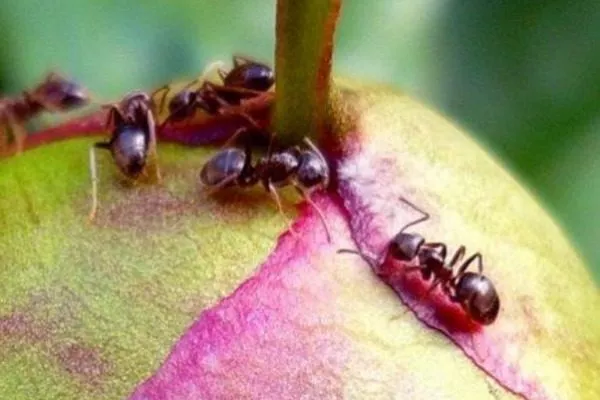
The plant may be susceptible to pests such as aphids, ants, thrips, and nematodes. Insecticides can help control these insects:
- Green soap;
- Karbofos;
- Confidor;
- Biotlin.
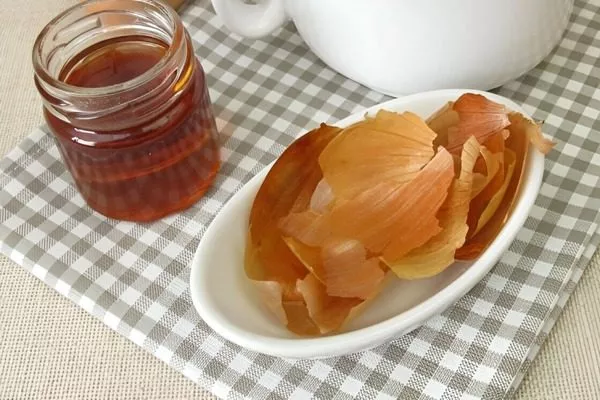
Folk remedies are also effective in controlling insects: solutions of wood ash, infusions of onion peels, garlic or celandine.
Pros and cons
Reviews
Garden Treasure is a reliable perennial with a striking appearance and consistent blooms. It's easy to care for and fits perfectly into any landscape, ideal for both experienced and novice gardeners. This variety will enhance any garden, adding vibrancy and grace.