
Among the many flowers that have taken pride of place in gardens, the Festival Maxima peony stands out for its ease of maintenance and beauty. This variety, popular among gardeners, is easy to grow. It requires proper care, which doesn't require much time or effort.
Description of the herbaceous peony Festival Maxima
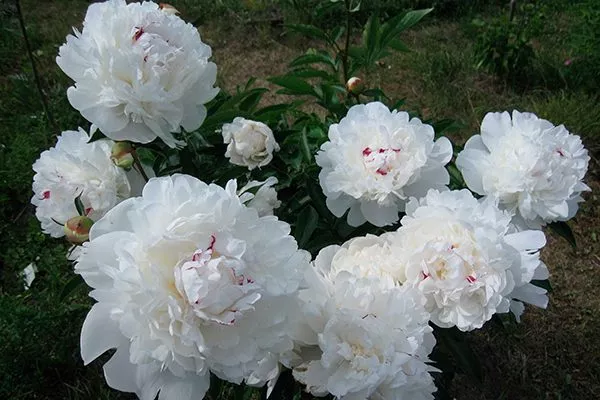
The variety's decorative qualities make a pleasant impression. Its delicate white flowers and pleasant aroma attract the attention of gardeners worldwide.
History of creation
It was developed in 1851 by breeders from the French flower company Mieller. During the 20th century, it became widespread, gaining popularity in various parts of the world.
Description of the appearance of the plant and flowers
A perennial plant with exquisite milky-white inflorescences. It reaches about 1 m in height, but some specimens can reach 1.2-1.3 m. It is characterized by a broad crown, adorned with strong shoots and wide, lacy, dark green leaves.
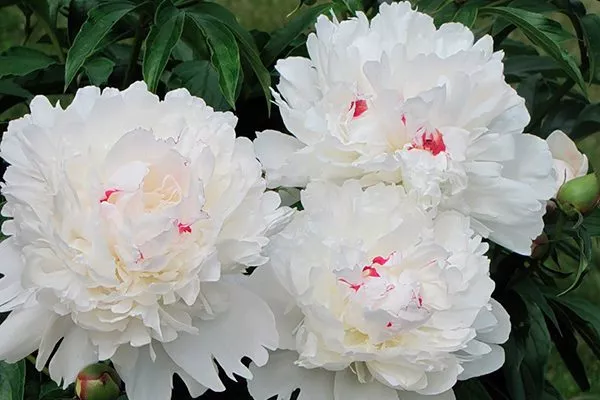
The foliage retains its decorative appearance even in autumn, retaining its green hue. As autumn approaches, the leaves acquire a distinctive burgundy-red color. Thanks to its sturdy stems, it maintains its shape even during periods of abundant flowering.
Features of flowering
Flowering begins in May-June and lasts 14-20 days. It belongs to the large-flowered group of herbaceous plants—a single bush produces numerous inflorescences up to 20 cm in diameter. The flowers are double, consisting of numerous tightly packed petals.
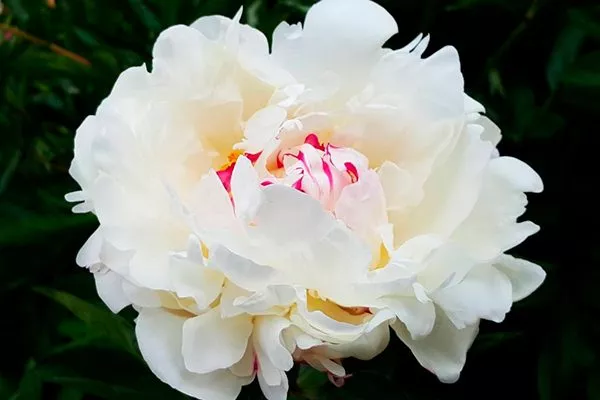
- ✓ The presence of pink or red stripes on the central petals.
- ✓ The height of the bush reaches 1-1.3 m, which distinguishes it from other varieties.
The primary color of the inflorescences is white, sometimes with a slight pink tint, but with noticeable pink or red streaks on the central petals. This special accent adds uniqueness, highlighting the milky palette. The aroma is pleasant and rich.
Sometimes the variety's inflorescences can be not only pure white but also a delicate pink. Flowering is most abundant in the second or third year after planting, but may then require careful care.
Do I need to tie it up?
It usually doesn't require staking, as its stems are strong and don't break under the weight of its large flowers. Although the shoots may bend slightly, they tolerate light winds and rain well.
In regions with frequent strong gusts of wind in exposed areas, it is recommended to support the stems with twine or tape to prevent possible damage during bud opening. Sudden strong winds can negatively affect the shape of the bush and even damage the flowers.
What kind of soil is suitable?
Choose nutritious and neutral soil. If the soil's acidity is too high, adjust it by adding wood ash or slaked lime. These substances will help stabilize the acidity, creating more favorable conditions for growth and development.
Application in design
It enjoys widespread popularity and finds numerous uses in landscape design. It is often used for solo and mixed plantings, as well as in group compositions.
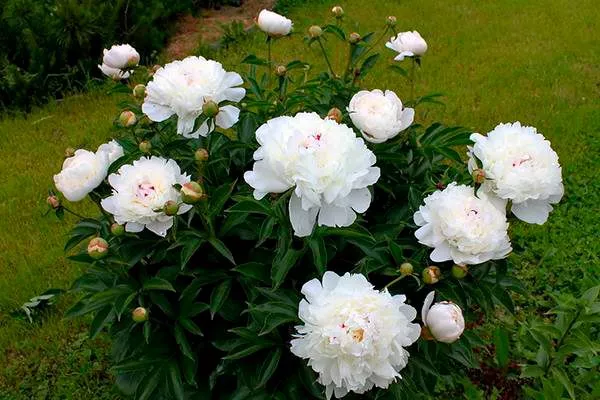
Applications in landscape design:
- Against the backdrop of emerald lawns, its elegant flowers create a contrast and add a unique charm.
- In mixed borders, combined with bulbous primroses such as tulips, for varied and colourful compositions.
- Against a background of silvery conifers, creating a spectacular combination of colors and textures.
- Along the perimeter of a flowerbed or flower garden, framing the space with its beauty.
- In a circular planting on the lawn, adding aesthetic splendor.
- Combine with several varieties of single peonies to create a fascinating and varied floral ensemble.
The Festival Maxima variety is an excellent choice for formal cut flower arrangements. White bouquets are perfect for special occasions, such as weddings and anniversaries. When cut, it pairs well with red roses, creating a bouquet symbolizing romantic affection and passion.
Pros and cons
This plant wins favor with its beautiful, snow-white blooms and ease of cultivation. Before planting, it's helpful to familiarize yourself with its characteristics, design possibilities, and basic growing guidelines.
Advantages:
Methods of reproduction
Increasing the number of specimens in a plot is quite simple. To do this, use one of the convenient propagation methods:
- Dividing the bush. In the spring, dig up a plant older than 3-4 years from the ground. Cut the rhizome into 2-3 pieces, each containing renewal buds, and let them dry. Replant the resulting pieces in separate holes.
- Stem cuttings. Select a stem with an undeveloped bud, cut it, shorten it, and treat it with a growth stimulant. Plant it in a mixture of nutrient-rich soil and perlite. Cover with a bottle to create greenhouse conditions.
- Seeds. Propagation by seed is possible, but not very effective, as Festival Maxima peonies grow slowly and do not always retain their varietal characteristics. The process involves pre-treating the seeds and then growing the seedlings and transplanting them into open ground.
- ✓ Optimum temperature for rooting cuttings: 20-22°C.
- ✓ Air humidity should be maintained at 85-90% to prevent the cuttings from drying out.
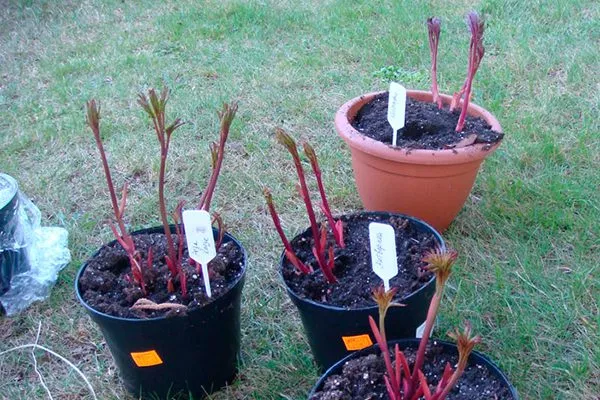
Most often, gardeners use cuttings and division, which allow them to preserve the qualities of the parent plant.
Landing rules
The best time for planting is autumn, and it's recommended to do this as early as possible to allow the seedlings to take root before frost sets in. This species tolerates spring transplanting less well, as it takes longer to adapt and may not even bloom because the buds open too early.
Helpful tips:
- It prefers a large space and bright sunlight, so keep this in mind when planting. It will grow in one spot for a long time, so make sure it has enough space and sunlight beforehand.
- Avoid planting seedlings near houses or other buildings, as runoff rainwater can damage young shoots in the spring. Space seedlings at least 2 meters apart.
- Avoid planting the crop near large shrubs and trees, as they can limit growth by competing for micronutrients in the soil.
- The soil should be nutritious and well-drained, avoiding sandy or waterlogged areas. Excess moisture can cause root rot and ultimately lead to the death of the plant.
- Preparing the soil before planting involves digging a hole at least 70 cm deep, creating drainage at the bottom, mixing the top layer of soil with humus and peat, and adding fertilizer.
Aftercare
It's important to pay attention to several key aspects. Ensure basic agricultural practices:
- Watering. Water the bushes 1-2 times a week, increasing the frequency in hot weather. Pour 20-30 liters of water under each plant, ensuring adequate moisture.
- Top dressing. At the beginning of active growth in spring, fertilize the plant with ammonium nitrate. In summer, potassium salt can be added, and in late summer or fall, superphosphate can be applied to maintain nutrient balance.
- Mulching. Mulch the soil around the roots with straw or sawdust. This prevents rapid moisture evaporation and creates a protective layer around the roots.
- Disease prevention. To protect against fungal diseases, spray the plantings with a 1% solution of copper sulfate once a month.
- Loosening the soil. After each watering, gently loosen the soil around the stems. This procedure improves soil aeration.
Following these recommendations will help ensure healthy growth and beautiful bud opening.
What to do after flowering?
The Festival Maxima peony's bloom period typically lasts until mid-July. Once the buds fade, remove them. Wait until the leaves naturally yellow and fade to pruning before pruning.
Preparing for winter
At the end of the summer season, apply mineral fertilizer and compost under each flower bush. This variety is highly frost-resistant, eliminating the need for winter shelter. Preparing for the cold season involves pruning the shoots, ensuring the stumps are 1-2 cm above the leaf buds. Perform this procedure in the fall, once the first steady frosts have set in.
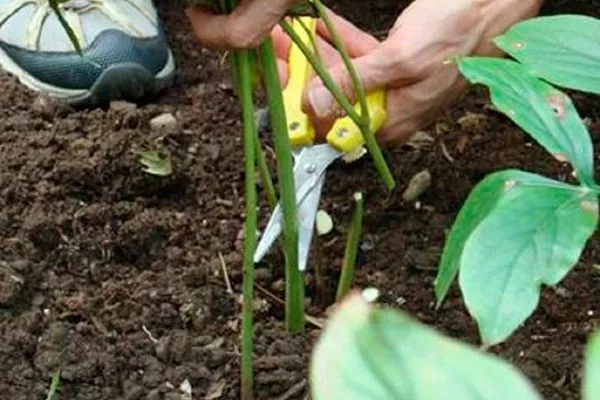
Avoid covering the bushes with cut foliage, as this can encourage the development of gray mold. Cover the bushes with a thin layer of immature compost or peat moss. These measures will help keep the plant healthy and provide optimal conditions for its winter dormancy.
Pests and diseases
It exhibits resistance to various diseases, making it more attractive to gardeners. If not properly cared for, it may be susceptible to several common diseases and pests:
- Gray rot. It occurs with high humidity, acidic soil, and excess fertilizer. If infection is detected, remove the affected areas and treat the crop with fungicides.
- Root rot. It occurs due to excess moisture or stagnant water at the base. If the disease is detected, repot the bush, removing rotted parts of the roots, and treat with systemic fungicides.
- Rust. It appears as spotting on the leaves. Remove affected leaves and spray the plant with chemicals. As a preventative measure, remove dead and diseased parts in the fall.
- Nematodes. Small worms forming on the roots. Dig up the bush and treat the soil with fungicides.
- Ants. They appear during bud formation. To eliminate them, spray the plant with a Fufanon solution.
Reviews of the Festival Maxima peony
Among the diverse world of plants, the Festival Maxima peony occupies a special place, captivating with its ease of care and magnificent blooms. Its low maintenance, wonderful fragrance, and long flowering period make it a reliable and beautiful addition to any garden landscape.