
The Duchesse de Nemours peony will grace any garden with its luxurious, snow-white crown. Its low maintenance, abundant blooms, and pleasant fragrance make it an ideal choice for gardeners. This variety is sought after by garden lovers worldwide. With proper care, you can enjoy its splendor year after year.
History of creation
In the 19th century, the breeder Calot F. from Douai became famous in France. One of his masterpieces was the white variety Paeonia Duchesse de Nemours, created in 1856. Calot dedicated it to the Duchess of Nemours, renowned for her exceptional beauty.

Description of the appearance of the plant and flowers
It is long-lived, but to maintain its decorative appearance, repotting is recommended. This promotes rejuvenation and provides additional nutrition.
Plant characteristics:
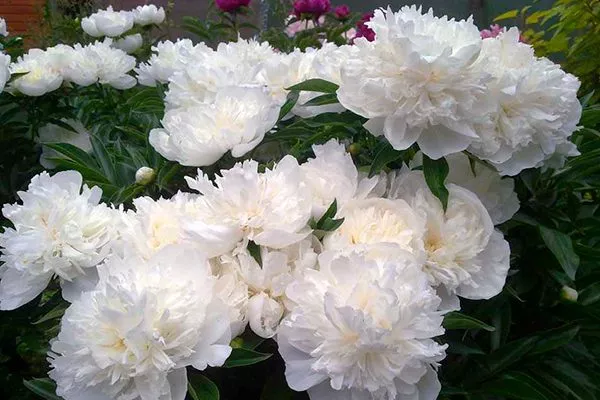
- Over the course of a season, a mature peony bush forms a lush crown with erect shoots reaching a height of up to 1 m.
- Large, dark green leaves with prominent veins create an attractive appearance. In autumn, they take on a crimson hue, becoming even more decorative.
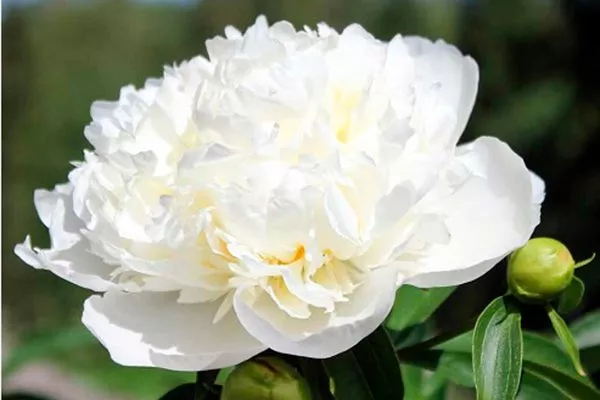
- It has large double single flowers with a diameter of 17-19 cm.
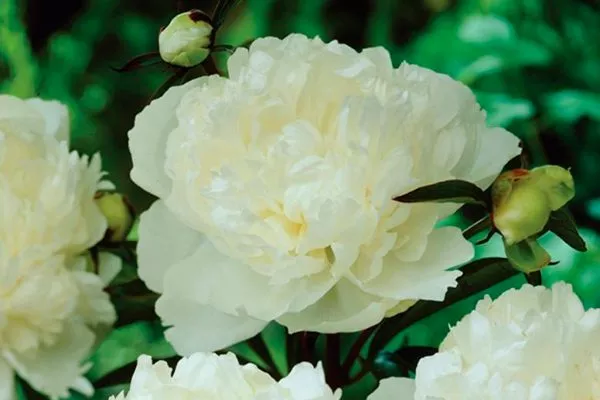
- The snow-white outer petals form a cup containing small, carved petals of a yellowish hue. This combination gives the flowers a lush, airy appearance.
- It has a subtle but noticeable aroma, reminiscent of the scent of lilies of the valley.
- Retains freshness when cut for up to 5-6 days.
- ✓ Flowers change color from snow-white to cream towards the end of flowering.
- ✓ The leaves remain decorative until the first frost, which is rare among peonies.
The root system of an adult plant consists of fleshy root tubers that grow to a depth of 1 m and a diameter of up to 35 cm.
Timing and characteristics of flowering
Bud formation begins in April or early May, and lush bloom occurs in late spring or early summer. The bud opening period lasts about 18 days.
Frost resistance
It is highly cold-resistant. It is climate zone 3 and can withstand temperatures down to -34-40°C. This makes it suitable for growing in various regions:
- Central Russia;
- Ural;
- Middle zone;
- South of Russia;
- Siberia;
- Far East.
Its cold resistance allows it to successfully overwinter in open ground without additional cover, which greatly simplifies plant care.
Where is the best place to plant Duchess de Nemours?
Prefers sunny locations but can also grow in partial shade. Avoid excessive shade, as this can negatively impact flowering and development.
Helpful tips:
- An abundance of sunlight promotes the lush bloom of flowers.
- Direct sunlight does not cause petals to fade.
- It can grow in partial shade, but the appearance of buds will be less abundant.
- In partial shade, development slows down.
- The area must be protected from strong winds.
The Duchesse de Nemours peony can grow in one place for up to 20 years.
Do I need to tie it up?
It has strong stems that remain compact for most of the year. During flowering, the shoots may slightly spread out under the weight of the buds. Staking is not necessary, but is recommended to maintain the bush's neat outline.
When flowers appear, you can tie the stems with twine or secure them to a support. This will help keep the shoots upright, prevent them from falling apart, and maintain their decorative appearance.
Application in design
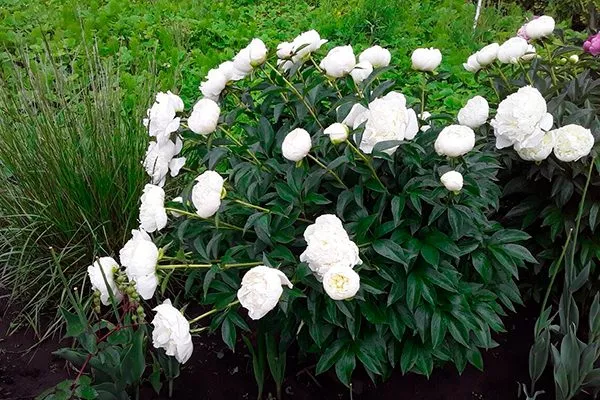
It looks spectacular in group plantings. It can also be planted singly against a backdrop of emerald lawns or conifers.
Use of peony in landscape design:
- They can be planted as specimens in the lawn or in the center of a flowerbed. Their large flowers and lush foliage create a striking accent in the garden.
- Plant in groups of 3-5 plants of the same or different varieties. This will create a lush and colorful display during flowering.
- They pair well with other perennials, such as irises, daylilies, and hostas. Their lush foliage creates a beautiful backdrop for shorter plants.
- Popular for cutting, their large, fragrant flowers look beautiful in bouquets.
They are a classic element of traditional gardens and fit perfectly into the informal setting of a cottage garden. Their low maintenance and abundant blooms make them an ideal choice for this style. Peonies can be used to create modern and minimalist landscapes.
Landing
Proper planting of peonies, including the Duchesse de Nemours variety, is key to their long-term prosperity. Here are a few steps for a successful procedure:
- Choose a well-lit location, protected from strong winds. Peonies prefer sunny spots with some shade.
- The soil should be well-drained and fertile. Add organic fertilizer to ensure nutrient-rich soil.
- In northern regions, September is preferable, while in southern regions, October is. These planting times will allow the plant to establish roots before winter.
- Select a well-developed seedling with 3-4 above-ground shoots and a healthy root system. Avoid damaging the roots.
- Dig a hole approximately 60 cm deep and in diameter. Fill it with a nutrient mixture including turf and leaf mold, humus, and sand.
- Place the seedling in the center of the hole, spread the roots, and push the growth buds 3-5 cm below the soil surface. Fill the hole with soil, compact it, and water thoroughly.
- Mulch the root zone with humus to retain moisture and suppress weed growth.
- ✓ The planting depth of root tubers should be strictly 3-5 cm, otherwise the plant may not bloom.
- ✓ The distance between bushes when planting should be at least 1 m to ensure sufficient air circulation.
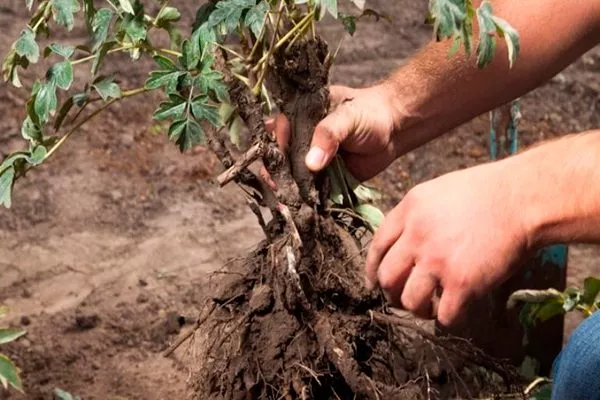
Correct planting creates a solid foundation for the healthy and beautiful development of the crop.
Reproduction
There are several ways to increase the number of bushes in a plot. Duchesse de Nemours is propagated using three methods:
- By dividing the bush. Suitable for peonies over 5 years old. Perform the procedure at the end of August. Dig up the bush and trim the stems to 10 cm, removing any diseased or dead roots. Divide the rhizome into sections with 5-6 renewal buds on each. Treat the sections with a potassium permanganate solution and plant them in separate holes.
- Cuttings. Carry out the procedure in midsummer. From a healthy plant, separate a shoot with 2-3 pairs of leaves. Trim the lower leaves and shorten the upper ones. Treat the cutting with a growth stimulant and plant it in loose soil at a 45-degree angle.
Cover with a cut-off bottle and water and ventilate regularly. Plant the rooted cuttings in open ground the following year, in August. - Seeds. Propagating peonies from seeds is a lengthy process that can take several years. Collect peony seeds in the fall, when the seed pods are brown and dry. Remove the pulp and store in a cool, dry place until spring.
Before sowing, stratify the seeds: place them in moist sand or vermiculite and store in the refrigerator for 6-8 weeks. After stratification, sow them in pots or trays with well-drained soil to a depth of about 1 cm and lightly cover with soil.
When the seedlings are strong enough, they can be transplanted into individual pots or into open ground.
Choose the most optimal option for crop propagation.
Aftercare
The Duchesse de Nemours peony is an easy-to-care-for plant, but it does require some care for abundant blooms and healthy growth. Helpful tips:
- Water regularly, especially in hot and dry weather. Avoid overwatering, as this can lead to root rot.
- Feed the plant with a balanced fertilizer in spring and fall. This will help improve growth and promote abundant flowering.
- Mulch the surrounding soil with organic material, such as compost or bark. This will help retain moisture, suppress weeds, and regulate soil temperature.
- Deadhead spent flowers to prevent seed formation. In the fall, cut stems back to ground level.
- Peonies can be divided every 3-5 years to rejuvenate them and increase the number of flowers. Divide the rhizomes in spring or fall.
By following these simple tips, you can enjoy beautiful flowers in your garden for years to come.
What to do after flowering?
After flowering, certain care is required. This includes the following:
- Trimming. During the first few years of flowering, leave no more than one bud on young plants and remove the rest. This allows them to focus their energy on growth and development. After flowering, prune all side shoots on mature peonies to encourage larger blooms.
Before wintering, cut off all the above-ground parts. - Preparing for winter. Protect young bushes from frost and adverse weather conditions during the first year after planting. To do this, mulch them with peat, mound them with soil, and cover them with fallen leaves or pine branches. Remove the covering in the spring.
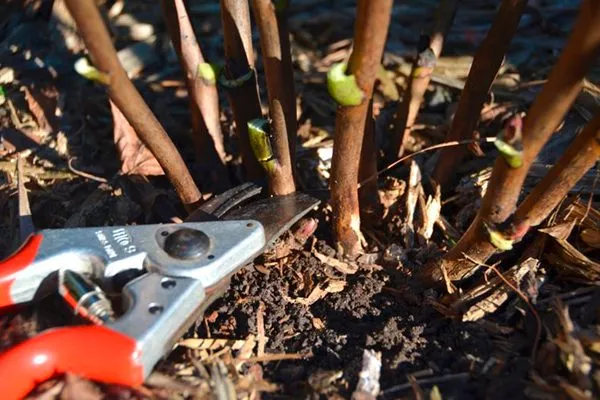
Adult specimens usually adapt well to harsh weather conditions and do not require special protective measures.
Pests and diseases
Despite its resistance to diseases and pests, it can sometimes be attacked. Common pests include aphids, ants, scale insects, and whiteflies. If insects are detected, use folk remedies such as a solution of finely ground laundry soap, an infusion of chamomile and dandelion, or a decoction of wood ash.
In terms of diseases, gray mold, brown spot, or rust are possible. To treat gray mold, treat the crop with Inta-Vir or Iskra. If brown spot is detected, apply a 0.7% copper oxychloride solution. Fundazol is effective against rust.
Reviews with photos of the milky-flowered peony Duchesse de Nemours
The Duchesse de Nemours peony is a variety that attracts gardeners with its excellent qualities and relative ease of maintenance. It's important to follow key growing guidelines, consider its characteristics, and the importance of timely care to ensure its health and beauty.