
Do Tell is a popular herbaceous peony variety among Russian gardeners, a beautiful representative of the lactiflora varieties and hybrids. It is prized for its luxurious, long-lasting blooms, robustness, and excellent winter hardiness. Its refined beauty has earned it several prestigious awards.
Who developed the variety and when?
Du Tell is an achievement of American selection, born in 1946. The author belongs to M. Auten from Pennsylvania, who created a specialized nursery and registered 298 varieties.
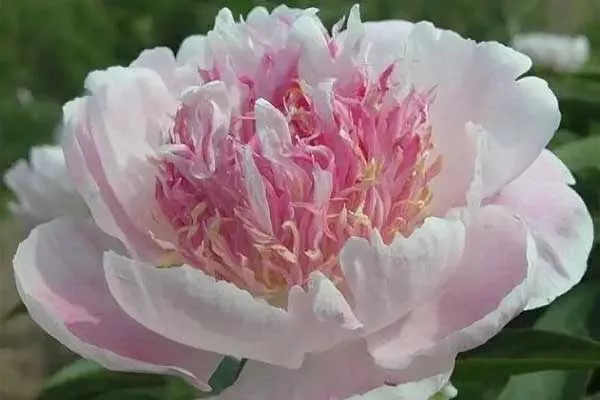
Do Tell is an intraspecific hybrid and belongs to the category of milk-flowered (white-flowered, Chinese) peonies. It has many distinctive characteristics:
- unpretentiousness;
- ability to withstand adverse conditions (heat, humid weather);
- strong immunity (plants are rarely affected by diseases and suffer from pest attacks);
- stable winter hardiness (the crop can withstand temperatures down to -34°C during the cold season);
- the ability to maintain decorative properties throughout the season.
Thanks to its hardiness, this flower variety grows well in many regions of the Russian Federation, particularly in the Moscow region. Abroad, it is even cultivated in the northern and mountainous regions of Scandinavia.
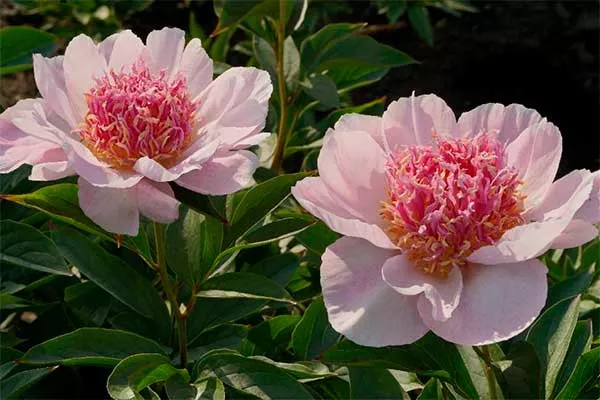
The hybrid's main advantage is its enhanced ornamental value. This was highly praised by members of the APS (American Peony Society), who awarded Oten's creation two prestigious awards:
- APS Gold Medal (2004);
- Award for Landscape Merit (2009).
Description of the herbaceous peony Du Tell
This milk-flowered hybrid has the appearance of a strong, rounded bush with slender, sturdy red stems. It is covered with dense, light-green, dissected, corrugated foliage with a glossy sheen. The plant reaches a height of 0.8-0.9 m. Its roots are strong and well-developed.
The Du Tell bush holds its shape well. It doesn't require staking. Its flower stalks don't bend to the ground under the weight of the buds. Even after the buds fade and dry out, the plant retains its decorative appeal. Its foliage remains attractive throughout the season, right up until frost.
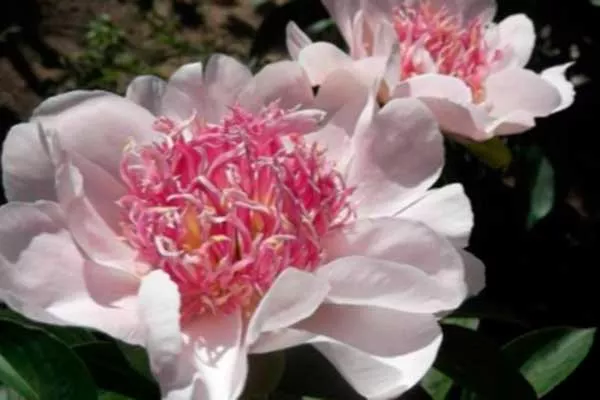
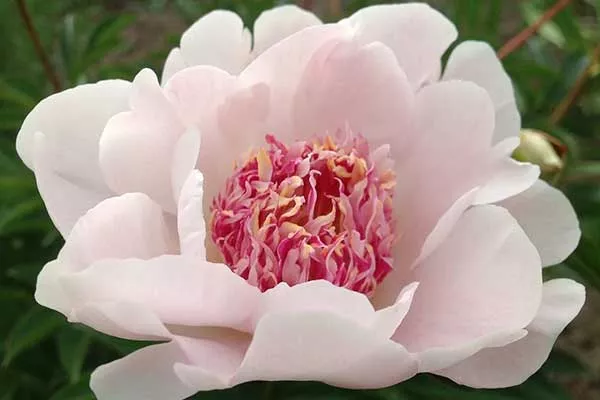
The flower has a beautiful anemone-like shape, also known as Japanese. It resembles a cup, densely packed with numerous narrow inner petals (staminodes) and framed on the outside by large outer petals. Its characteristics are as follows:
- diameter indicator - 14 cm;
- color: pale pink, white or light purple (outer petals), dark pink or red (staminodes);
- the core is yellow.
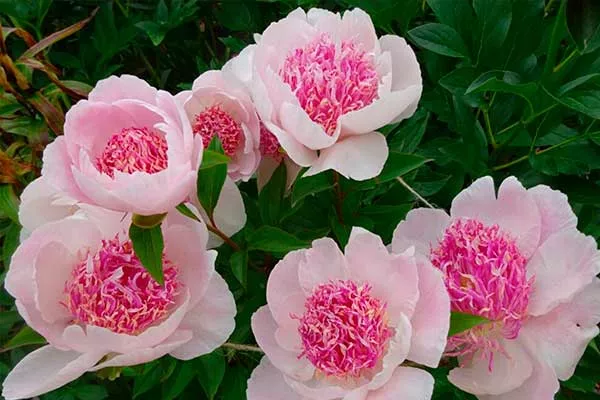
Hybrid peonies tend to fade in the sun. They lack a distinct fragrance. The flower stalk may have no more than two side buds.
Features of flowering
Do Tell is a mid-season herbaceous peony variety and hybrid. Its buds open in the first days of June in central Russia (a week earlier in southern regions). The bush blooms profusely and for a long time:
- the number of flower heads that a plant produces per season is up to 50 pieces;
- the “life” of an opened bud is 7-10 days;
- the period during which the bush blooms is 4 weeks (June-July).
The Du Tell peony doesn't typically delight gardeners with its lush blooms in the first year after planting. During the first two years, the plant gains strength. It reveals its full glory, blooming with numerous spectacular buds, starting at three to four years of age.
This hybrid variety is ideal for cutting and flower arrangements. These peonies are known for their durability. They retain their freshness and decorative appearance in a vase for over a week. Florists often use them in bridal bouquets.
Application in design
The Du Tell peony's primary use is for landscaping flowerbeds, borders, garden paths, and hedges. It adapts well to flower gardens and is also suitable for urban areas. This luxurious flowering bush looks spectacular when planted alone.
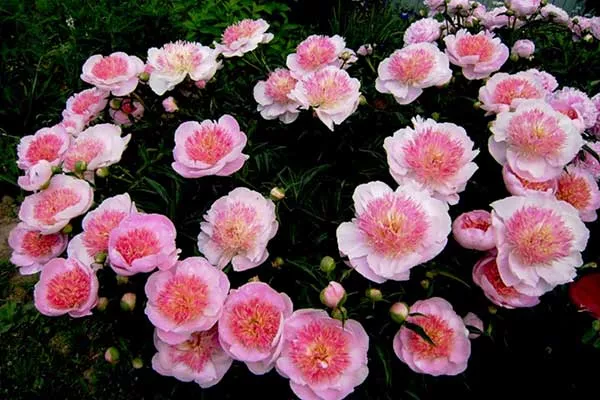
The hybrid is also suitable for creating group arrangements in flower beds. It looks especially striking next to the following ornamental plants:
- bush roses;
- bearded irises;
- and other perennials of brighter colors that bloom at the same time (primroses, daylilies, forget-me-nots, daisies, bells).
Popular varieties of peonies Du Tell
| Name | Bush height (m) | Flower diameter (cm) | Flowering period |
|---|---|---|---|
| Great | 0.9 | 20 | June-July |
| Blue | 0.8 | 18 | June-July |
| Sushi | 0.85 | 19 | June-July |
In addition to the Du Tell hybrid, several of its subspecies can be found for sale in specialized nurseries:
- GreatThis cultivar is characterized by large, double flower heads with white petals and a sweet aroma. Its primary use is for bouquets.
- BlueThis variety is distinguished by its delicate blue petals. The open bud resembles a delicate cloud. It is very large and double.
- SushiFlowers of this variety are characterized by rich pink petals with a variegated border and a bright berry aroma.
Landing
Gardeners consider early fall (the first ten days of September) to be the best time to plant a hybrid variety in a flowerbed. This allows the plant to establish roots before the cold weather sets in. Spring planting carries the risk of damage from subsequent frosts.
Selecting a location on the site
Du Tell peonies grow in the same location for at least 20 years. For the first 6-7 years, they retain their decorative qualities. This is facilitated by a well-chosen site for planting. It should meet the following requirements:
- sunny, with light partial shade at midday;
- windless, protected from drafts;
- with fertile loose soil, loam with neutral acidity;
- with groundwater level on the site at a level of 1.5 m;
- located away from tall trees and bushes that will compete with peonies for moisture and nutrients.
- ✓ The optimal soil pH for the Du Tell peony should be between 6.5 and 7.5. Testing and adjusting the pH is essential before planting.
- ✓ The planting depth of the division should not exceed 5 cm above the renewal buds to avoid problems with flowering.
This ornamental plant does not tolerate acidic soils. Before planting, it will be necessary to alkalize the soil by adding dolomite flour, chalk, and ash. Then, periodically check the soil pH in the flowerbed and, if necessary, adjust it with a deacidifying agent.
Preparatory work
Start preparing the selected area for Du Tell peonies for planting 2-3 weeks in advance:
- clear it of weeds, their roots, and plant debris;
- dig up (processing depth - a shovel blade);
- add river sand if the soil is too dense and clayey;
- dig a hole (depth - 0.6 m, diameter - 0.6 m);
- cover the bottom of the hole with a layer of coarse sand and lay crushed stone on top of it (it will serve as drainage);
- partially fill the hole with garden soil mixed with fertilizers: wood ash (250 g), superphosphate (100 g), potassium sulfate (80 g).
A peony seedling (division) also requires preparation for planting. Immediately before planting, inspect it and remove any damaged roots. Coat the cuts with brilliant green or sprinkle with crushed charcoal. Soak the lower part of the plant in a pale pink solution of potassium permanganate for several hours.
A step-by-step guide to planting a peony
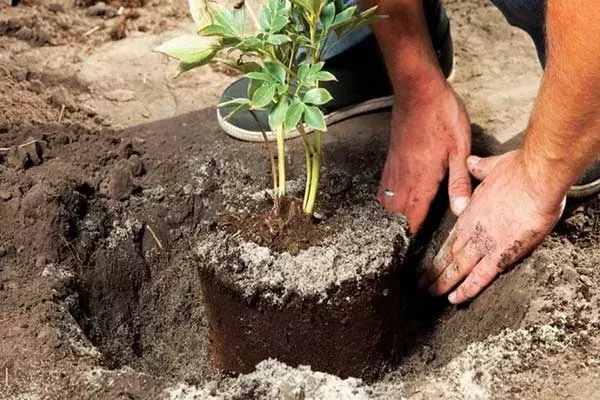
When planting the Du Tell peony in a flowerbed, follow these steps:
- Place the division in the central part of the hole on a mound of garden soil and fertilizer.
- Straighten the roots.
- Cover them with soil. Monitor the planting depth. It should be 4-5 cm above the renewal buds.
- Water the seedling generously, using 10 liters of water.
- Mulch the soil under the peony. Use organic matter: compost, peat moss, humus, hay, straw, sawdust, tree bark, and fallen leaves.
Reproduction methods
You can propagate garden plants vegetatively or by seed. The former option is more popular among gardeners. It involves dividing the bush or planting stem cuttings. Seed propagation is less popular because it requires more time and doesn't guarantee the preservation of varietal characteristics.
| Method | Time to first flowering | Preservation of varietal characteristics |
|---|---|---|
| Rhizome division | 2-3 years | Yes |
| Stem cuttings | 3-4 years | Yes |
| Sowing seeds | 5-7 years | No |
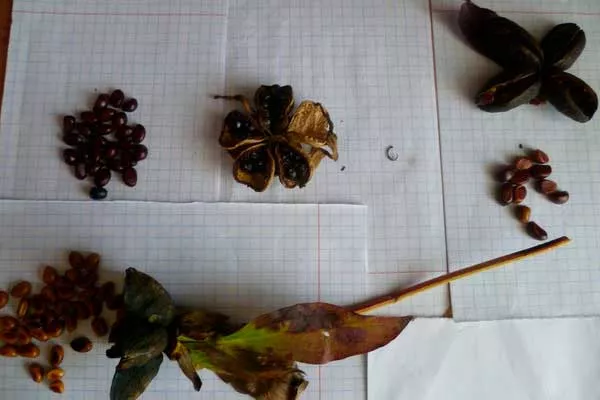
Sowing seeds
If you want to grow a peony bush from a seed, follow these step-by-step instructions:
- Soak the seeds in water with Epin added, or in a pale pink solution of potassium permanganate. Leave for 2 days.
- Fill the planting container with sand (use clean river sand). It will need to be preheated.
- Scatter the seeds over the sand surface. Cover the planting with plastic wrap.
- Leave the container with the seeds in a warm place (temperature: 25-27°C). Remove the film daily for 15-20 minutes to air.
- After the seeds have sprouted, transplant them into individual pots filled with nutritious potting mix. Transfer them to a room with a temperature of 6-7°C.
When the seedlings develop their first leaves, return them to a warmer temperature (23-24°C) and cover them with plastic again. Keep the peony seedlings in these conditions until you transplant them to the flowerbed. This should be done in early August.
Rhizome division
This method of peony propagation is considered the simplest and most effective. It involves dividing the bush into several parts with developed roots. The best time to do this is the second half of August or the beginning of September.
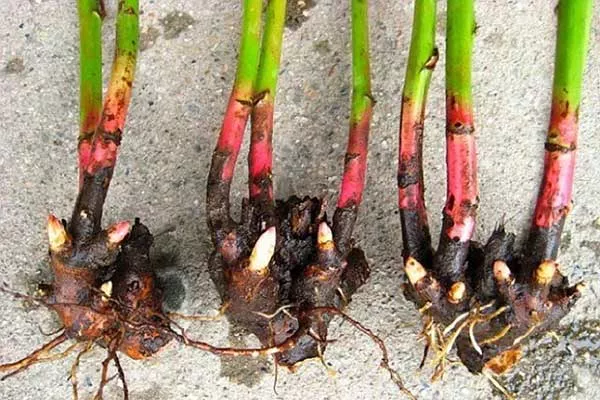
Follow the procedure step by step:
- Choose a suitable bush of the Du Tell hybrid: beautiful, healthy, mature (from 4 years old).
- Cut off all the shoots so as not to leave any stumps.
- Carefully remove the rhizome from the ground.
- Clean it from dirt. Dry it.
- Using a sharp knife, divide the root system into sections (divisions). Each section should have roots and 2-3 buds.
- Soak the resulting planting material in a solution of potassium permanganate. Then plant it in the flowerbed.
Rooting stem cuttings
In summer, you can propagate peonies using this vegetative method. Wait until the bush has finished blooming and then get started. Follow these steps:
- Select several stems from the bush (in its central part) that look the strongest and healthiest.
- Using pruning shears, cut them off at the very base.
- Remove the lower tier of foliage from the cut shoots.
- Shorten the stems by 2/3, and along with them the upper leaves.
- Make a diagonal cut at the bottom of each cutting.
- Treat the cut areas with Kornevin.
- Plant the cuttings in pots filled with nutritious potting mix. Cover them with a plastic bag.
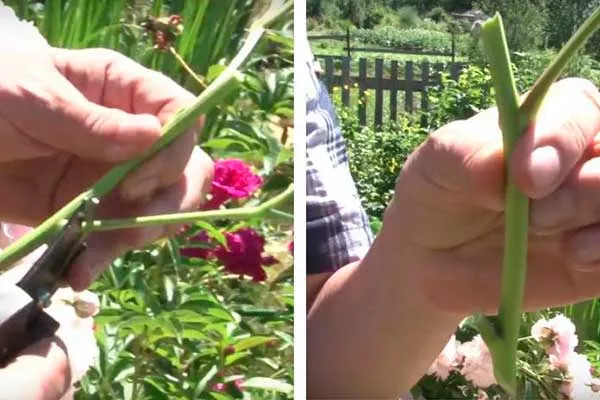
Water the plantings and ventilate them daily. Once new leaves and shoots emerge, the makeshift greenhouse can be removed. Early next fall, the plants will be ready for transplanting into the flowerbed.
Aftercare
The Du Tell Chinese peony is easy to care for. To ensure it continues to delight you with its beauty and stay healthy all season long, follow these simple gardening practices.
Watering
When caring for your plant, pay special attention to watering the soil beneath it. The plant's health and lush bloom depend on the amount of moisture it receives.
Water the peony flowerbed according to the following rules:
- After planting the divisions, moisten the soil once every 3 days (if there is no rain);
- water an adult bush less often - once every 7 days;
- use at least 20 liters of settled warm water per plant;
- pour it not under the root, but into a groove made at a distance of 20-25 cm from the tree trunk circle;
- Do not over-water the soil under the flower, as stagnant moisture is harmful to it.
Combine watering with weeding and loosening the soil. Loosen the soil under the Du Tell peony for the first time two weeks after planting. There will be no need for further loosening if you mulch.
Top dressing
It's difficult to achieve lush and long-lasting blooms without fertilizing. Follow the fertilizing schedule:
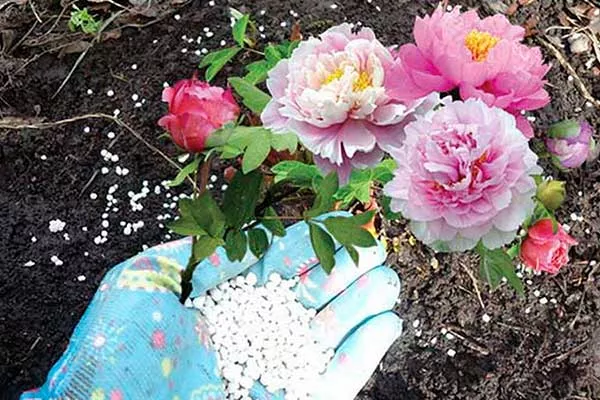
- at the beginning of spring, fertilize the flowerbed with Fertika spring-summer peonies, potassium nitrate, or water with a solution of bird droppings;
- During the period of bud formation and 2 weeks after they have finished flowering, add mineral compounds: Superphosphate, potassium sulfate (consumption rate - 15-20 g per 1 bush).
If you added nutrients to the holes when planting an ornamental crop, you will not need to fertilize it for the next 2-3 years.
What to do after flowering?
Once the buds on the bush have faded and dried, they should be removed immediately, as they weaken the plant and detract from its decorative appeal. There's no need to remove the green foliage. Preserving it promotes the formation of flower buds for the following season. It's also a good idea to add humus to the soil beneath the peony.
Transfer
Another useful procedure for a faded Du Tell hybrid bush is relocating it to a new location in the garden. This should be done in the fall at least once every six years (can be started as early as four years old). It has positive effects:
- rejuvenates the plant;
- helps to preserve its decorative properties;
- prevents the buds from becoming smaller, which is caused by soil depletion.
Experienced gardeners combine replanting with dividing the bush to obtain more plants for the flowerbed. The procedure is similar to the peony planting described above. Check the weather forecast in advance. There shouldn't be any rain for the next two weeks, as peony roots don't tolerate waterlogged soil.
Trimming
In October, trim each stem on the bush to a height of 3 cm. Sprinkle all cuts with wood ash powder. After pruning, collect plant debris, remove it from the area, and then burn it. It can harbor pests and pathogens.
Preparing for winter
The Du Tell hybrid is considered frost-hardy. Although it's frost-tolerant, it requires proper winter preparation. Follow these steps:
- Feed the bush with a fertilizer high in potassium and phosphorus to increase its cold resistance;
- mulch the flowerbed with a layer of organic matter (its thickness is 10-15 cm).
Pests and diseases
This hybrid variety of milky-flowered peony is resistant to major plant diseases and pests. Lack of proper care and unfavorable growing conditions are the main causes of infection and pest infestation in Du Tell bushes.
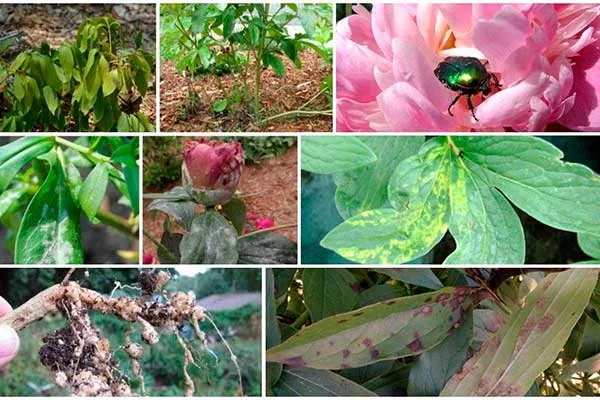
The greatest danger to the flower is posed by such diseases as:
- Powdery mildewA characteristic sign of a plant affected by fungus is a whitish coating on its foliage. To treat the peony, treat it with Skor or Quadris.
- RustInfected plants will develop reddish-yellow growths on their leaves and shoots. Control the disease with copper-containing products such as HOM, Bordeaux mixture, and copper sulfate.
- Lemoine's diseaseAffected bushes begin to wither, and knobby swellings form on their roots. It is untreatable. The infected plant must be dug up and destroyed by burning outside the garden.
The worst enemies of the Du Tell peony in the insect world are these pests:
- Bronze beetleThe parasite feeds on leaves and flower petals. Collect it by hand. Treat the soil in affected peony beds with Medvetoks.
- ThripsThese small insects suck the juices from the petals. If you find them on the bush, spray it with Aliot.
- AphidThe parasite feeds on the sap of perennial plants, causing damage. If the pest is found in small numbers, collect it by hand. If a large colony forms, the flowerbed will need to be treated with Iskra-M.
Carry out preventative measures to prevent bushes from becoming diseased and being attacked by pests throughout the season, starting in early spring:
- water the flower bed properly, loosen the soil;
- apply fertilizers without overdoing it;
- Get rid of weeds in time;
- do not neglect pruning bushes;
- Treat peonies with fungicides several times;
- Inspect your flowerbed periodically to detect symptoms of disease at an early stage and to detect parasites in a timely manner.
Helpful tips
Experienced gardeners offer beginners advice on growing the Du Tell hybrid to ensure its luxurious blooms and health:
- Carry out drastic pruning of bushes only after the shoots have naturally wilted. Shortening the stems any earlier will reduce the plant's frost resistance.
- Pluck off the very first buds on the bush so that the plant does not waste energy on flowering and more intensively grows green mass.
- Before purchasing a seedling, inspect it carefully: it should have at least 2 live growth buds.
- For more lush and long-lasting flowering, allocate a plot for the flowerbed that will receive plenty of sun in the first half of the day and diffused light or light partial shade in the second half.
- Grow ornamental plants in a location free from standing water. Otherwise, create drainage at a depth of 60-70 cm using crushed stone and gravel.
- When planting, do not plant the seedling too deep. This can result in small buds forming.
- Use foliar feeding with Kemira or Nutrisol during the bud formation period to increase the size of flower heads.
- Don't overfeed peonies. Overfeeding can lead to diseases such as gray mold, powdery mildew, and late blight.
Positive and negative qualities
The Du Tell peony has found many fans among domestic gardeners thanks to its numerous inherent advantages:
Reviews from flower growers
Du Tell is one of the most beautiful and popular varieties of lactiflora peony. Domestic gardeners appreciate its elegant blooms with beautifully colored petals, dense, glossy foliage, and neat bush shape. The plant is hardy and undemanding, making it an excellent choice for those trying their hand at growing perennials.