
The Brother Chuck peony attracts attention with its impressive ornamental qualities and high climate tolerance. This variety combines large, densely double flowers with a rich fragrance and a long blooming period. Its robust health and low maintenance make it ideal for both garden arrangements and cut flowers.
What is a Brother Chuck peony?
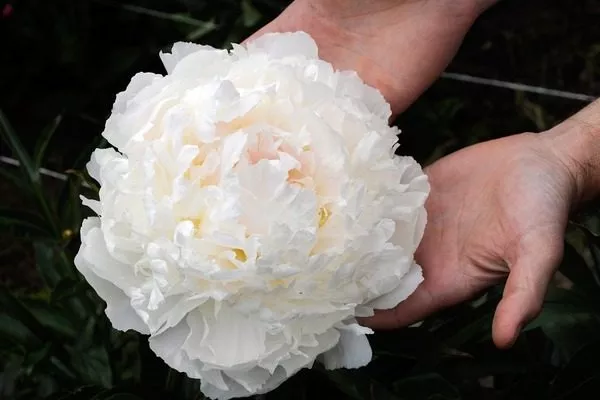
This variety attracts the attention of many gardeners in our country. The delicate buds resemble clouds in their shape, painted in pale pink hues. It's this striking appearance that draws attention—it's impossible to pass by the flowers without admiring them.
Description of the plant and flowers
The Brother Chuck peony was bred in 1995 in the United States by Roy G. Clem, who dedicated it to his brother. Thanks to its excellent adaptability, this variety is successfully cultivated in various regions of Russia.
Distinguishing features:
- This is a herbaceous peony with a neat, yet fairly large bush, which looks especially impressive during flowering.
- The plant has a strong central stem, dense foliage of large, bright green leaves, and a well-developed root system. The bush averages 70-80 cm in height.
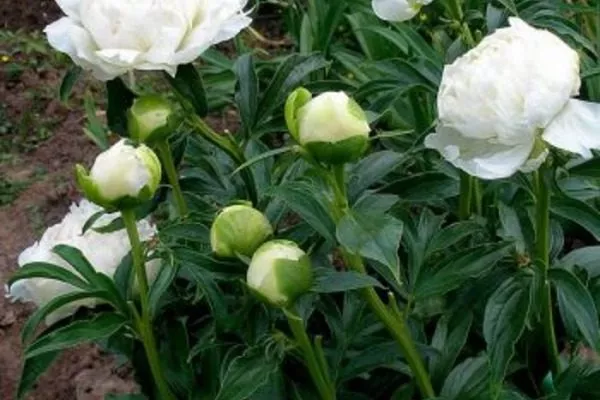
- The variety is distinguished by its elongated, pointed leaves with a noticeable gloss.
- The variety belongs to perennial plants.
Features of flowering
This variety is a mid-season bloomer. Buds begin to open in May, sometimes in early June. Flowering lasts approximately four weeks.
Key Features:
- Throughout the growing season, the bush produces numerous beautiful flowers, indicating abundant blooms. On average, each individual flower lasts for about two weeks.
- The Brother Chuck peony is a densely double flower with large dimensions: the diameter reaches 16-17 cm. The buds are dense, consisting of intricate petals of the same size.
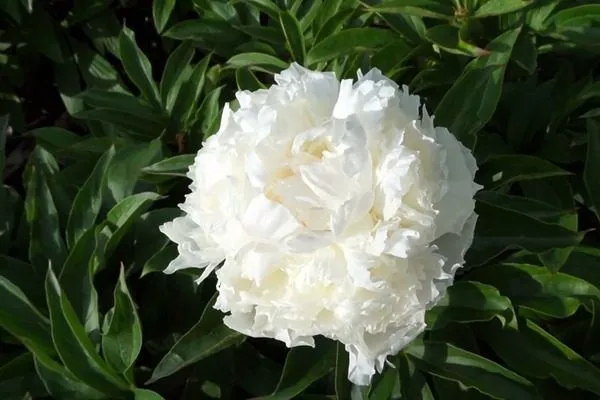
- The flower has a neat, regular shape, reminiscent of a sphere. It appears very airy, like a foamy mass.
- The main advantage of this American variety is its unusual coloring—a white base with pink and yellow hues. Champagne-colored peonies are sometimes found. Furthermore, the petals have a satiny sheen, and the flower exudes a pleasant, sometimes intense, fragrance.
Use in landscape design
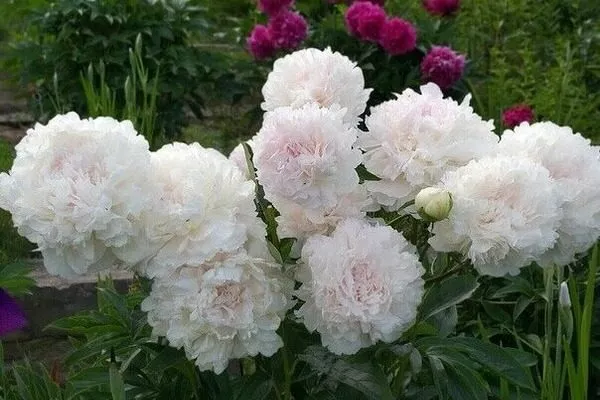
Snow-white peonies look spectacular both singly and in groups. They are often planted in flowerbeds, flower gardens, and parks. Recently, the Brother Chuck variety has increasingly been used to create low hedges in summer cottages and private courtyards.
Growing regions
Thanks to its high adaptability to a variety of conditions, this peony can be grown in virtually any location in our country. Brother Chuck peonies are most often found in flowerbeds:
- Moscow region;
- Siberia;
- Urals.
Frost resistance and preparation for winter
This variety is characterized by high winter hardiness and can withstand temperatures down to -40 degrees Celsius. At the end of September, it is recommended to cut back the above-ground portion of the bush and mulch the root zone with fallen leaves and pine branches. The mulch layer should be approximately 20 cm thick.
After 7 years, the plants no longer need additional shelter for the winter.
Resistance to diseases and pests
Brother Chuck peonies have a strong immune system, but can sometimes be attacked by bronze beetles, which cause significant damage. The best way to control them is by hand picking. The most common diseases are fungal infections.

In July, bushes often suffer from rust, especially those growing near pear trees and junipers. A reddish or brown coating appears on the leaves, followed by curling of the blades. For treatment, use fungicides such as Fitosporin.
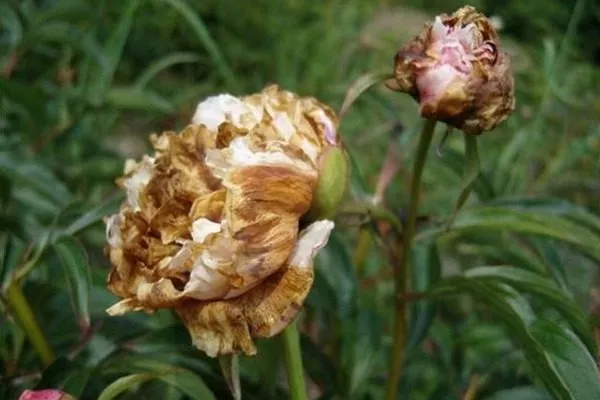
During a wet and warm winter, peonies can become infected with gray mold. Symptoms include black spots on stems, leaves, and even buds. Remove infected parts and treat the bush with fungicides such as Topaz, Horus, Strobi, and others.
How to choose seedlings in a nursery and online?
Make your purchases from reputable nurseries or stores with positive reviews and a long history of operation. Pay attention to ratings, customer reviews, and quality certificates.
Other recommendations:
- High-quality seedlings should have a well-developed root system with no signs of rot or drying out. Check the condition of the roots (bare, in a container, or in peat pots).

- A healthy plant will have strong, vibrant buds, a sign that the peony will actively grow and develop after planting.
- The optimal age for planting a seedling is between 2 and 4 years. Young bushes take root faster and begin to bloom earlier.
- The lowest price doesn't always mean quality. Compare offers from multiple sellers and consider their reputation and service.
- The best time to purchase peony seedlings is early spring or fall, when the plant is dormant and tolerates transplantation better.
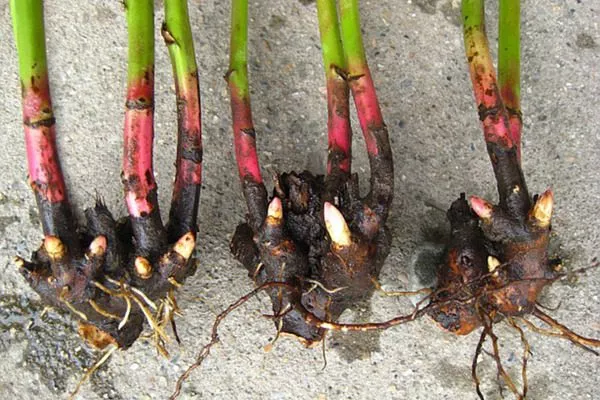
A reliable store offers guarantees on planting material and the option of a return or replacement if the plant is damaged or diseased upon receipt.
Landing
Peonies are best planted between March and June or between July and November. This process requires no experience or special knowledge, making it easy even for novice gardeners.
Requirements for planting site and soil

The chosen site should be level, well-lit, or in light partial shade. It is preferable to have the location protected from drafts and strong winds.
Planting a seedling
To plant, prepare a hole approximately 50 x 50-60 cm in size, placing a drainage layer at the bottom. Top the drainage layer with a nutritious soil mixture.
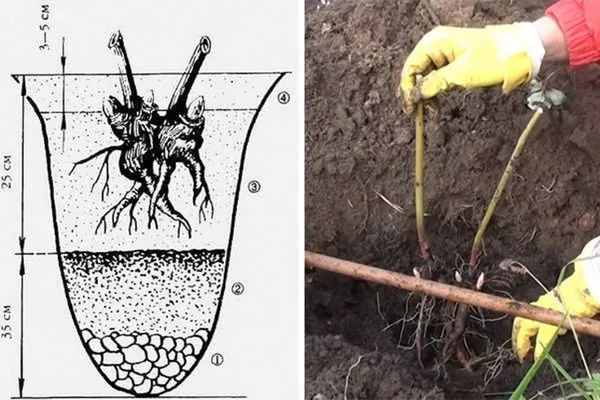
Carefully place the plant in the hole, being careful not to damage the roots. When planting in groups, it is recommended to maintain a distance of 100-120 cm between plants.
Peony care Brother Chuck
Caring for the plant is key to its health and abundant flowering. Regular gardening practices promote the development of large, beautiful flowers.
Watering and lighting
The Brother Chuck peony prefers sunny locations but tolerates light shade. Water the plant regularly, especially on hot days, but avoid stagnant water.
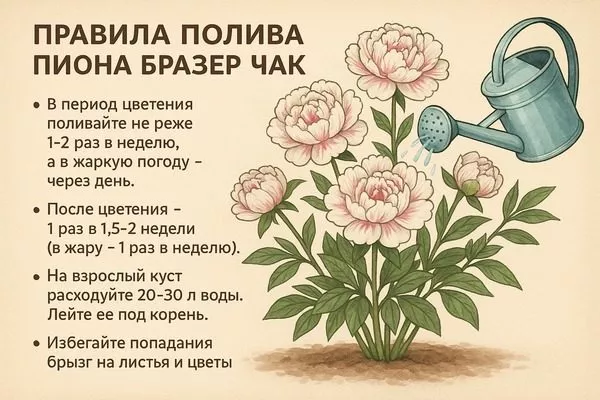
The best way is to moisten the soil around the roots so that it absorbs moisture well.
Fertilizers
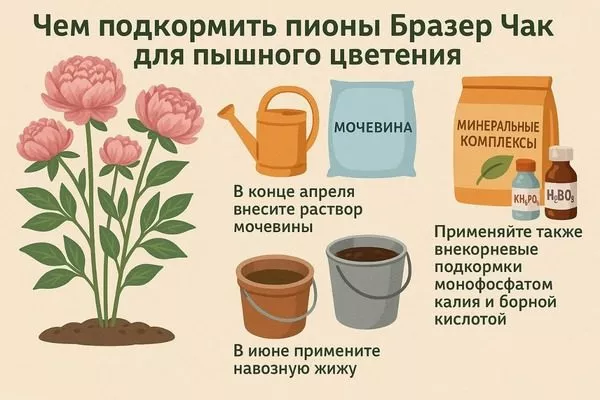
During the first two years after planting, peonies thrive on fertilizer added to the soil. Therefore, fertilize only twice:
- at the end of April, after the snow melts – add a urea solution (20 g per 10 l of water);
- at the end of June – use a mixture of slurry.
Starting in the third year, pour about 5 kg of rotted manure under each bush in the spring, and in the fall, use complex mineral compositions designed to feed perennials in the fall.
Trimming
Pruning a Brother Chuck peony is an important procedure for maintaining the plant's health and enhancing its decorative appeal. Follow these recommendations:
- In late September or early October, when the aboveground portion of the bush has completely finished blooming and is beginning to turn yellow, carefully cut the stems back to about 5-7 cm above the ground. This will help prepare the peony for winter and prevent disease.
Remove cut parts from the area and destroy them to prevent the spread of possible infections.

- In spring, when growth begins, remove damaged or weak shoots to encourage the development of strong, healthy stems.
Pros and cons
Reviews
The Brother Chuck peony attracts attention with its striking appearance and low-maintenance nature. Its frost and disease resistance, along with its beautiful flowers, make this variety ideal for a variety of climates. Proper cultivation and minimal care are the key to a healthy plant that delights with abundant and long-lasting blooms.