
Peonies are hardy and profusely blooming perennials that can grow and bloom in the same place for up to 30 years. Various pathogens—fungi, bacteria, and viruses—can interfere with the successful development and flowering of peonies. We'll discuss the most dangerous and common peony diseases, how to control them, and how to prevent them.
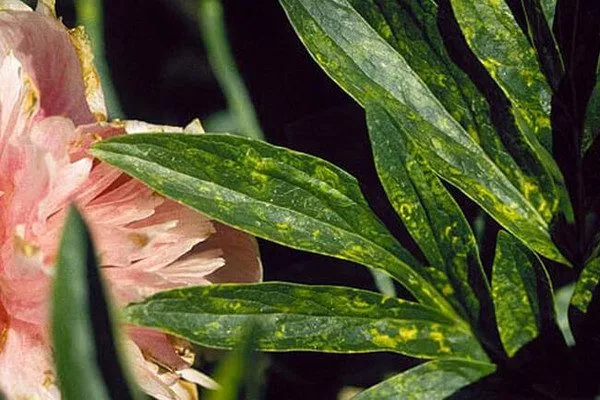
Fungal diseases
These are the most numerous and common diseases affecting peonies. Almost all of them are treatable, especially in the early stages. If left untreated, the plants will languish for a long time, bloom poorly, and eventually die.
Gray mold
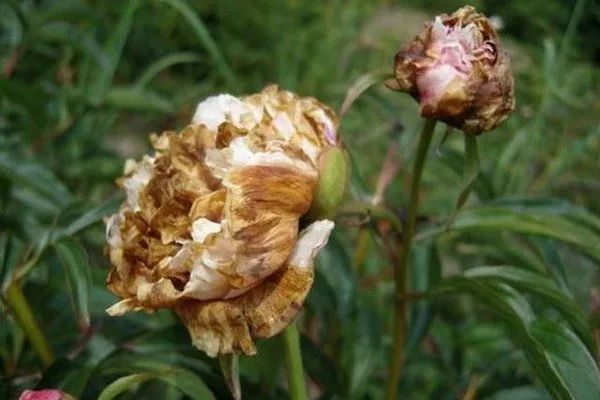
Gray mold (botrytis) is considered one of the most dangerous diseases of peonies. It is caused by the fungus Botrytis cinerea. The disease is dangerous because it can spread from the above-ground parts to the rhizomes. If the root system rots, the bush will die.
Reasons for development:
- unfavorable weather conditions - cool and rainy spring and/or summer, sudden temperature changes;
- damp clay soils, waterlogged area;
- thickening of the flower bed, poor ventilation of the area;
- Unremoved plant debris - the pathogen may remain in them.
Signs of damage:
- Brown spots appear on petals and buds, growing larger over time. A gray, fluffy coating may gradually develop on the petals.
- As the disease progresses, leaves and stems turn black and rot, especially at the bottom, where parts of the plant are located close to the ground.
- Buds affected by grey mould often dry up without ever opening.
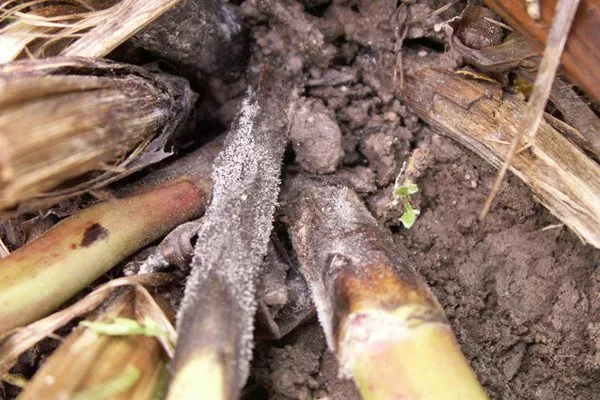
If the damage is severe, the peony bush falls apart - the stems droop to the ground and dry out.
Measures to combat gray mold:
- Fungicidal preparations:
- Abiga Peak — This contact copper-containing fungicide is effective only at low temperatures, so it is used in early spring.
- "Previkur Energy" — a systemic fungicide that penetrates plant tissue. Protection lasts for approximately three weeks.
- Switch — a fungicide that suppresses not only gray mold but also a wide range of secondary rots. Its action begins within 2–3 hours, and its protective effect lasts for 3 weeks.
- "Pharmayod". A broad-spectrum disinfectant and antiseptic. Protects against bacteria and fungi.
- Folk remedies:
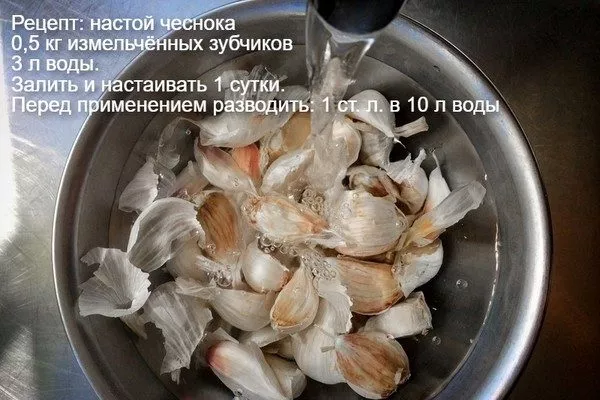
- Garlic infusion. Add 0.5 kg of crushed cloves to 3 liters of water and let steep for 24 hours. The strained infusion is diluted with water—1 tablespoon per 10 liters of water—and sprayed on flowers in dry weather, paying particular attention to affected areas.
- Soda ash solutionDissolve 50 g of powder in 10 liters of water and mix thoroughly. Apply the resulting solution to the affected bushes. It's recommended to do this every 10 days until the symptoms disappear completely.
Prevention of gray mold in peonies involves a standard set of agricultural measures aimed at preventing the development of fungal diseases.
Preventive measures gray rot:
- Avoid dense plantings, regularly loosen the soil, and adhere to the dosage of fertilizers.
- Disinfection of garden tools and planting material, quarantine of new plants.
- Timely removal and destruction of affected plant parts, and in the autumn – plant debris and fallen leaves.
- Providing drainage in areas with high groundwater levels.
Rust
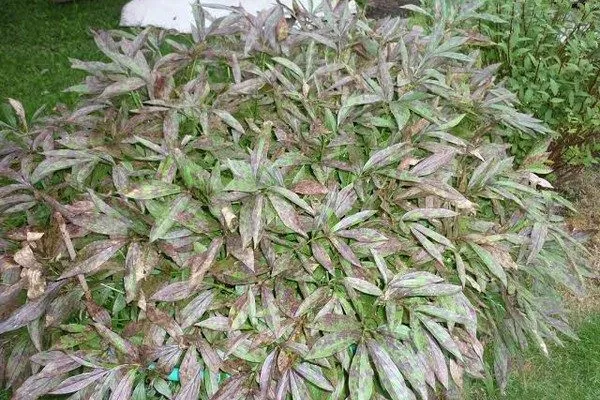
Peony rust is caused by the fungus Cronartium flaccidum (Cronartium paeoniae). This disease develops particularly rapidly in humid and warm weather. By mid-summer, the leaves of affected bushes dry out.
The intermediate host of the fungus is the pine tree. This conifer can become a source of infection for many years. Early-ripening peony varieties, especially hybrids, are more susceptible to rust than others.
Reasons for development:
- damp and warm summer;
- proximity of pine trees;
- overdose of nitrogen fertilizers;
- shading bushes.
Signs of damage:
- In mid-summer, when flowering ends, brown, brown or yellowish-brown spots appear on the leaves.
- On the underside of the leaf blade, small orange or yellowish-brown pads form - they contain fungal spores that are easily carried by the wind, resulting in a massive infection of the plants.
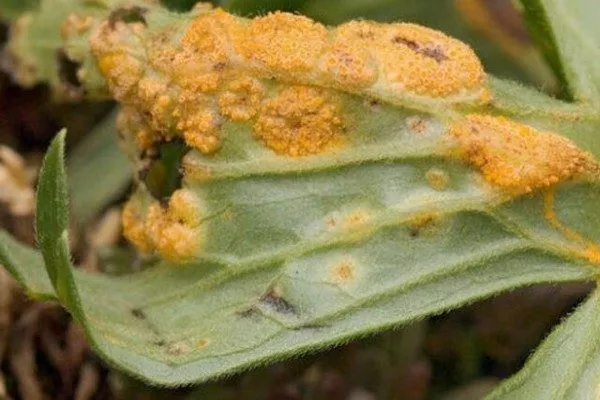
Peony rust can be treated with both folk remedies and chemicals. The best results are achieved with a combination of treatments.
Rust control measures:
- Fungicidal preparations:
- Fitosporin-M. This drug is effective in the early stages of the disease and at temperatures of +15 °C.
- "OxyHom". A copper-containing solution (20 g per 10 liters of water) is applied every 2-3 weeks or as the solution is washed away by rain. Two to three applications per season are sufficient.
- Bordeaux mixture 1%. Dissolve 100 g of the preparation in 250 ml of hot water. Pour the resulting mixture into 5 liters of water. In another container, dissolve 300 g of slaked lime in 5 liters of water. Pour the Bordeaux mixture solution into the lime in a thin stream and stir.
- Folk remedies:
- Colloidal sulfur solution. Dilute 100 g in 10 liters of water. Spray the plants with the resulting solution, watering the affected areas especially generously.
- Soda solution. Mix 60 g of powder with 1/2 tbsp of liquid soap. Dilute the resulting mixture in 5 liters of water and use it to spray peonies.
- Garlic infusion. 200 g of crushed garlic cloves are steeped in 2 liters of water for 2 days. The resulting infusion is filtered and used for foliar application.
- Kefir solution. Dilute 1 liter of kefir or whey in 10 liters of water. This solution is only used in cloudy weather; it loses its effectiveness in sunny weather.
Cut parts of diseased bushes should not be thrown into compost; they must be burned to destroy fungal spores and prevent infection of other plants.
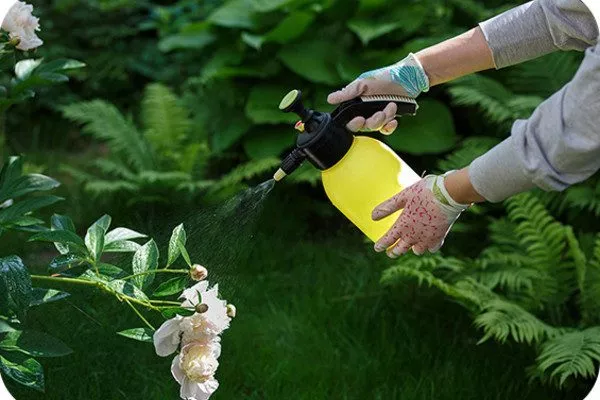
Rust prevention measures:
- For preventive purposes, peonies are treated with fungicides at intervals of 7-10 days, for example, with the preparations "Strobi", "Falcon", "Topaz", "Rakurs", "Skor" and others.
- Providing sufficient light and ventilation.
- Preventing dense plantings.
- Compliance with the feeding and watering regime.
- Timely removal of plant debris and weed control.
- Regular inspection of plants and removal of affected parts.
Brown spot (cladosporiosis)
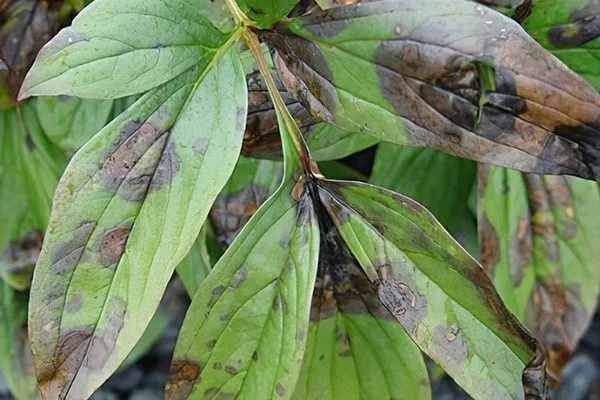
Cladosporiosis is caused by the fungus Cladosporium paeoniae and typically appears in early summer. The pathogen's spores land on the above-ground parts of the plant and rapidly develop in droplets of water.
Reasons for development:
- high humidity - more than 80%;
- dense plantings;
- lack of lighting;
- deficiency of potassium and phosphorus.
Signs of damage:
- Brown spots and dots appear on the surface of the leaf blades.
- Over time, the spots increase in size, darken, and merge, covering almost the entire leaf blade.
- With high humidity, a dark gray coating may appear on the underside of the leaves.
- In addition to leaves, stems, buds, and flowers can also be affected.
If brown spotting is pronounced, affected leaves are cut off and burned.
Measures to combat Cladosporiosis:
- Copper-containing products. Affected peonies are sprayed with copper sulfate and Bordeaux mixture.

- Fungicides and biofungicides:
- Systemic — Fitosporin-M, Previkur Energy, Quadris and others.
- Contact — “Abiga-Peak”, “Bakterra”, “Tsineb”, “HOM”.
- Combined — “Profit Gold”, “Ridomil Gold”, “Oxychom”, “Sporobacterin”.
- Folk remedies:
- Potassium permanganate. The bushes are sprayed with a pale pink solution, to which it is recommended to add grated garlic (2 heads per 1 liter of solution).
- Kefir (or whey)Dilute 1 liter in 10 liters of water. The kefir solution is used for spraying, but only in cloudy weather; it loses its properties when exposed to sunlight.
If spotting appears late in the fall, it is recommended to treat peonies with the preparation "Horus", which is effective at low temperatures.
Preventive measures:
- Regular treatments with biological preparations or folk remedies - early in the spring, before flowering and two weeks after it.
- Application of potassium-phosphorus fertilizers.
- Removal of plant debris at the end of the season.
It is prohibited to add fresh manure and bird droppings to the soil to avoid the development of fungal infections.
Root rot
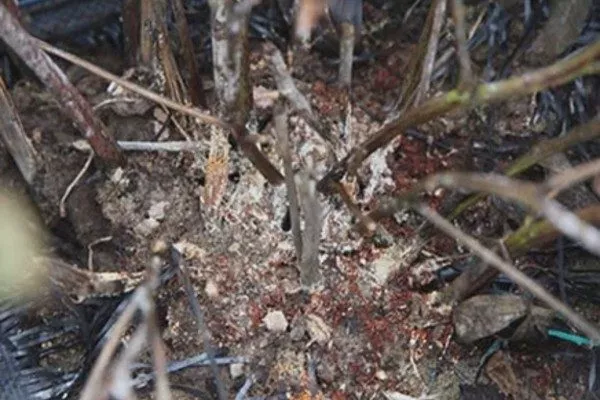
Root rot is a fungal disease that affects plant roots and rhizomes. It is caused by fungi of several genera, including Fusarium, Botrytis, Rhizoctonia, and Sclerotinia.
Most often, the disease can be detected when digging up a bush, for example, to carry out a division procedure.
Reasons for development:
- excessive watering;
- rainy weather;
- sharp changes in air temperature;
- increased soil acidity.
Signs of damage:
- An indirect sign of the disease can be the appearance of the bush and its above-ground parts. The leaves and stems of peonies affected by root rot darken and wilt.
- The roots of affected peonies become soft, covered with a brownish coating, and later begin to rot and die.
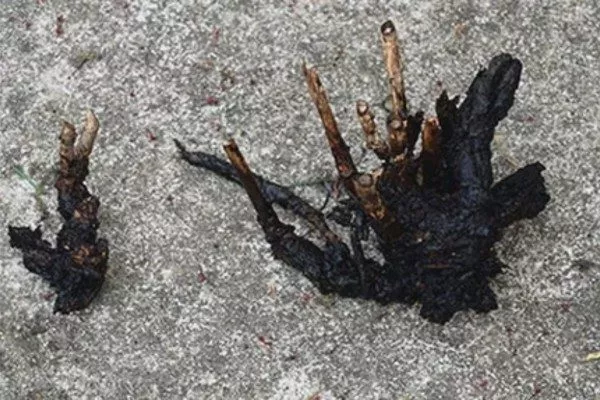
Control measures:
- If the root system is severely damaged, saving the plant is rarely possible. If only a few areas are affected, they are carefully removed.
- After removing the affected areas, treat the roots with 1% copper sulfate (100 g per 10 liters of water) or the contact fungicide "Maxim." The peony is then replanted (or divided) in a new location.
To save a peony affected by root rot, it is important to detect the problem in time and begin treatment as quickly as possible.
Preventive measures:
- Purchased planting material should always be treated with a fungicide solution.
- When planting peonies, maintain space between adjacent bushes and avoid overcrowding - good air circulation is essential.
- When planting, components that reduce the soil's acidity are added to it, for example, dolomite flour.
- After removing plant debris, the soil is disinfected to reduce the risk of re-infection.
Septoria
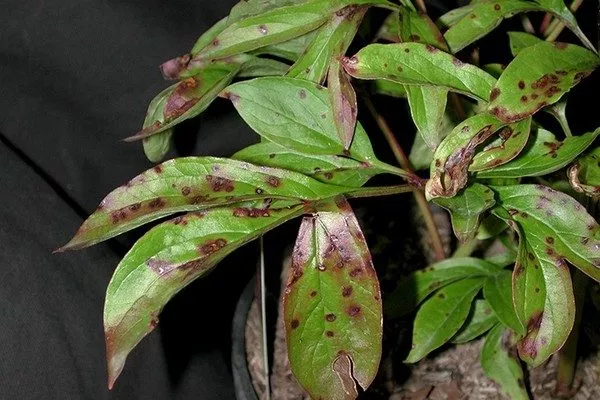
Another name for this disease is brown spot, caused by the fungus Septoria macrospora. It weakens peonies, negatively impacting their winter hardiness and flowering the following season.
Reasons for the defeat:
- rainy and cool weather;
- heavy clay soils;
- close occurrence of groundwater;
- dense, poorly ventilated plantings.
The first symptoms of brown spot begin to appear in early to mid-summer. The disease gradually changes, and if left untreated, the plant may die.
Signs of damage:
- Brownish or yellow-brown spots, round or elongated, appear on both sides of the leaf blade. They have a lighter center and a dark purple border along the edges.
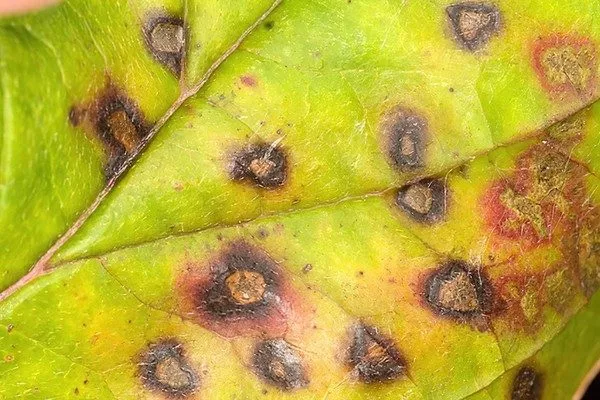
- Over time, the spots merge, acquiring a light brown color with a smoky hue.
- The first signs of the disease appear on the lower leaves, then they spread up the stem.
- In severe cases, leaves dry up completely and may not fall off for a long time.
Control measures:
- Mechanical. Affected parts of the bushes are removed and burned. If the plant is severely damaged, it makes sense to destroy it completely to prevent infection of healthy plants.
- Spraying with fungicides. Plants are treated before and immediately after flowering. Bushes are sprayed with copper-containing products. For example, Bordeaux mixture, HOM, or Oxychom can be used. Moreover, it's important to treat not only the bushes but also the soil around them. Spraying frequency is once every two weeks.
- Folk remedies. They cannot cope with the disease 100%, but they help slow down its development and the spread of the fungus:
- Soap and salt solution. This is a mild antiseptic. It's best used early in the disease process, when small spots appear. Dilute 250 ml of the solution in 10 liters of water. You can use rock salt or iodized salt.
- Iodine solution. It helps combat not only septoria but also other fungal and bacterial diseases. The solution is prepared from 20-25 drops of iodine, 1 liter of milk, and 10 liters of water. It is also recommended for use in the early stages of the disease or for prevention.
-
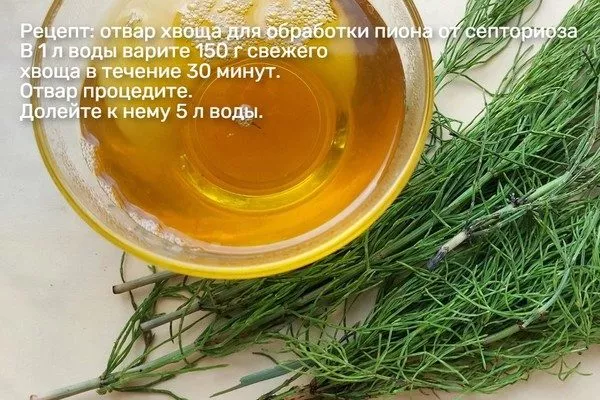
- Horsetail decoction. Boil 150 grams of fresh horsetail in 1 liter of water over low heat for half an hour. Strain the infusion and dilute it with 5 liters of water. Spray the peony bushes after sunset. Apply once a month.
- Garlic infusion. It's made from one head of garlic and several sprigs. The crushed garlic is steeped in a potassium permanganate solution for 2-3 hours. The concentrated infusion is diluted in 10 liters of water and used to spray peonies. The frequency of application is once every 10-14 days.
Preventive measures:
- Maintaining the intervals between peony bushes is important – do not allow the plantings to become too dense.
- Disinfection of planting material and garden tools.
- Remove and burn affected parts of bushes and plant debris in a timely manner.
Verticillium wilt
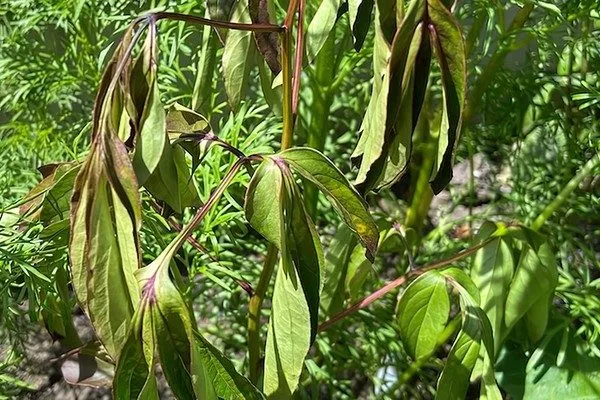
This fungal disease attacks the vascular system of plants. Symptoms typically appear during flowering. Because the pathogen penetrates the plant's internal tissues, the disease is extremely difficult to treat.
The fungus spends the winter in the soil, on the roots or root collar. Verticillium wilt can manifest itself long after the bushes are planted (2 years or more), making diagnosis and treatment of peonies difficult.
Reasons for development:
- sharp fluctuations in humidity;
- damage to the roots or the lower part of the stem;
- temperature changes.
Signs of damage:
- The lower leaves and young shoots turn yellow and wither.
- The inflorescences become smaller and lose their original (varietal) color.
- Darkening of the cut stems.
In cases of severe damage, often only the upper part of the bush remains viable.
Control measures:
- Diseased bushes are sprayed with biological fungicides, for example, Fitosporin-M.
- The bush and the surrounding area are treated with the chemical fungicide "Maxim, KS", which destroys the fungus in the soil.
- If a plant affected by verticillium wilt does not respond to treatment, it is dug up and destroyed.
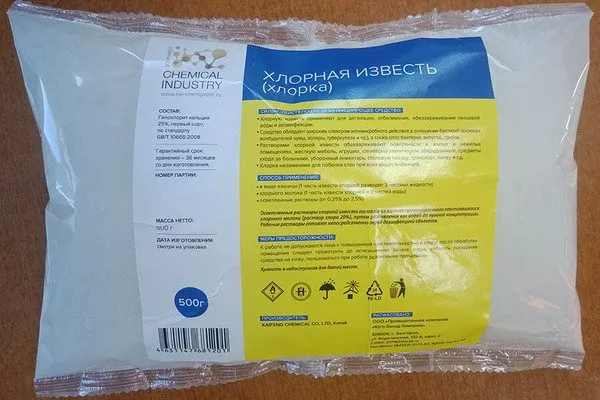
- The soil is watered with bleach or formalin.
The causative agent of verticillium wilt can survive in the soil for 10 years or more. If this disease appears in a plot, it is recommended to keep it under bare fallow (do not plant anything) for 2-3 years.
Preventive measures:
- Crop rotation is important: peonies should not be planted where other peonies grew earlier than 5 years ago.
- Fertilize the soil, but do not overuse nitrogen, and do not allow a deficiency of phosphorus-potassium fertilizers.
- Disinfect the soil and planting material.
- Weed out weeds in a timely manner without burying them in the soil.
Bacterial diseases
Peonies are rarely affected by bacterial diseases. They develop rapidly and are difficult to treat. This is why preventative measures against bacterial infections are so important.
Bacterial spot
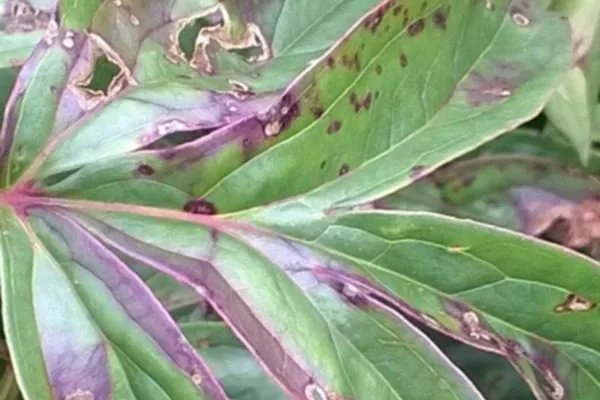
Bacterial leaf spot, which affects peonies, has an incubation period (from infection to the appearance of the first symptoms) of 5 to 7 days. The causative agent is the bacterial pathogen Pseudomonas syringae.
Reasons for development:
- infection through new planting material;
- thickening of plantings;
- water droplets falling on leaves;
- cold and rainy weather;
- sharp changes in air temperature;
- clay soils and waterlogged areas;
- dense and poorly ventilated plantings.
Signs of damage:
- Brown, purple, or yellowish-brown spots appear on peony leaves.
- Gradually, single spots grow, often occupying the entire surface of the leaf blades.
- Affected leaves dry out prematurely, but do not fall off for a long time.
Control measures:
- Spray with a 1% Bordeaux mixture. Repeat treatments are carried out at intervals of 1-2 weeks.
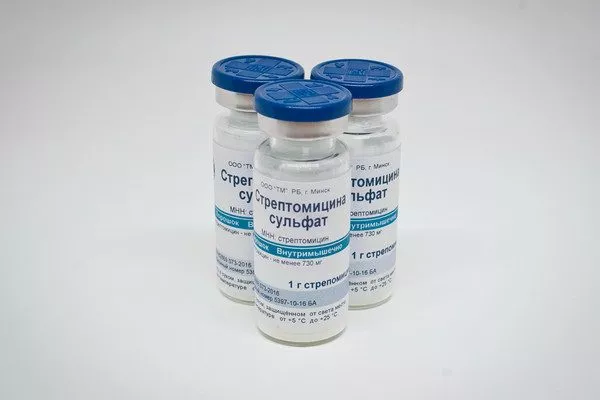
- Spraying with streptomycin: dilute 1 g of the preparation in 10 liters of water. Treat not only the bushes but also the soil.
Peonies should be treated early in the morning or evening, as sunlight promotes evaporation of the fungicide. It's also important to alternate treatments, as using the same fungicide can lead to the development of resistance (the pathogenic microflora becoming accustomed to the active ingredient).
Preventive measures:
- Regularly inspect peonies and remove any affected parts of the plant, then burn them. Trim off wilted flowers, as this is often where the infection spreads to the leaves.
- Disinfection of planting material and tools – pruning shears, garden knives, etc.
- Compliance with agricultural technology - do not plant too densely, regularly loosen the soil, and adhere to the dosage when applying fertilizers.
- Ensure good drainage to avoid overwatering.
Fire blight
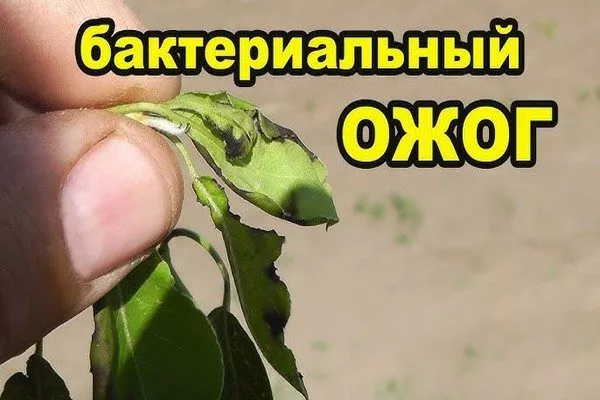
The causative agent of fire blight of peonies is the bacterium Erwinia amylovora. It can be introduced into a plot along with new planting material. Infection also occurs through damage to leaf blades.
Reasons for development:
- cold rainy weather;
- sharp changes in air temperature;
- damage to leaves by insects, hail, etc.;
- dense and poorly ventilated plantings.
Signs of damage:
- The leaves become covered with water-soaked spots, which subsequently turn brown and dry out.
- Over time, the spots grow, dry out, curl up and die, and the peony dies.
Control measures:
- All damaged areas are cut off to healthy tissue.
- After pruning, the bushes are sprayed with antibiotics, for example, streptomycin (1 g of the drug is diluted in 10 liters of water).
Preventive measures:
- Regular inspection of plants with subsequent removal of affected parts.
- Preventive spraying with fungicides, for example, the following preparations are suitable: Fitosporin M, Abiga Peak, Previkur Energy.
- Providing peonies with sufficient light and ventilation.
- Avoiding dense plantings and waterlogged soil.
- Removal of plant debris and weeds - possible sources of infection.
Viral diseases
Peony viral diseases are caused by special submicroscopic pathogens called viruses. They can remain inactive (latent) for long periods of time and are activated only under stress, such as when dividing the plant. Viral diseases are incurable.
Lemoine's disease
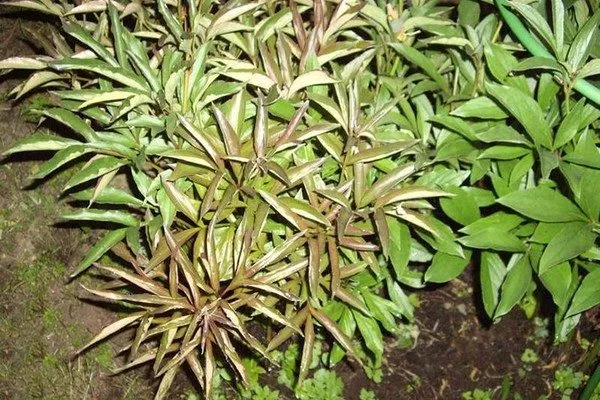
Lemoine disease is rare but poses a serious threat to peonies. Like all viral diseases, there is no cure. It is caused by the tobacco rattle virus.
The causes of Lemoine disease are unknown. One theory is that its occurrence is somehow related to root-knot nematodes. However, this theory has not been scientifically confirmed.
Signs of damage:
- Peony growth slows down, bushes wither, turn yellow, and shoots do not develop.
- Swollen areas appear on the roots.
- Flowering stops or is absent altogether.
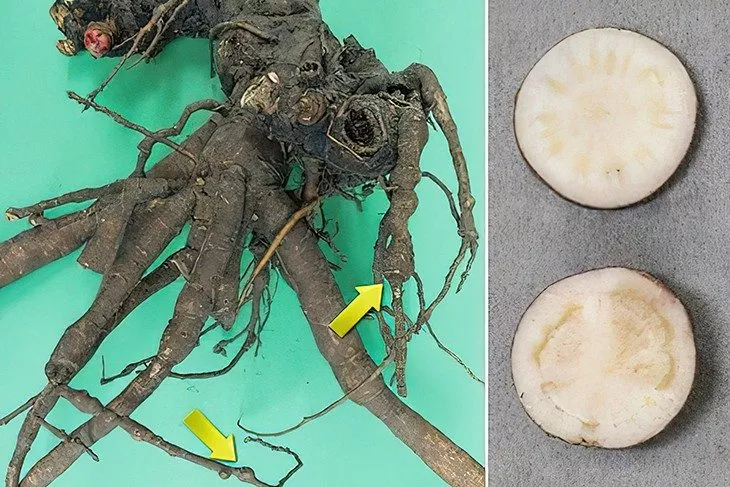
Control measures:
- A bush infected with the virus is completely dug up and burned outside the area to prevent the spread of infection.
- The area where the diseased plant grew is disinfected with fungicide-based products (Fitosporin, Trichodermin) or a weak solution of potassium permanganate. Peonies should not be planted in this area for several years, even after disinfection.
Preventive measures:
- Maintaining the watering regime and preventing plantings from becoming too dense.
- Timely removal of plant debris.
- Disinfection of garden tools.
Leaf mosaic
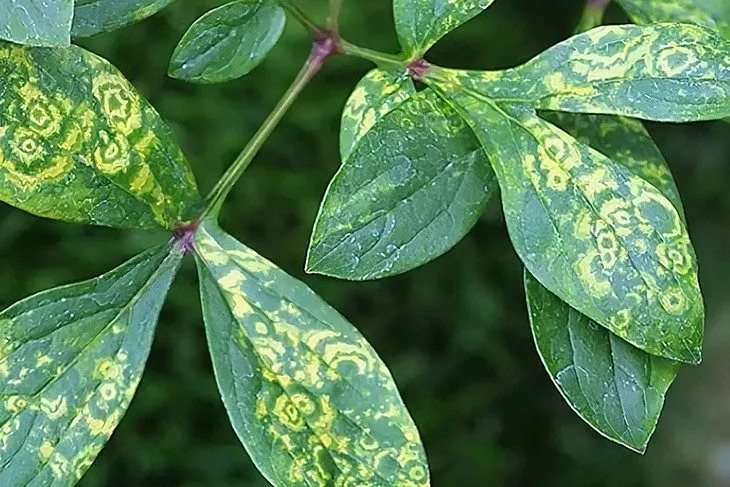
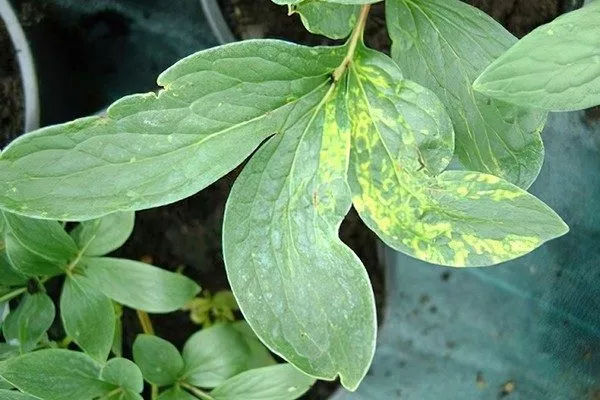
Paeonia virus is the causative agent of ring mosaic disease in peony leaves. The disease damages the bushes' ornamental appearance without slowing their growth or reducing the abundance of blooms.
Reasons for development:
- infection through soil or plant debris;
- use of non-disinfected instruments;
- transmission of the virus by insects.
Signs of damage:
- Between the veins of the leaf blades, stripes, rings and half-rings of light green and yellowish hues appear, creating a mosaic-type pattern.
- Small necrotic spots may appear on the leaves over time. The pattern may appear in some years and disappear in others.
Control measures:
- The infected bush is dug up along with a lump of earth and destroyed (burned) away from the site.
- The soil is disinfected and peonies are not planted on it for 4-5 years.
Peony diseases can be successfully cured with timely treatment. This only applies to fungal and bacterial infections. Bushes infected with viruses cannot be cured, so it's best to destroy them.