
The Blushing Princess peony attracts both novice and experienced gardeners. The plant boasts numerous positive qualities and is cold-hardy. It is chosen for its robust growth habit and beautiful flowers that fill the garden with a pleasant fragrance. Proper care is essential to ensure abundant blooms.
Breeding history
It was brought from the United States. The original creators are considered to be botanists from the Sanders company, who created more than ten unique peony varieties. The plant was bred in 1991.
Characteristics of the peony Blushing Princess
This medium-sized shrub is distinguished not only by its high adaptability, but also by:
- It exhibits a unique ability to grow even in unfavorable conditions, which may affect the number of flowers, which will remain minimal in such situations.
- A distinctive feature is its high winter hardiness – it can survive winter without additional shelter at temperatures down to -40°C. These characteristics make it suitable for cultivation even in regions with harsh climates.
- It is characterized by strong immunity, but has average resistance to powdery mildew.
- The bush is not subject to destruction even by strong winds and heavy rainfall.
- ✓ Ability to grow in unfavorable conditions, but with a minimum number of flowers.
- ✓ High winter hardiness down to -40°C without additional cover.
- ✓ Average resistance to powdery mildew.
Description of the appearance of the plant and flowers
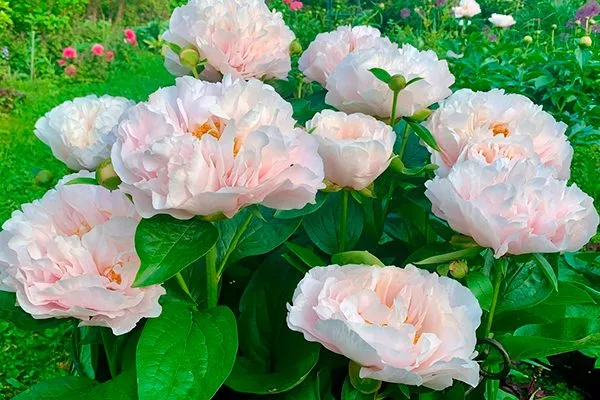
It has sturdy stems and leaves. No additional support is required during bud formation. Mature specimens can reach over 75 cm in height. The flower's description includes the following characteristics:
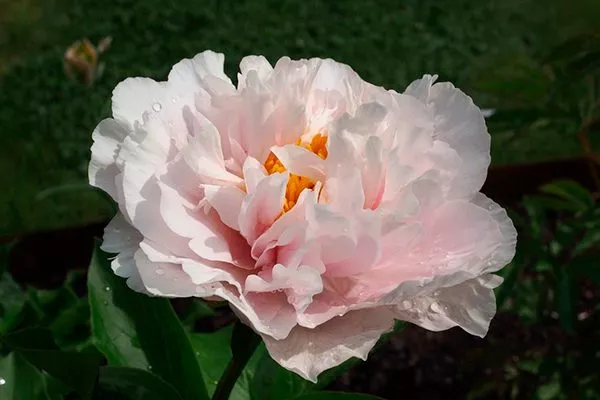
- Semi-double buds reaching 16-18 cm in diameter.
- Volume thanks to many dense petals.
- Petals are a pale pink tint fading to almost white near the center.
- Bright yellow stamens in the center.
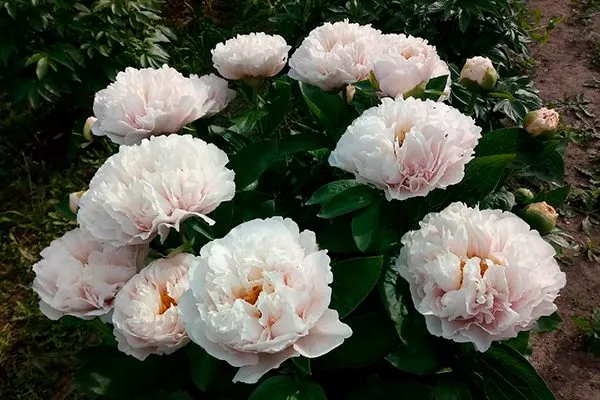
This perennial has an impressive appearance, with sturdy stems capable of supporting large buds without deforming during the decorative season. The foliage is dense, dark green, and has a distinctive sheen. The leaves are oval-pointed.
Flowering time and period
Blushing Princess is an early bloomer, maturing in early spring. The first buds begin to open in late spring, and by June the entire bush is covered in soft pink flowers.
Pros and cons
The variety's ornamental qualities have not gone unnoticed by landscapers, and it's becoming a frequent fixture in gardens, parks, and walkways. The following advantages stand out:
Among the variety's shortcomings, gardeners note low resistance to powdery mildew.
When and how to plant?
The planting process follows a specific algorithm. Follow these recommendations:
- Choose a well-lit area, protected from the wind.
- Avoid low areas to prevent excess moisture from accumulating.
- The optimal time for planting is the last week of August.
- Given the high growth rate, leave at least 50 cm between adjacent seedlings.
- Choose soil with neutral and slightly acidic properties.
- Place drainage material, such as broken brick or small stone, at the bottom of the hole.
- Three weeks before planting, mix the garden soil with complex mineral fertilizer.
- Add river sand to improve soil permeability.
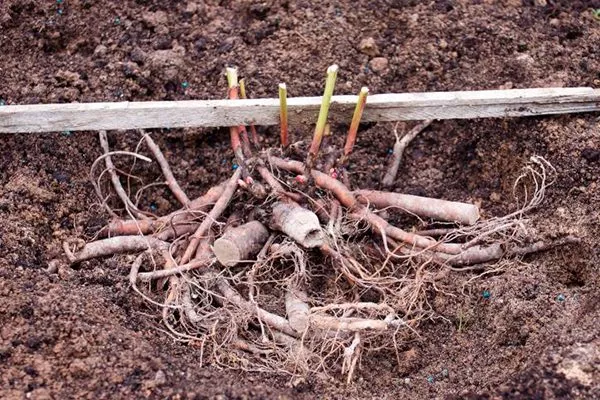
- Place the seedling in the center of the hole so that the renewal buds are at least 3-4 cm from the ground level.
- Fill with garden soil, compacting it to eliminate voids.
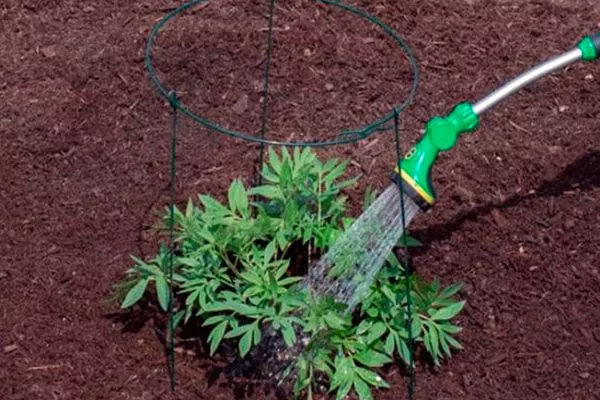
- Water generously with warm, settled water.
- Mulch with a protective layer of organic matter. Use materials such as tree bark, sawdust, wood chips, compost, humus, high-moor peat, hay, or dried leaf litter.
Care instructions
Caring for peonies is easy, as no special knowledge is required for successful care. Simply follow these steps:
- The plant requires abundant but not too frequent watering. Increase the amount during hot periods. Apply water only at the roots, avoiding contact with the leaves.
- Loosen the soil and remove weeds.
- In early spring, apply high-nitrogen fertilizers to stimulate the vigorous growth of young, strong shoots after the winter. Organic fertilizers such as humus, compost, and wood ash are also acceptable.
- Water the soil thoroughly before each application of fertilizer.
- During the period of bud formation, use mineral fertilizers containing potassium and phosphorus to stimulate the development of large and highly decorative flowers.
Wintering
In the fall, when the leaves begin to lose their vitality, prune the stems. It's important to do this before frost sets in, as it can be difficult for the plant to adapt to these conditions if pruning is done too late.
After cutting the stems, leave short pieces (10 cm) on the surface of the soil, and dig up the area around them and mulch them using ash and coniferous grass.
Reproduction methods
Increasing the number of seedlings yourself isn't difficult if you know the right steps. Propagation is possible using several effective methods:
- Division of rhizome. Ensures a 100% result. Perform this procedure in late summer or early fall. Dig up the bush and wash the soil off the rhizome. Cut the shoots back by 10 cm, then divide the rootstock into sections with buds. Sprinkle the cut sections with ash or crushed charcoal. Plant in holes filled with nutritious soil.
- Stem cuttings. In this case, the survival rate is limited to approximately 30%. Perform the procedure in the summer after flowering. Select a strong shoot with an undeveloped bud, cut it, and treat it with a rooting stimulant. Plant the cutting in a prepared container and cover it to create a greenhouse effect.
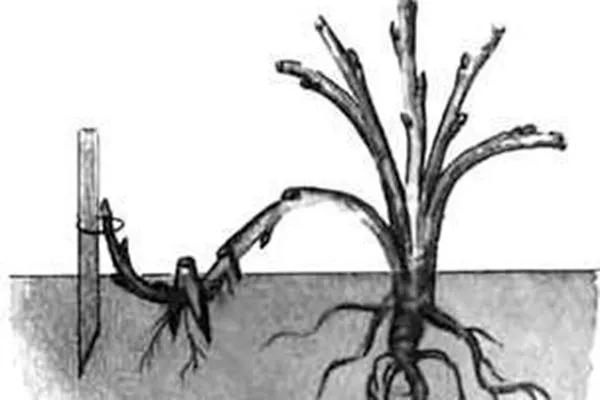
After rooting, transplant the young specimens into open ground at the end of summer next year. - Rooting of cuttings. This procedure should be carried out in late spring, when the plant has become stronger. Dig holes under the selected shoots, make cuts in the stems, and bend them into the holes, securing them with pins. Cover the branches with soil and water regularly.
After the shoots appear, loosen the soil around them. Separate the young seedlings from the mother plant at the end of summer and transplant them to a garden bed for further growth.
Diseases and pests
Blushing Princess has excellent immunity but is susceptible to powdery mildew. In cloudy weather, the hybrid may be susceptible to the disease, as the humidity creates a favorable environment for growth.
Another disease that poses a threat to the crop is gray mold, which occurs for the same reason. In the fall and spring, be careful with watering. To prevent this, spray the bushes with Bordeaux mixture and water the soil with a weak solution of potassium permanganate.
Aphids and rose chafers are pests that feed on the plant sap contained in shoots. If infested, bushes may wilt, resulting in fewer flowers. To control aphids, use Actellic or a soap solution. Rose chafers are sensitive to Medvetox.
Application in landscape
The Blushing Princess variety is ideal for creating group arrangements in the garden. Experts recommend using other peonies as "neighbors" to contrast with this variety.
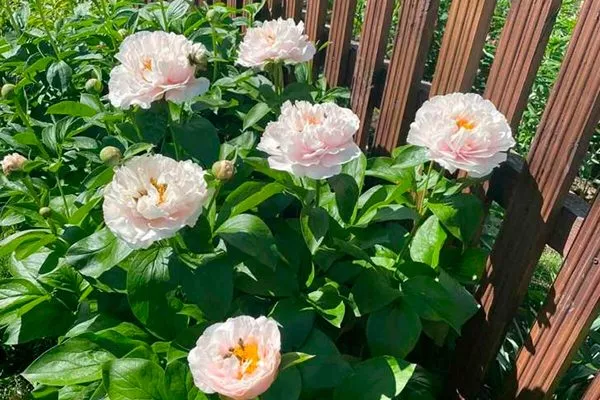
Some examples of using culture in landscape design:
- Pairing with contrasting peonies adds more vibrancy. Use different colors, flower shapes, or plant heights to create a striking visual contrast.
- Make Blushing Princess a visual accent by planting it in the center of your arrangement. This will help it stand out from the other plants.
- Place a row along a fence to create a natural and beautiful green wall. This method ensures that the plants blend harmoniously with the surrounding landscape.
Shelter for the winter
This variety is highly winter-hardy. When the autumn leaves begin to lose their vigor, trim the stems completely, leaving stumps about 10-15 cm high. Then, dig around the trunk and cover with a layer of mulch, including wood ash and compost.
Gardener reviews of the Blushing Princess peony
The Blushing Princess peony is a resilient plant with large, semi-double flowers. It boasts high winter hardiness and excellent immunity, making it an excellent choice for planting in a variety of climates. Care is relatively simple, requiring little effort or attention.