
The Alexander Fleming peony is a popular variety that has earned the recognition of gardeners worldwide for its magnificent characteristics. This plant is distinguished not only by its extraordinary beauty but also by its low maintenance requirements. Regular watering and adherence to other gardening guidelines will help you grow a strong and flourishing plant.
History of creation
Bred in the Netherlands in 1950, it is a hybrid of two varieties: Bunker Hill and Sarah Bernhardt. The cultivar originated from Blonk. It is highly adaptable and can be grown in a variety of Russian climates.
Peony Characteristics by Alexander Fleming
This perennial herbaceous plant can grow and bloom in the same location for up to 7-8 years. During this time, its bushes become larger, and its flowers become smaller. To maintain its decorative appearance, it is recommended to dig up and divide it every 5-6 years.
Description of bushes
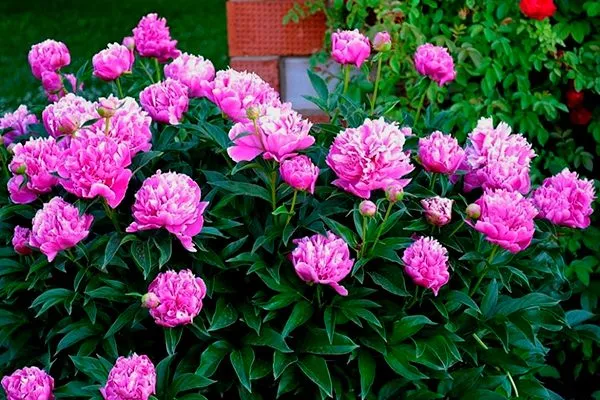
Compact, dense bushes grow up to 100 cm in height and spread up to 65 cm in diameter. The upright stems are strong and resilient, not bending toward the ground when the flowers open. Flower stalks typically form a single bud; less commonly, up to three lateral flower buds form.
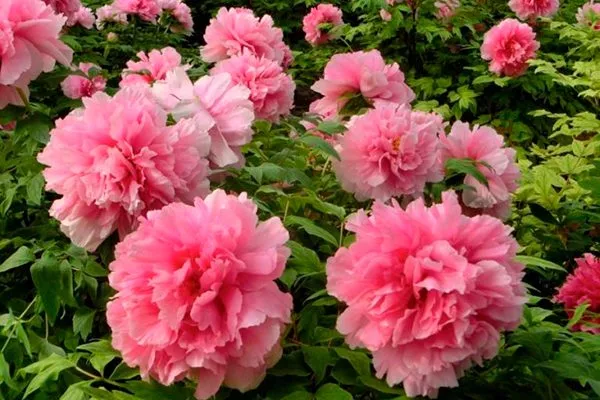
The shoots are densely covered with stiff, lanceolate leaves with prominent veins. The dark emerald foliage, with a matte sheen, is borne on long petioles. In autumn, the shade remains the same, only fading slightly and gradually dying.
Description of flowers
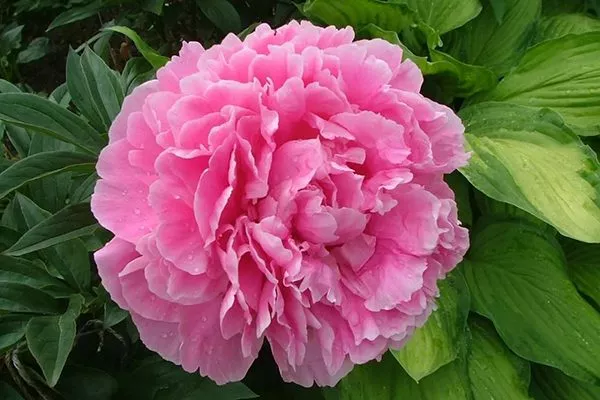
Double, large, 18-20 cm in diameter. The petals have wavy or lobed edges and light tips, which can be tinged with purple. The flowers are round and full, with a closed center. The buds are pink.
Features of flowering
This plant belongs to the group of plants with a mid-season flowering period. The first flower buds usually appear 2-3 years after planting. Flowering begins in late May-early June and lasts 2-3 weeks. At its peak, it presents a spectacular sight.
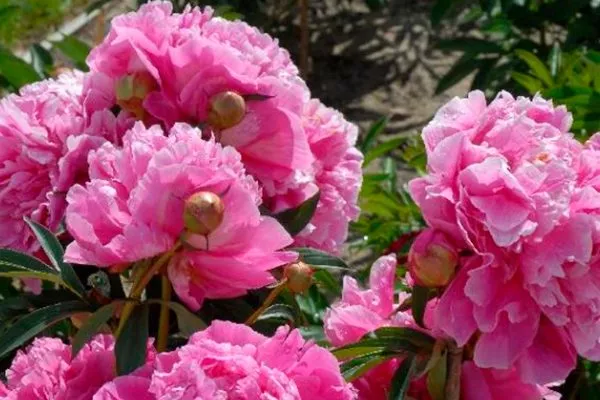
In each inflorescence, 2-3 buds bloom simultaneously, creating a voluminous flower cap that rises above the foliage.
Frost resistance
It is highly frost-resistant and can withstand temperatures as low as -34-40°C without significant damage. With proper shelter, it thrives not only in the central part of the country but also in the harsher climates of Siberia and the Urals. It quickly recovers in the spring and continues blooming.
Where is the best place to plant?
It grows well in both sunny areas and light partial shade. Scattered afternoon shade is not harmful, and the hybrid continues to bloom profusely and brightly. It is not recommended to plant in low-lying areas with wet soil or in areas with dense shade.
Do you need support?
It has stiff stems, so it usually doesn't need support, but during flowering, when the branches are covered with buds, they may droop slightly. In such cases, to avoid breakage due to gusty winds or heavy rain, it is recommended to plant it under the protection of a fence or building façade.
Using Peony by Alexander Fleming in Landscape Design
It pairs harmoniously with many garden crops. To create a striking composition, consider the following recommendations:
- Tall, spreading bushes are best planted in the background of a flowerbed, for example, next to lilies with smaller leaves and unblown flowers.
- They look good in combination with flowers that have small white buds, which will advantageously emphasize the large buds.
- Suitable partners include irises, phlox, delphinium, milkweed, sedum, pokeweed, and foxglove. Low-growing plants such as alchemilla, primrose, aster, and heuchera look harmonious alongside them.
- Many gardeners grow this plant in combination with geraniums. Compositae or scented geranium varieties look especially striking against them. It's important to remove spent buds promptly to preserve the flowerbed's decorative appearance.
- Since peonies are spreading, it is not recommended to plant the same species next to them so that they do not interfere with each other.
Reproduction
Vegetative methods are used to propagate the hybrid, which preserves varietal traits. Florists use two methods to increase the number of seedlings:
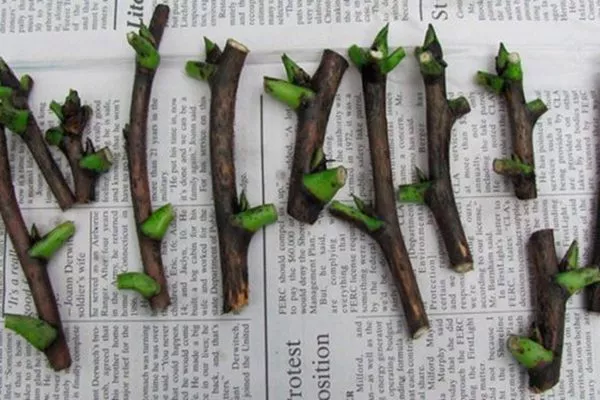
- Cuttings. Cuttings are an effective propagation method that allows you to preserve the genetic characteristics of the mother plant. Select a mature, healthy specimen with a well-developed root system. Prepare the soil around the mother plant by adding organic compost or humus.
Select mature shoots with 3-4 internodes. Cut the cutting at an angle to easily distinguish the top from the bottom. Treat the bottom with a growth stimulant to speed up the rooting process. Plant the cutting 10-15 cm deep in prepared soil. Leave only two or three internodes above ground.
Cover the planted cuttings with plastic film or glass to create a mini greenhouse and provide optimal rooting conditions. Once they have rooted and are large enough, transplant them to their permanent location.

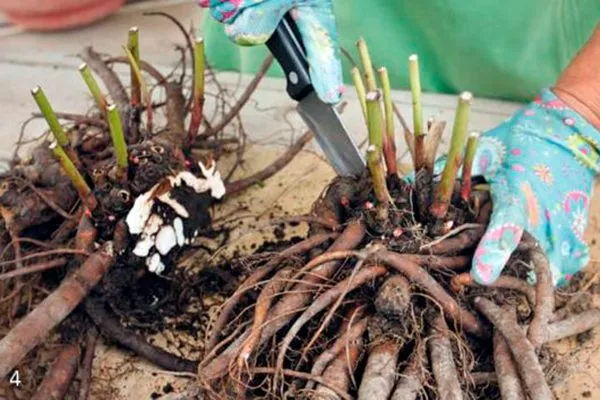
- Division. In the fall, trim the shoots. Dig up the rhizome and shake off the soil. Remove any diseased, dry, or overly long feeder shoots. Divide the rhizome with a sharp tool.
Plant the resulting divisions in new holes. Each division should have at least 5-6 renewal buds.
Choose the most convenient propagation method to obtain a plant that retains all varietal characteristics.
| Method | Optimal timing | Survival rate | Beginning of flowering |
|---|---|---|---|
| Dividing the bush | August-September | 85-90% | For 2-3 years |
| Cuttings | June-July | 65-75% | For 3-4 years |
| Root cuttings | September | 70-80% | In 4-5 years |
Landing rules
This plant is easy to grow and doesn't require much care, as long as you follow the planting guidelines. Follow these recommendations:
- The optimal place for planting is well-lit, away from buildings that create shadows.
- Does not tolerate waterlogged areas, which can lead to root rot.
- The best soil is loam. If the soil is clayey, amend it with sand, peat, and humus.
- Improve sandy mixtures by adding clay and peat.
- Neutralize overly acidic soil with wood ash.
- Avoid planting or replanting flowers in the spring, as their buds begin to open as early as February or March. Planting in the spring can damage the buds and weaken the plant.
- The optimal time for planting is the end of August or the beginning of September.
| Parameter | Optimal values | Critical deviations |
|---|---|---|
| Depth of the pit | 60 cm | Less than 40 cm |
| Drainage layer | 20-25 cm | Absent |
| Soil acidity | pH 6.5-7.0 | pH below 5.5 or above 8.0 |
| Distance between bushes | 80-100 cm | Less than 60 cm |
| Depth of planting buds | 3-5 cm | More than 7 cm |
Step-by-step algorithm:
- Dig a hole measuring 60x60x60 cm.
- Place a drainage layer (20-25 cm) of coarse sand, crushed stone or broken brick at the bottom of the pit.
- Pour a layer of fertilizer (compost, humus, lime, superphosphate, wood ash, potassium sulfate) 20-30 cm thick.
- Fill the hole with soil mixed with compost and leave it to settle for a week.
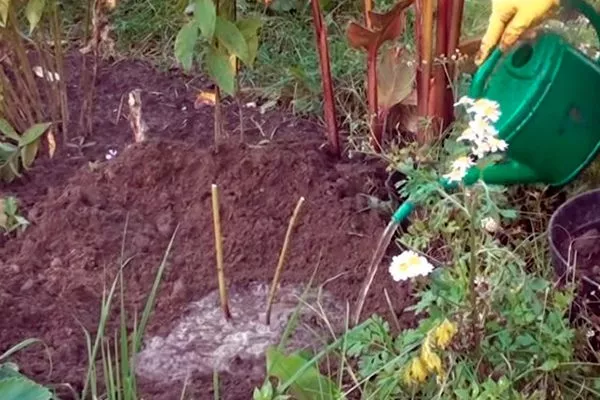
- Place the rhizome in a hole with settled soil, cover with soil, compact it lightly, and water thoroughly. The root collar should remain at ground level.
Keep the soil around the plant constantly moist until it takes root.
Aftercare
Care is simple and accessible even to novice gardeners. Follow basic gardening practices.
- Watering. Provide moderate watering—no more than once a week. A mature plant requires 30 liters of water. During budding, increase watering to prevent the soil from drying out. Excess moisture can lead to root rot.
- Top dressing. Fertilize the plant three times per season: in early spring, during bud formation, and after flowering. Use organic and mineral fertilizers.
- Trimming. The plant requires sanitary pruning: remove damaged or diseased shoots and leaves. During the growing season, remove faded flowers to maintain its decorative appearance.
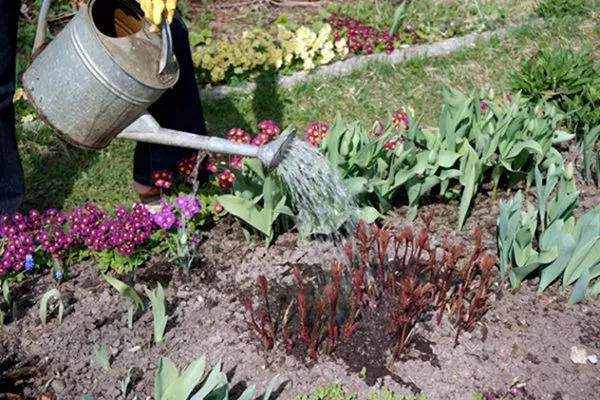
Mulching and loosening the soil help retain moisture and prevent weed growth.
What to do after flowering?
To encourage additional blooms and prevent seed formation, carefully trim off spent flowers. This will allow the plant's energy to focus on strengthening roots and further development. After flowering, trim the flowering stems back to leaf level. This helps maintain the plant's aesthetic appearance and promotes the formation of beautiful foliage.
Fertilize your peonies after flowering. Use a formula with a balanced macro- and microelement balance to provide them with the necessary nutrients.
How to prepare the Alexander Fleming peony for winter?
Despite its high frost resistance, Alexander Fleming requires some care in the fall before the onset of cold weather. Follow these recommendations:
- After the tops have wilted, cut off the shoots.
- Water the plants thoroughly to saturate the soil with moisture before winter.
- Apply the last fertilizer of the season – potassium-phosphorus fertilizer.
- Cover the bushes with soil or compost to protect the roots from frost.
- Remove old mulch and apply new compost. Mulch will help retain soil moisture and prevent pests. In southern regions, hilling is sufficient.
By following these simple steps, you can ensure the hybrid will overwinter successfully and bloom abundantly next season.
Autumn Work Calendar
- September: last potassium fertilization (20 g/bush)
- October: trim the stems at a height of 10-15 cm
- End of October: moisture-charging watering (40-50 l/bush)
- Early November: mulching with peat/compost (10 cm)
- End of November: installation of snow guards
Pests and diseases
Alexander Fleming may be susceptible to certain fungal diseases and pests. The most dangerous of these include:
- Gray rot.The stem darkens, the leaves curl and wilt. The peony may die within a few days. Treat with Fitosporin.
- Verticillium wilt.This is an incurable disease. Dig up and burn the affected bush.
- Mosaic.Leaves are turning yellow, and uneven spots in the form of circles and streaks are appearing. Remove the affected bush from the area immediately.
- Rust.The stems become covered with reddish, convex growths and turn red. Spray with copper sulfate.
- Septoria.Black and brown spots with a purple border are appearing on the leaves. Treat with Fitosporin and trim off the affected areas.
- Root rot.It's growing poorly and gradually dying. Remove it from the area and disinfect the soil with formalin.
- Powdery mildew.A dry, whitish coating appears on the leaves, which darkens and thickens over time. Use Bordeaux mixture for spraying.
- Ants. Large colonies of insects inhabit unopened flowers and eat them from the inside out. To control ants, we recommend using the product "Grom."
- Nematode.It attacks the roots, forming spherical growths on them. Destroy the bush and disinfect the soil.
Reviews of the peony by Alexander Fleming
The Alexander Fleming peony has attracted the attention of gardeners for many years. Even beginners can grow it, as it's easy to maintain and care for. With proper gardening practices, the plant will remain healthy and delight with its rich fragrance and vibrant appearance.