
Pelargonium is one of the most popular and easy-to-grow houseplants, delighting with vibrant and long-lasting blooms. However, proper watering is essential for its successful growth. Over- or under-watering can stress the plant, deteriorate its appearance, and even cause death. Timely adjustments to care are essential.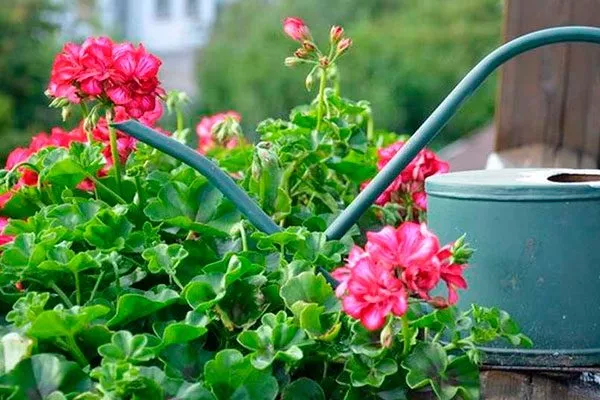
Norms and frequency of watering an indoor flower depending on various factors
The amount of water needed for pelargoniums is determined by a number of factors. The main ones are:
- Pot size and soil structure. In small containers, the substrate dries out faster, while in larger pots, moisture is retained longer. Soil type also plays a role: clay soil retains water longer, while sandy soil releases it more quickly.

- Conditions for keeping plants. Air temperature, light levels, and room humidity directly affect the rate of moisture evaporation. On hot, sunny days, plants lose more water and require more frequent watering.
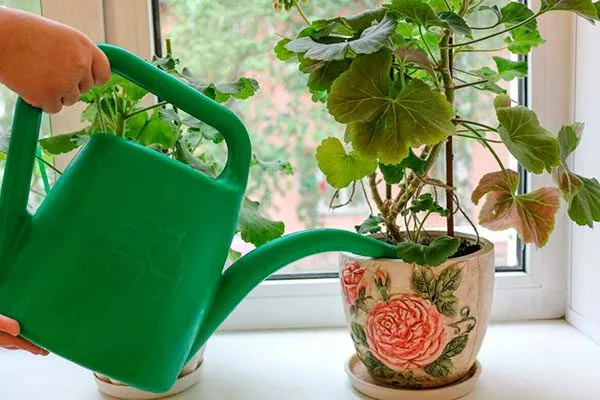
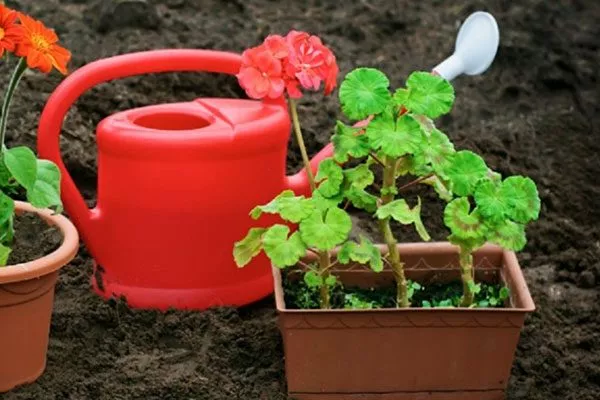
To determine when and how much to water, you can use several methods:
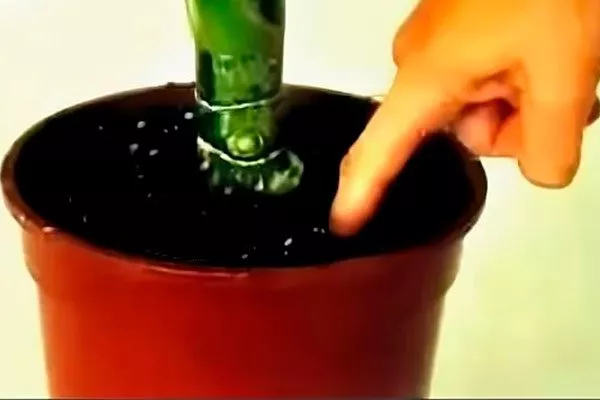
- Manual soil condition check. Stick your finger into the soil to a depth of 2-3 cm. If the soil feels dry, it's time to water; if it feels damp, you can postpone watering.
- Using a moisture meter. This device shows the moisture level of the substrate and helps to avoid over-watering or over-drying.
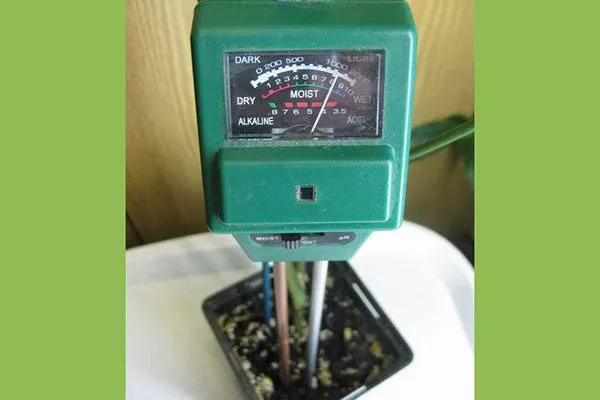
Carefully observe the plant's appearance. Wilting or yellowing leaves often indicate a lack of water, while softened or rotting leaves indicate overwatering.
What water should I use for the culture?
Water straight from the tap is not suitable for watering pelargoniums: it leaves a white coating on the soil, which negatively affects the plant's condition and can slow its development.
For irrigation at home, it is better to use one of the following options:
- Settled water. The simplest and safest method. Pour the liquid into bottles and leave it for 2-3 days – this will allow the chlorine to evaporate and heavy impurities to settle. This type of water is the best.
- Filtered water. Suitable for those who don't want to wait. Strain the water through a household filter and use immediately. It's softer and cleaner than tap water.
- Boiled water. After boiling, allow the liquid to cool slightly. Use only warm water. It's free of chlorine and salts, but requires more time to prepare.
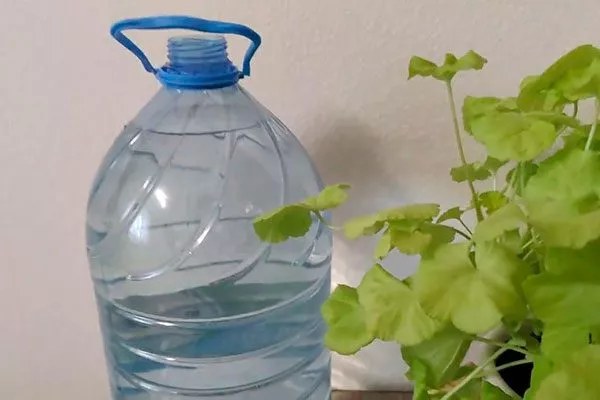
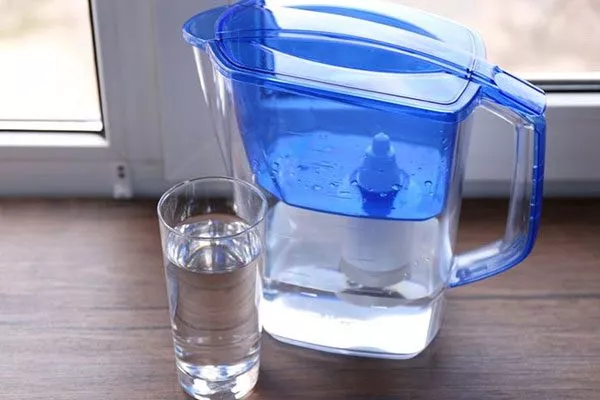
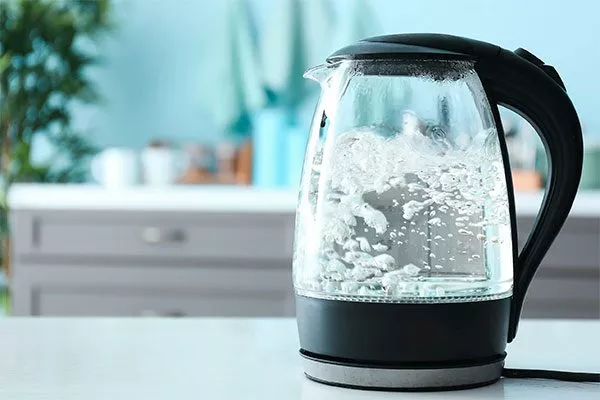
Maintaining the correct temperature is especially important when watering young pelargonium seedlings. The water should be moderately warm—from 17°C to 25°C. Water that is too cold can cause stress: growth slows, the root system stops developing, the leaves begin to turn pale, and eventually die off.
Watering methods
There are several methods for watering pelargoniums, each with its own advantages. To ensure healthy growth and abundant blooms, it's important to choose the method that best suits your growing conditions.
Upper
The classic method of watering pelargoniums involves carefully pouring water directly onto the soil at the base of the plant. Despite its simplicity, this method requires precision and accuracy.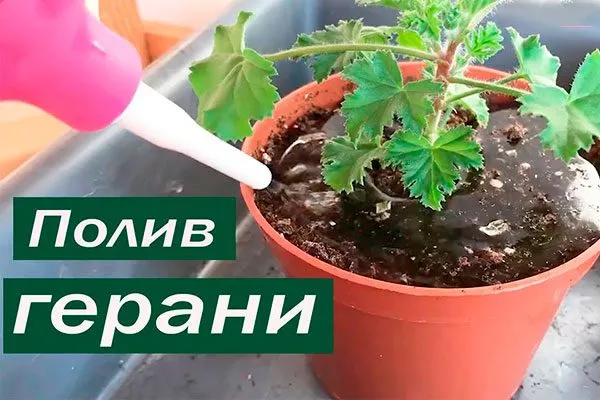
How to properly perform overhead watering:
- Pour water in a thin stream closer to the edge of the pot, avoiding contact with the leaves, stems, and especially flowers - over-watering the above-ground part can provoke rotting and the development of fungal infections.
- Water until water begins to drain through the drainage holes. After 15-20 minutes, drain the excess water from the tray to prevent the roots from becoming waterlogged.
- Between waterings, allow the top 2-3 cm of soil to dry out. Pelargoniums don't like over-watered soil and tolerate short-term droughts much better than over-watering.
This method is ideal for mature, robust plants, especially during periods of active growth and flowering. It helps control the amount of water and avoid overwatering the substrate. However, if the soil is too dense or compacted, it's best to alternate this with watering through a tray to ensure water reaches the lower soil layers.
Lower
Water is supplied through a tray rather than from above. Place the pelargonium pot in a container of warm water so the plant absorbs moisture through the drainage holes in the bottom. This method is considered gentle and helps avoid many common problems associated with overwatering and disease.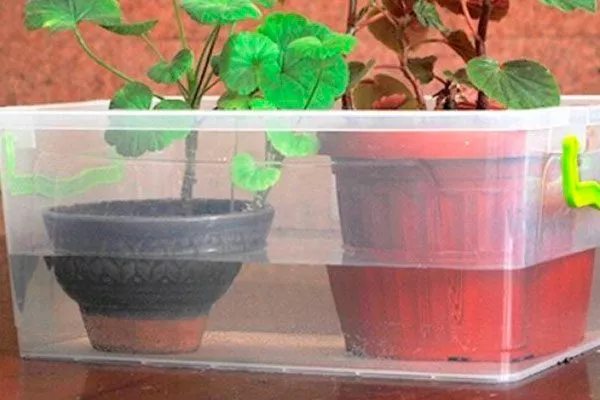
How to properly perform bottom watering:
- Pour room temperature water into a tray or wide bowl.
- Place the pot in water so that the liquid reaches approximately half the height of the container.
- Leave the plant in water for 15-30 minutes – this is enough for the soil to be well saturated.
- After watering, allow the water to drain through the drainage holes. Be sure to drain any excess moisture from the tray.
This method is especially effective during the cool season, when moisture evaporation is slow and there's a risk of overwatering. It's also suitable for delicate seedlings and dormant plants.
Drip
A system of gradually introducing small amounts of water into the plant's pot is the most popular method. This is especially useful for pelargoniums during hot periods or when they have been neglected for long periods. This method helps maintain stable soil moisture, preventing both over-drying and over-watering.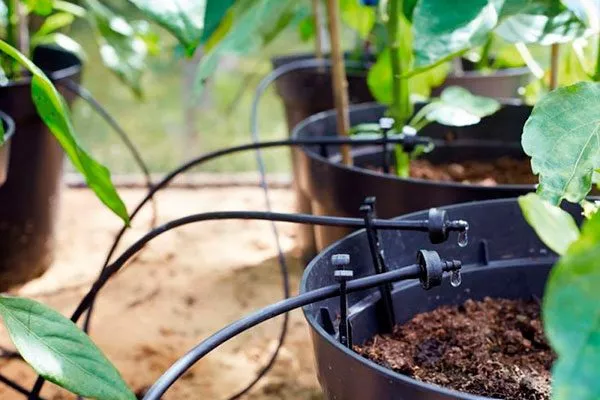
Drip irrigation options:
- Medical drip. One of the budget-friendly options. A thin tube connects to a water bottle, with a drip dispenser at the end. You can manually adjust the flow rate.
- Bottle method. Fill a plastic bottle with water, make a small hole in the lid or bottom, and place it upside down in the pot. Water is added gradually as the soil dries out.
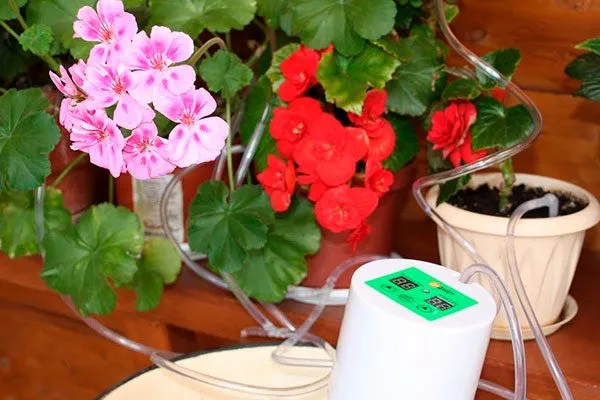
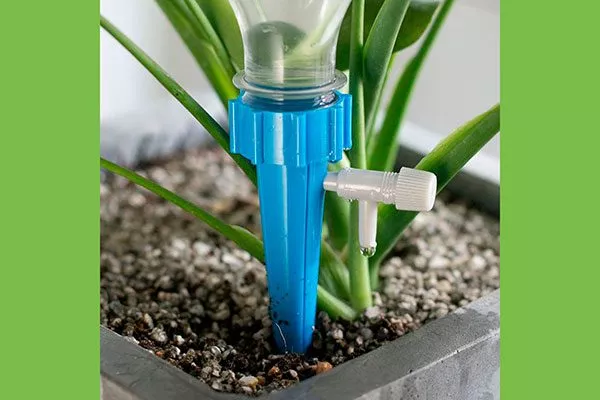
This is a practical and safe way to maintain optimal humidity for pelargoniums. The key is to properly adjust the water supply and regularly check the soil condition.
Wick
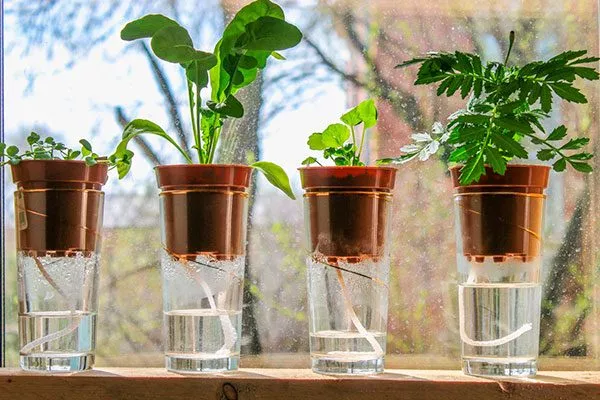
If you have a lot of pelargoniums and other houseplants, an automatic watering system is a great solution. It will significantly simplify care and save time, especially if you have a busy schedule or are away from home for long periods.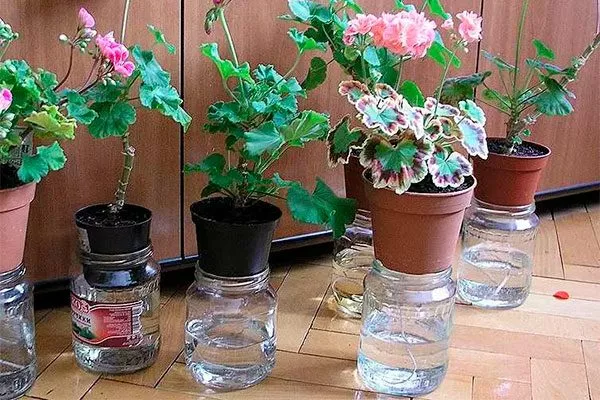
How to identify overflow and what to do about it?
Pelargoniums don't tolerate stagnant soil. If they're regularly overwatered, the roots begin to rot and the plant quickly loses its decorative appeal.
Overflow can be determined by a number of external signs:
- the lower leaves turn yellow, while the soil remains moist for a long time;
- the leaves become wilted, soft, sometimes with brown spots along the edges;
- a musty smell appears from the soil - a sign of root rot;
- growth slows down, flowering stops;
- a whitish coating may form on the surface of the substrate;
- the stem at the base darkens or becomes soft - an alarming symptom of the onset of root rot.
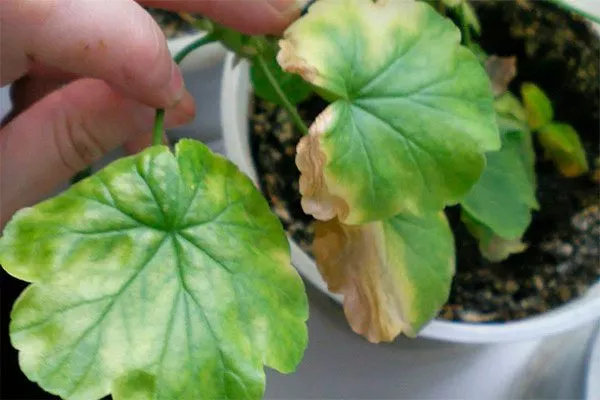
What to do in case of overflow:
- Stop watering immediately and let the soil dry out to a depth of at least 5-7 cm.
- Place the plant in a warm, well-ventilated place with diffused light.
- Inspect the drainage holes. If they are clogged, carefully clear them out.
- Remove the plant from the pot if the rotten smell is strong or the stem begins to turn black. Rinse the roots, trim off any rotted areas, and treat the cuts with wood ash or a fungicide.
- Plant in fresh, loose and light soil, with drainage at the bottom.
- Limit watering for the next week until the plant adapts.
Signs of moisture deficiency and how to restore moisture to over-dried soil
Although pelargoniums are tolerant of short-term drought, they quickly lose their appearance and health if left without moisture for a long time. To prevent this from happening, it's important to recognize the signs of overdrying and properly restore humidity levels.
Main symptoms:
- leaves lose turgor - become flaccid, droop downwards;
- yellowing of the lower leaves, especially at the edges;
- twisting of leaf blades inward;
- drying up of buds or their falling off before opening;
- growth retardation, cessation of flowering;
- the soil is moving away from the sides of the pot and looks cracked and is dry to the touch.
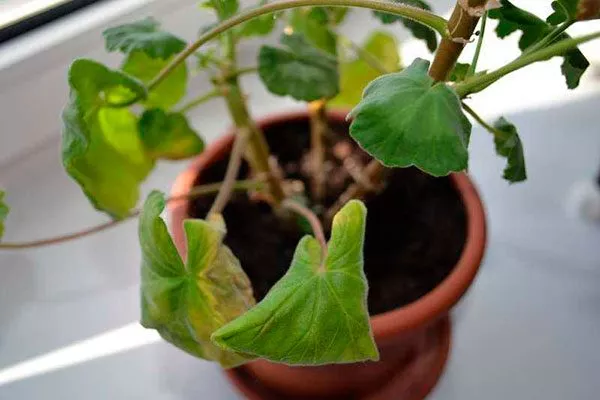
Helpful tips for restoring humidity:
- Don't overwater the plant. This will cause water to run off around the edges and not moisten the roots.
- Use the gradual moisturizing method:
- If the soil is very compacted and pulling away from the sides, gently poke a wooden stick into the soil in several places. Moisten the soil gradually using a spray bottle or small watering can, applying water in several passes.
If necessary, replant the plant into fresh, loose soil. - After resuming watering, mist the leaves (only if there's no sun) or simply place an open container of water nearby to increase humidity. Give the plant a weak solution of a stimulant (such as Epin or Zircon) to help manage stress.
Even if pelargonium has suffered slightly from drought, with the right care it will quickly recover and continue to delight with lush flowering.
Do I need to spray my houseplant?
Pelargoniums' delicate leaves don't tolerate misting well—moisture on the surface can cause them to turn yellow and fall off. Some gardeners recommend fertilizing the plants with indoor plant fertilizer, but others believe foliar feeding is unnecessary.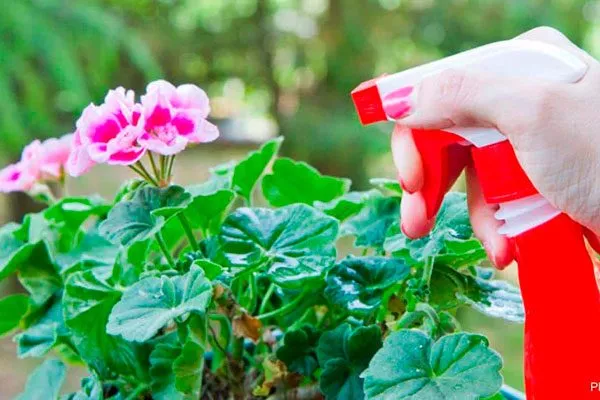
The only exception is preventative spraying with Mag or Extract once every two weeks against spider mites. Plants receive all their nutrients through the roots and thrive.
Peculiarities
Watering pelargoniums requires careful attention and consideration of the plant's specific characteristics. It's important to maintain an optimal watering schedule, select the appropriate water, and consider the plant's growth stage.
Combining watering with fertilizing
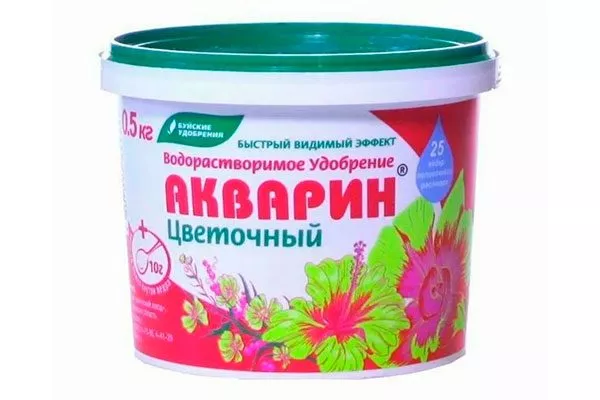
During bud formation, fertilize pelargoniums more frequently to ensure abundant and long-lasting blooms. Use liquid fertilizers:
- Peduncle;
- Aquarin for flowers.

Watering pelargonium for flowering and disease prevention
To stimulate flowering, strengthen health and protect the crop from diseases, you can use liquid fertilizers with antiseptics - iodine and hydrogen peroxide.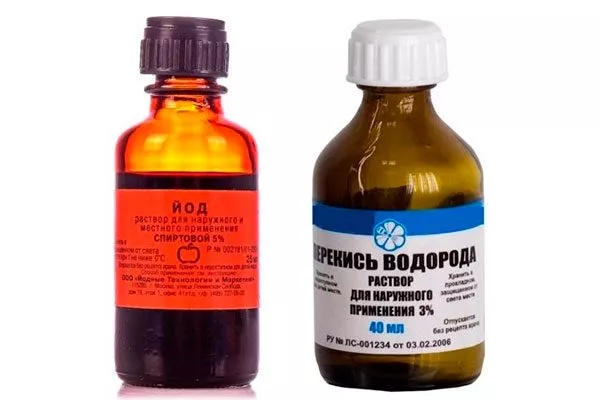
How to cook:
- Add 0.5 teaspoon of iodine and 1 teaspoon of hydrogen peroxide to 1 liter of warm, settled or boiled water.
- Mix the solution thoroughly.
Water the plant at the root. For a 500 ml pot, use 15-20 ml of solution; for a 1-1.5 liter pot, 25-30 ml of the solution is sufficient. For a 10-12 liter pot, you'll need 50 ml of the prepared fertilizer.
Watering frequency:
- in summer - twice a month;
- in winter – once a month;
- during the period of budding and flowering – once every 10 days, while irrigation with antiseptics should be carried out 1-1.5 hours after the usual moistening with warm water.
To stimulate growth
To accelerate pelargonium growth, use Asparkam: dissolve half a tablet in 1 liter of water and use the solution for watering. After this treatment, flowering usually ends earlier, lateral shoots stop developing vigorously, and the pelargonium begins to grow upward.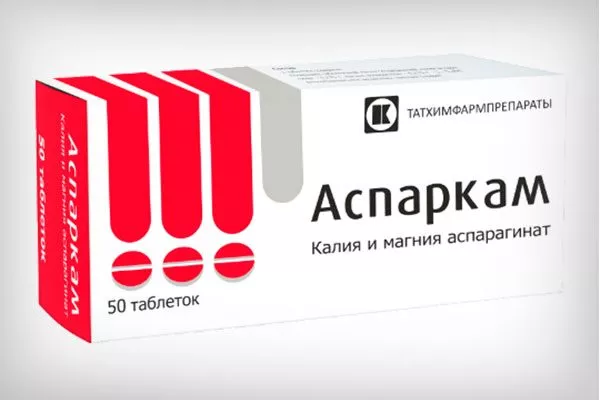
After landing/transplanting
After planting or moving the pelargonium to a new pot, treat it with Kornevin – this helps reduce root stress and promotes rapid rooting.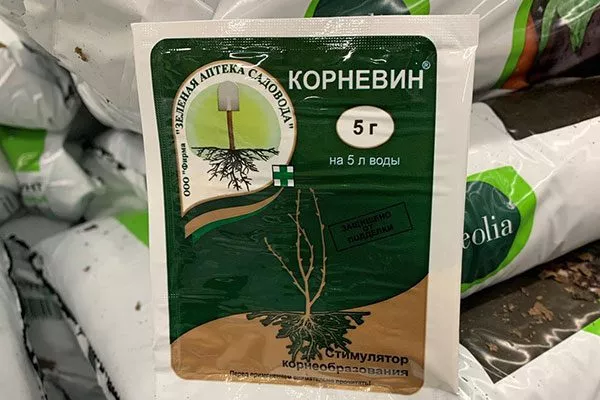
Use charcoal as a drainage medium: its pieces do not decompose in the soil, absorb excess moisture during overwatering, and retain residual fertilizer, providing nutrition to the plant between waterings.
Mistakes when watering geraniums and how to avoid them?
Many gardeners face difficulties caring for pelargoniums, which negatively impacts their health. Here are the most common ones:
- Overwatering. Excess moisture leads to root rot. To avoid this, be sure to check the soil moisture before watering.
- Using cold water. Watering with cold liquid stresses the plant. It's better to use room temperature water.
- Water getting on the leaves. Moisture on the foliage can cause spots and fungal diseases. Water the plant carefully, directing water only at the roots.
How to make watering geraniums easier?
To make watering and plant care easier, here are a few helpful tips. Follow these important steps:
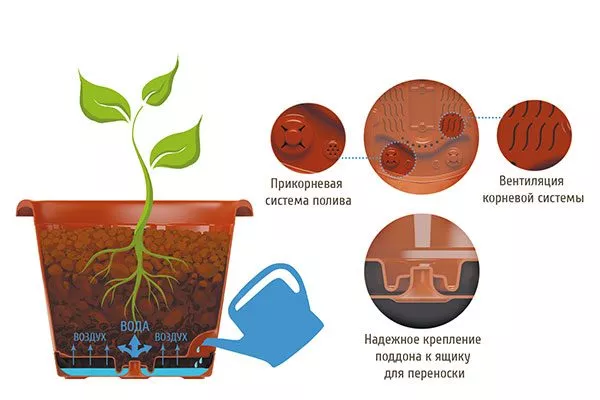
- Use a container with a tray. This will allow you to control the moisture level and avoid over-watering – excess water will accumulate in the container and evaporate gradually.
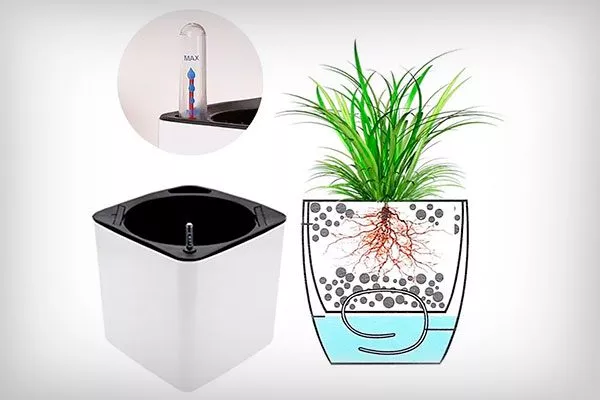
- Use self-watering pots or planters. These containers are equipped with a water reservoir, which gradually flows to the roots, providing stable hydration.
- Set up drip or wick irrigation. Automatic water supply systems will help maintain optimal humidity, especially if you are often away.
- Check soil moisture before watering. This will allow you to avoid watering the plant too often and making mistakes.
- Use settled or filtered water at room temperature. This reduces stress on the roots and improves moisture absorption.
Proper watering is key to the health and beauty of pelargoniums. By taking into account the plant's characteristics, regularly checking the soil moisture, and maintaining an optimal watering regime, you can avoid root problems and maintain lush blooms. It's important to pay attention to your plant's cues and promptly respond to signs of overwatering or drought.