
Proper shaping of pelargoniums through pinching and pruning is the key to their robust health, attractive shape, and abundant flowering. In spring, these procedures stimulate active growth and flower bud formation, and in autumn, they help prepare the plant for a period of dormancy and renewal. Following these simple recommendations will help you maintain your plant in excellent condition.
Why is pruning necessary?
Pruning is an important part of geranium care, necessary to remove old stems and shorten long shoots. Proper pruning promotes the formation of lush flower stalks and a beautiful plant shape. Failure to do so results in the lower leaves falling off, exposed branches, and loss of decorative appeal.
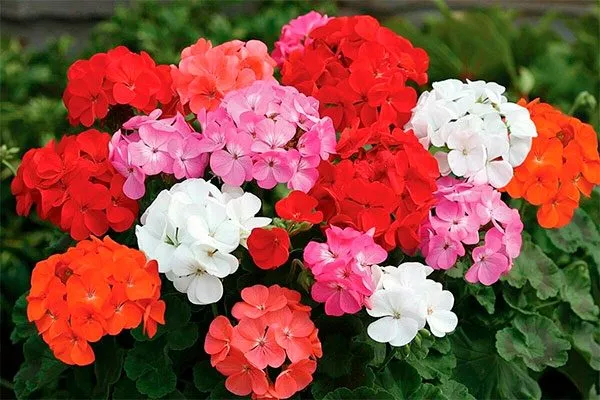
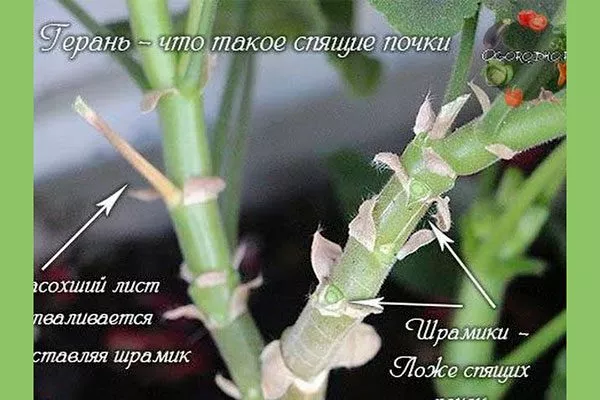
In addition to forming the crown and shoots, this procedure has a number of advantages:
- stimulates abundant and long-lasting flowering;
- gives the plant a compact shape;
- improves metabolism;
- prepares geranium for winter;
- improves aeration and light sensitivity;
- is a preventative measure against diseases.

What is pinching?
Removing the apical bud, known as pinching, stimulates the development of lateral shoots. This method promotes the formation of a dense crown and, as a result, more abundant flowering.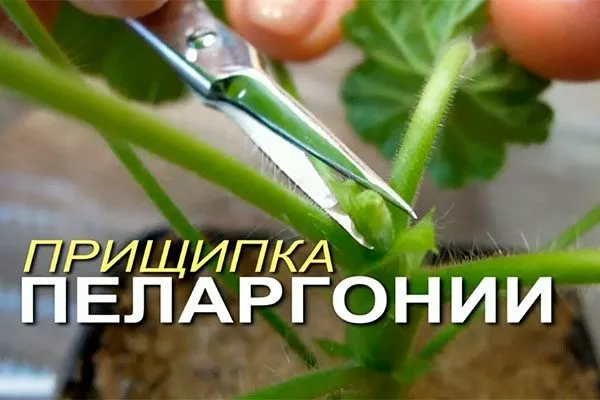
For small plants, this procedure is carried out manually or using special manicure tools.
Features of pruning
This plant is a favorite among many gardeners. Despite its low maintenance, it requires proper care, the key to which is pruning. This procedure requires a meticulous approach.
Spring
In winter, pelargoniums may lose some foliage—the degree depends on care and variety. Slow-growing varieties usually survive the winter well and may not require spring pruning. Zonal geraniums, which are characterized by more vigorous growth, may lose their decorative appeal by spring, but this is easily corrected with pruning.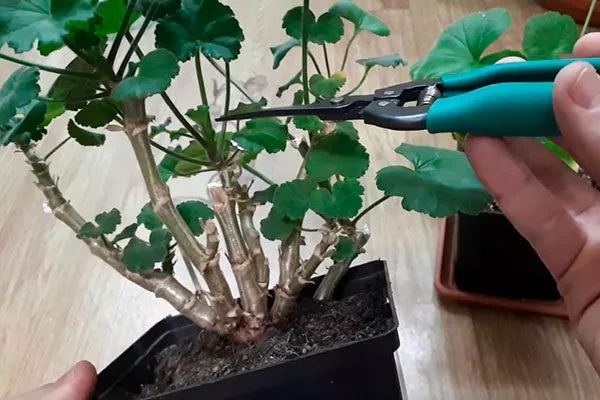
In spring, remove shoots that crowd the center of the bush, as well as overly long, crooked, and old branches. Pruning stimulates the awakening of dormant buds, ensuring rapid and uniform growth, resulting in a lush and attractive bush.
Pruning mature pelargonium bushes
A more intensive crown shaping method for pelargoniums is recommended for mature specimens. This process involves shortening woody and large stems.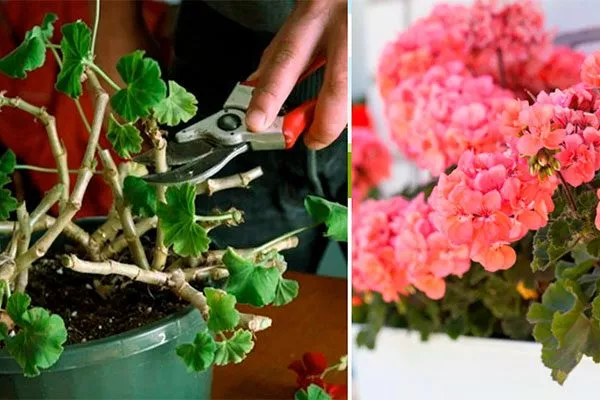
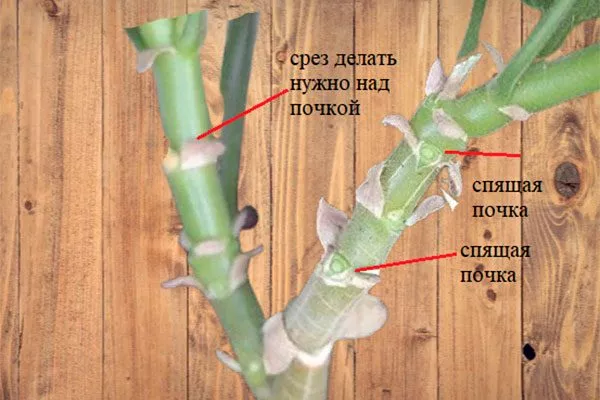
When pruning, three to five dormant buds are preserved on each branch, which will later give rise to new shoots. The cut stems can be used for propagation, resulting in the production of young plants.
Pruning young bushes
This procedure helps form a compact and lush bush, stimulates active branching, and promotes more abundant flowering. It's best to begin this process early in the plant's growth cycle.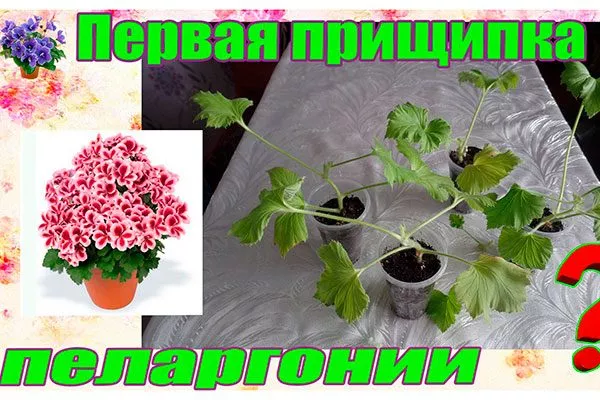
Why do young pelargoniums need pruning?
- so that the plant does not stretch upwards, but forms strong lateral shoots;
- to set more flower buds;
- to improve air circulation inside the bush and reduce the risk of disease.
The first pruning or pinching is done when the seedling has 4-6 true leaves. Pinching the tip of the main shoot stimulates the growth of lateral stems. Subsequently, the bush can be shaped as desired, depending on the desired shape and density.
Pruning old pelargoniums that have never formed
Plants of this type often have bare stems, often devoid of leaves. Forming them into a lush bush is a difficult task. In such cases, it is recommended to re-root the plant and pinch the young shoots to create the desired shape.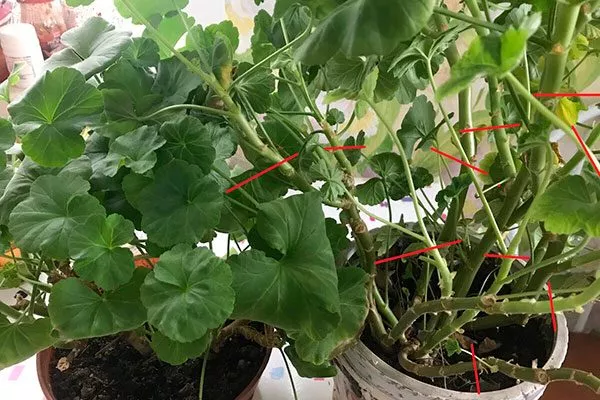
An old bush can be pruned back radically, leaving only short stems (5-10 cm) above ground. If new shoots emerge from the lower part, allow them to grow and pinch off the tips to encourage branching. This will give the pelargonium a chance to renew itself.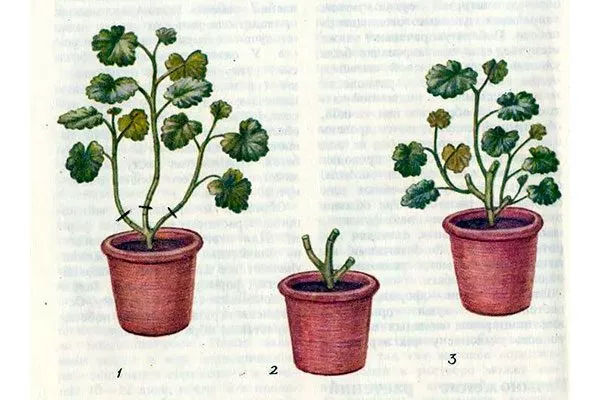
Pruning modern varieties of pelargoniums
Each pelargonium variety has its own unique growth pattern. Some naturally form lush bushes, while others require regular shaping by pinching the tips to encourage branching.
Zonal pelargoniums, depending on their size, are divided into three main categories:
- standard (30-60 cm);
- dwarf (12.5-20 cm);
- miniature (10-12.5 cm).
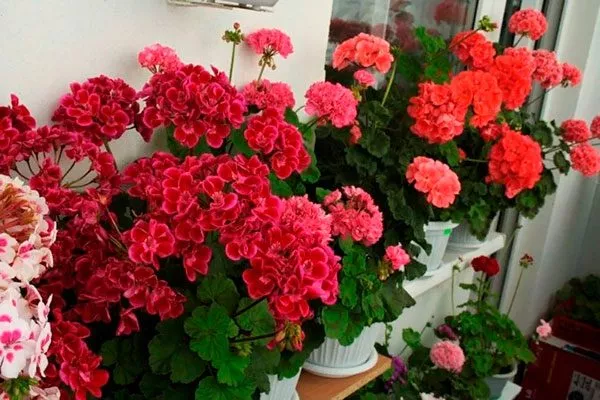
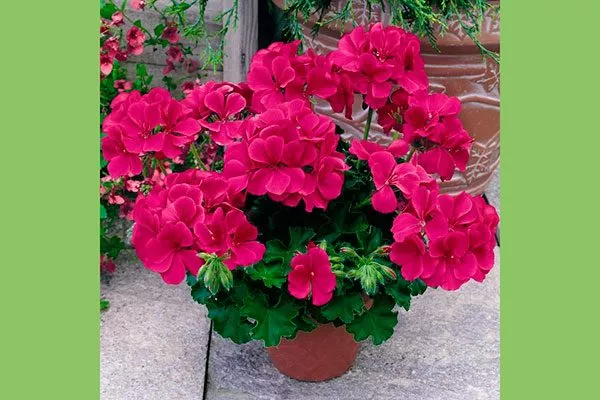
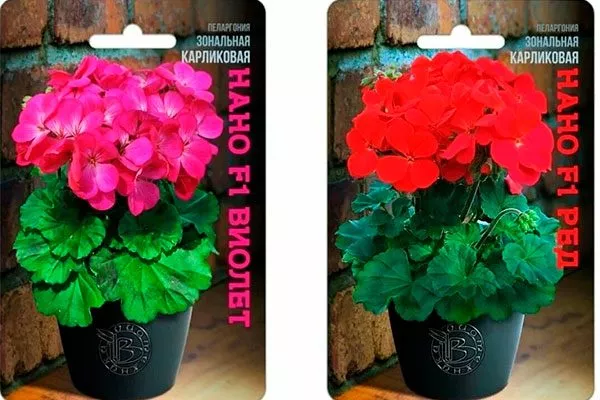
Miniature and some dwarf varieties typically form compact bushes on their own. Miniature zonal pelargoniums can survive without pruning for 2-3 years, requiring only spring repotting or topsoil replacement.
Features of pinching
For a successful procedure, it's crucial to use sterile, sharp instruments, pre-treated with alcohol, to minimize the risk of damaging the plant. Before beginning the procedure, thoroughly wash and disinfect your hands to prevent infection.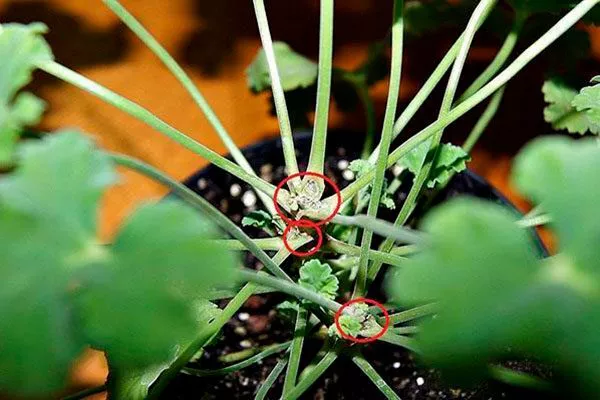
Follow the rules:
- When manually pinching, avoid pulling the shoots too hard to avoid damaging the root system. After pruning, provide the plant with sufficient sunlight to stimulate rapid growth of strong, healthy new shoots.
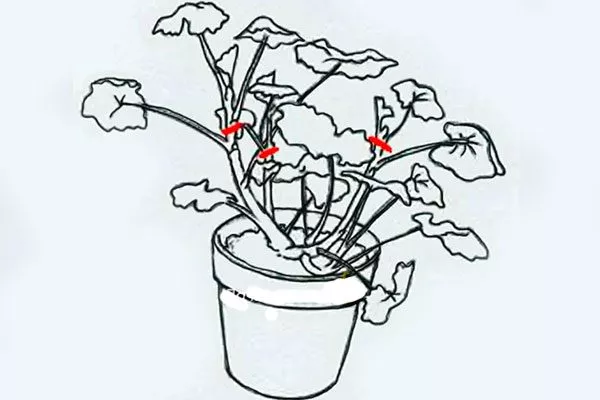
- Prune all shoots growing inward to avoid excessive density and ensure adequate air circulation. If there is significant space between leaves due to insufficient light, shorten the shoot just above the leaf.
- If you find diseased shoots, cut them off along with part of the stem.
Formation of a standard plant from a bush
Standard geraniums are small trees growing to approximately 1 m in height, with foliage and flowers concentrated at the top. Not every variety is suitable for this form. Choose robust specimens with strong, upright stems. Remove all side shoots and provide support for the plant.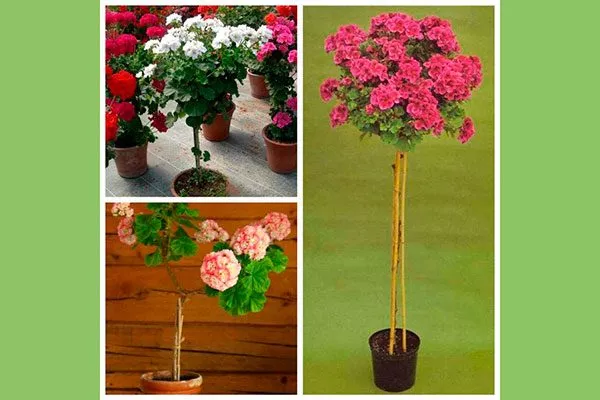
When the plant reaches the desired height (not exceeding 1 m), pinch it back: shorten older shoots after the first bud, and young shoots after the fourth. Flowering can be expected only the following season after pruning.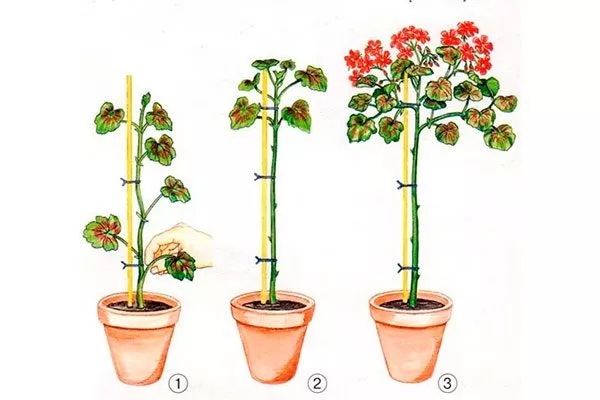
Step-by-step instructions
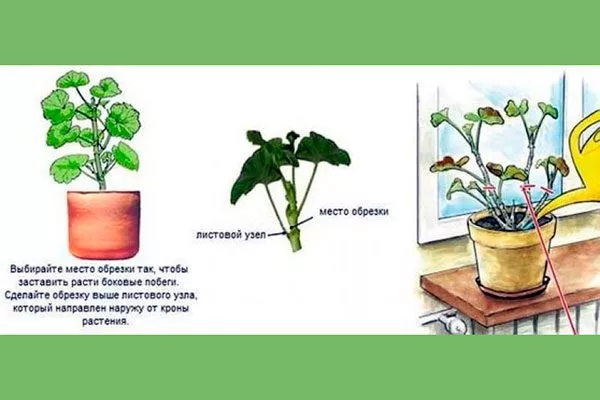
To pinch a plant correctly, first carefully examine the upper shoots and identify the largest growth bud. Removing this bud stimulates the development of lateral shoots and prevents the pelargonium from growing tall.
The main goal of pelargonium pruning is to thin out the crown and create a beautiful, healthy bush. Remove all inward-growing shoots, as they crowd the plant and impede air circulation. Leave only those that grow outward.
Follow the rules:
- Make cuts at the leaf node.
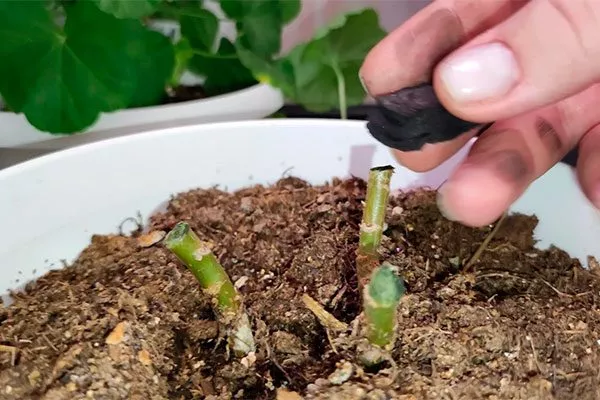
- To prevent rotting and infection, treat the cut areas: sprinkle with activated charcoal powder, cinnamon, or lubricate with brilliant green.
- After the procedure, the plant needs nitrogen fertilizers - apply them after some time, when the bush begins to grow.
What to do immediately after pruning?
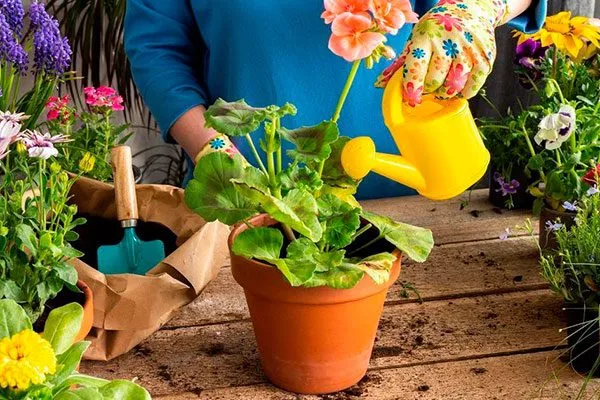
This plant requires careful care. First and foremost, provide it with maximum light, avoiding direct sunlight. Keep the plant on a windowsill for a month, then move it closer to the window. Room temperature is ideal.
Basic requirements:
- Water moderately, removing excess water from the saucer. It's better to underwater than to allow the pot to become waterlogged.
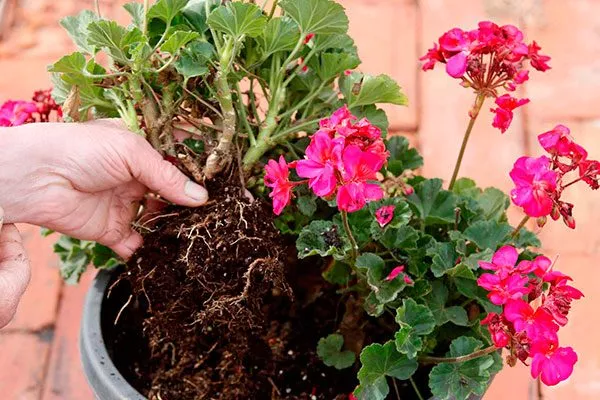
- Replant once every three years, avoiding combination with pruning.
- Pelargonium responds positively to fertilizing: in the spring, after pruning, use nitrogen fertilizers, and then phosphorus-potassium fertilizers to form a lush crown.
How to stimulate branching and achieve abundant flowering?
Begin shaping the bush when it's young. Pinch the tips of the shoots above the fourth to sixth leaf to encourage the development of lateral branches. In the spring, in February or March, trim the stems that have stretched out over the winter by about a third of their length. Avoid pruning in the fall, as this will weaken the plant before the dormant period.
Other events:
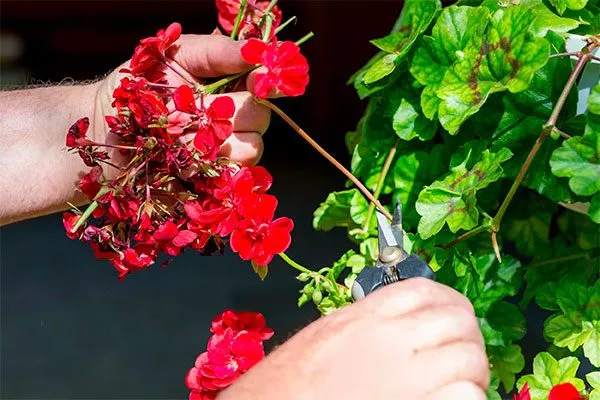
- Remove faded inflorescences. This will help conserve the plant's energy for the formation of new buds, rather than for the formation of seeds.
- Provide sufficient lighting. If there's not enough light, the shoots will stretch, the leaves will become small, and flowering will weaken or stop. However, during midday, it's best to protect the leaves from direct sunlight to avoid burning.
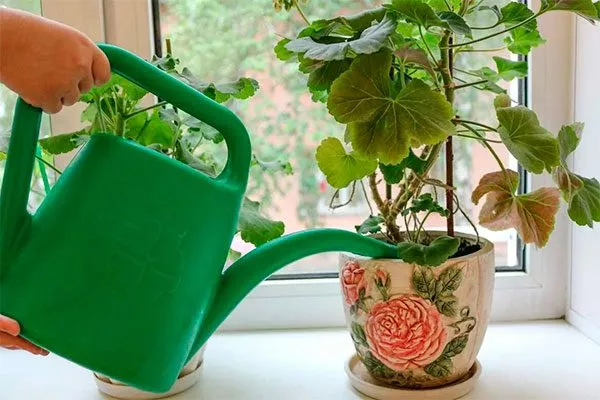
- Keep an eye on watering. Pelargoniums don't like stagnant water, but overly dry soil also negatively impacts flowering. Water when the top 2-3 cm of soil dries out. In summer, water 2-3 times a week; in winter, water approximately every 7-10 days.
Common mistakes
Pruning geraniums is a simple procedure, but it requires care and adherence to a few rules. With the right approach, the results will be pleasantly surprising. However, beginners often make mistakes that can lead to the death of the plant.
The most common pitfalls are listed below:
- A sharp change in conditions of detention. If the pelargonium has been outdoors all summer, for example on a balcony or windowsill, give it time to adapt to indoor conditions before autumn pruning.
Pruning itself is a significant stress, and when combined with sudden changes in temperature and humidity, it can harm the plant. It's best to wait a few days after bringing it indoors to allow the plant to acclimate to the new conditions. - Use of non-sterile instruments. Before pruning, thoroughly disinfect all tools, and clean and dry them afterward. Ignoring this step can lead to plant infection through the cuts—the infection quickly penetrates the tissue, causing diseases that, in advanced cases, can lead to the death of the plant.
- Incorrect watering regime after pruning. After a deep fall pruning, some gardeners begin to water the plant generously, mistakenly believing this will speed recovery. However, excess moisture during this period is a direct path to root rot and the development of fungal diseases, particularly blackleg.
Questions and answers about pinching pelargoniums
Pinching pelargoniums raises many questions for beginning gardeners. Below are the most common ones, with clear and practical answers.
Why is it necessary to pinch pelargonium, even if it is growing well?
Pinching isn't just a way to make a plant more attractive, but also an important tool for maintaining its health and harmonious development. Pelargoniums exhibit a phenomenon called apical dominance: the apical shoot secretes auxins, phytohormones that suppress the growth of lateral buds.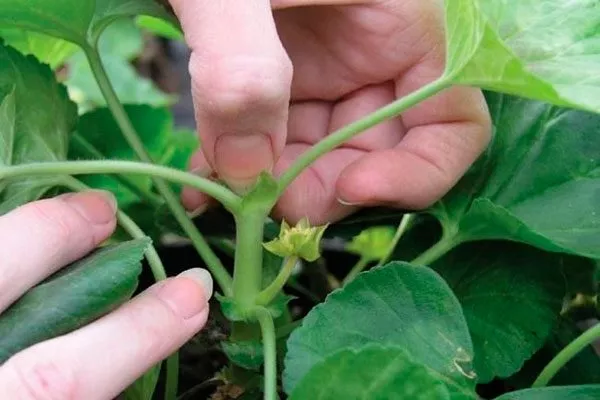
Without pinching, the bush elongates, becoming single-stemmed with sparse branching, and the lower part becomes bare. By removing the shoot tip, you redirect growth hormones, activating dormant buds in the leaf axils. As a result, the plant takes on a compact shape, becomes denser, receives better ventilation, and is less susceptible to diseases.
When exactly should the first pinching be done on a cutting?
The optimal time is when the rooted cutting reaches 12-15 cm in height and already has at least 2-3 pairs of full-fledged leaves. This means the plant has successfully adapted and can withstand mild stress without affecting its growth.
Is it possible to pinch a cutting if a flower stalk has already begun to develop on it?
Yes, pinching off a cutting with a flower stalk emerging is not only possible, but also necessary—it's considered the best way to establish a strong, well-branched bush. The emergence of a flower stalk on a young plant often indicates favorable conditions, rather than actual readiness to bloom.
Removing the flower stalk along with the top allows you to redirect resources toward root and lateral growth. This approach not only prevents the plant from becoming depleted but also helps form a proper bushy structure.
What happens if you don't pinch at all?
The plant will develop as a single, long shoot with a single flower at the top. As a result, the bush remains unbranched, becomes elongated, loses its compactness and stability, and requires support. Flowering is limited to the top, the decorative effect is reduced, and the leaves become sparse and weak.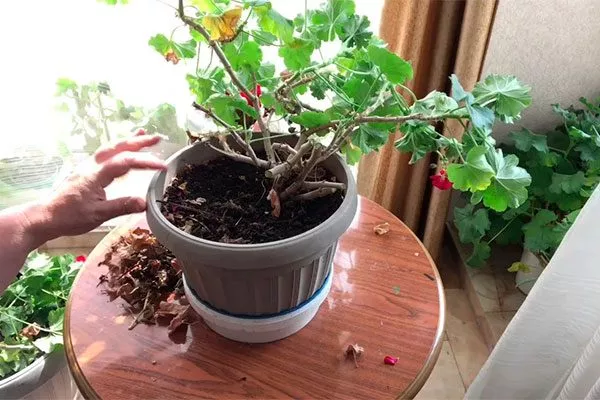
Regular pinching dramatically changes the plant's shape. Removing the top stimulates the emergence of lateral buds, increases branching, and promotes the formation of flower stalks along the entire length of the shoots.
How many leaves should be left when pinching so that the bush branches successfully?
It's important to leave at least two or three nodes with strong, healthy leaves. These serve not only a decorative purpose but also a vital function—they ensure photosynthesis and support the plant during recovery.
The more developed leaves remain after pinching, the better the bush will develop – lateral shoots form from the lower axils, and the remaining leaf blades actively nourish the plant, promoting rapid growth.
Do I need to pinch only once or do I have to repeat the procedure?
A second pinching 3-4 weeks after the first helps form a second tier of shoots and create a dense, harmonious crown. This method is especially effective for plants grown in pots or containers.
Re-pinch only when the plant has sufficient light and is actively growing. A lack of light, nutrients, or moisture will not result in branching, but rather in shoots becoming thin and elongated.
What should I do with the pruned shoots? Can they be rooted?
This is truly the optimal method for propagating pelargoniums by cuttings. Suitable cuttings are 5-7 cm long, with one internode and 1-2 mature leaves. After cutting, allow the cuttings to dry for 12-24 hours to allow the wounds to heal and reduce the risk of rotting in the substrate.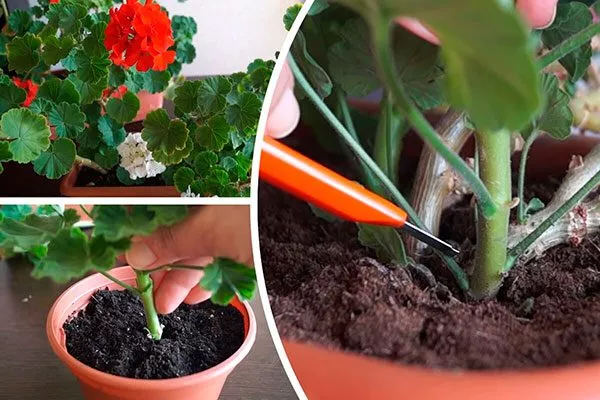
Then plant them in moist, loose peat—preferably with mycorrhiza or with the addition of rooting stimulants. This approach accelerates the formation of healthy and strong plants and saves time when propagating the collection.
How do you know if pinching worked?
You can tell the procedure has been successful by the appearance of new shoots in the leaf axils—they usually become visible within 5-10 days. These young shoots develop rapidly, becoming independent growth points, indicating the awakening of dormant buds and active branching.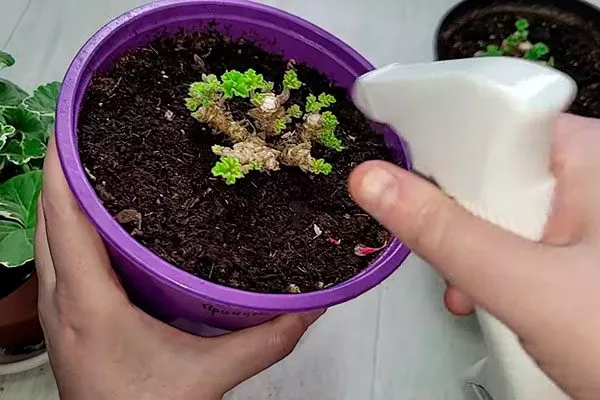
What is the correct way to pinch a rooted but still small bush?
Make the cut just above the second or third node, leaving 2-3 layers of leaves. It's important not to overdo it—the plant needs to retain at least two healthy leaves for full recovery.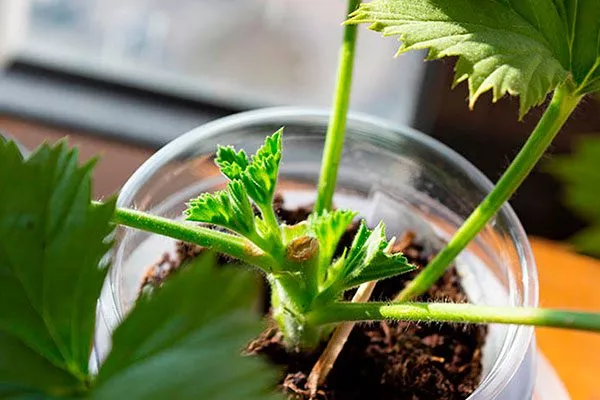
After this procedure, provide the plant with bright, indirect light and protection from drafts. Water as the top layer of soil dries, avoiding excessive moisture. Within 7-14 days, lateral buds will activate, new shoots will emerge, and the bush will thicken.
How to prune a pelargonium mother bush to renew it?
Leave 2-3 healthy nodes on each shoot—these are where new shoots will develop. A stump height of about 10-12 cm allows the plant to distribute nutrients evenly among several growing points, rather than concentrating them in one tip.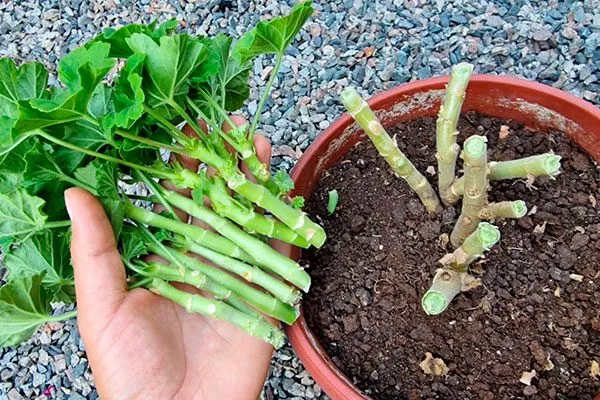
This method is perfect for spring renewal of a collection of indoor pelargoniums or when preparing a large number of cuttings for propagation.
Why doesn't pinching always work?
The procedure may be ineffective for several reasons. Most often, this is due to an underdeveloped root system, insufficient light, or cutting too high, leaving few nodes on the stem.
If the rooted cutting is still weak, the plant will not be able to stimulate lateral growth due to resource constraints. For successful pinching, the pelargonium must have at least 2-3 full-fledged leaves and a strong root system.
Can pinching be replaced with pruning?
Pruning is an effective alternative to pinching, especially for older or leggy indoor pelargoniums. Unlike pinching, pruning allows you to completely renew the bush, activating several dormant buds at once, and creating a compact plant with numerous young shoots.
Pelargonium is one of the most popular houseplants, beloved for its vibrant flowers and decorative foliage. To ensure the plant enjoys a lush, dense bush and abundant blooms, it's important to properly shape its crown. In spring and fall, pinching and pruning are especially important, as they help direct the plant's energy toward the development of lateral shoots and the formation of flower buds.