
Pelargonium is a popular plant grown by many gardeners. Their attractive colors make these flowers look stunning. With a wide variety, you can choose the perfect variety, especially from the Tuscany series. We suggest familiarizing yourself with the most common varieties, including their characteristics, pros, and cons.
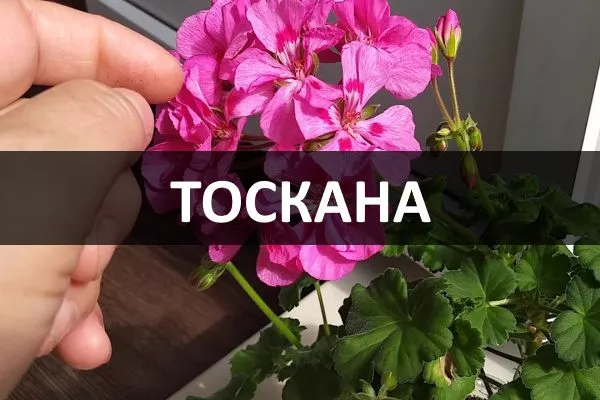
Pelargonium Tuscany's characteristics
These are low, branched bushes (25-30 cm) that attract with their beautiful inflorescences. When open, the buds resemble umbrellas of four petals.
Breeders have worked hard to create a diverse palette of Tuscany pelargoniums: from a delicate marshmallow to a rich scarlet with dark spots. While the varieties vary in color, they share a common trait: compact habit, large, spherical inflorescences, and a delicate fragrance. Tuscany also blooms early, abundantly, and for a long time.
Series and popular varieties
The Tuscany group features numerous zonal pelargonium varieties, appealing to both beginner and experienced gardeners. Explore the characteristics of the most popular varieties, which impress with their incredible beauty, amazing fragrance, and ease of care.
Toscana Castello Series
| Name | Bush height (cm) | Inflorescence color | Flower type |
|---|---|---|---|
| Toscana Castello Rose Eye | 25-30 | Fuchsia with a dark spot | Non-terry |
| Toscana Castello Dark Red | 25-30 | Cherry with white stripes | Terry |
| Toscana Dolce Vita Lavender | 25-30 | Pink lavender | Simple |
| Toscana Dolce Vita Rose Eye | 25-30 | Bright pink with a raspberry eye | Terry/semi-double |
| Edwards Toscana | 25-30 | Bright red with white lining | Terry |
| Tuscany Hero | 25-30 | Bright crimson with a white eye | Terry |
| Toscana Malaika | 25-30 | Bright crimson | Densely terry |
| Tuscany Okka | 25-30 | Orange with a pink tint | Semidouble |
| Tuscany Magnus | 25-30 | Deep red | Terry |
| Toscana Renske | 25-30 | Red-burgundy | Terry |
Toscana Castello is a series of pelargoniums named after a beautiful castle. The flower is striking in its grandeur. This compact bush with upright stems is characterized by its branching. The plant is covered with numerous dark green leaves with a lighter center.
The Toscana Castello series of pelargoniums boasts dense, fade-resistant blooms. The semi-double flowers come in a wide variety of shades, ranging from white and soft pink to purple. These varieties are suitable for both flowerbeds and windowsills.
Let's look at one of the popular varieties Toscana Castello Rose Eye (Tammo)This is a non-double zonal pelargonium. It is characterized by large, capped, and very beautiful flowers. Its compact, abundant blooms are a particular advantage of this variety.
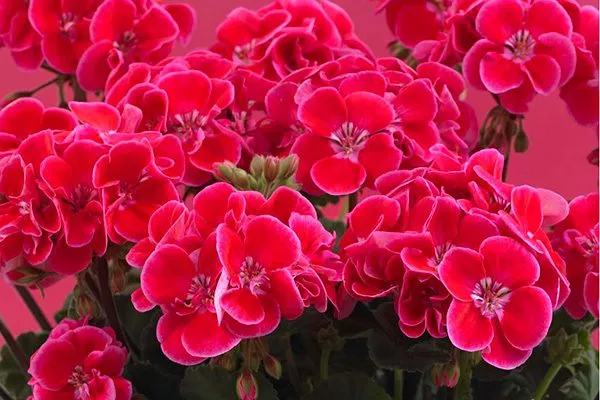
The petals are fuchsia with a darker, velvety blotch. The plant is well-foliated, covered in dark green foliage. Pelargonium Toscana Tammo blooms profusely and continuously, like other members of this series.
Another equally popular variety from this series is Toscana Castello Dark Red (Bernd)This small plant is suitable for growing indoors, on a balcony, or in the garden. The flower is covered with beautiful, neat leaves, colored a rich emerald hue.
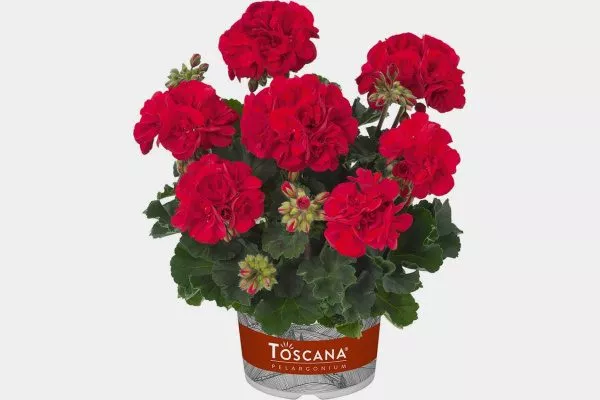
This double zonal pelargonium boasts large flowers, reaching up to 3.5 cm in diameter. The petals are a rich cherry color. The inflorescences are gathered in bright clusters that densely cover the cap. From the center of the bud, sparse white stripes run along the petals.
Toscana Dolce Vita Series
The Toscana Dolce Vita series includes many varieties: White (Erika), Lavender (Lara), Red (Mylena), Hot Coral (Lisa), Neon Blue (Nancy), Rose Eye (Claudio), Salmon (Emma), Red Eye (Hot Spot Kiss), Coral Eye (Hot Spot Coral) and others.
One of the most popular is pelargonium. Toscana Dolce Vita Lavender (Lara), attracts attention with its compact bush with numerous inflorescences. The plant is covered with neat, small, dark green leaves that have no distinct zones.
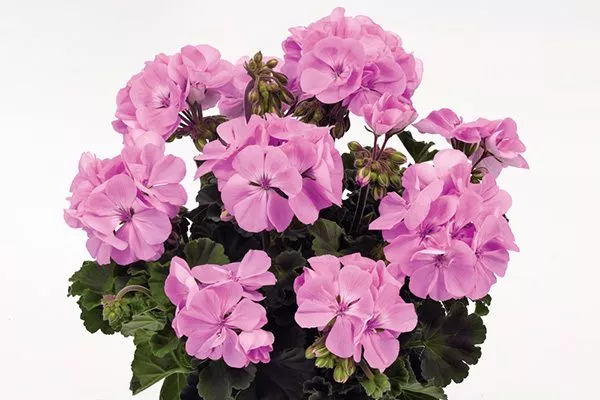
Pelargoniums are characterized by single flowers, a vibrant pink-lavender hue with a lighter center. The flowers are quite large and have numerous petals.
Another popular representative of this series is Tuscany Dolce Vita Rose Eye (Claudio)This is a compact, unhurried, and squat pelargonium. The bush branches well and has a neat and impressive appearance. The plant is covered in beautifully shaped, dark green foliage.
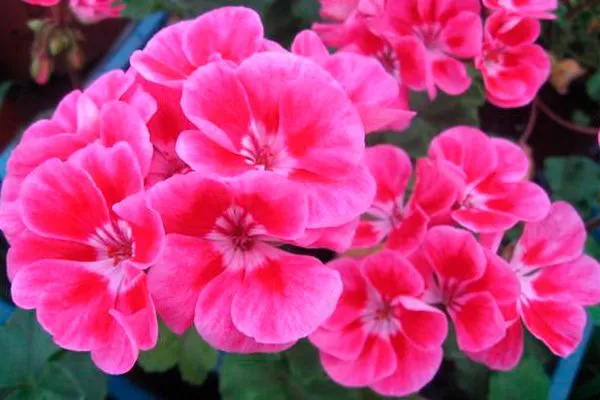
Large double and semi-double flowers form voluminous heads. The petals are a very bright, rich pink, dominated by a dark crimson eye. A white tint appears at the base of the petals.
Variety Edwards Toscana
Edwards Toscana is a pelargonium that makes an incredible impression. This small bush is characterized by numerous branches and is covered with large, dark green leaves. The plant has short, strong internodes.
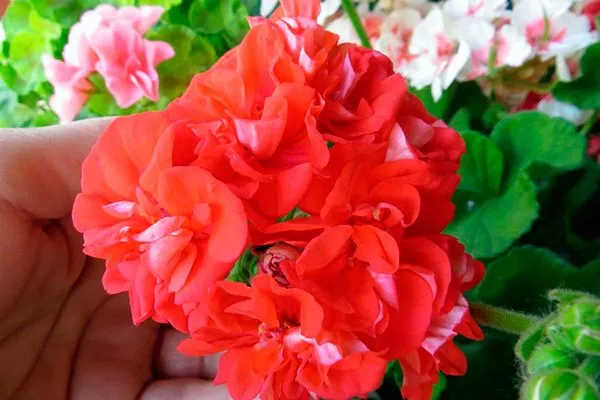
Large, bright red flowers, up to 10 cm in diameter, bloom on the shoots. When half-open, the flowers resemble roses. The undersides of the petals and their bases are lined with white. Pelargonium blooms from early spring to late fall.
Toscana Hero variety
Pelargonium Toscana Hero is a standard variety with a compact size and good foliage. The plant is covered in light green leaves with subtle dark zones.
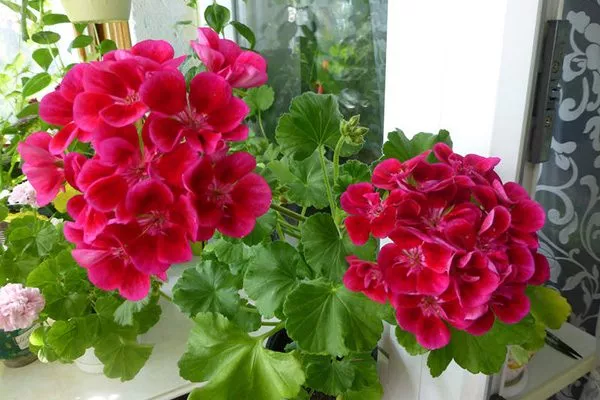
Pelargoniums combine large inflorescences with velvety flowers, painted a bright crimson hue with a white eye. The color shimmers beautifully in the sun. The flowers are large and graceful.
Toscana Malaika variety
Toscana Malaika is an incredibly beautiful pelargonium, characterized by a compact, well-branched habit. The plant is abundantly covered with medium to large leaves of a rich emerald hue.
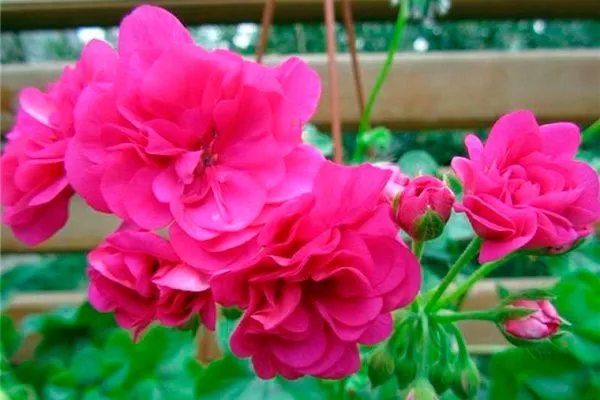
Pelargoniums have beautiful, large flowers with neatly arranged petals. The densely double, bright crimson blooms resemble roses. They are distinguished by their lush and long blooming period.
Variety Toscana Okka (Tuscany Okka)
Pelargonium Toscana Okka is an ivy-leaved plant characterized by a standard-sized bush and interesting leaves (they are pubescent, light, and soft). However, not all gardeners appreciate this quality.
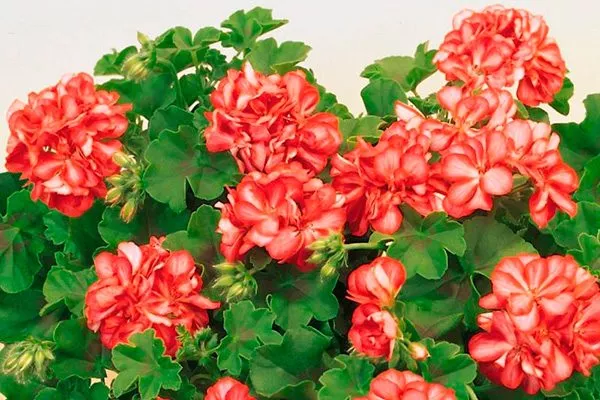
The large, semi-double orange flowers are the cultivar's main attraction. The hue can be brighter or duller, with a slight pink tint, but the petals remain a piercing orange, especially in the sun. The petals have white and pink stripes down the center, and the underside is white.
Toscana Magnus variety
Pelargonium Toscana Magnus is characterized as a dense subshrub. This dwarf plant boasts good foliage. It is covered with medium to large dark green leaves with a concentric zone of brown in the center.
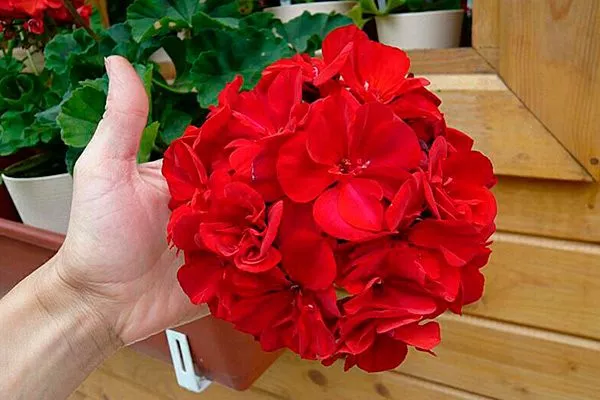
This variety is renowned for its large inflorescences and flowers gathered in large caps. The double flowers are a vibrant, deep red. Pelargoniums have a rich, tart aroma. With age, the stems of the plants become woody, developing hard, brownish-beige bark.
Pelargonium Toscana Magnus has many advantages:
- drought resistance;
- high decorative value;
- weather resistance;
- bright colors;
- resistance to diseases and pests;
- ease of care;
- compactness.
Toskana Renske variety
Toscana Renske is a compact pelargonium that blooms from early spring to late fall. The plant is covered with fairly large, attractive, dark green leaves. It blooms early and continuously, and can be planted in both pots and open ground.
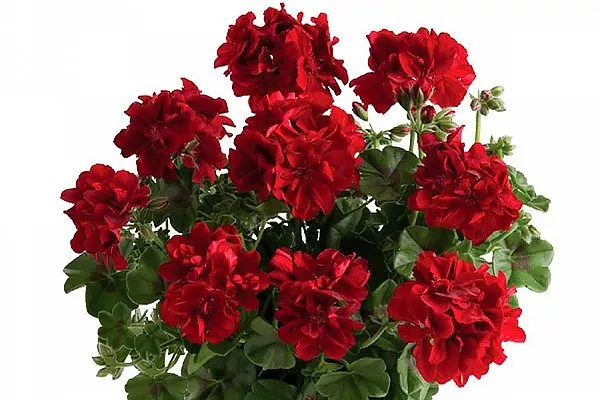
The plant is covered in small inflorescences with red-burgundy petals. The double flowers can have a dark red or dark burgundy hue depending on the lighting.
Pelargonium Toscana Renske has many advantages:
- high decorative value;
- compact dimensions;
- different shades depending on lighting;
- ease of care;
- excellent immunity.
Planting and further care
Caring for the ivy-leaved pelargonium Toscana doesn't require much time or effort. Care procedures include planting the plant and following proper cultivation practices.
Follow the recommendations of experienced florists:
- Planting a plant. If you decide to buy a pelargonium, remember that it thrives in bright light. When planting in a garden, choose a well-lit spot. In an apartment, place the pot on a sunny windowsill.
You can purchase soil for pelargoniums at a specialty store or prepare it yourself: mix turf and leaf soil, peat, humus, and sand in equal proportions.
Repot the purchased plant along with the root ball. Water the pelargonium beforehand. - Watering, spraying and fertilizing. Water the plant generously for two weeks before and after planting. Then, water every other day during hot weather, and twice a week during cold weather. Install drainage to ensure proper absorption of excess moisture.
Spray the flower as needed, but only on very hot days. - Trimming. This procedure is essential for pelargonium, as it will allow the plant to bloom for as long as possible.
Prune the bush in early spring: remove long stems and shape the plant. Also prune in the fall: remove diseased stems and leaves. Pinch back throughout the year. - Reproduction. There are several ways to increase the number of pelargoniums: by cuttings or from seeds. In the first case, growing from cuttings will ensure a faster, full-sized plant that will bloom in just a few months and delight you with vibrant flowers.
Propagating pelargoniums by seeds is not recommended at home, as it is a longer and more labor-intensive process, which is usually used by experienced gardeners. - Diseases and pests, other problems. Zonal pelargoniums can suffer from yellowing, rotting, and dry leaves. This is usually caused by insufficient light, overwatering, poor ventilation, and planting in poor-quality soil.
Pelargoniums can be susceptible to pests such as aphids and whiteflies. If you spot them, first remove them by hand and then treat them with an insecticide solution.
The plant can be affected by various diseases, including leaf rust, gray mold, and powdery mildew. If the disease is mildew, treat the pelargonium with an iodine solution. If it is mildew, repot the plant. If it is rust, use Oxyhom or Abiga Peak (repeat treatment after 7-10 days).
Pelargonium Toscana is renowned for its incredibly beautiful and easy-to-grow varieties. Only after researching its characteristics, advantages, and disadvantages should you visit a specialist store to purchase the right variety. Provide the plant with the proper care so it will reward you with abundant and lush blooms.