
Pelargonium Tahir is a series that includes several varieties from a Russian breeder. Each variety has its own unique characteristics that distinguish it from other geranium species. This series requires specific growing and care conditions, which are important to be aware of in advance.
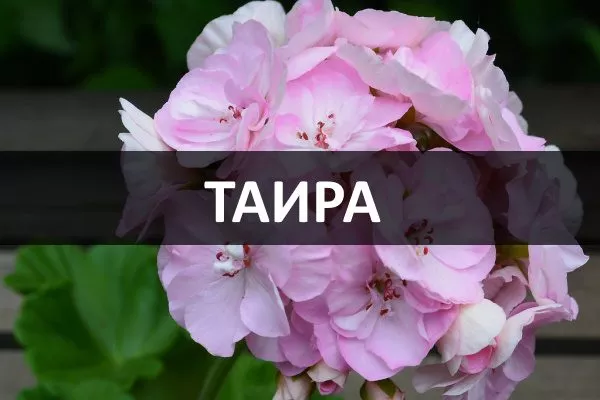
Pelargonium Tahiri's characteristics
Taira is considered a cultivar of pelargonium, developed through Russian selection. Its creator is Irina Turyak, who lives in Novosibirsk. Consequently, she developed varieties adapted to harsh climates. Therefore, when growing, it's important to choose the right location:
- the north side is absolutely not suitable in winter, give preference to the southern windowsill;
- in summer it is better to keep the pot on the east or west side;
- In summer, be sure to shade the window with a light curtain, as Taira may get burned;
- In winter, move the container away from the glass to prevent frostbite.
Varieties
Irina Turyak has not bred many varieties, but she continues to work on creating new hybrids.
| Name | Flower type | Flower size | Color |
|---|---|---|---|
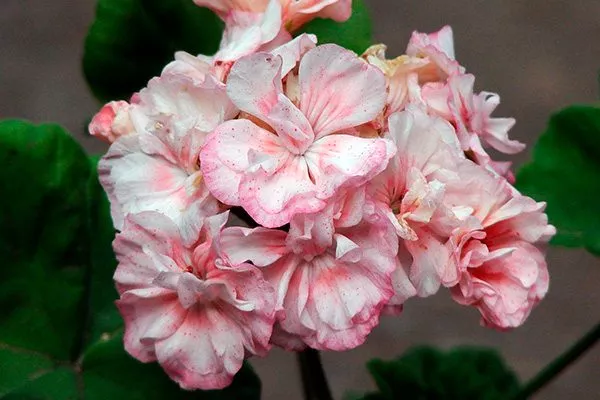
| Mary Magdalene | terry | large | soft pink with raspberry strokes |
| Crimean rose | terry | large | pink with variable shades |
| Fevronia | terry | average | pink, lighter in the center |
| Lyubov Orlova | terry | large | white |
| Siberian rose | rosebud | average | pink-pearlescent |
| Angel Day | terry | average | peach-coral |
| Zlata | semidouble | average | orange with white lining |
| Agatha | semidouble | large | salmon |
Mary Magdalene
This is the most popular pelargonium in the Tair series, as it is easy to grow and boasts a striking flower appearance. Maria Magdalena has been around for a long time, but was only officially registered in 2017.
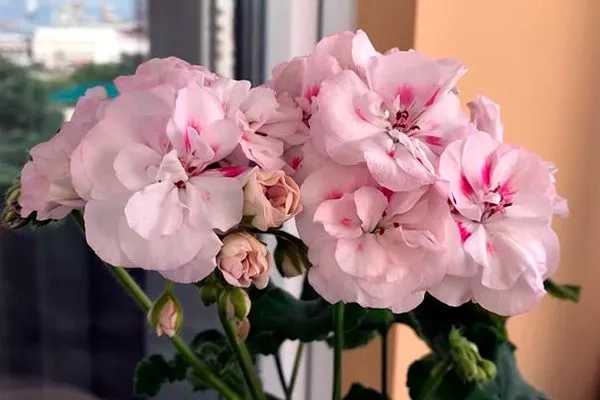
Characteristic features:
- subgroup of pelargoniums - zonartic, zonal;
- bush – strong, but compact;
- leaves - large;
- flower type – large, double;
- shade – soft pink, with raspberry-colored strokes on the surface;
- no pruning required;
- color saturation is weak.
Mary Magdalene has a number of advantages:
- unpretentiousness;
- self-formation;
- high level of decorativeness;
- large-flowered;
- very abundant and long-lasting flowering;
- a large number of peduncles;
- disease resistance.
Flower growers consider the weak intensity of color saturation to be a disadvantage.
- ✓ Mary Magdalene: low color saturation requires additional lighting to enhance the color.
- ✓ Crimean rose: the variability of shade depending on lighting allows you to control the color range of the plant.
Crimean rose
Another favorite from the Tahira series. It boasts profuse, nonstop blooms throughout the summer. Bred in 2017, this variety belongs to the Zonartic family, a zonal pelargonium.
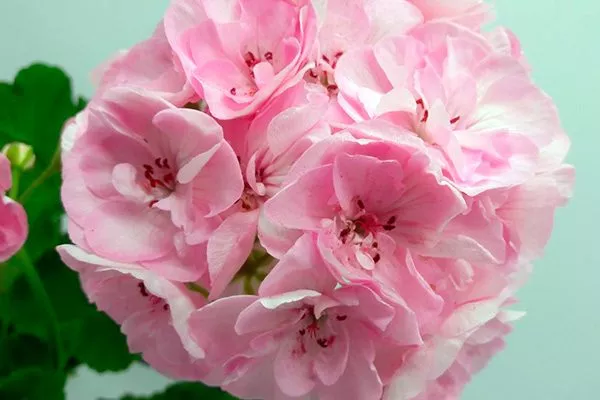
Brief description of the Crimean rose:
- the shape of the buds after opening is spherical;
- bush – compact, with a harmonious, beautiful shape;
- flowers - double;
- peduncles are strong, in large numbers, heavy, and therefore bend;
- the shade of the anthers is rusty-brick;
- pruning required.
The Crimean rose's distinctive color is its unevenness and variability depending on lighting. In dim, diffused light, the petals have a delicate pink hue, while in bright light, they become more saturated. This creates speckles on the surface, and the center becomes pale.
The main advantages of the variety:
- flower size;
- ease of formation;
- rapid rooting;
- compactness;
- the ability to obtain the desired shade;
- active lush flowering.
Flower growers do not note any negative aspects.
Fevronia
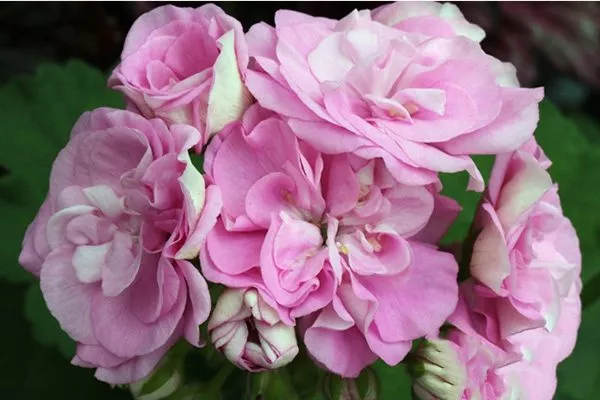
Fevronia appeared quite recently – in 2019 – but has already won the hearts of gardeners. Characteristics:
- plant strength – average;
- the surface of the foliage is slightly pubescent;
- shoots – erect;
- flower stalks are strong;
- flower size – medium (about 3.5 cm);
- bud shape – round;
- flower type – double;
- the color of the petals is pink, lighter in the central part;
- saturation - strong;
- bush formation type – one-pinching.
Other advantages:
- inflorescence density;
- long and abundant flowering;
- disease resistance;
- ease of bush formation;
- terry;
- brightness of color.
Florists have not yet discovered any downsides.
Lyubov Orlova
This variety is zonal and not considered a hybrid. It features continuous and profuse flowering and is less heat-tolerant, so it's best grown in cooler conditions.
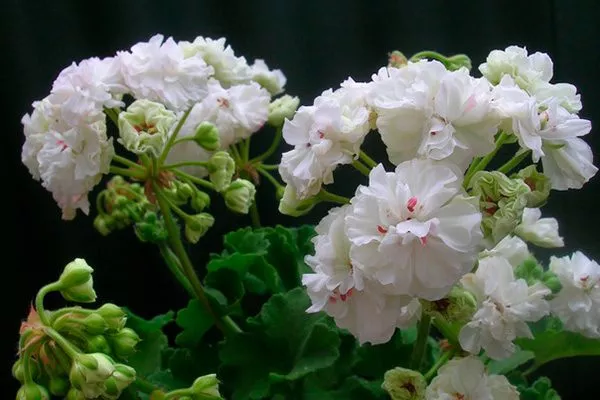
Peculiarities:
- flower type – large, double;
- petals - have a slight waviness at the edges;
- color – white;
- The bush is strong and upright.
Advantages:
- high level of decorativeness;
- large-flowered;
- abundance of flowering;
- disease resistance;
- saturation of white shade.
There is one drawback, but a significant one: if the room temperature exceeds +27-28 degrees, the flower stops developing and almost does not bloom.
Other varieties
Irina Turyak has created several other varieties that are also popular:
- Siberian rose. This is a dwarf rosebud, also classified as a zonal pelargonium. It is considered a compact bush with beautiful pink-pearlescent buds. The center is always light. Immediately after planting, flowering is sparse, but as the plant matures, the profusion increases significantly.
Blooms constantly and forms easily.

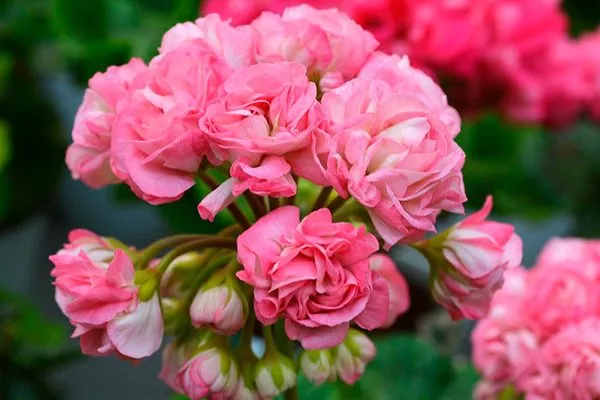
- Angel's Day. The growth habit is zonartik. This variety is distinguished by serrated leaf edges, a rich peach-coral hue to the petals, and a double bloom. The bush type is stocky, with bright, lush flowers. It is characterized by leaf shedding and abundant flowering.
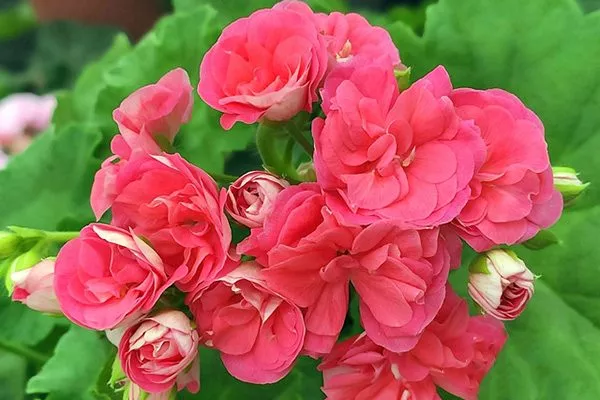
- Zlata. This is a golden-leaved dwarf variety, not zonal (which is not unusual for Tahira). The petals have an orange hue and a white "lining," with golden veins.
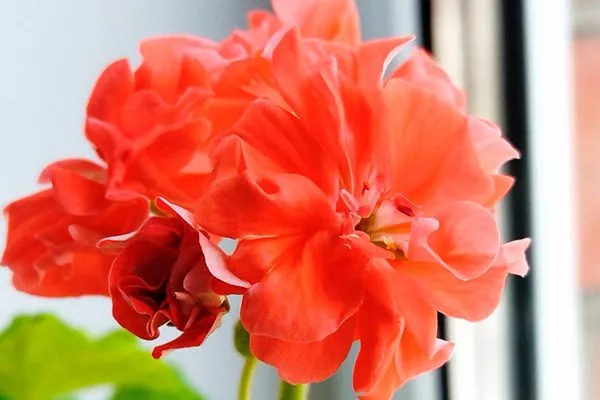
- Agatha. Another pelargonium with golden leaves. The flowers are semi-double, salmon-colored, large, and bloom profusely and for a long time. The petals are distinctively folded. Zonation occurs solely under the influence of sunlight.
Features of growing a variety series
It is strictly forbidden to repot the Tair variety within 15 days of purchase. During this time, it is recommended to keep the flowers separate.
Growing conditions
For Tahir pelargoniums, the following conditions must be created:
- temperature – from +12 to +25 degrees, depending on thermophilicity;
- in summer, at night, you need to take the pots out onto the balcony or open the windows;
- in winter the temperature should not exceed +20 degrees;
- sudden changes are excluded.
- ✓ Optimal air humidity should not exceed 65% to prevent fungal diseases.
- ✓ The temperature regime must be strictly observed: from +12 to +25 degrees, with a mandatory night temperature decrease in the summer.
Planting a plant
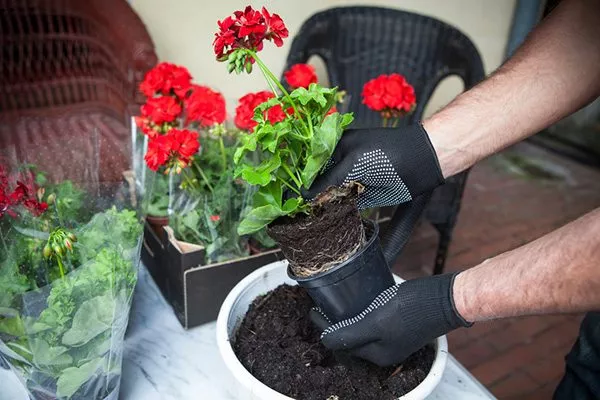
Planting is recommended from November to April. The procedure is straightforward:
- Prepare the soil mixture. It can be store-bought or homemade. If homemade, use 2 parts sod soil, 1 part each of peat and sand.
- Place drainage at the bottom of the pot and the substrate on top, filling it halfway.
- Place the seedling and sprinkle it with soil mixture.
- Water it.
Watering, spraying
Tahira doesn't like high humidity, so it should be no more than 65%. Humidification is carried out according to the following rules:
- settled water at room temperature;
- Spraying is carried out only in hot weather by directing a spray bottle with fine water mist;
- The best way to water is from a tray, but you can also pour water from a watering can with a sprayer.
Top dressing
Apply fertilizer only during the growing season—from spring to fall. For this purpose, purchase specialized complex fertilizers. They should contain nitrogen, potassium, and phosphorus, always in equal proportions. This is the only way to ensure simultaneous growth and abundant flowering.
Loosening and pruning
The soil mixture must be loosened after each watering. Otherwise, the root system will begin to rot.
Pruning is carried out as needed. Some varieties shape themselves, others by pinching, and still others by pruning. Faded buds and wilted, old branches must be removed.
Also watch a video on how to trim pelargoniums to ensure they bloom profusely:
Reproduction
Taira reproduces in only two ways:
- Seeds. This is a lengthy process that requires special care. After collecting or purchasing the planting material, the seeds are scarified, soaked in warm water for three hours, and then sown.
- Cuttings. The most suitable method: pinch off a healthy cutting, place it in a rooting stimulator, and use the soil typical for this variety.
Read more about propagation of pelargoniums Read the full article on this topic.
Diseases and pests
Tahira is disease-resistant, but proper growing conditions and care are essential. Failure to do so can result in the following diseases:
- Puccini. This is a fungal infection. Symptoms include the appearance of rusty spots on the leaves and stems, followed by leaf drop.
- Blackleg. Occurs when the tree is overwatered, causing the root to rot. It is characterized by darkening of the trunk near the base.
- Gray rot. Symptoms include the formation of a greyish coating on the green mass of the plant.
- Leaf rust. It can be recognized by the gray-brown spots on the leaf blade, which become stripes as they progress.
- Powdery mildew. Signs include a white coating that looks like pebbles.
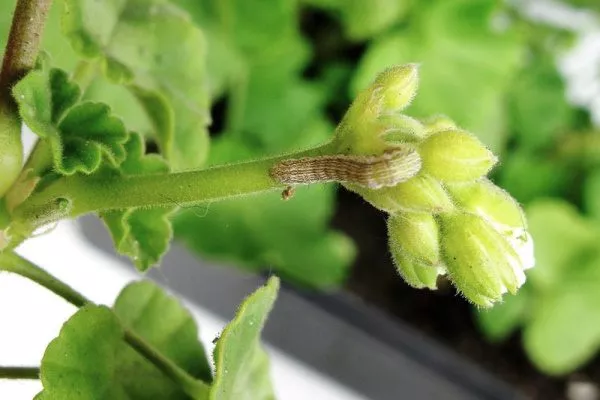
Besides diseases, pelargoniums are also susceptible to pests. Most commonly, these include nematodes, caterpillars, whiteflies, termites, and aphids. Insecticides are used against these pests.
Knowing the characteristics of each variety in the Tair series allows you to grow a beautiful, profusely blooming pelargonium. Almost all of Irina Turyak's varieties are zonal, characterized by disease and pest resistance, and ease of care and cultivation. These beautiful flowers are beloved by gardeners.