
The Iriol series of pelargoniums is a distinct group developed by a domestic breeder. It includes several vibrant varieties beloved by our gardeners. Many of these were recently bred, making them new additions.
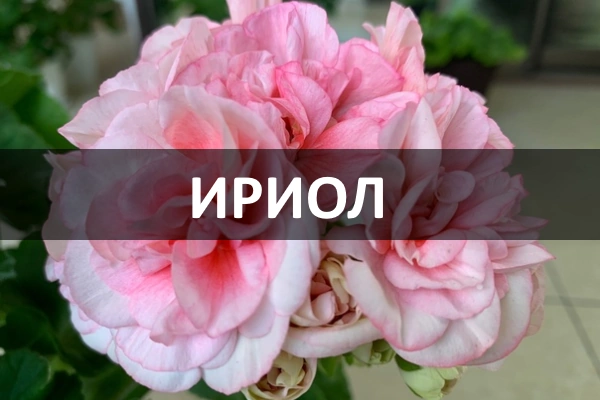
Pelargonium Iriol's characteristics
Iriol pelargoniums are owned by Irina Yashina, who lives in Saratov. All varieties in this group belong to the zonarthic family, which share the following characteristics:
- ease of care;
- size of buds;
- long flowering provided proper care;
- scaly stem;
- the leaves are most often carved, but can also be simple;
- flowers are double or semi-double;
- the main requirement is coolness during the dormant period;
- branched and intertwined root system;
- shortened stem;
- During flowering, leaves fall off because all the energy is directed towards the development of flower stalks;
- number of flowers – in inflorescence – 2-5 units.
- ✓ The temperature during the resting period should not exceed 15°C to prevent premature awakening.
- ✓ Use only well-drained substrate to prevent root rot.
Varieties
The Iriol series doesn't have many varieties, as Irina Yashina has only been breeding pelargoniums for a few years. Nevertheless, her varieties have already earned well-deserved attention.
| Name | Flower type | Petal color | Flowering period |
|---|---|---|---|
| Nacre | Terry | White and pink with pearlescent notes | All year round |
| Madam Zoya | Terry | Hot pink with a light pink center | Long-term |
| Enchanting Sapphire | Terry | Lilac-pearlescent, sometimes plum | Long-term |
| Eternity | Terry | Pink, white and salmon | Long-term |
| Bohemia | Semidouble | Bright red, possibly with a cherry tint | Long-term |
| Madam Anna | Semidouble | Crimson neon and salmon red | Long-term |
| Enchantress | Terry | Pink-peach | Long-term |
| Akira | Terry | Pink, peach, greenish, creamy | All year round |
| Bullfinch | Terry | Pale pink with raspberry spots | Long-term |
| Eleanor of Aquitaine | Terry | White-pink, salmon, yellow, greenish | Long-term |
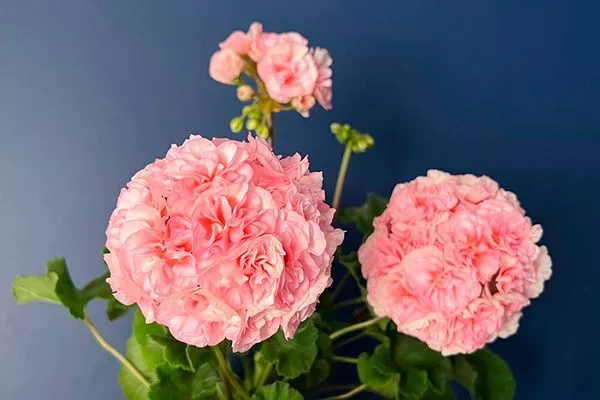
The most popular variety is Mother of Pearl
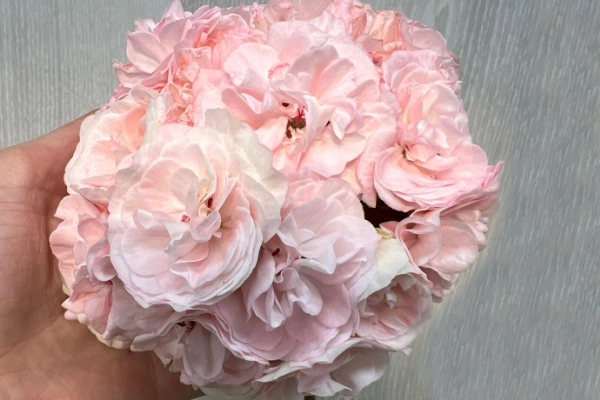
Like other Iriol varieties, Mother-of-Pearl appeared relatively recently – in 2019. The flower's main characteristic is its double, large buds, which have pearlescent notes against a white and pink background. Another distinctive feature is its almost year-round flowering, although during the dormant period, the pelargonium produces fewer buds.
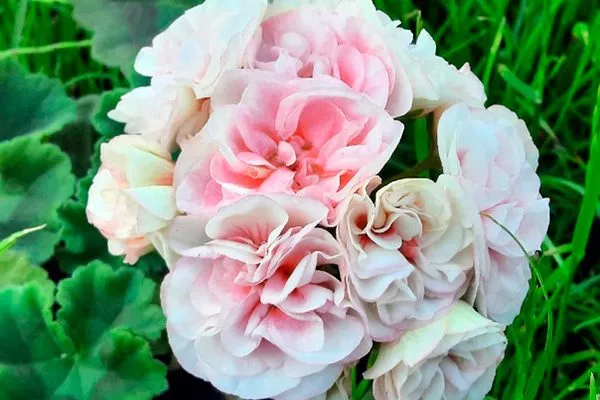
Other features:
- After drying, the flowers do not fall off, but remain in the inflorescences, so they need to be picked off in a timely manner;
- the first flowering occurs the following year after planting the seedling;
- the bush is compact, self-forming, so pruning is not required;
- foliage – dense, dark green;
- direction of shoot growth is horizontal;
- The diameter of the buds is about 5 cm.
Based on numerous reviews, Mother-of-Pearl has no downsides, but it does have some care considerations common to all zonartics. However, it has many advantages:
- very long flowering period;
- heat resistance;
- abundance of flowering;
- the delicacy of the shade of the buds;
- unpretentiousness.
Other varieties
Irina Yashina has created several other varieties that are not yet as popular, but many gardeners enjoy growing them. Almost all of them appeared in 2019:
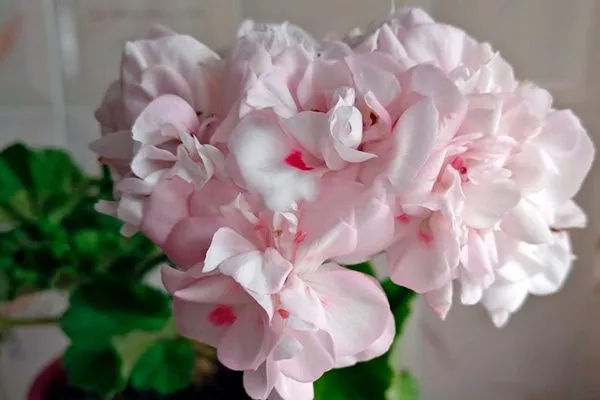
- Madam Zoya. It's considered a renowned beauty due to its double blooms and vibrant pink hue. However, the petals are light pink in the center. It's distinguished by its profuse flowering and green foliage on elongated stems. Its slow growth is its main drawback.

- Enchanting sapphire. A very beautiful lilac-pearlescent pelargonium with decorative green leaves. Sometimes the petals darken, acquiring a plum hue. Like many other varieties, Iriol forms on its own. The bush is dense and neat, with lush, long-lasting blooms.
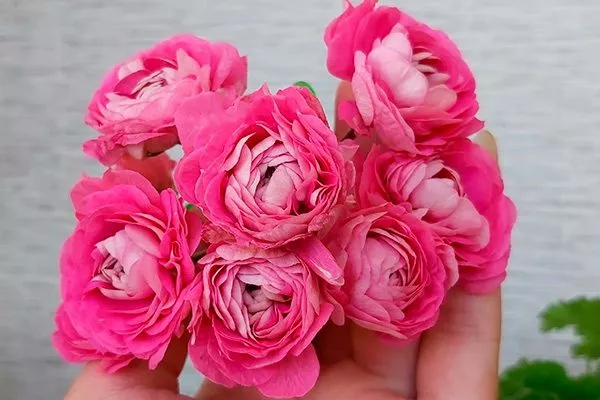
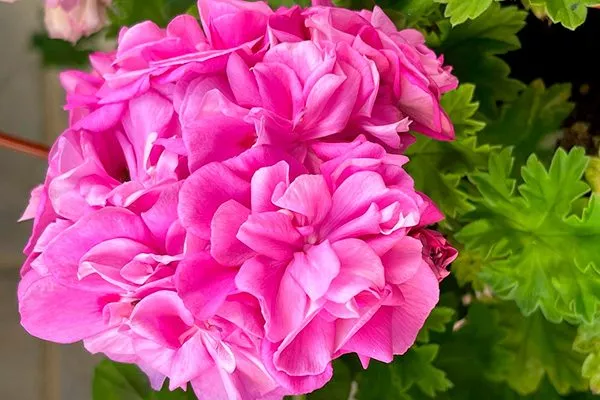
- Eternity. Another flower that delights gardeners with its lush petals. Their color is pink, white, and salmon, and the caps are so dense that they create the impression of a sphere. The bush is quite stocky, with simple, light-green leaves.
Formation is required. It also blooms for a long time, with only a short period of rest.
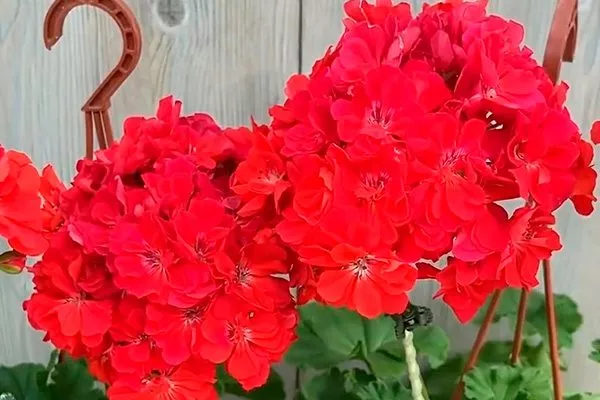
- Bohemia. This variety, bred in 2018, features large, bright red buds, though a cherry tint can develop if the light is insufficient. The petals are semi-double, and the leaves are a standard green and beautifully shaped.
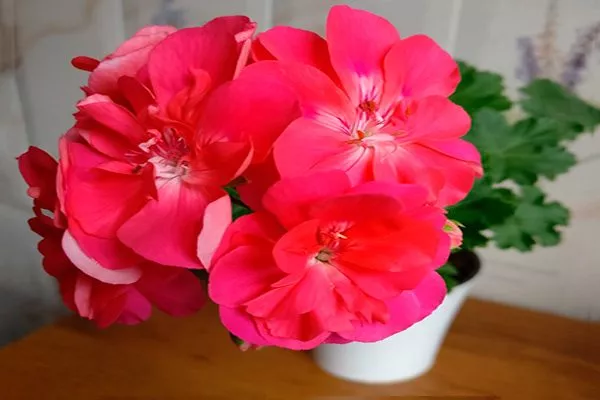
- Madam Anna. This semi-double flower has petals of a vibrant, saturated hue. The first row is crimson-neon, while the second row is salmon-red. The serrated leaves are dark green, and the bush is compact and neat, requiring no pruning or pinching.
- Enchantress. The petal color of this pelargonium is unusual—a muted pink-peach. The bush is very compact, requiring no pruning, and the leaves are typical of zonarticas.
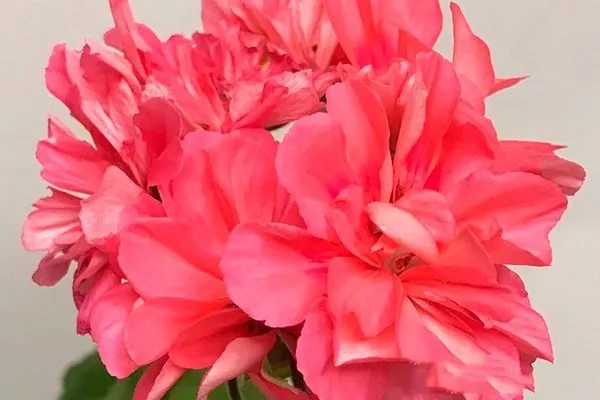
- Akira. Very delicate double flowers with shades of pink, peach, green, and cream. The bush is standard, but the inflorescences are very large and heavy, causing them to lean forward. It blooms profusely year-round.
- Bullfinch. A double flower with a delicate pink hue and sparse crimson spots on the petals. The flower stalks are so large that the decorative leaves are almost invisible behind them. It grows independently.
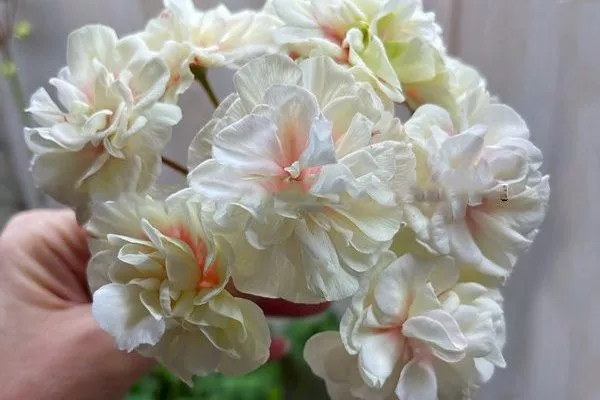
- Eleanor of Aquitaine. This variety, which requires no pruning or pinching, is a standard bush plant with double flowers in a variety of shades. The buds feature shades of white and pink, salmon, yellow, and even green.
The flower stalks are elongated and weighty due to the large, massive flowers, so they can bend downwards or sideways. This is a new variety, introduced in 2020.
The nuances of growing Iriol
Zonarthic pelargoniums should be placed on windowsills away from direct sunlight, as this can cause burns. It is recommended to rotate the pots periodically. Otherwise, the foliage on the side that receives less light will droop and dry out.
Planting a plant
The planting procedures are standard, but a drainage system of expanded clay or perlite is essential. This is important, as Iriol pelargoniums are sensitive to excess moisture, causing root rot. The container should be at least 25-27 cm tall, as the roots grow quickly.
Features of the process:
- Disinfect the pot.
- Place a drainage layer of about 5-10 cm on the bottom.
- Sprinkle with sand and top with soil. You can use a specialized substrate or make your own from equal parts of disinfected sod soil, sand, peat, and humus.
- Place the seedling, sprinkle it with soil mixture and water.
Watering, spraying
Iriol pelargoniums should be watered as needed – the frequency depends on the temperature and humidity. To avoid mistakes, water when a crust begins to form on the top of the soil.
Top dressing
These pelargonium varieties are fertilized once a month. It's recommended to use a complex fertilizer containing nitrogen, potassium, and phosphorus. Be sure to water the substrate before applying fertilizer.
- At the beginning of the growing season, use fertilizers with a high nitrogen content to stimulate leaf growth.
- During the budding and flowering period, switch to fertilizers with a high content of phosphorus and potassium to support flowering.
- Stop fertilizing one month before the dormant period begins.
Trimming
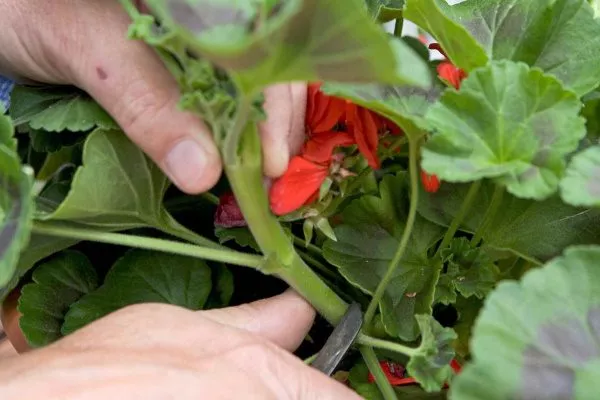
Most Iriol flowers don't require pruning, as they are self-forming varieties. However, some require pinching. To do this, remove the shoots whose growth needs to be stopped. Afterwards, be sure to dust the cut areas with activated charcoal or wood ash.
Reproduction
Iriola is best propagated by cuttings, as it's difficult to obtain a cultivar completely identical to the parent plant from seed. Furthermore, the process is time-consuming. Therefore, cuttings are used. Features:
- mainly young shoots are cut off;
- after this they are placed in warm water with activated carbon (1 tablet per 200 ml) for 2-3 days;
- You can add any rooting agent, which will speed up the time it takes for roots to form;
- When roots appear, the cuttings are planted in the standard way.
Read more about propagating pelargoniums here.
Diseases and pests
Iriol has a strong immune system, so these pelargoniums rarely get sick. The main rule is to care for them properly and avoid overwatering. Overwatering can lead to fungal diseases and various pests. These can be controlled with fungicides and insecticides.
The Iriol series varieties are characterized by low maintenance, ease of cultivation, and abundant, long-lasting blooms. There are several varieties, each with its own flower type and petal color, but all are favorites among Russian gardeners.