
The Jusis series of pelargoniums represents a modern collection of true floral masterpieces. It features only the most spectacular varieties with stunning blooms, unusual coloring, and high vigor.
Pelargonium Eusis: About Breeding
The YUZIS pelargonium series is the work of Russian breeder Yulia Lvova. All varieties have undergone variety testing and received original names. This series includes many spectacular pelargoniums with lush blooms.
| Name | Flowering type | Sun resistance | Soil requirements |
|---|---|---|---|
| Perseus | rose-shaped, densely double | moderate | unpretentiousness |
| Parsifal | super-terry | low | exactingness |
| Bridal bouquet | rosebud terry | low | high |
| The Swan Princess | terry | low | high |
| Frida | simple | moderate | unpretentiousness |
| Goffin | unusual shape | moderate | high |
| Magenta | simple | moderate | unpretentiousness |
| Tinker Bell Fairy | terry | low | unpretentiousness |
| Cloudberry | rosebuds | moderate | unpretentiousness |
| Jane Eyre | similar to eustoma | moderate | high |
| Brazilian Carnival | terry | moderate | high |
- ✓ Consider the level of sun tolerance: varieties with low tolerance require more care and protection from direct sunlight.
- ✓ Pay attention to soil requirements: unpretentious varieties are better suited for beginners.
Perseus
A stunningly beautiful variety with salmon-colored inflorescences. They are so dense and thick that they appear artificial. This zonal pelargonium features strong, stocky bushes, upright, well-foliated shoots, and sturdy flower stalks.
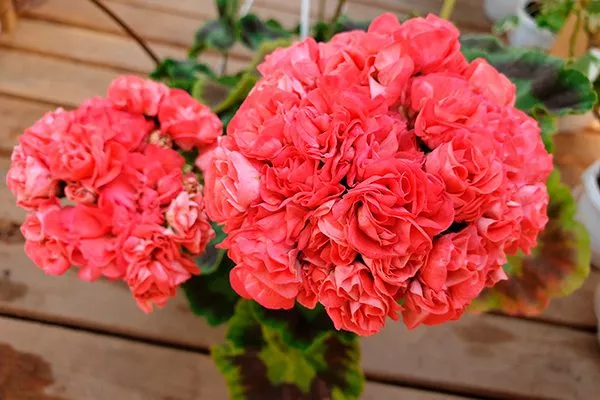
The leaves are green with a dark zone. The inflorescences are dense, tight, and large. The flowers are rose-shaped, densely double, and salmon-colored. In full sun, the flowers are more vibrant; in the absence of sunlight, they become almost creamy. This flower looks especially beautiful on balconies and terraces.
Pros:
- the bushes branch well;
- dense and beautiful inflorescences;
- resistance to petal shedding;
- unpretentiousness;
- long flowering;
- increased endurance.
No shortcomings were found in this wonderful variety.
Parsifal
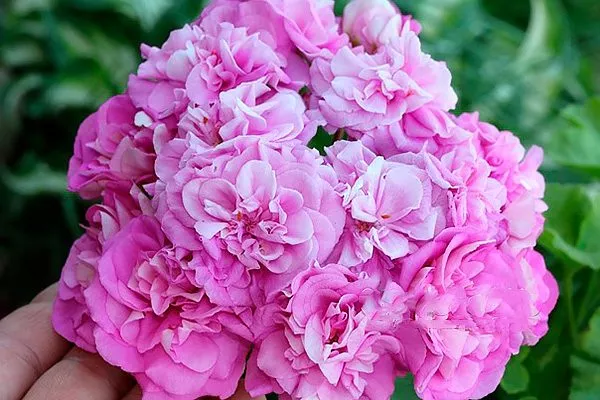
This zonal pelargonium amazes viewers with its unusual coloring—it boasts lilac, super-double blooms, large and lush, resembling pom-poms. This pelargonium blooms slowly, each bud opening leisurely. This variety produces low, sturdy bushes that spread vigorously.
Pros:
- spectacular and abundant flowering;
- the plant bushes well and actively produces lateral shoots;
- large inflorescences;
- beautiful coloring - with a gradient from a richer lilac to a lighter one;
- The inflorescences last a long time and do not fall off.
Disadvantage: the inflorescences react poorly to heat and direct sunlight.
Bridal bouquet
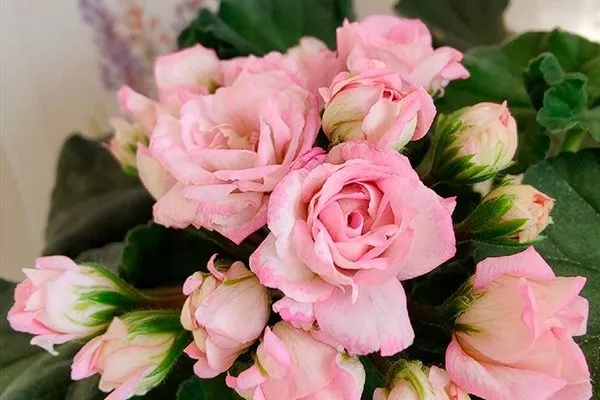
A double-flowered rosebud pelargonium with stunningly beautiful inflorescences. The flowers resemble small roses in shape. The color is soft pink, and the buds are beautiful at all stages of bloom. The flowers open slowly and gradually. Buds at various stages of bloom may appear on the bush at the same time. The bushes are strong and well-foliated.
Pros:
- lush flowering;
- high decorative value;
- Propagates well by cuttings.
Cons:
- demanding of soil composition and watering regime;
- afraid of drafts.
The Swan Princess
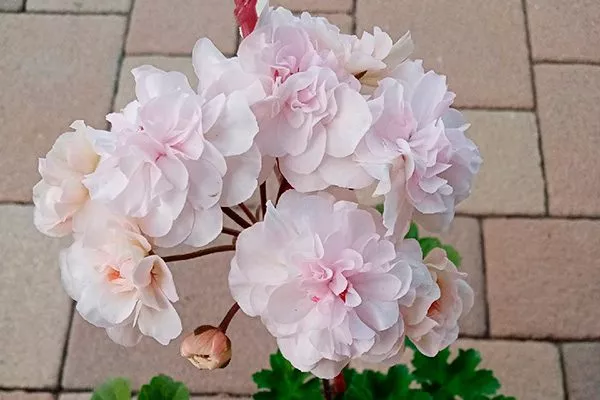
This pelargonium has double flowers gathered in giant inflorescences. The color is snow-white, with petals tinged with a delicate pink. The petal edges are ruffled, and the rosettes are large. This variety is a zonartic plant, with sturdy, well-branched bushes.
Pros:
- compact and neat bushes;
- blooms actively and massively;
- unpretentiousness.
Cons:
- demanding soil composition;
- reacts poorly to direct sunlight.
Frida
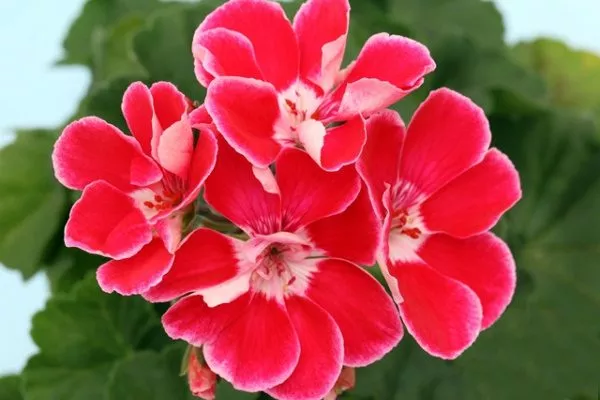
A stunningly beautiful pelargonium with wine-red flowers gathered in small, loose clusters. Each cluster contains 3 to 8 flowers. The flowers are bright crimson or wine-red, each with 5-6 petals. The edges are bordered with a snow-white edge. The centers are light, appearing to be illuminated from within. The bushes are neat, dense, and compact.
Pros:
- does not crumble for a long time;
- looks very elegant;
- long flowering.
There are no shortcomings to this mega-ornamental flower.
Goffin
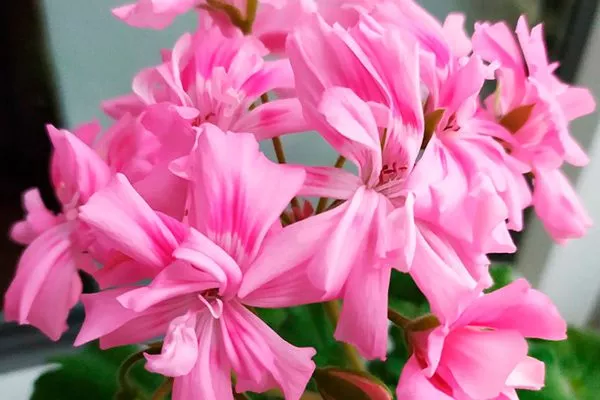
A dwarf zonal pelargonium with unusually shaped flowers. The petals are slightly recurved. The color is a soft fuchsia, more intense in the center than at the edges. The bushes are compact and well-foliated. The inflorescences are large, with a flower diameter of 6 cm. The leaves are pubescent and free of dark zones.
Pros:
- does not require formation;
- abundant flowering;
- endurance and unpretentiousness;
- does not crumble;
- strong peduncles, hold inflorescences for a long time.
Cons:
- demanding soil composition;
- reacts poorly to temperature drops.
Magenta
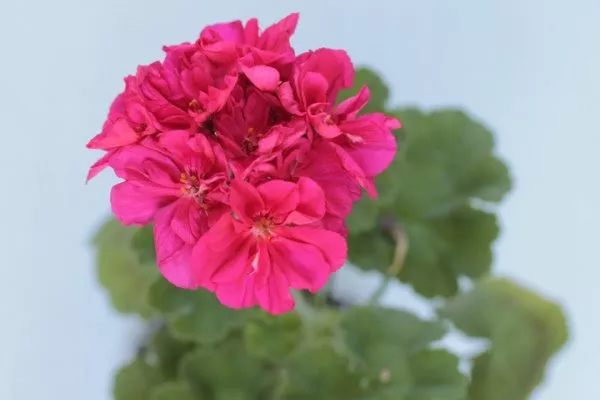
A zonal pelargonium with red-scarlet flower caps. The leaves are large, with barely visible dark spots. The flower stalks are long and strong, easily supporting the flower caps.
Pros:
- does not require formation;
- long flowering;
- high immunity.
No disadvantages were found in this variety.
Tinker Bell Fairy
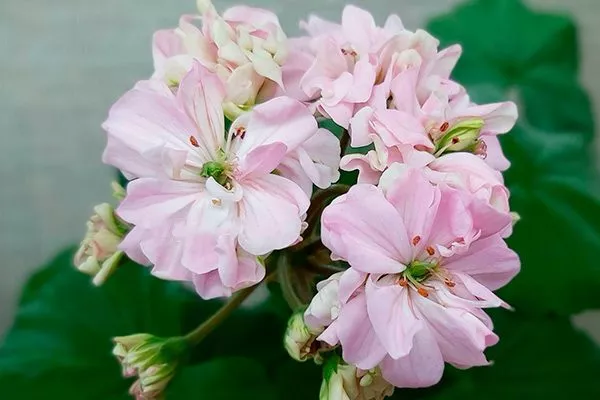
This pelargonium has compact, almost dwarf-like bushes. The flowers are double, a delicate lavender shade. The petals are wavy, with about ten in each flower.
Pros:
- luxurious flowering;
- compact and neat bushes that do not require shaping.
Cons:
- petals may fall off under unfavorable conditions;
- reacts poorly to direct sunlight.
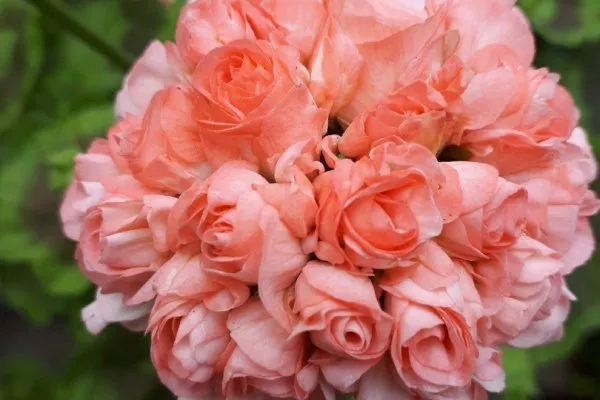
Cloudberry
A luxurious rosebud pelargonium with flowers a delicate carrot shade. The buds open slowly and gradually. The bushes are compact, the flower stalks thick and strong.
Pros:
- spectacular and long-lasting flowering;
- unusual shade of flowers.
No disadvantages were found in this wonderful variety.
Jane Eyre
This flower truly lives up to its name—delicacy and femininity are combined with endurance and undemanding nature. This pelargonium has standard, well-foliated bushes that are easy to shape. The leaves are dense, with barely visible dark spots—this variety is zonal.
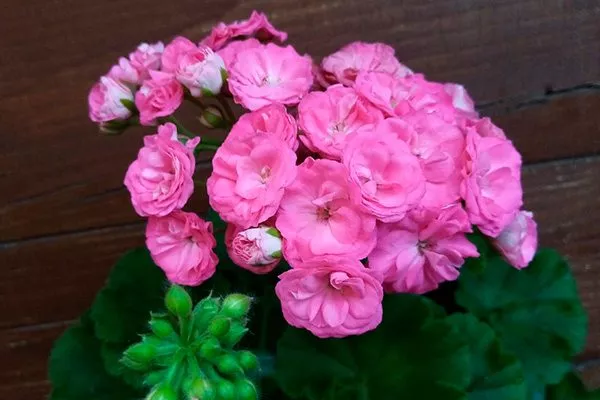
The inflorescences are large, composed of numerous flowers reaching 3-3.5 cm in diameter. They are a soft pink color with white eyes in the center. The flowers resemble eustoma in shape.
Pros:
- long and abundant flowering;
- flowers do not fall off;
- high decorative value.
Cons:
- demanding watering regime;
- petals may fade under the sun's rays.
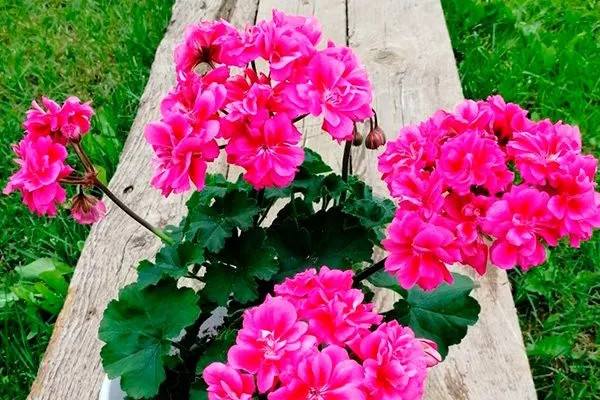
Brazilian Carnival
A striking zonal pelargonium with double, purple-fuchsia flowers. The petals take on a burgundy hue toward the center. The leaves are rich green.
Pros:
- lush and long flowering;
- high immunity;
- endurance.
Cons:
- petals may fade in the sun;
- demanding soil composition.
The Uzis series deserves the utmost attention from pelargonium enthusiasts. Each flower in the collection can rival the most renowned and popular varieties. All Uzis pelargoniums boast luxurious blooms and are sure to create a sensation among houseplant enthusiasts.