
Pelargonium is an exceptionally beautiful flower that many people grow on their windowsills. It is popular and used in indoor gardening and landscape design due to its decorative appearance, ease of maintenance, and ability to thrive in a wide variety of conditions.
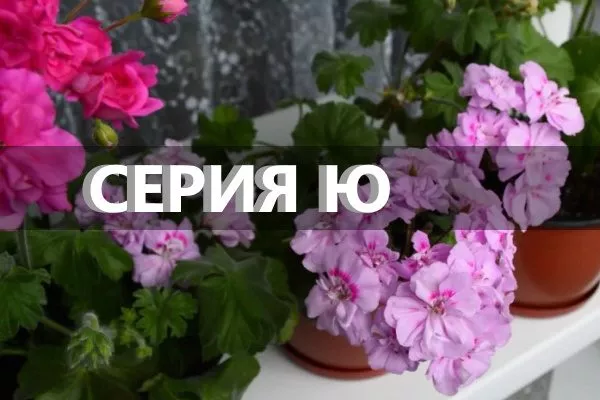
Pelargoniums of the U series
The U-series pelargoniums were developed by Yulia Lvova, a Chelyabinsk breeder. A characteristic feature of this plant is its rapid growth, as it can grow 25-30 cm in just one year, reaching an average height of 60-85 cm.
Pelargoniums have alternately arranged, petiolate leaves. The outer surface of the leaf blade is typically pubescent, but glossy specimens, as well as plain green or variegated ones, are also found. Petals are typically rounded or heart-shaped.
Varieties of this series
Among the numerous varieties bred by Yulia Lvova, there are a variety of plants characterized by striking appearance and low maintenance. Explore the most popular varieties in her collection.
| Name | Plant height (cm) | Leaf color | Flower type |
|---|---|---|---|
| Yu-Tsar's Bride | 60-85 | Bright green | Rose-shaped |
| Yu-Anna Karenina | 30-40 | Green | Rosebudny |
| Yu-Sakura | 25-30 | Green | Terry |
| U-Minuet | 30-40 | Green | Terry/semi-double |
| U-Madame De Pompadour | 30-40 | Muted light green | Peony-shaped |
| Yu-Lilac Fog | 30-40 | Green | Terry |
| U-Polonaise | 30-40 | Dark green | Rose-shaped |
| Yu-Grushenka | up to 50 | Dark green | Rose-shaped |
| Yu-Keili | 30-40 | Rich green | Semidouble |
| Yu-Asya | 30-40 | Green | Terry |
| Yu-Yuha | 30-40 | Light green | Terry |
| Yu-Nastasya Filippovna | 30-40 | Rich green | Super-terry |
| Yu-Calusharii | 30-40 | Dark green | Terry |
| U-Wild Rose | 30-40 | Juicy green | Terry |
| U-Carioca | 30-40 | Light green | Semidouble |
| Yu-Dzhiga | 30-40 | Light green | Terry |
| U-Marlezon 2 | 30-40 | Dark green | Rose-shaped |
| Poor Lisa | 30-40 | Dark green | Semidouble |
| Yu-Gamayun | 30-40 | Green | Semidouble |
| Yu-Tatyana Larina | 30-40 | Green | Semidouble |
| Yu-Princess | 30-40 | Dark green | Terry |
| U-Totta | 30-40 | Dark green | Semidouble |
Yu-Tsar's Bride
The bush is standard, fairly dense, and well-foliated. The foliage is large, slightly pressed against the stem by pubescent leaves of a bright green hue. The flowers have thick, short peduncles.
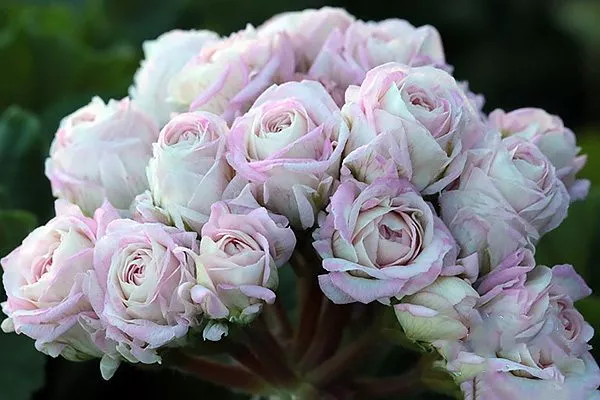
Pelargonium blooms in small clusters, each containing about nine medium-sized flowers. Resembling roses in appearance, the petals are a soft pink hue, with a darker edge.
The buds open slowly, and the flowers stay on the bush for quite a long time.
Advantages:
- relative unpretentiousness;
- aesthetic appearance;
- abundant and long-lasting flowering.
The Yu-Tsarskaya Nevesta variety has no negative qualities.
U-Anna Karenina
Pelargonium Yu-Anna Karenina was bred by Yulia Lvova in 2019. This rosebud plant is considered one of the most unusual representatives of the Geranium family. The bush grows compact and well-foliated. It forms on its own.
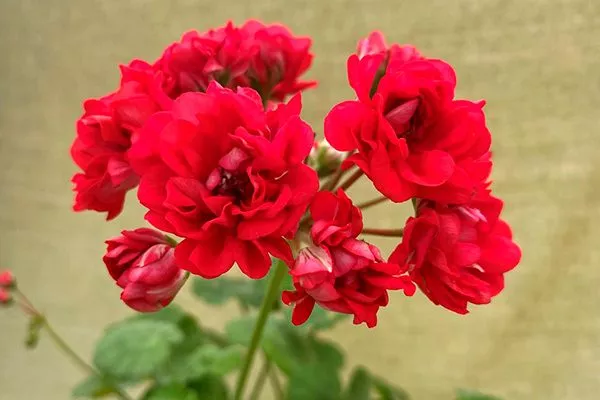
The leaves are zonal, slightly pubescent, and green in color. The flowers are robust, short, and the buds resemble roses. This rose-shaped, densely double pelargonium is a bright scarlet hue. It impresses with its decorative qualities.
Pelargonium grows quickly—a tall flower emerges from a cutting in just a few months. It blooms profusely and abundantly, typically from spring to late summer. With proper care, it can delight with flowers all year round.
Advantages:
- high decorative value;
- compact dimensions;
- different shades depending on lighting;
- unpretentiousness;
- independent bushiness.
The disadvantages include a lack of information from flower growers, since this is a relatively new variety.
Yu-Sakura
Pelargonium Yu-Sakura is a relatively new plant, but it has already received many positive reviews. The plant's bushes are typically low and miniature, with short flower stalks. The name derives from its unusual shape and strong resemblance to cherry blossoms. This pelargonium has lush, double flowers in a pink hue.
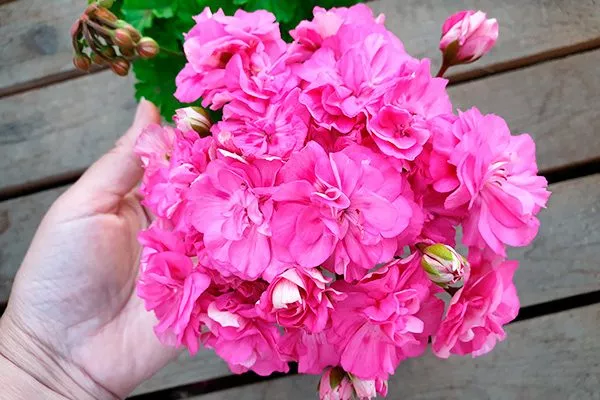
Pelargoniums form buds quickly after repotting. The flowers hold well on the bushes. This variety blooms year-round with only a short rest period. in winter.
Advantages:
- Suitable for those who love pink;
- the possibility of obtaining new cuttings when grown at home;
- easy to care for;
- the beauty of buds and blossoming flowers;
- lush and long-lasting flowering.
Among the disadvantages, flower growers note a specific aroma, as well as the difficulty of outdoor decoration - it will take a lot of time.
U-Minuet
The compact pelargonium U-Minuet is highly decorative. The bush grows low and stocky. The trunk is covered with pubescent green leaves. The inflorescences are shaped like huge caps, covered with double and semi-double pink flowers.
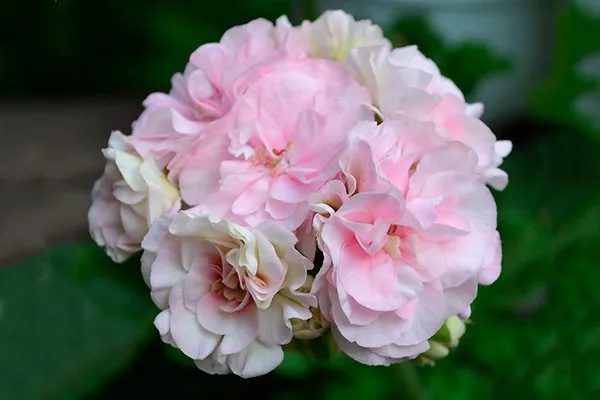
The inflorescences have large, saucer-shaped petals. They are neatly arranged into buds. The U-Minuet variety ensures long flowering due to the wave-like opening of new buds. Their color can vary from a delicate peach to a light pink, depending on growing conditions.
Advantages:
- ease of care;
- high decorative value;
- versatility;
- long flowering;
- compact dimensions.
The disadvantages of pelargonium include the difficulty of rooting and the need for regular rejuvenation.
U-Madame De Pompadour
Pelargonium 'U-Madame de Pompadour' was named for its bushy shape. With proper care, it's a dwarf plant with excellent branching and vertical shoots that reach toward the light source. Without flowers, they take on a lush, rounded shape. The plant is covered in muted, light green leaves.
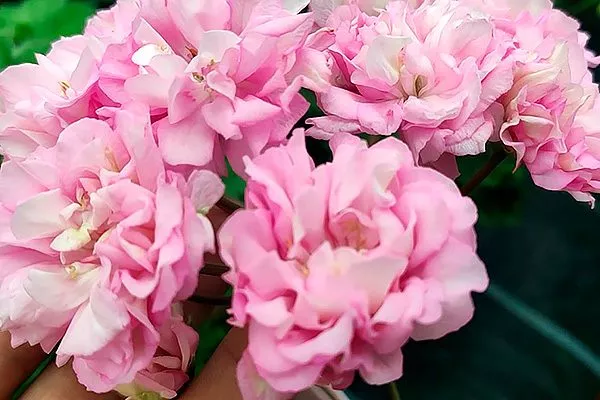
Pelargoniums have long stems with dense blooms. The double flowers grow large, resembling peonies. The petals are a unique lilac-pink hue. Blooming is profuse, with new flowers and inflorescences slowly emerging on a long stem that rises above the lush foliage.
Advantages:
- round shape of a well-groomed bush;
- long-lasting picturesque flowering;
- long flower stalks that stand out against the green background;
- large, double inflorescences;
- compact dimensions.
Florists note that this variety has no significant drawbacks.
Yu-Lilac Fog
Pelargonium Yu-Lilac Mist grows into a lush, compact bush with long stems. The plant produces dense, large inflorescences, with flowers that can reach up to 7 cm in diameter. The double petals are lilac, a vibrant, rich shade that dominates.
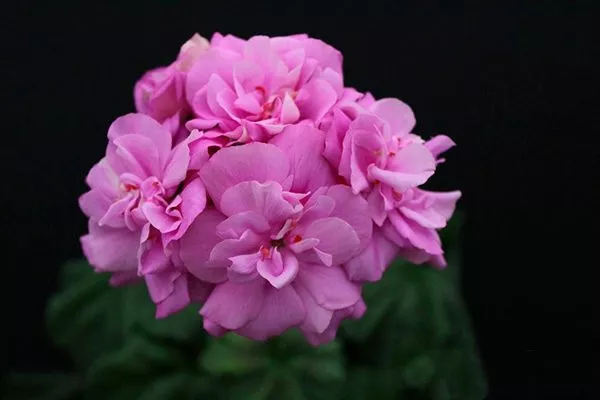
This variety is characterized by continuous, abundant and colorful flowering, which is its main positive quality.
Advantages:
- widely used in landscape design;
- relative unpretentiousness;
- long flowering;
- decorative qualities.
Pelargonium has no known deficiencies.
U-Polonaise
Pelargonium U-Polonaise is a dwarf, neat shrub with abundant foliage. During flowering, the plant produces large, velvety flowers reminiscent of roses.
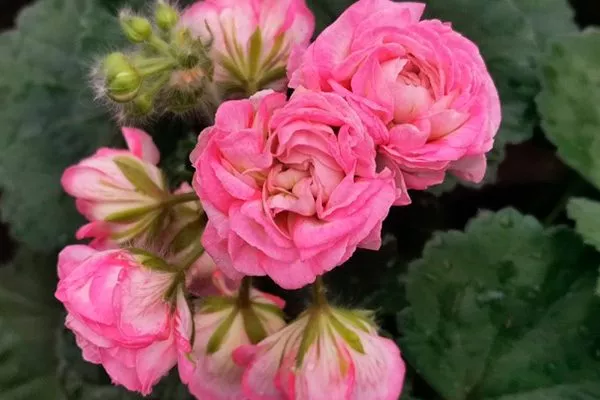
The voluminous, densely double flowers are very striking and vibrant, with a predominantly peachy-pink hue. Pelargonium blooms abundantly and vibrantly.
Advantages:
- possibility of growing indoors and outdoors;
- graceful appearance of the bush;
- ease of care;
- bright and large flowers.
According to reviews from experienced gardeners, the U-Polonaise variety has no known shortcomings.
Yu-Grushenka
Pelargonium Yu-Grushenka is a hybrid variety that was developed relatively recently but has already become a favorite among both novice and experienced gardeners. It is a low-growing plant, reaching no more than 50 cm in height. The bush is stocky, vigorous, and branched. The inflorescences are large, and the flower stalks are strong.
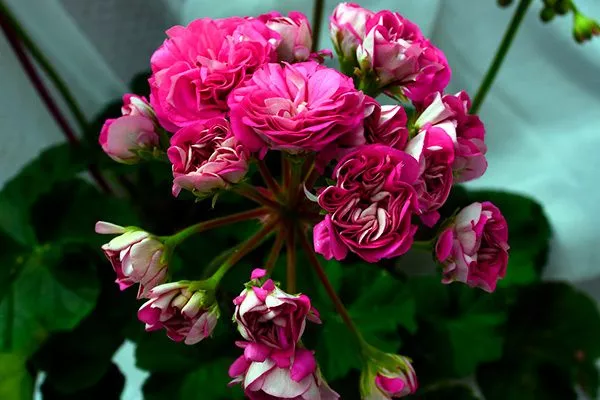
The bush is covered with small leaves with a beautiful serrated edge, making them even more unique. The foliage is dark green with a lighter sheen. The densely double, enormous flowers resemble roses. The petals are pink or lilac on the inside, and pure white on the outside.
Advantages:
- frost resistance;
- possibility of replanting after a long summer flowering;
- undemanding in maintenance.
Flaws:
- high cost;
- poor resistance to rain;
- difficulty in finding seedlings.
Pelargonium Yu-Grushenka begins blooming in early summer. The blooms are lush and abundant.
Yu-Keili
This pelargonium variety is characterized by a small bush with strong, upright stems. The bush bears a sparse number of leaves, which are of a standard size. The foliage is a rich green.
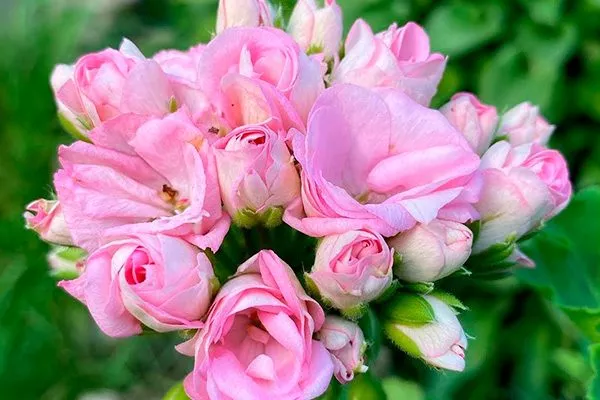
The semi-double buds resemble those of eustoma. The petals are bright and vibrantly colored, typically with a pinkish hue. The abundant blooming of the Yu-Keili pelargonium lasts for 14-20 days.
Advantages:
- ease of care;
- ease of planting and growing;
- Possibility of planting in a pot and on a plot.
Among the disadvantages, flower growers note the risk of disease if not properly cared for.
Yu-Asya
Pelargonium Asya is a standard shrub covered in green, slightly pubescent leaves. The plant has long flower stalks that hold firmly to the bush in strong winds.
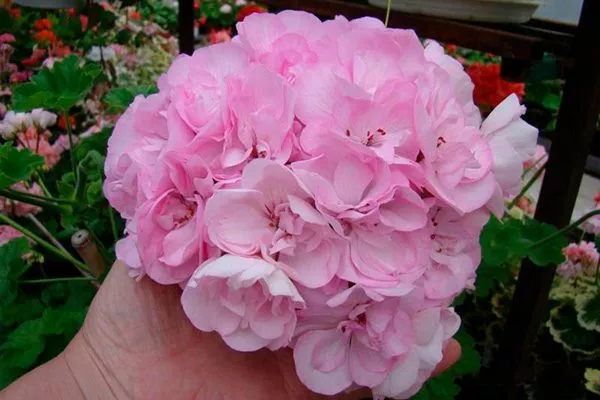
This is an exceptionally beautiful shrub: during flowering, the pink flowers, tinged with lilac, gather in large clusters. The flowers are large and rich. The plant blooms quickly, profusely, and continuously.
Advantages:
- unpretentiousness;
- undemanding in care;
- easy to grow;
- resistance to diseases and pests.
No significant disadvantages have been identified in this variety.
Yu-Yuha
This hybrid plant is characterized by large, double flowers measuring 7 cm in diameter. The petals are tinged with lilac. Pelargonium is often called a chameleon because the flowers are predominantly different colors when they open. The bush itself is compact.
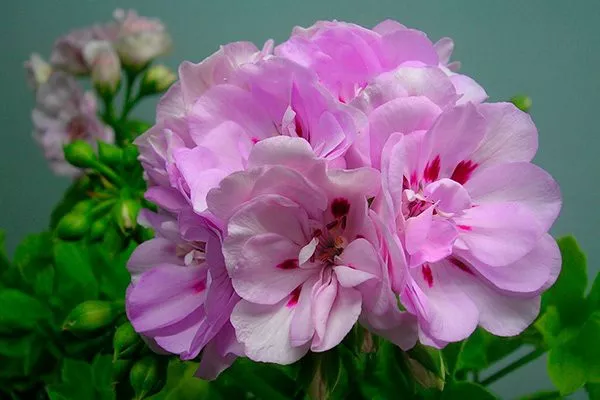
The plant is covered with small, rounded, light green leaves. Flowering occurs from spring to late fall. During this time, the pelargonium is covered with large, double flowers in various shades of purple.
Advantages:
- possibility of indoor and outdoor cultivation;
- lush and long flowering;
- disease resistance;
- small size;
- easy to care for;
- unusual color of flowers.
No deficiencies were found in the Yu-Yuha pelargonium.
Yu-Nastasya Filippovna
This perennial zonal pelargonium is characterized by a standard size, not exceeding 30-40 cm in height. The trunk and leaves are covered with numerous round leaves with serrated edges. The foliage is a rich green.
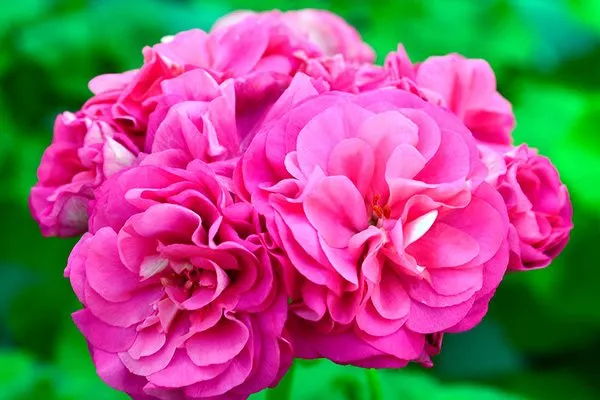
The super-double, large, and velvety flowers are fuchsia in color, making them a real eye-catcher. The inflorescence consists of numerous large flowers with numerous petals.
Advantages:
- ease of care;
- abundant flowering;
- tolerance to adverse environmental factors;
- possibility of planting in open ground.
Pelargonium Yu-Nastasya Filippovna has no disadvantages.
Yu-Calusharii
Pelargonium U-Calusharii is a dwarf plant that readily forms bushy shoots. It grows luxuriantly, sending out shoots in slightly different directions. The internodes are short. The plant is covered with small, dark green foliage. The buds are light, two-toned, with a bright spot in the center.
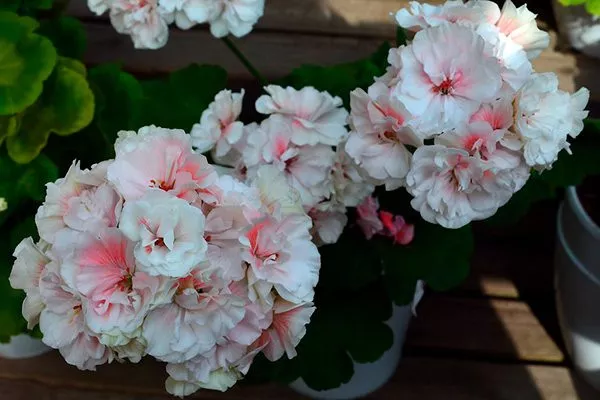
Tight inflorescences are borne on sturdy stems. The flowers are double, creamy with a delicate orange center. The petals are slightly wavy. This pelargonium blooms profusely and continuously.
Advantages:
- the fabulous beauty of elegant flowers;
- ease of care;
- disease resistance.
The variety has no particular drawbacks, other than the plant's reluctance to propagate. As a rule, the resulting cuttings rarely take root.
U-Wild Rose
Pelargonium U-Wild Rose is a standard-sized shrub covered in lush green foliage. The foliage is minimal. The buds resemble climbing roses, and the unusually shaped flowers make the plant delicate and beautiful.
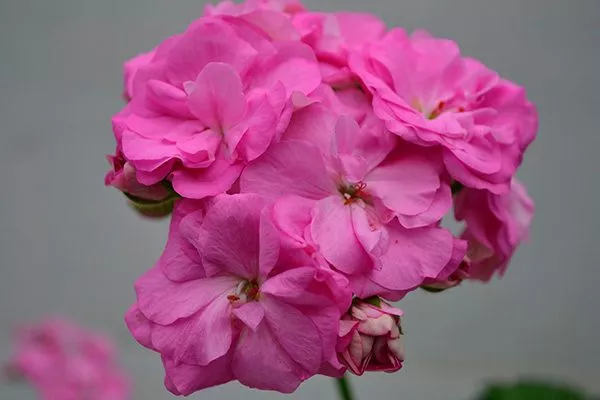
Flower petals can range in color from light purple to deep pinkish lilac. Double petals are typically the primary color—pink. Blooms are uniform and abundant, and their duration depends on the growing location.
Advantages:
- ease of care;
- strong and good immunity;
- impressive appearance.
Among the disadvantages, flower growers include pelargonium's sensitivity to watering and organic fertilizers.
U-Carioca
Pelargonium U-Carioca is characterized by a regular-shaped bush. It is a compact, bushy plant covered with small, dense, light green leaves. Pelargonium has a standard growth habit.
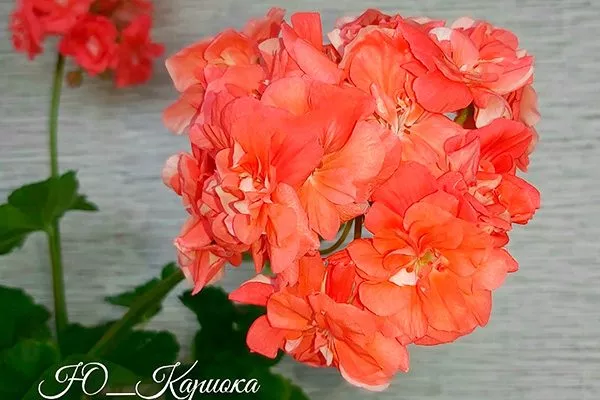
The inflorescences are large and dense. Numerous flower stalks are located on the bush. The petals are two-toned, brightly colored—white and pink.
Advantages:
- high decorative value;
- abundant and long-lasting flowering;
- ease of care.
The disadvantage of this variety is its poor tolerance to heat and drafts.
Yu-Dzhiga
Pelargonium thrives in open spaces during the summer. The bush has a large structure and standard size. The plant is covered with large, light green leaves. Its main characteristic is its upright shoots.
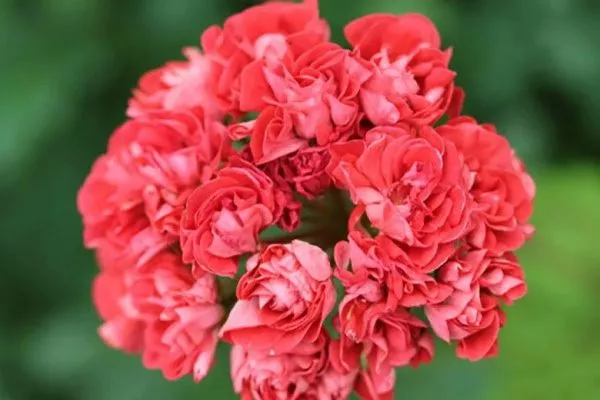
This variety features dense inflorescences, a rose-shaped flower, and a double bloom. The petals are a coral-red hue. This pelargonium blooms simultaneously and prolifically.
Advantages:
- ease of planting and care;
- increased immunity;
- unpretentiousness;
- pleasant aroma.
No significant deficiencies were identified in the Yu-Dzhiga pelargonium.
U-Marlezon 2
This hybrid pelargonium is a compact, well-branched plant. The lush bush is covered with spreading leaves with a noticeable dark zone. The flowers are rose-shaped and vibrant, and the inflorescences form a tight ball.
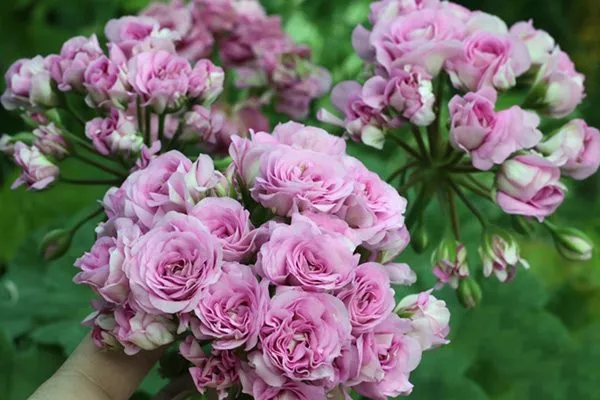
The medium-sized flowers are a cool lilac hue. U-Marlezon 2 is renowned for its incredibly beautiful blooms of luxurious buds and a pleasant fragrance. It blooms profusely and beautifully. Leaf shedding may occur during flowering.
Advantages:
- pleasant aroma of flowers;
- good immunity;
- ease of care.
The disadvantage of this variety is its intolerance to heat.
Poor Lisa
Pelargonium 'Yu-Bednaya Lisa' is a shrub with upright stems and good foliage. The foliage is dark green and has a rounded, slightly lobed structure. The plant branches well and actively grows in the summer.
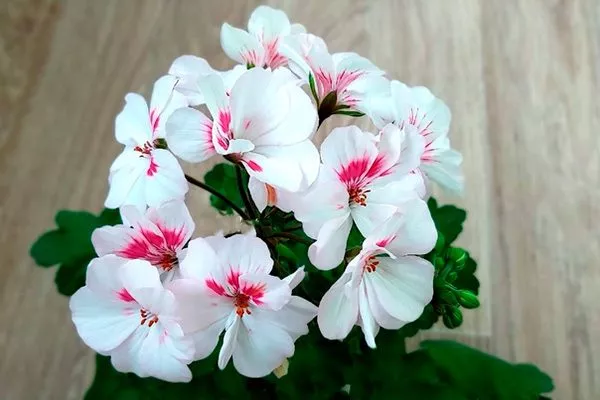
Pelargoniums have short stems that don't break in strong winds. The buds are medium-sized, and the petals are light pink with bright pink markings. This is a semi-double variety. The backs of the petals have clearly visible veins.
Advantages:
- independent tillering;
- easy to care for;
- impressive appearance;
- unpretentiousness;
- abundant and long-lasting flowering.
No significant disadvantages were found in this variety.
Yu-Gamayun
Pelargonium Yu-Gamayun is a compact plant with long, slow-growing flower stalks. It is distinguished by its early flowering period, which is considered very lush and long-lasting. Large inflorescences consist of wheel-shaped, semi-double buds of vibrant color.
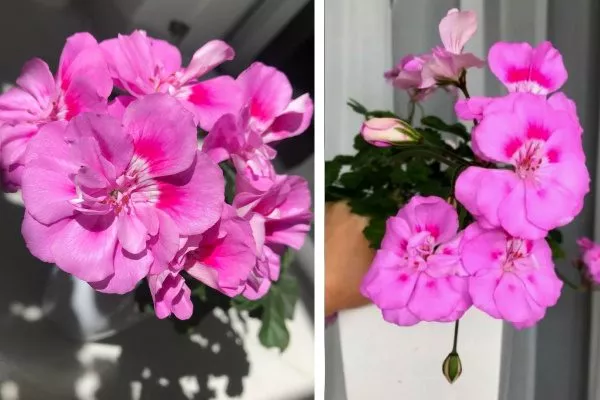
The miniature bush is adorned with a lush cap of flowers, painted in a delicate pink color with fuchsia strokes.
Advantages:
- impressive appearance;
- compact dimensions;
- flowering already from the cutting;
- large inflorescences;
- undemanding.
Among the disadvantages, flower growers point out low heat resistance, sensitivity to watering, and susceptibility to spider mites.
Yu-Tatyana Larina
Yu-Tatiana Larina is a small zonal pelargonium with strong, upright stems. The plant reaches 30-40 cm in height. The bush has good foliage. The rounded leaves are divided into sections and have serrated edges.
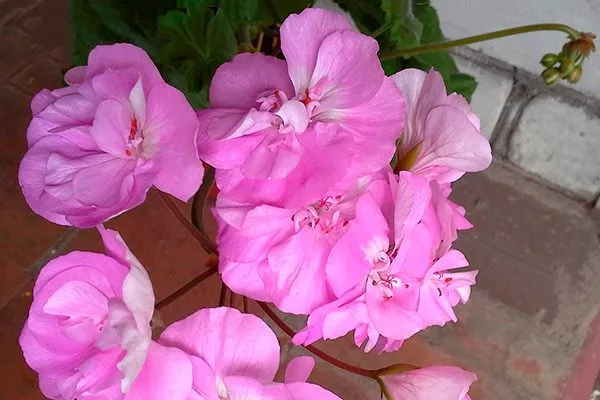
The semi-double, large flowers resemble orchids in shape. Dense, light purple petals make this pelargonium an incredibly beautiful plant.
Advantages:
- fast growth and early flowering;
- an abundant number of buds in the inflorescence;
- ease of care;
- good immunity.
Florists note that a disadvantage of pelargonium is its sensitivity to high temperatures.
Yu-Princess
Pelargonium Yu-Knyaginya is a dense, well-branched, slow-growing shrub. It is distinguished by its good foliage and dark green leaves of a distinctive shape.
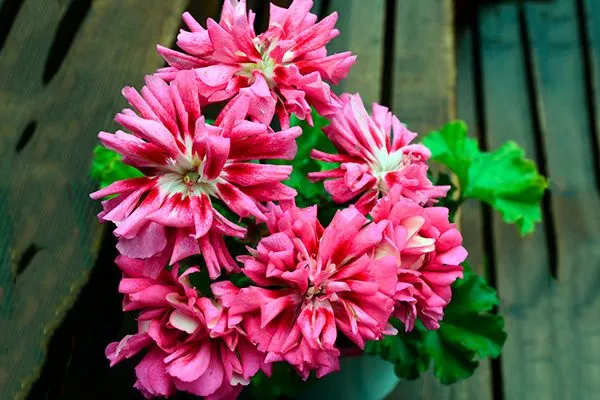
The flowers are large and voluminous, with curled petals that resemble chrysanthemums. The petals are pink with a white center.
Advantages:
- ease of care;
- impressive appearance;
- ease of growing and planting;
- disease resistance.
Florists note that the Yu-Knyaginya pelargonium has no significant drawbacks.
U-Totta
A compact, zonal plant covered in pubescent dark-green leaves with a slight dark zone. Pelargoniums have short, upright flower stalks and a large inflorescence.
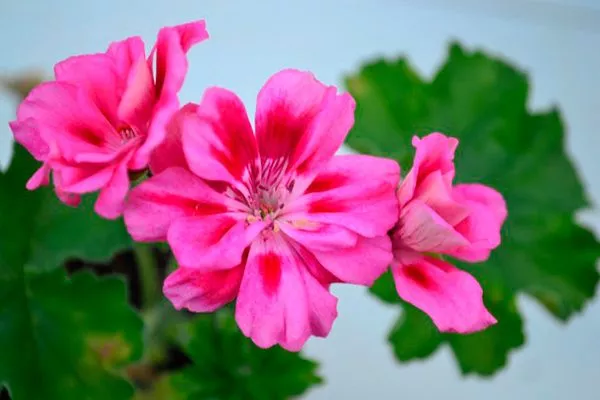
Semi-double flowers with bright pink petals and a raspberry hue and a light center. Pelargonium U-Totta is characterized by lush and abundant blooms that will delight you with vibrant blooms on a lush crown.
Advantages:
- endurance;
- unpretentiousness;
- pleasant aroma;
- good immunity.
Yu-Totta is a pelargonium that has no negative qualities.
Other popular varieties of the Yu series
Yulia Lvova also offers other popular varieties that have won the hearts of both novice and experienced gardeners. We invite you to familiarize yourself with their characteristics:
- Yu-Juno. A zonal pelargonium characterized by a medium-sized, well-formed bush. The plant is covered with large green leaves. The flowers are large, with petals a delicate peach hue.

- Yu-Pena Days. A compact hybrid pelargonium with a standard growth rate. The foliage is beautiful, dark marsh green. The super-double flowers come in a variety of colors, from coral-red, coral-pink, and coral-red to fiery salmon.
- Yu-Ryushar. A voluminous bush with green leaves. The plant is standard-sized and upright. The inflorescences are large, with semi-double, raspberry-pink flowers with an eye. It blooms uniformly and continuously.
- U-Disco. A compact zonal plant, covered with bright yellow leaves in summer and light green in winter. The medium-sized, double flowers are a vibrant pink-fuchsia color. Pelargonium blooms readily.
- Yu-My precious. The bush grows lush and compact, covered with glossy leaves with a barely noticeable variegation zone. The plant produces large, semi-double flowers, reaching up to 4 cm in diameter. The flower stalks are strong and upright. The plant blooms early and winters well.
- U-Quadrille. A zonal pelargonium characterized by a neat habit and compact stems. The plant has large, bright green leaves. Double flowers up to 4 cm in diameter are colored pinkish-lilac. This variety is renowned for its abundant blooms.
- Yu-Sirin. Pelargonium is a compact, well-formed shrub with medium-sized flower stalks. The plant is covered in large, vibrant flowers. The petals are bright pink with darker spots.
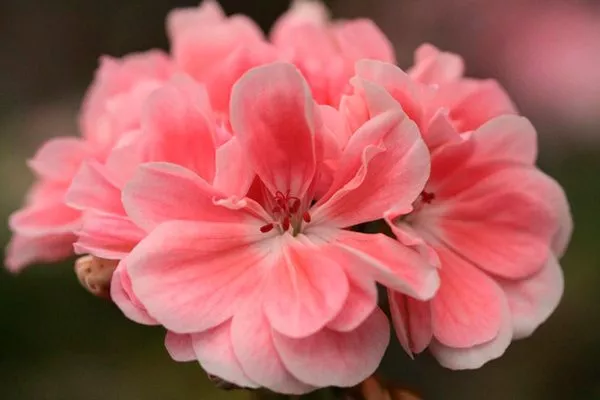
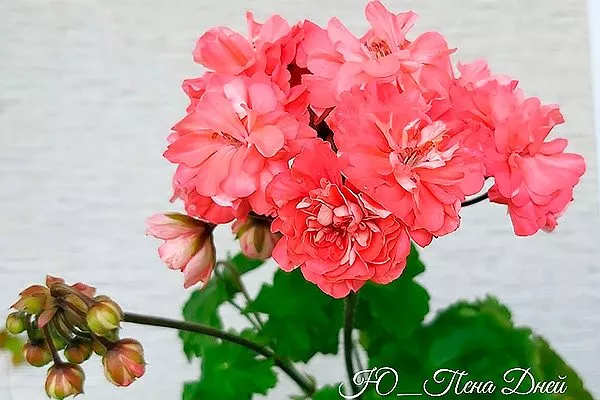
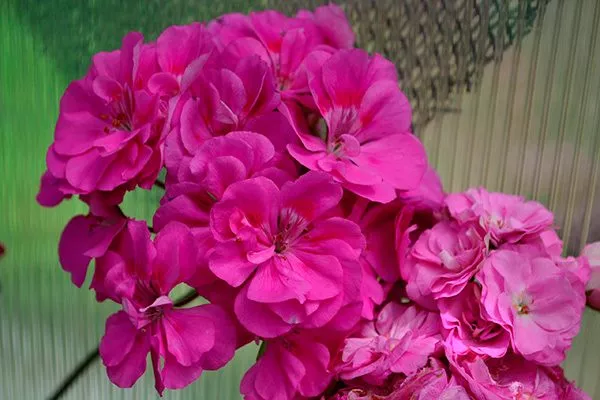
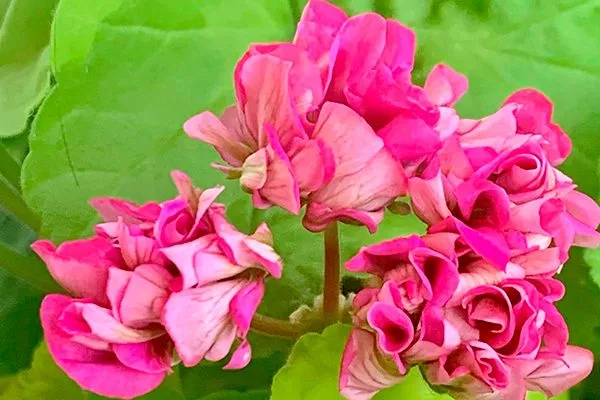
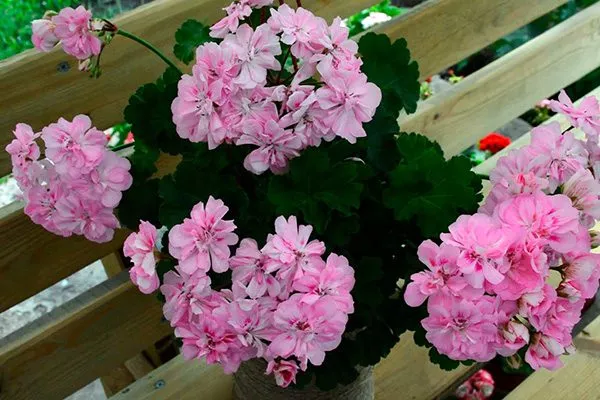
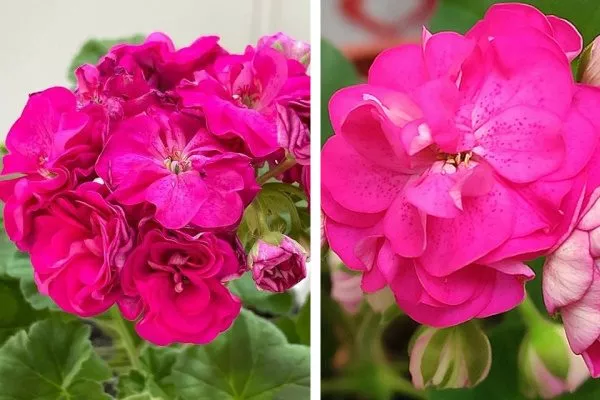
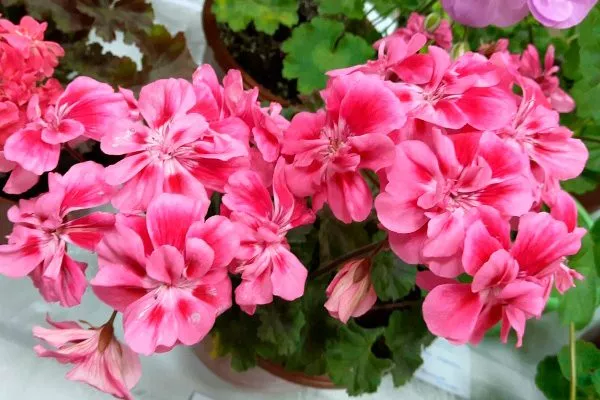
Yulia Lvova has worked hard to create numerous varieties of the Y series. All pelargoniums have a maximum of advantages and practically no negative qualities.
Planting and further care
Caring for pelargoniums isn't particularly difficult if you follow certain rules. Caring for the plant is very simple and doesn't take much time.
- ✓ The soil should be light, breathable, with a neutral or slightly acidic pH of 6.0-7.0.
- ✓ It is essential to have a drainage layer at the bottom of the pot to prevent water stagnation.
Follow these recommendations:
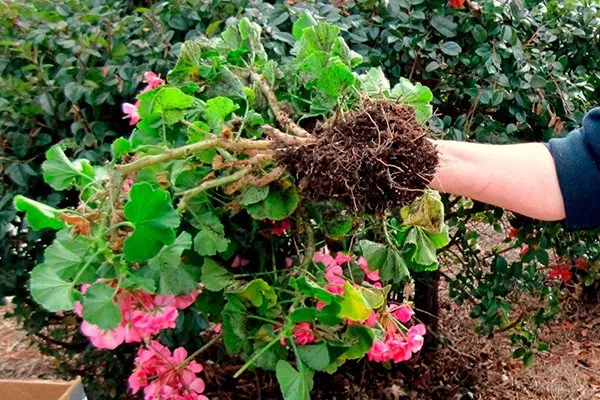
- Planting a plant. Repot pelargoniums in the spring and only if necessary in the fall. Purchase ready-mixed potting soil from a specialist store or prepare your own (mix equal parts of turf soil, river sand, and well-rotted compost).
Remove the flower from the container with the root ball, moistening it first, then place it in a new pot so that the voids are filled with new soil mixture. - Watering. Pelargoniums require moderate, regular watering. In summer, water the plant twice a week, and in winter, reduce the frequency to once a week.
- Top dressing. During the growing season, pelargoniums require fertilizer. Experienced gardeners recommend using ready-made, liquid fertilizers, avoiding organic fertilizers. During this period, apply fertilizer every few weeks, and once the plant reaches dormancy, reduce the amount to once a month.
Phosphorus and potassium are considered a complete fertilizer. To promote continuous flowering, gardeners use magnesium sulfate (1 gram per 1 liter of warm water). - Trimming. Indoor pelargoniums require periodic pruning to ensure a healthy crown and lush flowering. Perform this procedure at the end of February, before the growing season begins.
- Reproduction. You can increase the number of flowers by cuttings or seeds. Plants grown from cuttings will delight you with vibrant blooms within a few months. Propagating pelargoniums from seeds at home is not easy, as it is a lengthy and more arduous process. Learn more about propagation of pelargonium Read in our other article.
- Diseases and pests. Pelargoniums often suffer from fungal and bacterial infections. The most common are blackleg, gray mold, powdery mildew, and leaf rust.
Blackleg disease cannot be saved, and gray mold requires repotting after removing the affected parts. For rust, use Oxychom or Abiga Peak (apply at intervals of 7-10 days). For powdery mildew, treat the plant with water or iodine solution.
Pelargonium is a unique plant beloved by many gardeners. Yulia Lvova's cultivars offer many different varieties, each with distinct appearances, advantages, and disadvantages. Now you can decide which flower to place on your windowsill or grow in your garden to enjoy its lush blooms.