
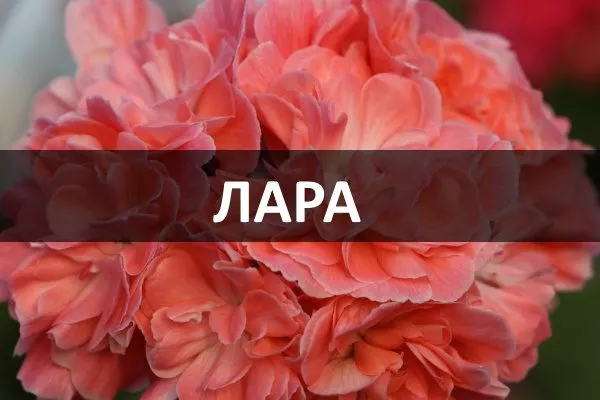
The Lara series of pelargoniums is a new and little-known, yet extremely interesting line of cultivars. It includes many new and beautiful varieties and hybrids—zonartiks. The line includes double, rosebud, and dwarf varieties, distinguished by flower color, leaf shape, and other external characteristics.
History of origin
In the 19th century, pelargonium was called "red geranium" in Europe. This flower was very popular at the time. Following this trend, breeders sought to develop a special variety of pelargonium—one with yellow flowers.
Cliff Blackman of Australia decided to create a yellow-flowered pelargonium. In 1985, the breeder began developing the new variety. In his work, Blackman used zonal pelargonium and articulatum (a native species of South Africa). The result was the zonartics.
Over 20 years of research and experimentation, Blackman developed many hybrid varieties, differing in shape and color. He never succeeded in producing a pure yellow pelargonium. However, there are currently over a dozen beautiful varieties bearing the prefix "Lara" (the name of the Australian city where he created the new line).
Lara varieties
The Lara series boasts a rich selection of original and spectacular pelargoniums, captivating the imagination with the beauty of their blooms. Below are the most popular varieties and hybrids in the Lara series, along with descriptions, advantages, and disadvantages.
| Name | Flower type | Bush height (cm) | Inflorescence color | Features of leaves |
|---|---|---|---|---|
| Harmony | rosebudnaya | 30-50 | hot pink | green |
| Delight | semi-double | not specified | cyclamen or fuchsia | heavy pubescence |
| Marjorie | terry | not specified | snow-white with pink strokes | zonarticaceae |
| Alf | not specified | not specified | bright scarlet | glossy, medium green |
| Largo | not specified | not specified | scarlet with a crimson tint | shiny, hairless |
| Rita | semi-double | not specified | tender salmon | not specified |
| Enwoy | terry | not specified | light salmon | not specified |
| Gem | pink | not specified | pink | juicy, bright green |
| Genie | not specified | not specified | pale pink | decorative, bright green |
| Susanne | terry | not specified | pink with carmine and salmon tones | with a wide dark zone |
| Mandarin | not specified | not specified | peach with a yellowish core | juicy green, with jagged edges |
| Lara Prince | semi-double | not specified | light pink | dark green with a brown zone |
Harmony
A zonal rosebud pelargonium for indoor and balcony growing. Bushes are fluffy, compact, with green leaves. Height: 30-50 cm. Inflorescences are double, lush, and large, with densely double, rose-shaped flowers. Color: bright pink. When fully open, the flowers resemble a rose.
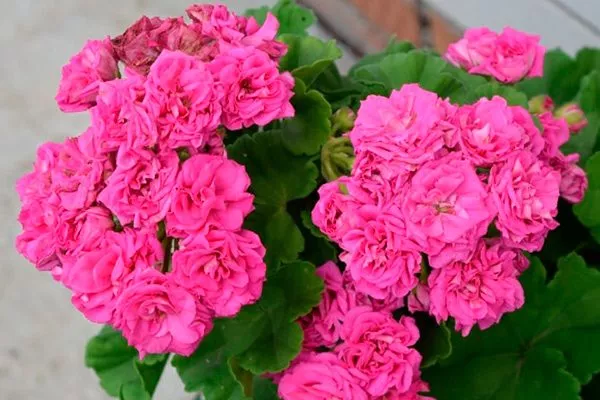
The Harmony variety, thanks to its high decorative qualities, is often used to decorate home gardens and flower beds. Its vibrant flowers pair beautifully with a wide variety of grasses and flowering plants. The pink color looks especially striking with white flowers.
Delight
A hybrid zonartic with large semi-double flowers. The color is vibrant, cyclamen- or fuchsia-hued, with a small bright white spot in the center. This zonal pelargonium is heavily pubescent, suggesting the use of ivy-leaved or species-type pelargoniums in its breeding.
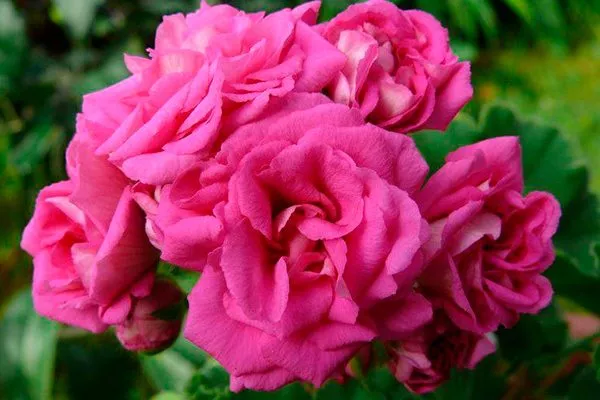
The inflorescences consist of numerous flowers that are tightly clustered together. They have strong, tall, and straight stems. The bushes are vigorous, with a standard growth habit.
Marjorie
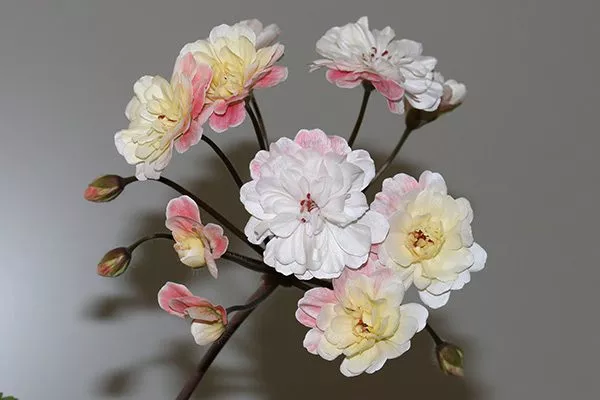
A large-flowered pelargonium recommended for hanging pots. This variety has fluffy, compact bushes. It features zonartik leaves, long stems, and giant double inflorescences—up to 20 cm in diameter, with flowers up to 5 cm in diameter. This pelargonium has elongated petals, snow-white with random pink accents.
Alf
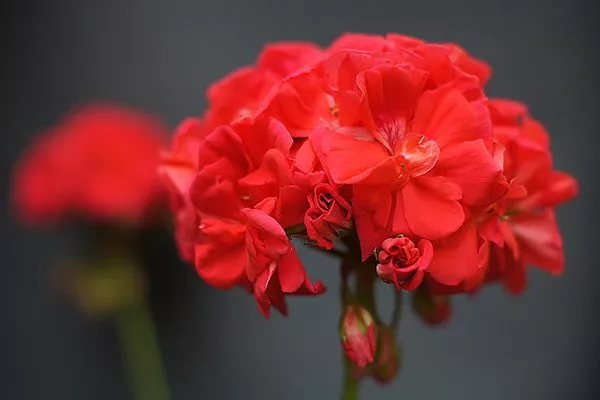
A zonartik with spectacular bright scarlet inflorescences. They are large and fairly dense, held on long but sturdy stems. The bushes are compact and low-growing. The leaves are glossy, medium-green, and odorless.
Largo
A hybrid zonulaceae with large scarlet flowers. The diameter is 6-7 cm. A raspberry tint is present. The bushes are upright and erect. The leaves are glossy, glabrous, rich green, large and dense, without a distinct zone.
Rita
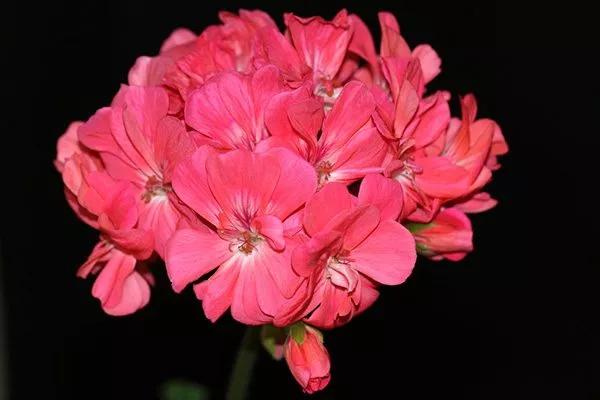
A low-growing hybrid with relatively small inflorescences on short stems. The color is soft salmon, the petals are semi-double, and the inflorescences are medium-dense.
Enwoy
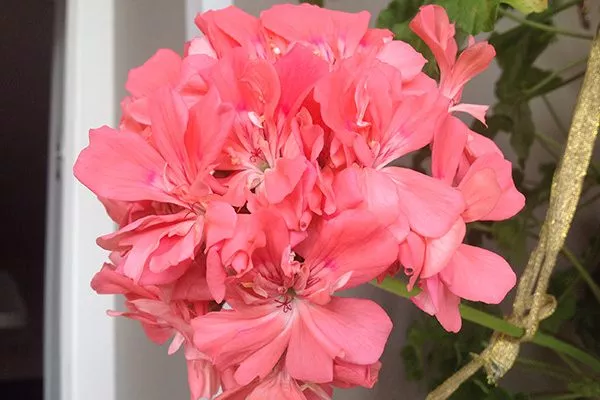
A zonartik with compact bushes and thick stems that grow almost horizontally. This variety is not particularly common. The flowers are large, double, light salmon-colored, with feather-like petals. The caps are large, and the peduncles are long. Recommended for growing in hanging pots.
Gem
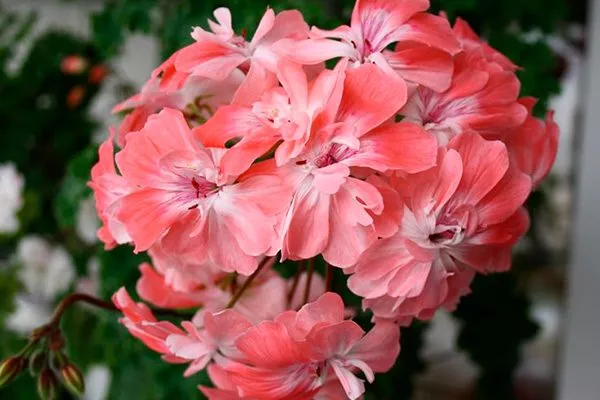
This variety is rarely found in collections today, as it is quite demanding and requires specific growing conditions. The bushes are medium-sized, with tall stems and lush inflorescences. They have double pink flowers with light spots on the upper petals. The leaves are succulent and bright green.
Genie
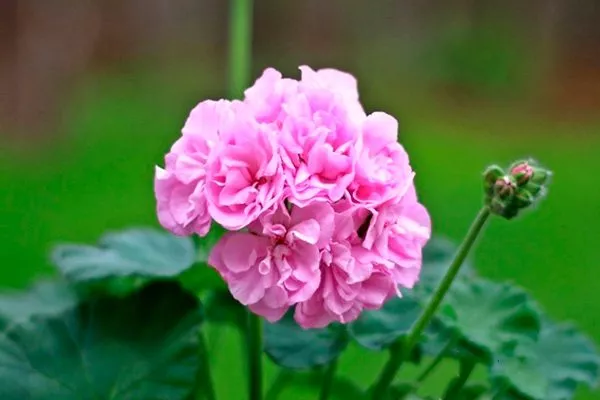
This pelargonium grows on medium-sized bushes with sturdy, straight, and fairly long stems. The inflorescences are pale pink umbels, somewhat reminiscent of orchid flowers. The leaves are decorative, bright green, and lacy.
Susanne
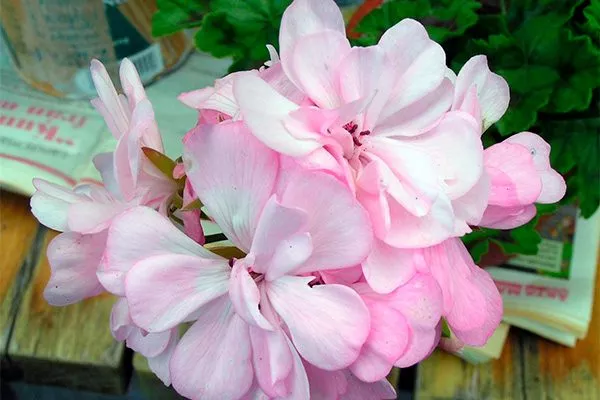
A zonal pelargonium with large, double flowers, whose coloring combines pink with carmine and salmon tones. The leaves have a wide, dark zone. This flowering plant is exceptionally expressive and will easily transform even the dullest balcony into a blooming garden.
Mandarin
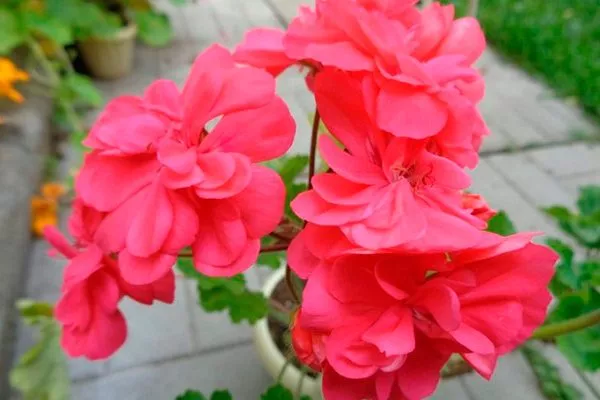
When fully bloomed, this hybrid resembles a juicy tangerine. This zonarthica has delicate peach-colored inflorescences with a yellowish center. The inflorescences are dense, double, and borne on tall stems. The leaves are rich green, with serrated edges. The bushes are compact, with long petioles.
Lara Prince
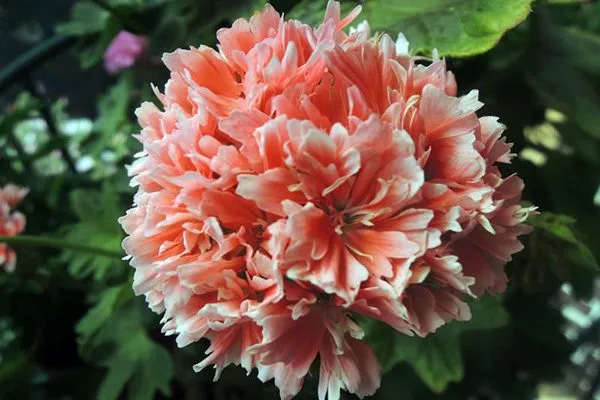
A compact zonarthic with semi-double, light pink flowers. The inflorescences are very large, the bushes are compact, and the leaves are dark green, with a clearly visible brown zone.
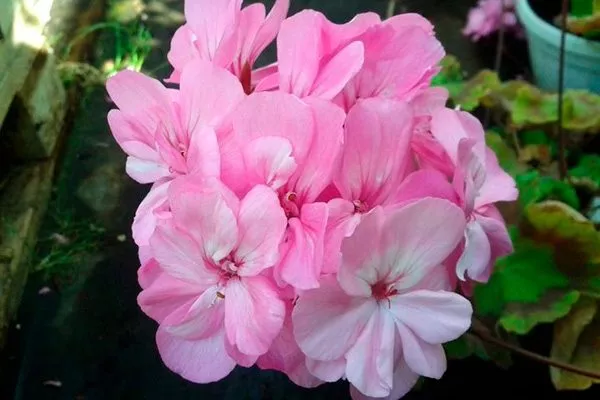
The Lara line also includes other varieties less well-known among pelargonium enthusiasts. All are unique and unusual in their own way, and are of interest for indoor gardening and landscape design.
- ✓ Optimum temperature for growth and flowering: 18-22°C during the day and 12-15°C at night.
- ✓ Light level: at least 6 hours of direct sunlight per day.
How to plant and grow Pelargonium Lara?
Growing pelargoniums is accessible even to the most inexperienced gardeners. Growing these flowers doesn't require much effort, and care comes down to standard procedures.
Planting pelargoniums
Before planting pelargoniums, trim off any overgrown shoots. Pruning is typically done in late winter or early spring, and pelargoniums are typically planted outdoors in April. Planting should only occur after the weather has become consistently warm and the threat of frost has passed.
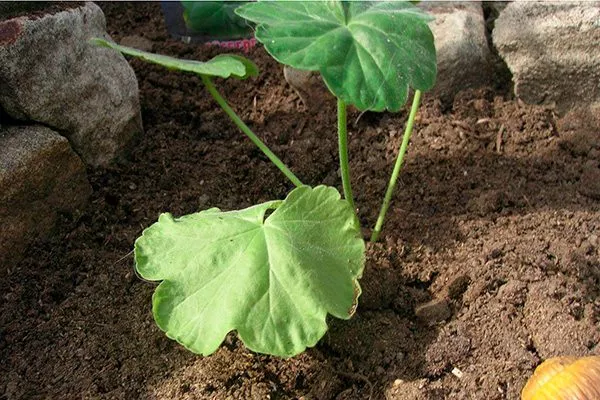
If the seedlings will remain indoors, they also need to be repotted into new pots, as the soil quickly becomes depleted. Once planted in a pot or vase, place the flower on a sunny windowsill.
Pelargoniums require loose, fertile soil with a slightly or neutral pH. A drainage layer is essential at the bottom.
Growing and care
To ensure that pelargonium blooms long and profusely, and that the bushes are strong and healthy, it is necessary to provide it with appropriate care.
How to care for Lara pelargoniums:
- Watering. They should be regular, and the soil should not be allowed to dry out or become too wet. Excessive moisture always leads to root rot.
- Top dressing. Flowers require nutrient supplements. A complex fertilizer containing potassium and phosphorus is recommended.
- Wintering. Pelargoniums enter a dormant period during winter. If grown indoors, the plant is moved to a room with a temperature of +14°C. Learn more about keeping pelargoniums in winter Read in our other article.
- Lighting. Flowers need good light, but don't like direct sunlight. Too much light will cause the leaves to dry out. Diffused light is best.
- Wet procedures. The leaves of pelargoniums grown at home need to be wiped from time to time, otherwise rot may appear on the pelargonium.
Transfer
It's recommended to repot indoor pelargoniums every 2-3 years. Flowers should be moved to larger pots. When repotting, the soil should be refreshed each time.
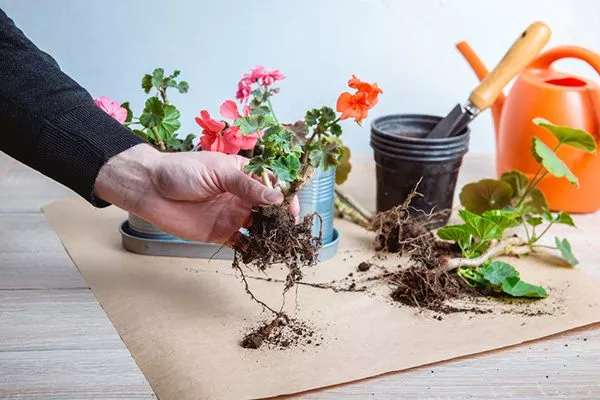
Reproduction
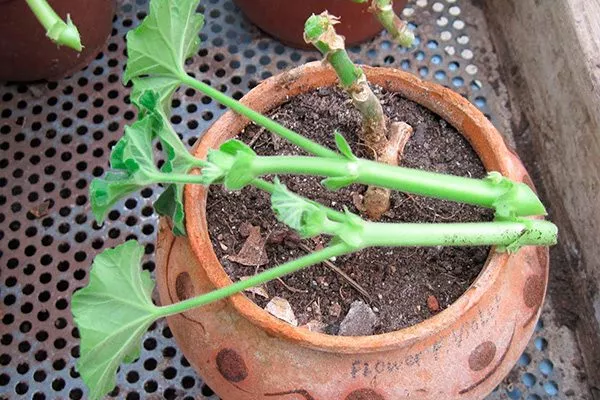
Pelargoniums propagate quickly and easily vegetatively. The simplest and most effective method is propagation by apical cuttings. Seed propagation is not practiced in indoor gardening—it is too time-consuming and labor-intensive.
- Inspect plants weekly for signs of disease and pests.
- Treat plants with biological fungicides once a month to prevent fungal diseases.
Diseases and pests
Lara pelargoniums are susceptible to fungal, bacterial, and viral diseases. They are also susceptible to insect pests. The risks are particularly high if care instructions are not followed.
Pelargoniums can be affected by:
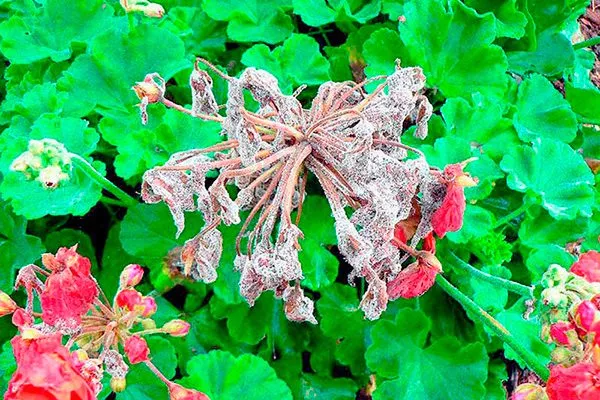
- Gray mold — in case of excess moisture. Leaves affected by the disease should be cut off.

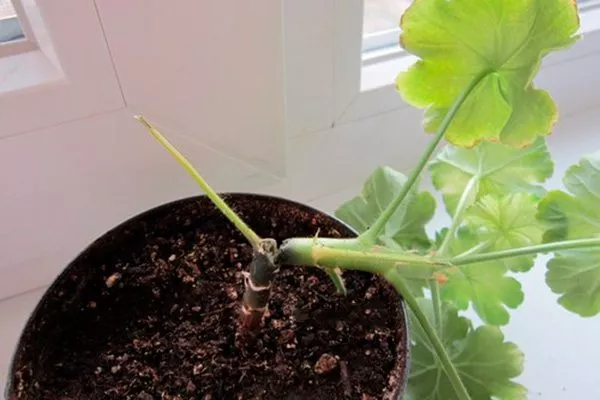
- Black leg - it is not curable, so the diseased pelargonium has to be thrown away along with the soil.
The Lara series is a truly unique collection of zonartica pelargoniums. These varieties deserve the utmost attention from both novice indoor gardeners and seasoned gardeners.