
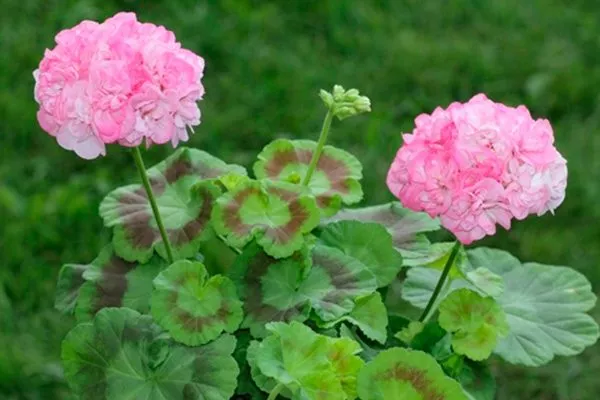
The Jägershus line features a wide variety of pelargoniums, including dwarf, standard, and giant varieties. This collection includes many zonal and star varieties, and their shades range widely, from pure white to deep red.
Pelargonium Jagershus characteristics
The Jägershus cultivar series was developed by Swedish pelargonium enthusiast Daniel Persson. It was developed between 2009 and 2011. Since 2014, the breeder has developed four more cultivars, and the collection will likely continue to grow. By 2022, the Jägershus cultivar series included over a hundred cultivars and hybrids.
| Name | Flower type | Color | Bush size |
|---|---|---|---|
| Borre | Zonal | Powdery pink with raspberry edging | Powerful, densely foliated |
| Faley | Rosebudnaya | Deep pink | Standard |
| Sara | Terry | Deep pink with iridescent highlights | Careful |
| Jackpot joker | Zonal | Deep pink with orange and raspberry | Powerful, well-foliated |
| Mandelblom | Zonal | White-pink or cream | Standard |
| Mormor marta | Zonal | White and pink | Standard, neat |
| Athena | Zonal | Red-orange with a white eye | Compact |
| Augustokarlik | Zonal | Light pink with a salmon tint | Standard |
| Nanita | Zonal | White with red speckles and stripes | Standard |
| Carsten | Zonal | Soft pink | Compact |
| Moster Kerstin | Zonal | Hot pink | Compact |
| Millhouse Black | Zonal | Soft pink | Standard |
Borre
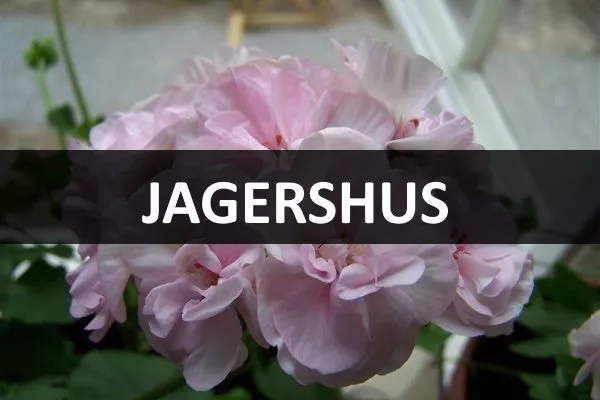
A zonal pelargonium with large, densely double flowers. The color is a powdery pink with a gradient transition. The center is white, with a distinct crimson edge along the petal edges. The bushes are vigorous and densely foliated. The leaves are large and slightly pubescent.
Faley
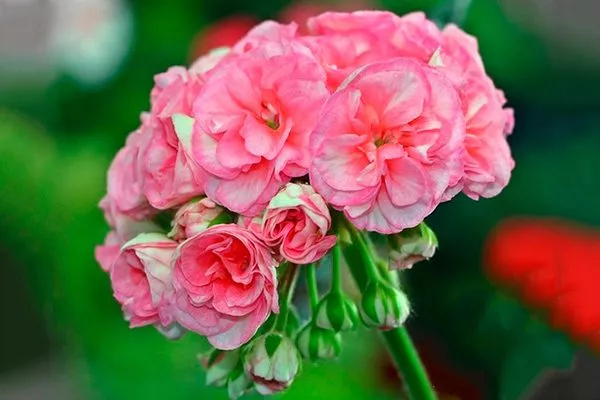
A zonal rosebud pelargonium with large inflorescences. The double flowers resemble garden roses in shape. The color is rich pink. The leaves are large, with a dark pattern in the center.
Sara
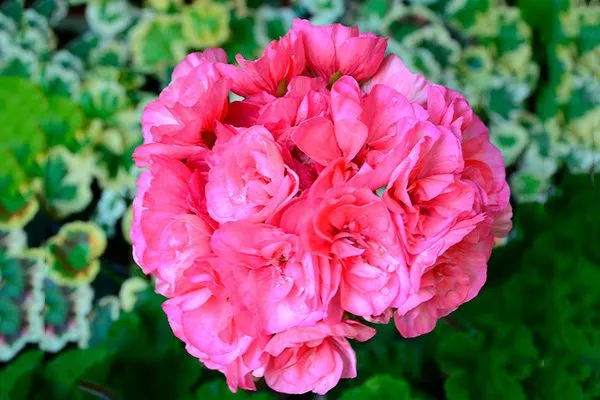
A double pelargonium with deep pink blooms. The coloring is iridescent. The flowers are darker in the center, and the petals are lighter at the edges. The bushes are neat, with large, dense leaves.
Jackpot joker
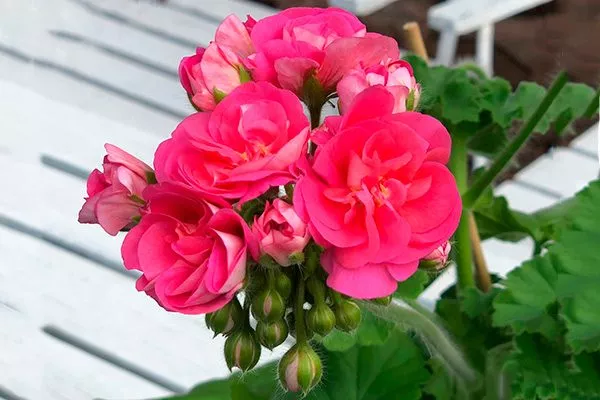
A striking new variety with rich pink flowers. The iridescent coloring is red along the edges, glowing orange from within, and raspberry tones predominate in the center. The bushes are vigorous and well-foliated.
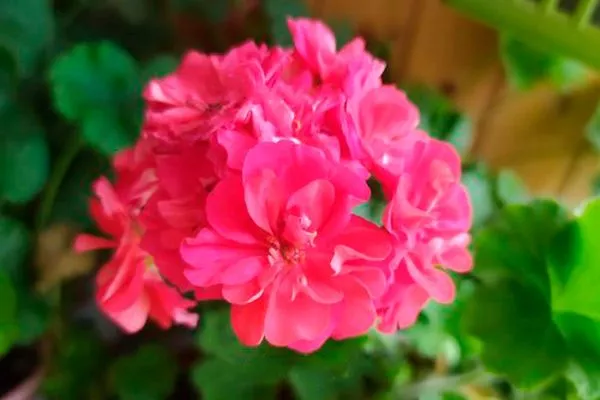
Mandelblom
A zonal pelargonium with white, pink, or cream flowers. The bushes are standard, with large, airy, and delicate flower heads.
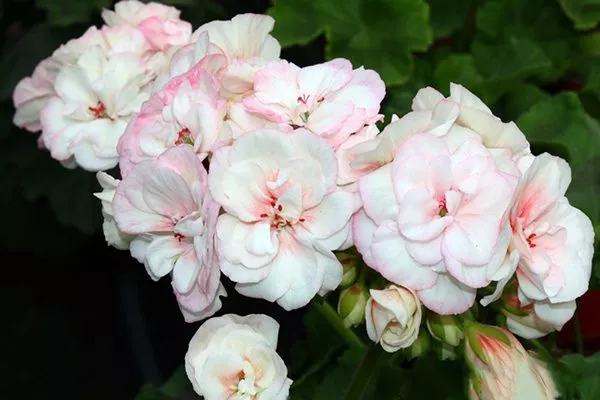
Mormor marta
A zonal variety with a white and pink color. Large, double flowers. The bushes are standard, neat, and suitable for planting outdoors.
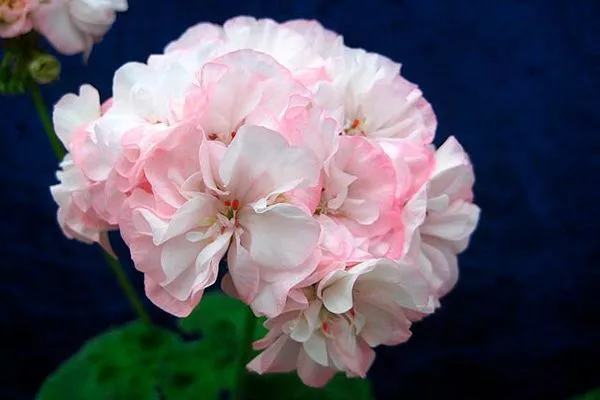
Athena
A zonal red-orange pelargonium with a white eye in the center. Compact bushes with double, medium-sized flowers and long stems. This variety was bred in 2010.
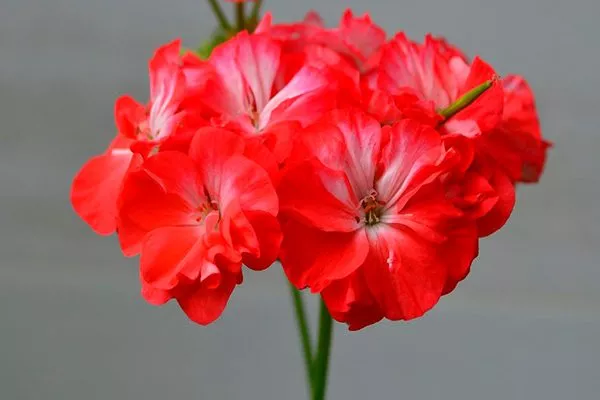
Augustokarlik
A double-flowered zonal pelargonium. It features large, light pink capped inflorescences with a salmon hue. The bushes are standard, with medium-length, sturdy flower stalks.
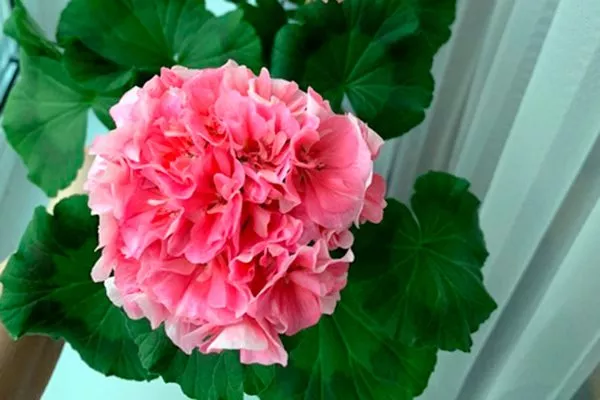
Nanita
A zonal pelargonium with double white flowers covered with red speckles and stripes. A greenish center.
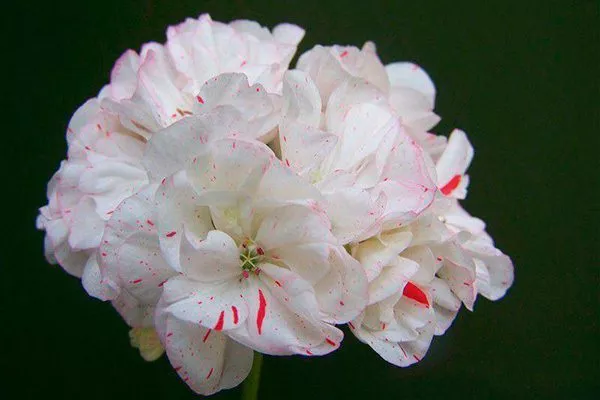
Carsten
An elite variety with stunningly beautiful inflorescences. The double flowers are a delicate pink, resembling airy vanilla pom-poms.
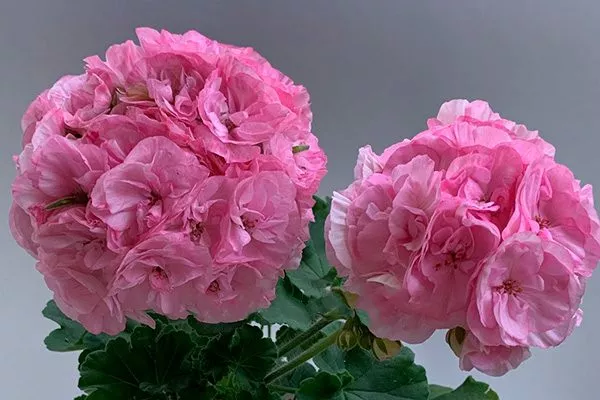
Moster Kerstin
A zonal double-flowered pelargonium with large, bright pink blooms. The bushes are compact, with large, dense, dark green leaves.
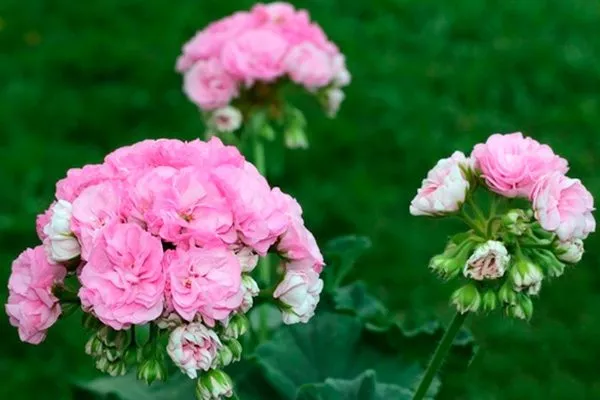
Millhouse Black
A spectacular double-flowered zonal pelargonium. It features delicate pink, airy blooms with wavy petals. The leaves feature dark green "butterflies." The leaves look beautiful against the pink blooms.
Planting and further care
Jägershus pelargoniums don't require much effort from indoor gardeners. These flowers require standard care. The key is to take appropriate care—watering, fertilizing, repotting, and, if necessary, shaping.
Plant transplantation
After purchasing young Jägershus pelargoniums from a flower shop or official nursery, don't repot them immediately. Give the young plants about a week to acclimate. Then, plant them in small pots.
Planting procedure for pelargonium Jägershus:
- Water the pelargonium a day before planting.
- Wash the planting pot and treat it with potassium permanganate. Be sure to make drainage holes in it if there aren't any.
- Place some foam on the bottom - this will be a drainage layer.
- Fill the pot 1/3 full with nutritious potting soil - you can buy it at a flower shop.
- Carefully remove the pelargonium from the seedling pot and transplant it to a new location along with the old soil.
- Fill the empty space with soil mixture and compact it.
- Water the planted flower with warm, settled water.
- ✓ The water temperature for watering should not be lower than room temperature to avoid stressing the plant.
- ✓ The drainage layer made of foam plastic must be at least 2 cm to effectively drain excess water.
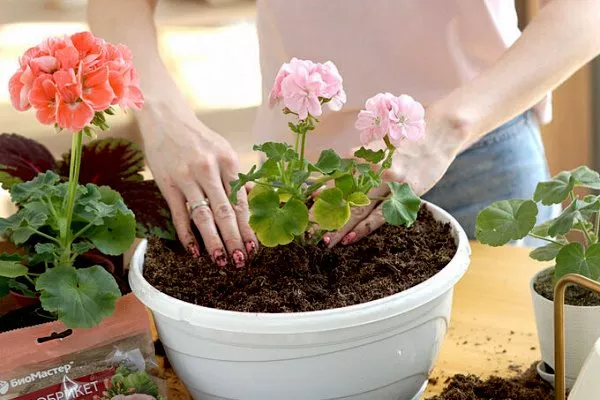
Place the pelargonium on a windowsill. Choose a window with diffused light; direct sunlight is not recommended for young pelargoniums.
Once the pelargonium has adapted, it can be moved to a sunnier location. It thrives best on south- and east-facing windowsills. At midday, shade the pelargonium to prevent the flowers and leaves from fading. The room should be well-ventilated, but avoid exposing the flowers to drafts.
Watering and fertilizing
Jägershus pelargoniums are watered moderately. They don't tolerate overwatering, as the roots will rot. Leaves should be kept away from water during watering.
Fertilizing begins in the spring. Flowering is stimulated by adding potassium and phosphorus. Liquid fertilizers (solutions) are used. Special nutrient complexes for indoor plants can also be used. It is recommended to fertilize Jägershus pelargoniums once a month.
Reproduction
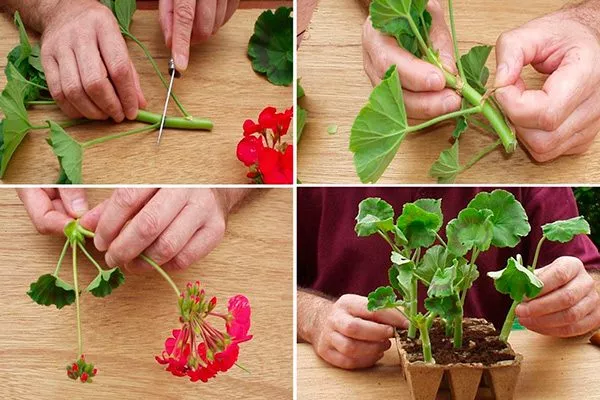
Pelargoniums Jagershus are rarely propagated by seed. Firstly, it's time-consuming and labor-intensive, and secondly, it doesn't guarantee the transmission of varietal traits. The best method for propagating pelargoniums is by cuttings.
The procedure is usually carried out in the spring or after pruning—the removed shoots are used for propagation. For cuttings, select tops with at least three leaves.
- ✓ Cuttings must have at least three leaves for successful rooting.
- ✓ Roots should reach a length of 3 cm before planting in the ground to minimize stress during transplantation.
How to propagate Pelargonium Jagershus:
- Dip the cutting into a growth stimulator, then place it in settled water.
- When the roots reach 3 cm in length, transplant the cutting into soil, allowing the roots to dry first. The soil mixture should consist of soil and sand.
- Keep the planted cuttings in the shade for 3-4 days, and then take them out into the sun.
Water the pelargonium seedlings by pouring water into the tray. Once they have rooted, transplant them to their permanent location.
Formation
Bushes requiring shaping are usually pruned in the fall. This involves removing excess leaves and pinching off the shoot tips. Bush shaping can also be done in the spring, but at this time, only the excessively long ends of the shoots are removed.
Diseases and pests
Pelargoniums Jagershus are rarely affected by disease. And if properly cared for, they won't get sick at all. The main cause of disease is overwatering, which leads to gray rot and root rot.
Gray mold can be eliminated by removing the affected parts and treating the plant and soil with appropriate fungicides. However, root rot is rarely curable, as there is no effective treatment for this disease.
Pelargoniums grown on the first or second floor, as well as outdoors, can be affected by aphids and spider mites. Plants should be inspected regularly. If signs of insect infestation are detected, the flowers should be immediately treated with appropriate insecticides.