
Pelargonium is one of the most popular flowers. It's often found on windowsills, grown on balconies, and in flowerbeds. The Bold series is particularly popular. Explore the most popular Bold pelargonium varieties to find the perfect plant for your garden.
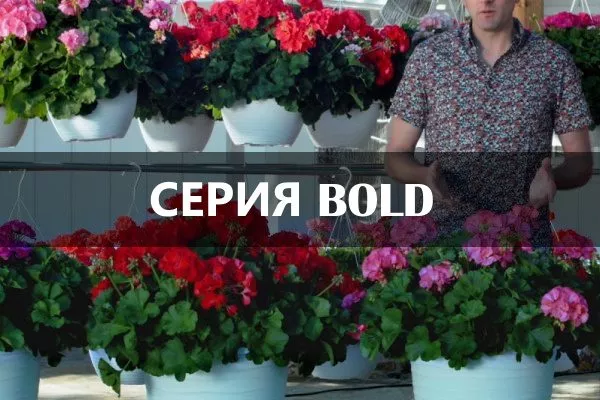
Pelargonium Bold's Features
The Bold series was developed by English breeder John Gibbons. The plant is characterized by fairly dense foliage and short internodes. Varieties in this series are considered easy to care for and have good vitality.
Pelargoniums form into small shrubs, adorned with numerous vibrant bouquets. Their rounded shape and height of up to 30 cm make them attractive. They will grace any garden and become its focal point.
Pelargonium Belongs to the Geraniaceae family. It has a branched trunk and forms independently, without any intervention from its owners. However, it can be helped to achieve a beautiful shape more quickly by pinching the shoot after the fifth pair of leaves.
Varieties
The Bold series includes over 30 varieties, developed between 1982 and 2000. We invite you to explore the most popular Bold pelargonium varieties.
| Name | Bush height (cm) | Flower color | Flowering period |
|---|---|---|---|
| Gold | 30 | pink with purple edge | year-round |
| Carmine | 30 | red-crimson | until November |
| Diamond Wedding | 30 | pale pink | abundant and prolonged |
| Anna | 30 | white and pink | abundant |
| Ministry of Defense | 30 | hot pink | early and abundant |
| Cherub | 30 | bright pink with white centers | abundant |
| Princess | 30 | desaturated pink | long and abundant |
| Pixie | 30 | purple | simultaneous flowering of 4-12 inflorescences |
| Sunrise | 60 | salmon with white veins | until autumn |
| Sunset | 30 | apricot-salmon | resistant to rain and sun |
| Bold Beacon | 30 | thick cherry | undemanding to soil and lighting |
| Bold Limelight | 30 | candy pink | ease of care |
| Bold Gem | 30 | red | abundant flowering |
| Bold Magic | 30 | rich salmon | early flowering |
| Bold Bunny | 30 | light salmon | abundant flowering |
| Bold Cloud | 30 | white and pink | permanent |
| Bold Shades | 30 | pink-crimson with a dark red border | resistance to lack of moisture |
| Romance | 30 | soft pink | withstands bad weather and heat well |
| Elf | 30 | red with a slight orange tint | lush and abundant |
| Festival | 30 | pink | long-term |
| Parade | 30 | bright red | undemanding |
| Joy | 30 | raspberry-pink with a white eye | petal coloration even in cool conditions |
Gold
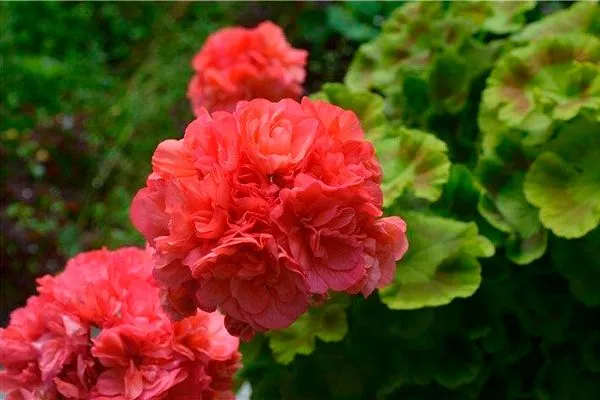
Pelargonium Bold Gold is considered one of the most common varieties. This perennial forms a small, bushy yet compact shrub, reaching up to 30 cm in height. It looks very impressive.
It blooms year-round. The flowers delight with delicate pink blooms and a thin lilac edge. The leaves are a yellow-green hue, more reminiscent of gold. Pelargonium has a branched stem.
Advantages of the variety:
- decorativeness;
- ease of care;
- long flowering period.
The Bold Gold variety has no significant disadvantages.
Carmine
Bold Carmine belongs to the zonal group. The plant is characterized by large double and semi-double flowers with red-crimson petals. This compact pelargonium sometimes takes on a carmine-red hue.
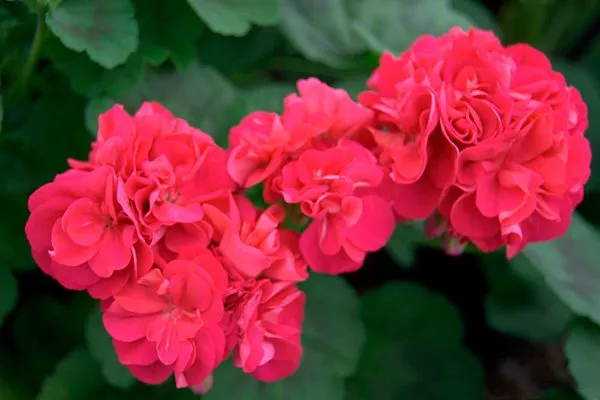
This compact, rounded bush blooms even in November, literally covered in vibrant buds. The plant has a branched trunk, and the foliage is yellow-green with a golden sheen. When exposed to sunlight, the foliage takes on characteristic orange hues.
Advantages of the variety:
- good bush formation;
- attractive appearance;
- abundant flowering;
- Possibility of indoor and outdoor cultivation.
Diamond Wedding
Pelargonium Bold Diamond Wedding is a small, highly branched shrub that lives an average of 10 years. A mature plant is characterized by a lush, spreading crown. The trunk is covered with small, bright green leaves. It is renowned for its abundant flowering.
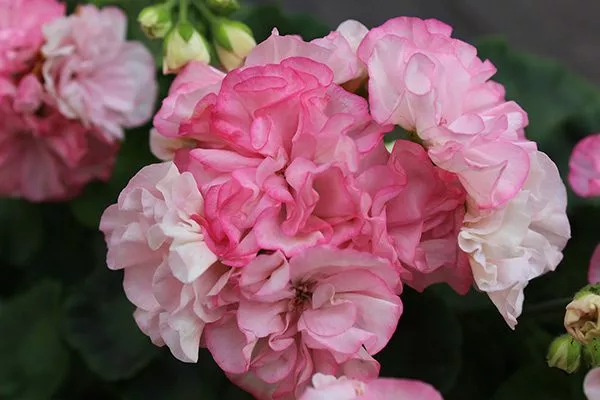
The Bold Diamond Wedding pelargonium has flowers gathered in clusters, and its petals are a pale pink. The flower color may vary slightly depending on the lighting.
Advantages of the variety:
- undemanding to care;
- abundant and long-lasting flowering;
- delicate color of flowers.
Flaws:
- the need for sufficient space;
- poor tolerance of proximity to other plants.
With proper lighting and watering, pelargonium will not cause any trouble for the gardener.
Anna
Pelargonium 'Bold Ann' is a zonal variety. It forms a compact bush with a branched stem. The plant is covered in lush white-pink inflorescences, with a darker pink edge along the petals. The bush grows low and blooms profusely.
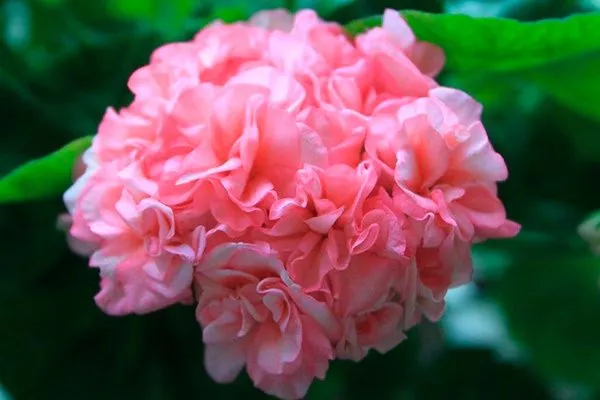
Large inflorescences with double petals create a lush, fragrant bouquet that will decorate your windowsill or garden.
Advantages of the variety:
- easy care;
- impressive appearance;
- bright color;
- independent branching.
Florists note that this variety has no significant drawbacks.
Ministry of Defense
Pelargonium Bold Minstrel is popular for its abundant flowering. The plant grows low, producing short, robust stems. It blooms early, producing bright pink flowers. During flowering, it produces 3-4 heads.
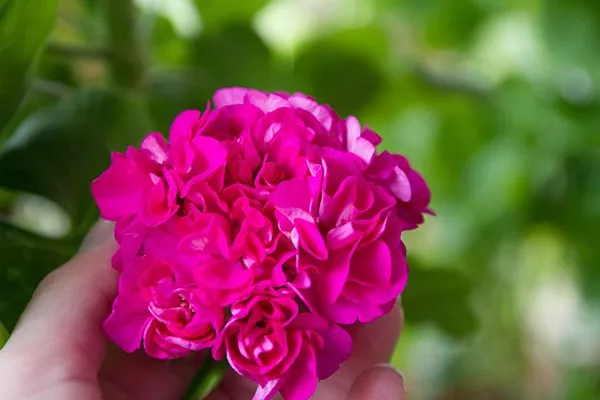
This variety is renowned for its abundant foliage: medium-sized, green foliage covers the entire bush. Suitable for growing indoors and outdoors during the warmer months, you'll enjoy vibrant blooms practically all summer long.
Advantages:
- ease of planting;
- undemanding in care;
- high endurance;
- voluminous inflorescences;
- long flowering.
Disadvantages include poor response to direct sunlight and extreme heat. The plant may begin to weaken, so it requires shade on hot days.
Cherub
Pelargonium Bold Cherub features large, semi-double, bright pink flowers with white centers. The bush is compact and well-foliated. The foliage is olive green with red veins and lighter zones. This plant blooms easily with proper care.
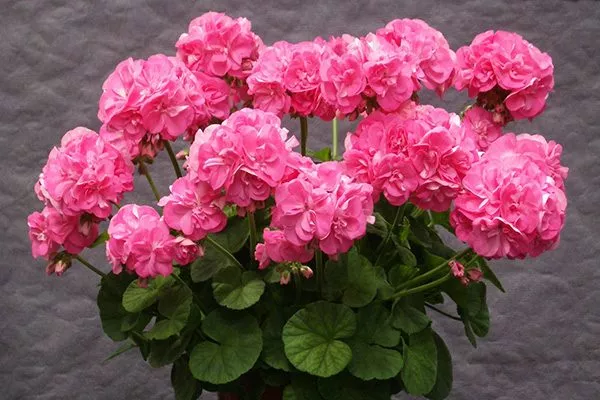
Advantages of the variety:
- compactness;
- fluffy hats;
- ease of care;
- bright and abundant flowering.
Florists speak highly of the variety and note that it has no significant drawbacks.
Princess
The zonal pelargonium Bold Princess is a dwarf plant characterized by a muted pink color. The bush forms well and boasts long, abundant blooms. The petals take on a more vibrant hue in low light, and a distinctive border appears along the edges.
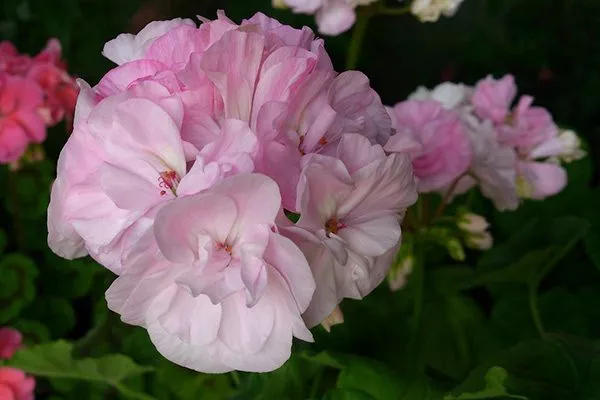
The flowers are large and double. The petals are a soft pink. This variety is considered a "flowering" variety.
Advantages of the variety:
- the petals practically do not fall off;
- ease of care;
- easy landing.
The variety's drawbacks include difficulty in collecting cuttings. The plant has no other drawbacks.
Pixie
The zonal pelargonium Bold Pixie attracts attention with its dwarf size and lush crown formation. The double flowers are a rich purple color. The petals have serrated tips. The plant is covered in foliage of a flawless green.
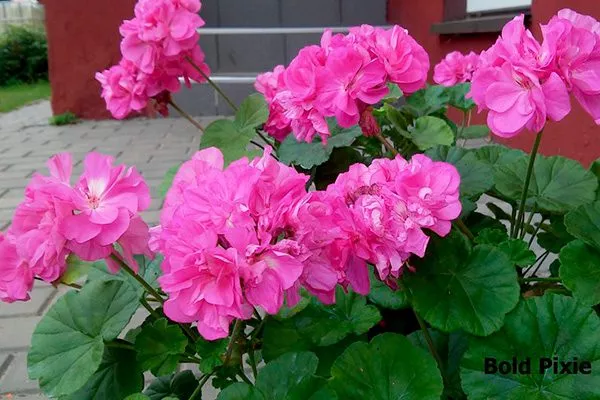
Advantages of the variety:
- the possibility of simultaneous flowering of 4 to 12 inflorescences;
- unpretentiousness in care and ease of planting;
- high degree of resistance to diseases and pests.
The Bold Pixie variety has no disadvantages.
Sunrise
Pelargonium Bold Sunrise features large, double flowers in a salmon hue with prominent white veins. A distinctive feature of this variety is the slightly lighter tint along the petal edges.
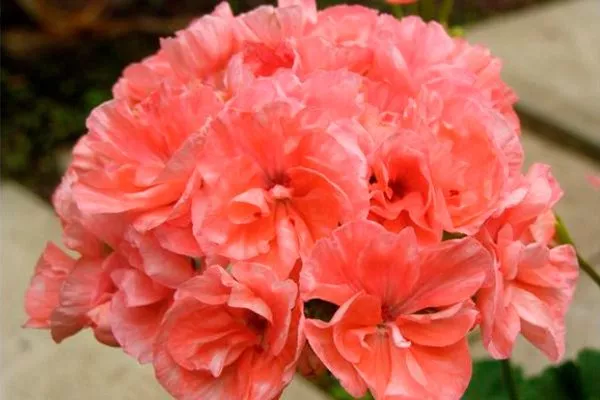
Pelargoniums have a dense, stocky growth habit, and their inflorescences can reach large sizes. Among the many varieties, Bold Sunrise is considered the tallest, reaching up to 60 cm in height.
Advantages of the variety:
- unpretentiousness;
- flowering until autumn;
- good rooting of cuttings;
- undemanding to growing conditions.
Florists note that the Bold Sunrise pelargonium has no drawbacks.
Sunset
Pelargonium Bold Sunset is recommended for outdoor growing. It is a self-bushy plant, growing compact and well-formed. It is covered with thick, fluffy, dark green leaves.
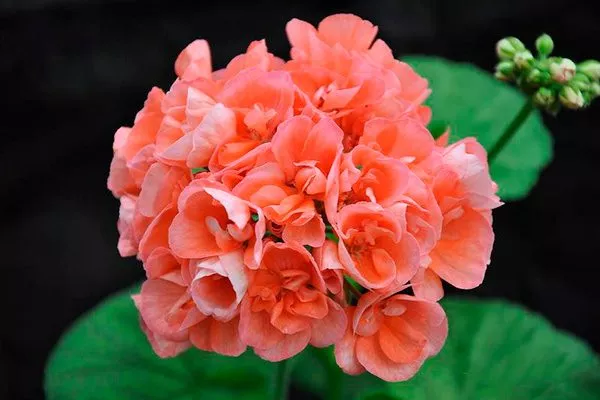
This variety is characterized by large, lush inflorescences with numerous small double flowers. The petals boast a rich apricot-salmon hue. Its striking appearance will make this pelargonium a stunning addition to your garden.
Advantages of the variety:
- resistance to rain and sun;
- frost resistance;
- flowering even in the absence of moisture;
- ease of landing.
Pelargonium Bold Sunset has only positive qualities and no serious disadvantages, except for the need to comply with agricultural practices.
Bold Beacon
The zonal pelargonium Bold Beacon is a dwarf variety that attracts attention with its richly colored flowers. The plant grows lushly, thrives well, and doesn't require particularly demanding conditions.
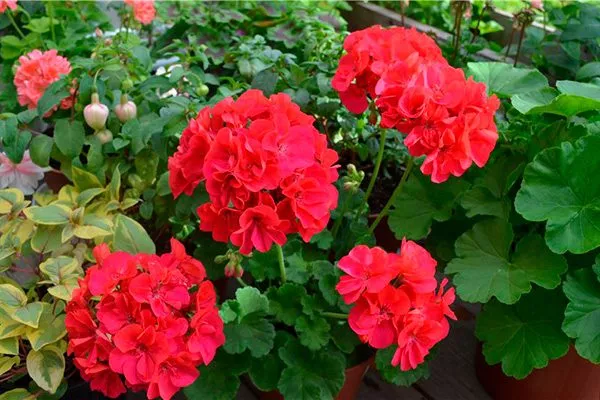
The semi-double flowers are a deep cherry red. The upper petals may have scarlet flecks. The inflorescences are bright and large. The plant is covered with medium-sized foliage, tinged with emerald.
Advantages:
- attractive appearance;
- compact dimensions;
- undemanding to soil and lighting;
- rich color of petals.
Cherry pelargonium is famous for its lack of negative qualities and has many positive reviews from gardeners.
Bold Limelight
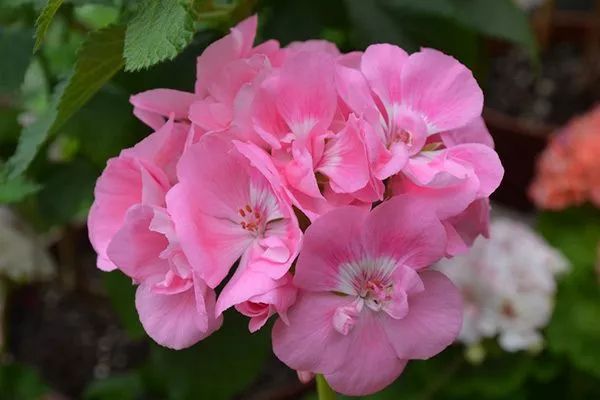
Limelight is a standard zonal pelargonium that produces excellent bushiness when trained early. The semi-double flowers are large and candy-pink. They feature a white eye and dark eyelashes. The stem is covered with large emerald leaves.
Advantages:
- compact dimensions;
- beautiful color of flowers;
- undemanding to soil.
The variety's drawbacks include petal shedding. Its overly pompous appearance is also considered a drawback, making it unsuitable for gardeners who dislike such varieties.
Bold Gem
Pelargonium Gem is characterized by its miniature size and abundant foliage. This variety is perfect for lovers of timeless classics. The plant is renowned for its attractive appearance: large, double flowers with red petals will captivate your gaze. The trunk is covered with large green leaves.
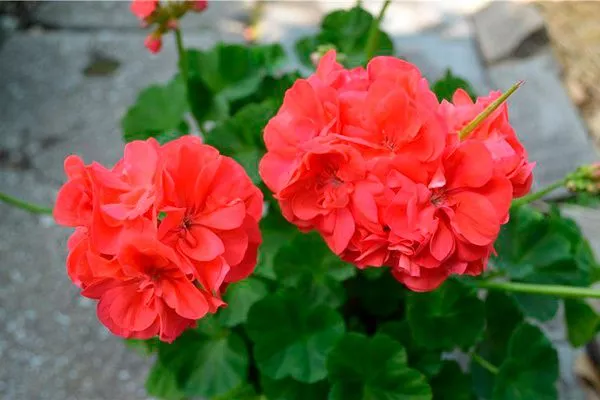
The bush forms a beautiful bush. It might seem like an ordinary pelargonium, but no, this variety has its own unique charm. It will be especially appreciated by lovers of red. This pelargonium is not fussy, so it thrives and delights with abundant blooms.
Advantages:
- smart appearance;
- ease of care;
- minimal moisture requirements.
Florists note that this variety has no disadvantages, but only positive qualities.
Bold Magic
Pelargonium Bold Magic is considered an exceptional variety, characterized by early flowering and excellent wintering. The plant is ideal for inexperienced and busy gardeners.
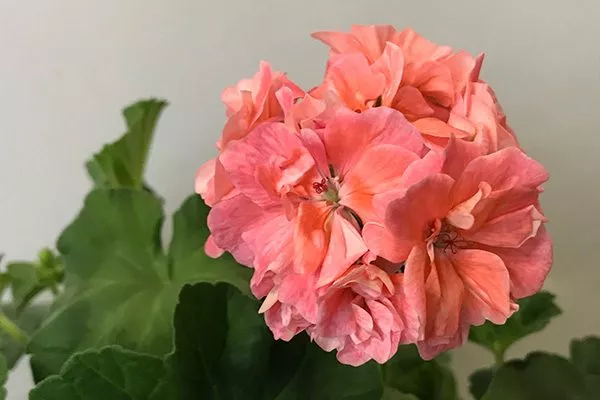
This low-growing shrub is covered with small, dark green leaves. The double flowers are large and airy. The petals are a rich salmon color. It's impossible not to notice this attractive plant.
Advantages of the variety:
- compactness;
- ease of care;
- strong immunity;
- easy landing.
According to those who grow Bold Magic, the variety has no significant drawbacks.
Bold Bunny
Pelargonium Bold Bunny is a miniature plant of the zonal type. It is covered in neat emerald leaves. The buds open to reveal simple, light salmon-colored flowers.
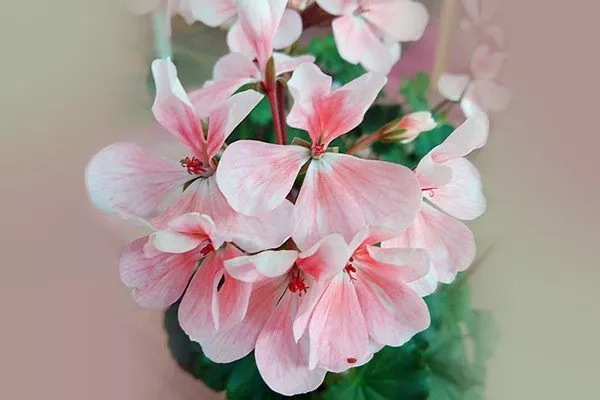
The name translates as "brave rabbit," as the flower's upper petals are narrow and resemble rabbit ears. This variety is renowned for its abundant blooms.
Advantages of the variety:
- resistance to lack of moisture;
- unpretentiousness;
- abundant flowering;
- delicate shade of flowers.
Gardeners do not find any disadvantages to the Bold Bunny pelargonium.
Bold Cloud
Pelargonium Bold Cloud is one of the most popular varieties of the yellow-leaved type. The plant is compact, acting like a miniature in its early stages. No problems are observed during flowering. Pelargonium blooms indoors both in summer and winter.
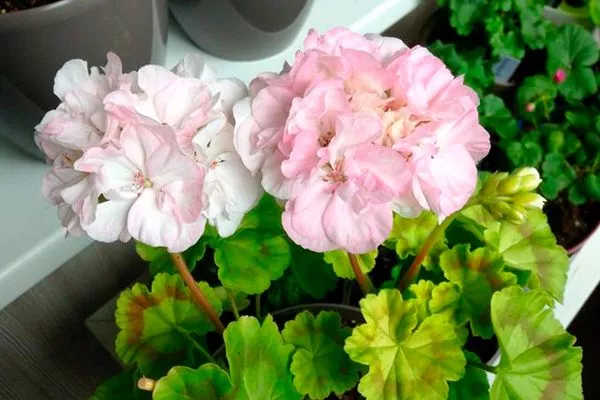
This zonal plant is covered in golden-green foliage with a wide brown zone in the center. The semi-double flowers are a marshmallow shade of white and pink. The constant blooming of these enormous flower heads will leave you captivated.
Advantages of the variety:
- abundant and long-lasting flowering;
- delicate color of petals;
- easy to care for.
The Bold Cloud variety has no disadvantages.
Bold Shades
Pelargonium Bold Shades is popular among gardeners due to its effectiveness. The plant grows small, with a trunk covered in bright green, neatly shaped leaves.
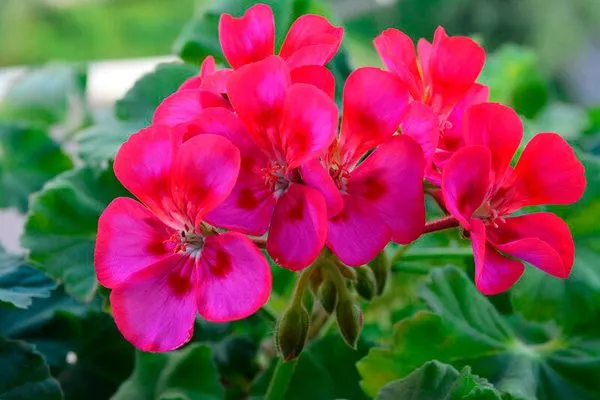
This variety has large, single flowers with an unusual coloring: pink-crimson petals with a thin dark red border and a matching spot on each petal. This beautiful plant will make a real decoration on a windowsill or in the garden.
Advantages of the variety:
- large flowers with interesting colors;
- ease of care;
- resistance to lack of moisture.
According to reviews, the Bold Shades pelargonium has no significant drawbacks.
Romance
Bold Romance is a luxurious pelargonium renowned for its sturdy, beautiful, and fluffy growth habit. It is characterized by the unique arrangement of dense petals within the flower. The flower heads are tightly packed and strong. They are distinguished by their decorative qualities.
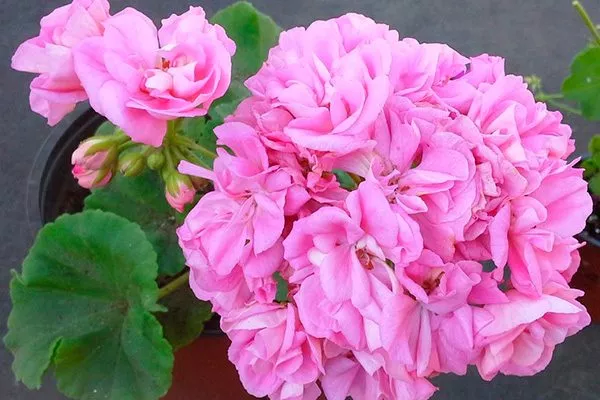
Pelargonium foliage is compact and bright green. The petals are a soft pink, making the plant a real eye-catcher. This subtle coloring makes the flower unparalleled.
Advantages of the variety:
- withstands bad weather and heat well;
- endurance;
- Suitable for windowsill and porch decoration.
Florists note that this variety has no disadvantages.
Elf
Pelargonium Bold Elf is a small miniature plant. It boasts good foliage. The trunk is covered in olive-green foliage with distinctive, narrow zoning.
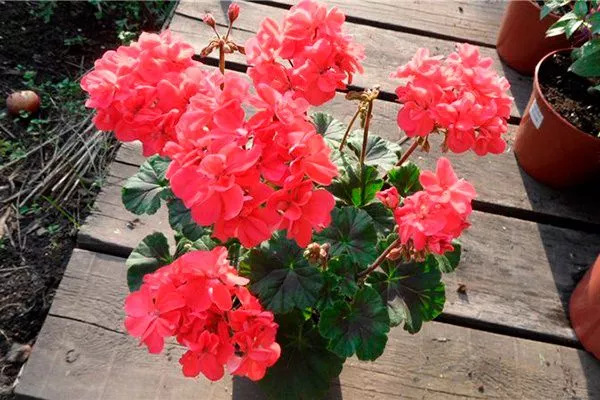
Pelargoniums have large, double flowers, red with a slight orange tint toward the center. They bloom profusely and abundantly, delighting their owners.
Advantages of the variety:
- undemanding in care;
- the opportunity to decorate the windowsill in the apartment and the garden near the house;
- resistance to diseases and pest attacks.
Pelargonium has only positive qualities, and gardeners have not noticed any negative aspects.
Festival
The Bold Festival pelargonium is renowned for its incredible beauty. The flowers on the crown are so numerous that they resemble bright roses. This compact plant blooms profusely and abundantly. The trunk is covered with medium-green foliage.
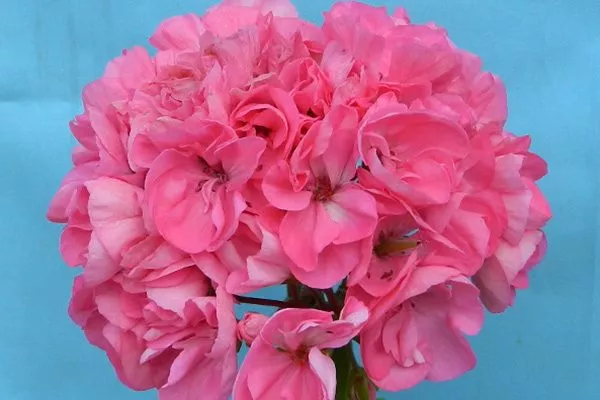
Large flowers with delicate, pink-hued petals make this plant a true queen on a windowsill or in the garden. It's an easy-to-grow plant, requiring little attention from the grower.
Advantages of the variety:
- is distinguished by its effectiveness;
- undemanding to soil;
- weather-resistant;
- long flowering.
This variety has many advantages and no disadvantages at all.
Parade
Pelargonium Bold Parade is a beautiful plant for lovers of red shades. It features large, long-lasting blooms. The bush is standard-sized and easy to shape. The trunk is covered with small emerald foliage.
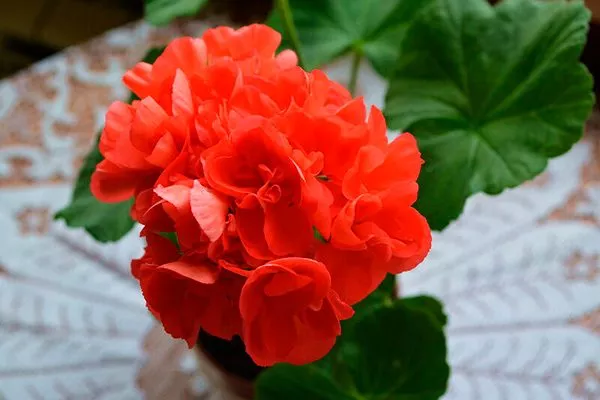
The flowers are bright red, with the undersides of the petals bleached, adding a touch of elegance. The numerous blooms create a lush bouquet studded with vibrant "beads."
Advantages of the variety:
- undemanding;
- strong immunity;
- bright colors.
Gardeners do not notice any disadvantages of the Bold Parade pelargonium.
Joy/bold joy
The zonal pelargonium Bold Joy is easy to care for. It boasts abundant foliage: the stem is covered in medium to large petals, all bright green.
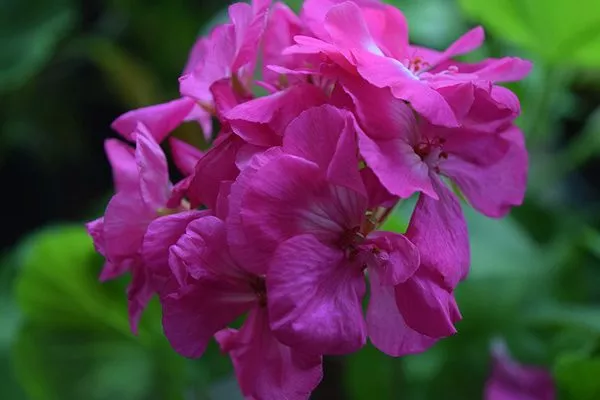
The double flowers, a rich raspberry-pink hue and a white eye, add incredible beauty. This striking plant will brighten any room and fill it with a pleasant aroma.
Advantages of the variety:
- ease of planting;
- petal coloration even in cool conditions;
- strong immunity.
Pelargonium Bold Parade has no negative qualities.
Planting and further care
To plant a pelargonium and ensure it blooms profusely in the future, follow a few rules. Planting and subsequent care will allow you to enjoy beautiful flowers without spending too much time on them.
Planting a plant
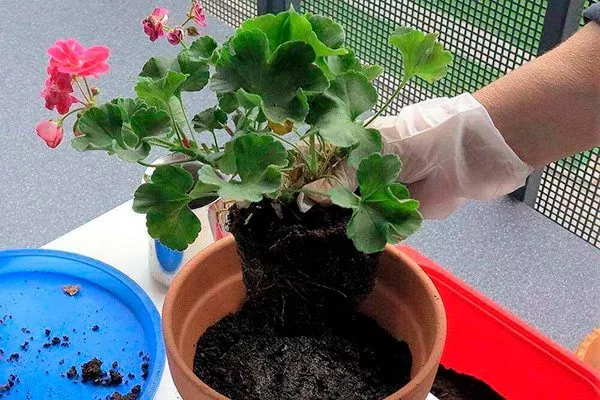
Gardeners believe that purchased pelargoniums need to be repotted immediately because the transport soil is too rich in fertilizers and stimulants. To ensure a smooth repotting process, follow these recommendations:
- Pre-water the plant.
- Remove it and shake off the old soil from the root system.
- Carefully inspect the roots, remove any defects and sprinkle with charcoal.
- Place drainage material in a shallow pot, then cover with expanded clay, then add fresh soil. Fill in the remaining soil without compacting it.
- Water the newly planted plant so that the spaces between the roots are filled with soil.
- ✓ Use only fresh soil, specially prepared for pelargoniums, to avoid infection with diseases.
- ✓ Make sure the drainage layer is at least 2-3 cm to prevent water stagnation.
Watering, spraying
Keep the plant moist, watering it whenever the soil dries out. Avoid overwatering the plant to prevent root rot. the arrival of winter reduce watering.
As for spraying, avoid this process, as it can lead to foliage burn and rot due to moisture accumulation. Pelargoniums require only 1-2 waterings per week.
Top dressing
Continue fertilizing until growth begins. Use the following fertilizers:
- Minerals that consist of nitrogen, potassium and phosphorus, zinc, manganese, boron, iron and copper.
- As an organic fertilizer, gardeners recommend using cow manure humus, but not more than once every 3 years.
You can also purchase fertilizers designed for the Geranium family in a specialized store.
Trimming
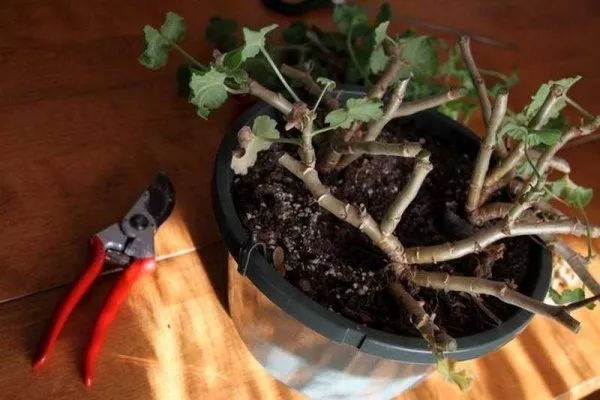
The plant requires annual pruning. Begin this procedure in early spring, as soon as flowering begins. During pruning, remove all upper shoots, which will later be used for propagation. This procedure will allow the pelargonium to grow laterally and bloom profusely.
- Prune in early spring, before active growth begins.
- Remove no more than 1/3 of the shoot length to minimize stress on the plant.
- Use only sterile instruments to prevent infection.
Reproduction
There are several ways to propagate pelargoniums. Explore each method and choose the most suitable one.
Seminal
This method is considered the most popular, as the seeds have excellent germination rates. Follow these recommendations:
- In mid-February, sow small seeds on moistened substrate.
- Sprinkle with a thin layer of soil, moisten and cover with glass.
- Place the container with the seedlings in a warm place. The first shoots will appear in just 14 days.
- Remove the glass and lower the room temperature. Once the first pairs of leaves appear, transplant the plants into individual cups.
By cuttings
The method is renowned for its simplicity and will allow you to obtain a pelargonium that retains all of its varietal characteristics.
Step-by-step instructions:
- Cut the apical shoots so that their length is about 6 cm. Be sure to leave the leaves.
- Allow the cuttings to air out for 1 hour to allow the cut to dry slightly.
- Plant the seedlings in a container with the substrate, then cover with glass. New roots should appear within 14 days.
Diseases and pests
Bold series pelargoniums can be affected by aphids, whiteflies, and spider mites. Insecticides can help control these infestations. Treat all indoor plants and those near the pelargoniums, as they are at risk of infestation.
Pelargoniums often suffer from blackleg, a soil-borne pathogen. Fungicides, such as Fitosporin, help combat the disease. As a preventative measure, disinfecting, freezing, and calcining the soil before planting is recommended.
If only a small part of the roots is affected, carry out treatment:
- Clear the roots of soil and inspect them carefully.
- Remove damaged parts, disinfect.
- Treat with a solution of potassium permanganate or sprinkle the cut area with crushed charcoal.
If the edges of the leaf blades are red, this indicates low room temperatures.
Pelargoniums are considered amazing plants, popular among many gardeners. These flowers make a real home decoration and require little care.