
Pelargonium is a popular houseplant, often called geranium. It's ideal for landscaping balconies, loggias, and patios. It's a flowering plant that can be grown with equal success both indoors and outdoors.
Description of the culture
Pelargonium is a herbaceous or subshrub plant belonging to the Geranium family. This undemanding and sun-loving plant tolerates low moisture levels well. Pelargonium does not overwinter outdoors.
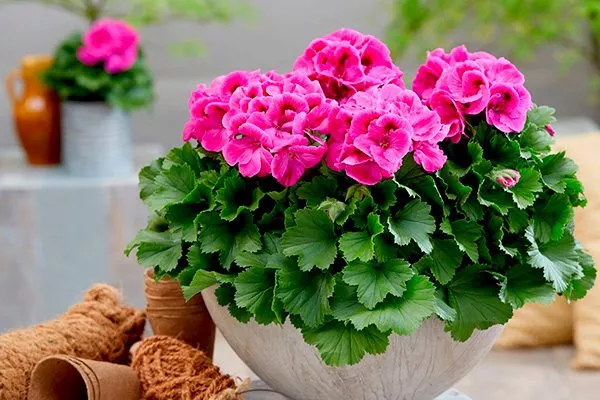
Pelargoniums thrive in tropical climates. A particularly large number of species grow in southern Africa. Pelargoniums range from dwarf species, up to 12.5 cm tall, to giant varieties, up to 1 m tall.
Description of the plant:
- stems - straight or creeping, well branched;
- leaves - simple, palmate or palmate-dissected type;
- flowers - whitish, red or pale pink, individual or collected in umbrella-shaped inflorescences;
- fruit — a capsule with sepals that opens from the bottom up.
Pelargoniums have bright, large, and decorative inflorescences. However, some varieties are grown for the distinctive scent of their leaves. Even if for some reason a flower fails to bloom, it still adds beauty to the home and garden thanks to its beautiful and fragrant leaves.
Pelargoniums were extremely popular 200 years ago and were widely used to decorate aristocratic gardens. People began calling them geraniums. In the USSR, this flower was unfairly called "bourgeois" and "the poor man's rose," and its popularity faded. Today, pelargoniums are once again in demand and are widely used in amateur gardening.
Medicinal properties
Pelargonium is used to produce medicinal raw materials with a wide range of pharmacological effects. However, the plant requires caution—it contains poison and, upon contact with skin, can cause skin diseases.
Pelargonium contains many essential oils, organic acids, calcium, and starch. All parts of the plant, from the flowers to the rhizome, possess medicinal properties.
Useful properties of pelargonium:
- The plant is a powerful antiseptic. Pelargonium leaves placed in pickles help preserve food by preventing the growth of harmful bacteria.
- Prevention of colds. It's believed that the plant with red flowers is best. It's recommended to place pieces of pelargonium leaves in your nose before going outside (or after returning). Pelargonium oil can also be used for this purpose.
- Helps in healing wounds. The leaves are used to make a mushy mass - the dry one is suitable for fresh wounds, while the juicy one helps with arthrosis and rheumatism.
- For the treatment of otitis and runny nose. The juice squeezed from the crushed leaves of pelargonium is dripped into the ears/nose.
How to prepare a healing remedy:
- Infusion/decoction. Pour boiling water over pelargonium leaves and steep in a thermos. Place the leaves in a double boiler for 10 minutes. Infusions and decoctions of geranium leaves are effective for various skin conditions, including dermatitis, ulcers, and eczema. They also help with hair loss, sore throats, and stomatitis.
- Tincture. Fill a jar with leaves, pour vodka over them, and let steep in a dark place for 2-3 weeks. Recommended as a rub for rheumatism.
- Oil. Grind the leaves into a pulp, pour olive oil over them, and let steep for two weeks. Use this mixture for massage.
- Ointment. The juice squeezed from the leaves, mixed with baby cream, use to treat ulcers.
Pelargonium is contraindicated for allergy sufferers as it can trigger an asthma attack.
Are pelargonium and geranium the same thing?
The confusion over the names "geranium" and "pelargonium" arose from a discrepancy in the classification proposed in the 17th century by two leading botanists. Dutchman Joseph Burman classified the plants into separate genera, while Carl Linnaeus, on the contrary, grouped the two plants into a single group.
How are pelargoniums and geraniums similar?
Both geraniums and pelargoniums are members of the Geraniaceae family. These flowers have much in common, yet inexperienced gardeners often confuse them. Many even believe that pelargoniums and geraniums are simply different names for the same plant.
Similarities between geranium and pelargonium:
- The plants are similar in appearance - they have the same stems, leaves, and seeds.
- Both flowers have a specific, easily recognizable scent and brightly colored flowers.
- They have beneficial (medicinal) properties.
- They prefer good lighting.
- Easy to grow and propagate.
What is the difference between pelargonium and geranium?
Not everyone can spot the differences between geraniums and pelargoniums. Only specialists can see them. The fact that geraniums and pelargoniums are distinct plants is confirmed by the fact that they cannot be crossed due to genetic differences.
Differences between geranium and pelargonium:
- Geranium is native to the Northern Hemisphere, while pelargonium is native to the Southern Hemisphere (Africa).
- Geraniums tolerate cold better and bloom even at +12°C. Pelargoniums are heat-loving and can only overwinter at room temperatures; when cold weather sets in, they should be brought indoors. Geraniums, on the other hand, overwinter very well (except in northern regions).
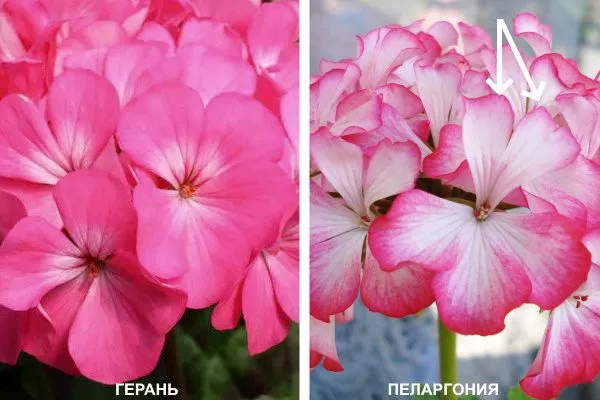
- Geranium flowers consist of 5-8 identical petals. The flowers are usually solitary, but sometimes they are gathered into inflorescences.
 The pelargonium flower has an irregularly shaped corolla—the upper pair of petals is larger than the lower three. Pelargonium flowers are grouped into large inflorescences that resemble umbels.
- Geranium flowers come in a wide variety of shades, but are typically blue and purple. Geraniums are never red, and pelargoniums, conversely, are never blue.
- Geraniums bloom in gardens from June until frost sets in. Pelargoniums, on the other hand, bloom year-round. In summer, they can be placed outside or on the balcony, and when the cold weather sets in, they can be brought indoors to continue blooming.
The most popular species and varieties of pelargonium
Due to their great diversity, pelargoniums are difficult to classify. However, they are most commonly divided into six species, each containing dozens, even thousands, of cultivars.
| Name | Flower type | Leaf color | Care Features |
|---|---|---|---|
| Zonal | non-double/semi-double/double | green with a zone | unpretentious |
| Ivy-leaved (ampeloid) | non-double/double/rosebud | smooth, dense | require regular watering |
| Royal pelargoniums | fringed | wide, jagged | capricious, require lower temperatures in winter |
| Angels | small | small | hardy, fast growing |
| Unique individuals | look like royalty | dissected, fragrant | need pruning |
| Fragrant | small | palmately lobed | grown for their smell |
Zonal
Zonal pelargoniums are the most common type of pelargonium on the planet, with thousands of varieties. Zonal pelargoniums get their name from the presence of a "zone" on their leaves—a different color, shaped like a spot or ring.
Zonal pelargoniums have upright stems and dense foliage. The flowers are gathered in umbel-shaped inflorescences. The leaves are covered with fine hairs and have a distinctive fragrance. They have been cultivated for over 300 years.
Zonal pelargoniums are divided according to the number of petals into:
- semi-double - consist of 6-8 petals;
- non-double - 5 petals;
- double - more than 8 petals.
Zonal pelargoniums, in turn, are divided into several subgroups:
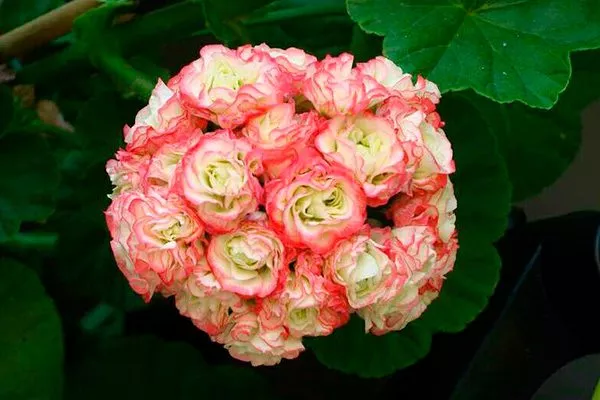
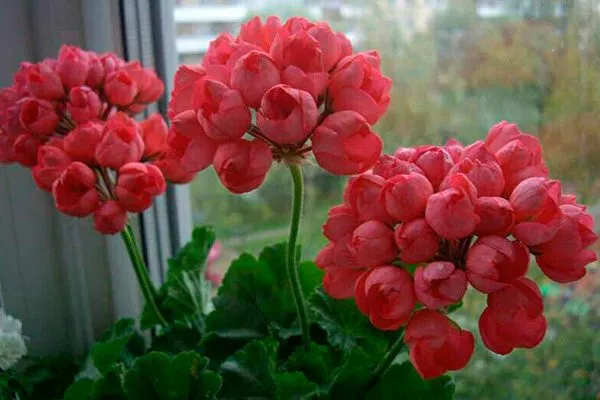
- Rosaceae. Rosebud Zonal pelargoniums are zonal pelargoniums with flowers that resemble roses. Known since the late 19th century, the most famous variety is Appleblossum Rosebud.
- Caryophyllales. This group has large flowers, reminiscent of garden carnations. The petals are serrated. A popular carnation-flowered variety is Diana Palmer.
- Tulip-shaped. These pelargoniums have flowers with 6-9 petals, resembling unopened tulips. They were developed by American breeders in 1966. An example of a tulip-shaped pelargonium is Patricia Andrea.
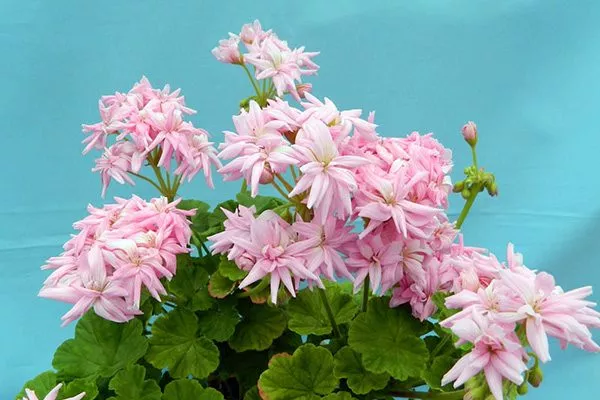
- Star-shaped. These zonal pelargoniums have flowers and leaves that are distinguished by their pointed shape, hence their name, "stellate." The two upper petals of the flowers are distinct from the rest—more elongated than the others. The first cultivars of this group appeared in Australia in the mid-20th century. An example of a star pelargonium is St. Elmos Fire.
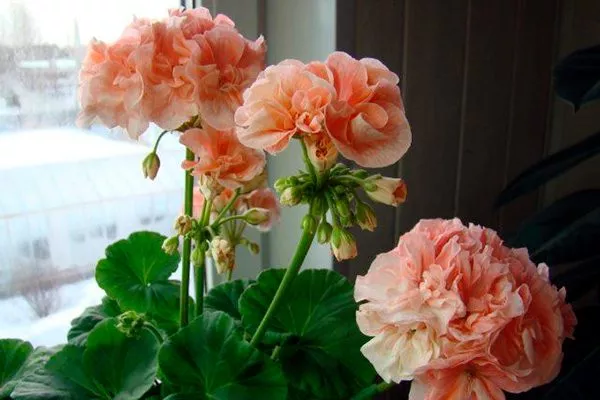
- Deacons. These were created by crossing the zonal pelargonium Orion and the ivy-leaved variety Blue Peter. This subgroup is characterized by compact bushes and abundant flowering. There are varieties with red, orange, and pink flowers. An example of a deacon pelargonium is Deacon Birthday.
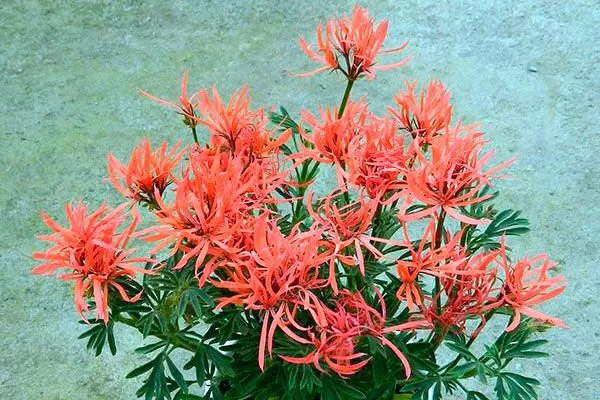
- Cactus-like. These are rare pelargoniums with unusual petals—long, curled, or twisted. They appear to be "shaggy" and resemble cactus dahlias. They have been known since the 19th century, but most cultivars are now lost. An example of a cactus pelargonium is Mrs. Salter Bevis.
Ivy-leaved (ampeloid)
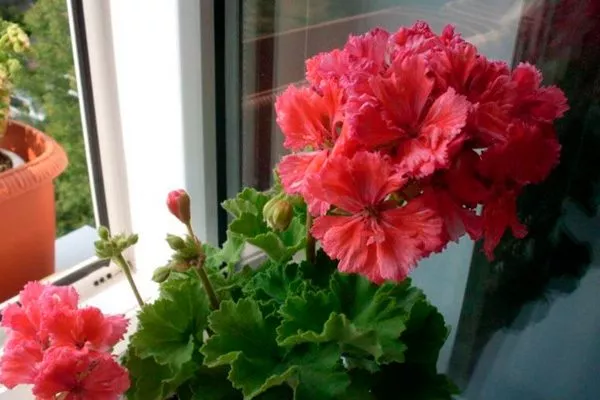
These are trailing plants with drooping shoots that grow to a length of 30-100 cm. They look especially beautiful on balconies and loggias, but can also be grown outdoors as groundcover. They have been cultivated since the late 19th century. The first variety was called 'König Albert.'
Ivy-leaved pelargonium flowers can be:
- terry,
- non-terry;
- rosebud (rose-shaped).
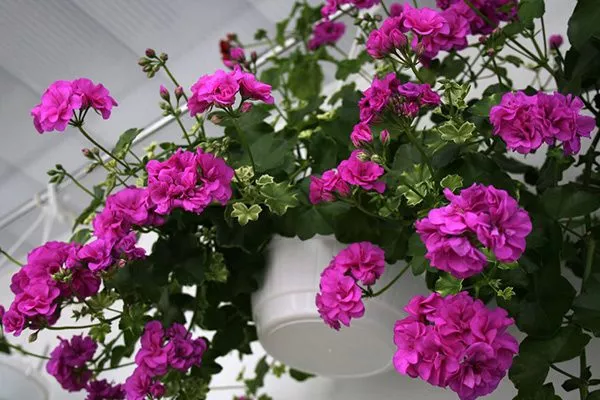
The leaves of ampelous varieties have a smooth surface, they are dense and hard, and resemble ivy leaves in appearance.
Royal pelargoniums
These pelargoniums grow vigorously, reaching a height of 50 cm. They have large, fringed flowers, up to 5-7 cm in diameter. The petals are ruffled. The flowers are not uniform in color; they always have dark spots or stripes on the petals. The upper petals are often darker than the lower ones.
Regal pelargonium varieties typically come in white, burgundy, deep pink, or purple. Their leaves are broad and serrated, somewhat reminiscent of maple. An example of a regal pelargonium is Tunia's Perfecta.
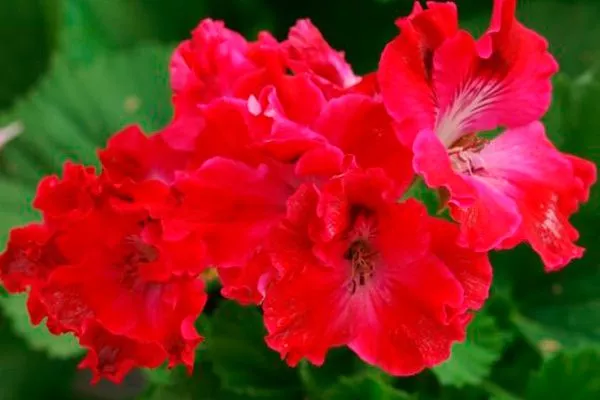
Compared to other species, the regal pelargonium is more capricious and demanding. It blooms for no more than four months—much less than, for example, zonal varieties, which can bloom year-round. For regal pelargoniums to develop flower buds, winter temperatures should be between 10 and 12°C.
Angels
Many gardeners consider these pelargoniums to be part of the regal pelargonium cultivar series. They were developed by English breeders in the early 20th century by crossing regal and curled pelargoniums. Many more Angel varieties and hybrids were subsequently developed. An example is Eskay Saar.
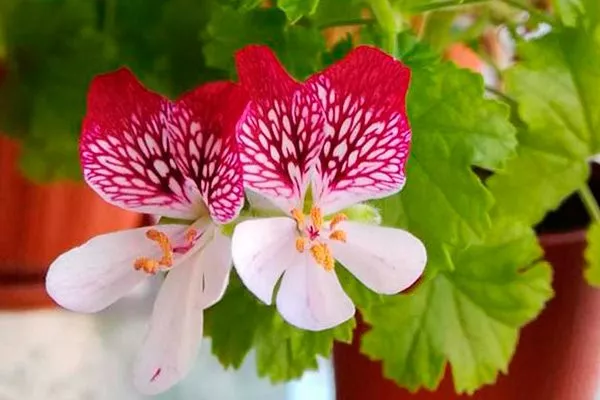
Compared to regal pelargoniums, Angels have smaller leaves and flowers—1-2 cm in diameter—and their stems are trailing rather than upright. Angels' advantages include hardiness and undemanding nature, rapid growth, and drought tolerance.
Unique individuals
Unique pelargoniums are an ancient species of pelargonium, known to gardeners since the second half of the 18th century. They were created by crossing the brilliant and regal pelargoniums. The first variety was called Old Unique. A current example of the Unique variety is Robin's Unique.
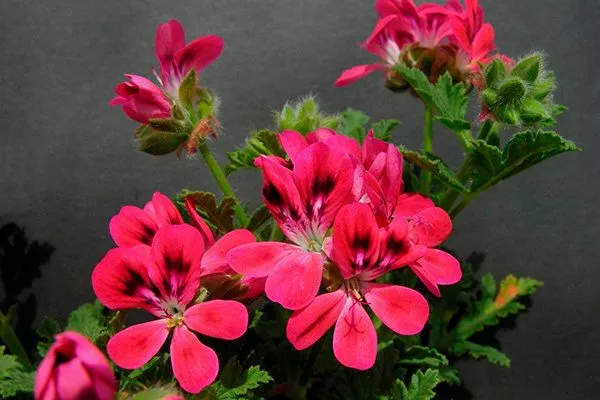
This group produces flowers similar to those of the regal pelargonium. They have dissected, fragrant leaves with unusual nuances in their aromas. "Unicums" reach a height of 50 cm. The plants do not bush out well and require pruning or pinching.
Fragrant
Scented-leaved pelargoniums are a group of varieties united by their ability to exude rich aromas. They vary in shades, but all evoke a pleasant sensation.
Most scented varieties have a modest appearance. They have small flowers, usually white or pink. The leaves are palmately lobed, with angular or wavy edges. The bushes are loose, branched, and can grow up to 1 m in height. An example of a scented geranium is Sarah Jane. This variety has a light fragrance with citrus notes.
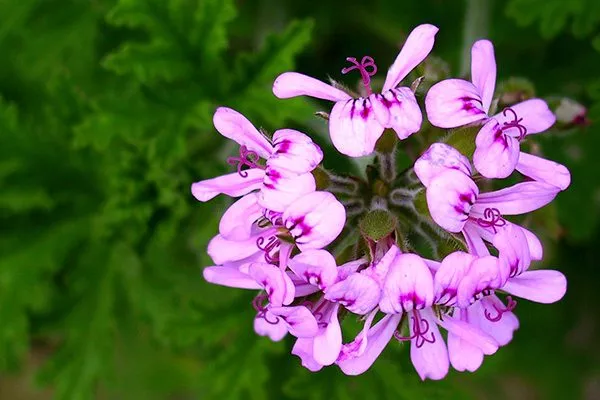
Scented pelargoniums are grown for their fragrance. The leaves of these flowers can smell like apple, peach, verbena, grapefruit, nutmeg, oriental spices, mint, wormwood, and more.
- ✓ For aroma: Choose fragrant varieties with the scent of apple, citrus or spices.
- ✓ For long-lasting flowering: preference is given to zonal and ivy-leaved varieties.
Popular varieties
Almost every type of geranium is represented by numerous cultivars, allowing gardeners to find the perfect one to suit their tastes. Below are some pelargonium varieties that are popular and sought after among indoor gardeners.
| Name | Plant height | Flower color | The scent of leaves |
|---|---|---|---|
| Lara Harmony | 40 cm | hot pink | No |
| Passat | 30 cm | pink-salmon | No |
| Ainsdale Duke | 50 cm | deep red | No |
| PAC Viva Rosita | 40 cm | deep red | No |
| Sarah Hunt | 35 cm | white-pink-salmon | No |
Lara Harmony
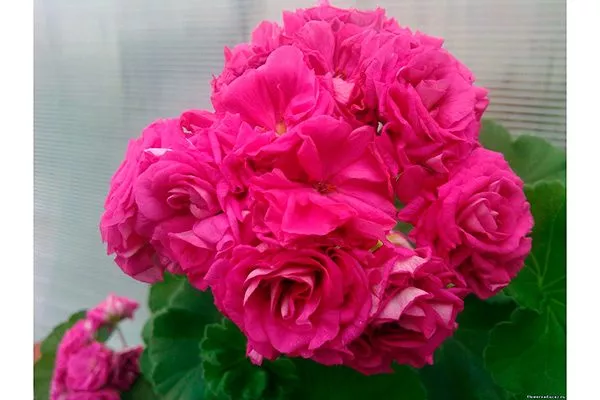
A double rosebud variety for growing indoors, in the garden, or on a balcony. The bushes are compact and fluffy, with large, bright pink flowers. The leaves are bright green, and the stems are upright. It blooms year-round and tolerates frost well. It can be grown outdoors as an annual flowering plant.
Passat
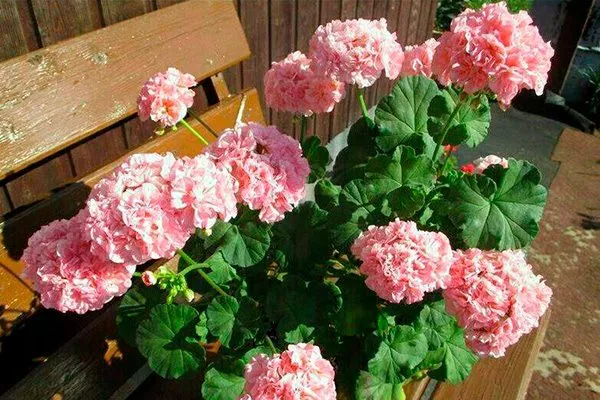
A zonal pelargonium with compact bushes and double salmon-pink flowers. The leaves are variegated, the stems are upright, and the inflorescences are dense and pompon-shaped. Can be grown indoors or outdoors. Tolerates temperatures of 10°C.
Ainsdale Duke
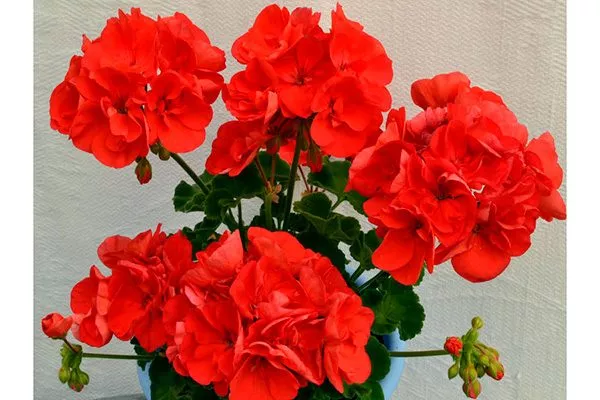
A zonal pelargonium with stocky bushes and umbel-shaped, deep-red inflorescences reaching 10-11 cm in diameter. It can be grown in pots or in the ground. A single inflorescence can contain up to 40 double flowers. Blooming is profuse and long-lasting.
PAC Viva Rosita
A rosebud pelargonium with sturdy bushes reaching 40 cm in height. It produces large inflorescences of double, deep red flowers. The buds resemble buttercups and reach 5 cm in diameter. It requires regular fertilizing.
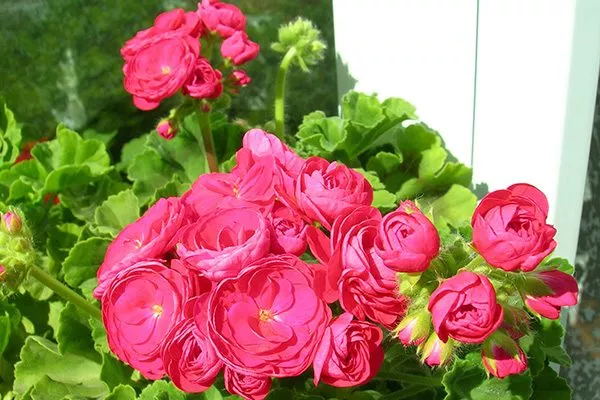
Sarah Hunt
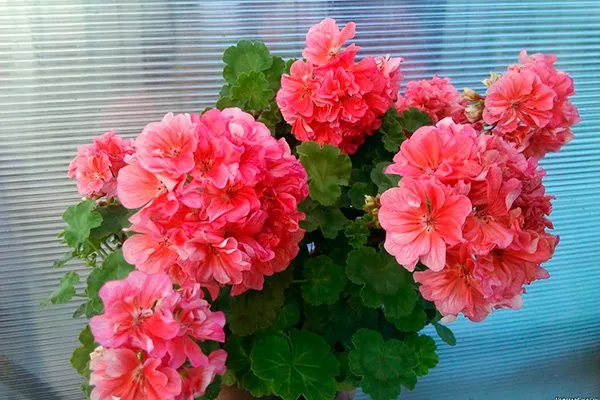
A zonal pelargonium with compact bushes and large, double flowers in white, pink, and salmon. This variety is distinguished by its golden leaves. The two-tone petals have curled edges.
Conditions and care of pelargonium
Pelargoniums are among the most low-maintenance plants. With proper care, they can bloom year-round, delighting their owners with lush blooms.
- ✓ Optimum temperature for flowering: +20…+25°C, decreasing to +10…+12°C for royal pelargoniums in winter.
- ✓ Lighting: At least 6 hours of direct sunlight daily, with protection from midday sun.
Temperature of content
Pelargoniums are heat-loving plants, so the air temperature should not drop below critical levels. Otherwise, the plant will not bloom. If the plant is exposed to cold, its leaves will gradually change color at the edges. The optimal temperature range is between 20 and 25°C.
The exact temperature requirements depend on the species and variety of pelargonium. Some can survive at 6°C, while others require higher temperatures.
To ensure a smooth winter, it's important to ensure good air circulation, so avoid placing flowers too close together. It's also important to thin the crowns of the bushes, otherwise the plant risks contracting a fungal infection.
Lighting
Pelargoniums love light and can grow in direct sunlight. Only a few species are finicky and prefer to grow in less-lit areas, such as terraces or balconies.
Lighting recommendations:
- On windowsills, the plant can overheat if the sun is strong. Therefore, it should be provided with good ventilation and protection from the midday sun.
- If there's insufficient light, pelargoniums turn yellow, their lower leaves dry up and die. Flowering becomes weak or even stops altogether.
Air humidity
Pelargoniums don't tolerate high indoor humidity well. This plant shouldn't be sprayed with water. To create a favorable microclimate, the room where the plant is growing should be regularly ventilated. During warmer months, it's recommended to move the pelargonium outdoors.
Watering
Pelargoniums require moderate and regular watering. The soil shouldn't be too wet, as this can cause root rot. Overwatering can cause diseases, and root rot can occur, making it virtually impossible to save. For the same reason, avoid wetting the leaves.
Pelargoniums are considered drought-resistant. However, you shouldn't allow the root ball to dry out. To check the soil's condition, touch it; if it doesn't stick to your fingers, it's time to water.
Soil
Pelargoniums require fertile and loose soils with an acidity of pH 7 or slightly less.
Recommendations for soil selection and preparation:
- The best option is a special soil mix for geraniums or pelargoniums. You can buy it at a flower shop.
- You can prepare the soil substrate yourself by mixing equal parts of garden soil, sand and peat.
- Disinfect the substrate before use, for example by calcining it in the oven.
- Be sure to place a drainage layer at the bottom of the pot. You can use pebbles or expanded clay for this.
- Loosen the soil regularly, both in pots and when growing in the garden.
In summer, pelargoniums can be brought into the garden; they look beautiful in flowerbeds, among other flowers. Moreover, they don't need to be removed from their pots, to prevent root growth from compromising the lushness of their blooms. Furthermore, potted pelargoniums will not be susceptible to fungal and soil-borne pests.
Pot
Young pelargoniums thrive in a small pot—10x10 cm. Mature plants also prefer containers where their roots can grow all over the soil. Furthermore, you can plant two pelargoniums in one pot—a combination of red and white-flowered varieties will create a striking effect.
Top dressing
To ensure lush and long-lasting blooms, pelargoniums are regularly fertilized—every two weeks. In hot weather, when the plant needs to be watered daily, the weekly dose is divided into seven portions and applied with each watering.
Recommendations for pelargonium feeding:
- In autumn and winter, pelargoniums rest, and during this period, fertilizing is stopped.
- From March-April, the flower begins to be fed with potassium compounds.
- After replanting, the plant should not be fertilized for a while—it needs to adapt to its new location. This takes about a month.
- Pelargoniums don't tolerate organic fertilizers, especially fresh ones. They require mineral fertilizers specifically designed for flowering houseplants.
- It is recommended to feed the plant with iodine water. It is prepared by dissolving a drop of iodine in 1 liter of water. Water the soil only when it is damp, and water it along the sides of the pot to avoid burning the roots.
Transplanting pelargoniums
If the roots of the pelargonium begin to peek out of the drainage holes, and after watering it begins to quickly wither, then it is time to transplant it into a more spacious pot.
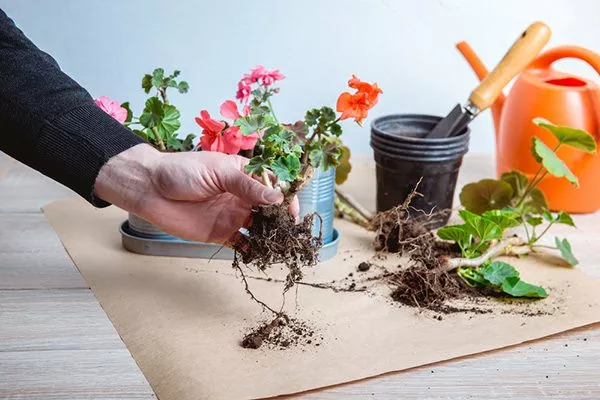
Transplant rules:
- Use a pot 3-4 cm larger than the previous one. Clay pots are preferable.
- Before filling the pot with substrate, pour boiling water over it to prevent the spread of fungal or viral infections that may have remained from the previous plant.
- Don't repot pelargoniums more than once every 2-3 years, as moving to a new location is always stressful for the plant. It's best to periodically top up the pot with soil.
Pruning indoor geraniums
Pelargonium grows very quickly, so it needs to be shaped to make the bushes look neat.
Tips for pruning:
- Carry out the shaping procedure in the fall. Create a low, squat crown to encourage bushy growth. The more shoots you prune, the denser the crown will be.
- In spring, it's recommended to trim the long ends. In summer, don't prune the flower; just remove faded blooms, as they drain the plant of water and nutrients.
Zonal pelargoniums, which are the most popular species today, especially require pruning; they are the ones most often found on windowsills and balconies.
Reproduction of indoor pelargonium
Pelargoniums can be propagated vegetatively and by seed. The former method allows for the fastest possible production of new flowering plants, making it the preferred method among gardeners.
Cuttings
This is the simplest method of propagation, allowing you to fully preserve the varietal characteristics of the parent plant.
Breeding rules:
- Take cuttings from the tops of mature plants. Make the cuts at an angle and sprinkle them with crushed activated charcoal.
- The length of the cutting is 7-10 cm, it should have 4-5 leaves.
- Leave the cuttings in the air for 2-3 hours, and then plant them in a moistened substrate.
- Do not water the cuttings for 24 hours after transplanting, and then give them a few drops of water to prevent rotting.
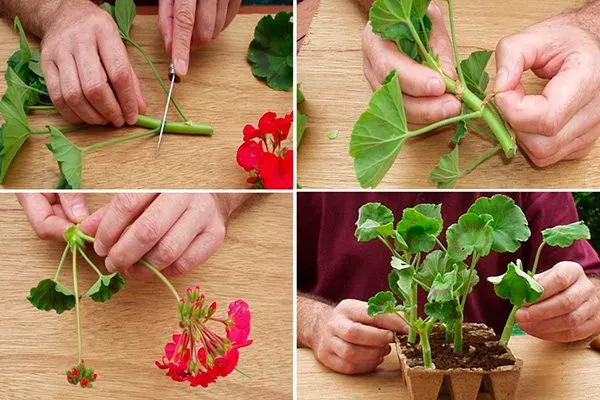
The cuttings will begin to root within a month. They are transplanted into individual pots and cared for like adult plants.
Propagation by seeds
It's generally accepted that pelargoniums grown from seeds bloom more profusely than those grown from cuttings. However, this method is quite labor-intensive and requires time and patience. Purchase seeds only from reputable flower shops.
How to grow pelargonium from seeds:
- Sow seeds in January-February.
- Place the seeds in a container on the moistened substrate and cover with a lid. Or use another container and plastic wrap or glass instead of a lid.
- Place the seeds in a warm, dark place and keep them at a temperature of 25°C. Seedlings will appear within a week.
- When the first leaves appear on the seedlings, transplant them. Reduce the temperature to 16–18°C.
After 2 months, transplant the seedlings into separate pots and care for them like adult pelargoniums.
Dividing the bush
Only mature plants are propagated this way. The bush is divided into roughly equal parts. The plant is removed from the pot, the soil is shaken off, and the roots are cut in half with a sharp knife. The cuts are sprinkled with charcoal, and each part is repotted in a separate pot.
Winter maintenance
Indoor pelargoniums don't have a distinct dormant period or leaf shedding. They simply require less water and bloom less frequently. During this period, pelargoniums are watered once every 10 days and not fertilized. Temperatures are lowered to 20°C during the day and 13°C at night.
Diseases
Pelargoniums don't get sick often, and most of their illnesses are caused by violations of growing rules and maintenance conditions.
The most common diseases of pelargonium:
- Blackleg. The causative agent is a fungus that causes the stem to turn black. The cause is frequent watering and cold. The plant will die; there is no cure. The bush and soil must be destroyed, and the pot disinfected.
- Gray mold. A gray coating (mold) appears on the leaves, and dark spots appear on the stem. This is caused by overwatering, heavy soil, or poor drainage. Treatment involves spraying with fungicides, such as Fundazol.
- Leaf rust. Accompanied by the appearance of yellow-red spots, the cause is high indoor humidity. Treatment includes Oxychom, Abiga Pik, and other medications. Biological products such as Fitosporin are ineffective against rust.
- Powdery mildew. This fungal disease causes the leaves to become covered with a whitish coating. The leaves then dry out, and the plant stops growing. Causes include overfeeding and/or high humidity. Treatment is with Oxyhom or its equivalent.
Pests
The scent of pelargonium leaves is disliked by many insects. For this reason, it is even used as a repellent, placed near plants susceptible to pest attacks. However, some insects, such as spider mites and whiteflies, are not bothered by the scent of the leaves. In these cases, the plant should be sprayed with Actellic, Actara, Fufanon, and other insecticides.
Other problems with indoor geraniums
Growing geraniums usually doesn't cause any problems if you care for them properly. The most common symptom of this plant's leaves turning yellow.
What problems can pelargoniums have?
- leaves turn yellow and dry out - lack of moisture;
- the tops have become loose and damp - too frequent and abundant watering;
- the leaves have turned red - the air temperature is too low;
- the tops have a pink tan - caused by sun exposure;
- the leaves fall off and the lower part becomes exposed - not enough light;
- It doesn't bloom - the air temperature is too high.
Pelargonium is a beautiful plant that will enhance any room, flowerbed, or balcony. All pelargoniums, regardless of species or cultivar, bloom profusely and for a long time, adding beauty to homes and gardens. Properly care for them, and they will delight you with their blooms for a long time.
How interesting, thank you!
A very beautiful flower, now I want to buy one like this for my collection!