
PelargoniumOften confused with geraniums, the geranium is considered one of the most popular houseplants. In Russia, this heat-loving plant has been grown on windowsills since the 19th century, and its main advantage is its vibrant and lush blooms. If the plant doesn't bloom, it's important to quickly identify the cause and take appropriate measures.
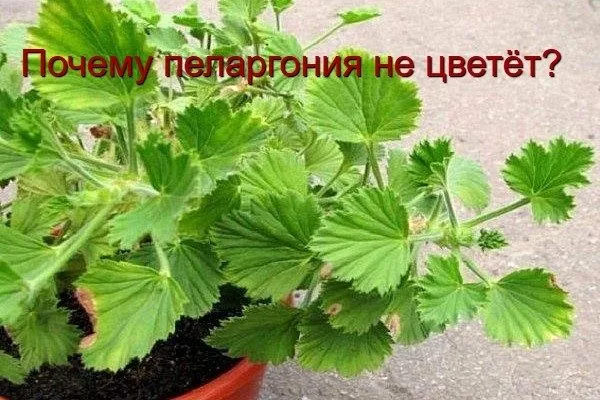
1. Lack of light
If your pelargonium is located in partial shade or on a north-facing window, it may lack the energy to produce buds. Moving the pot to a brighter location—for example, on a south- or east-facing window—can solve this problem.
When moving pelargonium pots closer to the light, it's important to remember that either too much direct sunlight or too little can negatively impact the plant's health. Firstly, it can cause leaf burns, and secondly, it can inhibit flowering.
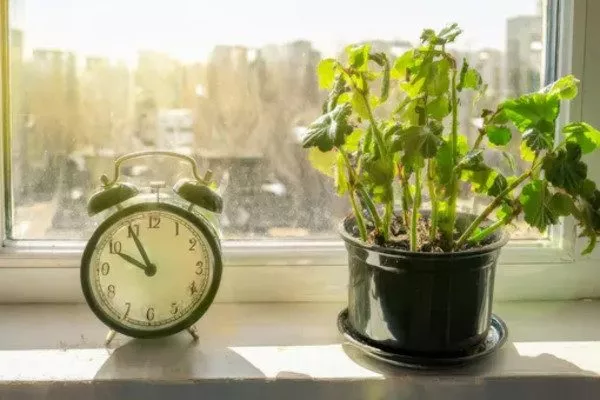
If this situation occurs, you need to place the pots where the plant will receive bright, but diffused light.
2. Inappropriate pot
Most often, the lack of flowering in pelargoniums (Pelargonium spp.) is due to an improperly selected pot. The onset of flowering in pelargoniums is not directly dependent on lighting or fertilizing—the stage of root development is crucial.
What does the volume of the pot affect:
- intensity of growth and development of shoots;
- ability to resist pathogens;
- abundance and duration of flowering.
If a plant is planted in a pot that's too large, it will bloom only after it's filled the entire container. In this case, the pelargonium will only continue to grow shoots and leaves. Disadvantages of large pots for pelargoniums:
- the plant spends energy on developing space, not on flowering;
- the risk of over-watering and the development of root rot increases - due to the large volume of substrate, moisture can linger in the lower part of the container for a long time;
- The air exchange in the substrate deteriorates, which means the roots don't receive enough oxygen and their metabolism is disrupted.
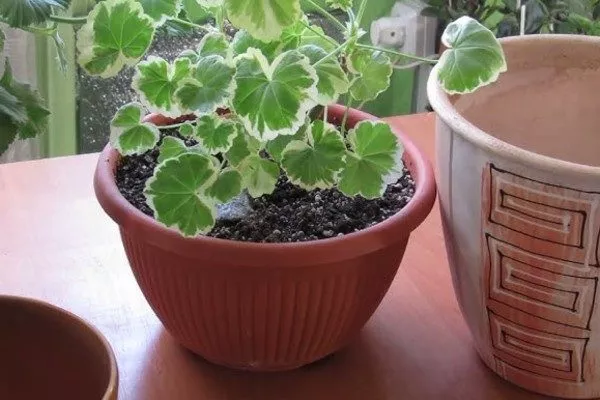
The size of the pot is selected taking into account the shape of the pelargonium:
- Standard flower. Mature pelargoniums reach a height of 50-60 cm. These plants require pots of 1-1.2 liters. The optimal diameter is 12-14 cm.
- Dwarf flower. The bushes reach a height of 30 cm by the age of 2-3 years. Suitable pots are 0.6-0.8 l and 10-12 cm in diameter.
- Mini pelargonium. It requires a 0.25-0.5 liter planting container. The optimal diameter is 8-10 cm.
3. Unsuitable soil
Pelargoniums are sensitive to nutrient deficiency and waterlogging. Either of these problems can be caused by using a poor-quality substrate. This can result in a lack of flowering.
Pelargonium requires a substrate that has a certain nutritional value, air permeability and moisture-holding capacity.
What should the substrate for pelargonium be like?
- loose;
- neutral or slightly acidic (pH 6.0–6.5);
- containing a set of organic and mineral components.
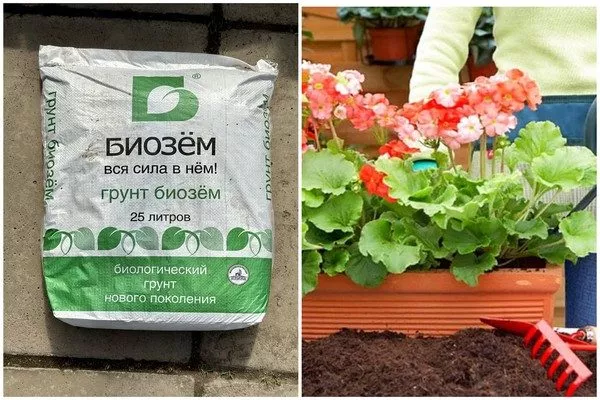
For pelargoniums, it's recommended to use ready-made soils. For example, the "Biozem" substrate is suitable, consisting of high-moor peat, perlite, coconut fiber, and a complex of macro- and microelements. It has a balanced composition and is ideal for pelargoniums.
4. Overwatering in winter
It's important to remember that pelargoniums are native to South Africa. They tolerate drought well, but do not tolerate dampness. Overwatering quickly leads to root rot. When growing pelargoniums, it's crucial to avoid waterlogging and stagnant water in the planting trays.
If pelargoniums are kept indoors during the winter, watering should be cut in half. If normal, "summer" water levels are maintained, the plant will not bloom.
5. Incorrect feeding
Overfeeding is just as harmful to pelargoniums as underfeeding. Overfeeding disrupts the nutrient balance necessary for bud formation, which can lead to a lack of flowering.
How does overfeeding affect pelargonium?
- The growth of green mass is stimulated at the expense of flowering. Excess nitrogen can lead to hypertrophy of the plant—leaves grow excessively large. Plant shoots become soft and excessively elongated.
- Natural processes in plant tissues necessary for bud formation are disrupted. Excessive fertilization in the fall can slow down or even stop pelargonium flowering.
To solve this problem, it is recommended to reduce the amount of nitrogen in fertilizers. Replace ammonia and urea nitrogen with phosphorus-potassium fertilizers high in micronutrients.
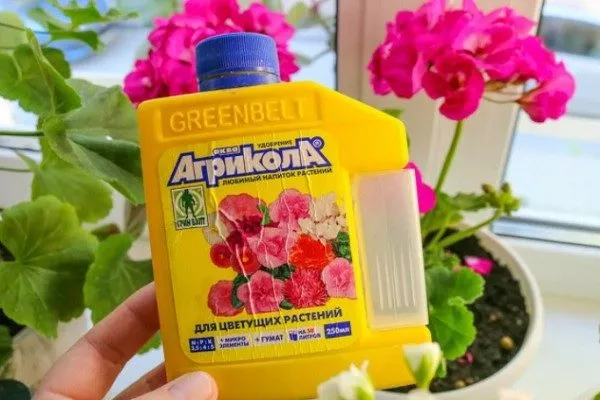
Fertilizing is recommended only during the active growing season (spring-summer). It's best to use special formulations for flowering plants (such as Agricola). Phosphorus is especially important for flowers, as it promotes bud formation. The approximate frequency of fertilizing is once every two weeks. Follow the dosage instructions on the packaging.
6. Diseases
If spring and summer are cool and damp, and the weather is often cloudy, the risk of fungal diseases, which weaken the plants, increases. If appropriate measures are not taken promptly, the pelargonium will not only stop blooming but may also die quite quickly.
If your pelargonium looks yellowed and drooping, find out the reasons for its ill health and how to treat it. Here.
Powdery mildew
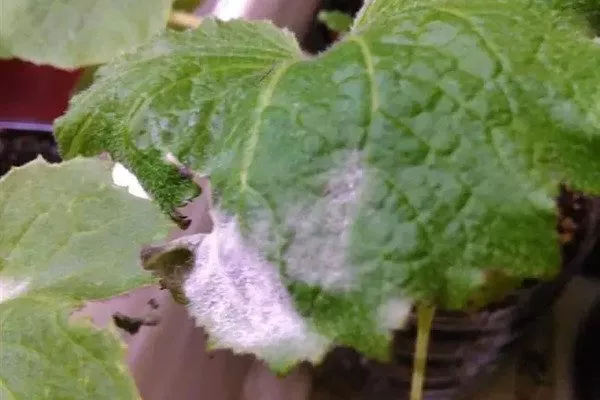
This fungal disease, which causes a grayish coating to appear on the leaves, weakens the pelargonium, potentially causing it to stop blooming. Over time, the above-ground parts, coated with a powdery coating, become deformed, yellow, and curl.
Powdery mildew typically develops in high humidity, particularly during warm, rainy weather during the active growing season. Shading also promotes disease development. The pathogen (fungus) is easily spread by wind and by contact.
Rust
The disease is caused by a fungus and is characterized by the appearance of yellow-brown spots on the leaves, which subsequently dry up and fall off. In severe cases, rust leads to stunted shoot growth and reduced or absent flowering.
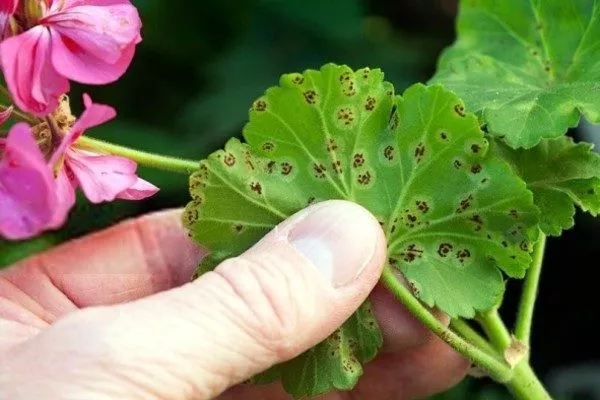
Rust development is promoted by damp conditions and stagnant air. Infected leaves should be removed and destroyed immediately. Diseased pelargoniums should be isolated from healthy plants, repotted, the soil changed, and quarantined for two weeks.
To combat rust, systemic fungicides are used, for example, Topaz, Baktofit, Fitosporin or their analogues.
Root rot
Caused by a fungal pathogen, it attacks stems, leaves, and roots. It begins with yellowing and leaf drop. If left untreated, the entire plant soon turns yellow.
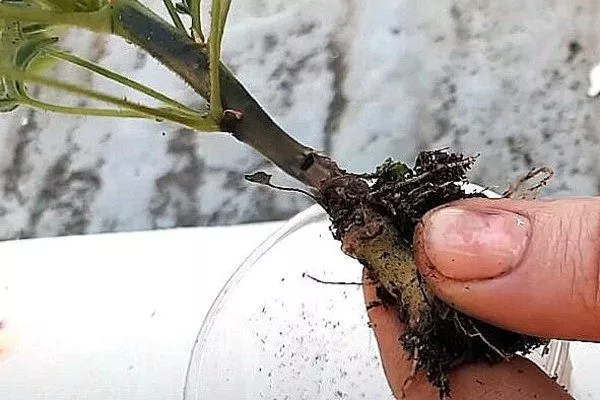
It arises from overwatering and contaminated soil. The disease ends with root death, stunted growth, and blackening of the trunk. After this, the plant can no longer be saved.
7. Pests
Pelargoniums have a distinctive scent that repels many insects. However, some pests are not bothered by this scent and feed on the plant's sap. Due to insect damage, pelargoniums may lose vitality and fail to bloom.
Most often, pelargonium is affected by pests:
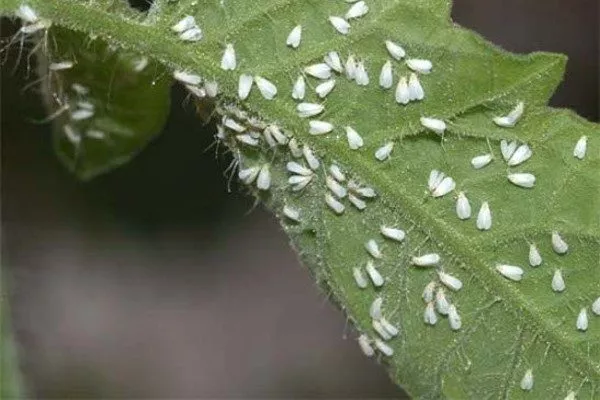
- Whitefly. Larvae and moths feed on the plant's sap. The leaves turn yellow, become deformed, and sticky, and growth slows. To control the pest, use a soap solution (1:6) and insecticides such as "Aktara" or "Biotlin."
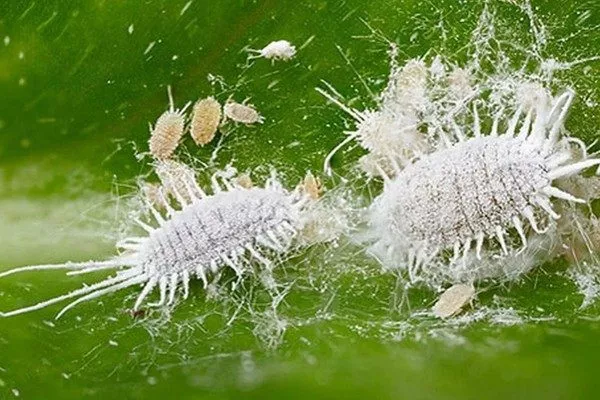
- Mealybug. This small pest also feeds on plant sap. Clusters are typically found where leaves join the stem. For minor infestations, use a solution of 20 ml of alcohol and soap diluted in hot water. For larger infestations, use insecticides such as Fufanon-Nova.
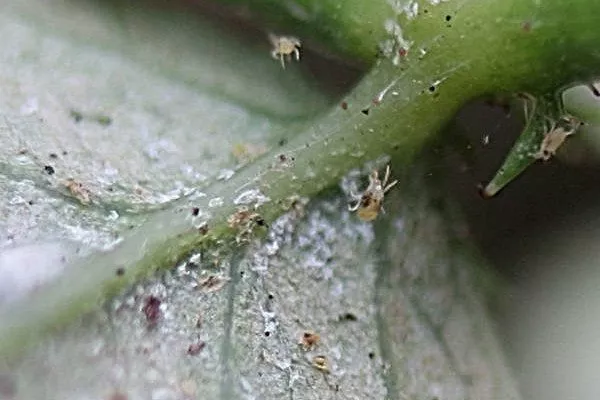
- Spider mite. The pest entangles shoots with a fine web, causing the leaves to curl inward. The pest usually appears when the air is too dry. Plants affected by the mite are sprayed with acaricides, such as Envidor or Fitoverm.
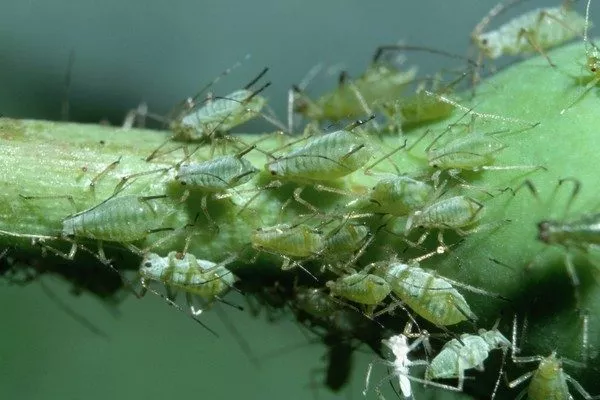
- Aphid. It sucks the juices from leaves, flowers, and young shoots. Pelargonium leaves curl and fall off. The plant should be sprayed with an insecticide, such as Fitoverm.
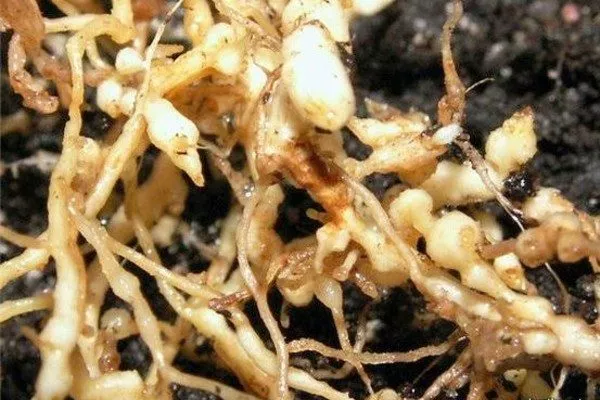
- Nematodes. These barely visible worms (1-2 mm) attack plant roots. The plant becomes stunted, its growth slows, the leaves become smaller, and flowering becomes sparse or stops altogether.
Regular inspections will help prevent insect pests from appearing on your pelargonium. This is especially important during bud formation, as the risk of aphid infestation increases during this period.
8. Poor ventilation
Pelargoniums may stop blooming or fail to bloom at all if they don't receive enough fresh air. A lack of oxygen in the plant's tissues disrupts cellular respiration, which impairs the absorption of water and minerals. As a result, the growth and development of buds slows, and existing buds may fall off.
Proper ventilation can help improve the situation. This is especially important for greenhouses and winter gardens, where stagnant air significantly increases the heat load. In rooms with consistently high temperatures—around 30°C—air conditioners and fans can be used, for example.
9. No pruning
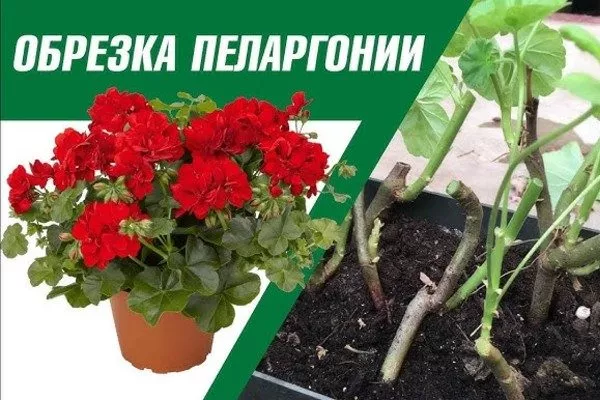
Without pruning, pelargoniums begin to stretch, their stems becoming bare, and they end up with critically few leaves. The flower's blooms become less pronounced, and over time, if appropriate measures aren't taken, they may stop blooming altogether.
Pelargoniums are pruned no more than twice a year—in spring and fall. Proper pruning rejuvenates plants, creates a compact crown, increases the number of reproductive organs—buds and flowers—prolongs the plant's life cycle, and makes it more decorative.
10. Heat
The optimal temperature for pelargoniums ranges from 18 to 21°C. Excessively high temperatures—over 25°C—stress the plants, resulting in stunted growth and cessation of flowering.
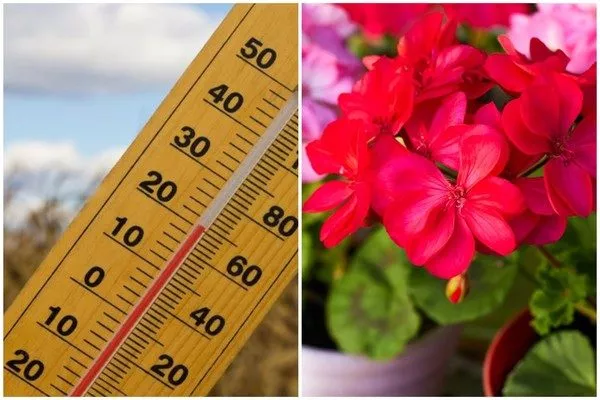
Reasons for flowering to stop during hot weather:
- The roots are overheating. High temperatures cause the root system to simply stop functioning and small roots to die.
- It's decreasing activity of phytohormones.They are responsible for cellular respiration and photosynthesis. Heat disrupts metabolism, which can delay flowering.
- Burns appear on the leaves. Due to damage, photosynthesis is disrupted and the flowering process is suppressed.
In hot weather it is also recommended:
- water pelargonium in the evening;
- Do not feed plants in hot weather - the roots, already under serious stress and not coping well with their tasks, can be burned by fertilizers;
- increase ventilation and air circulation.
There are many reasons why pelargoniums stop blooming, which is, in fact, their main advantage. If you follow proper gardening practices, regularly inspect your pelargonium, and take appropriate measures promptly, they will bloom for the entire time nature intended.