
Orchids are beautiful, delicate flowers that are so beloved by homeowners, which is why they grow them. Before buying an orchid, be aware of the diseases it can be susceptible to. Pests can also attack the plant. There are ways to combat parasites and diseases, as well as preventative measures.
The main diseases of orchids
Orchids can be susceptible to various diseases, including fungal and viral ones. We suggest you review the common orchid diseases and learn about treatment methods to prevent the plant from dying.
Anthracnose
The disease appears on the leaves, and less commonly on the pseudobulbs. You can recognize anthracnose by the small, round, but distinct brown spots that can enlarge and merge over time. Indentations gradually form.
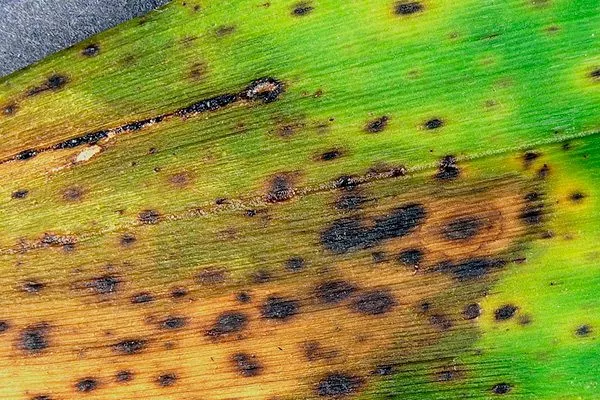
The plant is susceptible to this disease due to excessively high humidity, stagnant water in the leaf axils, or the core of the pseudobulbs. Anthracnose is caused by a fungus.
What to do:
- Cut off and burn the affected areas.
- Treat the cut areas with activated carbon or ash.
- Use copper-containing products (Hom, Horus). Treat the plant three times, 10 days apart. After this, reduce watering and do not fertilize.
- ✓ Use only hardwood ash, excluding oak and walnut, due to their high tannin content.
- ✓ Ash should be sifted through a fine sieve to remove large particles and coals.
- ✓ To prepare the solution, mix 200 g of ash with 1 liter of hot water, leave for 48 hours, stirring occasionally.
Fusarium
A disease that causes yellowing of leaves, with spots forming on them. The disease also affects young shoots. The leaf blades become soft, curl, and may become covered with a pinkish coating.
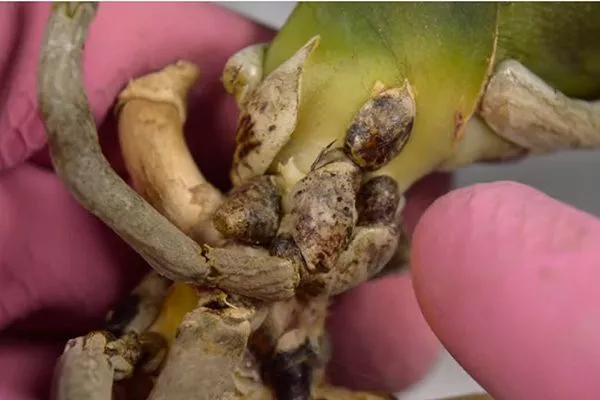
Most often, the cause of fusarium formation is a lack of oxygen circulation in the room and high humidity levels.
How to solve the problem:
- For 10 days, treat the orchid with a solution of Fitosporin-M, immersing the pot with the plant in it three times a day.
- At first, do not spray the flower, so as not to provoke the rapid development of the disease.
- Ventilate the room more often, but make sure there are no drafts.
Rhizoctonia or brown rot
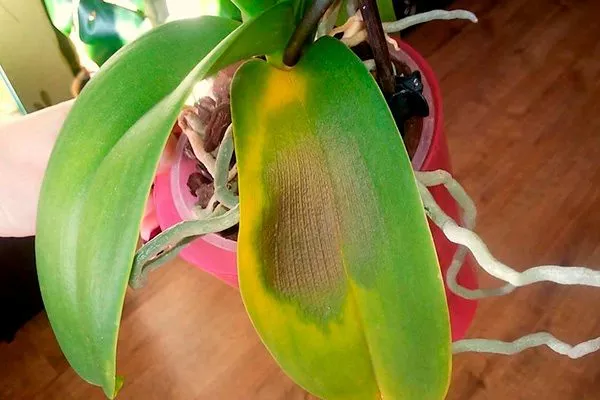
An infectious fungal disease caused by the fungus Rhizoctonia soloni. The plant's roots become dark, compressed, dry, and curled, while the tips turn black. In severe cases, the leaves become covered with brown, wet spots with a yellow border.
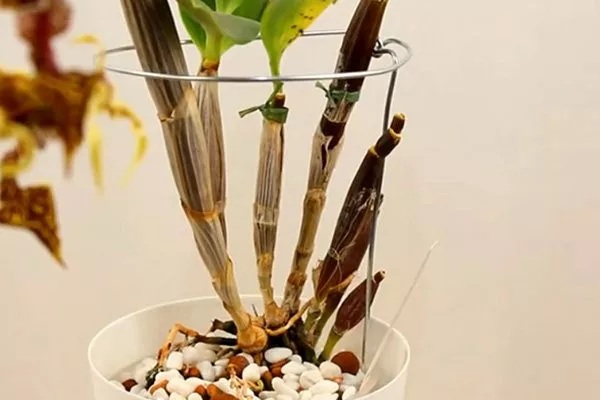
If treatment is not promptly initiated, the rot progresses to the growing point, resulting in the death of the orchid. Rhizoctonia typically affects plants in winter, during the dormant period, or due to insufficient light. The disease also occurs due to excessive soil moisture or a weakened immune system.
Fungicides can combat brown rot:
- Fizan-20. Dissolve 10 ml of the preparation in 1 liter of warm water. Soak the roots for half an hour, then apply to the foliage.
- Fiton 27. Dilute 5 ml in 4 liters of water. Soak the roots and apply to the plant.
- Copper sulfate. Use the powder to dust the affected areas, or dilute according to the instructions and treat the entire plant.
- Colloidal sulfur. Apply in the same way as copper sulfate.
| Preparation | Concentration | Exposure time | Efficiency |
|---|---|---|---|
| Fizan-20 | 10 ml/1 l | 30 min | High |
| Fiton 27 | 5 ml/4 l | 30 min | Average |
| Copper sulfate | According to the instructions | Before drying | High |
Powdery mildew
All indoor orchids are equally susceptible to this disease. When infected, the plant's leaves and buds become covered with a white coating. The affected areas eventually dry out, and ultimately, the flower dies.
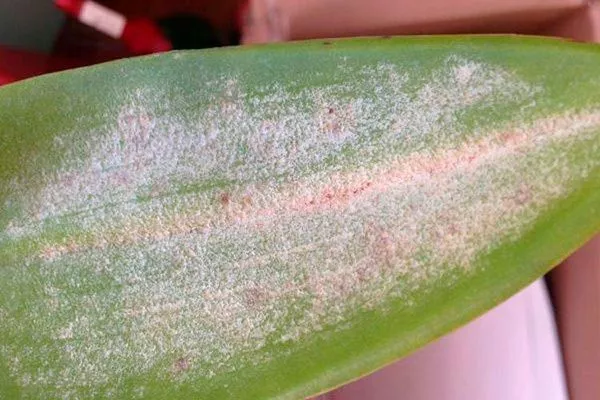
The disease develops due to high humidity and high air temperatures. These conditions are called the greenhouse effect.
Begin treatment as soon as you notice signs of powdery mildew. This will reduce the risk of plant death. Control methods:
- Use a colloidal sulfur solution. Dust the affected areas with the powder, or dilute it according to the instructions and apply it to the entire plant.
- Use Baktofit according to the instructions.
Root rot
Root rot causes orchid leaves to turn brown, and the roots to rot and soften. The disease is typically caused by excessive temperature and humidity.
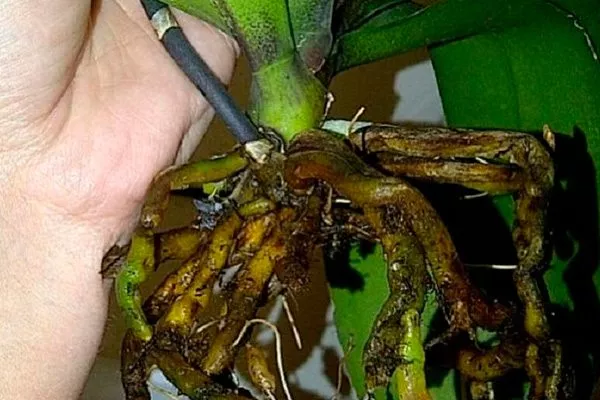
How to solve the problem:
- Create favorable conditions for keeping the orchid.
- If root rot is detected, treat the roots and substrate with a solution of Fitosporin-M or Trichoderma Veride. Achieving positive results requires three treatments, spaced 10-14 days apart.
Heart rot or crown rot
Heartwood rot is considered rare, but it does occur. Typically, crown rot is caused by some kind of infection.
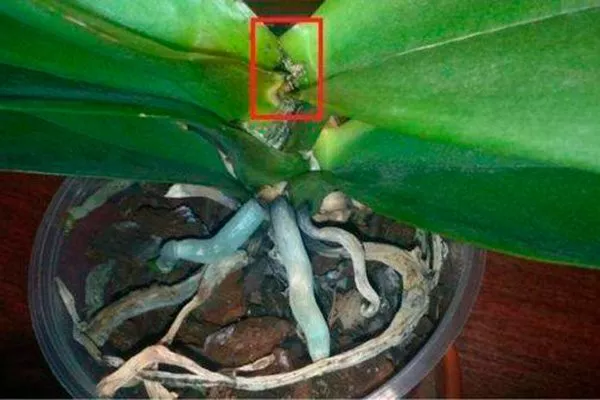
Sudden temperature fluctuations also have negative consequences – the leaf blades become damaged, allowing pathogenic microorganisms to enter. To avoid this problem, first and foremost, follow proper plant care and hygiene.
Prevention:
- Provide stable lighting, temperature and humidity.
- Remove any water that has accumulated after watering from the core.
- Water the plant only when the substrate is completely dry.
- Ventilate the room regularly.
Black rot
A fungal disease in which the plant becomes completely covered in black rot and begins to wither. Typically, the disease is caused by too low a temperature or a weakened immune system due to pest attacks.
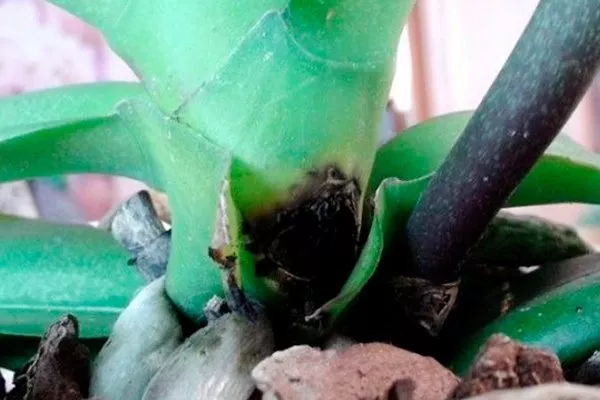
How to combat black rot:
- Remove the affected areas down to healthy tissue with a sharp knife or scissors.
- Treat the affected areas with charcoal or Bordeaux mixture.
- Remove the substrate and sterilize the pot.
- Replant the orchid and create favorable conditions for it.
Gray mold
The disease manifests itself as dark spots covered with a gray, fluffy coating. They first appear on the leaves, then on the soil surface, and eventually cover the flowers. Brown specks also appear on the flowers.
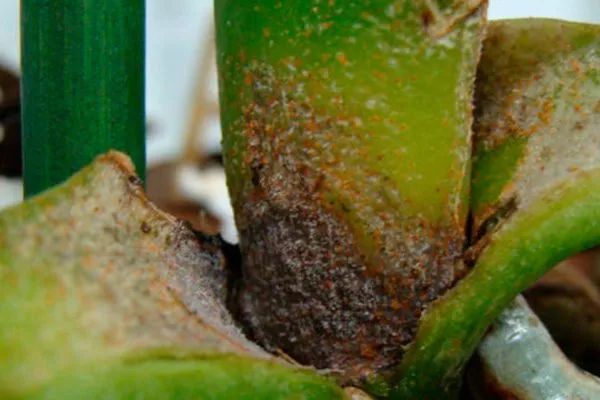
Gray mold is a result of improper plant care. It is caused by low temperatures and high humidity. However, orchids can also be susceptible to the disease due to excessive application of high-nitrogen fertilizers.
How to eliminate the disease:
- If the orchid is severely damaged, remove the damaged areas, then spray with fungicides, for example, Sporobacterin, according to the instructions.
- When watering, use special preparations that will increase its resistance to diseases.
Brown spot or bacterial spot
Brown spot appears on shoots and young leaves as light brown, water-stained spots. Over time, these spots grow larger, darken, and merge with each other. Overwatering and low temperatures accelerate the disease process.
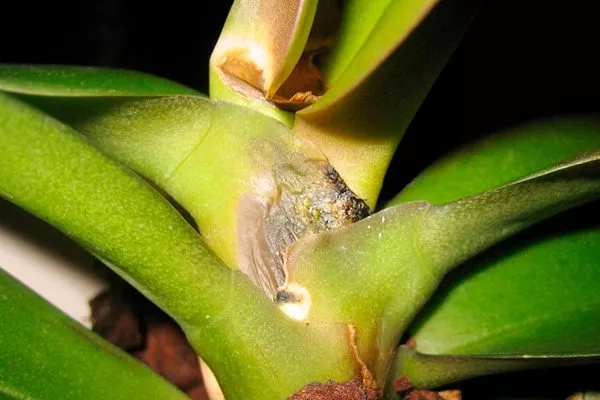
If the plant is only minimally damaged, it can be revived:
- Cut away the affected areas down to healthy tissue. Sprinkle the cut areas with charcoal and treat with Bordeaux mixture.
- After the “operation”, keep the orchid in good conditions.
If the infestation is severe, it's virtually impossible to cure the plant. As a preventative measure, spray the orchid with copper sulfate once a month.
Sooty mold
Sooty mold spores are caused by pests such as scale insects, mealybugs, and aphids. These insects leave sticky secretions, clogging the pores and disrupting photosynthesis. This is how the fungal infection develops, causing a black coating to form on the plant.
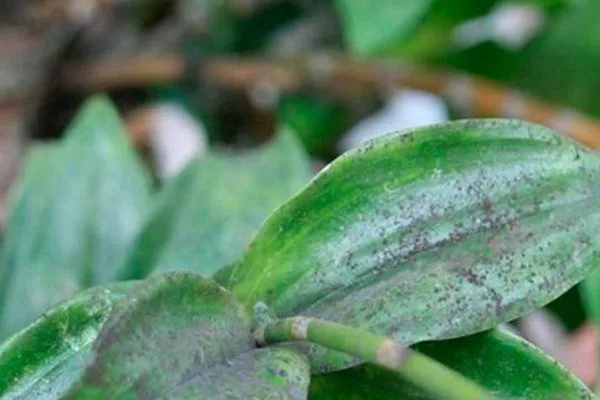
Conduct comprehensive treatment:
- Wash the leaves for 6 days after you notice the disease.
- Trim off the affected areas.
- Treat the orchid with an insecticide twice, 10 days apart. Recommended products include Hom, Ridomil, and Topsin M.
To prevent this, maintain the indoor humidity level required for orchid cultivation. Provide the plant with adequate lighting and ventilation, and regularly inspect for pests.
Rust
Considered a rare disease, it causes yellow-brown spots on the leaves. Rust appears as a result of high humidity, high peat and humus content in the soil, and failure to observe quarantine regulations.
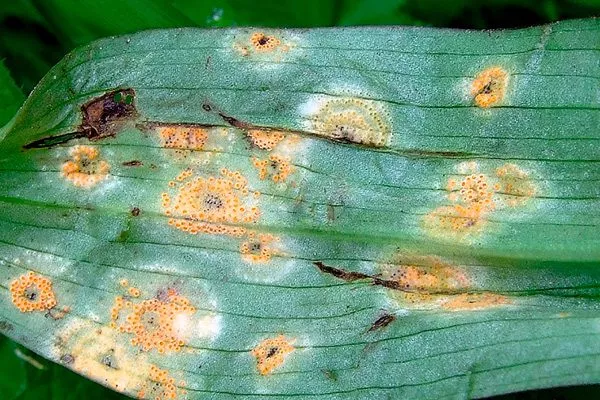
To address the problem at an early stage, treat the orchid with Hom at a rate of 3 g per 1 liter of water. In advanced cases, spray with Topaz or Strobi at a rate of 2 g per 2 liters of water.
For prevention, treat healthy plants with the same preparations.
Diseases due to poor care
In addition to various infections, orchids can suffer from improper care. Excessive sunlight or excessively cold wintering can also cause illness.
Mold in a pot
Mold formation on an orchid indicates the presence of numerous fungal microorganisms that spread rapidly through microscopic spores. Orchids can be susceptible to two types of mold.
White
It looks like fluffy medical cotton wool. A fluffy coating appears on all parts of the plant. It's caused by high humidity and temperature.
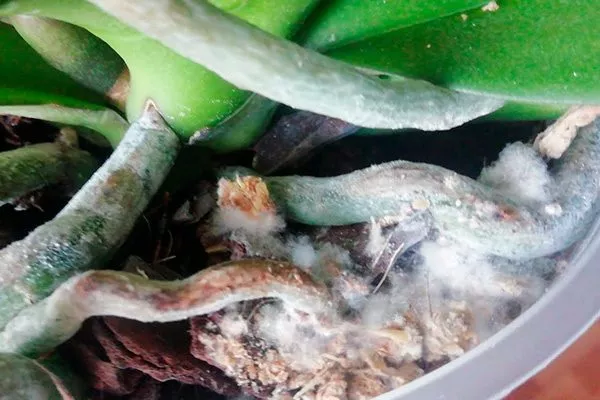
If you detect mold, treat the orchid with a copper sulfate solution at a rate of 5 ml per 2 liters of water. Additionally, normalize the watering schedule and ensure the necessary indoor conditions: humidity 50-70%, daytime temperature from 18 to 23 degrees Celsius, and nighttime temperature from 13 to 24 degrees Celsius.
Prevention consists of strictly following agricultural practices and preventing water stagnation in the leaf axils.
Blue
Mold forms in the substrate and on the root system. Its occurrence and spread are caused by overwatering and high humidity. Condensation and moss may also appear on the pot walls.
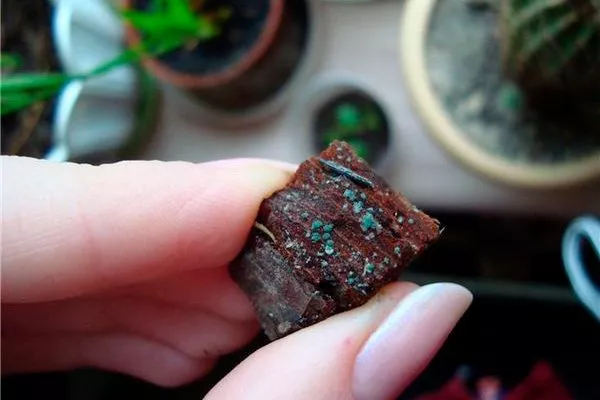
To eliminate small amounts of blue mold, let the substrate dry out, and in case of severe infestation, rinse and treat the root system with copper sulfate, then replace the soil and pot.
To prevent blue mold, follow a watering regime, maintain the required air temperature, and heat-treat the bark before planting the orchid.
Green spots and dark dots on flowers
Green and dark spots on flowers appear due to excessive moisture during watering. Mechanical damage can also cause these spots. Eventually, the spots dry out, leaving jagged edges.
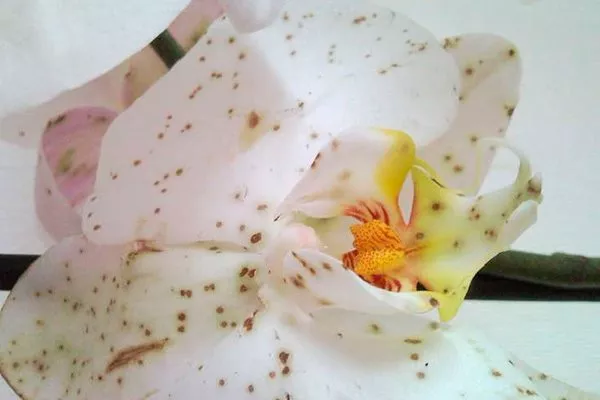
Sometimes the spots appear due to a fungal infection, such as gray mold. In this case, the flowers and buds will be completely damaged within 24 hours.
Brown and other spots on leaves
Brown or other spots indicate a fungal infection. Quarantine the orchid and treat with an antifungal agent.
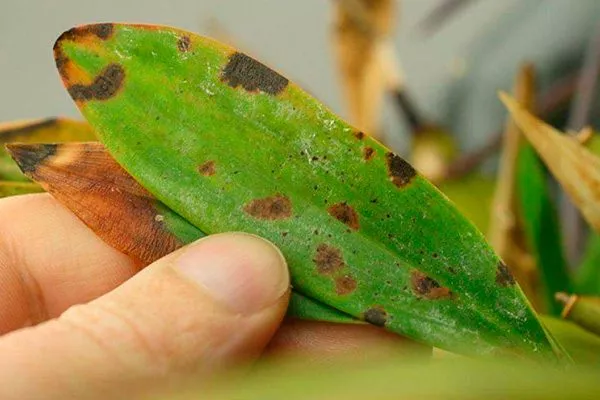
Prevention consists of providing suitable conditions for growth and development, thereby supporting the plant’s immune system.
Sticky drops
Sticky drops on the plant leaves appear due to the presence of pests (whitefly, scale insects, mealybugs) or improper growing conditions: excess fertilizer, excessive watering, high humidity.
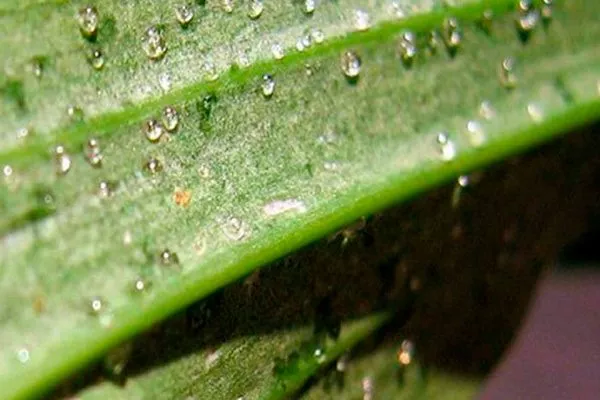
If you spot insects, treat the orchid with an insecticide. If the growing conditions are not met, treatment involves following proper agricultural practices.
Burns
Plant burns can occur due to spraying in hot weather or when the orchid is exposed to direct sunlight. Move the plant to a shady location, then protect it from direct sunlight.
The main pests of orchids
Orchids can be attacked by various pests. To prevent your plant from dying, learn about the insects and consider methods of controlling them.
Mealybug
The insect resembles a small ball of cotton wool with long antennae. Its oval body is covered with small hairs coated in white. The pest feeds on plant sap, injecting venom into the plant when it bites, causing buds and leaves to lose turgor. turn yellow and fall off.
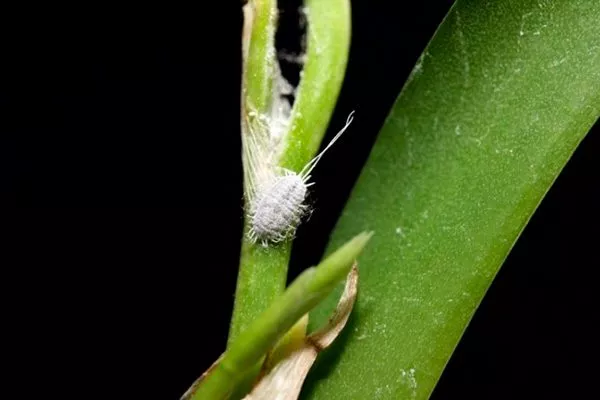
To get rid of the pest, remove all affected areas of the leaves and pedunclesWash the roots, leaf axils, and growing points thoroughly with soapy water. Chemical treatments such as Aktara, Fosfamide, BI 58, and Fozalon will also help.
Ticks
Orchids can be attacked by several types of mites. To combat the problem, familiarize yourself with the signs of pests and how to control them:
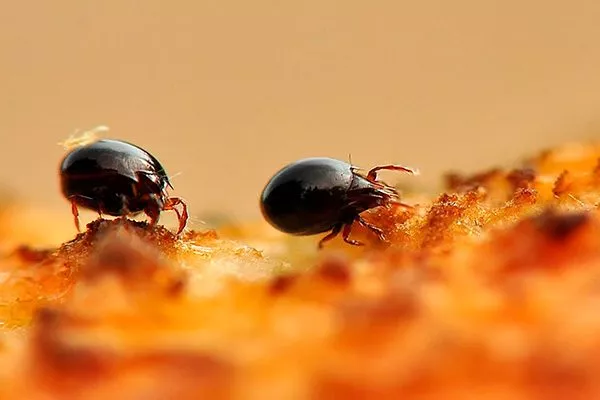
- Armored mite. A very small brown insect that moves quickly through the substrate and around the flower. It feeds on dying roots, rotting moss, and the substrate.
To get rid of the pest, remove the orchid from the substrate, clean off any rotting roots, rinse thoroughly with clean water, and replant in new soil. Treat the orchid with Fitoverm 2-3 times, every 5-7 days.

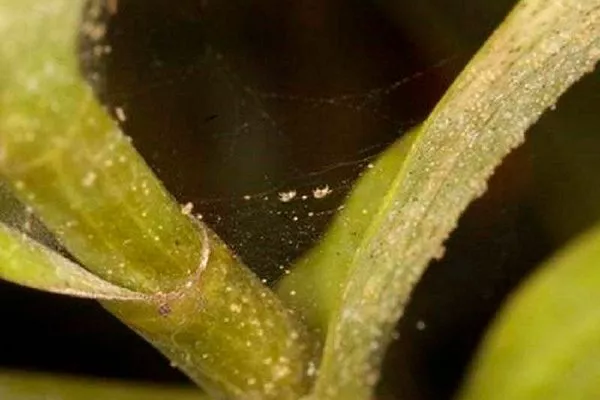
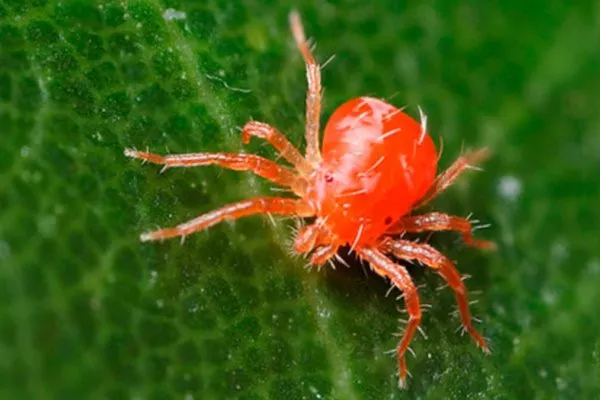
- Spider mite. A small pest that feeds on orchid sap. Sticky droplets form where the bites occur. The insect hides on the underside of the leaf, spinning a web.
To combat spider mites, use acaricides in combination with hormonal treatments. Gardeners recommend Fitoverm, Kleschevit, Actellik, and Iskra. Dilute the treatment with hormonal treatments that kill the eggs and larvae during the mite development phase.
- Red tick. A small insect that typically lives deep in the leaf axils. Over time, the pest eats away at the base of the orchid, causing the flower to wilt.
To get rid of spider mites, clean the leaf axils with a soapy solution, then treat with an acaricide: spray the entire plant and water the soil. After 10-15 minutes, blot all the axils with a napkin.
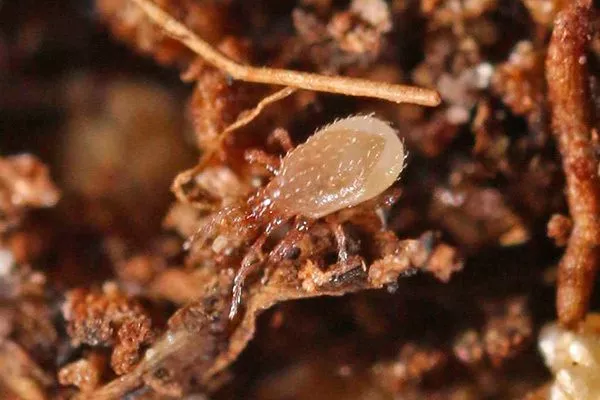
- Soil (root) mite. A small, gray-white insect that lives in very damp soil. It feeds on rotting organic matter and fungi. The pest moves along roots and leaves, and penetrates all the axils of the plant.
To combat this, reduce humidity to 50-60% and reduce watering. Also, remove rotting roots and replace the substrate with a more aerated soil mixture.
Nematode
A microscopic roundworm that penetrates orchids through the roots, eating them from the inside out. Root, stem, and leaf nematodes are common. These pests can cause bacterial infections, leading to plant death.
Getting rid of nematodes is very difficult, but there is a chance to save the orchid if only the roots are infected. Remove the roots and try to grow new ones. Chemical treatments should only be used in industrial settings.
Thrips
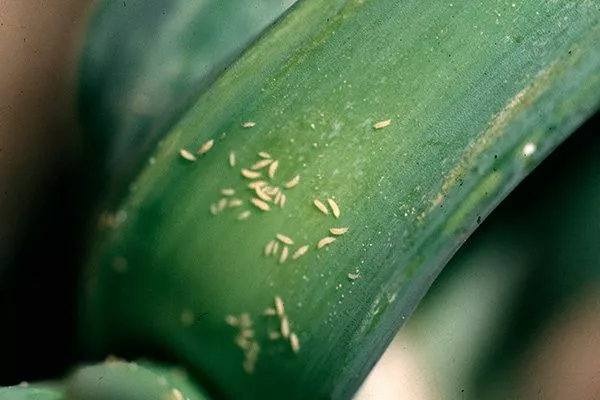
These elongated insects range in color from dark gray to light gray. They have a small, elongated tail. Using their wings, they can move from place to place. They feed on plant sap, causing complete damage to the orchid.
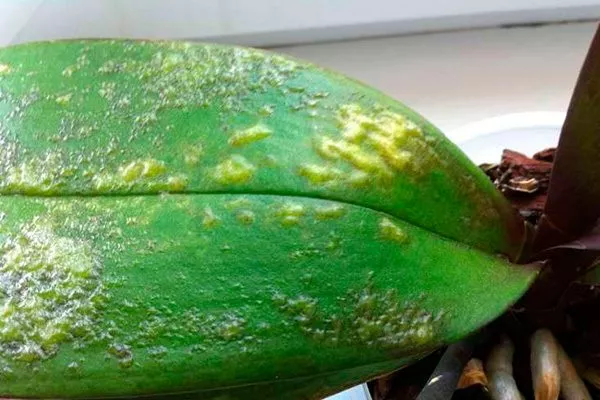
Damaged areas of the flower stop growing and lose turgor. The leaves become unsightly, covered with stripes and scars.
Springtails or pods
These tiny pests come in a variety of colors. These insects thrive in very waterlogged soil. Springtails feed primarily on decaying organic matter, but they can also damage plants and eat young roots.
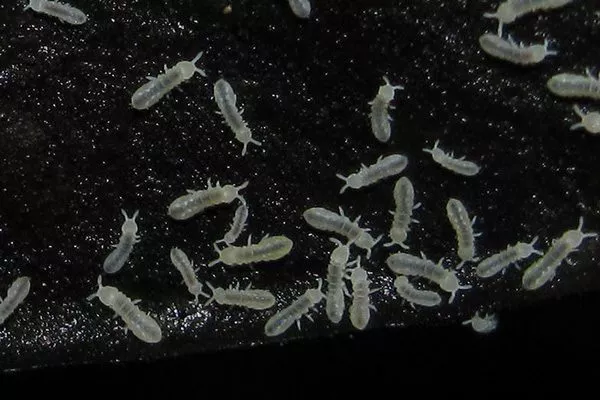
If you have a large infestation, begin combating it. The following steps will help reduce the springtail population:
- Dry the soil between waterings, do not allow the roots to dry out and the leaves to wilt.
- Change the substrate to less decomposable soil, remove all rotting roots.
- Adjust watering.
Other pests
Orchids can also be attacked by other pests. The most common of these are considered to be the following insects:
- woodlice;
- scale insect;
- snails;
- whitefly;
- soil gnats;
- aphid.
Insecticides help to cope with many pests.
Universal preparations for orchids
Universal products are used to treat orchids. Many of them are designed to eliminate insects, while others combat diseases.
Insecticides
Insecticides are designed to combat harmful insects. These products are used on houseplants, with the dosage and volume of solution adjusted:
- AktaraThis is a toxic product classified as hazard class 3, so use it strictly according to the instructions. The product contains a toxin that penetrates plant sap-sucking pests, blocking nerve impulse transmission. The insects are paralyzed and die.
Dilute Aktara according to the instructions: for root watering – 1 g per 10 liters of water; for spraying during the growing season – 4 g per 10 liters of liquid. Dilute the liquid formulation at the same dosage as the granules. - Oberon RapidA long-lasting product. Capable of killing insects at any stage of their development, it is effective against eggs and larvae. It is excellent against thrips, whiteflies, aphids, and mites. Available as a suspension.
0.7 mg of the product is used per 1 liter of water. Oberon Rapid is designed for complete spraying of the orchid and for irrigating the substrate. - FitovermA product containing microorganisms. It effectively combats many pests, including ticks. Available in liquid form, it's easy to use. To use, dilute Fitoverm according to the instructions. Dosage varies depending on the insect species:
-
- thrips – 2 ml per 200 ml of water;
- aphids – 2 ml per 250 ml of water;
- spider mite – 2 ml per 1 liter of water.
Spray the leaves and water the soil. Treat the orchids 4 times, 7 days apart. The insects will die within a few hours or a few days.
Fungicides
Fungicides are designed to eliminate pathogens that cause fungal infections. These products prevent fungal spores from infecting the surrounding microorganisms:
- FitosporinEffectively suppresses infectious agents. The formula contains various fillers and OD-humate, which enhances fungicidal action and maintains long-lasting stabilizing properties.
Fitosporin is an excellent preventative treatment for orchids. It is not very effective against severe cases of the disease. It is used to treat the soil and roots of orchids before planting. Follow the instructions. - FitolavinThis is a systemic antibiotic designed to protect against various plant rots. It is considered a preventative measure and is also used to combat diseases at an early stage.
For prevention and treatment, dilute Fitolavin in water at a concentration of 2 ml per 1 liter. Apply by spraying, immersion, misting, soaking in the solution, or watering at the roots. - FundazolIt is used to treat planting material at seed factories, prevent diseases, and treat plants. It is also used to water contaminated soil, spray orchids during the growing season, and treat seeds and tubers before planting.
The dosage depends on the goals:- For spraying, dilute 10 g in 10 l of water.
- For pre-planting treatment of bulbs, dissolve 10 g of the product in 1-2 liters of water.
- To water the soil, dilute 10-15 g in 10 liters of water. This amount is enough to treat 20 square meters.
- To treat the roots, prepare a mixture with the consistency of porridge.
Use warm water to help the product dissolve faster. Treat the plant no more than twice.
Acaricides
Acaricides are effective against various types of mites. These products contain sulfur, chlorophosphorus compounds, antibiotics, and pyrethroids:
- NeoronA contact acaricide that acts on ticks at various stages of development upon contact. After treatment, the product remains effective for 10-40 days. It is effective at all temperatures and can control large insect populations.
It is recommended to use Neoron for spraying orchids at the initial stage of infestation. Dilute strictly according to the instructions. - VertimecThis is a systemic product containing abamectin. It is particularly effective against various types of mites, aphids, and thrips. Apply two treatments, 7 days apart. The product is available as a concentrated emulsion.
After spraying, it immediately penetrates the plant's foliage and the pest through the plant's sap. This paralyzes the insects, causing them to die. Treat the orchid on all sides, preferably at the beginning of the growing season. Protection lasts 10-20 days. Mites die within 1-5 days. - Butox 50An insecticidal acaricide containing deltamethrin. It is available as a light yellow liquid with a distinctive odor. It is highly water-soluble, has a broad spectrum of activity, and is effective against many pests. To treat orchids, dilute one ampoule in 4 liters of water.
How to fight with folk remedies?
You can make your own homemade remedies to avoid buying chemicals. We suggest you check out the most popular folk remedies:
- Potassium permanganate solution. Dissolve 2 g in 10 liters of water. Treat the plant three times.
- Infusion of field horsetail. Dissolve 100 g in 1 liter of water. This recipe is effective for treating powdery mildew.
- Milk whey. Dilute milk with water in a ratio of 1:10. Use to prevent fungal infections once every 2 weeks.
- Ash infusion. Dissolve 1 kg of ash in 10 liters of warm water and leave for 5 days. Then strain the liquid and dilute with liquid laundry soap.
Use the resulting solution to treat fungal infections. Apply three times, one day apart.
Choose the most suitable option for yourself, and you will see that folk remedies are no worse than chemical preparations.
General rules of prevention
It's not pleasant when an orchid begins to die. Therefore, to avoid such a sad sight, take preventative measures. Experienced gardeners recommend following these rules:
- maintaining a temperature regime with differences of no more than 5 degrees;
- application of fertilizers in the correct dosage;
- the humidity level should be 50-60%;
- ventilate the room, avoiding drafts;
- water the orchid only when the substrate is completely dry;
- provide diffused and sufficient lighting;
- remove water from the leaf axils.
If you've decided to grow an orchid, remember that a healthy, strong plant with a strong immune system will be less susceptible to various diseases. Provide proper care, follow the care instructions, and implement disease and pest prevention. This will ensure a beautiful, flourishing plant.