
The orchid is a stunningly beautiful tropical plant, especially popular among gardeners. It is a perennial herbaceous plant. It belongs to the Orchidaceae family, considered one of the oldest on the planet. Growing this exotic flower requires some effort.
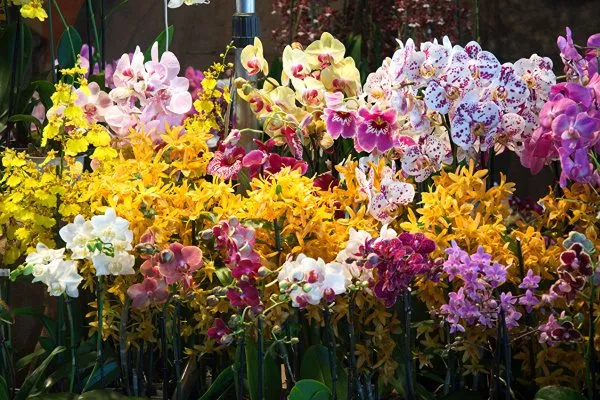
Plant overview
Orchids grow all over the world, but tropical climates are their most favorable. South America is considered the orchid's native land. On average, a plant can live 6-9 years in indoor conditions.
- ✓ Optimal air humidity should be 60-80% for most orchid species.
- ✓ The temperature regime must strictly correspond to the type of orchid: heat-loving +22…+25°С, moderately heat-loving +18…+22°С, cool-preferring +15…+18°С.
Most orchids used for home cultivation can be divided into several groups:
- Epiphytes — entangle any objects, using them as supports.
- Lithophytes — a small group, undemanding in terms of growing conditions and soil quality. In the wild, they grow on rocks.
- Ground — have a classic structure, grow on soils and are not distinguished by gigantic sizes.

According to branching, orchids are divided into:
- Monopodial — upright plants with one shoot trunk and an apical bud from which leaves grow each year, with generative buds between them.
- Sympodial — the main shoot lies horizontally. It contains growth points from which vertical shoots with leaves, flowers, and buds emerge.
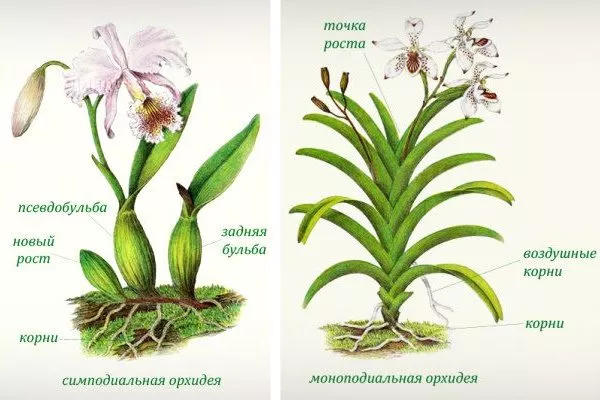
Description of indoor orchids:
- Roots Plants have a unique structure. Some of their roots are aerial, green, contain chlorophyll, and participate in photosynthesis. They don't require soil, don't root in it, and rely solely on nutrients and moisture. Moreover, they can even absorb water from the air.
- Stems Typically thick, swollen, or spindle-shaped, they are called bulbs or pseudobulbs. They store moisture and nutrients, which they release as needed. In terrestrial species, these stores are located in rhizomes or tubers.
- Leaves, most often have a dense, leathery structure. They can store water and food reserves.
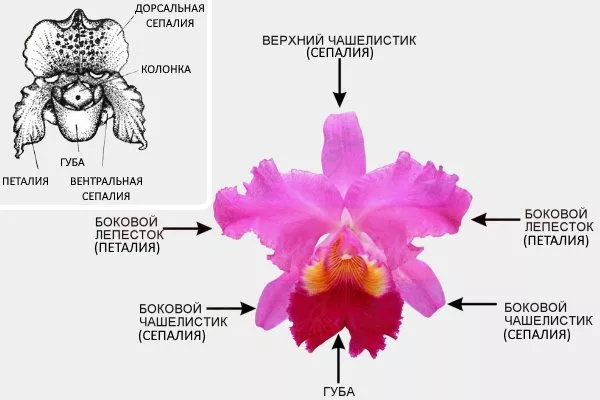
- Flowers They consist of three petal-like sepals, between which are three petals. The middle one, the lip, is larger than the lateral ones. The flower has one or two stamens, which are fused with the pistil.
There are thousands of orchid species, and even more varieties. Moreover, indoor orchids are in no way inferior in beauty to wild orchids. The most popular indoor orchid is the Phalaenopsis, which has about 70 species in its genus. It is recommended to start growing indoor orchids with this orchid.
Features of orchid flowering:
- The cycle depends on the species and variety. Some orchids bloom 3-4 times a year, for 2-3 months each time. Others bloom continuously for 8-9 months, with 2-3 months of rest.
- Indoor orchids bloom in late autumn. Flowering occurs in stages: buds appear first, and after 1.5-2 months, the inflorescences open. Only mature plants are capable of long and beautiful blooms.
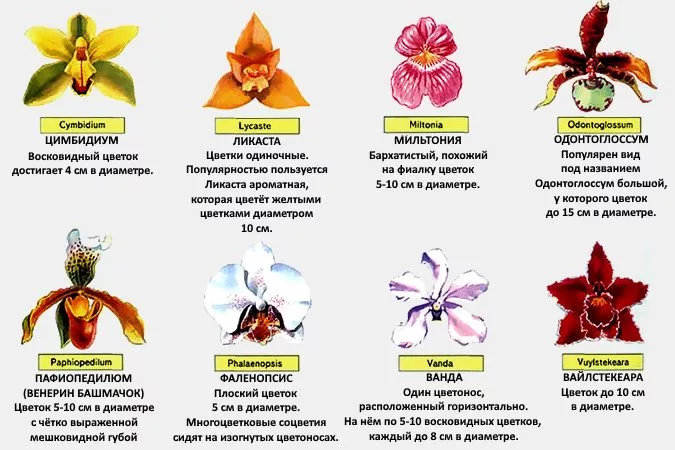
The height of an orchid depends on the plant species and variety. For example, the Phalaenopsis grows to approximately 50 cm.
Purchase rules
Orchids are demanding plants, so it's crucial to purchase healthy plants from the start. When purchasing these flowers for your home, inspect them carefully and evaluate them based on several important criteria.
How to do it correctly:
- Buy a flower at any time except winter.
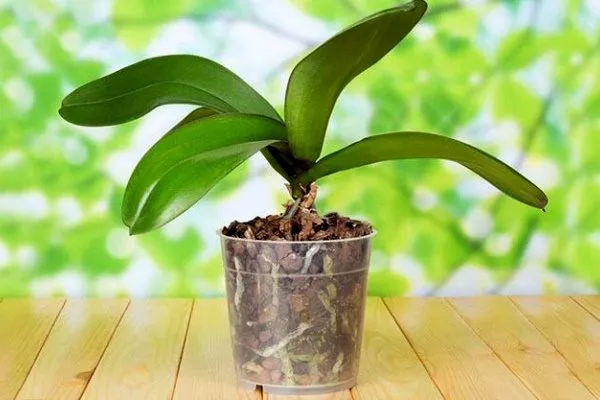
- Inspect the roots—they're easily visible through the transparent pots orchids are sold in. The roots should be healthy, free from mechanical or other damage. Cracks and dry areas are unacceptable. Check the root strength by gently rocking the plant in its pot. If it doesn't hold up well—the stem wobbles—the roots aren't strong enough.
- The leaves should be green, without any yellow areas. The presence of any yellowed leavesYellowing indicates disease or nutrient deficiency. Such a plant can be restored, but it will require some effort.
A healthy plant's leaves should be uniform, dense, and firm. If you see thinner, wider, or wilted leaves, the plant has likely recently suffered from some kind of disease and should not be purchased. - If the plant has a thickening on the stems (pseudobulb), it should be smooth and elastic; wrinkles or wilting are unacceptable.
Please also note the following points:
- the pot should have a tag indicating the orchid species/subspecies - this is necessary to know in order to provide the plant with the correct growing conditions (they may differ);
- If the flower is sold with supports, they must be perfectly clean, and no traces of fungus or mold are allowed;
- When purchasing a flowering plant, inspect not only the roots and leaves, but also the flowers for pests.
Find out when the flowers were put on sale - it is not recommended to buy a plant that has been in the store for more than a month.
How to transport?
Transporting orchids should be planned in advance. They are quite large plants, so they are not as easy to transport as, for example, violets. Orchids should definitely not be transported on public transportation; use a taxi instead.
When transporting an orchid, hold it in your hands; don't place it on the floor or put it in the trunk. It's best to have someone assist you during transport. To prevent damage to the leaves during transport, wrap the plant in thick paper. If it's freezing outside, pack the plant at the top and bottom.
Quarantine
Quarantine measures help identify insect pests that may be infesting your purchased orchid, which aren't always immediately detectable.
Quarantine rules:
- Place the flower in a room where there are no other flowers for 2-2.5 weeks, or at least maintain a distance of 2 m from the nearest plants;
- leave the new orchid alone for a while - do not fertilize or water it;
- Do not expose the flower to direct sunlight.
As the quarantine period approaches its end, gradually acclimate the plant to light by placing it on a sunny windowsill. Initially, for 1 hour, then 2 hours the next day, and so on.
Do I need to repot after purchase?
It's not recommended to repot orchids immediately after purchase or after quarantine. The orchid's substrate allows for a delay of 3-4 months. However, if the orchid was sold in sphagnum peat moss, it must be repotted immediately.
There are other reasons for relocating to a new location:
- the roots are cramped in the pot;
- the roots are intertwined and interfere with each other’s growth, which leads to the appearance of dead parts;
- the substrate used was too saline;
- the pot or roots have received mechanical damage;
- a coating appeared on the surface of the substrate.
Optimal conditions for growing orchids at home
Orchids require specific conditions—light and temperature—to grow, develop, and bloom. Under unfavorable conditions, the plant will refuse to bloom, wither, and may even die.
Lighting and placement
Lighting directly affects the quality of orchid blooms. If the plant receives sufficient light, it will bloom at intervals of 2-6 months.
Lighting requirements:
- light - diffused, it is not recommended to use spot lighting;
- It is undesirable to expose the plant to direct sunlight - burns may occur;
- If natural light is used, the plant needs shading in the summer - this is achieved using frosted glass, translucent plastic or a special mesh;
- The length of daylight hours is 10-12 hours; artificial lighting (fluorescent lamps) is turned on if necessary.
In summer, orchids should not be placed near south-facing windows. Alternatively, they should be carefully shaded. With the arrival of autumn, the shade can be removed, as sunlight becomes less intense. Orchids begin to slow down, gradually entering a dormant state.
Ambient temperature
Orchid growers use an unofficial classification system based on temperature. Each group has its own specific conditions. Before combining flowers in the same location, it's important to consider their temperature requirements.
For heat-loving plants
Orchids native to jungles and tropical climates thrive in temperatures ranging from 15 to 33°C during the day and 15 to 28°C at night. They are recommended to be placed on south-facing windowsills, providing diffused or other UV protection.
Heat-loving orchids:
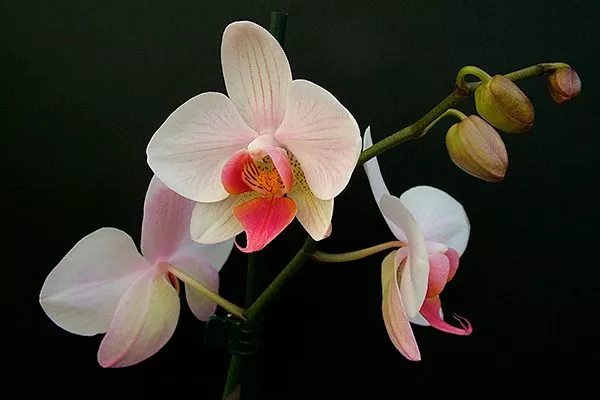
- Phalaenopsis — an orchid with pink, white-pink, or yellowish flowers. The optimal temperature range is +22…+25°C. It grows well in sphagnum moss.

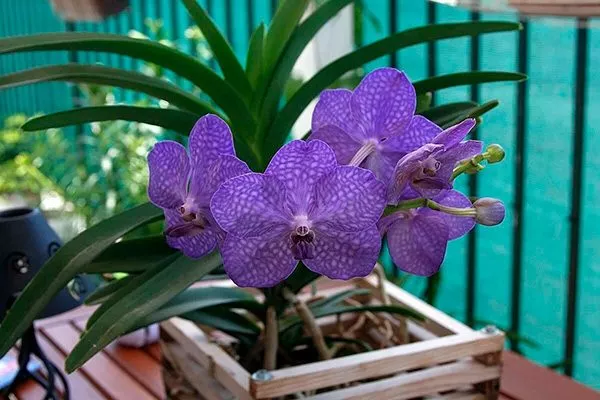
- Dwarf Vanda — grows well at temperatures starting from +25°C. Flowers are collected in bright orange inflorescences.
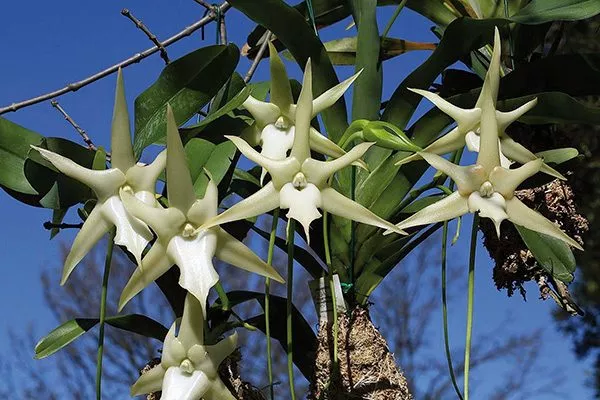
- Malagasy Star — with large white flowers and a citrus aroma. Dies at +10°C.
For plants with a medium temperature range
These orchids grow in the colder zones of the tropics and subtropics. They thrive at temperatures of 18 to 22°C during the day and 12 to 15°C at night. These plants do not tolerate direct sunlight well; it is recommended to place them near west-facing windows.
Medium-thermophilic orchids:
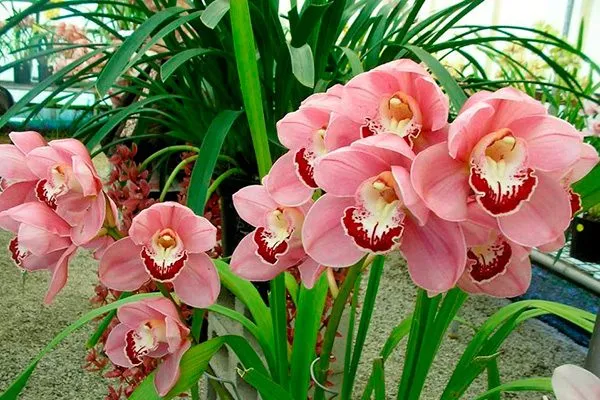
- Cymbidiums — multicolored orchids growing wild in China, Japan, and Australia. They require temperatures of 16 to 20°C.
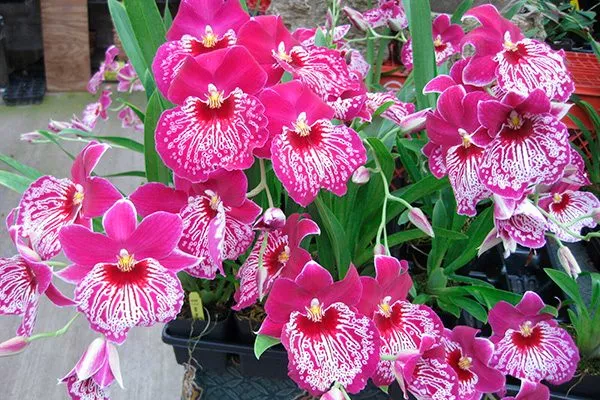
- Miltonia — prefer temperatures in the range of +12…+23°C. They do not tolerate direct sunlight.
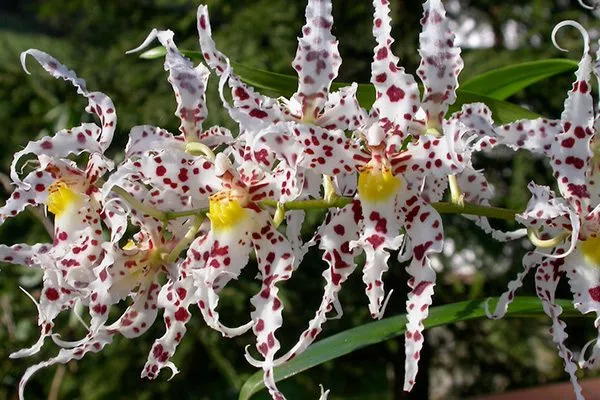
- Odontoglossums — these mountain orchids grow well at +20…+22°C, but are able to survive when the temperature drops to +8°C.
For plants that prefer cool temperatures
These orchids are native to subtropical and high-altitude regions. Their optimal temperatures are 15 to 18°C during the day and 12 to 15°C at night.
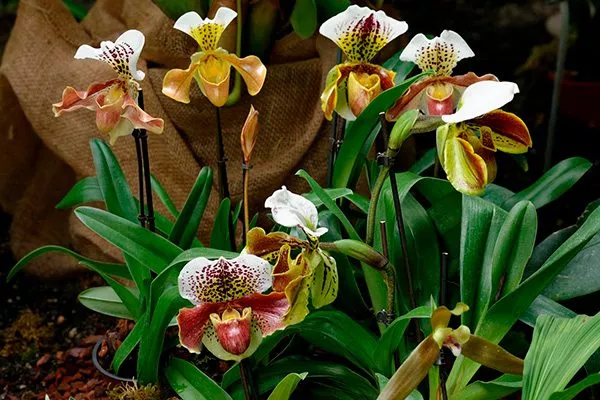
Orchids that prefer cool temperatures - PaphiopedilumsThey are also called Venus's Slippers due to the shape of their flowers. They have spectacular blooms, often variegated. These plants thrive at temperatures of 14 to 16°C, but some prefer moderate temperatures.
Humidity
Orchids need high relative humidity. It's more important for these plants than watering. In nature, even orchids growing in arid areas absorb moisture from dew and fog—they usually appear there at night.
Tips for optimal humidity:
- Keep plants, especially in summer, not indoors, but in special greenhouses with lighting;
- In summer, spray orchids 2-3 times a day, and in winter, occasionally - if the room is too warm or sunny;
- Water and spray the plant only before lunch so that it dries out by evening.
Most orchids originate from regions where droughts alternate with rainy seasons. Because of this, the plants experience distinct dormant periods during which flower buds are formed. Watering for these orchids is uneven throughout the year.
Care instructions
In order for an orchid to grow healthy, bloom for a long time and be ready to reproduce, it must be properly cared for.
Methods of watering orchids
The main rule watering orchids It's better to underwater than overwater. These flowers are extremely sensitive to moisture, so watering them should be done in accordance with proper gardening practices.
Tips for watering:
- Water generously in spring and early summer. As the plant enters dormancy, watering should become less frequent and eventually be reduced to a minimum. Maintaining adequate humidity is sufficient to prevent the pseudobulbs from wrinkling.
- For watering, use soft rainwater at room temperature or slightly warmer.
- Don't water orchids immediately after purchase—stores often overwater them. Wait one week.
- Watering frequency: once every 10-14 days (depending on the type/variety of orchid and environmental conditions).
- Watering is not done according to a schedule, but rather based on the condition of the substrate and the flower. Determine the need for watering based on external signs:
- there is no condensation on the walls of the transparent container;
- If the ends of the roots have acquired a bright yellow-green hue, it’s time to water the flower; if they are gray-green, moisture is not needed;
- the flower pot became lighter;
- Place a wooden skewer into the soil for half an hour; if it remains dry, it's time to water the plant.
There are many ways to water orchids. The key is to provide the plant with the required amount of water without damaging its roots.
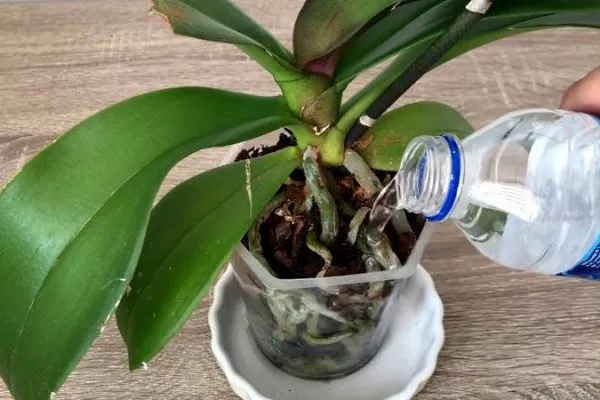
Options:
- By immersion. Place the pot in a larger container of water for 15 minutes. The water should be about 2 cm below the top of the pot. Then remove it and place it on a tray to drain. Don't let the plant's roots get into the water.
- In the usual way. Water the substrate, and discard the water that has drained into the tray after 15 minutes. The recommended watering rate for one flower is 50 ml.
- Strait. Suitable for orchids in peat pots or those with foam inserts in the substrate. Place the pot in a larger container, then water the substrate until the water reaches about halfway up the pot. Then remove the flower from the water, let the excess drain, and replace the pot.
- Spraying the substrate. Do this daily, focusing only on the growing point. It's important to know when to stop, so this method isn't suitable for beginners. With this type of watering, orchids can bloom almost year-round.
- With ice cubes. Every week, several ice cubes are placed on the substrate - 1-3 pieces (depending on the size of the plant).
Top dressing and fertilization
When grown indoors, orchids require regular feedingThey are necessary to replenish mineral reserves that are washed out of the substrate and extracted by the orchid roots.
Recommendations regarding feeding:
- do not apply fertilizer when replanting the flower or immediately after;
- Feed the flower during the growing season;
- do not feed a blooming orchid;
- Apply fertilizer carefully to avoid burning the roots - it is best to do this after wetting the roots with water;
- In spring and autumn, fertilizers are applied once every two weeks, and in winter and summer – once a month.
Fertilizers should contain mineral components such as phosphorus and potassium. They stimulate bud growth and ensure beautiful, rich flower colors.
How to repot orchids?
Orchids are repotted only during dormant periods, when the plant is not blooming. For a successful repotting, it's important to select the right substrate and pot, and most importantly, to move the plant from one container to another correctly.
Choosing a pot
Orchid roots require constant air circulation to prevent them from rotting due to constant moisture. Therefore, special pots are chosen for these flowers.
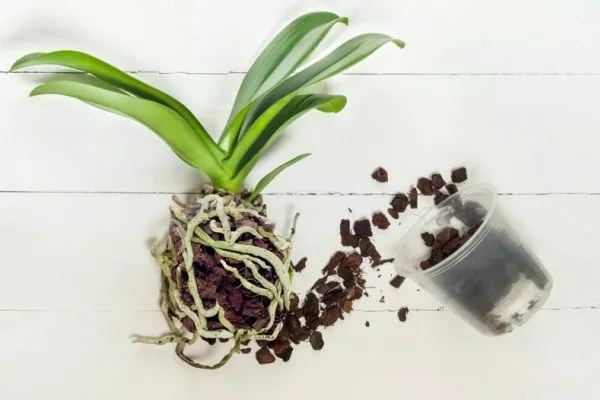
Recommendations for choosing pots:
- Wicker containers and boxes with holes are suitable;
- glass is an excellent option, as light passes through it;
- In ceramic and plastic pots, holes must be made;
- Plastic containers with holes can be disguised with beautiful hanging planters.
Rules for choosing soil
The substrate in which orchids grow is soilless. It consists of several ingredients mixed in equal parts. You can make it yourself or buy it ready-made.
The substrate consists of:
- bark (mainly pine);
- coconut flakes or fibers;
- sphagnum moss;
- charcoal;
- perlite or vermiculite.
If it is necessary to reduce the acidity of the substrate, a little high-moor peat is added to it.
The transplant process
In order for the orchid to grow and bloom successfully in a new place, it is important transplant correctlyOne mistake is enough for the plant to suffer.
- Prepare the new pot and substrate a week before repotting to allow them to adapt to room temperature.
- After repotting, do not water the orchid for a week to give the roots time to heal any damage.
How to repot an orchid:
- Pour expanded clay (fine fractions) into the pot - fill it one-third full.
- Add more substrate on top, filling the pot another third.
- Remove the orchid from the container, being careful not to damage the roots.
- Trim off any dry or rotted areas with scissors. Cut straight, not diagonally.
- Rinse the root system under warm running water.
- Place the flower roots in the pot so that some of them remain on the surface.
- Fill the empty space between the roots with the same amount of substrate. Add enough to bring it back to its original height. Lightly compact the substrate with your hands to ensure stability.
- Only after a week do they begin to water the transplanted orchid.
When replanting, the main thing is to preserve all hanging roots by providing them with good air exchange.
Orchid propagation
Like other plants, Orchids can be propagated Vegetatively and by seeds. At home, vegetative methods are recommended.
Cuttings
The easiest and fastest way of propagation is by cuttings.
Procedure:
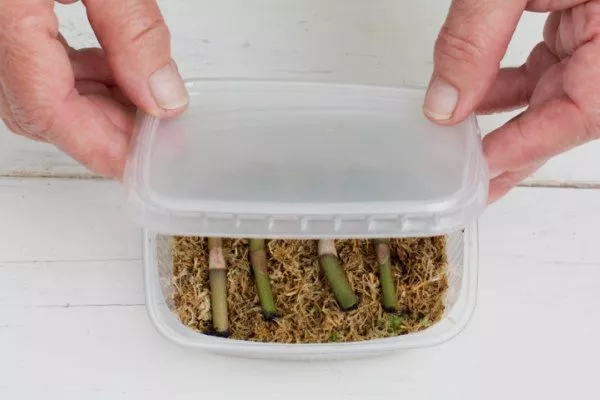
- Cut off a side shoot or a faded flower stalk.
- Cut the shoot into 4 cm pieces. There should be a dormant bud in the center of the shoot. Sprinkle the cut areas with charcoal (crushed activated charcoal from the pharmacy will also work).
- Place the cuttings on a damp surface (wet sand or sphagnum moss), cover with film or a lid, and wait for rooting.
Children
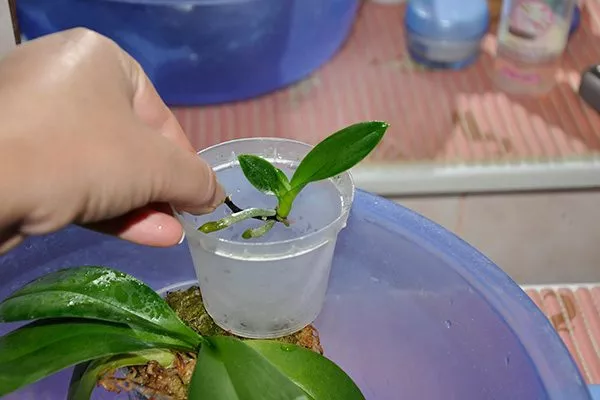
Orchid offspring appear on roots, stems, leaves, and flower stalks. Any part of these can be used for propagation.
Procedure:
- With one movement of scissors or pruning shears, separate the plant that has developed roots.
- Treat the cuts with crushed activated carbon or wood ash.
- Plant the bushes in a substrate made of pine bark and charcoal. Place them in a transparent pot.
- Spray the substrate with warm water. Start watering on the 4th day.
By dividing the root
Orchid roots are very fragile, so this method requires extra care.
Reproduction order:
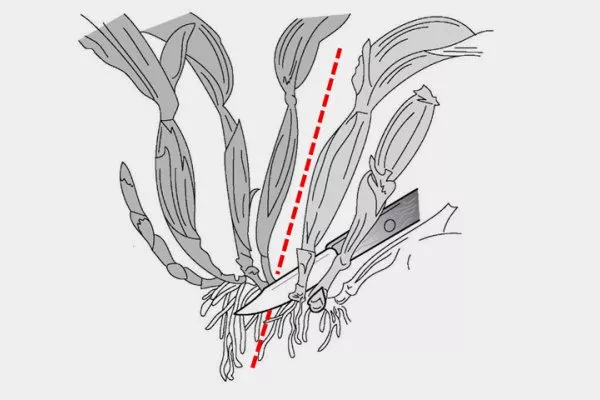
- Carefully pull out the rhizome.
- Using a pre-disinfected knife, cut the rhizome in half, leaving 2-3 bulblets on each section. Sprinkle the cut ends with charcoal.
- Plant both halves in separate pots and water generously.
Seeds
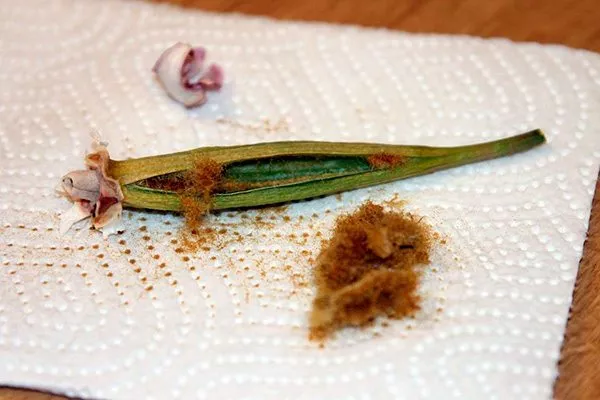
This is the most difficult method of orchid propagation. The seeds of this plant are so small that they resemble pollen, making them extremely difficult to collect. They lack a protective shell, making them very difficult to preserve.
Successful seed rooting requires favorable conditions—adequate humidity, temperature, and light. Seeds take four years to produce a flowering plant.
How to care for an orchid during and after the flowering phase?
During the flowering period, the plant requires improved conditions - it needs more strength to set flowers.
Care instructions:
- water generously with warm water;
- increase the air temperature by 5°C;
- Apply fertilizer according to the instructions and standards - overfeeding the flower is unacceptable.
Once flowering is over, return to standard care - watering becomes less frequent, the temperature is lower, and fertilizing is less intensive.
Orchid care during the dormant period
During dormancy, maintain a stable temperature of 22°C to 24°C in summer and 13°C to 15°C in winter. Water the plant infrequently and moderately, and do not fertilize. This is the ideal time for repotting.
How to make an orchid bloom again?
Having become accustomed to a comfortable life, an orchid may refuse to bloom. In this case, you can stimulate its flowering by creating stressful conditions.
How to make an orchid bloom:
- Temperature changes - by moving the flower to a cooler place.
- Drought - temporarily reduce the amount of watering.
Since sudden temperature changes can harm delicate plants, shock treatments should be used with caution.
Diseases and pests
Orchids are susceptible to bacterial, fungal, and viral diseases. These are caused by insect infestations, mechanical damage, or contact with unsterile instruments.
Diseases:
- Viral. This is the worst-case scenario. You won't notice the problem right away, and most importantly, no fungicide can protect against viruses. The solution is to destroy the plant.
- Fungal. They appear due to high humidity. If the damage is localized, remove the affected parts of the plant and treat the flower with fungicides.
- Bacteriosis. They are caused by water accumulation on the leaves or in their axils. Antibacterial treatments are used to eliminate the problem.
The orchid has quite a lot of enemies:
- woodlice, silverfish, nematodes - they are controlled by reducing watering and collecting them by hand;
- snails - antidotes and manual collection are used against them;
- sucking pests (aphids and spider mites) - oil rubs are effective against them; in case of severe infestations, insecticides are used.
Read more about orchid diseases and their treatment Read in our other article.
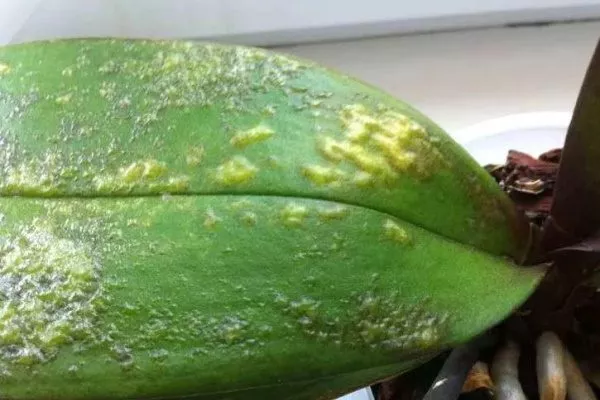
Table of possible problems and solutions
Table - possible problems and their solutions:
| Warning signs | Cause | Solution |
| The formation of aerial roots has increased | it's high time for a transplant | Replant the flower. |
| The leaves are soft, the roots are rotting | overwatering | Treat the roots with a fungicide, dip them in ash and plant in new substrate. |
| It doesn't bloom | overfeeding | Reduce nitrogen fertilization and reduce watering. |
Frequently asked questions
The orchid is not only beautiful, but also mysterious. This flower is always the subject of much debate. Below are some frequently asked questions.
What interests novice gardeners:
- How to care for an orchid in a flask? The glass flask creates and maintains a humid microclimate suitable for epiphyte roots. The downside is that the glass cools quickly, which can chill the roots. Plant care is standard - watering, ventilation, fertilizing.
- Is it possible to keep it at home? Yes, but keep it away from the bedroom. They say the flower can drain positive energy, including from a person. There's also a belief that a man who comes into contact with orchids too often becomes overly effeminate and pampered. However, this is just a myth, with no scientific basis.
- What flower looks like an orchid? Several flowers have similarities with them: irises, evening primrose, alstroemeria and schizanthus.
Reviews
Orchids are rightfully known as the most beautiful flower on the planet—they truly are beautiful. But like any royal flower, they require extra attention. However, the care is entirely justified; if done correctly, these beautiful orchids will regularly delight you with their blooms.
Thanks for the information. It's all very informative. I really want to try propagating by cuttings. I hope it works.
I really needed information about repotting after purchase and transporting orchids, and I also used methods to get them to bloom again. Thank you so much for your help!