
The appearance of sticky drops on an orchid will inevitably raise the question for any attentive gardener: is this normal or a problem? And indeed, this concern is not unfounded. It's important to promptly determine the cause of the sticky substance and eliminate it if it poses a danger to the plant.
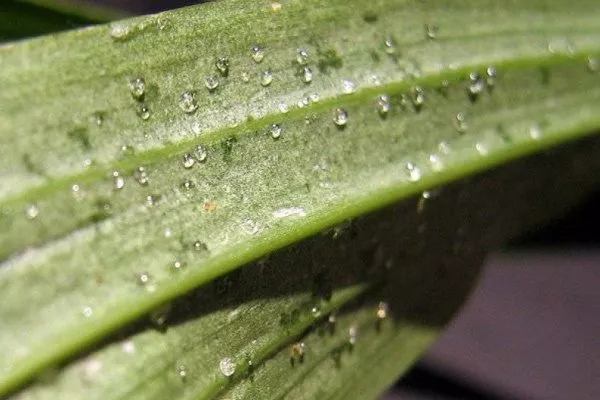
What does the appearance of sticky drops mean?
Sweet, sticky droplets often appear on the surface of orchid leaves, stems, and flower stalks. This is a common occurrence in orchids—many members of this family can produce a sticky syrup called a nectarine.
- ✓ The presence of a white coating next to the sticky drops indicates powdery mildew.
- ✓ The appearance of drops on the bulbs requires an immediate check of the watering regime.
Nectarine fruit formation is considered a natural process, which botanists call transpiration. The clear substance secreted resembles dewdrops, but is sticky and sugary. This secretion poses no danger to the flower. In all other cases, the plant will need assistance.
Where can transparent droplets appear?
Before you figure out the cause of the sticky drops, take a close look at which parts of the orchid they appear on—the leaves, the peduncle, or the pseudobulbs.
| Name | Type of nectar | Allocation conditions | Attracted insects |
|---|---|---|---|
| Phalaenopsis orchid | Extrafloral | High humidity, warmth | Ants, aphids |
| Dendrobium orchid | Floral | Moderate humidity, light | Bees, butterflies |
On the leaves
If sticky droplets appear on the underside of leaves, don't panic. This could be a natural process called transpiration, which, due to the movement and evaporation of water within the plant, can cause droplets to appear on its leaves, flowers, and stems.
If a coating or spots appear on the leaves along with the droplets, the plant may be attacked by insects or infected. Parasitic insects may also be the cause of the sticky droplets.
On the peduncle
If sticky moisture appears on the flower stalk, it means the plant isn't being cared for properly. It's located in an unfavorable microclimate. Drops on the flower stalk are harder to notice—they resemble stray drops of water.
The presence of water droplets on the flower stalk is a warning sign that shouldn't be ignored. In this case, it's recommended to reduce watering and humidity.
On the potatoes
If sticky drops appear on the orchid bulbs, it's likely that the watering schedule is incorrect or the plant is being attacked by pests. The plant is in serious danger—immediate measures are needed to save the orchid.
Reasons
It's important to determine the cause of the stains, as they are likely a reaction to improper care. Even if the sticky residue is natural and not related to pathologies, it can attract insects and fungi, which will then need to be controlled with chemicals.
Powdery mildew and other diseases
If, over time, a whitish, flour-like coating appears in place of the sticky mildew, the orchid is infected with powdery mildew. After a short time, the plant's leaves begin to darken and dry out. High humidity and heat trigger the disease. The plant can be saved by spraying it with an effective fungicide. If left untreated, powdery mildew will kill the orchid.
Powdery mildew is a fungal disease. A plant may initially become infected with it, and then be attacked by another fungus when its immune system is weakened. In this situation, the white spots become dry and darken.
Diseases are caused by improper conditions and care, such as systematic overwatering. High humidity is a breeding ground for powdery mildew, fusarium, and other fungal infections. These diseases interfere with photosynthesis, stunting the plant's growth, and often deforming its leaves.
It is recommended to treat a diseased plant with a high-quality fungicide as soon as possible, for example:
- Coming soon;
- Topsin-M.
Mealybugs and other parasites
When pests appear, the plant can release drops on all parts - stems, leaves, peduncles.
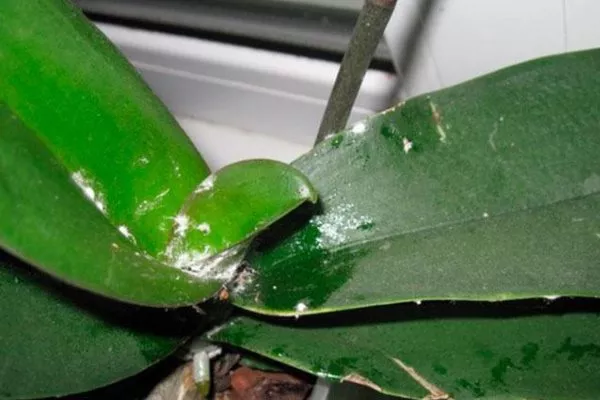
Why do sticky drops appear:
- The plant secretes them for self-defense—the sap is viscous, and if an insect gets caught in it, it becomes immobilized and stops causing damage to the plant. The sticky droplets also attract beneficial insects, which repel or consume the pests.
- Sticky mildew can be caused by mealybugs, aphids, leafhoppers, and other parasitic insects. The droplets are their waste products, and their presence is harmful to the plant. The sticky substance interferes with photosynthesis, causing the leaves to die.
To kill the parasites, gardeners place the flower in a warmer environment. The insects then crawl out onto the surface. They can be collected by hand and then sprayed with an effective broad-spectrum insecticide.
Improper care
Sticky drops can appear due to improper care. Overfeeding with mineral fertilizers is a particularly common cause of sticky mildew.
Care errors that lead to the appearance of sticky drops:
- Excessive feeding. Overfeeding can cause a sticky coating. If you overfeed your orchid regularly, it will begin to wither and ooze sap. If you adjust your feeding schedule promptly, the drips will disappear over time. The plant needs to be repotted immediately, regardless of whether it's blooming or not.
It's not recommended to repot orchids during the flowering period, but if you overfeed, you should break this rule, as the plant may die. Phosphorus, potassium, and nitrogen fertilizers should be applied with particular care. They can increase metabolism, leading to mucus production. - Overwatering. It's important to closely monitor the root system, following the recommended watering frequency and amount. If the substrate becomes compacted and doesn't allow air to pass through, repot the plant immediately.
An orchid also needs to be repotted if an unpleasant odor or mold appears.
It's important to monitor the amount of light and room temperature—improper lighting can also lead to the appearance of a sticky coating. Avoid placing the plant in direct sunlight.
Extrafloral nectar
Some orchid varieties, by producing nectar, attempt to rid themselves of insect pests. These pests simply attach themselves to the sticky drops and quickly die. They are easily washed away during watering.
Orchids also produce droplets in response to certain negative factors. A gardener should determine what exactly the flower is reacting to with the droplets in order to help it cope with the problem.
Excessive humidity
Overwatering causes moisture to leak through the plant's above-ground parts. If proper care isn't provided promptly, the plant will begin to rot. Orchids with aerial roots should be watered regularly to allow them to ventilate; constant standing in water is strictly prohibited.
Excessive watering is especially dangerous at low temperatures and in bright light.
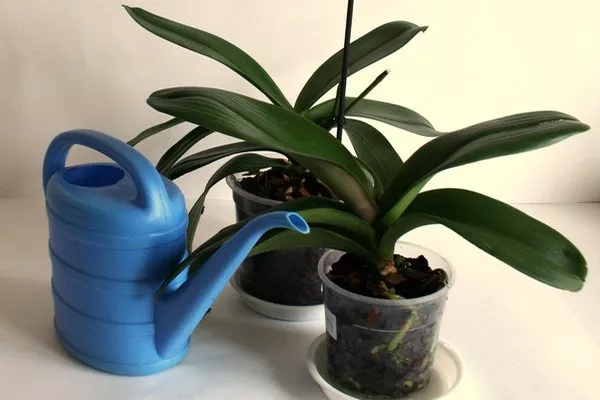
How to prevent critical increase in humidity:
- evaluate the moisture content of the substrate by the middle layer, not by the top layer;
- Monitor the roots through a plastic pot - if condensation appears on them, you can water the flower only after it has evaporated;
- The recommended watering frequency in summer is once a week, in winter - once every 2 weeks.
If a gardener is unsure whether it is time to water an orchid or not, it is better to postpone watering for one day.
What to do?
If sticky drops are found on an orchid, it is necessary to first isolate it from other plants, then determine the exact cause of the phenomenon, and only then, depending on the diagnosis, begin treatment.
Diagnostics
To find out the reason for the appearance of sticky drops, you need to carefully examine the plant.
Diagnostic procedure:
- Turn on a bright light and use a magnifying glass to inspect the plant for scale insects or other pests. Carefully examine the leaves, their axils, and roots.
- If there are no parasites and no signs of disease, the plant is most likely covered in nectar (this should also be removed to avoid attracting insect pests).
Treatment methods
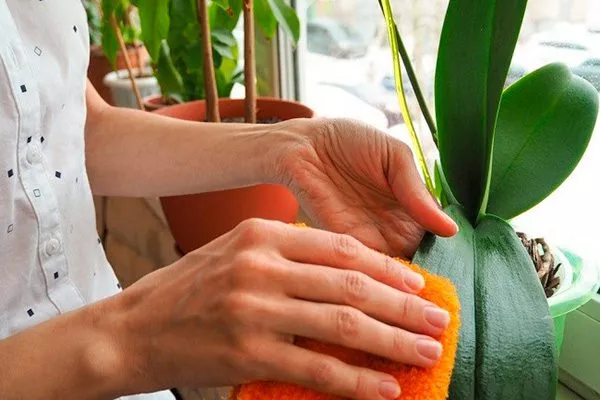
Orchid treatment methods depend on the diagnosis. In any case, the plaque must be removed with warm water before proceeding with treatment.
What to do first:
- Normalize watering. During the winter, cut them back, otherwise the plant infected with fungus will become even more ill.
- Remove insects. If pests are found, remove them by hand or wash them off with a warm shower. If mealybugs are found, treat the plant with an oil-based product.
If spider mites are found on the plant, remove all affected parts. Thoroughly wash and disinfect the pot.
A variety of medications can be used to treat orchids; they are selected based on the diagnosis.
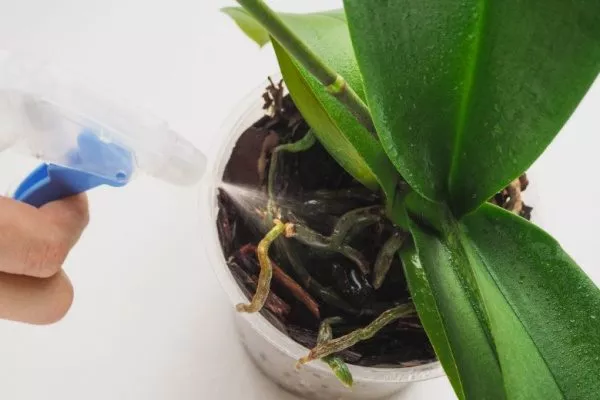
Recommended medications for combating sticky drops:
- Mospilan. An insecticide applied at 10-day intervals for maximum effectiveness. This product is suitable if mealybugs, aphids, or other parasitic insects are found on the orchid.
- Phosphamide. The drug is used when parasites are detected. It is dissolved in water and the resulting solution is sprayed on orchids infested by insects.
- Alirin-B. It is used for watering orchids using the immersion method. The preparation is diluted in water—two drops per flower.
- Fitosporin. This is a universal remedy used to treat diseases caused by fungal infections.
- Bordeaux mixture. This is a composition consisting of lime and copper sulfate.
- Zircon. This product significantly increases the plant's resistance to stress. Its use enhances plant immunity to powdery mildew, rot, and bacterial diseases.
- Cleansing flower. The product is intended for indoor plants. It is used both for the treatment of sticky plaque and for its prevention.
- Quadris. It is based on azoxystrobin, which has a powerful therapeutic effect. It is recommended for preventative use.
- Trichodermin. A biofungicide used for preventative purposes, in case of damage to the root system and when treating the substrate.
- Topaz. Helps treat fungal infections. Available as an emulsion. Recommended for use in combination with contact fungicides.
- Fundazol. A fungicide that suppresses fungal infections. Recommended for use on plants affected by powdery mildew. Treatments should be done at 5-day intervals.
In addition to the above-mentioned medications, you can also use various folk methods.
Tips for dealing with sticky residue:
- Wiping with hydrogen peroxide and ammonia helps remove the sticky residue. These solutions are used to wipe the affected areas.
- If the damage is severe, chemical treatments are recommended. At the initial stage of infection, when the damage is not too severe, orchids can be treated with laundry soap. However, after this, the flowers must be sprayed with a chemical solution to completely eliminate the infection.
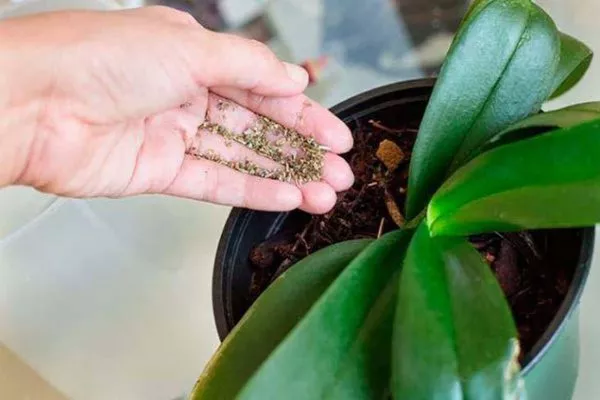
- Infected areas of the plant can be sprinkled with cinnamon. If there is mold in the pot, sprinkle cinnamon throughout the entire substrate. It is recommended to repeat this procedure several times, with intervals of 3-5 days.
Traditional methods of treatment
If the plant damage is superficial, you can use alternative treatment methods - folk ones.
Recommended activities:
- Wash the leaves daily with a soapy solution (prepare it from laundry soap).
- If the soap solution does not produce the desired effect, add a little vodka or alcohol to the water.
- Rinse the plant with a shower and then treat it with aromatic oils.
- Use horsetail infusion for spraying.
- Wipe the leaves with an iodine-soda solution.
Prevention
Preventing sticky drops is similar to the measures taken to prevent any disease. It's important to follow proper orchid care guidelines and inspect them regularly. Drops on leaves can signal a serious problem.
- ✓ Maintaining air humidity at 50-60% prevents the development of fungal diseases.
- ✓ Regular inspection of the underside of leaves helps in early detection of pests.
Preventive measures:
- Water the plant only as needed. Pay attention to the roots—if they've turned light gray, it's time to water. Check the weight of the pot. If it's light, it's time to water.
- Monitor the humidity in the room. It should be 60-70%, no more.
- Feed the flower no more than twice a month, and only during the active period.
- Quarantine all purchased orchids to ensure they are free of pests and infections.
If, after quarantine, it turns out the orchid has been infected with insect pests, fungi, or bacteria, it must first be treated. The plant should be quarantined until it has fully recovered.
How to care for an affected plant:
- treat the flower with appropriate preparations - fungicides for diseases and insecticides for pests;
- create optimal living conditions;
- Wait another 2 weeks after complete recovery/destruction of parasites to make sure the plant is cured - only then can it be moved to a room with other flowers;
- Feed the orchid weakened by pests/diseases with Epin or Zircon.
Recommendations for plant care
Regardless of the cause of the drips, the plant needs appropriate growing conditions. It's important not only to treat the orchid but also to create a favorable environment for it.
Tips for caring for a sick/pest-infested plant:
- If insect pests are found on the orchid, the substrate in which the flower grows is washed every 10 days.
- Maintain the temperature at +22…+25°C in summer and +16…+18°C in winter. The difference between day and night temperatures should be no more than 5°C.
- Use artificial lighting to extend daylight hours to 14 hours. Turn on grow lights. And be sure to shade the plant from direct sunlight.
- If the flower is being treated for rot and fungus, keep humidity low. It should be reduced from 60-70% to 50%.
- Ventilate the room frequently - fresh air currents prevent the development of microorganisms.
- During treatment, fertilizing the plant is not recommended, with the exception of iron-containing preparations.
- Water the flower rarely and little by little, and only after the substrate has completely dried out.
Treat the orchid for at least two weeks. Continue treatment even if the sticky spots disappear, as infectious diseases tend to recur.
Once the course of treatment is completed, it is recommended to transplant the plant into fresh substrate (if the case is urgent, transplantation is carried out at the very beginning).
Post-treatment care
Once the sticky drops caused by insect pests have been removed and the pests themselves have been destroyed, the plant requires special care. Parasitic infections are prone to recurrence, so measures must be taken to prevent their recurrence.
Post-treatment care instructions:
- Wash the plant, its stem, leaves and flowers daily with a cotton pad soaked in water or soapy water.
- Repot the orchid in a new pot to prevent recurrence.
- The pot in which the orchid grew before and during the disease must be thoroughly washed and disinfected.
- Water the plant once a week, moderately. Maintain high humidity indoors, but don't let it reach the maximum levels.
A plant saved from parasites will need additional feeding no earlier than several months after complete recovery.
Content errors
An orchid is a capricious plant, sensitive to the slightest changes in its usual habitat and care errors.
Most often, novice gardeners make the following mistakes:
- excessive watering, and systematic violation of the regime leads to rotting of the plant;
- placing the flower in direct sunlight;
- low indoor air humidity;
- use of protective granules against parasites.
When purchasing pest control granules, gardeners make a serious mistake—such products are strictly contraindicated for orchids. The substances contained in the granules can cause severe root burns.
Current issues
Beginner gardeners often have questions about growing orchids. Sticky drops are no exception—they also raise a number of questions about them.
What interests novice flower growers:
- Question No. 1. Should I cut off the flower stalk during treatment? It's true that the plant expends a lot of energy on flowering, but deliberately removing the flower stalk and buds during treatment is not recommended. This is pointless, as the fight against parasitic insects or microbes will be carried out with powerful chemicals—fungicides or insecticides. If the plant doesn't have enough vitality to fight the problem, it will shed its flowers and unopened buds on its own.
- Question No. 2. Are there any orchid species predisposed to powdery mildew? This disease is equally dangerous for all orchids, regardless of species. The risk of infection depends not so much on the variety itself as on the growing conditions—whether the grower can or cannot create the necessary environment.
- Question No. 3. Is there a connection between sticky droplets and infectious diseases? Yes, but it's not direct. Droplets can appear on perfectly healthy plants, too. However, there is an indirect connection—fungi and bacteria thrive in sticky, sugary environments. Therefore, weakened flowers that develop droplets can become susceptible to various infectious diseases.
Finally, watch this video about sticky drops on an orchid:
Florists are right to be concerned when sticky drops appear on orchids. They can be the result of a natural process harmless to the plant, or they can be a sign of a serious problem. In any case, it's important to closely monitor the plant's condition to take appropriate measures promptly.