
Orchids are considered capricious flowers, requiring specific growing conditions and care. One potential problem when growing them is root loss. However, this situation isn't a death sentence for the orchid—it can still be saved with some resuscitation measures.
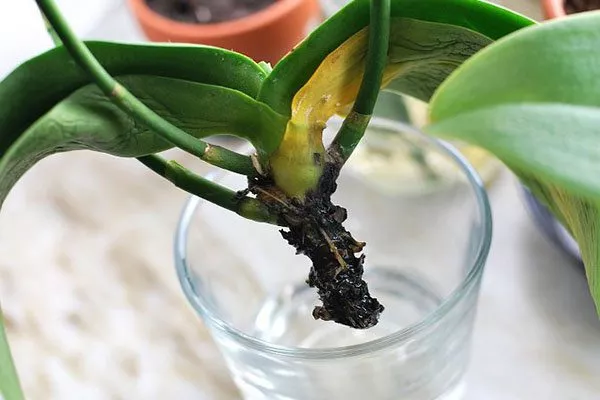
Why does an orchid lose roots?
The main cause of any orchid problems, including root loss, is poor care. Orchids grown in their natural habitats are virtually disease-free—they are vigorous, strong, and resilient plants.
When growing indoors, it's quite difficult to maintain the microclimate typical of the tropics or highlands, resulting in problems with roots, leaves, and flowering. However, before taking measures to prevent root loss, it's important to accurately determine the cause.
| Name | Temperature of content | Humidity | Lighting |
|---|---|---|---|
| Phalaenopsis | 22-26°C | 60-70% | Diffused light |
| Dendrobium | 18-22°C | 50-60% | Bright light |
| Cattleya | 20-24°C | 50-70% | Direct light in the morning |
Due to natural causes
Orchid lower leaves age over time—this is a natural phenomenon that requires no intervention. A similar situation occurs with the root system, where a "cycle" occurs: some roots grow, while others die. It's important for a gardener to be able to distinguish between natural and pathological processes.
The roots are overdried
Infrequent watering often causes orchid roots to dry out. The plant doesn't tolerate water stress well—first the roots die, then the leaves. Root desiccation can also be caused by high water hardness.
Overheat
Although orchids thrive in warmth, they cannot tolerate direct sunlight. If you place orchid pots on a south-facing window without providing any shade, the plants will respond to this stress by drying out their roots and dropping their leaves.
A similar situation can arise when orchid pots are placed near heating radiators. The substrate begins to evaporate excessively, and the roots suffer from a lack of moisture—overheating leads to root loss.
Overflow
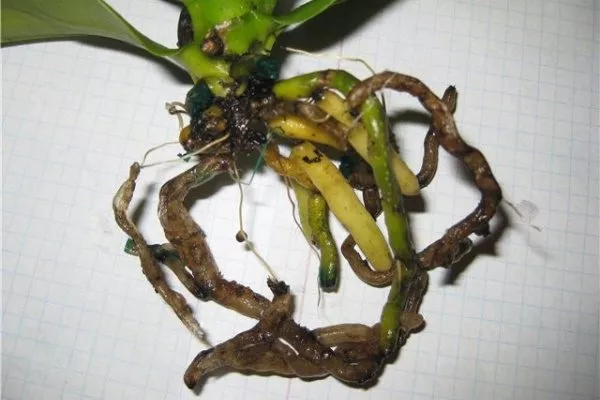
Many indoor plants die from overwatering, and orchids are no exception. Regular overwatering causes the plant's roots to rot and die. Their color also changes—greenish roots become gray or black, and their interiors become hollow.
Frostbite
Orchids love heat, so they can easily freeze if placed near an open window during the cold season. Just 10 minutes is enough for the plant's leaves to freeze, and then the roots. If the room is ventilated, the plant should be moved away from the open window.
Orchids can also freeze during transportation if it's cold outside. Therefore, transporting these flowers requires careful planning, including planning the entire journey. It's advisable to take a taxi and pack the plant appropriately.
Fungus
Fungus attacks orchids due to overwatering or the use of undisinfected tools. The fungus can enter through fresh cuts. Affected roots become spotted and must be trimmed back to healthy tissue.
- Isolate the plant from other houseplants to prevent the spread of infection.
- Remove all affected areas of roots and leaves with a sterile instrument.
- Treat the cuts with the fungicide indicated in the article and let them dry for 8-10 hours.
Excessive feeding
Inexperienced gardeners often overfeed orchids. They believe that nutrition can only benefit these flowers. When applying fertilizer, it's important to strictly adhere to the dosage and follow the instructions. Excessive fertilization can cause root burn.
Unsuitable substrate
The quality of the substrate in which orchids grow determines air exchange and the quality of root hydration. If the substrate is too dense, the roots may also rot.
What will be needed for resuscitation?
Saving an orchid that has lost its roots requires the use of special products. First, the cuttings must be disinfected—this can be done with activated charcoal or cinnamon—and second, new root growth must be stimulated by treating them with growth stimulants.
- ✓ The air temperature should be stable, without sudden changes, in the range of 22-26°C.
- ✓ Air humidity should be maintained at 60-70% using a humidifier or a tray with water.
Recommended stimulants:
- Succinic acid. It's used to restore plants that have lost roots and/or leaves. One tablet is dissolved in 1 liter of water. The solution is used for spraying and watering, but not more than once a month.
- Vermiculite. This loose material is typically used as a substitute for moss and bark. Unlike the substrate, vermiculite contains far more nutrients. Plants made from bark and moss are transplanted into vermiculite in the usual way for orchids. Water the plant as the mixture dries.
- Kornevin. It stimulates root growth. The preparation is diluted in water according to the instructions, and the rootless plant is immersed in the solution. The flowers are then transferred to a container of water and placed in a warm, well-lit area.
- Fitosporin. This remedy helps restore orchids infected with fungus. The plant is soaked in a Fitosporin solution for 15-20 minutes. It is then planted in a pre-prepared greenhouse or in a pot filled with sphagnum moss.
- Glucose. It's a great complement to all the previous treatments, as it promotes root growth. The plant is placed in a glucose-water solution up to the root collar, which accelerates root formation.
Stimulants speed up the process of restoration of rootless orchids, but the results require time and proper care.
Plant restoration
Restoring an orchid without roots is a difficult task, but it can be achieved even if it has completely lost them. There are several methods for reviving orchids; let's take a closer look.
In a mini-greenhouse and in sphagnum moss
A mini greenhouse creates the most favorable microclimate for orchids. Even in the most difficult cases, roots can be restored in greenhouse conditions. The plant will be isolated from the outside environment, so maintaining the desired temperature and humidity is crucial.
To build a greenhouse for restoring orchids, you will need:
- a plastic bottle with a capacity of 2, 5 or 6 liters - the volume depends on the size of the flower;
- fine fraction expanded clay;
- bark of medium and fine fraction;
- sphagnum moss (preferably live).
The procedure for restoring an orchid in a greenhouse:
- Cut a plastic bottle so that the flower fits easily inside. The cut-off portion can be used as a lid. The cut bottle can also be covered with plastic film with holes punched in it.
- Place expanded clay at the bottom of the bottle, then bark on top, then sphagnum moss. The sphagnum moss should always be slightly damp, but not soggy.
- Place the flower in the bottle in a warm place, out of direct sunlight.
Roots in orchids revived in a greenhouse usually appear after about 30 days.
Root growth in water
This method is rightfully considered one of the simplest. It's accessible to every gardener and requires little effort. If the roots are damaged—frozen, dried out, rotted, or starved of air—special root care products should be used to promote faster root growth.
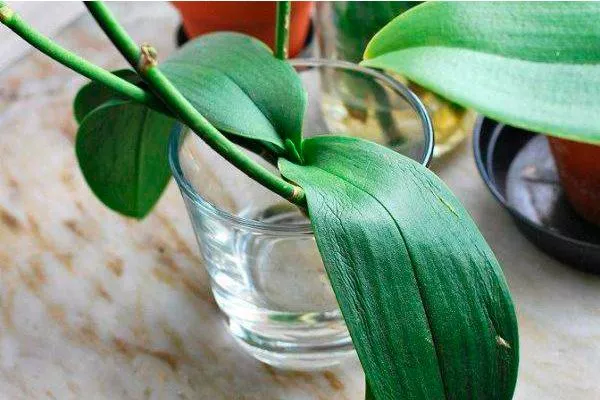
The procedure for restoring an orchid above water:
- Trim off any damaged roots with a disinfected, sharpened tool. Dry the cuts at room temperature for 8 hours. Treat the root collar with Kornevin, Zircon, or another effective rooting agent.
- Place the orchid in a pot that has a ledge at the bottom so that the base does not touch the water, only the roots.
- Dissolve an activated charcoal tablet in 200 ml of boiled water. Immerse the orchid in the resulting solution.
Place the container with the flower in a warm, well-lit location. Once the plant has developed roots, repot it in a medium of finely chopped bark and sphagnum moss.
Growing roots above water
If your orchid's roots are rotting and falling off, try the water-based resuscitation method. It's important to follow all the steps correctly and consistently. Use filtered or boiled water.
Procedure:
- Remove the plant from the substrate and inspect the remaining roots. Trim off any rotted or dry areas with a disinfected tool. If the flower neck is also affected by rot, trim it back to healthy tissue.
- Sprinkle the cuts with charcoal or activated charcoal to prevent infection. Leave the flower for 8-10 hours to allow all cuts to dry.
- Find a glass container that ensures the plant's neck doesn't touch the water—there should be 2-3 cm between them. If the plant is placed in water, the rotting process will continue.
- Place the plant in a well-lit place, but not in direct sunlight.
During the described recovery process, orchid leaves almost always lose their elasticity. But this is a normal occurrence—roots are regenerating at the expense of green mass.
Use of succinic acid
To restore roots and leaves, use succinic acid tablets. They can be purchased at a pharmacy. One tablet costs 10-15 rubles.
How to revive an orchid with succinic acid:
- Remove the flower from the pot and rinse the roots under running water. Trim off any rotten areas and disinfect the cuts, then dry the roots.
- Prepare a solution: dissolve 2-4 acid tablets in 1 liter of warm water. Soak the root collar and remaining roots in the resulting solution. Be careful not to let water get into the rosette. Soak for 15-20 minutes. Repeat daily until the orchid begins to grow roots.
- After each soaking, hang the orchid, without roots, or place it in a container filled with water. Position it so that the plant's crown doesn't touch the water. Alternatively, use moss. Wet it and place it near the crown. The plant can also be suspended over wet moss.
- Once the flower has developed roots, plant the orchid in fresh substrate prepared specifically for orchids.
Also watch a video on how to grow roots from scratch:
Disinfection
Orchid root loss is often due to rot. Furthermore, during resuscitation, the plant can become infected with fungal and other infections, for example, when using contaminated tools. In addition to disinfecting scissors and other cutting tools, it is necessary to treat fresh cuts.
The most popular means of disinfecting cuts among flower growers are:
- activated carbon;
- charcoal;
- brilliant green;
- cinnamon;
- fungicides.
Cutting tools are processed mainly in alcohol - it is an affordable and reliable product.
If there are traces of sooty (black) fungus on the roots, it is recommended to rinse the entire flower in warm water, treat the cuts and soak in one of the following fungicides:
- Boscalid;
- Tolclofos methyl;
- Pencycuron.
Fungicide treatments are carried out twice, so don't rush planting the flower in the substrate. After a week's break, repeat the treatment. To prevent the root system from drying out, mist it with a spray bottle and cover it with a cotton towel.
The process of reviving an orchid
Once the resuscitation process has begun, it's important to provide the plant with conditions that are as favorable as possible for root growth. If done correctly, the first signs of recovery will appear in about a month. Initially, small bumps will appear on the root collar, and roots will soon emerge from these.
If the restoration is successful, the leaves will begin to grow along with the roots, in about 1.5 months.
The success of recovery is determined by the following factors:
- the condition of the plant, its ability to recover - the amount of vitality and energy;
- time of year - it has been observed that recovery is more successful in the spring;
- In winter, a rootless orchid being revived requires warmth and artificial lighting, otherwise the recovery process will not begin.
All steps and recommendations for root extension must be followed precisely and in a specific sequence. One mistake or omission in the plan is enough for the process to go awry.
Once roots emerge, the plant needs to be provided with a high-quality bark substrate and properly watered. It's also important to remember and avoid the mistakes that led to root loss.
If the orchid's leaves become limp and soft after root recovery, it's recommended to wipe them with gauze soaked in a solution of succinic acid. However, the leaves usually don't recover, and new, firm, and elastic ones grow. The old leaves, having devoted their energy to root growth, eventually turn yellow and fall off.
Watch this video about orchid resuscitation:
Further care
Complete resuscitation of an orchid takes from one month to a year. The duration of root recovery depends on the plant's condition at the start of treatment, including how many living roots or root remnants remain, the condition of the leaves, and the conditions in which the plant was kept.
Tips for further care:
- When the new roots reach 3-4 cm, repot the plant in fresh soil. Don't use the same pot it grew in; instead, choose a smaller one, like for a new plant. Peat pots are also suitable. They're convenient because you don't have to repot the plant—you simply place the pot in a container with the soil.
- After transplantation, the restored plant is watered as usual.
- To make the plant stable, it is secured to supports.
- The plant is provided with normal lighting for 12-14 hours a day.
- Maintain a temperature of 22 to 26°C. Adjust humidity according to the specific orchid species/variety. Typically, 60-70% humidity is recommended. To avoid errors, it's best to use a humidity meter.
Most often, if everything is done correctly, a rootless orchid can be saved. However, failure can befall a gardener if the orchid has problems not only with the roots but also with the stem. Restoration also requires careful care, without which no results can be achieved.
Root damage, let alone root loss, is a serious challenge for an orchid. However, gardeners should know that this is a fairly common occurrence and can be successfully combated with sufficient diligence. The key is to detect the problem early and begin resuscitating the plant.