
The orchid is a delicate flower that almost everyone loves. However, it's a delicate plant that requires attention and care. There are many types of orchids, so before purchasing, it's important to decide which variety you like best.
Brief description of orchids
The orchid is a wondrous creation of nature, a symbol of harmony and perfection, and belongs to the Orchidaceae family. Most gardeners consider it one of the most beautiful flowers in the world. The orchid captivates with its delicacy, splendor, and charm. Its flowers come in a wide variety of colors.
People have admired the beauty of the orchid for centuries. In some countries, this flower is considered a national symbol. Representatives of this genus are found on every continent. Their primary habitats are the tropics, subtropics, mountains, and even cliffs.
The flowers grow on tree stumps and bark, but can also survive on rocky surfaces. The orchid can grow from 2 cm to 2 m.
Groups
All orchid species are divided into two groups. There are monopodial varieties of orchis (another name), characterized by a single, long stem growing vertically. Several flower stalks may emerge from the base of the shoots or the axils of the fleshy, dense leaves.
There are also sympodial orchid varieties, which grow horizontally, like twining vines, from which shoots emerge that connect to the root system. These stem shoots accumulate moisture and nutrients. The leaves of this group of plants are much narrower and thinner than those of monopodial varieties.
Orchid varieties by genus and species
In biology, plants have their own classification system. They are divided into groups by family, genera, and species. Each species is further divided into varieties.
Orchid genera, species, and varieties are astonishing in their diversity and abundance—there are over 150,000 specimens worldwide. Each flower is unique and has distinct characteristics. With a diverse palette of colors and shades, any orchid enthusiast can satisfy their tastes and preferences.
Phalaenopsis
| Name | Growth type | Flower color | Aroma |
|---|---|---|---|
| Phalaenopsis Aphrodite | Monopodial | White, pink, lilac | Weak |
| Phalaenopsis Schiller | Monopodial | Pink, purple | Weak |
| Phalaenopsis Stewart | Monopodial | White with purple spots | Weak |
| Phalaenopsis amabilis | Monopodial | White | Weak |
| Phalaenopsis Lobba | Monopodial | Yellow with brown spots | Weak |
| Phalaenopsis Sandera | Monopodial | White with pink spots | Weak |
One of the most popular members of the Orchidaceae family. Considered low-maintenance and affordable, it's ideal for beginners. It's a monopodial epiphyte—it has a single growing point and naturally grows on trees.
Phalaenopsis comes in a wide variety of colors: snow-white, pink, lilac, yellow, and often with a contrasting lip and speckled petals. Orchids with pink-purple hues are almost all hybrids. Few of them have a distinct fragrance.
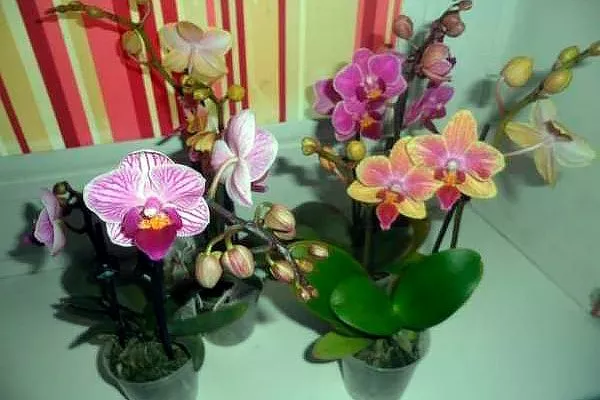
The Phalaenopsis genus of orchids comprises 70 species. The most striking representatives are:
- Phalaenopsis Aphrodite (Phalaenopsis aphrodite);
- Phalaenopsis Schiller (Phalaenopsis schilleriana);
- Phalaenopsis Stewart (Phalaenopsis stuartiana);
- Phalaenopsis charming (Phalaenopsis amabilis);
- Phalaenopsis Lobba (Phalaenopsis lobbii);
- Phalaenopsis sanderiana.
Dendrobium
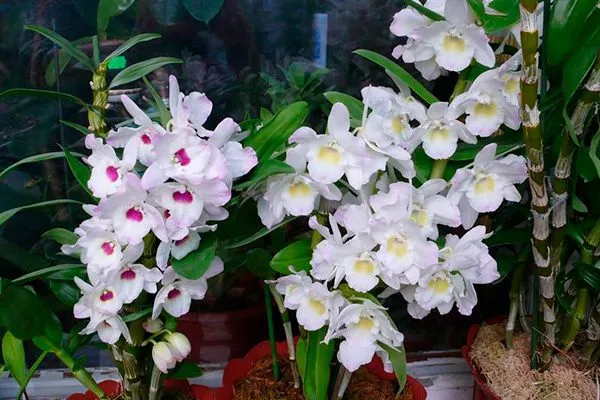
This orchid species has up to 1,500 varieties. Dendrobium belongs to the group of sympodial epiphytes, native to Oceania. It is renowned for its abundant and long-lasting blooms. The plant is moisture-loving, requiring daily irrigation.
Cymbidium
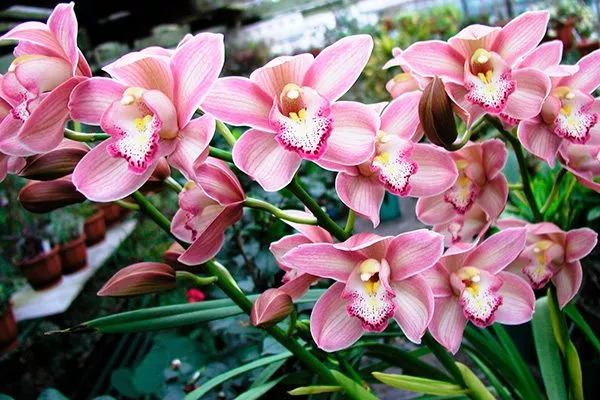
This orchid species includes approximately 60 hybrid and natural varieties. It is native to Australia, Indochina, and the Japanese islands. It is a sympodial epiphyte, but lithophytes (those that grow on the ground) also occur.
Cymbidium orchids come in a variety of colors: cream, red, yellow, and brown. The flowers grow large, sometimes reaching up to 13 cm in diameter, and typically feature a large, contrasting lip. This frost-hardy species prefers medium humidity and indirect light.
Cattleya
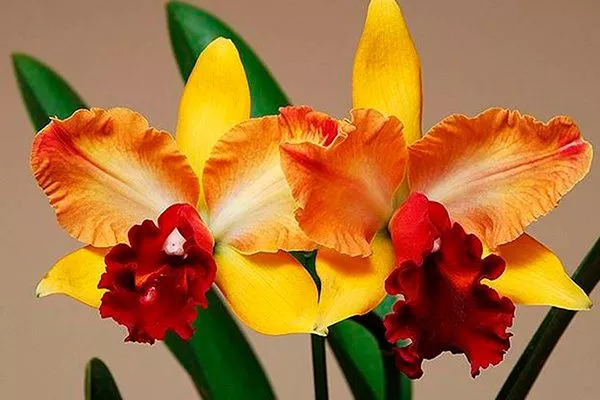
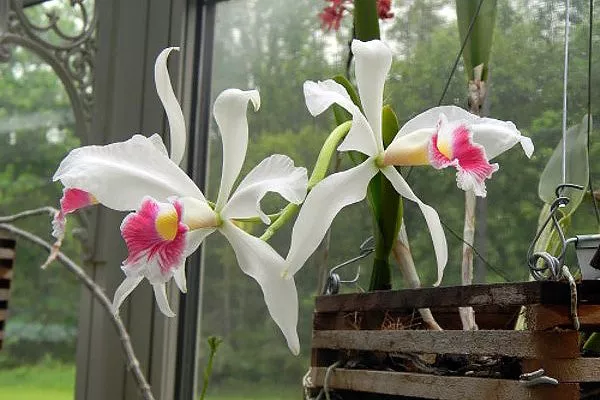
A typical Amazonian sympodial epiphyte, it absorbs moisture from the soil and air, enabling photosynthesis through its aerial root system. There are approximately 120 orchid varieties of this species. It is an easy-to-grow orchid that thrives at temperatures between 18 and 20 degrees Celsius. It blooms once a year.
Cattleya comes in white, purple, raspberry, pink, and lilac. The plant produces beautiful, large flowers, reaching up to 25 cm in diameter. Orchids typically have double, delicate petals.
Wanda
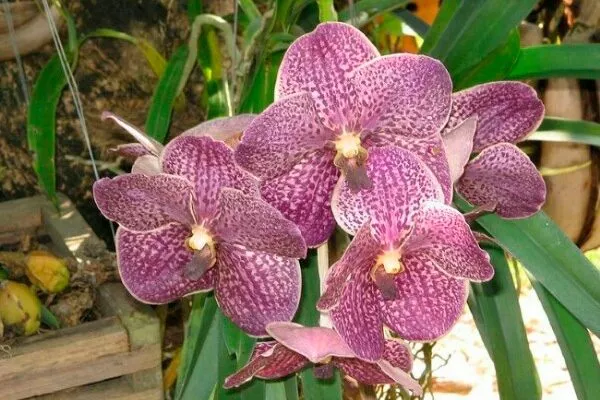
A monopodial epiphyte native to Southwest Asia and Northern Australia, Vanda is an expensive species characterized by its high price and high care requirements. It requires regular irrigation, high humidity (up to 80%, which is unusual for orchis), bright light, and a temperature of 26-28 degrees Celsius.
The flowers grow large, reaching up to 15 cm in diameter. The petals are shades of pink, lilac, or purple. However, they don't immediately become vibrant; they initially take on a soft light green hue, and after the buds open, the final shade is transformed.
Vanilla
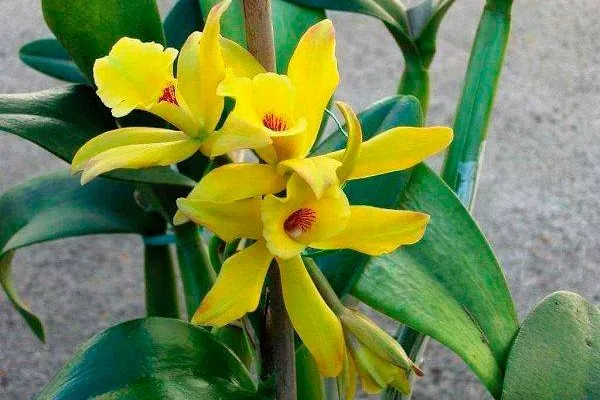
Vanilla is a variegated orchid with approximately 100 species in its genus. Native to Central America, the plant is now grown worldwide not only for its spice but also for its decorative properties.
The Vanilla orchid is renowned for its edible, fragrant fruits. Indoors, the plant delights with abundant blooms. In the wild, the orchid grows as a vine, 10-30 meters long, and grows in tropical forests. Fruiting conditions are impossible to create indoor.
Oncidium
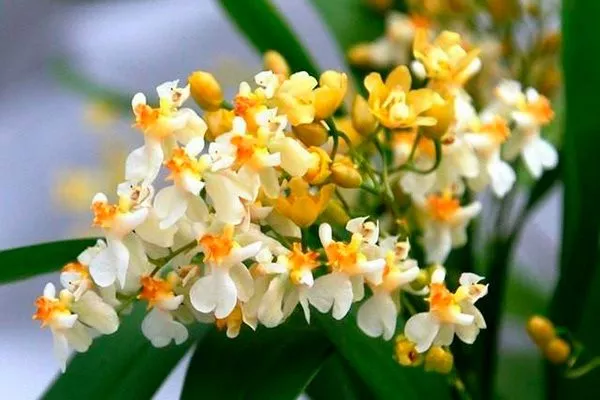
Oncidium is native to South America. It grows along the banks of the Amazon and is a sympodial epiphyte. The flowers are rather sparse: almost all are yellow with red or brown spots. The orchid's lip has a distinctive, cushion-like growth. The buds are large.
The flowers are beautiful with their distinctive appearance—resembling a ballerina in a pirouette. Because of this, the species is often called the "dancing doll." This type can survive for several weeks without water, but be warned: the orchid will take a serious revenge—it will not bloom.
Brassia
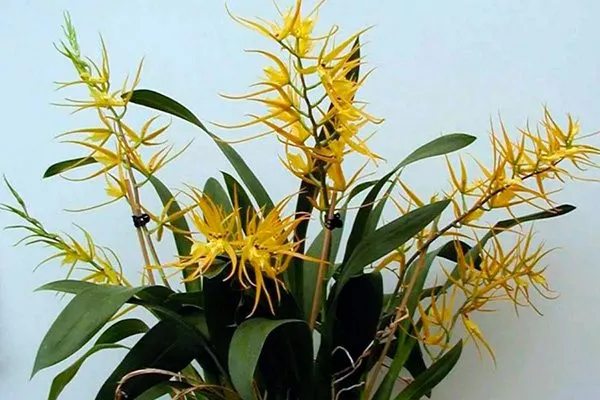
Native to the Amazon, Brassia is a sympodial epiphyte with a pleasant vanilla scent. With proper care, this orchid will bloom year-round. The flowers grow large, reaching 10-15 cm in diameter. The petals are yellow, orange, or brown. These flowers are predominantly solid-colored.
There are about 30 interesting varieties. This undemanding plant requires bright light, adequate humidity (up to 60-70%), and a stable temperature (23-25 degrees Celsius). The Brassia species is named after the artist and passionate gardener William Brass.
Ludisia
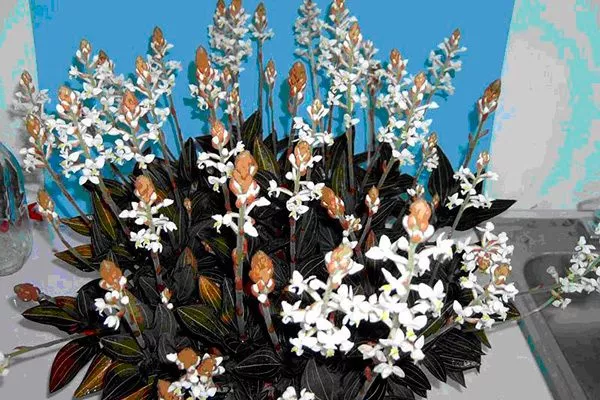
Ludisia (or Ludisia, or Jewel Orchid) grows in the rainforests of China, Malaysia, and Vietnam. It is a sympodial plant and is renowned for its ease of care. It is suitable for beginning gardeners.
The plant's value lies not in its flowers, but in its leaves—they are characterized by an unusual coloring: olive or purple with light veins. The leaves are velvety. The orchid itself is short and creeping, reaching up to 15 cm in height.
Paphiopedilum (Venus' Slipper)
This species is not suitable for beginners, as it requires careful care. Don't expect flower stalks from a single-flowered rosette. The plant consists of a short stem with a rosette covered in broad, linear or strap-shaped leaves, colored a rich green.
The flower stalk ranges from 4 to 60 cm in length, with a single slipper. The Victoria-Regina variety is an exception, with up to 30 slippers that open alternately. Lady's slipper flowers are characterized by large, vibrant flowers in shades of red, yellow, and green. The lip, with its striking coloring and sweet nectar, stands out.
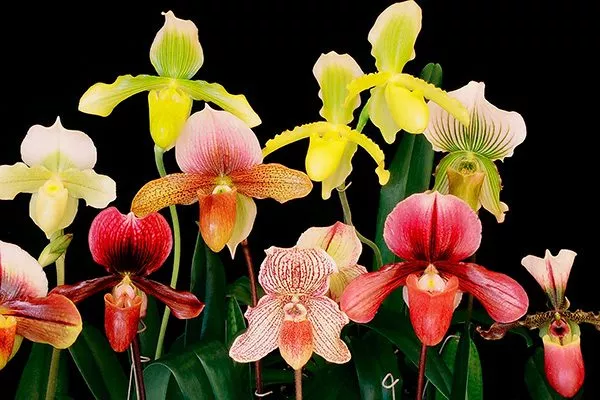
One of the species of lady's slipper orchid is the "calloused" orchid or Paphiopedilum callosum.
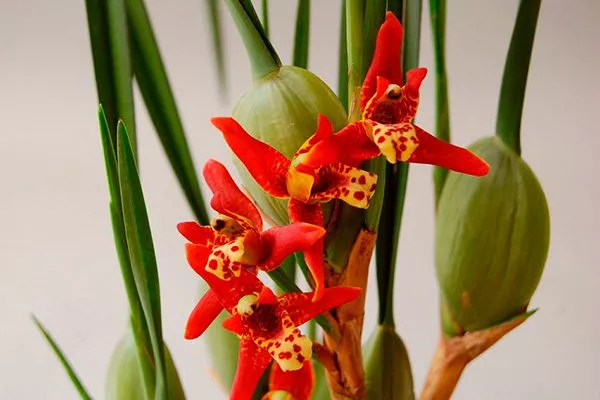
Maxillaria (also known as the coconut orchid)
Maxillaria (also known as the coconut orchid) is considered a shade-tolerant, beautifully flowering plant. It is a sympodial plant native to South and Central America. There are 300 species of this plant. It has thin, narrow leaves that reach 60-100 cm in length, depending on the cultivar.
The pseudobulbs are rounded, flattened on both sides. The flowers are small – 2-4 cm in diameter. The plant blooms profusely and is fragrant. Orchids can be yellow, red, or orange, with speckled or striped lips. The flowers are triangular in shape. The blooming period lasts about a month.
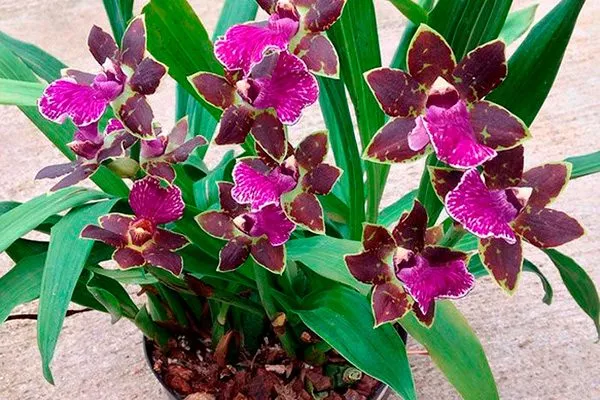
Zygopetalum
An Amazonian sympodial epiphyte or lithophyte with approximately 30 varieties and characterized by horizontal branching. The flowers reach 7-8 cm in diameter and have a pleasant, sweet aroma. The petals typically have two- or three-part coloring, ranging from white to burgundy or ink.
It's characterized by an interesting ladder-like growth habit: each successive pseudobulb grows taller than the previous one. The plant is easy to care for indoors; all you need to do is provide it with a cool location, as the orchid doesn't tolerate heat.
Guide
In the wild, habenaria grows in Korea, Japan, and northeastern China. It can also be found in small numbers in the southern Primorsky Krai of Russia. It's a delicate plant, so it can be quite challenging for a novice gardener to manage.
The flower's unusual name translates as "white heron." It was so named due to its uncanny resemblance to the bird. The plant has narrow leaves arranged alternately on the stem. The flower stalk reaches 50 cm in length, bearing 2 to 8 flowers.
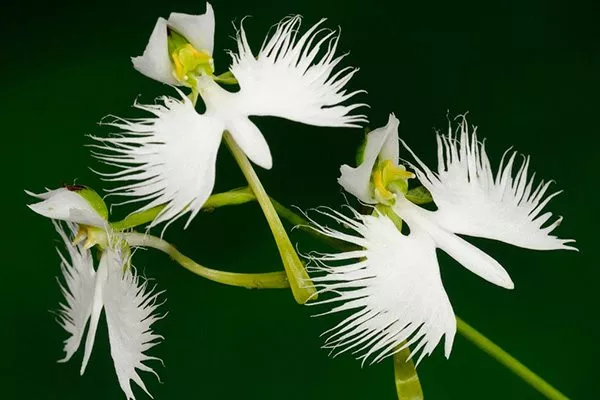
There is a type of this orchid called the ray orchid (also known as the white heron orchid or Habenaria radiata).
Miltonia
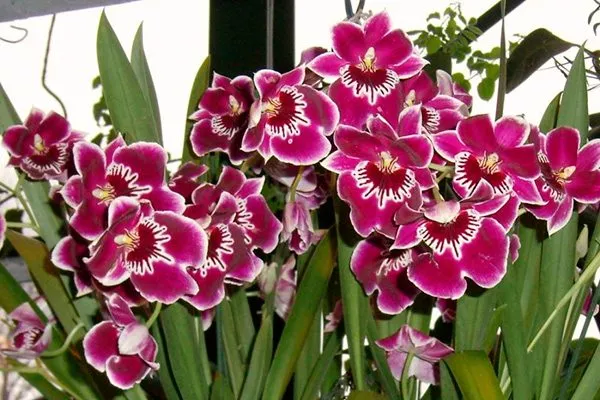
This Brazilian-Colombian orchid is very demanding in terms of care. It is sympodial and does not require extreme humidity, light, or temperature. There are about 10 varieties of indoor orchids.
They bloom for several months with fragrant, small, variegated flowers up to 4-5 cm in diameter. They are characterized by vibrant colors – most commonly, orchids with petals in shades of scarlet, yellow, purple, terracotta, pink, and snow-white. Their shape resembles that of a violet.
Cambria
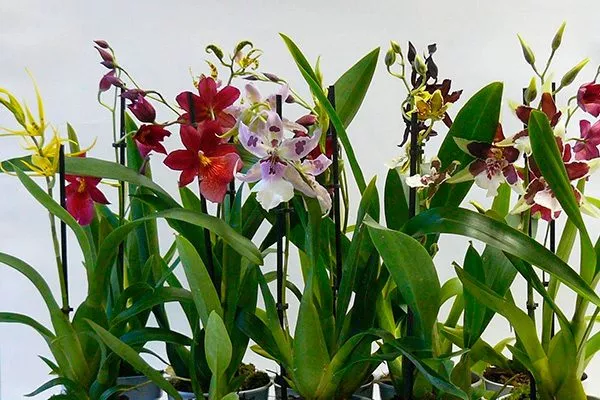
A sympodial epiphyte, this hybrid is easy to care for and features consistent, long-lasting blooms of small, star-shaped flowers up to 10 cm in diameter. Orchids come in a variety of colors: cream, yellow, brown, scarlet, spotted, and multicolored.
Cambria has moderate growing conditions, requiring only a minimum humidity level of 60% and supplemental lighting during the winter. This species typically blooms in late autumn and continues to bloom throughout most of the rest of the year.
Dracula
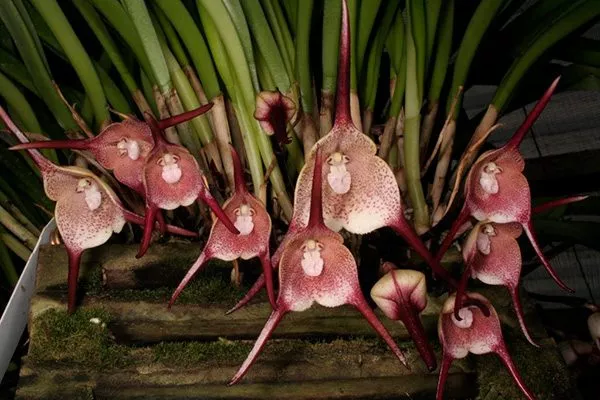
Dracula orchids have approximately 120 varieties. They are typically low-growing plants without pseudobulbs, though sometimes strap-shaped, deep-green leaves serve their purpose. The petals have slightly tapered edges and a thin tail, often covered in hairs.
The flower stalks are upright, and the flowers vary in shape and color across species. The stalks often resemble a "dragon's mouth." The flowers are a deep purple. Flowering can occur at any time with proper care. This species does not tolerate excessive light or high temperatures.
Bulbophyllum
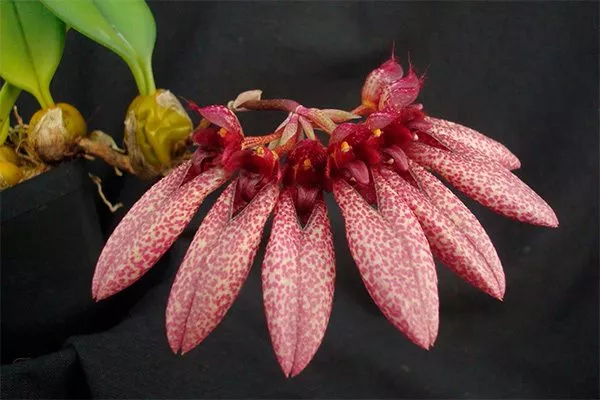
This is the largest orchid species by number, with approximately 2,000 subspecies. These varieties grow in tropical forests in hot countries. This type is characterized by a creeping stem with single- or double-leafed pseudobulbs that are convex or angular in shape.
The leaves are located at the apex; they are thin, stiff, or fleshy, growing vertically upward or drooping. Species with small flowers are found, but large-flowered Bulbophyllums also exist. The lip is fleshy, sometimes pubescent or ciliated, with a barely noticeable straight or short column at the base.
Beallara
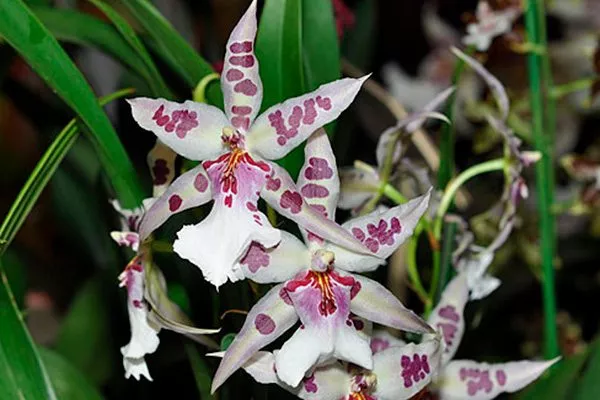
This is a sympodial hybrid species. It is characterized by thickened stems and the cauline bulbs that emerge from them. Several new shoots form on the pseudobulbs, replacing the old ones after they wither. The plants are covered with elongated, strap-shaped leaves with a prominent central vein.
The star-shaped flowers are gathered in clusters of several. The petals are colored in delicate shades of whitish, pink, purple, and cream. The flowers reach up to 20 cm in diameter. The height of the peduncle varies from 30 cm and up.
Odontoglossum
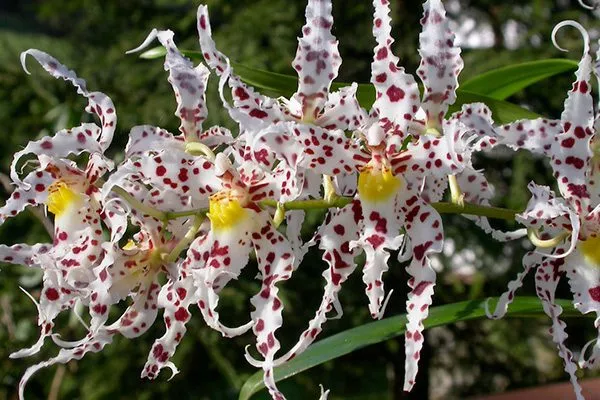
This species grows in the Andean foothills, but can be found throughout Latin America. These orchids are characterized by a pleasant fragrance. The flowers are star-shaped and come in several shades, typically dotted with leopard spots. The orchids include lithophytes and epiphytes.
They typically bloom once a year. This is a demanding species and not suitable for the novice gardener. It doesn't tolerate strong sunlight, requires watering, and requires a humidity level of 55-60%.
Ghost
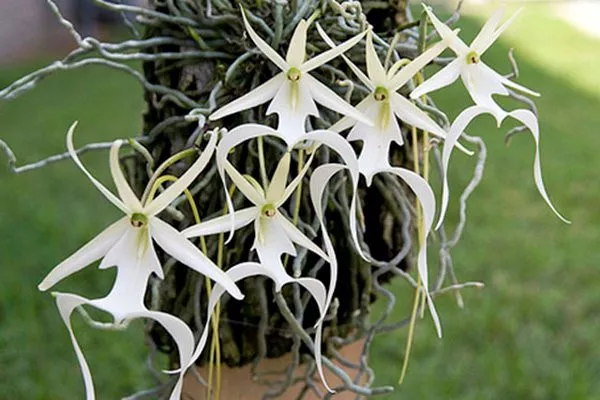
The Ghost orchid is considered one of the most mysterious and rare orchids. The plant lacks leaves and is also famous for its unusual method of nutrition: it obtains all its nutrition from fungi found on its roots. The flowers are white and green. The orchid blooms from June to August.
The plant requires regular care, maintaining an optimal humidity level of around 80%. It also requires supplemental lighting and occasional ventilation. This variety is quite easy to maintain, making it suitable for beginners.
Cleopatra
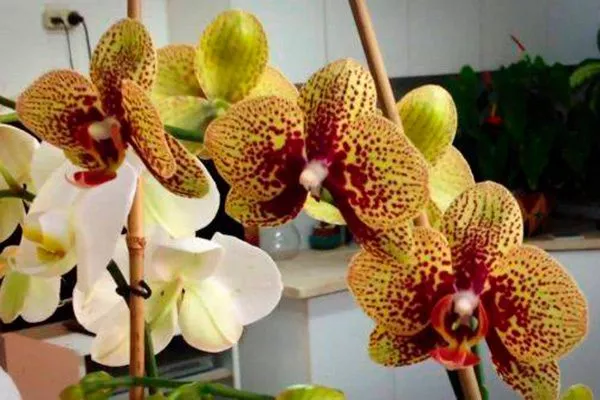
A luxurious hybrid belonging to the Phalaenopsis genus. The flowers are quite large. The petals are painted in golden tones with a vibrant scattering of dots and stripes of a distinctive shape. The plant has a miniature, neat lip, finished in a purple hue. The plant can be bright or pale.
The flowers have a dense structure, preventing damage during transportation. The flower stalk averages 60 cm in height. Lilac, pinkish, or purple spots make the plant unique and attractive.
Manhattan
A hybrid Phalaenopsis characterized by large flowers, reaching up to 9 cm in diameter. The petals are decorated with a variegated scattering of crimson dots on a white background. The orchid has a three-petaled lip with an intricate golden-brown pattern.
The petals are typically light pink or light lilac, with a bright yellow lip. This easy-to-care-for orchid is covered in leathery, oval-shaped leaves. With proper care and fertilization, it will delight with long-lasting blooms.
Tiger
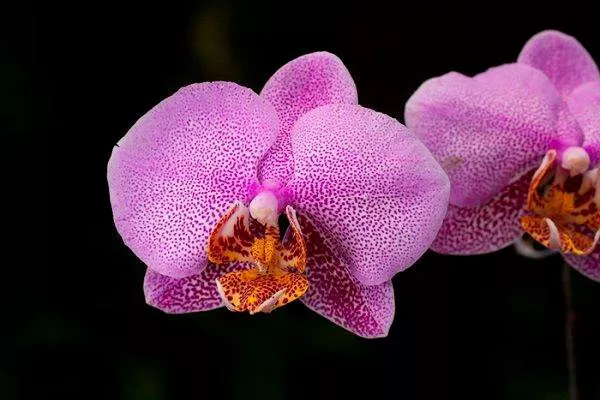
Several orchid species are commonly referred to by this name: odontoglossum, striped, and spotted Phalaenopsis hybrids. Their flowers are colored in shades reminiscent of tigers or leopards. The flower stalk reaches 25-30 cm in length. The inflorescence is a raceme containing up to six flowers.
The flowers are large, up to 10-15 cm in diameter, and open gradually. Orchids can be glossy, bright yellow, greenish, reddish-brown, or variegated. The lip can be white or creamy, sometimes dotted with brownish spots.
Coelogyne
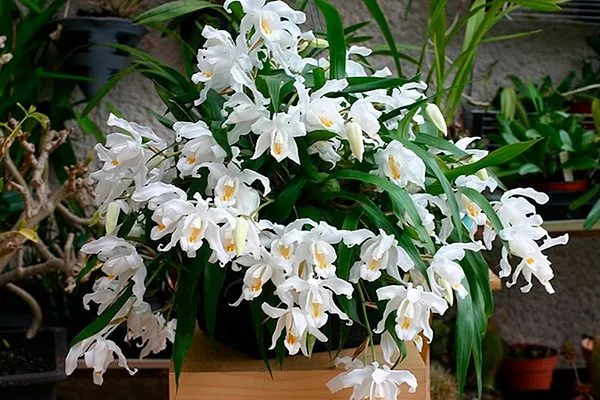
A rare sympodial orchid species in our country, it grows as a lithophyte or epiphyte. There are approximately 200 varieties, almost all of which are white, creamy, and peach-colored, though green flowers with five lanceolate sepals can also be found.
This orchid is renowned for producing new flower stalks throughout the year, forming an inflorescence of neat flowers 8-10 cm in diameter. This undemanding variety requires humidity and light levels of 70-85% with 12 hours of bright light per day.
Lelia
This plant is native to Latin America and is common in Brazil and Mexico. It is a compact sympodial epiphyte or lithophyte, growing to 30-60 cm in height. It is characterized by large flowers, reaching 15-25 cm in diameter. The color can vary widely.
There are only about 20 varieties. Orchids can have wavy or straight petals. They are not suitable for beginners, as they require proper care: at least 10 hours of bright, indirect light per day and 70-75% humidity.
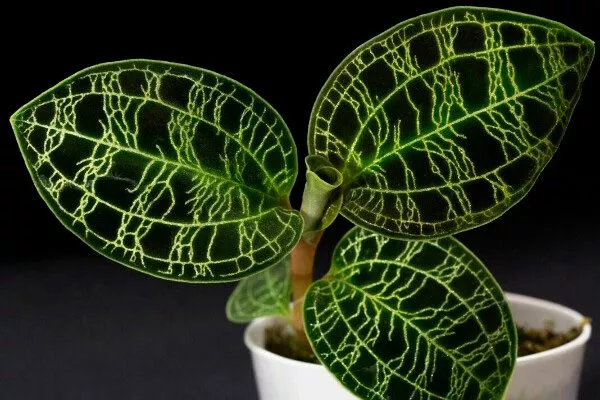
Makodes
Macodes is particularly prized not for its flowers, but for its beautiful, velvety, delicate leaves, which resemble fabric embroidered with gold or silver thread. The leaves are typically a soft green.
However, you can also find leaves in shades of cherry, olive, marsh, brown, and almost black. The orchid has small, unremarkable flowers, collected on a long stem.
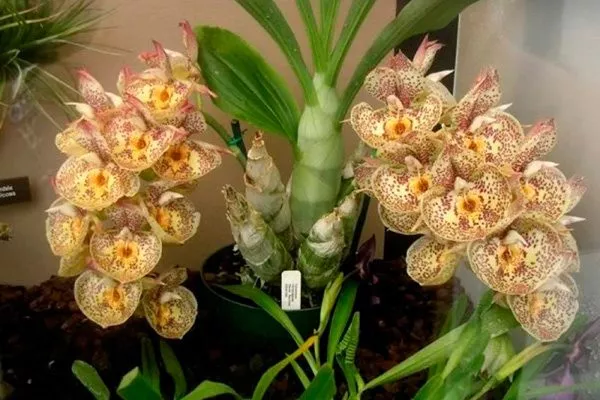
Catasetum
This beautifully blooming orchid is renowned for its pleasant fragrance and garland-shaped flowers in variegated colors. Interestingly, this species can produce flowers of varying sizes and colors at the same time. This is because Catasetum orchids have three distinct flower types.
Orchids' scent changes throughout the day—in the morning they smell like turpentine, in the evening like rye bread. Flowers can be small or large, ranging in diameter from 2 to 20 cm. This is a "shooting orchid," catapulting pollinia at any troublemaker. Anyone who decides to sniff the wonderful aroma also gets it.
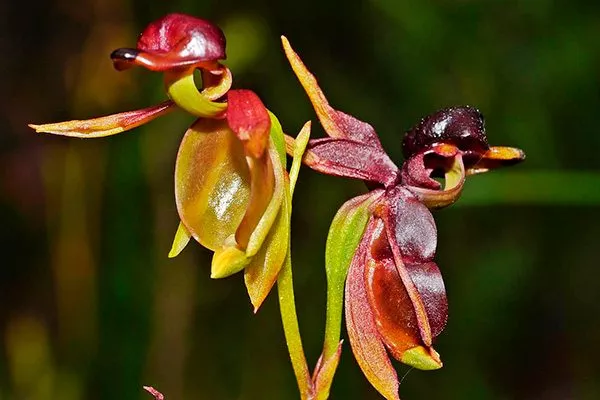
Caleana
A rare and unusual species characterized by its bizarrely shaped flowers, which resemble a flying duck. Found only in Queensland, Australia, Caleana grows in eucalyptus forests. The plant grows compactly, no more than 50 cm tall, and its flowers are no more than 2 cm in diameter.
The flower has only one narrow and thin leaflet. The orchid's petals are dark purple or reddish-brown. Occasionally, you can see plants with light green petals dotted with pink or lilac spots.
Grammatophyllum
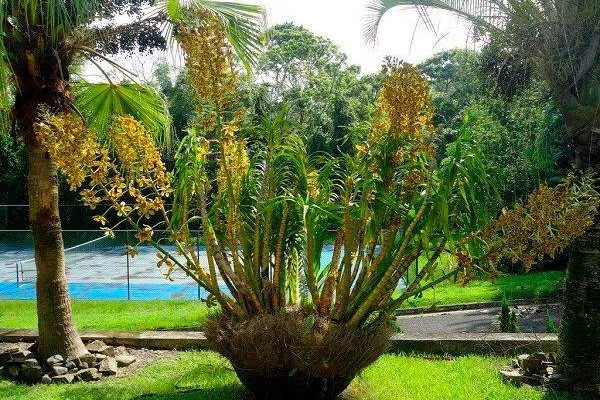
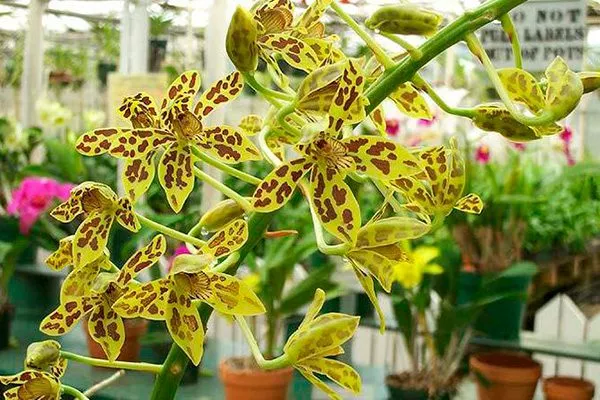
A large member of the Orchidaceae family. The smallest plant in this species does not exceed 50 cm in height. The flowers are yellow with a black pattern. The plant has elongated leaves. It takes up a lot of space, so it is rarely grown indoors.
The peduncle can grow up to 2 meters, producing 80-100 flowers. Typically, several peduncles form from the base of the pseudobulb, each with multiple clusters of inflorescences extending in different directions, forming a heart-shaped structure. This is an easy-to-grow variety, so growing it is straightforward.
Neofinetia
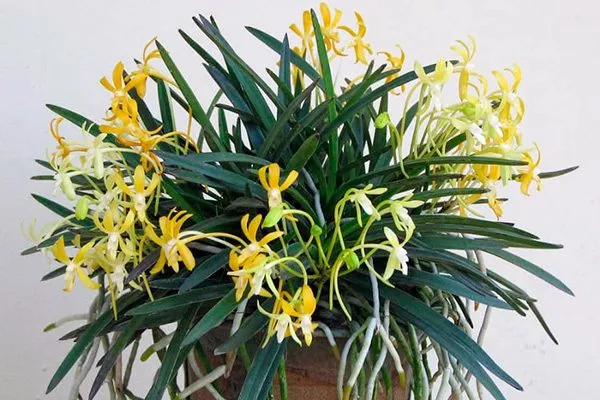
A miniature perennial plant native to high-altitude deciduous forests in Japan, Korea, and China. Mature plants grow no more than 15 cm tall. The monopodial shoot is covered with leathery leaves. The flowers are predominantly snow-white, no more than 2 cm in diameter. The species is renowned for its pleasant fragrance.
Neofinetia is considered an easy-to-grow variety, able to withstand low temperatures. The most popular for indoor cultivation is Neofinetia Falcata, or Sickle-shaped, which has many cultivars and hybrids with pink, soft yellow, and cherry-red flowers.
Stanhopea
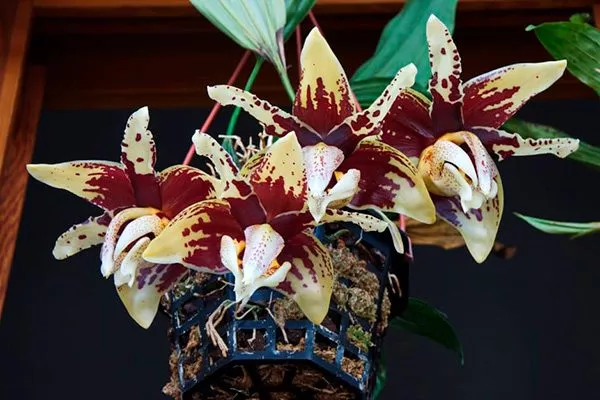
An orchid with 55 natural species and five hybrids originating in the wild. Many of these grow in the forests of South and Central America. These spectacular epiphytes have downward-facing flower stalks, leading to the plant's common nickname, the "inverted orchid."
The pseudobulbs are characterized by a faintly ribbed surface, each with a single leaflet of an oblong-ovate configuration at the apex. The flowers grow large, are distinguished by their variegated coloring, and are renowned for their chocolate-vanilla aroma, which is especially pronounced in the evening.
Miltoniopsis
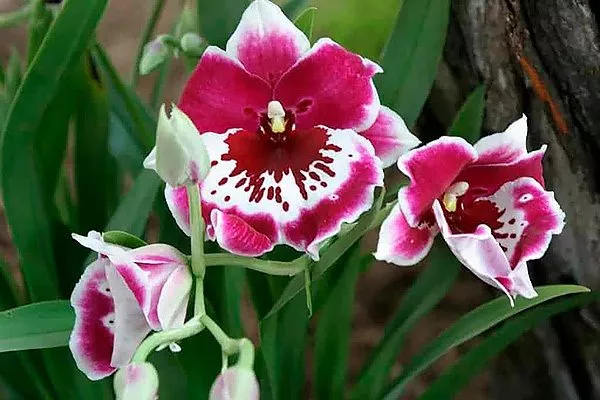
A sympodial orchid with an interesting structure: shoots with leaves form one after another. At the base of the shoots is a thick, oval pseudobulb surrounded by scale-like leaves. A single, light emerald-colored leaf grows at the crown.
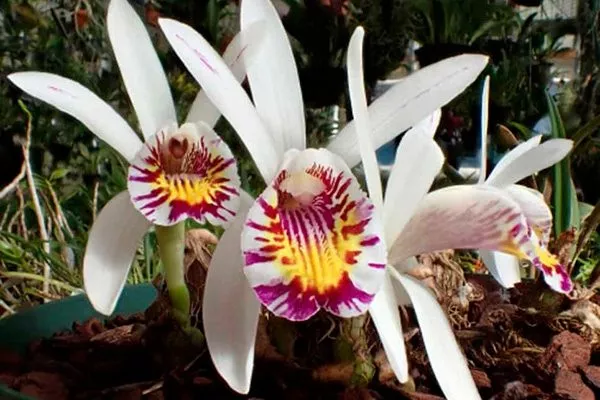
The flowers grow large and come in a wide variety of colors: purple, scarlet, lilac-violet, and scarlet. Some species have petals with patterns of speckles and strokes. The lip has a yellow spot around the base of the bud.
Pleione
A compact orchid growing from 10 to 22 cm in height. Native to the foothills of China and India, it also grows in the central regions of Vietnam, Thailand, Burma, and Laos. The genus Pleione comprises 19-22 native species and approximately six hybrids.
At the top of an adult pseudobulb, one or more leaves of an elongated-oval configuration are formed, and at the base - 1-2 flower-bearing stems with one flower, the petals of which are colored in a snow-white, matte yellow, soft coral or lilac-raspberry shade.
How to choose?
First of all, when choosing an orchid, keep in mind that this flower is very sensitive to sudden temperature changes. It's best to buy it at a specialist store.
When purchasing, focus on the main factors of plant health:
- Condition of the peduncle. The stem should contain both open and closed buds. This will help the plant cope with stress better and reduce the risk of bloom loss during transportation to a new location.
Look for the absence of mucus around the growing point of the flower stalk. A healthy plant's growing point is firm, elastic, and has an intense, natural color. - Condition of young and mature leaves. You can determine a plant's health by its leaves. Vigorous and healthy orchids have firm, firm leaves with a uniform, deep green hue. If there are spots on the foliage, don't buy the plant.
- Stems and flowers. The condition of the stems/flowers also indicates the orchid's health. Avoid purchasing a flower with a defective flower stalk or a twisted or thinned stem.
- Root system. A healthy orchid has roots that are firm, evenly colored dark green. Aerial roots should be firm, elastic, and flexible.
Among the vast number of orchid species, there are a wide variety of cultivars, all of which attract with their striking flower and foliage colors. Many are also renowned for their incredible fragrance, which attracts buyers looking to decorate their homes.