
A blue orchid is a rare and unusual sight that draws the attention of those around it. Many beginning orchid growers dream of growing such a beauty, but few know the specifics of caring for bluish orchis. Other gardeners doubt that true blue petals exist in nature. Let's find out the truth.
The history of the blue orchid
Blue phalaenopsis was first introduced to the world in 2011, at a trade show in Florida. The plant was named Phalaenopsis Blue Mystique (it was exhibited by Silver Vase Nursery).
Exactly 90 days later, the now Dutch company Geest Orchideeën also unveiled its creation, Phalaenopsis Royal Blue, and received a prize in the Sales Concept category. Representatives of the Dutch nursery were completely open about the fact that the plant had been chemically treated.
These days, many florists prefer orchids like Dendrobium. Just look at these neon-colored flowers! The coloring process is a two-step process.
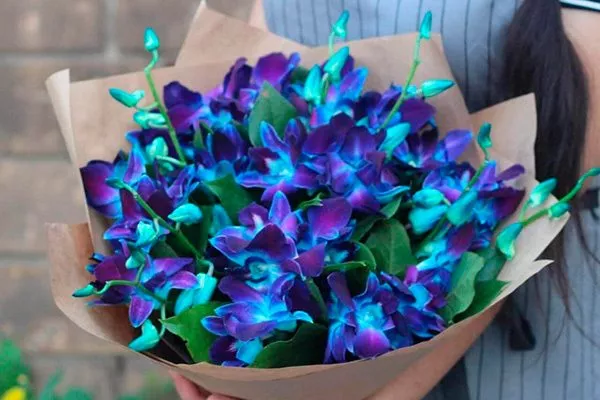
Are there real blue orchids?
In nature, phalaenopsis orchids do not have genes for blue pigments in their DNA, so this color of orchids does not actually exist. However, there are orchis with blue, violet, and bluish hues, but they are not as bright and saturated as those offered by manufacturers. They are often characterized by smaller flowers or a paler color.
Blue and blue orchids in nature
There are only a few orchid species with a natural blue or light blue hue that are not dyed. Therefore, the petal color will remain consistent throughout subsequent blooms.
Wanda
It's considered the only orchid in nature with a natural bluish hue. Its homeland is considered to be Southeast Asia, but it also thrives in China, Thailand, and the Philippines. It grows along riverbanks and in deciduous and coniferous forests (primarily in the sparse canopy of trees).
It's a capricious and demanding plant, requiring considerable effort from orchid growers to ensure successful growth and flowering. It comes in a wide range of colors, from delicate blue to deep purple.
This variety crosses well, resulting in numerous blue hybrids. The most common of these are:
- Vanda Magic Blue;
- Vanda Sansai Blue;
- Vanda rothschildiana;
- Vanda coerulescens.
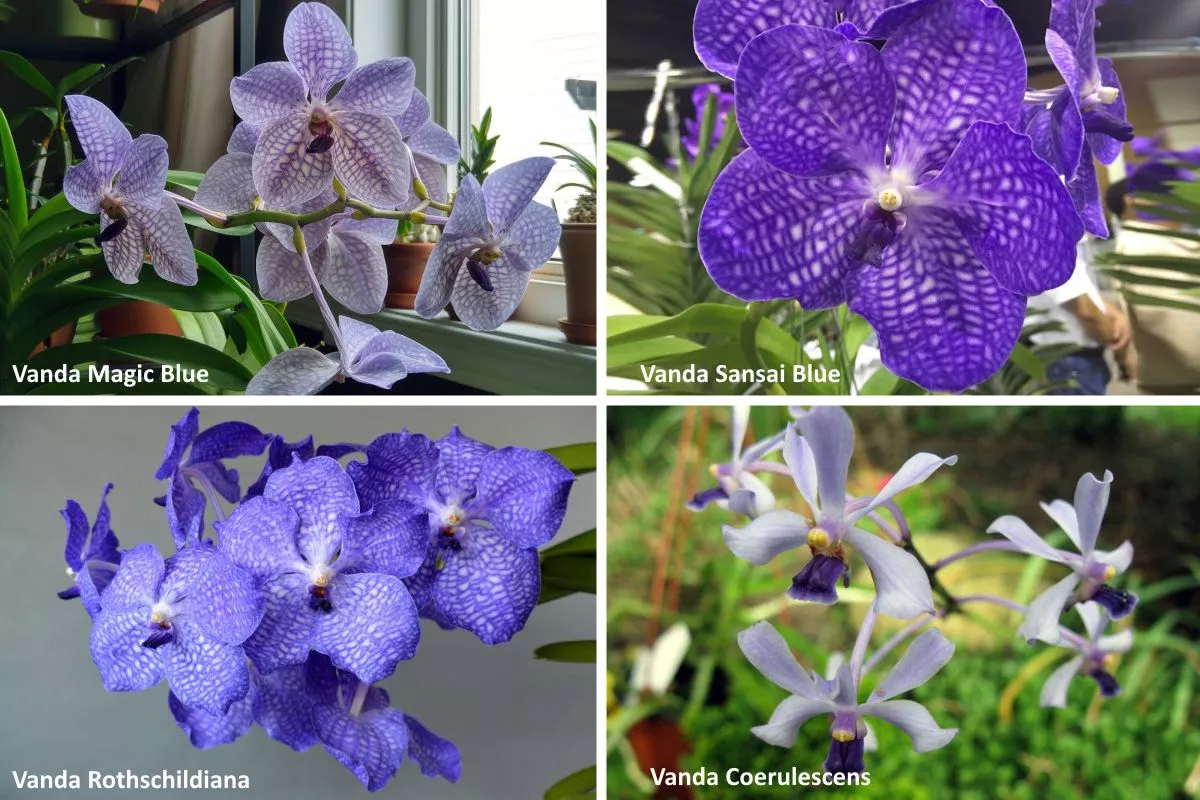
Flowering time is from early October to late November, but with proper care, flowering is also possible in summer and spring. Vanda grows to a height of 1 meter or more, with up to three flower stalks per bush, each bearing approximately 6-10 flowers 8-10 cm in diameter.
Cattleya
A relatively easy-to-grow variety with velvety petals and unusually shaped flowers. It is sympodial, growing horizontally. The distance between rhizomes is typically 8-10 cm. It is medium to large in size, with 1-4 leaves forming per pseudobulb.
The color is lavender, lilac, pinkish-blue, blue-blue, and purple, with uneven coloring. A distinctive feature is that flowering occurs exclusively in conditions of abundant sunlight and temperature fluctuations (day/night).
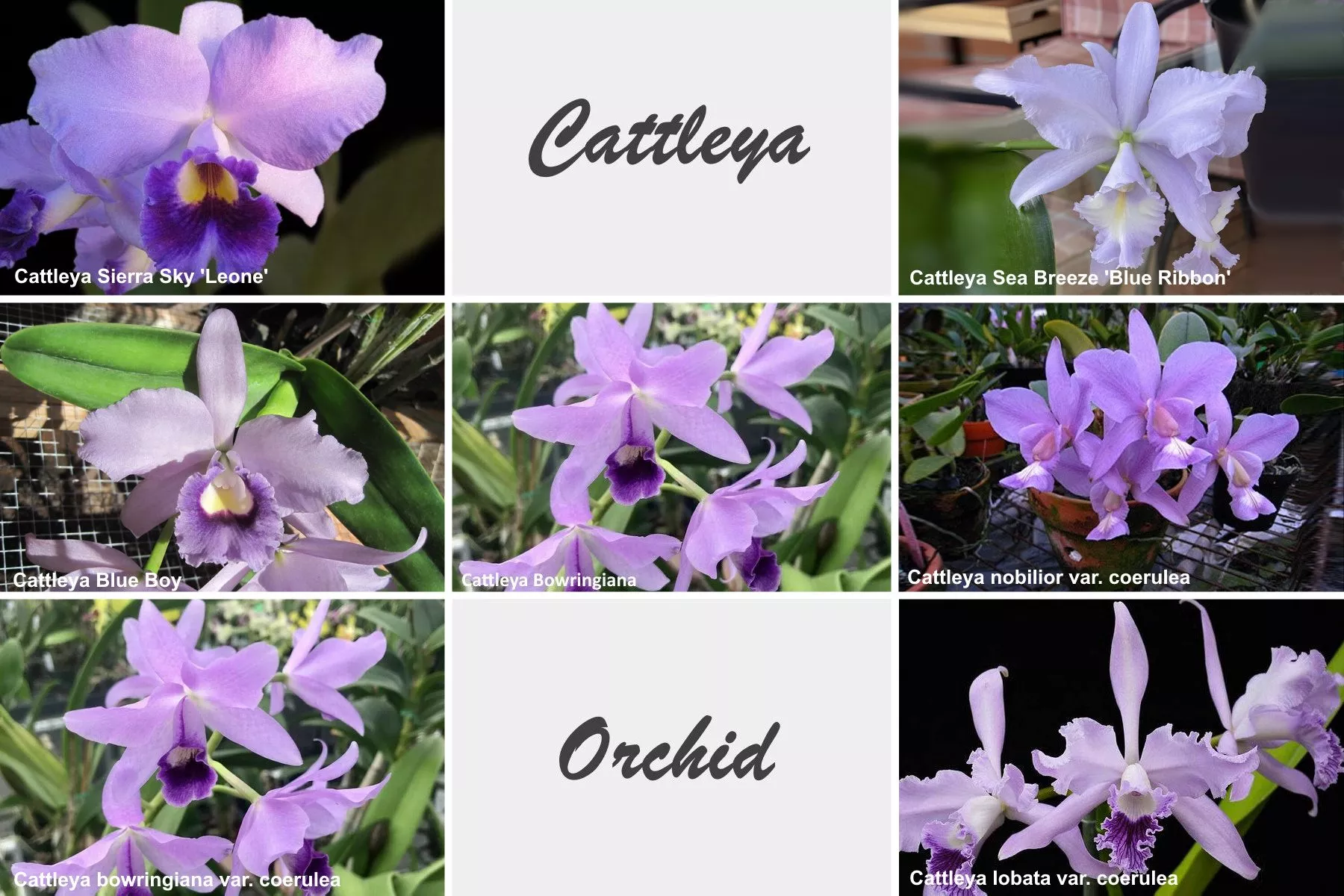
The following were bred with blue and lilac tints:
- Cattleya Sierra Sky 'Leone';
- Cattleya Sea Breeze 'Blue Ribbon';
- Cattleya Blue Boy;
- Cattleya Blue Grotto x Blue Boy;
- Cattleya nobilior var. coerulea;
- Cattleya bowringiana var. coerulea;
- Cattleya lobata var. coerulea.
Popular varieties of "blue" phalaenopsis
Phalaenopsis orchids produce the most beautiful blue orchids. The most popular ones are:
- Phalaenopsis Aphrodite blue (Phalaenopsis Aphrodite Blue). Developed in 2013 by breeders at Chiba University, the white Aphrodite orchid was infused with color genes from the blue-eyed orchid (Commelina vulgare). The blue variety is characterized by small flowers that cover the bushes in abundance. This orchid is currently unavailable for purchase.

- Phalaenopsis Royal Blue. Blue Royal Orchids are sold exclusively dyed using the injection technique. During the second bloom, the petals will be creamy or even white.
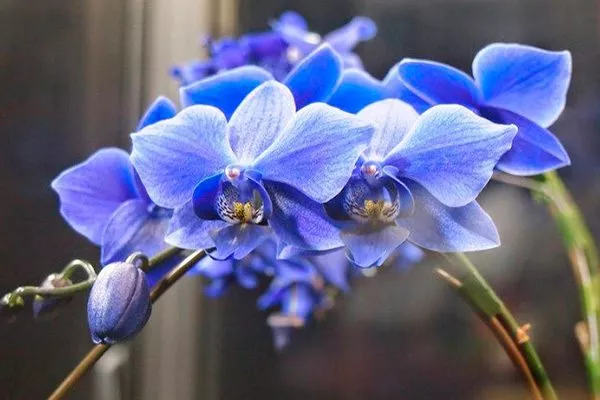
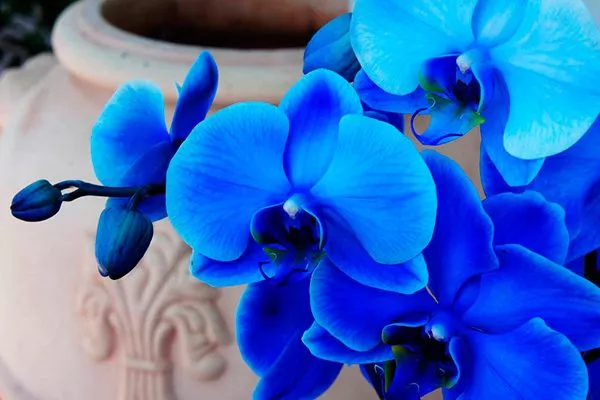
How can you tell if an orchid is dyed?
Today, most growers are open about the dyed nature of the orchids they sell. However, each is required to provide information about the treatment method used. It must be safe for the plant; if harsh chemicals are used, the plant will die quickly.
In all cases, a second bloom won't produce the desired shade, so overpaying for a fake isn't really an option. To distinguish the original from a dyed copy, pay attention to the following:
- the stem of a natural orchid is always green;
- If you run your finger over the petals, the fake will leave a bluish mark;
- The colour of the substrate should not contain other (unnatural) shades.
Pros and cons of painting
The main advantage of painting is the uniqueness of the orchid's hue, which can surprise everyone in attendance. Buying a blue orchid as a gift is especially popular.
There are many more disadvantages to painting:
- subsequent flowers will be ordinary white;
- high risk of plant death;
- immunity decreases, so the bushes often get sick.
Impact on plant health
Orchids are considered delicate and sensitive plants, so any intervention in their structure at the cellular level can be fatal. After introducing dye (regardless of the type), the plant's blood vessels become clogged, preventing respiration.
To prevent the flower from dying, it must be cared for very carefully. Correct procedure is also crucial, especially with the injection method. Potential problems (the most harmless consequences):
- infection, resulting in the development of diseases;
- the presence of a wound on the stem or root that does not heal for a long time;
- weakening of the plant due to pain after puncture;
- defects arise during further development;
- rotting of stems, leaves, flowers and roots;
- shedding of buds and flower stalks.
If you experience any of these symptoms, do the following immediately:
- pick off the flowers;
- cut off rotten and affected areas;
- treat the cuts with activated carbon, wood ash or cinnamon powder, then let dry;
- transplant into a new substrate with a disinfected pot.
How to Dye an Orchid: Step-by-Step Instructions
There are two ways to dye orchids blue and light blue, but both require the right dye. Food coloring and specialized dyes, such as "SPRING Pro Florist" spray dye (which applies color to the surface), are acceptable.
Watch a video on how to spray paint a white orchid blue:
Watering
This is the least traumatic method, as the dye isn't embedded into the plant's structure, but rather poured into the substrate. From there, the dye will saturate the plant via the root system, causing the flowers to develop a different color.
The method has one advantage: it doesn't require damaging the plant with punctures. The disadvantages are:
- the stems and sometimes the leaves will be blue;
- wait a long time for the plant to absorb the pigment;
- The dye must be applied in larger quantities than with injections.
With an injection
This technique is considered effective and quick, as petal pigmentation occurs within a short time. The procedure requires care, which will reduce stress on the flower. The dye can be injected into the stem, root, or flower stalk. The latter method is preferable, as only the flower will turn blue.
What you will need:
- a sterile syringe (required, because it is important to avoid infection);
- thin needle;
- food coloring;
- activated carbon.
The painting is carried out as follows:
- Take an orchid with white or extremely light petals.
- Dilute the dye with water at room temperature (it is better to use distilled water).
- Fill the syringe with coloring liquid.
- Choose a puncture site.
- Insert into the flower stalk area. Do this slowly.
- Powder the puncture sites with crushed activated charcoal.
Please also note the following recommendations:
- If you don’t have distilled water, use settled, but not boiled water;
- liquid temperature – room temperature;
- Before insertion, disinfect the needle (even a disposable one) with a light solution of potassium permanganate;
- The proportions of the dye are arbitrary (the more dye, the richer and darker the shade will be).
If you decide to try this experiment, here's a video to help you out, which clearly shows where to apply the paint:
Caring for a blue flower
Care instructions depend on the specific species and variety of orchid, whether it's being dyed or a natural blue flower. However, to help the plant cope with the stress of the procedure, ensure the dye lasts longer, and ensure long-lasting blooms, it's important to pay attention to a few nuances.
- ✓ Increase daylight hours to 18 hours in the first month after coloring to reduce stress.
- ✓ Use only distilled water for irrigation during the first month after the procedure.
Temperature
Since all orchids are heat-loving, maintain a daytime temperature of 25 to 30 degrees Celsius, depending on the variety. At night, the temperature drops to 18 to 20 degrees Celsius.
Watering, spraying and humidity
The optimal humidity level is between 60 and 70%. Unlike temperature fluctuations, sudden changes in humidity are unacceptable. If the air in the apartment is excessively dry, misting the foliage and flower stalks is acceptable.
Orchids also require watering depending on their variety. If you're unsure, follow these general guidelines. Orchids need watering when:
- the leaves become slightly wilted;
- the color of the green mass changes;
- a dry coating forms on the substrate;
- there is no condensation on the walls of the pot.
On average, under normal conditions, the substrate is moistened 2-4 times a month.
Watering methods:
- Immersion. To do this, pour water into a basin and insert a pot (make sure there are holes in the bottom and sides). Leave it there for about 15-20 minutes, then let the liquid drain.
- Hygienic shower. You can place the pot in the bathtub and water it with a spray can. Let the liquid drain again.
- From a watering can. Watering is carried out directly into the soil.
In all cases, make sure that no drops of water remain in the leaf axils - wipe them with napkins.
Top dressing
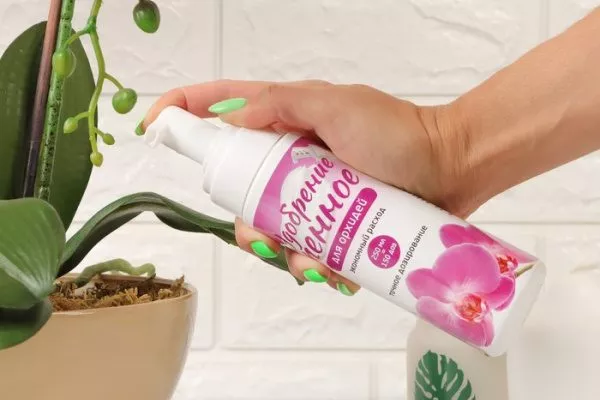
For blue orchids, especially those weakened by dyes, mineral supplements are essential, so it's recommended to fertilize them once a week. Keep in mind that during the dormant period, the frequency is cut in half. Both root and foliar feeding are essential.
Recommendations:
- for fertilizing, use complex preparations intended for orchids;
- fertilize immediately after watering;
- If the product is a salt-type product, rinse the substrate with water a couple of hours after applying it;
- During the peak of flowering, avoid using fertilizers – this will shorten the period.
Orchidists most often use the following preparations:
- Forte – the complex contains all the important microelements and is used to prolong flowering;
- Dr. Foley – develops the plant, as it consists of potassium and nitrogen;
- Mr. Color – biological fertilizer, considered universal.
Lighting
This factor is the most significant for orchids, affecting their vitality and overall health. Based on the plant's natural needs, place the pots on west-facing windowsills throughout the growing season. This will eliminate the need for supplemental lighting in winter and protection from UV radiation in summer.
Please note the following subtleties:
- The length of daylight varies from 10 to 16 hours, depending on the variety.
- If your windowsill is south-facing, cover the glass with blinds or light curtains in the summer. If your windowsill is north-facing, move the pots away from the glass during colder weather, but keep them at least 50 cm away from heating appliances.
- You can determine if your plant is getting too little light simply by examining the underside of the leaves. If you see purple, pigmented spots, immediately extend the daylight hours.
- If the flower is sick after coloring, the duration of light per day should be about 18 hours.
- If necessary, illuminate the orchis with fluorescent lamps with diffused light.
Soil for plants
The substrate for blue orchids always consists of pieces of bark. Pine and spruce are ideal. Keep in mind that the soil should not only be loose but also nutritious, so pay attention to the following:
- Before placing the bark in the pot, be sure to soak it in water, covering it with a weight (pressure). Leave it there for about three days. Then let it dry for 10-12 hours.
- The size of the bark pieces is 1.5-3 cm.
- Additionally, use sphagnum moss, which will later transform into peat and act as a fertilizer. It will also need to be soaked for 1.2 hours. Drying takes 5 hours.
- Be sure to add expanded clay and vermiculite/perlite. You can add coconut fibers, humus, and charcoal pieces.
The substrate should contain mostly bark – about 5 parts, but take only 1 part each of charcoal and moss.
When and how does it bloom?
With proper care, blue and blue phalaenopsis orchids bloom almost year-round, but they need a rest period from late fall to late winter. During this time, the plants gain strength for future bud formation and abundant blooms. Orchids can bloom continuously for up to 8-10 months.
Trimming
Blue orchid bushes do not require shaping, but pruning is necessary, which removes:
- damaged (broken, fractured) stems;
- diseased elements;
- faded flower stalks;
- dried arrows.
Please focus on the following:
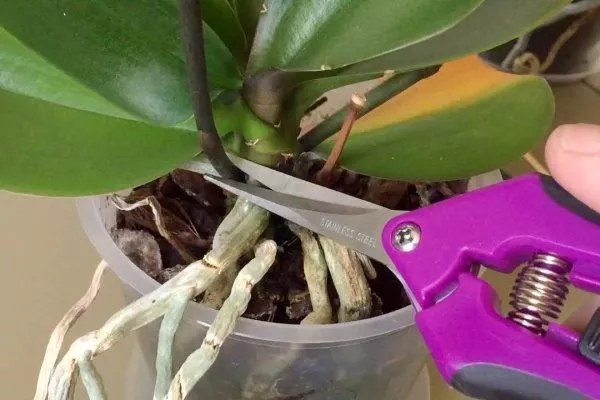
- disinfect instruments;
- dust the cut areas with crushed activated carbon or wood ash;
- Cut off old shoots so that the length of the shoot remains 2-4 cm.
How does a blue orchid reproduce?
Like any other orchid, blue orchids can be propagated in a variety of ways. The key is to use disinfected tools and treat the cuts with activated charcoal. Here are the methods:
- By division. This method works well for sympodial blue varieties that have pseudobulbs. The procedure is simple:
- Remove the flower from the container.
- Clean the roots from any remaining substrate.
- Divide the roots so that each one has pseudobulbs.
- Plant it.
- Children. Both basal and stem cuttings can be used. In the latter case, it's important that the cuttings already have developed aerial roots. Here's how:
- Determine the location of the cut.
- Separate the baby plant from the bush with a sharp scalpel.
- Replant.
- By cuttings and peduncles. First, you need to separate the cutting or flower stalk with its stem. Then, proceed as follows:
- Divide the planting material into 10 cm pieces.
- Place them horizontally in a prepared container with substrate.
- Cover with a lid.
- When sprouts and roots appear, plant them in permanent pots.
- With Cytokinin paste. A quick way to propagate blue orchids. You can buy hormonal paste at any flower shop. Here's how:
- Make a small scratch on a healthy flower stalk.
- Spread the paste in a layer of about 2 mm.
- Keep it like this until 3 leaves and roots 4 cm long are formed.
- Replant.
- Seeds. This is a complex method that is rarely used at home, as it takes 3-7 years to produce a flower.
Orchids don't propagate from leaves—they lack a growing point. If a leaf is plucked along with a small piece of the stem, called a heel, the planting material is first placed in water and then transplanted into a pot. Once the seedlings have grown, they are transplanted to their permanent location.
Transfer
When propagating blue and other orchids, seedlings are first planted in temporary pots and then, after rooting, in permanent ones. Sometimes repotting is required in other situations as well:
- if the pot is too tight;
- when the roots are strongly intertwined and entangled with each other;
- if there is damage to the root system;
- if an unhealthy coating has formed on the substrate;
- if there is a need to renew the soil and rejuvenate the flower.
Please note: repotting a blue orchid immediately after purchasing it or dyeing it is prohibited. This is due to the plant's stress level.
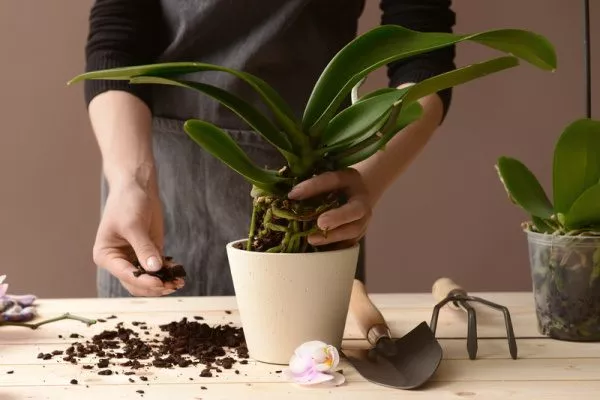
How to replant if necessary:
- Water the pot.
- Remove the flower from the container.
- Clean the roots from the substrate and wash them.
- Cut off damaged and unnecessary roots with pruning shears (disinfected).
- Let it dry for several hours.
- Plant in the standard way.
Be sure to disinfect the pot and prepare fresh substrate.
Pests and diseases
Blue orchids are susceptible to the same diseases and pests as any other orchid. However, unlike other orchids, colored specimens are more susceptible to rot. These diseases occur at the puncture site, so rot can occur on the flower stalk, roots, and stem.
Reviews from flower growers
Blue orchids are extraordinary flowers, incredibly popular among buyers and orchid growers. They are virtually nonexistent in the wild, but a blue or light blue hue can be achieved through dyeing. This can even be done at home, as long as proper care is taken afterward.