
The pink orchid is a classic representative of the flower world, especially in the Orchidaceae family. Many species and varieties boast pink petals, but the Phalaenopsis orchid is the most common. Caring for this plant isn't as difficult as it seems, but to obtain a new pink orchid, you need to know how to propagate this subspecies.
History of appearance
The orchid was given the name "orchis" back in ancient Rome (300 BCE) by the philosopher Theophrastus. Translated, the name means nothing more than "testicle." Orchids also grew in Japan and China, but they only arrived in Europe in the 18th century.
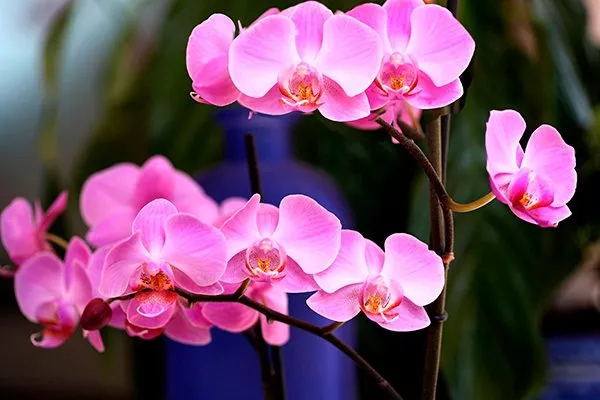
Other features:
- Orchids were brought to Russia only in the 19th century. The renowned Sandler nursery supplied the flowers. They were intended for the royal family, but the court's florists began propagating the plant, which led to its spread throughout the country.
- Orchids' popularity waned for a time, but revived after the end of World War II. The flowers were brought back to Russia, this time from Germany (Goering's greenhouse). The orchid was placed in the Moscow Botanical Garden.
- Moscow botanists began crossbreeding the plant, which resulted in the development of numerous new varieties. The flowers began to be grown in gardens and indoors.
- England saw the Schiller's pink flower in 1958.
Varietal characteristics of pink orchids
All pink orchids are hybrids, as the original flower had snow-white petals. This genus of epiphytic Phalaenopsis orchids grows in the wild on tree bark, rocks, and other objects. Indoors, they easily adapt to a root ball—their root system can quickly spread across the entire pot.
There are a huge number of varieties of pink orchids, but they all have common characteristics:
- The rosette contains 2 to 5 leaf blades, each characterized by an elongated shape. They are typically 15 to 20 cm long and 4 to 6 cm wide.
- The flower stalks are shortened – a maximum of 28-30 cm, but the number of buds on one varies from 15 to 20 pieces, due to which the bush looks lush.
- Flowering is long (2-6 months), but this is largely due to the sequential opening of the buds—one flower fades, and another immediately blooms. Flowering periods are two or three times a year.
- The shade ranges from the lightest pink to the deepest purple. Sometimes a single bud combines several shades.
- The flowers are usually about 3 cm in diameter. The inflorescences can be simple, branched or arched.
- The lip is small in size, with three lobes.
- Quite often, white vertical stripes form on the sepals.
When the flowers fade, babies are formed in their place, thanks to which natural reproduction occurs.
Popular varieties
Despite the vast number of pink orchid varieties, there are some that are particularly popular among Russian gardeners. They are easy to grow, maintain, and propagate, and in return, they delight their owners with abundant blooms.
| Name | Plant height (cm) | Flower diameter (cm) |
|---|---|---|
| Manhattan | 28-30 | 3 |
| Phantom | 28-30 | 3 |
| The Emperor's Pearl | 40 | 8 |
| Pretoria | 50 | 9 |
| Rome | 28-30 | 3 |
| Octopus | 28-30 | 3 |
| Salinas | 28-30 | 5-7 |
| Orange-lipped dragon | 28-30 | 3 |
| Pink Girl | 28-30 | 3 |
| Romance | 28-30 | 3 |
| Cosmopolitan | 28-30 | 10 |
| Pulcherima | 40 | 3 |
| Cleveland | 28-30 | 9 |
| Pasadena | 28-30 | 3 |
| Potter | 28-30 | 3 |
| Angelina | 28-30 | 3 |
| Los Angeles | 28-30 | 3 |
| Dusty belle | 28-30 | 3 |
| Cute Holly | 28-30 | 3 |
| Angel | 28-30 | 10 |
| Rosea | 28-30 | 3.5 |
| Pink Dragon | 60 | 3 |
| The Pink Panther | 50-60 | 3 |
| Legato | 28-30 | 3 |
| Sacramento | 28-30 | 7-10 |
| Gold Rush | 28-30 | 3 |
Manhattan
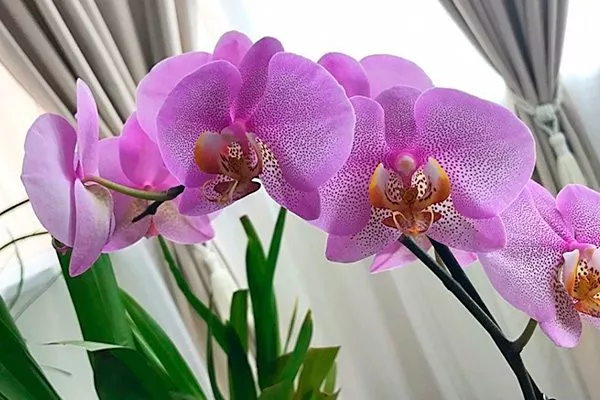
This variety is distinguished by pink petals with raspberry-tinted flecks across their surface, creating a simple, marble-like pattern. In appearance, Manhattan is similar to Pink Dragon and Philadelphia.
Phantom
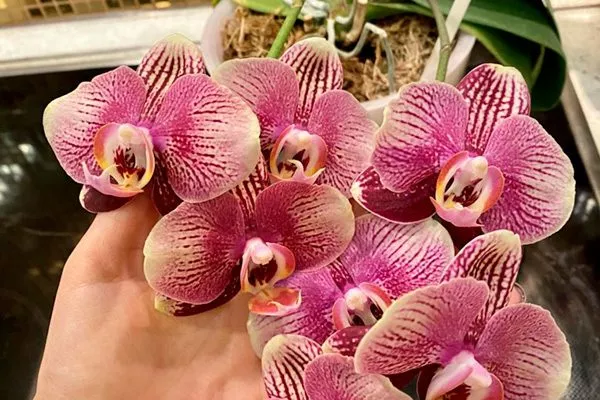
A stunning flower with a mesh pattern in shades of pink, raspberry, and even cherry. The petal base is white, light beige, or cream. A distinctive feature is the red or burgundy lip. The flower's shape is classic—butterfly-shaped.
The Emperor's Pearl
The second, common name is Jewel. It is considered a monopodial epiphyte that grows up to 40 cm in height. Other distinguishing features:
- the arrangement of the leaf blades is two-row;
- leaf color – dark green;
- foliage length – 25-30 cm;
- the structure of the plates is fleshy;
- length of peduncles – 60-62 cm;
- flower diameter – about 8 cm;
- The color is pink-crimson, but the core is pale pink.
Pretoria
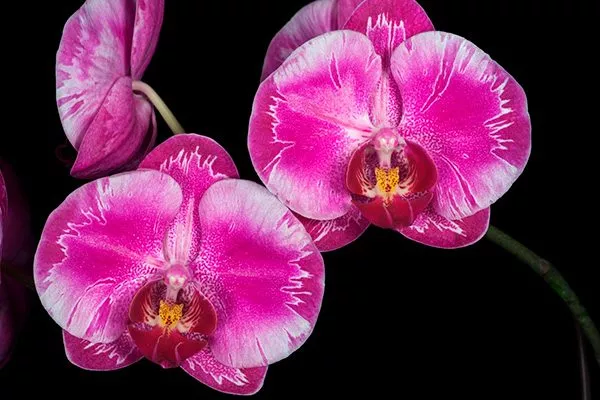
This variety features large buds (up to 9 cm in diameter), elongated leaves (up to 20 cm long), and a dark green foliage. The shoots reach up to half a meter in height, but the most striking feature of Pretoria is its unusual gradient color:
- border – almost white;
- the center of the petals is crimson or purple;
- the core is light pink.
Rome
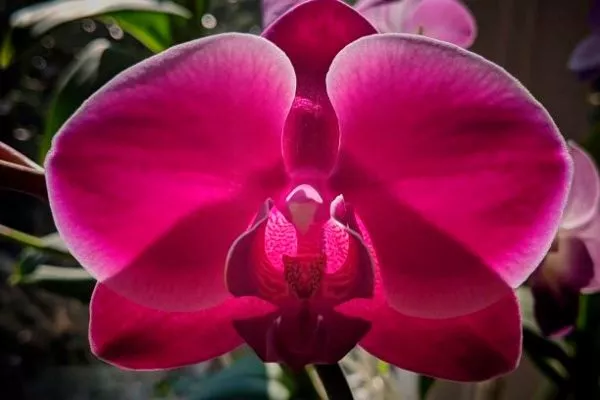
A striking Phalaenopsis with a very pungent fragrance. The buds are medium-sized and a classic soft pink. The lip can sometimes be dark pink.
Octopus
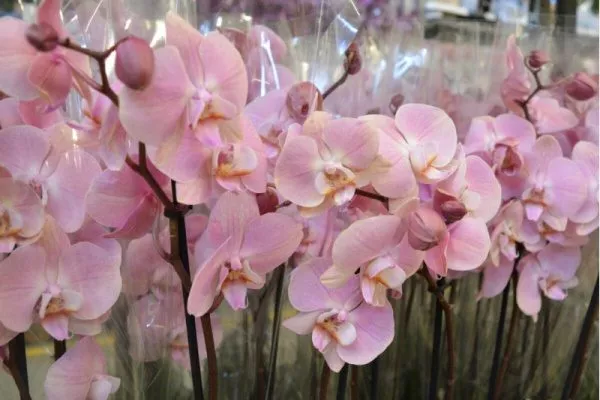
Another name is "Octopus." This unique variety combines two shades—creamy yellow and pink. The scattering of specks closer to the core creates an unusual pattern. The dots are usually crimson or burgundy.
Salinas
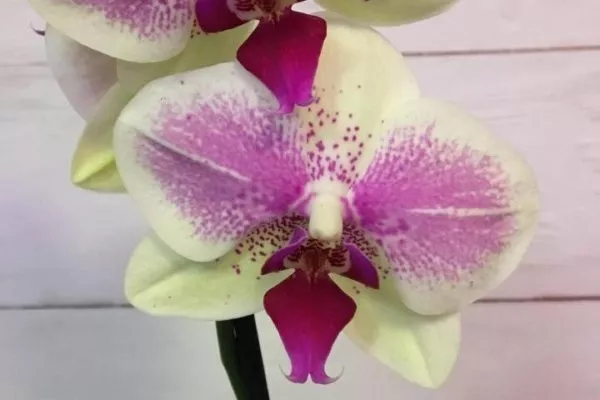
This variety features medium-sized flowers, ranging from 5 to 7 cm in diameter, with delicate pink petals that range from lightest to darkest. The center is dotted with crimson, and the lip is yellow.
Orange-lipped dragon
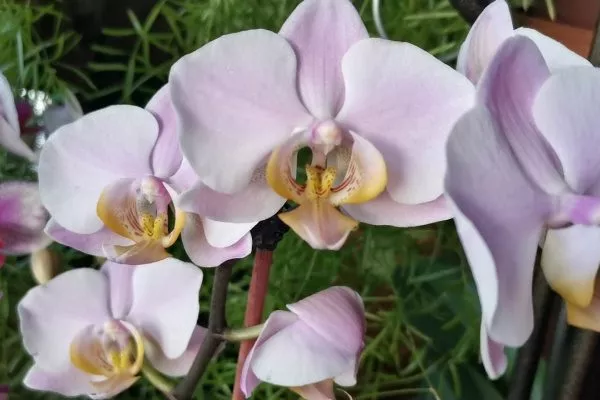
This is the most popular pink phalaenopsis. It belongs to the mixed-flower group. Its distinctive feature is pronounced: a mosaic pattern of crimson or lilac hues spreads across the soft pink petals. The center is bow-shaped, making it convex. Its hue is either orange or yellow-gold.
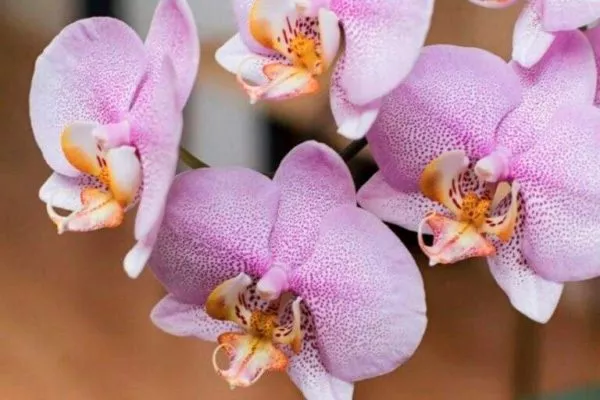
Pink Girl
Another variety that the vast majority of gardeners prefer to grow at home. The petals are a soft pink with a white border around the edges. The flower looks very delicate and graceful. The fragrance is quite pleasant, and it exudes fragrance throughout the day.
A distinctive feature is that the dark green leaf blades have light brown specks.
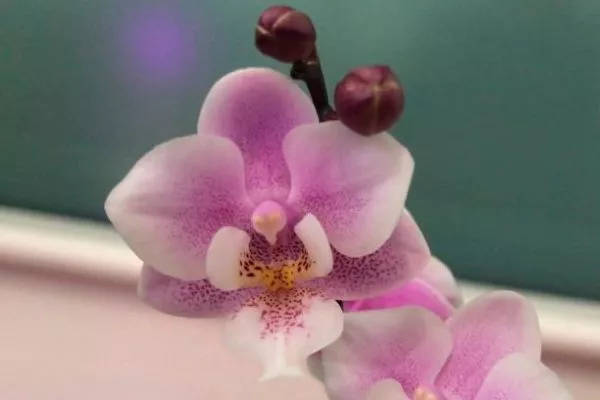
Romance
A distinctive feature of this variety is its large, white buds. Romance is considered a pink orchid because its petals are densely dotted with bright pink spots, giving the flower its pink appearance. The lip is distinguished by its raspberry or dark pink hue.
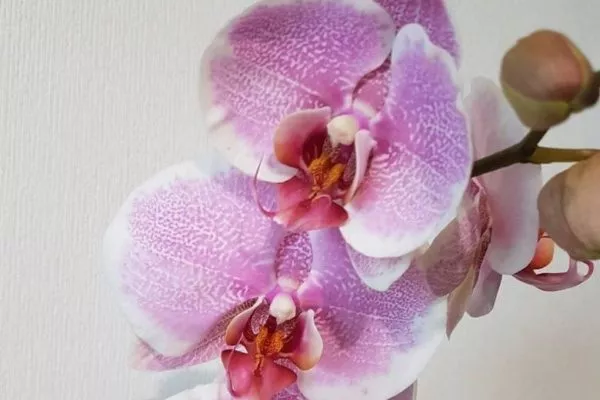
Cosmopolitan
Another Phalaenopsis species with large flowers (up to 10 cm in diameter). The petals are light pink, covered with veining in raspberry or purple. The lip is bright pink, and the center is white and yellow.
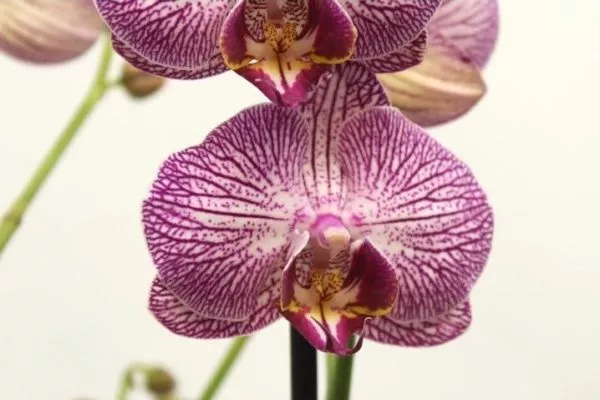
Pulcherima
This variety originates from Asian countries and belongs to the midi orchid group, which has peloric-shaped buds. The flower stalk is quite long – about 40 cm, but the flowers are quite small – about 3 cm in diameter. The color is a rich pink with a lilac tint. The lip is pure white or light pink.
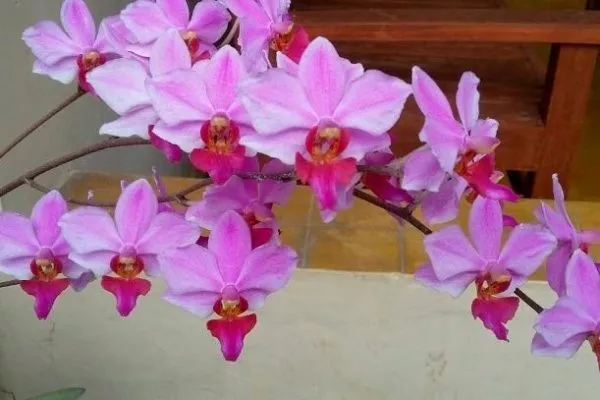
Cleveland
This flower is often confused with Cosmopolitan, but unlike the latter, it has light-colored buds with bright pink veins running along all the petals. The background color is gradient—the border is light, the core is dark.
The buds are quite large – reaching up to 9 cm in diameter, but the inflorescences are small – their length does not exceed 22 cm.
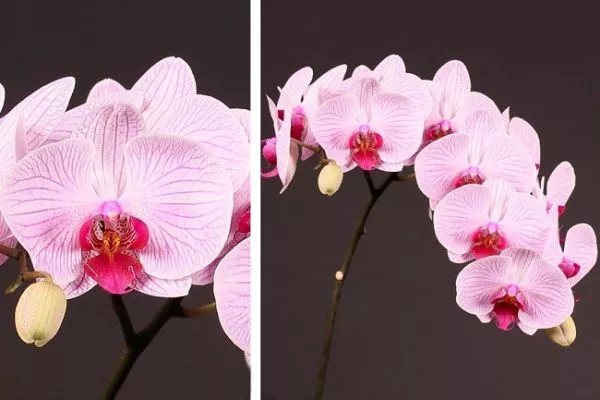
Pasadena
This variety features large buds, graceful and exceptionally straight stems, and an elongated rosette of leaves. The petals are vibrant pink, lilac, or purple. 'Pasadena' is distinguished by the long bloom time of a single bud.
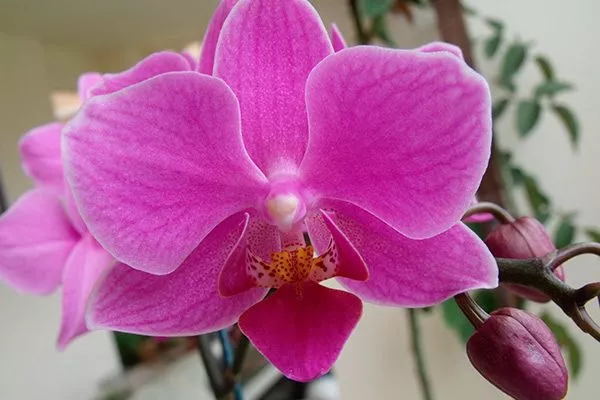
Potter
Considered the rarest pink phalaenopsis, Potter's is very difficult to find for sale. They are most often sold in nurseries or by hobby gardeners. The petals are covered with numerous crimson speckles and lines. The edging is similar. The buds are medium-sized, but the leaves are large.
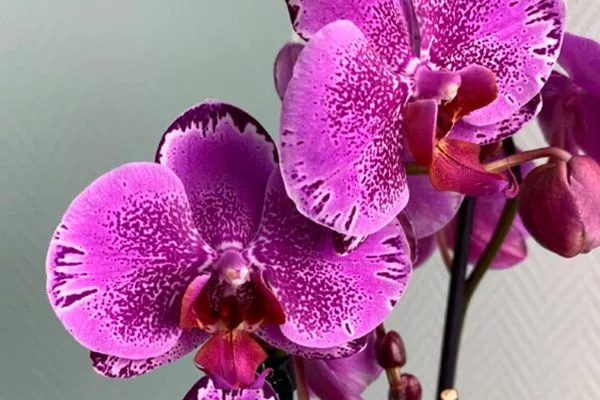
Angelina
This hybrid, newly introduced in 2018, is characterized by a large lip and medium-sized buds with a light pink hue. Lilac-tinged specimens are also available. The center is always crimson with a patterned pattern, the lip is white and pink, and the center is yellow.
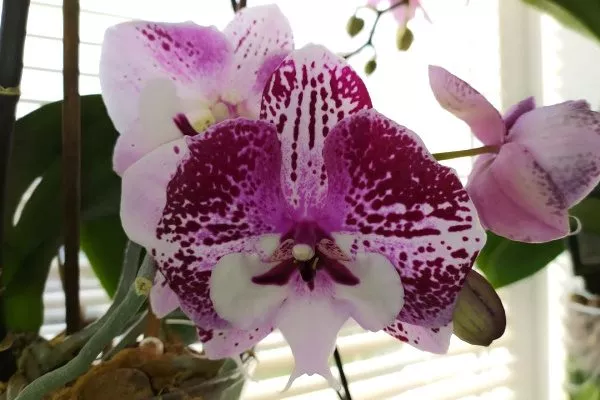
Los Angeles
This orchid stands out from others due to its unusual pinkish-lilac hue. Its petals are dotted with numerous crimson spots. The flower easily tolerates any adverse conditions.
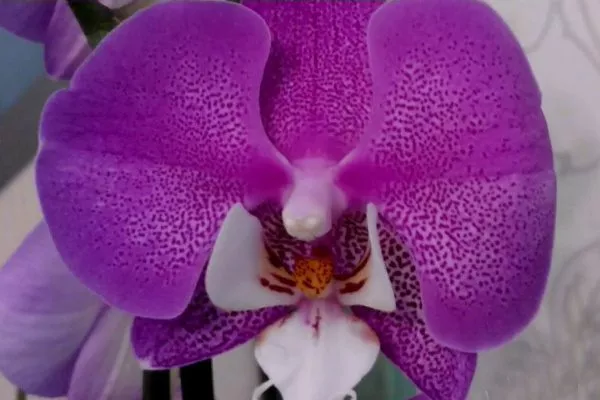
Dusty belle
This variety was bred from Schiller, so the buds are a very bright pink. The petals have a reddish-purple tint, and the edges are yellow. The flowers have a very intense fragrance.
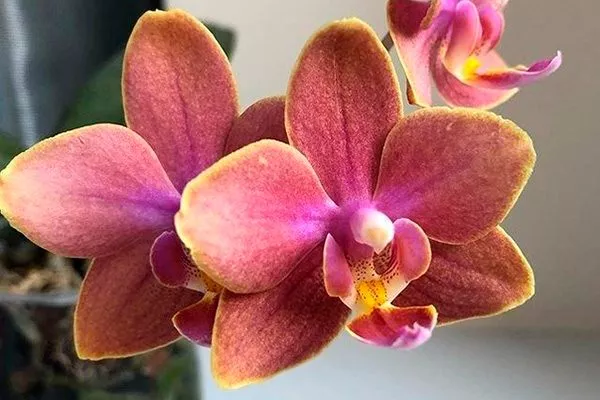
Cute Holly
This midi-colored orchid is pink with a vibrant crimson or purple hue. The flower stalks are short, the buds are medium-sized, and the lip is lilac or lavender.
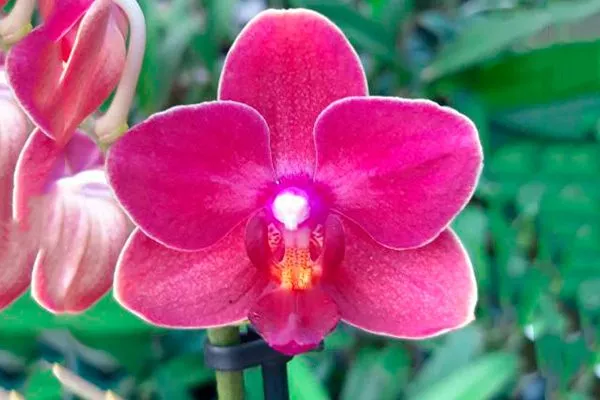
Angel
This large-flowered variety (up to 10 cm in diameter) requires very high care and is rarely seen on the windowsills of amateur gardeners. Flower color varies, ranging from pink to other shades.
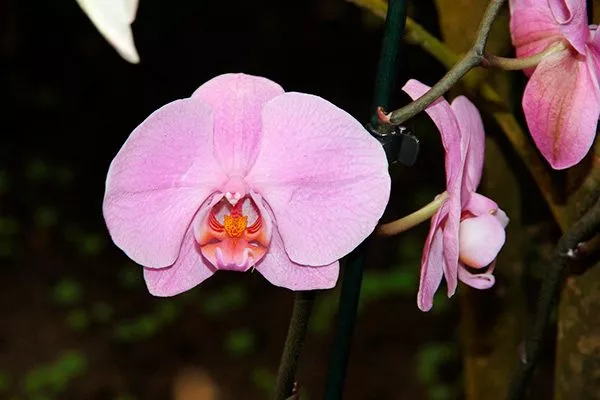
Rosea
A popular butterfly-shaped flower with numerous buds (about 50) on a stem. It is characterized by a very soft pink hue and very dark green leaves. The buds are small – about 3.5 cm in diameter, and the leaf blade is 30 cm.
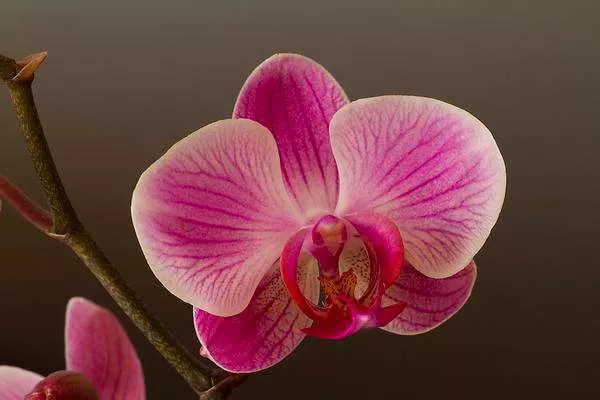
Pink Dragon
This variety grows up to 60 cm tall with a slender, dark green stem that's hidden behind the large, long foliage. The leaves are bright green and slightly stiff. The buds are a delicate pink, with a typical orchid shape. The petals are covered with dark speckles, and the lip is white and yellow with dark spots.
Florists recommend this variety to beginners because it is completely unpretentious in care.
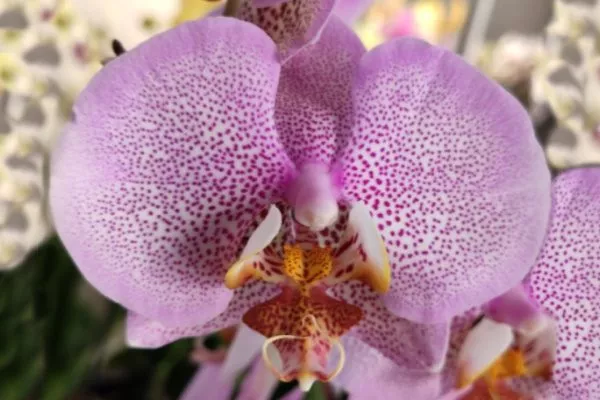
The Pink Panther
A classic hybrid variety obtained through selective breeding. It features five snow-white petals, but the pink spots make it appear completely pink. It grows to a height of 50-60 cm.
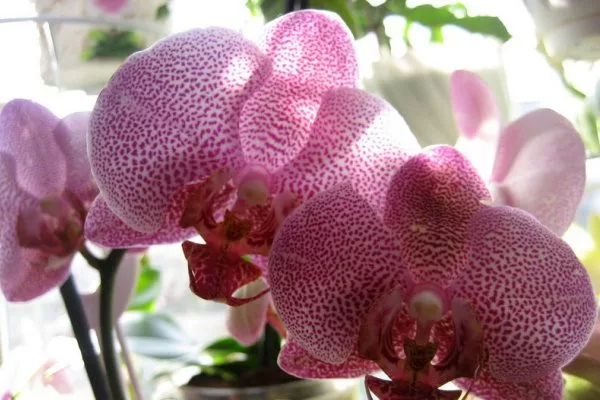
Legato
This variety is distinguished by large buds with silky petals. The color is delicate, not pure pink, but beige. Occasionally, specimens with lemon and gold hues are found.
Sacramento
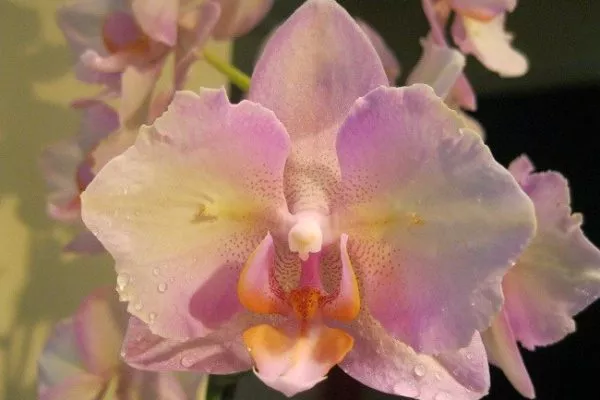
A popular variety due to its hardiness. The buds are large—ranging from 7 to 10 cm in diameter—and the petals are light pink. Its main characteristic is its repeated and prolonged flowering, so the dormant period lasts only three months.
Gold Rush
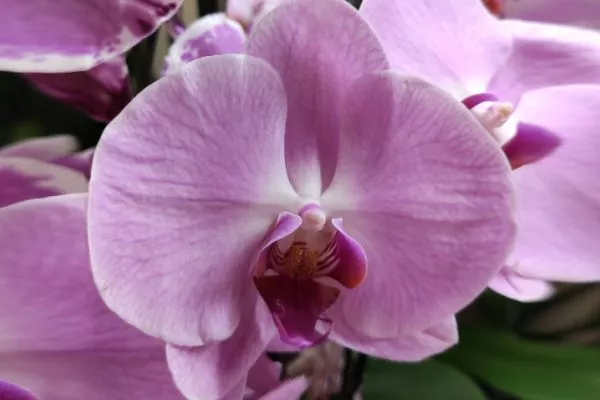
An exotic variety characterized by its unusual yellow-pink coloring. The flowers are glossy, with a dark center—sometimes red, orange, purple, or lilac.
Pink Phalaenopsis species
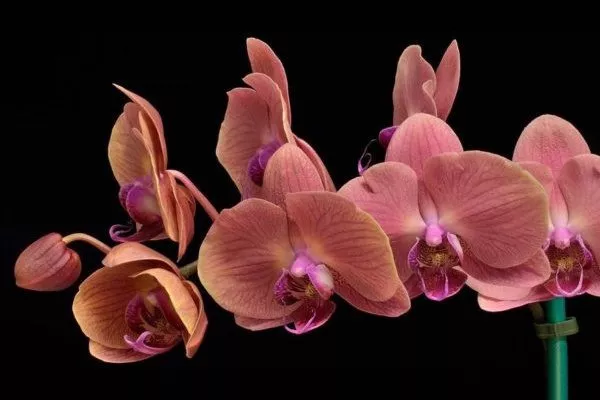
There are over 70 species of phalaenopsis. These are not cultivars, but varieties of the plant. Below, we'll look at popular species that have a natural rose color. These are often used in hybridization.
Schiller
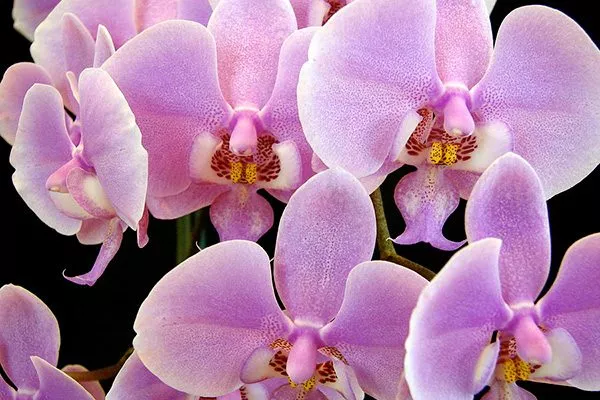
This is a tall plant, with stems reaching up to 1 m. Its root system is extensive, requiring a sturdy, large pot. The bush has so many leaves that the stem is practically invisible. The leaves are vibrant green, wiry, and large—8-10 cm wide and 50-60 cm long.
The petals are very delicate, and there are many flowers in a single inflorescence. One recorded instance is 174.
Sanderiana
This pink phalaenopsis is considered elite and rare, hence its high price. The flowers are medium to large (ranging from 5 to 9 cm in diameter), but the stem is short. Each flower bears approximately 50 buds, which can range from light pink to dark, and even purple. The lip is yellow, light brown, white, or reddish.
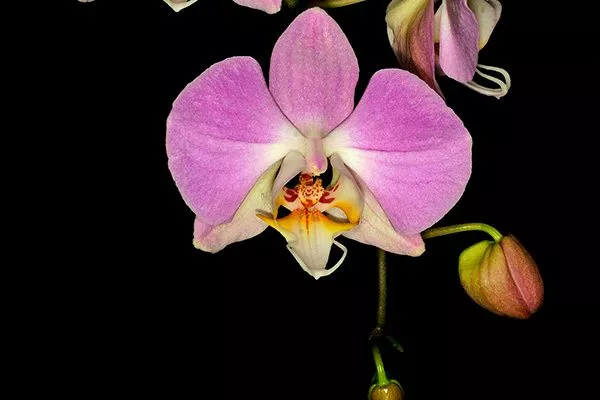
How to plant a pink orchid?
Growing pink orchid varieties is standard, but there are some features that are important for a beginner orchid grower to know.
Accommodation
Pink orchids prefer plenty of light but not direct sunlight, so it's best to place the pot on the west or east side of the house. They can also be placed on south-facing windowsills, but you'll need to shade the windows with light, airy curtains. Be sure to keep the leaves and buds away from hot glass.
Planting a finished flower
Before planting your orchid, prepare the appropriate substrate. It should be as loose and moisture-absorbing as possible, with a neutral pH. Keep in mind that you can't use garden soil, as the components used are completely different:
- bark from pine or spruce;
- charcoal;
- sphagnum moss;
- as drainage – vermiculite, perlite or expanded clay.
How to prepare planting mixture:
- Clean the bark of dirt and place it in a large bowl of water for 3 days. To prevent the bark from floating, place a weight on top.
- Remove the planting material from the liquid and place it outside on a windy side. The bark will dry out within 10-12 hours.
- Cut the bark into 2-3 cm pieces.
- Soak the sphagnum moss separately. Leave it for an hour and a half, then dry it outside for 5 hours.
- Crush the charcoal into pieces about 1 cm in size.
- Combine all ingredients in equal proportions. Some varieties of pink orchids require more bark.
Now choose a pot. It meets the following requirements:
- width of the flowerpot – 2-4 cm wider than the diameter of the root system;
- height – should be equal to the length of the roots, plus 10 cm for the drainage layer;
- material – plastic, clay, ceramic or glass.
You'll need to make holes in the pot not only at the bottom but also on the sides. Otherwise, water will stagnate excessively, which will cause root rot.
Immediately after purchase, the orchid should not be disturbed for 2-4 weeks, so replant it after the specified time. But first, prepare the orchid:
- Remove the flower from the pot after watering thoroughly.
- Rinse the root system in water to remove any remaining substrate.
- Inspect the roots and aboveground portion of the plant. They should be free of disease, pests, damage, or other signs of injury. If any are found, trim these parts and dust the cut areas with wood ash or activated charcoal.
- Place drainage material on the bottom of the container.
- Fill the top half with substrate.
- Place the flower, gently straightening the root shoots.
- Add substrate right up to the top.
- Moisturize moderately.
Please note that if the orchid has pseudobulbs, pay attention to their condition – they should be firm and not wrinkled.
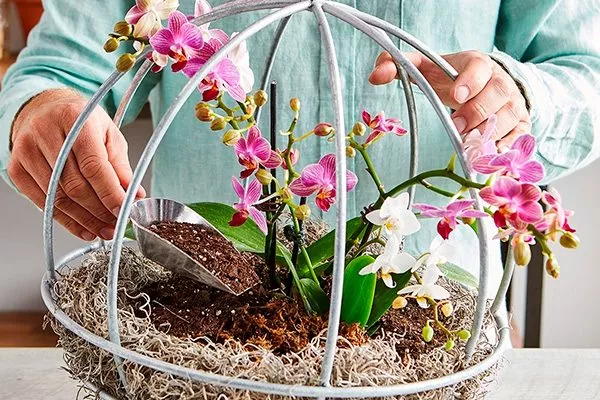
Transplanting a seedling
The seedling is replanted after rooting, which occurs both in the substrate and in water. The root system should already be fully formed—the shoots are firm and strong.
Planting is carried out in the classical way, but with some peculiarities:
- since the stem of the seedling is not yet strong, insert a support peg into the pot next to it and lightly tie up the future flower;
- During the first 15 days, keep the seedling at a temperature of +18 to +22 degrees, water every 3 days.
Features of growing conditions
Care requirements vary depending on the specific species and variety of pink orchid, but there are also general rules that should not be ignored.
- ✓ The optimal temperature for pink orchids should be maintained in the range of +18°C to +27°C during the day and not lower than +16°C at night.
- ✓ Air humidity should be at least 70%, but not exceed 90% to avoid rotting.
Temperature conditions
Exotic plants are considered capricious, as they absolutely cannot tolerate sudden temperature changes. Average thermometer readings should range from 18 to 20 degrees Celsius. However, many varieties can tolerate temperatures as low as 10-12 degrees Celsius.
Optimal values:
- during the daytime – maximum +27 degrees;
- at night – minimum +16-18 degrees.
Lighting
Pink orchids refuse to bloom if they receive insufficient light, so don't ignore this requirement for Phalaenopsis. Features:
- daylight hours – from 12 to 16 hours per day;
- light - diffused, not direct and not bright.
Air humidity
Being a tropical plant, orchids prefer high humidity, which is very difficult to achieve in our apartments. The optimal humidity for orchids is around 70-90%.
These levels are typically present in a bathroom while showering, but they're unacceptable in a regular room. Therefore, you'll need to artificially increase the humidity so that these levels are only present near the flower.
How to do it – methods:
- Spraying. Apply water from a spray bottle at room temperature or a couple of degrees warmer. However, keep in mind that 20-30 minutes after the hygienic shower, it's important to wipe each leaf, rosette, and stem with a soft cloth. Failure to do so may result in rotting.
- Humidifiers. The best option. The device is installed next to the pot. This method has no drawbacks.
- Containers with water. This method is used when a humidifier is not available. It's a good and free option.
Caring for a pink orchid indoors
Care procedures involve just two simple but important steps: moistening the substrate and fertilizing. With this pink exotic plant, you'll need to take care of it with the utmost care and pay attention to a few nuances.
Watering
Despite orchids' love of high humidity, their root system doesn't tolerate it. Overwatering always promotes root, stem, and leaf rot.
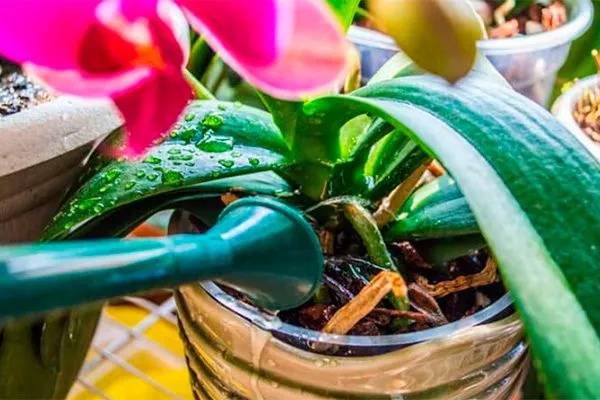
Main requirements:
- water once a week in autumn, spring and winter;
- during the period of active flowering – once every 11-12 days;
- in summer during hot weather – every 3 days;
- water quality – soft, warm, settled;
- The optimal liquid is rainwater, melt water, or filtered water.
To determine if your plant is ready for watering, look at the top layer of the substrate—it should be dry. Keep in mind that a lack of moisture in the substrate is indicated by drying leaf edges, yellowing of the green mass, and a change in the root color from white to grayish-green.
Top dressing
Flower shops offer a wide selection of fertilizers for orchids. The product should be water-soluble, as orchids are fed exclusively with liquid solutions.
Experts recommend fertilizing flowers once every 7-8 days, but once every 2 weeks during dormancy. Fertilize immediately after watering.
The best orchid complexes:
- Forte – used during flowering;
- Dr. Foley – consists of potassium and nitrogen, therefore it is used in spring;
- Mr. Color – universal bio-fertilizer.
During the flowering period
This is the time when the flower requires increased attention from the grower. The plant expends a lot of energy and strength during budding, so it's important to replenish this by adding generous amounts of minerals. All faded buds are removed to allow the plant to produce new fruit.
Preparing for winter
In autumn, reduce the frequency of watering and avoid applying nitrogen fertilizers (preferably potassium, calcium, and magnesium). You can water your orchid more frequently starting in February, as this is when flower stalks begin to form.
Diseases and pests
Pink orchids, if properly cared for, are extremely rarely susceptible to disease. This problem is most often encountered by beginners. Most illnesses are related to improper watering.
The most dangerous diseases for exotic animals:
- powdery mildew;
- anthracnose;
- leaf spot;
- fusarium;
- black rot;
- gray mold;
- root rot;
- brown rot.
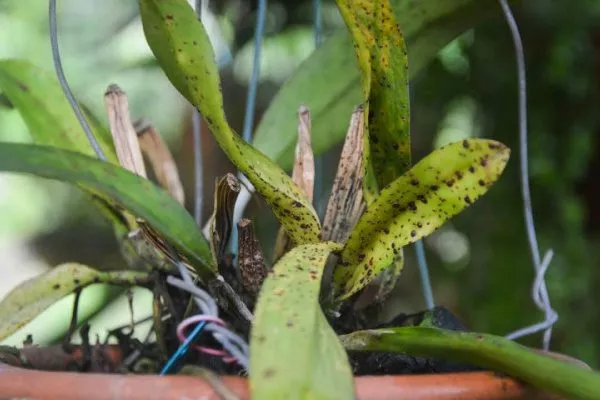
Pests also sometimes attack pink orchids. This can be caused by infestations from other houseplants or by improper care and maintenance practices. Pests are generally divided into three broad groups:
- the first is aphids and other juice-sucking insects;
- the second is snails of different species;
- the third - woodlice, silverfish, nematodes, thrips.
Various insecticides are used to control pests.
If you detect any disease or pest, take immediate action. Here's what to do:
- Trim off all affected parts of the plant. Treat the cut areas with activated charcoal. To do this, take several tablets, crush them into a fine powder, and dust the cut areas. Alternatively, you can use Miramistin or wood ash.
- Burn the orchid trimmings or dispose of them immediately in the garbage chute. This will protect all other plants in your apartment from infection.
- Spray all green mass or roots with the preparation.
To prevent such problems from occurring again, follow the conditions and care rules for orchids, and spray with insecticides and fungicides in advance as a preventative measure.
Reproduction
Pink orchids can be propagated in a variety of ways, except for one – by seed. Seed propagation doesn't preserve varietal characteristics, so you may not get pink buds.
Briefly about reproduction methods:
- Children. This is the most commonly used method. Both stem and basal cuttings can be used for propagation, but in the former case, the formation of aerial roots is essential.
The process is simple:- Find the baby.
- Cut it off with a sharp, disinfected knife.
- Plant in substrate or water for rooting.
- By dividing the bush. Best suited for orchids that have pseudobulbs (these are sympodial varieties).
The procedure is as follows:- Moisten the substrate in the pot.
- Remove the orchid from the pot.
- Thoroughly remove any soil from the root system. If this isn't possible by hand, rinse with water, preferably settled water.
- Use a knife to cut the bush into 2 or 3 parts so that each has a pseudobulb.
- Plant all the divisions in separate pots.
- Cuttings, flower stalks. An excellent choice for all types of pink orchids. Propagate as follows:
- Separate the cutting or flower stalk from the bush with a knife and an oblique cut.
- Cut into 10 cm pieces.
- Pour the substrate into the container and place the cuttings in a horizontal position.
- Cover with plastic.
- After the roots have formed, plant.
Pink orchids are not uncommon among gardeners, but that doesn't make them any less attractive. They can range in color from light to dark, with splashes of completely different shades, and these varieties are quite easy to grow.
I adore orchids. They're incredibly beautiful flowers. I currently have a snow-white and a purple orchid. I really want to buy more in different colors. Thank you for the detailed information about the names.