
White orchids are considered the most stunning, delicate, and beautiful flowers, symbolizing elegance and luxury. These flowers will truly enhance your home and are an excellent choice for wedding bouquets. Explore snow-white orchid varieties and learn about their distinctive characteristics.
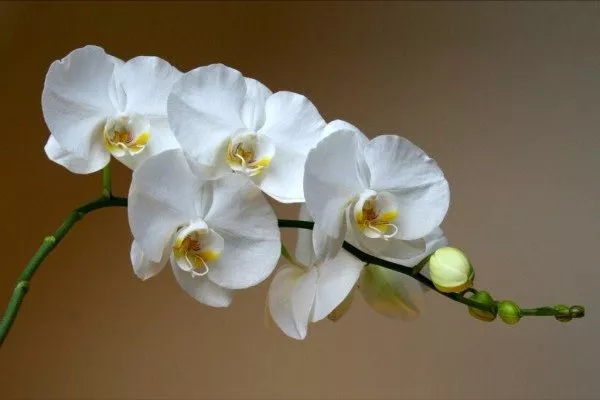
Characteristics of white orchids
The orchid's structure isn't much different from other Phalaenopsis species. Depending on the type, the plant can grow from 30-40 cm to 1 m in height. Its main characteristics include the snow-white petals during flowering.
Distinguishing characteristics:
- Orchids most often have purple or burgundy splashes scattered across their petals. Flowers also appear with crimson streaks on white petals.
- The orchid has stiff leaves and splayed aerial roots. The leaf blades are long and wide, glossy on the surface, and purple underneath. The leaf length varies between 20 and 40 cm, so a mature plant requires a larger area.
- An orchid's stem is a vertical shoot that can vary in length. White phalaenopsis has tall, curved flower stalks that rarely branch. peduncle reaches its greatest height, its upper part lengthens, due to which the flower buds are located further from each other.
- White orchids tend to open their lower buds first while the upper buds are forming.
- The center of the flower contains a structure called a "lip" that attracts pollinating insects. The lip can have a variety of shapes and colors.
- Typically, an orchid has 15 buds, and the diameter of the petals ranges from 7-9 to 12-13 cm.
Are there pure white flowers?
Many gardeners wonder if pure white orchids exist. Most desire to obtain such a plant to enjoy its incredible delicacy and elegance.
In nature
The Amabilis variety is the progenitor of many hybrids. It grows wild and is characterized by a bush with fleshy leaves and pearly white flowers. The leaves gradually develop into bright green rhizomes.
White phalaenopsis blooms year-round, with buds opening one after the other, each lasting approximately three months. This white orchid is native to Indonesia, New Guinea, Australia, southern China, and Java.
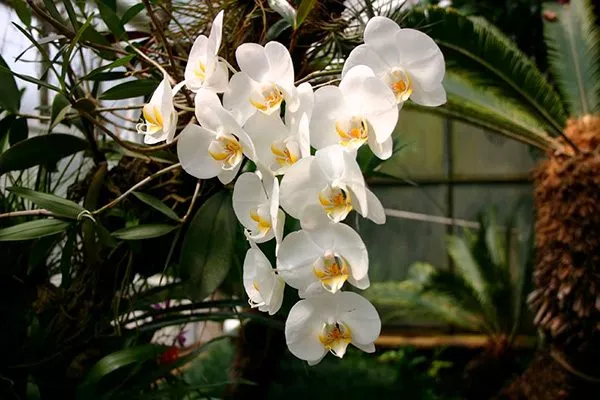
Artificially bred
Breeding white orchids is considered one of the most popular trends among gardeners, but it's extremely rare to achieve a pure white flower. Petals may have pink edges or spots. White phalaenopsis hybrids are available in flower shops.
The meaning of the flower
White orchid, translated from Latin, means "comes from God." This orchid variety, belonging to the Phalaenopsis family, means "butterfly." The flower's name was given by the renowned botanist Karl Ludwig Ritter von Blume. It derives from the unusual shape of the flower stalk, which resembles moths suspended on the stem.
Orchids have always symbolized wisdom, aristocracy, and elevated feelings. The flower's meaning changes depending on the color of its petals. For example, orchids with rich, colorful flowers signify pure passion, while plants with petals in delicate, muted tones symbolize warmth and comfort.
The white orchid has several meanings:
- beauty;
- harmony;
- pure love.
Different countries have their own legends that determine the meaning of the white orchid.
History of breeding
As early as 1510, attempts were made to cultivate phalaenopsis in the European climate. The first to try their luck were the Spanish conquistadors, who were captivated by the beauty of this unusual plant and wanted to bring it to Europe. However, all the specimens brought back perished due to unfavorable weather conditions and improper care.
Only 200 years ago was successful cultivation achieved in the European climate. Fortune smiled on the British, who figured out how to properly care for the orchid and ensure its full flowering. Then the Chinese began actively cultivating it, and then others around the world.
White varieties of the orchid family
There are many varieties of white orchids. Explore the most popular ones, beloved by many gardeners.
| Name | Plant height | Flower diameter | Flowering period |
|---|---|---|---|
| White Phalaenopsis | 30-100 cm | 7-13 cm | up to 3 months |
| Phalaenopsis multiflora | up to 60 cm | 4-6 cm | 4-6 months |
| Phalaenopsis butterfly | 20-40 cm | up to 10 cm | up to 8 weeks |
White Phalaenopsis
The white phalaenopsis is a common orchid that won't surprise anyone. As our journalists discovered, it's the one that's most popular in flower shops. Royal OrchidIt was artificially bred and appeared relatively recently. Essentially, it's a Phalaenopsis familiar to gardeners, but with longer stems reaching up to 1 meter in height and enormous flowers reaching up to 15 cm in diameter. This orchid has a subtle, unobtrusive fragrance.
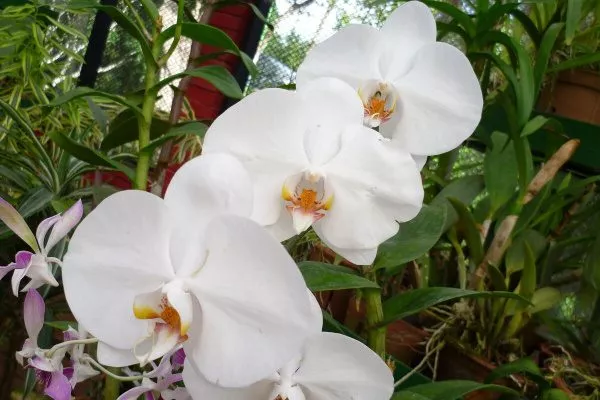
Royal Orchid White
For the plant to thrive and bloom, it needs optimal growing conditions. Proper care involves maintaining a temperature between 22 and 24 degrees Celsius. In autumn, lower the temperature to 14 degrees Celsius to promote flowering.
Also popular phalaenopsis multifloraMultiflora is an unusual hybrid orchid, recently developed by breeders. It can be any color, but white looks delicate and sophisticated.
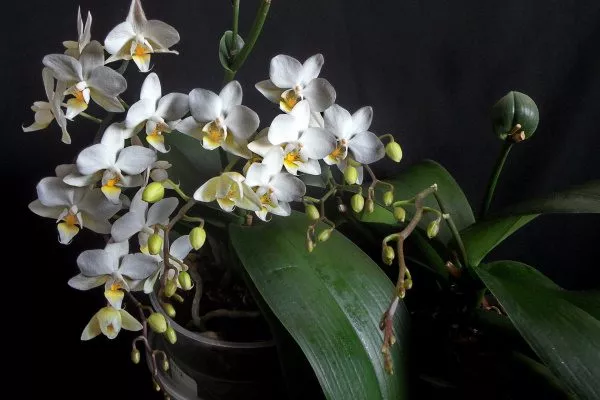
Phalaenopsis Multiflora white
How does Phalaenopsis multiflora differ from the regular one? Multiflora is a small orchid covered in numerous flowers (up to 50 on a single stem). The flowers are small, averaging 4-6 cm in diameter. A distinctive feature of this species is the formation of numerous branches during flowering. The average bloom time is 4-6 months.
At full bloom, the mature plant reaches up to 60 cm in height. The leaves are large, glossy, and green. The length of the leaves reaches 20-25 cm.
To prevent the plant from becoming diseased and to ensure it thrives, keep it clean, protect it from dust, and mist it occasionally. Maintain a suitable temperature—the ideal temperature is 22 degrees Celsius.
Also, on the shelves of flower shops, fans are looking for not just a white orchid, but specifically phalaenopsis butterflyThis is a phalaenopsis flower that has undergone a mutation, and now its lateral petals appear to have pinched edges (right down the middle). The resemblance of these petals to butterfly wings is where this phenomenon got its name.
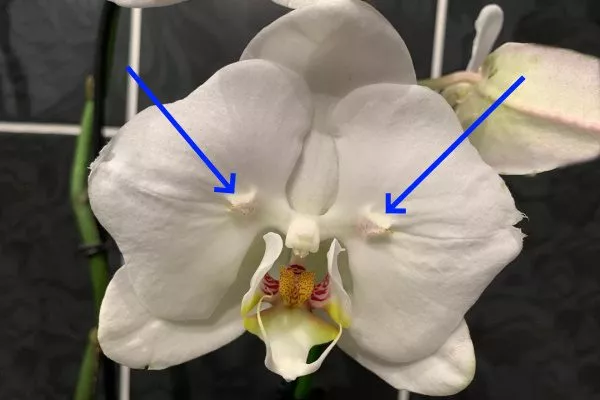
Next, we will look at the types of white phalaenopsis and popular varieties.
Phalaenopsis Aphrodite
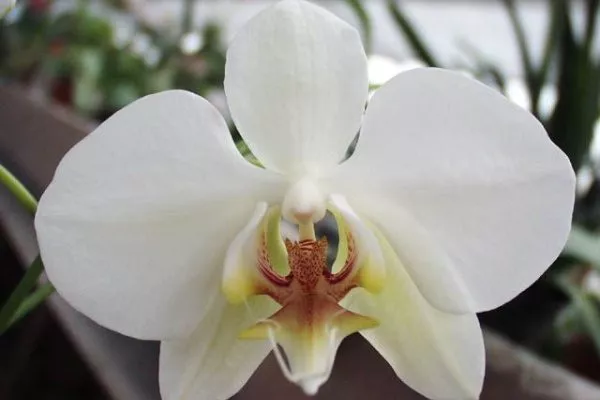
There are many species of phalaenopsis. One of them is Phalaenopsis aphrodite. The Aphrodite orchid is characterized by powerful roots with red tips. The plant has fleshy, glossy leaves, the outer surface of which is dark green, while the inner surface is violet-purple.
The flower stalks are tall, green with brownish-red spots. Typically, there are no more than two. The flowers are white. The lip is white and yellow with purple and/or red highlights.
Phalaenopsis Stewart
Phalaenopsis stuartiana - is one of the species of Phalaenopsis. A popular representative of this species isRhida stewartiana 'Pico Chip' (Pico Chip).
It has small but very interesting flowers, reaching up to 6 cm in diameter. The plant itself grows up to 45 cm in height. The leaves are variegated when young, turning grayish-green when mature.
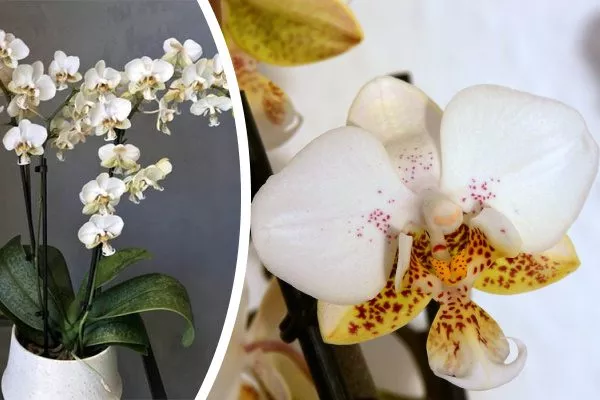
Phalaenopsis stuartiana 'Pico Chip'
The orchid's petals are white with pale yellow undersides and bright red spots at the base. The lip is golden yellow, with purple spots and horns at the tip.
Provide the plant with proper care, maintain a temperature between 22 and 24 degrees Celsius, and place the pot in partial shade. This will ensure a beautiful, flowering plant.
Phalaenopsis amabilis
Phalaenopsis amabilis is another species of Phalaenopsis. It grows in northern Australia and southeast Asia. It is characterized by a short stem and fleshy, glossy leaves of a dark green hue. A single plant produces 4-5 leaf blades.
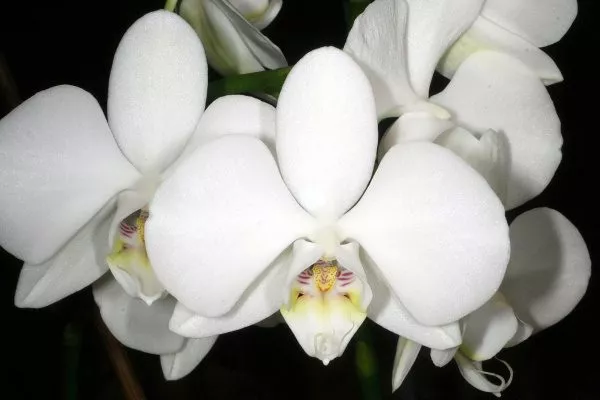
The flowers are white, with petals slightly tinged with lilac. The lip is reddish-yellow (more or less intense). The flower diameter ranges from 6 to 10 cm. Phalaenopsis amabilis is characterized by its long flowering period, from May to October.
Phalaenopsis variety "Alabaster"
The Alabaster orchid is medium-sized, growing up to 60 cm in height. The stem bears dense clusters of inflorescences—about 20 in total. The flowers grow large, reaching 7-10 cm in diameter. The lip is burgundy, yellow, and white.
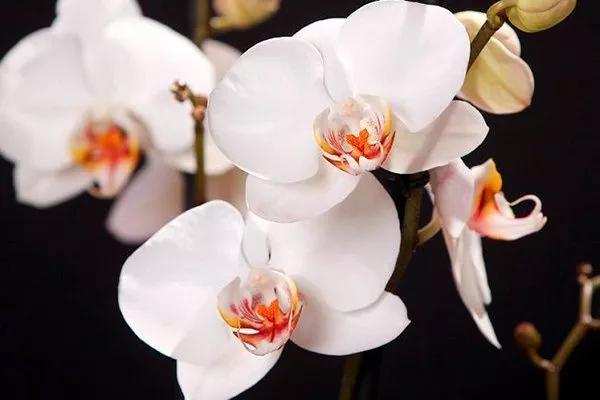
Phalaenopsis 'Alabaster'
The plant is covered with lanceolate, dark green leaves up to 25-30 cm long. The orchid blooms approximately once every six months, lasting up to 8 weeks. The Alabaster orchid requires high humidity, moderate watering, and avoids direct sunlight. Under these conditions, it will show its best blooms.
Phalaenopsis white variety 'Red Lips'
The stem of the Red Lips hybrid orchid grows 20-40 cm in height. It is covered with fleshy, elongated leaves of a rich green hue. The leaves reach up to 30 cm in length. Five to six leaves are clustered in a rosette.
The flower petals are white with a pinkish tint in the center, and the lip is a purple-crimson hue. The contrast of white and crimson is striking, making the flower a popular choice for weddings and other lavish celebrations.
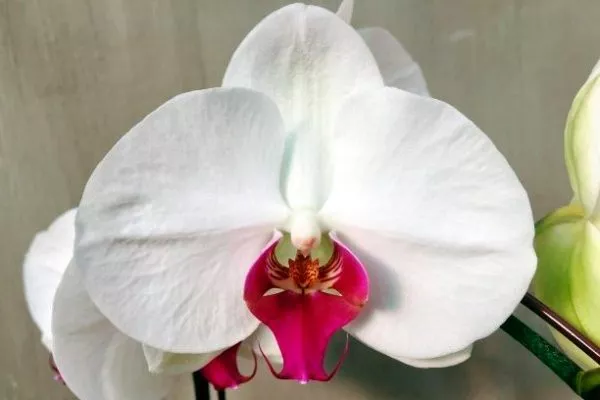
Phalaenopsis 'Red Lips'
The plant blooms profusely and for a long time if provided with ample but infrequent watering, allowing the soil to dry out. It doesn't require high humidity—50-70% is sufficient.
Phalaenopsis variety "Leontin", big linden
Many gardeners appreciate the Leontine orchid for its appearance: a delicate plant with an unusually large and extended lip. The stem reaches 70-80 cm in height, producing large flowers up to 10 cm in diameter. The rosette consists of several pairs of leaves.
This orchid has very fragile, silky petals of a pleasant snow-white hue, and a lip with a pale purple pattern. The flowers reach up to 9.5 cm in diameter. The lower part of the lip has pointed tendrils.
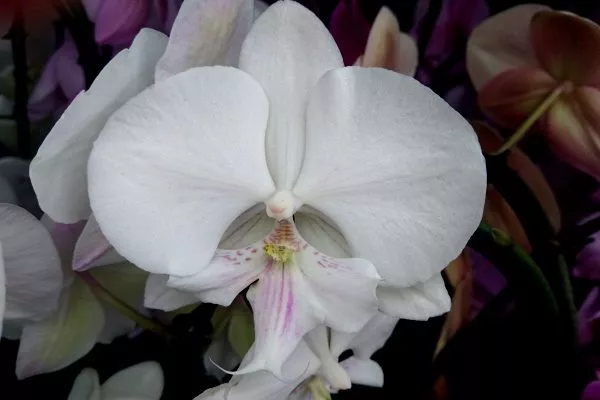
When growing this orchid during the day, it is recommended to set the room temperature at +22-24 degrees.
Phalaenopsis variety "Apple Blossom"
The Apple Blossom orchid grows up to 65 cm tall and typically has two flower stalks. The plant has smooth, leathery leaves, colored dark green. The leaves are elongated, 15 cm long and 6 cm wide.
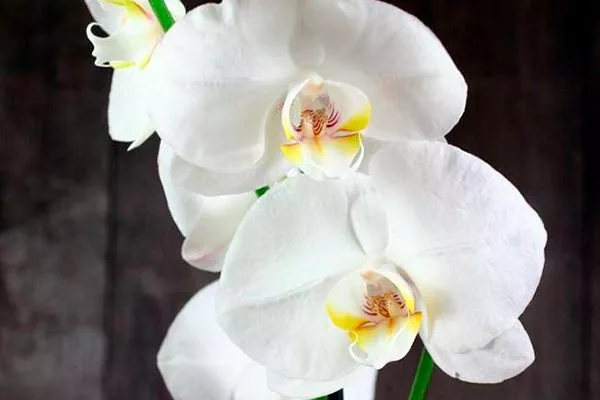
The flowers are unique, white with a yellowish lip and purple stripes inside. During flowering, they exude a delicate, fragrant aroma. The Apple Blossom orchid thrives in temperatures ranging from 17 to 27 degrees Celsius.
Phalaenopsis variety "Pandora"
The Pandora orchid is distinguished by its unusual coloring: the white petals are scattered with numerous lilac specks, while the center remains burgundy. However, there are specimens with pure white petals, sometimes with sparse dots.
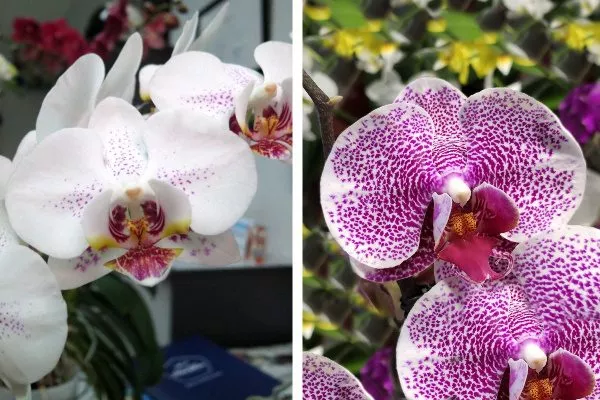
Phalaenopsis 'Pandora' in various colors
During flowering, 7-9 buds form on a single stem. The Pandora orchid is very popular in the Philippines. It grows best in a constant temperature of 17 to 25 degrees Celsius.
Phalaenopsis variety "Alaska"
Alaska is considered an easy-to-grow and hardy orchid variety. The plant has snow-white petals and a deep yellow center. The flowers reach up to 7 cm in diameter. A single stem can produce more than six buds. They open one after another, and the blooming period can last for three months.
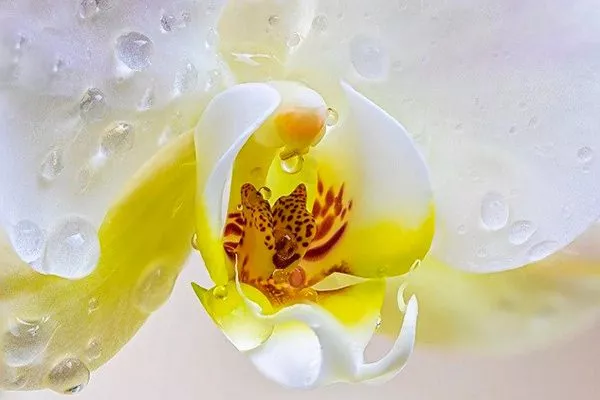
In order for the plant to delight you with flowering and beautiful flowers, it is necessary to follow certain care procedures: watering, temperature conditions, and humidity levels.
Phalaenopsis variety "Valencia"
The Valencia orchid is a rare variety. It is characterized by a firm, dense, leathery leaf blade that reaches 15-18 cm in length. The flower stalk can grow up to 60 cm. Several buds bloom in succession.
The flowers reach up to 8 cm in diameter, with snow-white petals, sometimes with yellowish streaks on the lower petals. The lip is large and lemon-colored. The center of the flower is dark crimson and has a yellow rim. The flowering period lasts up to 8 months.
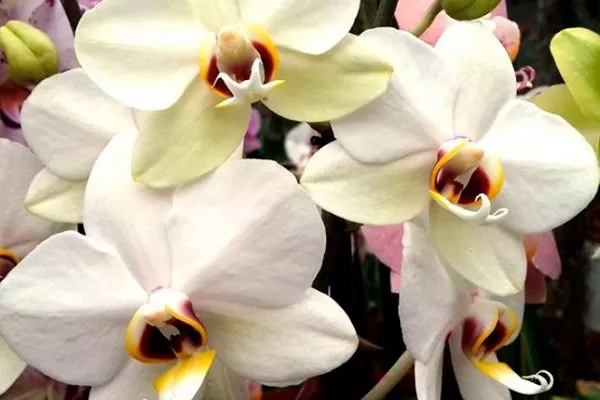
Proper care will ensure the orchid's health and beauty. It will become a true highlight of the room.
| Name | Plant height | Flower diameter | Flowering period |
|---|---|---|---|
| White Vanda | up to 1 m | up to 15 cm | up to 2 months |
| Cattleya alba | 30-45 cm | 5-25 cm | up to 8 weeks |
| Dendrobium dracoides | up to 10 cm | up to 6 cm | all year round |
White Vanda
This variety originated in Southwest Asia and Northern Australia. The plant has long, strap-shaped leaves, colored light green. Vanda is an orchid with powerful roots and a dense stem, reaching up to 1 m in height.
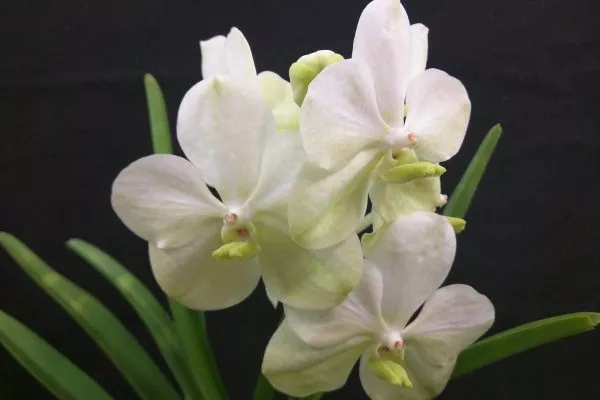
Flower stalks develop from the leaf axils. A single plant can produce up to four flower stalks, each with 15 snow-white flowers. This variety is characterized by a long flowering period lasting up to two months. When caring for it, maintain a temperature of 16 to 29 degrees Celsius.
Cattleya alba
The Cattleya orchid is native to Asia, South America, and Central America. It is a large-flowered hybrid plant, reaching 30-45 cm in height. Its stem consists of several pseudobulbs, each with 1-2 leaves. The thick, succulent stem stores water and nutrients.
The plant has long, narrow, leathery leaves, colored a rich green. Florists appreciate this orchid for its incredibly beautiful flowers, with velvety petals with ruffled edges. The flower stalk diameter can range from 5 to 25 cm.
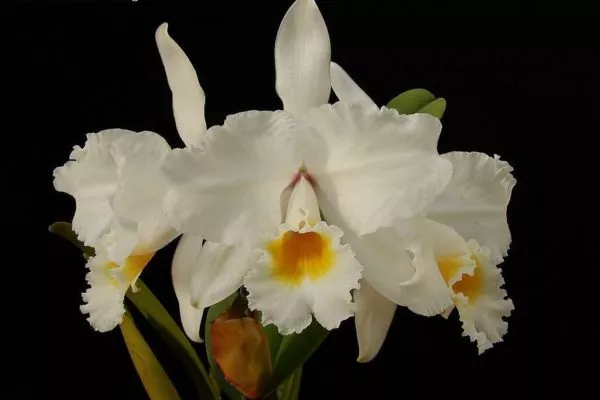
Dendrobium
This is another genus of flowers from the Orchidaceae family. This plant is grown as a houseplant, in greenhouses, and in botanical gardens. Below are the most popular white dendrobium species.
Dendrobium dracoides
Considered one of the most widespread varieties, it is found from India to Southeast Asia. The orchid's leaves are leathery and grow up to 10 cm long. Very short flower stalks emerge from the upper nodes of the shoot. Each stalk bears 2 to 5 waxy flowers, up to 6 cm in diameter.
The orchid's lip is characterized by wavy edges, and at the base, it is decorated with red or gold lines. A distinctive feature of this variety is its subtle tangerine aroma.
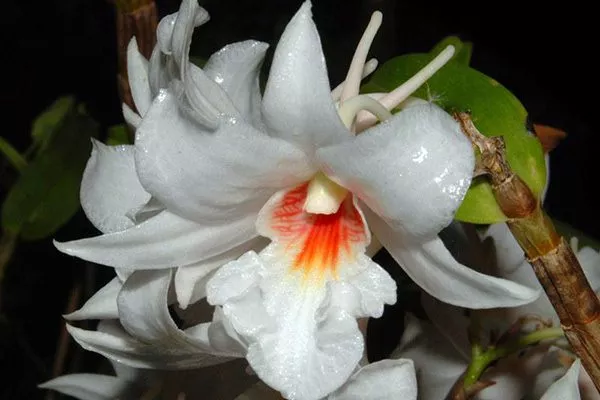
Dendrobium dracaena orchids should be kept at temperatures between 22 and 27 degrees Celsius during the active growth period. With proper care, the orchid will bloom year-round.
Dendrobium nobile (noble)
Orchids can reach up to 90 cm in height, but most mature plants do not exceed 50-60 cm. Each year, the plant adds 1-3 new leaves, depending on how many pseudobulbs the plant has grown.
This genus of orchids includes white varieties, such as Dendrobium Nobile 'Apollon'. These orchids have short stems that produce several flower corollas. The flowers are purple-white with a greenish edge and a delicate lemon-colored center. A single plant can produce up to 60-70 flowers, 5-5.5 cm in diameter. They often grow in clusters of several buds.
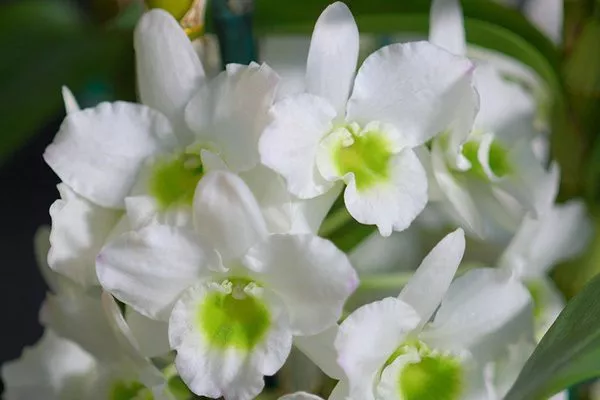
The orchid will grow and bloom well if it is provided with bright light without direct sunlight and a temperature of +16 to +30 degrees.
Dendrobium delicate
Dendrobium delicatum is a hybrid native to eastern Australia, New South Wales, and Queensland. The plant reaches 35-40 cm in height, with stems tapering upward, ending in 2-5 leaves somewhat resembling a date palm.
At the tops of the stems, flower clusters form, each bearing 10 to 25 small, snow-white flowers. This variety is distinguished by its scent of lily-of-the-valley and hyacinth. Provide this orchid with proper care, and it will delight you with abundant blooms.
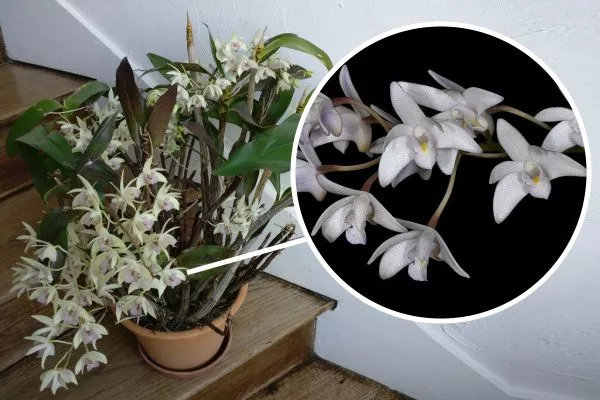
Habenaria
In the wild, Habenaria grows in Japan, Korea, and northeastern China. It can be found in small numbers in the southern Primorsky Krai of Russia. The plant has several other names, including Radiata, Povodnik, and White Heron.
This orchid was named "White Heron" due to its uncanny resemblance to a bird (specifically, species such as Habenaria radiata and Habenaria dentata). The plant is covered with narrow leaves arranged alternately on the stem. The peduncle reaches 50 cm in length, bearing 2 to 8 flowers.
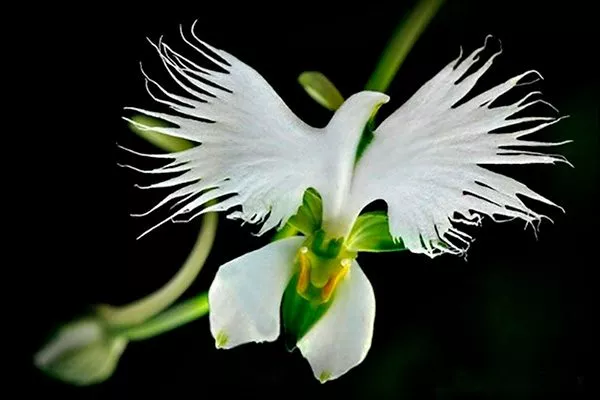
Habenaria is considered a demanding plant, so it can be challenging for a novice gardener to manage. The optimal temperature for growing it is no higher than 27 degrees Celsius.
Mini orchids
In addition to tall, varietal orchids, there are also miniature varieties with compact sizes and unique appearances. Below, see small white phalaenopsis.
Phalaenopsis Mini Mark
This hybrid is a cross between Phalaenopsis Micro Nova and Phalaenopsis philippinensis. The resulting flower is called Phalaenopsis Mini Mark. It is a small plant that grows up to 15 cm in height. The orchid has elongated leaves—about 8-10 cm—that are a bright green.
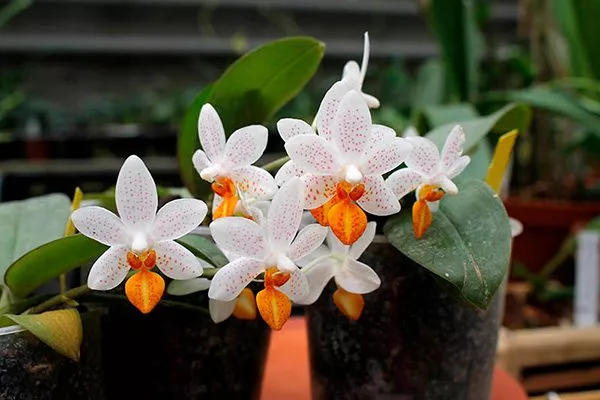
The plant bears white flowers dotted with tiny, variegated spots of orange, yellow, or pink. The flowers are small, growing to 3-4 cm in diameter. The delicate petal coloring makes the rich orange-brown lip particularly striking.
Phalaenopsis lobbii
This isn't a cultivar, but a species of Phalaenopsis. Phalaenopsis lobbii is native to India, Myanmar, the Himalayas, and Vietnam. It's a compact plant covered in small, snow-white flowers up to 2 cm in diameter.
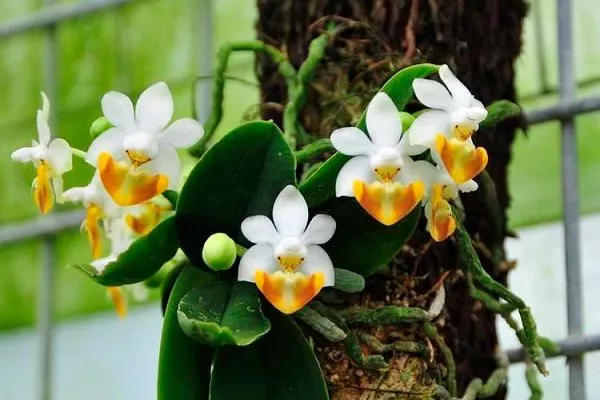
The orchid has a triangular lip, colored yellow-brown. The flower stalks are slightly drooping, semi-erect, but short—up to 13 cm. Phalaenopsis lobbai prefers warm temperatures—up to 30 degrees Celsius. The plant tolerates direct sunlight, but it requires high humidity and abundant watering.
Is caring for such plants different from caring for the population?
White orchids require special care. Unlike other orchids, white phalaenopsis orchids are more undemanding and quickly adapt to home conditions. Growing these orchids requires the following conditions:
- The daylight hours should be 14 hours. Fluorescent lamps are recommended for this purpose. The light should be diffused, as flowers dislike direct sunlight, as this will burn the petals and eventually kill the plant.
- The air temperature during the day should not exceed +25 degrees, and at night it should not be below +18 degrees.
- The indoor humidity level should be at least 50% for most varieties, but for the Vanda orchid, it should be at least 80%. If the humidity is lower, gardeners recommend misting the plant with a "rain mist."
- Transparent pots with good drainage are suitable for orchids. You can use ready-made soil, which is available at specialty stores. You can also make your own potting mix using dried oak bark and dried sphagnum moss.
- The flower requires only soft, warm, settled water, preferably boiled. It should not contain a lot of salts.
- ✓ The optimal temperature for most white orchids is +22…+25°C during the day, and not lower than +18°C at night.
- ✓ The air humidity level should be at least 50%, for the Vanda orchid – at least 80%.
- ✓ Daylight hours should be 14 hours long, diffused light, without direct sunlight.
How to choose a flower?
When buying an orchid at the store, you may end up with a diseased plant. To avoid this problem, pay attention to the following:
- Condition of leaves. They should look healthy, be glossy and free of blemishes.
- Root color. Carefully inspect the orchid. Typically, the flower is sold in a transparent pot, making it easy to assess the condition of the roots. Avoid buying a plant with dry or brownish roots. A healthy root should be fleshy and green or grayish-green in color.
- Soil condition. If the substrate is in good condition and there are no whitish spots on it, the flower does not need repotting.
- Bloom. Experienced gardeners recommend buying a blooming orchid with numerous unopened buds. This way, the flower will delight you with its beauty for a long time to come.
White orchids are the dream of many gardeners, but even a novice can manage to grow this exotic plant. With proper care and attention, your orchid will reward you with lush blooms.
Wow, I didn't know there were so many subspecies of whites. Thanks for the info.
I also have a white one, and the flower stalk is growing now. Once it blooms, I'll keep an eye out to see if I have the "Butterfly" variety.
My beauty has blossomed. I couldn't figure out what variety it is. It looks most like a "royal" variety.
Luxurious beauty ❤️