
Kalanchoe is a hardy, undemanding plant that rarely gets sick, but if improperly cared for or exposed to unfavorable conditions, its leaves may turn yellow. To restore the plant to its original appearance, the owner must correctly identify the cause of the yellowing and eliminate it.
Causes of yellowing
The challenge of dealing with yellowing leaves in Kalanchoe is that the plant reacts this way to virtually any care or maintenance issue. Therefore, the most difficult part is determining the underlying cause of the yellowing leaves.
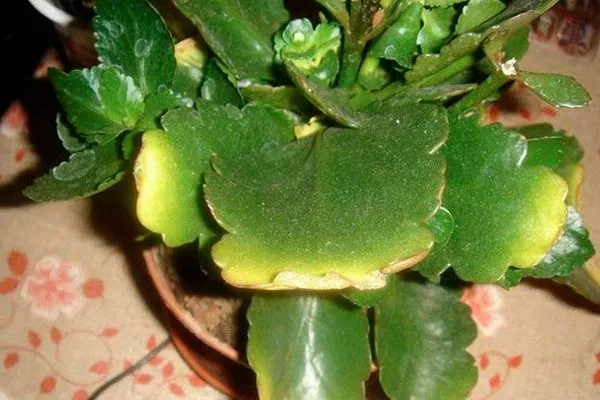
Watering errors
Any watering error can cause yellowing of the leaves or, worse, the death of the plant. It's overwatering that most often triggers various problems, including various types of rot. It's important to remember that Kalanchoe is a succulent, so it doesn't require much water.
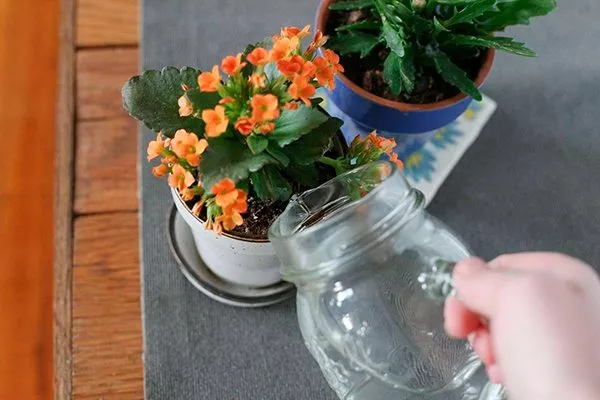
Yellowing of leaves may be due to the following factors:
- Overwatering This can cause root rot, causing the leaves to become limp, pale, lose their elasticity, and take on a yellowish tint. It's important to repot the plant promptly and establish a proper watering regimen, otherwise the plant will die.
Underwatering, just like overwatering, can also cause leaf problems. While overwatering causes the leaves to turn yellow, underwatering causes them to darken and curl. - Foliar spraying This can cause leaf burns and yellowing. This occurs if tap water is used for watering. It may contain chemicals harmful to the plant. To prevent this, be sure to let the water settle.
- Systematic watering hard water Poor-quality water from a tap or well can cause yellow pigmentation, resembling chlorosis. This occurs due to soil salinity. The problem can be identified by a white crust forming on the inside of the pot.
The best water for watering Kalanchoe is spring or rainwater. If neither is available, you can use filtered water or store-bought bottled water. If tap water is the only available source, let it sit for at least 24 hours, or better yet, 2-3 days.
The temperature regime is violated
Although Kalanchoe is a tropical plant, it thrives at normal room temperatures. This heat-loving plant also tolerates short-term cold spells, but extreme heat can negatively impact its appearance.
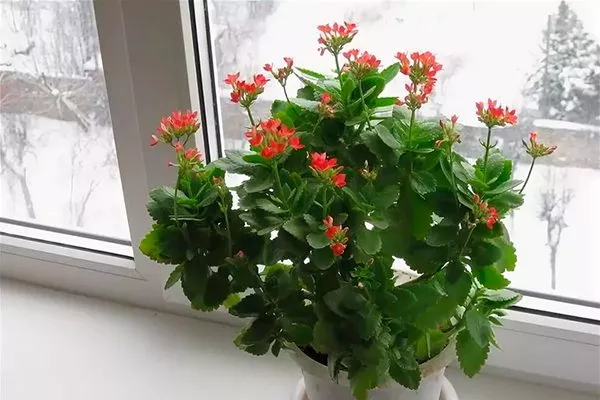
If the room temperature remains between 29°C and 31°C for a long time, Kalanchoe leaves begin to turn yellow and fall off. You can tell the problem is caused by excessive heat by one key sign: the process always starts from the bottom. Older leaves turn yellow and fall off first, followed by younger ones.
Normalizing the climate and removing damaged leaves can help improve the situation. During the dormant period, the temperature should be between 14 and 18°C, and at other times between 17 and 23°C. The minimum acceptable temperature is 9 to 10°C; colder temperatures can cause the plant to die.
Incorrect feeding
Over time, the Kalanchoe's root system expands, requiring more and more nutrients, and the soil tends to become depleted. If the plant isn't repotted and fed promptly, it will stunt, its leaves will shrink, and turn yellow.
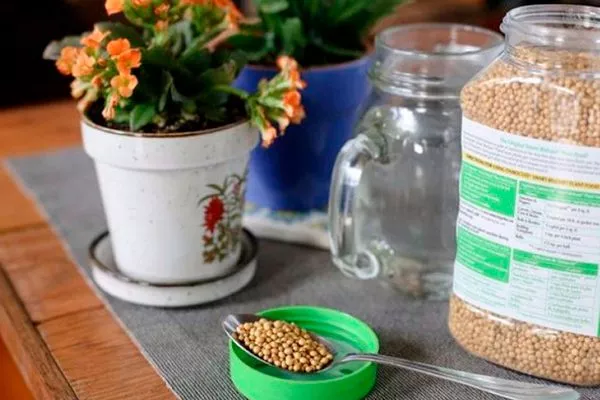
Young plants are repotted annually. For mature plants, change the soil in their pots every two years. During active growth, choose a pot that is 2 cm larger (wider and deeper) than the previous one.
Yellowing or other negative signs can occur not only due to a deficiency but also due to an excess of nutrients. Therefore, fertilizing Kalanchoe should be done with extreme caution, adhering to the dosage and feeding schedule—no more than twice a month. The solution concentration should be 50% of the recommended dosage.
Lighting
Most Kalanchoe varieties do not tolerate direct sunlight well. Often, excessive sun exposure, such as on a south-facing windowsill, causes the leaves to turn yellow, and if the situation worsens, they may curl.
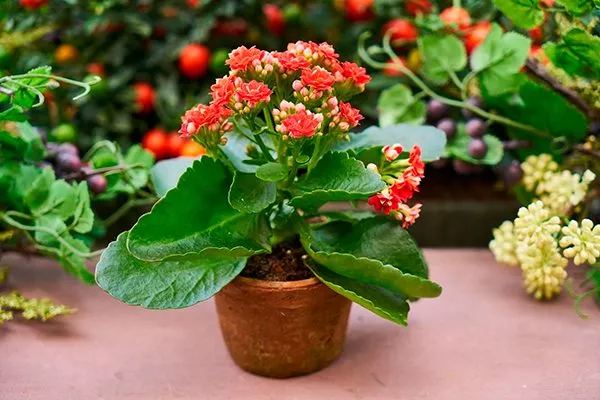
To prevent the leaves from turning yellow due to sun exposure, place the Kalanchoe pot in a location protected from direct sunlight. Place the pot near windows facing east, west, southeast, or southwest.
You also shouldn't shade the plant too much—a lack of light can also negatively affect the Kalanchoe's condition.
How to understand whether a flower needs more or less light:
- If yellowing of leaves is observed in the upper part, it means that the plant does not have enough light.
- If the leaves turn yellow evenly along the entire length of the stem, there is too much light.
Humidity
Leaves may turn yellow in low humidity conditions. In dry conditions, mist the plant regularly to prevent yellowing and wilting. Avoid placing Kalanchoe pots near radiators or heating appliances. In extremely dry rooms, running a humidifier is recommended.
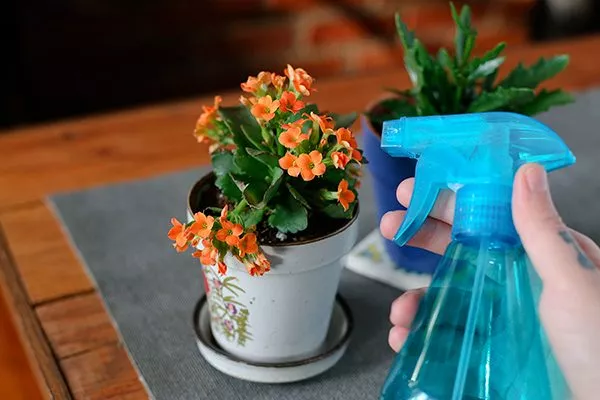
Kalanchoe is extremely susceptible to sudden temperature changes, such as those observed in winter—when very hot air comes from radiators and cold air comes from window panes.
Pests
Improper care can lead to pest infestations of Kalanchoe, and one of the most common symptoms is yellowing of the leaves.
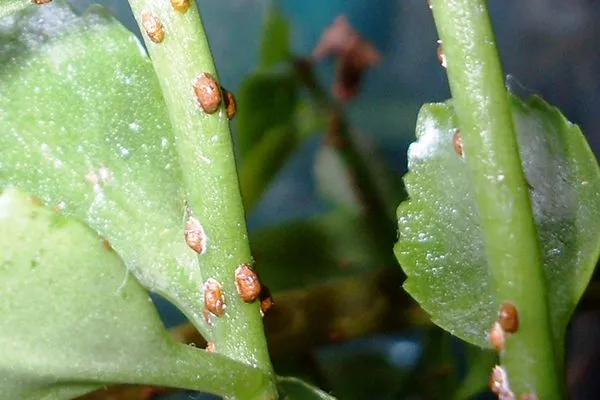
If your Kalanchoe's leaves have turned yellow, you should carefully inspect it for insects. Aphids are the most common infestation. Scale insects, mealybugs, and spider mites can also appear. This is especially common in the summer, when potted plants are brought outdoors.
You can combat insects with folk remedies, such as wiping the leaves with an alcohol, vinegar, or soap solution, or with chemicals such as Fitoverm, Decis, Aktara, etc. Repeat the treatment after 2-3 weeks.
- ✓ The presence of a sticky coating on the leaves may indicate an aphid infestation.
- ✓ White cotton-like lumps in the leaf axils are a sign of mealybugs.
Diseases
The appearance of wet yellow and/or brown spots on Kalanchoe leaves clearly indicates the presence of fungal infections caused by over-watering of the soil.
In this case it is necessary:
- Trim off all affected leaves and wilted shoots.
- Treat the plant with Fitosporin.
- Adjust and normalize the watering regime.
In case of severe damage, the plant can only be saved by rooting healthy shoots.
Transfer
Yellowing and wilting of Kalanchoe leaves may be due to improper repotting. This process is always associated with stress, and if it's done incorrectly, it's no surprise that the plant's leaves turn yellow.
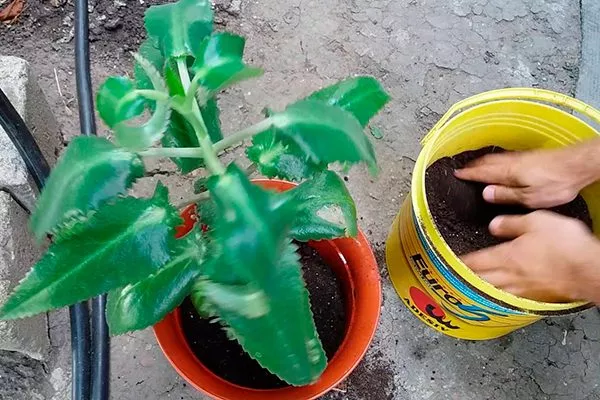
What mistakes can be made:
- The soil was selected incorrectly. To avoid mistakes, it's best to use a ready-made succulent substrate. You can also make your own, but be sure to carefully follow the instructions and recommended composition.
- Damaged roots. When repotting a plant, it's important to inspect the root system. If any roots show signs of rot or other damage, they should be carefully trimmed with a sterile instrument and the cut ends dusted with crushed activated charcoal.
Otherwise, pathogens will get into the new pot, and there will be no benefit from repotting the plant - you will have to repot it again. - Untimely replanting after purchase. Many novice gardeners make the mistake of not repotting purchased Kalanchoes. It's important to know that commercially available plants are grown in infertile soil, which contains virtually no nutrients. If not repotted, the plant will soon begin to turn yellow due to lack of nutrition.
Repot a store-bought plant after 1-2 weeks, once the adaptation period is complete. Kalanchoe is typically repotted in the spring, but this rule doesn't apply to store-bought plants—don't delay repotting. - Incorrectly selected pot size. It shouldn't be too large or too small. Its size should be proportionate to the flower. In an excessively large container, the soil will become acidic, leading to root rot. In small pots, the Kalanchoe won't be able to thrive, which can also lead to yellowing leaves and stunted growth.
Don't forget about drainage. The pot must have drainage holes. A 2-cm-thick layer of expanded clay, vermiculite, or other drainage material should be placed on the bottom.
Other reasons
If the plant is kept in ideal conditions and provided with appropriate care, and the leaves still turn yellow, you should look for another cause of the problem.
What else can cause yellowing of leaves:
- Stress. This affects newly purchased plants. If the environment changes abruptly, Kalanchoe may react by yellowing its leaves. In a nursery or store, the temperature is usually lower than room temperature, so it is recommended to initially keep the purchased plant in a cool room, at 17 to 19°C.
- No pruning has been done. Kalanchoe ages over time, and if it is not pruned in time, the shoots become elongated and the leaves become smaller and turn yellow.
Why do leaves dry out?
Kalanchoe leaves are very juicy and fleshy, and it takes a long time for them to dry out. If this problem occurs, it means the plant is experiencing severe discomfort. Dry leaves can be caused by excessively dry air, for example.
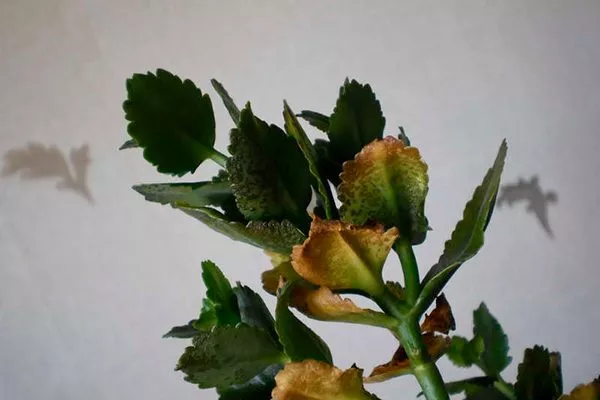
Kalanchoe leaf tips often dry out in winter when the heating is turned on. If dry leaves appear on the plant, move it away from heating devices immediately. Dry leaves can also indicate insect infestation; inspect the plant for any insects.
Why do leaves fall?
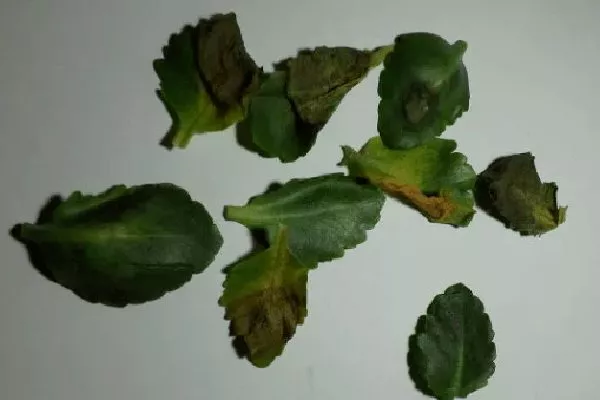
Leaf drop is most often observed due to lighting imbalances—either too much or too little light. Leaf drop can also occur due to low humidity and unfavorable temperatures.
Why do leaves curl?
Most often, leaves curl due to overwatering. If the curling is accompanied by a burgundy coloration, it means the plant is receiving too much light or is exposed to direct sunlight, which is unacceptable for Kalanchoe.
Leaf curling can also occur due to excess nitrogen in the soil, lack of moisture, and the presence of pests, particularly aphids. These pests, by sucking the sap, first cause leaf curling, then leaf drop, and eventually the death of the plant.
Why are the leaves soft?
Kalanchoe leaves become soft when watering is not properly maintained, which can lead to root rot. Fungal diseases not only cause leaf wilting but also stem darkening.
To prevent the plant from dying, it is important to reduce watering promptly and begin treating the roots with copper sulfate and/or effective fungicides such as Gliocladin, Gamair, etc.
Why is there a white coating on the leaves?
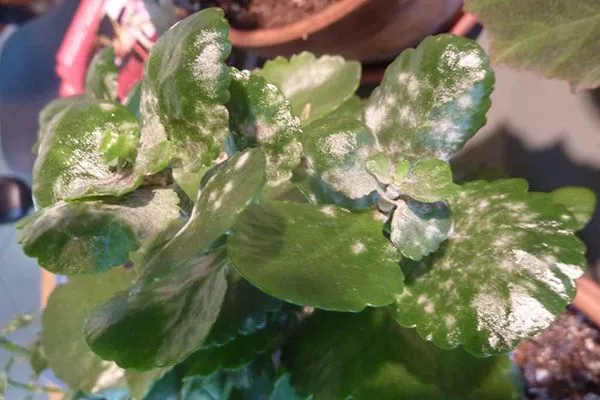
The white coating on Kalanchoe leaves is caused by powdery mildew fungi, which attack the plant at the cellular level. The coating also interferes with normal photosynthesis, ultimately killing the plant.
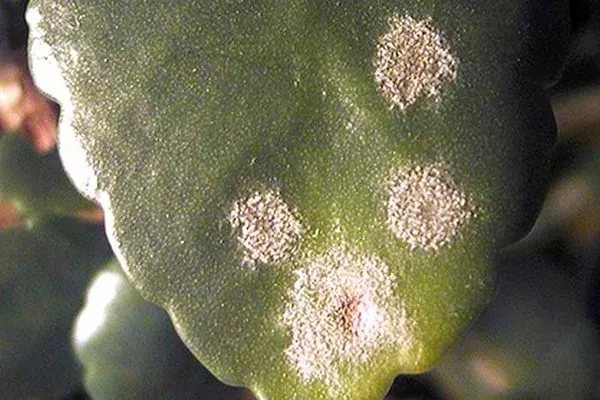
If a white coating appears, repot the plant and treat it with fungicides. Maintaining a proper watering schedule, avoiding excess nitrogen, and maintaining a normal temperature will help prevent powdery mildew and other fungal diseases.
Why are there spots on the leaves?
If water is scarce or watering is infrequent or insufficient, dry yellowish or brownish spots may appear on the crown. If the spots begin to rot, the bush should be immediately treated with a broad-spectrum fungicide.
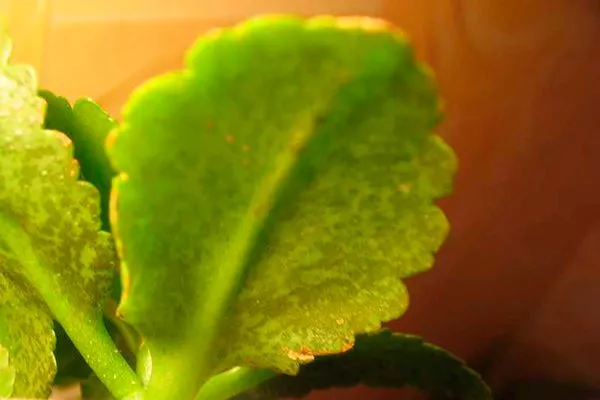
If the soil is overwatered, brown spots may appear on the Kalanchoe stem, and in some places, a gray coating may develop. In these cases, it is recommended to reduce watering and temporarily stop surface spraying.
Yellowing leaves are a serious symptom that shouldn't be ignored, just like any other changes in appearance. If you identify the cause of the problem and take action promptly, the plant can be saved.