
Among the many medicinal houseplants, Kalanchoe deserves special attention. Its sap was used to heal wounds, soothe inflammation, and even accelerate ulcer healing. Over time, alongside its medicinal properties, ornamental varieties emerged, attracting attention with their unusual leaves or vibrant blooms.
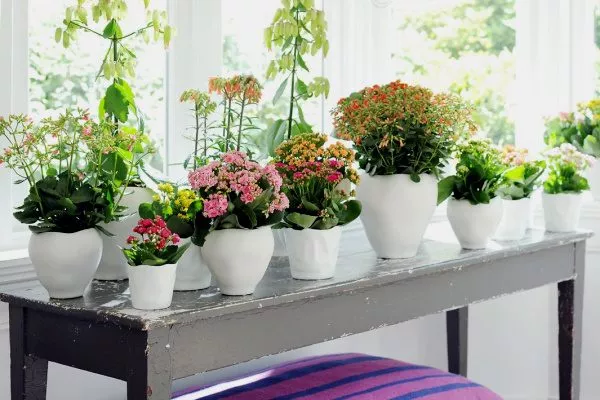
What is Kalanchoe and its varieties?
Kalanchoe – a succulent from the Crassulaceae family, native to the warm regions of Asia and Africa. The diversity of this plant is astounding: there are trailing shrubs, vines, epiphytes, and even tall tree-like shoots reaching several meters in height – a diversity that captivates the imagination.
General features:
- All species of Kalanchoe, whether medicinal or ornamental, belong to the succulent family. Their glossy, thick leaves store water. The leaves often have slits along the edges and can be attached to the stem by petioles or cling tightly to it.
- Kalanchoes delight the eye with abundant and long-lasting blooms when properly cared for. The plant blooms especially in winter. Even a purchased flowering Kalanchoe from Holland can bloom for 7 to 9 months. If your Kalanchoe isn't blooming, we recommend reading this article.
- The Kalanchoe flower palette includes various shades: from yellow, white and pink to purple, red and violet.
- ✓ Lighting: Bright but diffused light, avoiding direct sunlight in summer.
- ✓ Temperature: Optimal summer temperature +19…+26°C, winter temperature not lower than +10°C.
- ✓ Watering: Moderate, after the top 3 cm of soil has dried out, avoiding stagnant water.
| Name | Leaf type | Flower color | Plant height |
|---|---|---|---|
| Kalanchoe daigremontiana | Triangular with serrations | Soft pink | 50-70 cm |
| Kalanchoe Blossfeld | Rounded with a comb-shaped edge | Diverse | 20-30 cm |
| Kalanchoe pinnate | Ovoid | Not specified | Up to 4 m |
| Kalanchoe tomentosa | Oval with pubescence | Reds | 35-45 cm |
| Kalanchoe thyrsiflora | Rounded with a white coating | Yellow | Up to 60 cm |
| Kalanchoe serrata | Triangular with leopard spots | Not specified | 20-25 cm |
Kalanchoe daigremontiana
A valuable medicinal plant is Kalanchoe daigremontiana, also known as "Mother of Thousands" or "Goethe's Flower." This plant attracted the attention of Johann Wolfgang von Goethe with its unique propagation method and has sparked interest in scientific circles.
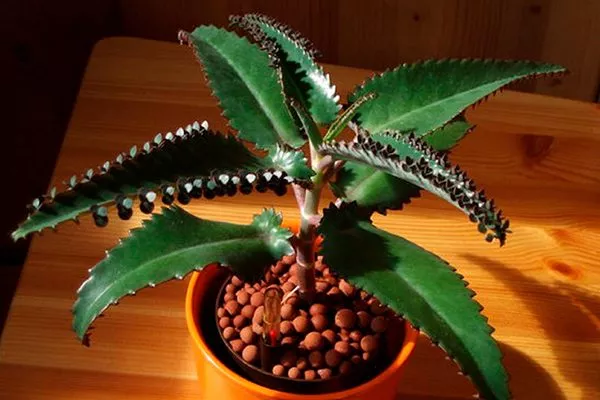
Features of the species:
- The plant is an upright shrub with a thick, straight stem (50-70 cm) in the center.
- The leaf blades are pale green, juicy, and smooth. The leaves are arranged alternately and triangular in shape with gray-green serrations along the edges. These serrations produce offspring buds (pupae) with roots that fall to the soil and immediately begin growing.
- This type of Kalanchoe can be propagated by cuttings, leaves or seeds.
- Kalanchoe daigremonii is an attractive ornamental foliage plant. Despite its long flower stalks, it bears delicate pink bell-shaped flowers arranged in panicles.
| Reproduction method | Rooting time | Success rate |
|---|---|---|
| Cuttings | 2-3 weeks | 90% |
| Leaf cuttings | 3-4 weeks | 75% |
| Seeds | 4-6 weeks | 50% |
Kalanchoe blossfeldiana
Kalanchoe blossfeldiana is the most common species of this plant grown indoors. One of its key characteristics is its long flowering period, which can last up to three months.
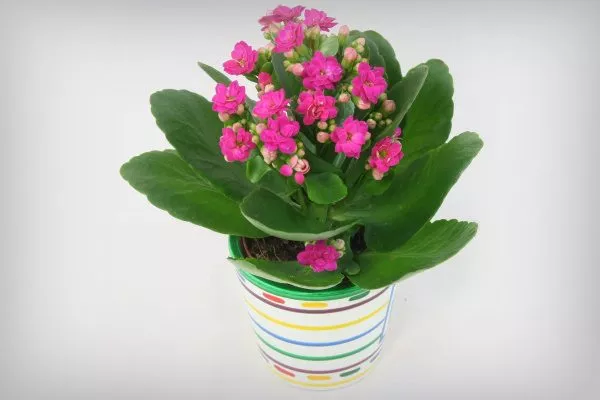
The plant has characteristic features of appearance:
- a low rosette of leaves 20-30 cm high;
- dark green, juicy leaf blades with a rounded shape and a comb-shaped edge;
- small four-petaled flowers, collected in elegant baskets, presented in a variety of shades - from red to white.
Features of the species:
- Breeders have developed a variety of Kalanchoe blossfeldiana cultivars, such as 'Double Kalandiva' with rose-shaped flowers, 'Rosalina' with compact double buds, and 'Grandiva' with inflorescences 2 cm in diameter.
- Caring for a flowering plant requires careful attention: for a second bloom, provide sufficient but diffused light, avoiding direct sunlight. Ideally, place the pot in a west- or east-facing window, using curtains for shade.
- It is recommended to maintain an optimal temperature, avoiding overheating: +24…+26°C in summer, and at least +10°C in winter. Watering and fertilizing should be carried out according to the schedule, avoiding excess moisture and nutrients. When watering, avoid getting wet on the leaves.
- Kalanchoe blossfeldiana is propagated both vegetatively (leaf cuttings followed by replanting in a pot) and by seed.
Kalanchoe pinnata
This plant is especially valuable for the treatment of kidney and urinary tract diseases, diarrhea, gynecological diseases and for wound healing.
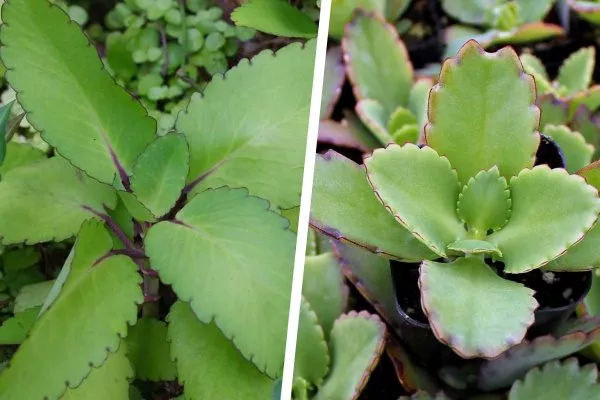
Description of the variety:
- Kalanchoe pinnate is a perennial plant with a bare, fleshy stem, hollow inside, and dense, ovate leaves colored in glaucous-green tones. The leaves are simple below, while the upper part is compound, odd-pinnate, arranged in a pattern of 6-7 leaflets.
- The leaves have a tart and sour, but pleasant taste.
- The plant is known for its valuable medicinal properties and is used in various countries. In India, the pinnate Kalanchoe is common in almost every garden and is widely used in Ayurvedic medicine.
- The plant's chemical composition is rich, including cardiac glycosides, which can cause heart problems if used improperly. Caution should be exercised when using medicinal plants, and pets should be discouraged from consuming the leaves.
- For successful growth, Kalanchoe requires ample light, but avoid direct sunlight when in flower. Water when the top 3 cm of soil is dry, avoiding excessive water stagnation in the tray.
Kalanchoe tomentosa
Kalanchoe tomentosa is popular due to its unique leaves, which resemble the ears of a teddy bear.
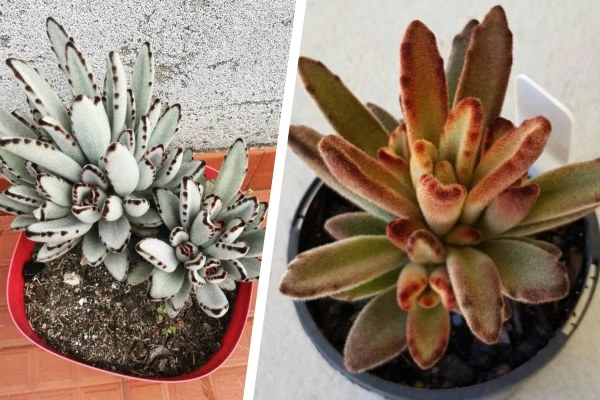
This plant with decorative foliage has the following characteristics:
- has one or more thick stems 35–45 cm high;
- the oval-shaped leaves tightly cling to the stems and are grey-green or brownish-green in colour with a dark brown border along the edges;
- all above-ground parts of the plant, including stems, leaves, and flower parts, are covered with soft silvery pubescence;
- It blooms in panicles on long stems, and the flowers are tubular in shape with red velvet petals and a yellow-green throat.
Features of the variety:
- Kalanchoe tomentosa blooms in winter when the air becomes cooler.
- The plant looks best in a room with plenty of sunlight and moderate temperatures, up to +26°C in summer and from +10°C in winter.
- From April to October, water the plant twice a week, preventing the soil from drying out. In winter, watering should be stopped to prevent new leaf growth.
- In spring, it's recommended to repot the Kalanchoe in a light soil with added sand to ensure good drainage. It's important to provide a drainage layer in the pot to effectively drain excess moisture.
- The succulent plant does not tolerate excess moisture, but if the soil dries out too much, the leaves may become thin and soft.
Kalanchoe thyrsiflora
Desert cabbage, or four-leaf Kalanchoe, a member of the Crassulaceae family, is native to tropical parts of Africa, such as Madagascar, the Cape Region, and Cape Verde Island.
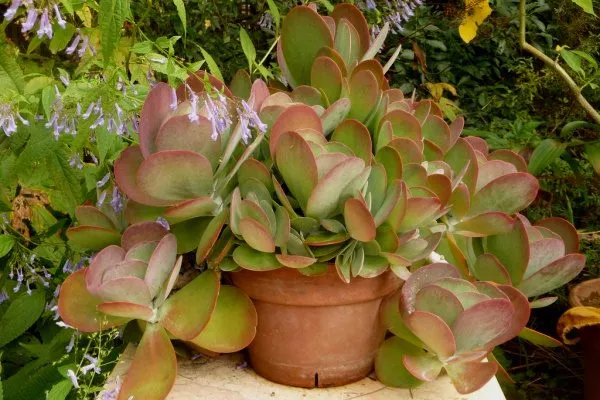
Features of the variety:
- This plant's exotic appearance also attracts attention due to its resemblance to common cabbage. Its relationship to the hare cabbage and golden root makes the four-leafed kalanchoe an interesting specimen among other plants.
- The plant's main features include rounded, gray-green leaves covered with a white, powdery coating. The leaves are arranged in a rosette up to 60 cm tall, parallel to each other, with rich red edges.
- The peduncle reaches a height of up to 1.3 m and ends with dense inflorescences consisting of small tubular yellow flowers with a pleasant aroma.
- This plant can be propagated by both cuttings and seeds.
- Caring for the four-leaf Kalanchoe includes providing it with abundant diffused light, moderate watering, and annual replanting into fresh soil.
- To prevent water from seeping into the leaf rosette, it is recommended to water through the tray. During bud formation, Kalanchoe requires fertilizing with liquid mineral fertilizer for succulents once a week.
- In summer, the optimal temperature for Kalanchoe should not exceed +28°C, and in winter it is recommended to keep the plant at +14-18°C.
Kalanchoe serrata
This succulent impresses with its incredible beauty and minimal care requirements. On the edges of the Kalanchoe leaves, baby plants bloom like a multitude of pink butterflies, creating a captivating kaleidoscope.
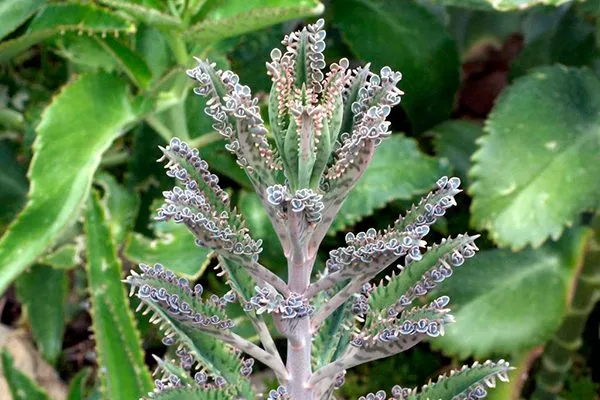
Description of appearance:
- The plant has a compact size, reaching a height of 20-25 cm and a diameter of up to 12 cm.
- The erect stem is covered with fleshy, triangular leaves with pointed tips, exceeding 7 cm in length.
- The leaf blade has a greyish-green color with expressive “leopard” spots or strokes, and the pinkish edges of the leaves add sophistication.
All these Kalanchoe varieties are a true treasure for indoor plant lovers. From their medicinal properties to their exquisite decorative features, each species can add a unique charm to the interior of a home or office. This plant wins the hearts of gardeners with its glossy leaves, vibrant flowers, and minimal maintenance requirements.