
Kalanchoe is not just a houseplant, as inexperienced gardeners mistakenly believe, but also a wild plant found in the tropics and subtropics. There are over two hundred varieties, but only slightly more than 30 are grown indoors.
Plant characteristics
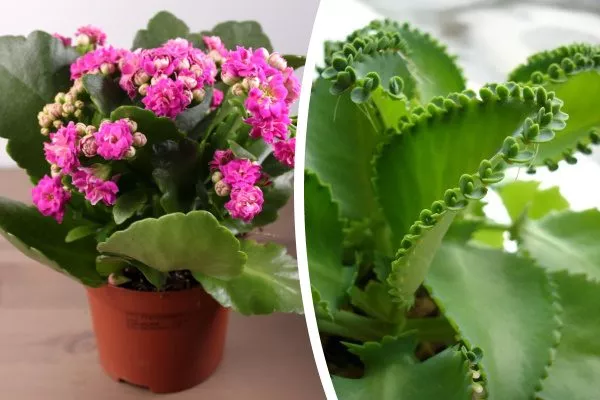
Kalanchoe belongs to the Crassulaceae or Crassulaceae family, genus Kalanchoe, and is considered a perennial and evergreen plant native to South Africa, America, and Asia. Commonly known as the "living tree" or simply "kalanchoe," Kalanchoe is also known as the "Kalanchoe."
Description
Kalanchoe is renowned for its healing sap, which is abundant in its fleshy leaves. This plant can be either decorative foliage or flowering. It grows as a bush and has the following characteristics:
- Leaves - depending on the species, they can be semicircular, lobed, simple, serrated, pinnately dissected or pinnate, but always juicy and thick;
- the arrangement of the leaves is usually opposite, but sometimes alternate or in whorls of three;
- the color of the flowers is varied - green of different shades, purple, red, yellow, etc.;
- type of buds – erect, drooping or four-membered;
- flower size – always large;
- type of culture – pubescent or naked;
- the height of the bush varies from 10 cm to 4 m;
- inflorescences are umbel-shaped;
- fruits - contain many seeds.
Medicinal properties and uses
| Application | Method of preparation | Dosage |
|---|---|---|
| Runny nose | Fresh juice diluted 1:1 with water | 2 drops 3 times a day |
| Wounds | A gauze bandage soaked in juice | Change every 6 hours |
| Stomatitis | A decoction of leaves (10 g per 200 ml) | Rinse 4 times a day |
| Burns | Ointment (juice + lanolin 1:3) | A thin layer 2 times a day |
| Varicose veins | Alcohol tincture (1:5) | Rubbing at night |
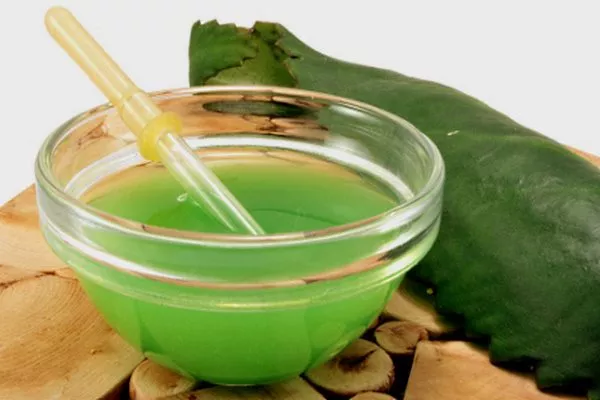
The medicinal properties of Kalanchoe are scientifically recognized, so the plant is widely used not only in folk medicine but also in official pharmacology. Consequently, Kalanchoe-based preparations are readily available at pharmacies.
Many species of the plant are used to make medicines, but most often it is the pinnate Kalanchoe, as it has anti-infective, healing, analgesic and anti-inflammatory properties.
It is used in the following cases:
- diseases of infectious etiology;
- rheumatism;
- dentistry;
- surgery;
- cracks (including their presence on the nipples of a nursing mother);
- gynecology;
- bedsores;
- wounds that do not heal, trophic ulcers, burns, frostbite;
- cold, cough;
- migraine;
- indigestion;
- boils;
- skin rashes and irritations;
- warts.
There is one contraindication: individual intolerance to the plant, which causes an allergic reaction.
Bloom
Kalanchoe blooms once a year, beginning in the last month of winter, after the plant's dormant period. The flowering period lasts several months (depending on the specific plant species), ranging from 2 to 6-8 months.
Modern gardeners try to artificially increase the frequency of flowering by establishing very bright daylight hours for 10 to 12 hours.
Varieties
Types of Kalanchoe There are many, but only a few have earned the attention of gardeners. The main ones are:
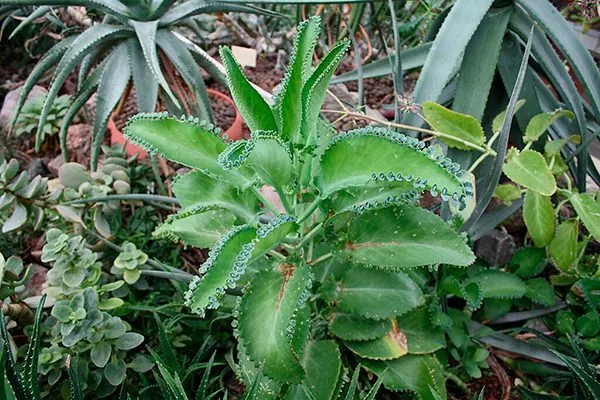
- Degremona. Characterized by erect stems that do not branch. The leaves are quite large and fleshy. The height of the bush is 60-100 cm, the length of the leaves is up to 14-15 cm. The edges are edged with teeth, which produce new plants after they fall.

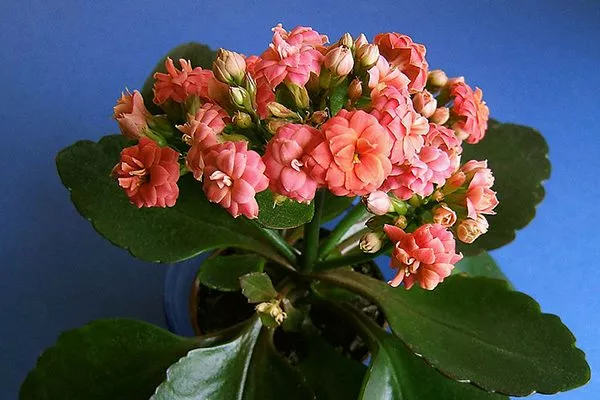
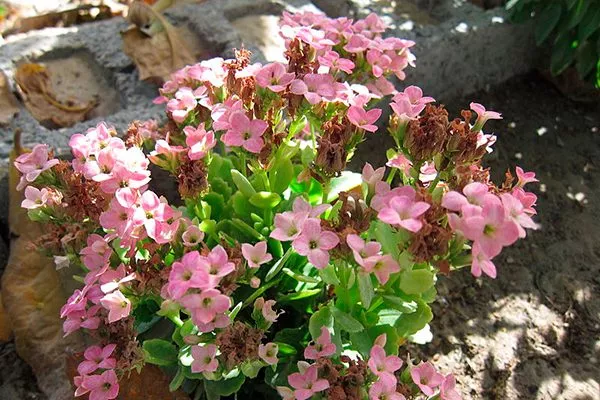
- Blossfeld. This species includes all Dutch Kalanchoes, known as Kalandiva. The maximum height of the bush is 30 cm, the stems are sparsely branched, and the leaves are rounded or rectangular. The plant is most often green, but varieties with a reddish border are also available. The plant is a flowering plant, with flowers in shades of red, pink, yellow, or orange.
- Cirrus. Another flowering species, covered in bisexual flowers with purple or red petals. The flowers are drooping. The leaves are very succulent, up to 20 cm long and up to 12 cm wide, with teeth at the tips. The height of the bush varies from 30 to 200 cm.
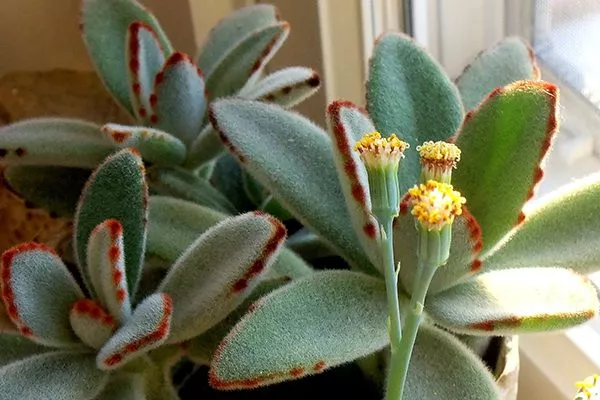
- Felt. It is characterized by slow growth, but reaches a height of up to 100 cm. The green foliage is covered with whitish hairs, giving the plant a fuzzy appearance. The leaves are oblong, slightly concave at the base, and have serrated edges. The flowers are pink and salmon-colored.
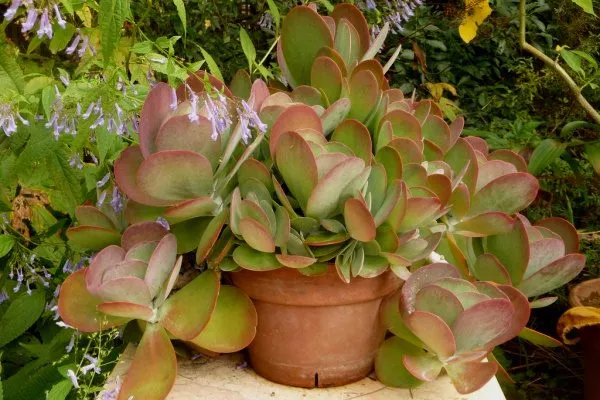
- Thyrsiflora. An unusual Kalanchoe, growing to 50-60 cm tall, with large, flat-rounded leaves up to 15 cm long and up to 10 cm wide. The leaves are green with reddish edges. The flowers have yellow petals, but they rarely bloom indoors.
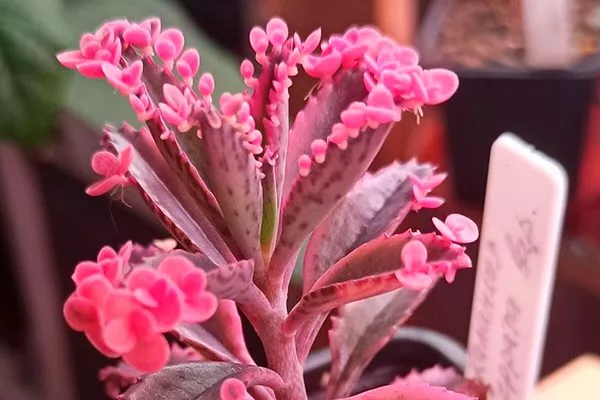
- Serrata. A rare species, nicknamed Pink Butterfly Plant because its leaflets are bright pink. The leaves have light stripes. The foliage is elongated and fleshy, with serrated edges. It reaches 30-50 cm in height and blooms with red, yellow-pink, or orange flowers.
Conditions of detention
Kalanchoe is considered an unpretentious plant, but if you do not pay attention to it and do not follow certain requirements, it will be impossible to achieve normal development and flowering.
Temperature and humidity
Kalanchoe is native to the tropics and subtropics, so it's important to maintain specific temperature and humidity levels. These parameters vary depending on the specific plant species, but generally, they are as follows:
- the temperature in winter is not lower than +14 and not higher than +18 degrees, the rest of the time – from +18 to +28 degrees;
- humidity – within 60%.
At temperatures below +10…+12 degrees the crop begins to get sick and die.
Lighting and location
All Kalanchoe species require 10 to 12 hours of daylight. The light should be bright, not dim, otherwise the plant will not bloom. The best light for winter is on south-facing windowsills, and for the rest of the year, on east- or west-facing windowsills. If placing pots on such windowsills is not possible, use grow lights.
Intense lighting is necessary before midday, and after lunch it is advisable to shade the bushes - for example, by closing a light curtain.
Watering
Since Kalanchoe is a succulent, special attention should be paid to soil moisture levels. This indoor plant does not tolerate stagnant water in the pot, as this can cause root rot.
The humidification technology depends on the time of year:
- Spring and summer. The water shouldn't be too warm—just below room temperature. The frequency of watering depends on the air temperature and humidity. On average, watering is done 3-4 times a week. Typically, gardeners rely on the soil to ensure it's completely dry.
Please note that Kalanchoe leaves and stems are capable of accumulating liquid and then releasing it into the soil (in case of drought). - Autumn and winter. During this period, the frequency of watering is reduced by exactly half. The water temperature should be between +23 and +25 degrees Celsius.
Periodically (1-2 times a week) the green mass is sprayed, but after a hygienic shower it is important to wipe the leaves and their axils, which will prevent putrefactive processes.
Soil
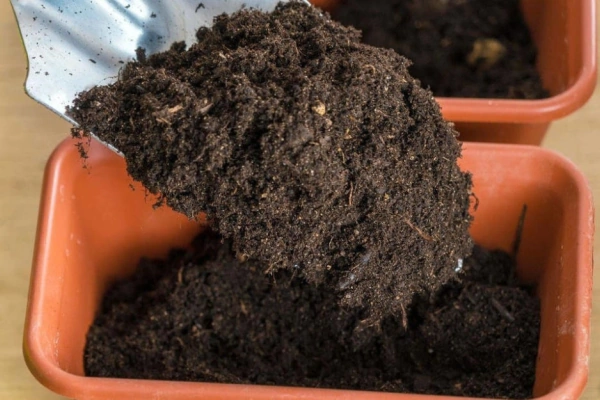
The soil for succulents should be loose and permeable, with a 1.5-2.5 cm drainage layer. Pay attention to the acidity level – it should range from 5.5 to 7.0 pH.
Experts recommend using glazed clay or making a substrate from sand, leaf soil, and humus, taken in equal proportions.
Top dressing and fertilizers
| Period | NPK composition | Frequency | The best brands |
|---|---|---|---|
| February-April | 8-12-8 | 1 time/14 days | Bona Forte for succulents |
| May-July | 5-10-15 | 1 time/10 days | Florovit Blooming |
| August-October | 3-7-12 | 1 time/21 days | Agricola for cacti |
| November-January | Without additional feeding | — | — |
Kalanchoe plants are fed throughout the spring and fall, but fertilizing them in winter is strictly prohibited as they need to rest. Special fertilizers for succulents are used for feeding, and the frequency depends on the specific species. Examples include Bona Forte, Florovit, Agricola, Fasco, Dobraya Sila, and others.
But there's one rule: the compounds must be diluted in water and applied in liquid form. The dosage should be half that indicated in the instructions.
Transfer
It's recommended to repot young plants every spring, and mature plants every three years. This procedure is performed after purchasing the plant, as store-bought plants are grown in soil (coconut and peat) unsuitable for home conditions.
Some rules:
- remove the flower from the pot as carefully as possible so as not to break the stems and roots;
- Before planting in a new pot, be sure to inspect all stems and the root system - if there is mold or rot, cut off these areas and treat the cut areas with activated charcoal or any fungicide;
- Before replanting, water the soil and remove the flower along with the root ball;
- After planting, compact the soil mixture, water lightly and lay a layer of mulch made from large wood chips, small pebbles or shell rock.
Trimming
Kalanchoe pruning is necessary to shape the crown and for sanitary purposes. Sometimes, depending on the species, this is necessary to prevent long stems from tipping over the pot. Pruning is performed after the flowering period, using various methods—cleansing (sanitary), rejuvenating, and crown-shaping.
Reproduction
| Method | Rooting period | Survival | First flowering |
|---|---|---|---|
| Cuttings | 14-18 days | 95% | In 6-8 months |
| Leaves | 21-28 days | 80% | In 10-12 months |
| Seeds | 4-6 weeks | 65% | In 2-3 years |
| Children | 7-10 days | 98% | In 4-5 months |
| Offspring | 10-14 days | 90% | In 5-7 months |
Kalanchoe reproduces not only vegetatively but also generatively. Various methods are available. Each has its own advantages and disadvantages, as well as unique features. Therefore, it's important to familiarize yourself with all the methods before choosing the right one.
Cuttings
This is a universal propagation method, as it can be used for all varieties of indoor Kalanchoe. Cuttings root quickly, and even accidentally broken stems can be used. There are no known drawbacks to this method.
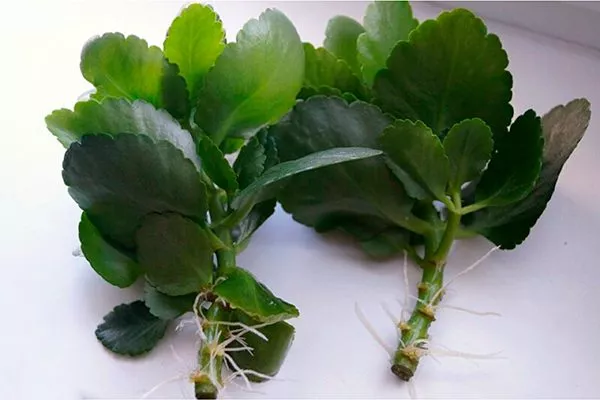
The principle is simple:
- a 6-8 cm long piece of shoot is cut off;
- installed with the lower part into the nutrient substrate;
- covered with a jar.
After a few weeks, roots will form and the plant can be transplanted into a permanent pot.
Leaves
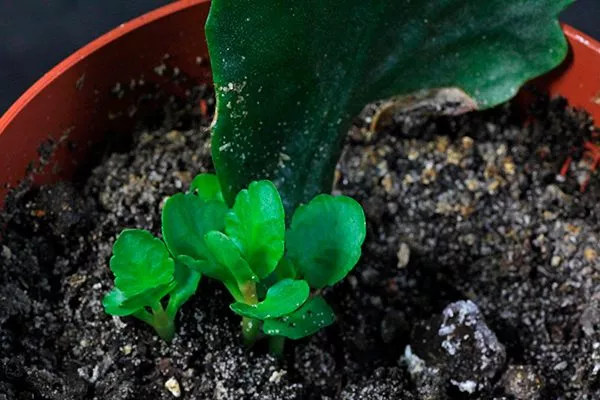
This method is identical to the previous one, but instead of cuttings, leaves are taken—they can be with or without petioles. It differs in the speed of rooting—the first roots appear in just a few days, but it's important to follow the key requirement: the substrate must be moist.
Seeds
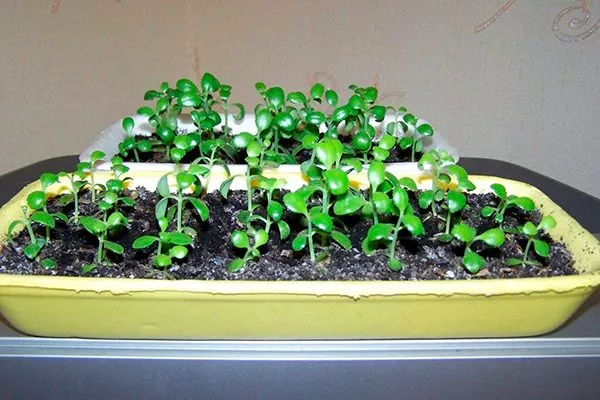
Propagating Kalanchoe by seed has many disadvantages. The main ones are the time it takes to obtain a new plant and the labor involved.
First, collect the seeds from the flowers, prepare them, and plant them in moistened soil. Cover them with glass and maintain a specific temperature and other conditions. Repotting should be done no sooner than a year later.
Children
Pups are the teeth that form along the edges of leaves. This method is quite simple and quick, as the daughter shoots already have a bushy shape and root shoots. Simply detach them from the plant and plant them in the substrate.
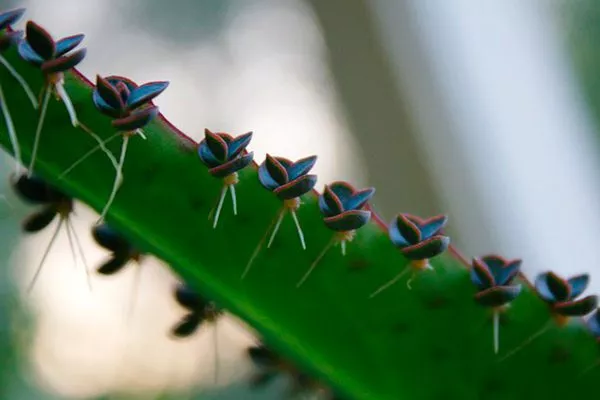
Axillary buds
Another simple propagation option, but it's only suitable for those Kalanchoe species that shed their leaves after flowering. At this point, axillary buds form, resembling cabbage heads. These are cut off when they reach 2 cm in length. Rooting occurs within 7-10 days.
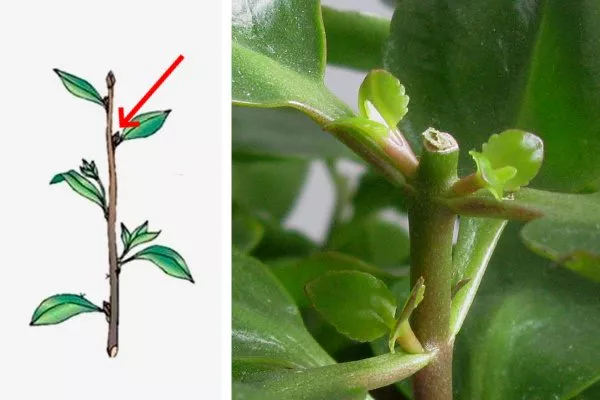
Offspring
To encourage the formation of mother offspring, it's important to pinch off the top of the stem. Propagation occurs after flowering. This method is simple and rooting is quick.
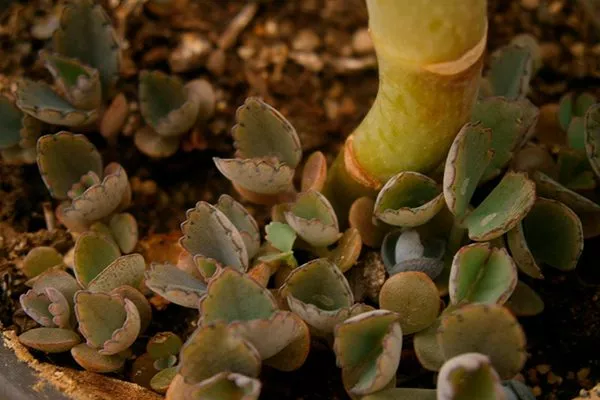
Diseases and pests
Kalanchoe rarely gets sick, but only if properly cared for. Diseases and pests that may occur include:
- Variegated mite - reddish spots appear on the leaves;
- mealybug - tubers turn white;
- aphids - green insects are found on stems and leaves;
- powdery mildew - light coating;
- gray mold - moldy areas can be seen;
- scale insect - appears as a greyish coating.
Insecticides and fungicides are used for control and treatment.
Treatment plan when pests are detected
- Isolate the plant for 14 days
- Mechanical cleaning with a soap solution (72% laundry soap)
- Treatment with Fitoverm (2 ml/l) at intervals of 5 days
- After 10 days, use Aktara (1 g/1.5 l)
- Prevention once a month with biopreparations (Bitoxibacillin)
But the easiest way is to strictly adhere to all agricultural rules.
Care errors and problems
Most often, beginning gardeners encounter problems because they make certain mistakes. What could happen:
- The flower stopped growing. The cause lies in unsuitable soil—unsuitable acidity, lack of nutrients, etc. The situation can only be corrected by replanting in a new substrate.
- Absence of flowering in flowering species. This can occur if you're overfertilizing. Flowering can be achieved by stopping nutrient application. Another cause is short daylight hours.
- The leaves are turning yellow. There are many reasons, but they all boil down to violating crop cultivation rules. It's important to analyze what's going wrong.
- The plant is drying out. The main cause is frequent soil drying out (due to insufficient or no watering). Drying also occurs due to pests and diseases.
- Wilting and rotting. This happens when the substrate is excessively wet – reduce the amount and frequency of watering.
- Shedding leaves. In this case, the soil is not suitable or there is not enough fertilizer.
Folk omens
Kalanchoe is associated with many beliefs and superstitions, which vary depending on the country where it's grown. Here are the most common:
- if the bush develops quickly and blooms on time, then there is prosperity and happiness in such a house;
- If the plant withers, this indicates that a curse has been cast on a family member;
- When a flower dies unexpectedly, people say that dark forces with negative energy have appeared in the house;
- If Kalanchoe begins to bloom in a family with seriously ill people, then you should expect a rapid recovery;
- unexpected flowering in a childless family promises an imminent pregnancy;
- If the plant blooms for a pregnant woman, it indicates an easy birth;
- If you see rapid development and flourishing in your office/workspace, your career ladder will move up.
Almost every gardener has a Kalanchoe plant at home. It's a medicinal plant, used in Soviet times to treat runny noses, and today it's used in official pharmacology. It's easy to grow and propagate quickly. The key is to follow all the requirements and choose a Kalanchoe variety that everyone in your family will enjoy.