
Kalanchoe Calandiva is a miniature flower with a long and beautiful bloom period. This highly decorative houseplant is extremely easy to grow, making it easy even for a novice gardener.
General information
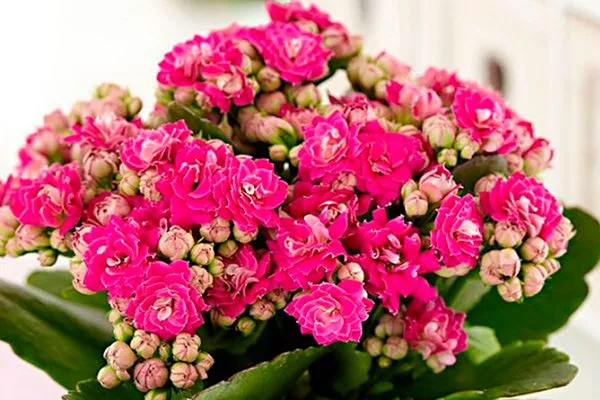
Kalanchoe Kalandiva is a decorative succulent growing 20-30 cm tall. The bush produces numerous buds, located literally all over the plant.
Brief botanical description:
- Escapes. Erect, fleshy, powerful.
- Leaves. Glossy, juicy, dark green, up to 5 cm long, with faintly toothed edges. They are borne oppositely on short petioles and are oval or ovoid in shape.
- Flowers. The small flowers, up to 1 cm in diameter, are gathered in corymbose inflorescences. The petal color varies depending on the variety.
Kalandiva is compact and dense, looking like a true succulent, capable of storing moisture and surviving long periods of drought.
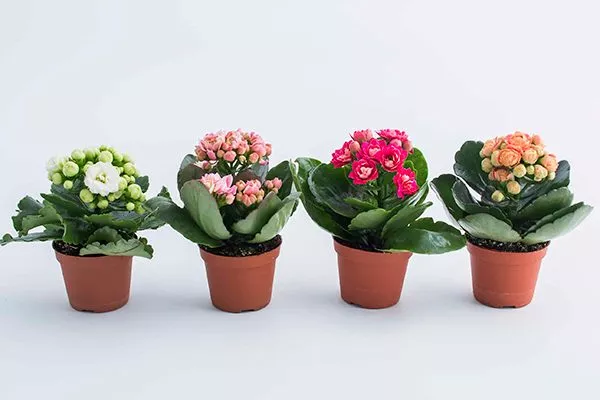
The most popular colors of Kalandiva are:
- salmon;
- red;
- pink;
- white;
- deep red;
- yellow.
Kalanchoes of various colors look especially luxurious when grouped together on a windowsill. In winter and spring, when many other houseplants are dormant, miniature Kalanchoes delight the eye with their vibrant colors.
History of creation
"Calandiva" is a group of Kalanchoe cultivars, representing a distinct trade name. They were selectively bred from the parent plant, Kalanchoe blossfeldiana, and differ from it in their miniature size and more profuse blooms.
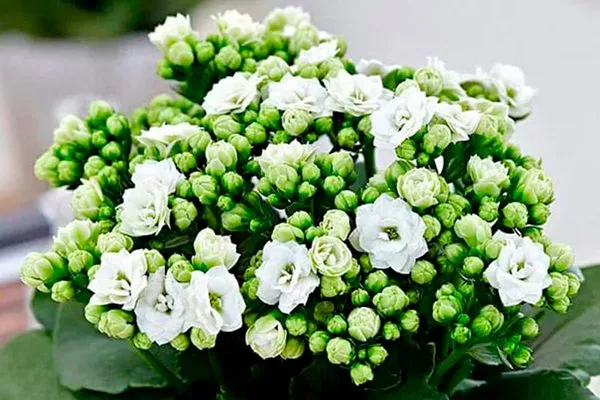
This Kalanchoe species burst onto the houseplant market in 2023 and quickly gained popularity. It is currently considered the most popular double-flowered hybrid among all Kalanchoes grown indoors.
How it blooms
Calandiva is distinguished by its long and abundant flowering period, growing well in winter during short daylight hours. The first flowers appear in midwinter, and then Calandiva blooms for 5-7 months. The plant requires especially careful care during its dormant period, which usually occurs in midsummer.
Types
There are two main subspecies of Kalandiva - Mix and Mini, let's look at each of them in more detail.
| Name | Plant height | Flower color | Flowering period |
|---|---|---|---|
| Mix | 20-30 cm | Diverse | 5-7 months |
| Mini | up to 20 cm | Peach, scarlet, purple | 5-7 months |
Mix
It has small bushes and inflorescences of a wide variety of colors—white, yellow, red, and even orange. This variety tolerates drought well and can be used to treat various colds.
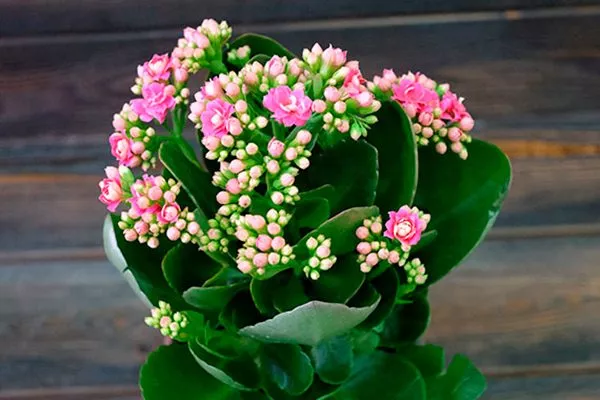
The Mix variety was developed using the Mini Kalanchoe. The most common Kalandiva Mix variety has snow-white and pinkish flowers.
Mini
This small plant grows as a bush, no more than 20 cm tall. Its flowers are peach, scarlet, or lilac. It's easy to care for and very hardy. Its stems are thick, and its shoots are numerous.
What to do after purchase?
Kalanchoes are sold in small pots at flower shops, but they need to be replanted into larger containers. And don't delay. Unlike repotting a houseplant, store-bought Kalanchoes require careful shaking of the soil from the roots and even washing them.
After repotting a plant, you need to create optimal growing conditions and provide it with appropriate care. If the plant was purchased in a large pot, repotting is not necessary unless it is not blooming at all.
Growing conditions
Evergreen succulents are known for their undemanding nature and ease of cultivation. However, they do have certain growing conditions, particularly light and temperature.
Accommodation
East- and west-facing windows are best for Kalandiva. South, southeast, and southwest-facing windows are also suitable, but only if they provide shade from direct sunlight. However, keep in mind that even slight shade can cause the plants to become deformed and stretch out.
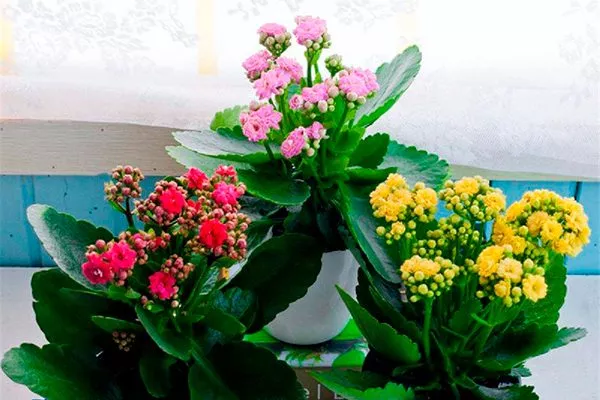
It is not recommended to place Kalanchoe in the shade or in strong sun; in the former case, the plant's leaves begin to wilt, and in the latter, sunburn occurs.
Kalandiva dislikes cold drafts and sudden cold spells. When airing, plant pots should be securely protected or moved to another room. In summer, the plant can be moved outside, but nighttime temperatures should not fall below 14°C.
Lighting
Kalandiva prefers bright sun, but not direct or for too long. This winter-flowering plant requires 14-16 hours of darkness. Daylight hours can be regulated with artificial shading. If cloudy weather persists for extended periods, supplemental lighting may be necessary.
During the dormant period, bright light is contraindicated. Intense light stimulates further development, leading to flower starvation.
Temperature
During winter and early spring, when flowering begins, the miniature Kalanchoe thrives in cool conditions. The optimal temperature during this stage is 16–18°C, and during the period of intensive growth, 20°C.
Before flowering, the plant is stimulated by lowering the temperature to 14°C to 15°C. This regimen encourages the formation of numerous flower buds. Along with the temperature reduction, watering and daylight hours are reduced.
Humidity
The plant has no special humidity requirements. It doesn't require special humidification. However, in the summer, when it's hot, Kalanchoe responds well to misting with settled water. It's also important to regularly remove dust from the leaves—this is an important part of caring for any plant, including Kalanchoe.
Home care
Kalandiva is easy to care for; it requires regular watering, fertilizing, and pruning. This plant can easily be left alone for long periods, making it ideal for those who are often away.
How to water?
The plant doesn't like excessive moisture. Improper watering is the most common cause of disease and death in Kalanchoe, so it's important to follow a few rules to avoid problems.
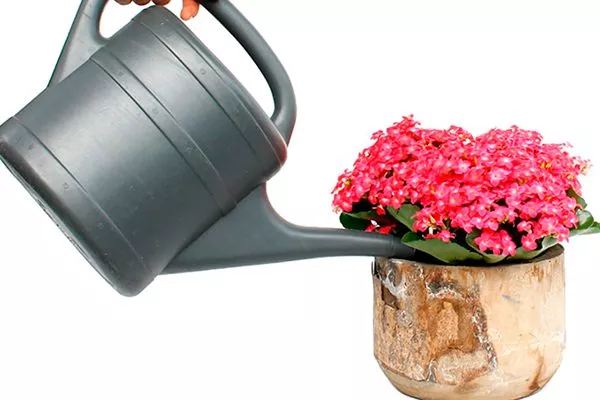
What you need to know about watering Kalandiva:
- in spring and autumn, watering is done no more than once a week, in summer - up to 2 times;
- in winter, watering is reduced to once every 2 weeks;
- For watering, use only settled or rainwater at room temperature;
- It is recommended to water the plant when the soil dries to a depth of 2 cm.
The plant signals a lack of water by the condition of its leaves - if they become wilted and rough, it needs to be watered immediately.
What and how to feed?
Kalanchoe should be fed exclusively with commercial fertilizers. Special formulations for succulents are recommended, but natural organic fertilizers are contraindicated for Kalanchoe, as they contain nitrogen, which negatively impacts flowering.
Complex fertilizers also contain nitrogen, but in small quantities. Kalandiva needs this element during the active growth phase; during flowering, it requires more potassium and phosphorus. Fertilizers are applied no more frequently than once every 3-4 weeks, and only during the growing season.
Is pruning necessary?
Kalandiva is characterized by rapid growth, so it requires periodic pruning. Young plants are pruned as soon as they begin to rapidly increase in size. Pruning in this case consists of removing a few upper leaves from each branch. Subsequent pruning is carried out as needed.
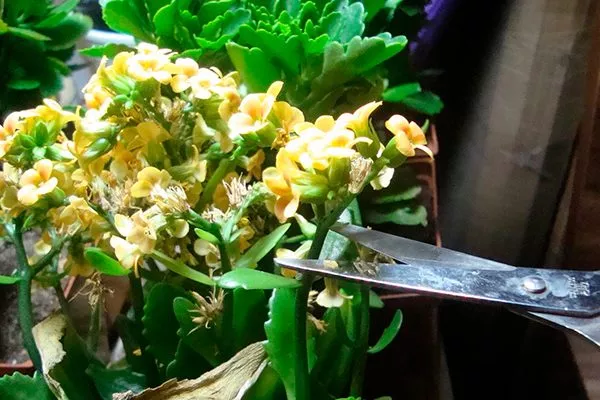
Rules for pruning:
- It is better to remove excess leaves during the growing season.
- Trim the leaves to form a beautifully shaped plant.
- Do not prune during flowering, and after flowering, remove the flower stalks at the very base.
- Trim with sterile, sharp tools. You can use a razor blade or a utility knife, for example.
- Do not remove leaves by hand. Avoid removing too many leaves at once; a maximum of 1/4 of the bush is recommended.
Gardeners often form a bush on a single stem. These plants look very beautiful and unusual.
Diseases and pests
The main threat to Kalandiva is various fungal diseases that cause rot. Even slight overwatering can lead to stem and root rot. In this case, the bush can only be saved by re-rooting the shoots.
Table. Diseases and pests that most commonly affect Kalanchoe Kalandiva.
| Name of the disease | Symptoms | Prevention | Treatment |
| Gray mold | A grayish dust appears on the leaves, and brown, water-soaked spots appear on the stems. This usually occurs when water stagnates in the soil. | Maintain a watering regime, avoid overwatering, remove fallen leaves and periodically replace the top layer of the substrate. | Treatment with fungicides, for example, Fitosporin-M. |
| Powdery mildew | Occurs when watering regimens are not met. It is accompanied by the appearance of a whitish coating on leaves and shoots. | Compliance with the watering regime. | Spraying with fungicides, for example, Alirin-B or Bordeaux mixture. |
| Scale insect | Small insects with waxy shields cause yellowing of leaves and suppression of flowering. | Collect pests manually, wash the plant with soapy water. | Treatment with Fitoverm or Actellic. |
| Aphid | Small insects feed on plant sap and live in colonies. | Spraying with soap solution. | Treatment with Fitoverm or Actellic. |
Transfer
Young plants should be repotted at least once a year. Mature plants should be repotted less frequently—every three years. Spring is the best time to do this. Repotting Kalanchoe during the flowering stage is strictly prohibited.
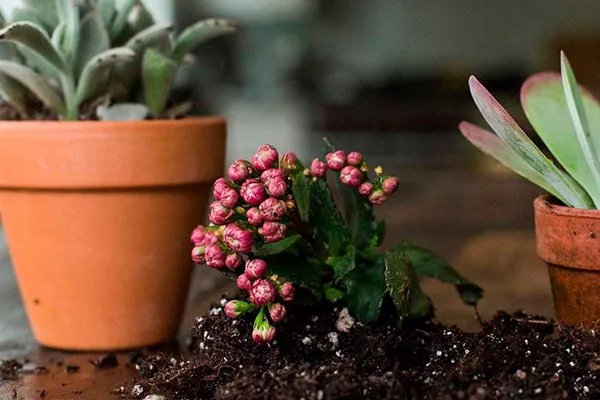
For replanting, use a pot that is 2 cm wider than the previous one. The optimal diameter of the planting container for a mature Kalandiva is 15 cm.
The soil should be neutral and well-drained. Ready-made potting mixes for succulents or cacti are suitable. A 2 cm drainage layer is optimal.
Transplantation procedure:
- Prepare a pot with drainage holes.
- Place a thin layer of vermiculite or expanded clay on the bottom. Top with a succulent growing medium. Add at least 4 cm of soil.
- Water the plant, wait 20 minutes, and then carefully remove it from the store-bought pot. Pull the plant out so that the root ball remains attached to the roots.
- Move the flower to a new pot, sprinkle the roots with substrate and compact it.
- Water the transplanted plant and move it to a slightly shaded area. Let it sit there for a few days, then return the pot to its original location.
It's recommended to mulch the top of the soil, for example with pebbles. They retain moisture well and prevent mold.
Reproduction
Calandiva is most often propagated by stem or leaf cuttings. The plant is well-branched, so there's no shortage of planting material. It can be propagated by seed, but this is a time-consuming and labor-intensive method, not popular with gardeners.
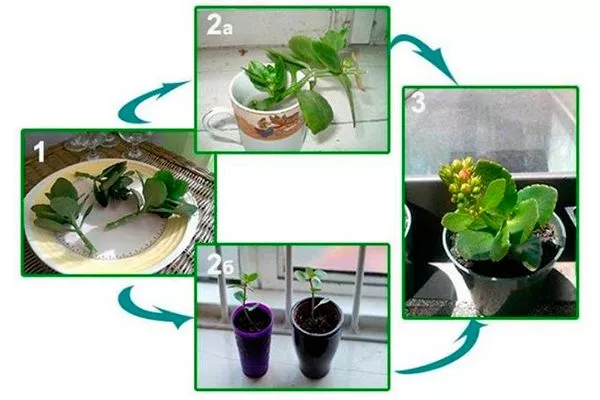
The procedure for propagation by cuttings:
- Using a sharp, sterile knife, cut off the top of the shoot, approximately 5 cm long, or a separate leaf.
- Sprinkle the cut with crushed charcoal or cinnamon.
- Air dry the cuttings for 3 hours.
- Treat the cuttings with a liquid that stimulates root formation, such as Zircon.
- Prepare a container with damp sand mixed with perlite. Place the cuttings into it to a depth of 3 cm, having drilled holes in it first.
- After planting, moisten the substrate regularly, but avoid overwatering it to avoid rotting. It's recommended to cover the cuttings with plastic or glass to provide an optimal microclimate for the cuttings and speed up rooting.
- Ventilate the plantings regularly and avoid exposure to direct sunlight.
- ✓ The air temperature should be maintained within the range of +20…+22°C for optimal rooting.
- ✓ The substrate humidity should be moderate, over-watering leads to rotting of the cuttings.
- ✓ Lighting should be diffused, direct sunlight can cause burns.
Roots on cuttings planted in a sandy substrate usually appear after a few weeks.
Kalanchoe Calandiva optimally combines beauty and ornamental appeal with ease and hardiness. With minimal care, this plant will delight you with its lush blooms for at least six months a year.