
Kalanchoe daigremoniana is a popular succulent and one of the most drought-tolerant houseplants. But this flower's popularity stems not from its ease of care, but from its many medicinal properties, which make it a true "home remedy."
Description
Kalanchoe daigremontiana belongs to the herbaceous succulent plants of the genus Kalanchoe from the Crassulaceae family.
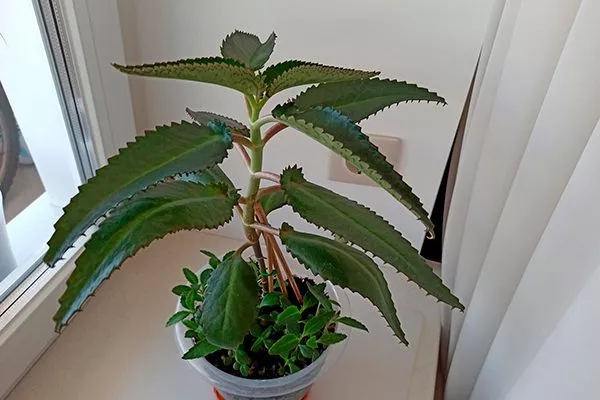
Brief botanical description:
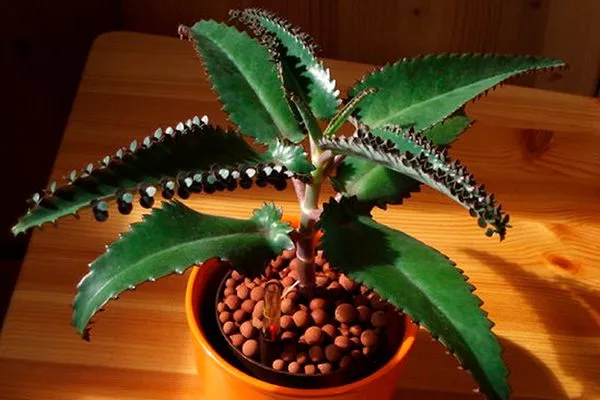
- Leaves. Fleshy, elongated leaves with numerous offshoots along the edges. The color is bluish-green, with purple spots on the underside. The edges are slightly curved inward. The leaves are 12-15 cm long, with serrated edges.
- Stem. Straight, weakly branching.
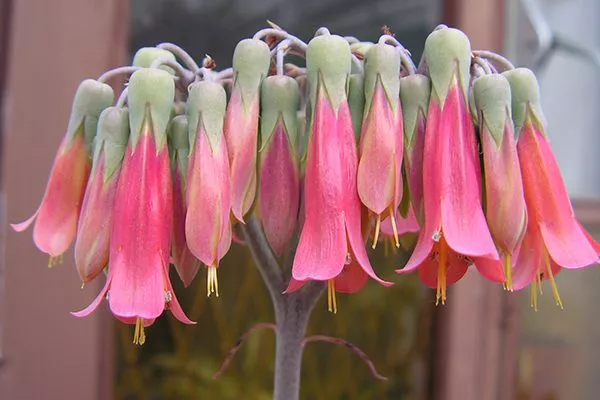
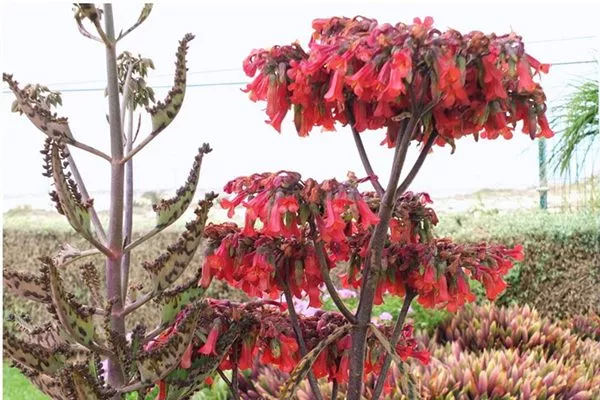
- Flowers. Umbels on vertical peduncles. They resemble hanging bells, light pink or pale lilac in color.
- Roots. Branched and well developed, superficial.
The plant reaches a height of 40-100 cm. The brood buds or babies have small roots that, when dropped onto moist soil, immediately begin to root.
Features of flowering
In the wild, Degremona blooms once a year. Getting it to bloom indoors is not so easy. Special conditions must be created for the plant.
For Kalanchoe to bloom, you need to:
- reduce the length of daylight hours to 4-5 hours;
- the rest of the time the plant should be kept in a dark cabinet, or covered with an opaque cap;
- Watering and fertilizing are completely stopped.
After a month of this regimen, switch to standard care. The succulent should produce flower stalks. If the Kalanchoe still hasn't bloomed, it's too young and not ready yet. Try again no sooner than six months to a year later.
What you need to know about the flowering of Dergemona:
- blooms in spring, but flowering is observed extremely rarely indoors;
- flowering period - 2 weeks;
- in winter a period of dormancy begins - the plant requires some reduction in temperature;
It happens that a plant blooms when it is poorly cared for, and often dies after flowering.
Origin
Kalanchoe daigremontiana was first discovered in southwestern Madagascar. Other names include Kalanchoe daigremontiana, devil's backbone, alligator ginseng, and mother of thousands. This species of Kalanchoe has been cultivated in Europe since the early 20th century.
The plant was first described by the German gardener and botanist Alwin Berger in 1914. This medicinal succulent appeared in the USSR in the 1930s and 1940s and quickly gained popularity—it grew on almost every windowsill.
Beneficial properties
The medicinal properties of Degremona are officially recognized by medicine. A wide variety of medicinal preparations are created using it. Not only are the Kalanchoe leaves and juice extracted from them beneficial, but the plant itself is also beneficial—it purifies the air of pathogenic microflora.
Degremona has the following healing effects:
- hemostatic;
- anti-inflammatory;
- wound healing;
- antiallergic;
- bactericidal;
- immunomodulatory.
Kalanchoe juice and homemade tincture are effective against dermatitis, respiratory infections, wounds, and burns. However, before using Kalanchoe-based products, consult a doctor.
Kalanchoe-based preparations contain glycosides, flavonoids, and lipids, including those active against various types of cancer cells. Today, Kalanchoe extracts in nano-encapsulated and other forms are used in anti-tumor therapy.
Growing conditions
Kalanchoe daigremonii is considered an undemanding houseplant. Even beginners can grow it. However, for its successful growth and development, daigremonii requires certain conditions, which are important to ensure.
Lighting
The plant loves full sun but can also grow in partial shade. The optimal daylight duration is 12 hours. In summer, it is not recommended to expose the Kalanchoe to direct sunlight, as it can damage the leaves.
The best location for Kalanchoe is on a west- or east-facing window sill. In winter, it's recommended to move the plant to a south-facing window. If there's insufficient light, supplement with additional lighting.
Temperature and humidity
Degremona is native to the hot tropics, so it doesn't tolerate cold temperatures. The optimal growing temperature for Kalanchoe degremona is +20°C. In winter, the temperature is reduced to +15°C.
The plant dislikes extreme cold combined with high humidity, as it begins to rot in such conditions. Generally, Degremona is not demanding in terms of humidity, so it thrives during the hot radiator season.
Priming
To ensure the soil is optimally suited to Kalanchoe in terms of structure and chemical composition, it's best to use a special substrate for succulents, which can be purchased at any flower shop, rather than garden soil.
As a last resort, you can prepare the soil yourself by mixing two parts compost and leaf mold with one part sand. To make the soil looser, it's recommended to add vermiculite or crushed charcoal.
Pots
The pot for the Degremona is selected based on the size of its root system. Since the Kalanchoe root system is shallow, deep containers are not used. Low, wide, and stable ceramic pots are ideal. They must have drainage holes.
Care
Kalanchoe daigremoniana requires minimal care. This plant is ideal for busy people or those away from home for long periods. Kalanchoe needs occasional watering, fertilizing, pruning, and repotting if necessary.
Trimming
Over time, the Degremona's main stem becomes too elongated, so it is pinched. This prevents the plant from becoming too elongated and taking on an unsightly shape.
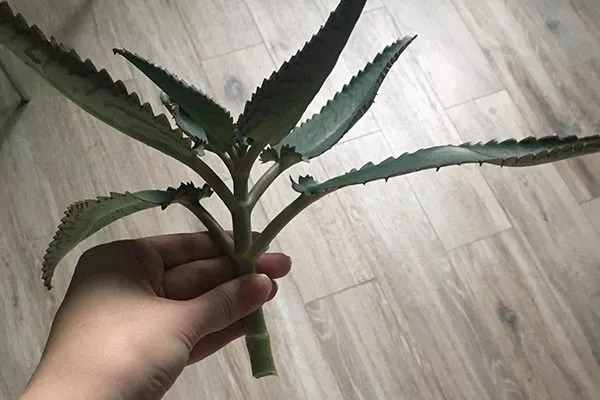
Trimmed tops are excellent propagation material. These cuttings later grow into new, full-fledged plants. Kalanchoe is a very fragile plant, so trimming the tops is done with sharp scissors or pruning shears.
Watering
Degremona is a succulent, so it prefers dry soil. It doesn't require regular watering; it can be done occasionally, as needed, when the soil becomes too dry. Water to a third of the pot's height. In winter, water the Kalanchoe once a month, no more often.
Kalanchoe's succulent leaves contain water, allowing it to tolerate dry air well. Excessive moisture, on the other hand, can be harmful, leading to fungal diseases and various types of rot. Even prolonged exposure to completely dry soil won't kill a Kalanchoe, but excessive care, such as frequent watering, can easily lead to disease and death.
Top dressing
To ensure large, succulent leaves, ideal for medicinal use, kalanchoe is recommended to be fertilized. Fertilizer can be applied at any time of year except winter. Kalanchoe should be fertilized no more than 2-3 times per season.
Special liquid mineral complexes for succulents are used as fertilizer. The dosage is adjusted according to the instructions on the packaging.
Transfer
A mature plant is repotted every 2-3 years. This is due to the constant growth of its root system. The container must be regularly replaced with a larger one. If the Kalanchoe is not repotted promptly, the plant will die.
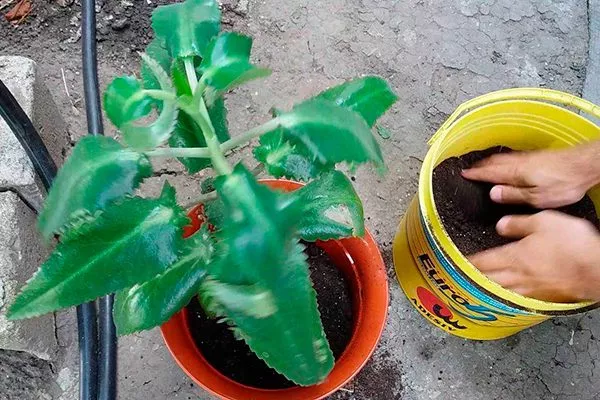
Repotting follows the standard procedure for all houseplants: prepare the pot, soil, and planting material. Keep in mind that each pot should be 2 cm taller and wider than the previous one.
Procedure:
- Place a drainage layer of expanded clay or fine gravel at the bottom of the pot.
- Top with store-bought potting soil or homemade potting mix. Fill the pot about a third full first.
- Remove the plant being repotted from its old pot. Shake off any remaining soil from the roots.
- Place the plant in the pot and fill the free space with the prepared substrate, pressing it down carefully.
- Water the plant thoroughly, but not excessively, with settled, room-temperature water.
Reproduction
Kalanchoe reproduces quite easily, and in a variety of ways - from store-bought seeds or vegetative methods.
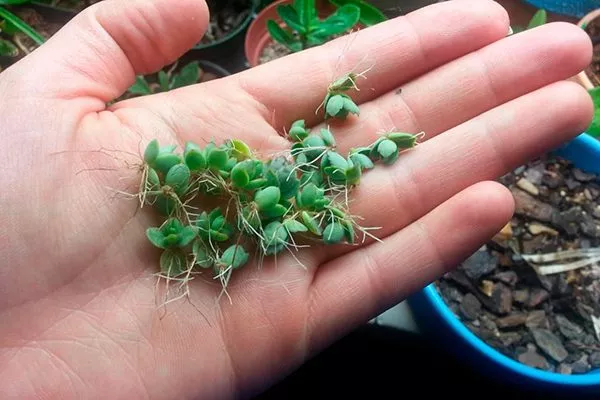
How to propagate Kalanchoe by buds:
- Prepare a pot with a substrate, which must contain peat and sand.
- Plant the babies that have fallen from the leaves in a prepared pot.
- Cover the plantings with film or glass to speed up the rooting of the buds.
- Ventilate the plantings regularly - 2 times a day.
Propagation by shoots that grow along the edges of the leaves is considered the easiest method of propagation, but there is also a faster way to obtain an adult plant - cuttings.
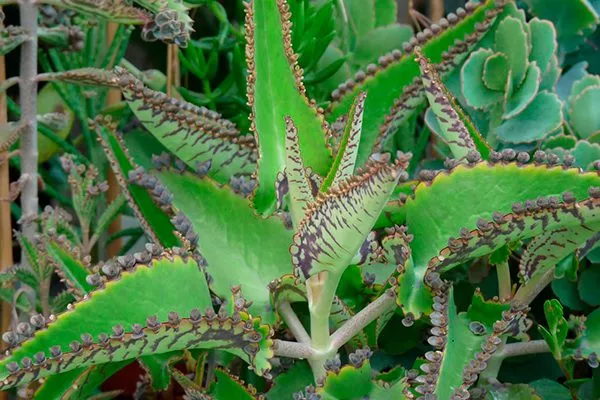
The procedure for propagating Kalanchoe by cuttings from the stem:
- Take a piece of the top, about 5 cm long.
- Place the cutting deep into the prepared soil.
- Spray the planted cutting with settled water at room temperature from a spray bottle.
Along with stem cuttings, leaf cuttings can also be used.
Propagation by leaf cuttings:
- Cut a leaf from the parent plant.
- Place it in a nutrient substrate containing peat and sand.
- Cover the sheet with a glass jar.
- As soon as the first roots appear, remove the jar.
Pests and diseases
Kalanchoe is a hardy plant that is not prone to disease, but it can also be affected by various diseases and pests, which usually spread to the flower from neighboring plants.
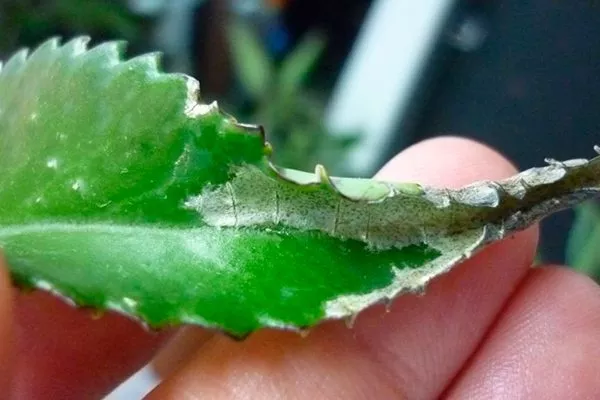
The most common insects that attack Kalanchoe are:
- Aphid. When they appear, a sticky coating appears on the leaves. These insects are very small and greenish in color, making them quite difficult to spot. Aphids can be controlled using folk remedies (such as a soap or tobacco solution) or insecticides.
- Scale insect. These insects, like aphids, feed on plant sap, slowly killing it. Thanks to their tough shells, scale insects are resistant to many insecticides. Therefore, it's recommended to first collect them by hand and only then spray them with poisons.
- Spider mite. Its presence can be detected by yellow marks and fine webbing. Removing the tick is easy; even a simple decoction of wood ash can help.
- Root worm. The presence of this pest causes the Kalanchoe to slowly dry out and die. If not detected and treated promptly, the plant will die.
- ✓ Aphids leave a sticky residue that can attract ants.
- ✓ Scale insects form brown bumps on leaves and stems that are difficult to separate from the plant.
- ✓ Spider mites leave a fine web mainly on the underside of leaves.
- ✓ Root worms cause the plant to wilt without any apparent reason, while the soil may remain moist.
If the plant is not severely infested, a single application of insecticides is usually sufficient. Overuse is not recommended, as they not only harm insects but can also negatively impact plant health and human health. Wear a mask and gloves when spraying plants.
Kalanchoe signals most diseases through external symptoms or other characteristics:
- active leaf fall indicates a lack of vitamins and minerals;
- yellowing and falling leaves are a sign of insufficient light;
- Dark spots on the leaves indicate excessive exposure to cold (the pot needs to be moved to a warmer place).
To prevent diseases and insect attacks, it's important to regularly ventilate the room where the Kalanchoe daigremonii is located. It's also important to keep it tidy and clean.
Kalanchoe daigremontiana is a true succulent, capable of surviving even with an owner who rarely remembers it. This resilient plant, with leaves covered in baby plants, is not only beautiful but also very useful—it has repeatedly helped its owners combat a wide variety of ailments.