
Vibrant blooms, glossy leaves, and low maintenance requirements are a wonderful combination of characteristics that have earned them popularity among many houseplant enthusiasts. Kalanchoe blossfeldiana is a popular choice for both novice and experienced gardeners who dream of a beautiful and useful plant.
Characteristics of Kalanchoe blossfeldiana
The flower's appearance gives the impression of neatness and compactness. In its natural habitat, the overall diameter of the bush is typically 30 cm. The leaves are generally rich green and feel watery and dense to the touch, especially in most varieties.
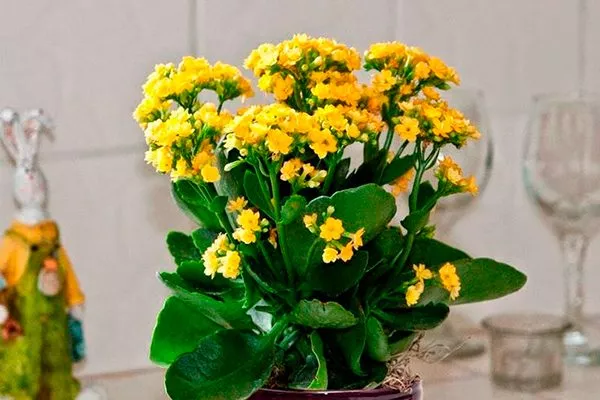
Distinctive characteristics of Kalanchoe blossfeldiana:
- The flowers typically measure no more than 1 cm in diameter, and their natural color is primarily red. However, growers cultivate varieties with various shades, including orange, pink, yellow, mixed colors, and more.
- The bush blooms in winter or early spring, continuing to bloom for several months. Adjusting the light level allows you to stimulate bud formation on the bush at almost any time of year.
This process allows for a longer flowering period, allowing you to enjoy vibrant flowers even during periods when this is not typically the case for this plant species.
This perennial herbaceous succulent plant includes various species with no common origin or relationship. This type of plant encompasses flora that possess reserves of liquid and moisture "in their bosom," allowing them to survive dry periods.
Beneficial properties
One of the benefits of Kalanchoe is its medicinal properties, which are manifested through the flower's sap. It has the ability to reduce inflammation, disinfect, and promote wound healing. Folk remedies are often used to address these issues.
The juice is used to lubricate gums when they are inflamed. Kalanchoe is used to make nasal drops for congestion and other respiratory ailments. An infusion is prepared as a gargle for sore throats and laryngotracheitis.
Kalanchoe blossfeldiana: after purchase
Kalanchoe blossfeldiana comes from the Netherlands, and during transportation, the bushes are exposed to less than favorable conditions: they are packaged in plastic, and are kept in cool, humid conditions due to heavy watering before shipment.
This can create the conditions for fungal diseases before the flowers reach the store. Therefore, it is recommended to carefully inspect the plant before purchasing, especially the base of the stem. If you notice spots or signs of mold on the foliage, it is best to avoid purchasing.
Helpful tips:
- If the bush appears healthy and you've purchased it, thoroughly inspect it at home after removing the packaging. Remove any leaves that show signs of disease.
- The plant will need time to adapt to its new conditions. It may have become accustomed to a lack of bright sunlight during transport, so place it in a spot with indirect light and allow it time to gradually acclimate to brighter lighting.
- Do not repot the bush immediately after purchase; it should remain in its pot until the following spring.
- During the first three months, the plant does not require additional feeding, as the substrate provided by the store contains sufficient fertilizer.
- After purchasing a bush, especially if it was offered for sale during flowering, a large amount of flower drop may occur. Carefully remove spent flowers, and when the inflorescences have completely faded, trim the flower stalk.
- ✓ To prevent fungal diseases after purchase, the plant should be isolated from other indoor plants for the adaptation period (at least 2 weeks).
- ✓ When replanting Kalanchoe blossfeldiana, use only sterilized tools and pots to prevent infection of the root system.
The substrate in which the plant is purchased from the store usually contains flowering stimulants. After pruning, new blooms can quickly grow, but adequate light is required for optimal results.
Caring for Kalanchoe blossfeldiana at home
Caring for Begonia blossfeldiana requires no experience or skills. It involves following basic gardening practices, just like other plants. This will determine the flower's continued development and flowering.
Illumination
When growing Kalanchoe blossfeldiana indoors, pay special attention to lighting. To maintain the plant's compact size and attractive appearance, as well as to ensure abundant and timely flowering, provide it with sufficient light.
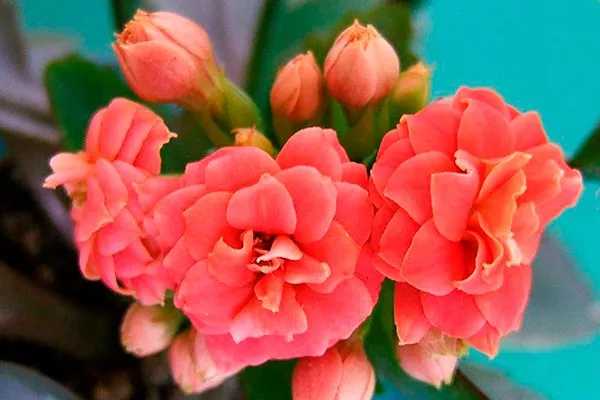
Follow the rules:
- The bush thrives on a windowsill facing any direction, except a north-facing one. During the summer months, if the window gets too hot, provide protection from bright sunlight. To prevent the plant from overheating, ventilate the room regularly.
- Provide sufficient light to the bush throughout the growing season, and provide additional lighting with a lamp if necessary.
- For seedlings and young plants that have not yet reached flowering, provide a daylight period of approximately 12 hours.
With the arrival of autumn, begin using artificial lighting for 1 hour each day. Gradually increase the duration of the lighting as sunlight decreases. By early December, the duration of artificial lighting should be 4 hours. From January to March, reduce the duration of the lighting.
Temperature conditions
During the growing season, the daytime air temperature in the room for Kalanchoe blossfeldiana should be between +24-27°C, and at night a change from 18 to 20°C is allowed.
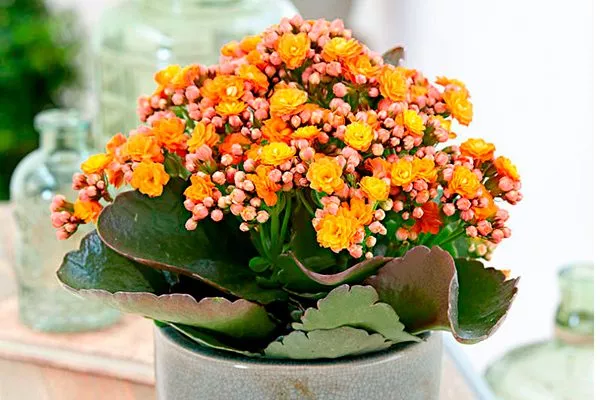
During periods of short daylight hours, maintain the temperature at around 18°C 24 hours a day. Both excessive cold and extreme heat can negatively impact bud formation.
How to water?
Like most succulents, Kalanchoe blossfeldiana tolerates short-term drought well. However, avoid allowing the soil in the pot to dry out completely. Excessively dry soil can cause the plant's leaves to lose their turgor.
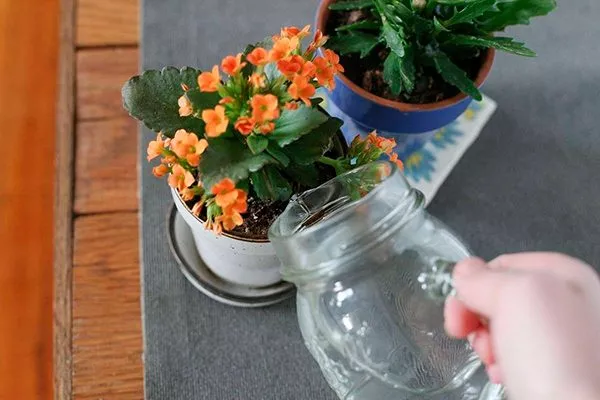
Avoid waterlogging around the roots, as this can lead to shoot and root rot. Watering frequency depends on the room temperature and the plant's developmental stage.
In summer, if the soil is well-lit and warm, water only when the surface of the potting soil has dried out to a depth of about 20 mm. In winter, if the plant is dormant, water less frequently, but don't allow the soil to dry out completely. Avoid dripping water on the foliage and shoots.
Air humidity
The leaves of Kalanchoe blossfeldiana are covered with a layer of wax, which effectively slows down moisture evaporation. Thanks to this protective coating, the plant thrives even in low humidity.
Repotting Kalanchoe blossfeldiana
For optimal growth and development of Kalanchoe blossfeldiana, it's important to select a well-drained substrate when planting. One suitable option is a universal peat-based soil mixture mixed with perlite in a 1:3 ratio. This will ensure good aeration of the root system.
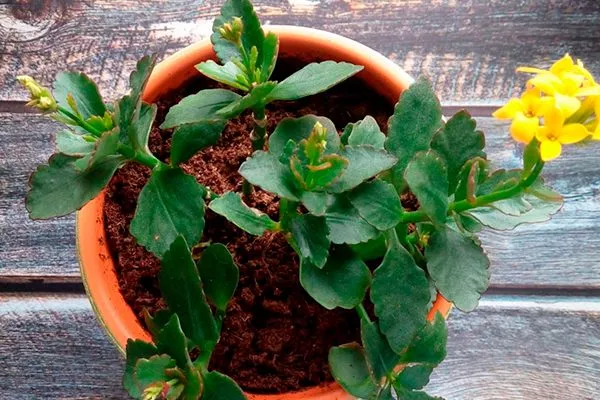
Given the bush's slow growth rate and small root mass, repot every 2 or 3 years. Transplant the plant, filling any empty spaces in the new pot with fresh potting mix.
The diameter of the new pot should be 2-3 cm larger than the previous one. The container can be made of either ceramic or plastic, but it is important that the bottom has holes to allow excess moisture to drain.
Fertilizer
Kalanchoe blossfeldiana requires fertilizing only during periods of intensive growth. During this stage, use mineral fertilizers with an NPK ratio of 2:1:2. This ensures the balance of nutrients necessary for the plant's development.
Standard fertilizers for flowering houseplants often contain excessive amounts of phosphorus, which can cause a zinc deficiency, which is essential for the normal growth and development of Kalanchoe. Avoid excessive nitrogen, as this can negatively impact the plant's decorative qualities.
Organic fertilizers are not recommended, as they can cause excess nitrogen. Ensure that the fertilizer meets the plant's needs, providing the necessary elements in the correct proportions.
Trimming
After flowering, remove all flower stalks from the plant, making the cut level with the large leaves. Lateral shoots will stimulate further flowering. Modern varieties typically branch well without pinching, which is not the case with older varieties.
Plants available in flower shops often maintain a compact form and abundant blooms through the use of special inhibitors during short daylight hours. Indoors, Kalanchoe can grow more sprawling and larger.
If the stems are very elongated, prune them radically and move the plant to a brighter location to prevent the young shoots from becoming too elongated. The cut sections can be rooted to produce new plants.
Features of flowering
Daylight hours have a significant impact on the flowering of Kalanchoe blossfeldiana. To stimulate bud formation, it's important to create alternating short and long daylight hours, bringing the plant closer to natural conditions.
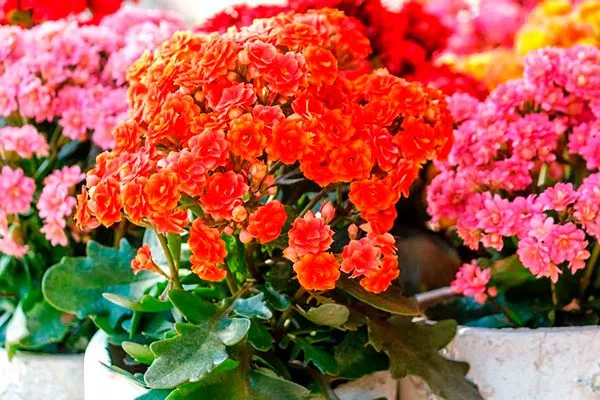
The growth cycle depends on the Kalanchoe variety, but on average it takes about 1.5 months with no more than 9-10 hours of daylight. Once buds appear at the tops of the stems, it is recommended to gradually increase the daylight hours. This will result in denser and more beautiful blooms.
If you keep the lights off in the room where your Kalanchoe is located during the dark hours, the plant may delight you with a lush bloom before the winter holidays. If you're aiming for summer blooms, place the plant in a dark place for approximately 14 hours a day for 1.5 months.
Methods of reproduction
There are several ways to increase the number of Kalanchoe seedlings. Experienced gardeners recommend propagating the plant from leaves, but growing from seeds or cuttings are also popular.
| Method | Time before flowering | Complexity |
|---|---|---|
| Seeds | 6-8 months | High |
| Cuttings | 3-4 months | Average |
| Leaf | 5-6 months | Low |
Growing from seeds
Seed propagation is typically used to develop new varieties of Kalanchoe blossfeldiana. This method is excellent for creating unique hybrids by crossing different varieties. The seeds of this plant are extremely small.
Follow the instructions:
- Take a container and fill it with a mixture of peat soil with the addition of a leavening agent (perlite, sand, etc.) in equal proportions.
- Moisten the substrate, level its surface, and distribute the seeds evenly, trying to sow them in rows, pressing them lightly into the surface. There is no need to cover the seeds deeply or cover them with more substrate.
- Cover the seeds with glass or plastic and place them in a brightly lit area. If kept warm (approximately 20-22°C), the first shoots should appear within 14 days. Once sprouts appear, remove the covering.
- Seedlings grown from seeds sown in early spring will begin blooming in late February. If you want the plant to bloom profusely and have dense foliage by then, sow in January, providing supplemental light until April.
Cuttings
Another method for propagating Kalanchoe blossfeldiana is by cuttings. This method is often used for newly developed varieties to preserve their characteristic features.
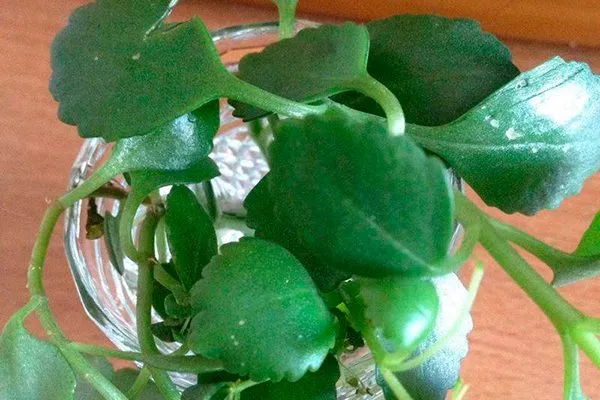
Helpful tips:
- Use the tops of the stems, cutting off pieces 7-8 cm long.
- Remove the two bottom leaves.
- Leave the cuttings to dry in a shaded area outdoors for 6-48 hours.
- Root the cuttings in a loose soil mixture, the same as for sowing. Sterilize the soil beforehand to prevent diseases.
The use of root growth stimulants is optional. Cuttings can be rooted in individual containers or in a shared container, burying their lower portions in the substrate.
Until the cuttings develop roots, regularly moisten them with a spray bottle or place them in a mini greenhouse with regular ventilation. With bottom heat and a warm temperature of 20-22°C (68-72°F), rooting should be complete within 15-20 days.
Leaflet method
To do this, cut the leaves with a sharp knife. Then carefully slice the veins a few millimeters across. Place the leaf face down on the soil surface and press it into the substrate using a stone. Moisten the soil and cover the pot with plastic wrap.
New plants will begin to emerge from the damaged leaf veins. Remove the film regularly for 15 minutes each day to allow air to air out the plants.
Pests and diseases
Most often, Kalanchoe blossfeldiana plants experience growth problems when they are improperly cared for. Let's take a closer look:
- Insufficient light during dry and hot weather can trigger powdery mildew. The first sign is the appearance of light-colored spots on the leaves. When grown in a cool and humid location, fungal diseases such as late blight, gray mold, or root rot may develop.
To treat the problem, treat the plants with a fungicide solution. In case of root rot, cut off healthy shoots and root them. - Kalanchoe can develop dropsy, a non-infectious disease that develops in high humidity and cool conditions. This manifests itself as brown crusts or small, dark, warty growths on diseased leaves.
As a preventative measure, water in the morning or afternoon, and if the room is cool, reduce the intensity. - Using hard water for irrigation can lead to alkalization of the substrate, which causes zinc deficiency, manifested in the reduction and deformation of young leaf blades, as well as their faded color.
Water the plant with settled water, sometimes adding a few drops of lemon juice.
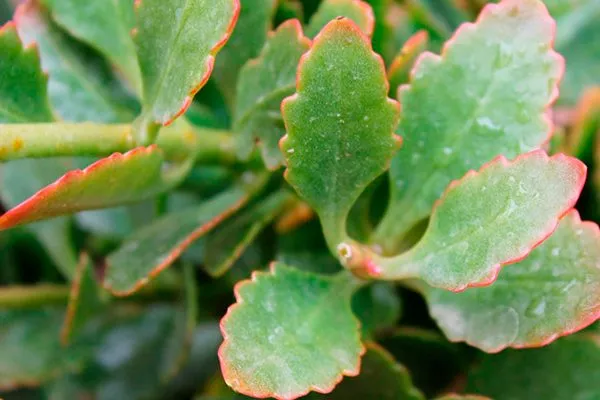
Growing Kalanchoe blossfeldiana is a fascinating process, accessible even to novice gardeners. This flower has many attractive features, making it a great addition to any houseplant collection. By following the Kalanchoe care recommendations, you can achieve abundant and long-lasting blooms.