
Seed propagation allows for the production of unique varieties. home cactus, experiment with mixing genotypes, and create your own collections of unusual thorny plants. But this approach requires patience and attention to detail, as the growth and development of seedlings of this crop is slow.
Advantages and disadvantages of propagating cacti from seeds
Growing cacti from seed is an interesting and educational experience, but it's also a labor-intensive and time-consuming process. It has its advantages and disadvantages.
Let's take a closer look at the advantages of propagating cacti from seeds:
- Possibility of breeding new varieties. By propagating cacti from seed, you have the chance to create a unique hybrid that has never existed before. This process offers scope for experimentation and creativity, allowing you to observe amazing changes and manifestations of genetic diversity.
- Obtaining a large number of plants in one procedure. A single packet of seeds can produce hundreds, sometimes thousands, of seedlings. Even if the success rate is low, a significant number of viable plants will still remain.
- Cost-effectiveness. Purchasing a mature plant is often more expensive than purchasing a small packet of seeds. Therefore, propagating from seed can significantly save a beginning collector's budget.
- Developing your own gardening skills. Growing cacti from seed requires a careful approach and constant monitoring of the development of each individual specimen. This experience develops plant care skills and enhances understanding of the growth characteristics and needs of specific species.
- Enjoy the growing process. Watching tiny plants grow from tiny seeds is a true delight for gardening enthusiasts. The ability to trace a plant's entire life cycle from conception makes this process especially appealing.
Let's examine in detail the disadvantages of propagating cacti from seeds:
- Long-term nature of the process. A significant period of time—usually several years—passes from sowing to the full development of a mature plant. During this time, losses can occur due to disease, improper care, or adverse environmental factors.
- The need for careful preparation. Before you begin growing cacti from seeds, you'll need to consider many aspects: preparing a high-quality substrate, creating the necessary humidity and lighting conditions, properly sterilizing the seeds, and much more.
- High risk of failure. Despite strictly following all recommendations, there is a risk that a significant portion of the seeds will fail to develop successfully. Factors such as infection, nutrient deficiencies, or improper temperature conditions can lead to the death of a proportion of young plants.
- Need a lot of space to grow. Since a single packet of seeds produces a large number of plants, you'll need a significant amount of space to accommodate the young plants. This applies to both a windowsill and a greenhouse.
- Labor intensity of care. Young plants require constant humidity control, regular fertilization, and protection from potential infections. They are significantly more susceptible to disease than mature plants, so it's important to provide the most comfortable conditions possible.
Despite the difficulties and time investment, growing cacti from seeds makes sense if you enjoy research, experimenting with creating new forms, and a desire to develop your gardening skills.
Selecting quality seeds
Proper selection of propagation material will ensure the success of the entire operation. Please pay attention to the following:
- Origin: Buy seeds from trusted producers who guarantee varietal purity, or collect them yourself from ripe fruits.
- Best before date: Check the expiration dates on the packaging. Old seeds lose their viability faster than fresh ones.
- Appearance: Fresh seeds have a bright color, shiny shell and dense structure.
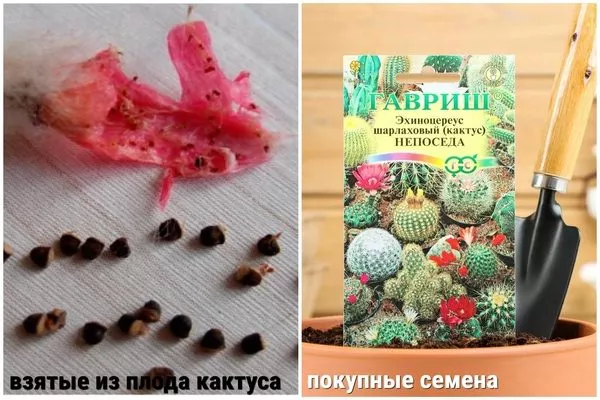
Some species produce large seeds with a hard shell, which require pre-treatment with growth stimulants or soaking in hot water.
You can read about which varieties of cacti can be grown at home by clicking on link.
Selecting and preparing a container for sowing cactus seeds
Choosing the right container is key to successfully growing cacti from seed. The right container provides the necessary conditions for root development and minimizes the risk of pathogenic microorganisms.
Selection criteria
Let's look at the key aspects of selecting and preparing containers:
- Raw materials for manufacturing. Lightweight and environmentally friendly materials such as glass, clay, ceramics, or food-grade plastics are preferred. They are easy to clean, transparent, and allow for monitoring of the substrate and plant roots.
- Size and shape. Containers for growing cacti from seeds should not be deep, as these plants have a shallow root system. The ideal depth is 35 cm. A wide bottom promotes better root development and simplifies subsequent care (this can be a square container or a spacious pot). Individual containers will be needed for further cultivation of mature seedlings.

- The presence of holes for draining excess moisture. It's important to choose containers with holes in the bottom to ensure good drainage. Stagnant moisture is harmful to the delicate roots of cacti and can lead to disease.
- Additional elements. The addition of a lid or film will create a mini-greenhouse effect, maintaining the desired humidity and temperature. These devices make it easier to maintain an optimal microclimate inside the container.
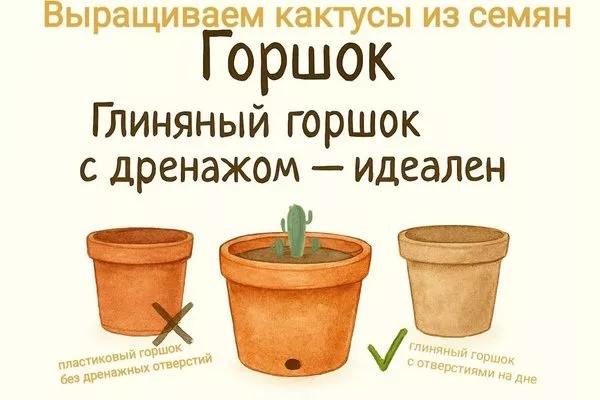
Stages of preparation of the selected container:
Following these simple rules will create ideal conditions for the rapid and healthy growth of your future cacti:
- Processing and cleaning. Before sowing, make sure the container you choose is clean and sterilized. Wipe it with an alcohol wipe or rinse it with boiling water. Pay special attention to joints and crevices where bacteria can accumulate.
- Integrity check. Assess the integrity of the walls and bottom of the chosen container. The slightest damage can allow pathogens to penetrate the substrate, which will negatively impact plant growth.
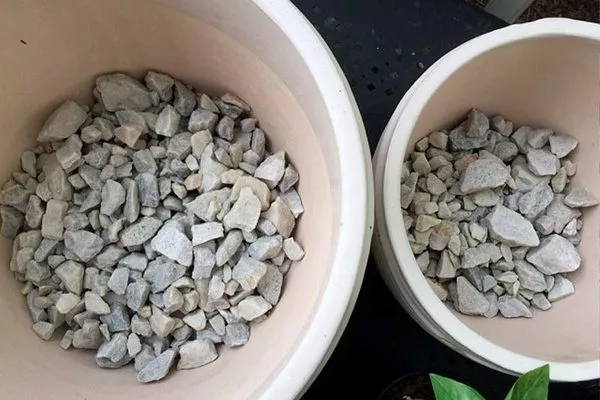
- Organization of proper drainage. Drill additional holes in the bottom if there aren't enough. You can lay a layer of gravel or expanded clay over the holes to prevent clogging and stagnation.
- Creating a favorable internal space. Place a layer of clean, dry substrate (a mixture of peat, sand, and perlite) at the bottom of the prepared container. It's a good idea to water the top layer with a light pink solution of potassium permanganate for additional protection against infections.
Selecting and preparing a substrate for sowing cactus seeds
The key to success when growing cacti from seed is the correct selection and preparation of the substrate. High-quality soil provides optimal nutrition, maintains the necessary acidity and moisture balance, and ensures the healthy development of young plants.
Substrate requirements
Basic principles for selecting and preparing the ideal environment for your future flower garden:
- Lightweight structure. Cactus substrate should have a loose structure to allow oxygen and water to quickly reach the root system. Dense and heavy soils promote the accumulation of excess moisture, which leads to root rot.
- Good drainage. One of the key characteristics of a good substrate is its ability to drain excess moisture. The soil should allow liquid to drain freely, preventing water stagnation in the root zone.
- Moderate fertility. While fertilizers are important for the proper nutrition of a young plant, an environment that's too rich in organic matter can be harmful. It's best to choose a poor, neutral substrate with minimal amounts of mineral supplements.
- Neutral pH. Most cacti prefer to grow in soil with a pH level close to neutral (6.5-7.5). Therefore, it's important to check the pH in advance and adjust it if it's outside the specified range.
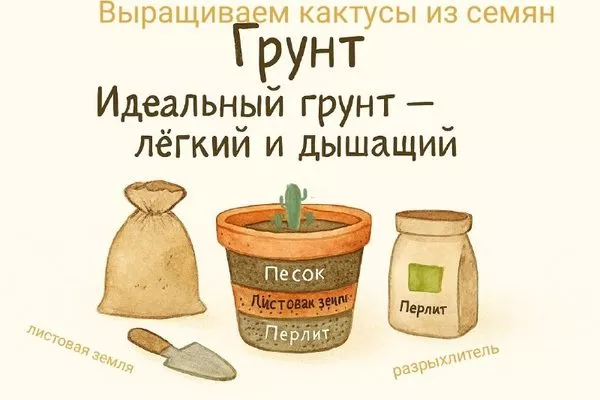
Recommendations for selecting components:
- Organic components. Peat, coconut coir, and compost are used to improve soil structure and make it crumbly. However, remember that organic matter increases acidity, so use it sparingly.
- Inert additives. Sand, vermiculite, and perlite provide essential drainage and help maintain stable moisture. Fine particles make the substrate light and airy, facilitating oxygen access to the roots.
- Biological stimulants. Fungal preparations and bacterial complexes increase the resistance of young plants to infectious diseases and accelerate the adaptation of the root system to new conditions.
Substrate preparation stage
Before adding the soil mixture to the container, be sure to carry out the necessary preparation. Combine all the soil ingredients in the correct ratio. Typically, this looks like this: one part coarse sand, one part finely crushed charcoal, one part lowland peat (or leaf mold), and one part fine crushed stone or brick chips.
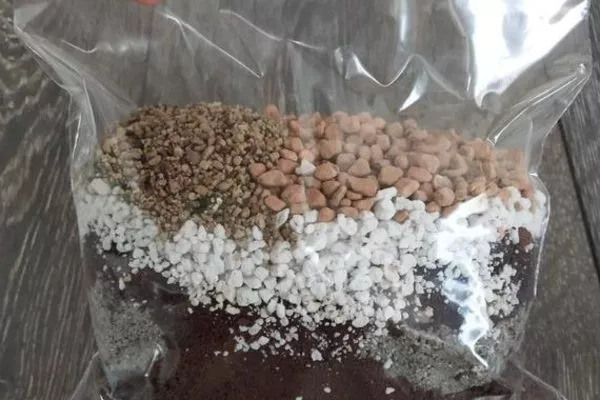 To prevent the introduction of harmful microorganisms, be sure to steam the prepared substrate in the oven or microwave. Sterilized soil protects young plants from diseases and harmful insects.
By following these recommendations, you can prepare the perfect soil mixture for a successful start to your cactus collection. You can also use a ready-made, store-bought soil specifically designed for succulents.
Preparing cactus seeds for sowing at home
The process of preparing cactus seeds for planting is similar to that of many vegetable crops. Pre-soaking the seeds in a potassium permanganate solution accelerates germination and reduces the risk of infection.
Before you begin sowing, follow these steps:
- Inspect the seeds under a magnifying glass, discarding any damaged or moldy samples. Clean them of any remaining fruit fragments.
- Rinse the seeds with pre-boiled water or a weak solution of potassium permanganate. This is most easily done by mixing the seeds in a tightly sealed container such as a test tube or jar.
- Soak the seeds in a special quinosol solution (approximately 0.5 g per 0.5 liters of boiling water) for a couple of hours. If quinosol is unavailable, they can be treated with a pinkish potassium permanganate solution for 15-20 hours.
An alternative option is to soak the seeds in a solution of hydrogen peroxide (about 20 g per 0.5 l of water) for 10 minutes, after which immediately rinse the seeds with boiled water.
For disinfection, it's convenient to place seeds on pieces of filter paper or white, thick cloth, labeling each sample with the name of the corresponding species. You can also use small plastic containers, pouring different types of seeds into them separately.
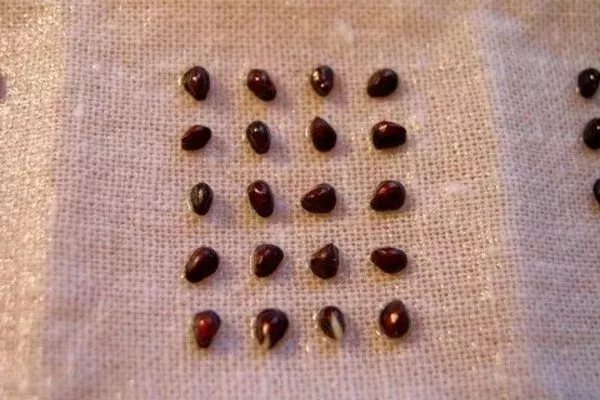
The most effective method is considered to be dry etching with TMTD (thiuram, gerill). Features:
- Place the dried seeds in a glass test tube, add a small amount of the solution, and shake vigorously. A thin protective layer of the solution will form on the seeds, after which they can be planted immediately.
- A small amount of seeds can be treated with the powder of the preparation on a sheet of paper.
- Soaking of particularly small seeds is contraindicated to avoid loss.
- It should be remembered that TMTD has moderate toxicity to mammals, so it must be handled with great care.
- It is recommended to add a small amount of the preparation directly to the substrate itself (approximately 1 g per 1 kg).
These measures will significantly increase the chances of successful seed germination and the production of strong, healthy plants.
Carrying out sowing
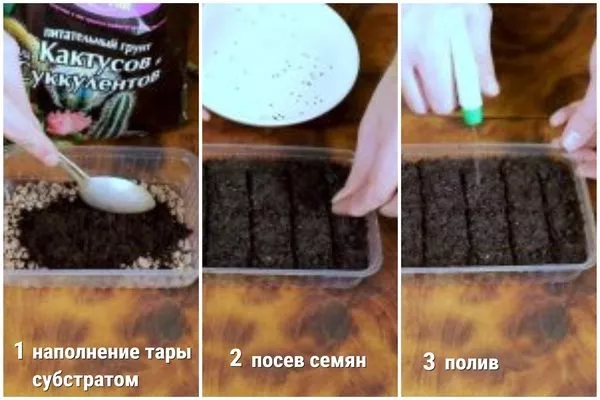
Follow these simple guidelines to ensure even seed distribution:
- Fill the container with moist substrate, compacting the top layer.
- Spread the seeds evenly over the damp surface, keeping a distance of about 1 cm from each other.
- Carefully sprinkle with a thin layer of sand, 1 mm thick.
- Cover the container with a clear lid or film to create a greenhouse effect.
Creating optimal conditions for cactus seed germination
When growing cacti from seeds, providing comfortable conditions for the initial growth stage is especially important. Seed germination is the most crucial stage, determining the future success of the entire campaign. Let's take a closer look at the environment needed for optimal germination speed and quality:
- Temperature conditions. One of the most important parameters for effective germination is ambient temperature. It should range from 20 to 28 degrees Celsius. These temperatures stimulate the rapid emergence of the first green shoots and the development of the root system.
Using special heating mats or backlighting lamps will help maintain the desired temperature balance. - Light mode. Light is necessary to activate photosynthesis and promote normal cell development. Place an artificial light source (a fluorescent lamp or a special grow light) approximately 15-20 cm from the soil surface.
It is advisable to provide lighting for 12-16 hours daily, simulating natural cycles.
- Humidification mode. To prevent overwatering and the growth of harmful bacteria, maintain a constant but moderate humidity level. The easiest way to achieve this is to regularly mist with warm, settled water from a spray bottle.
Please note that the bottom of the plant should always be kept dry to prevent root rot. - Greenhouse effect. Creating a kind of greenhouse helps retain heat and moisture near the soil surface, creating ideal conditions for rapid germination.
Covering the container with a transparent lid or plastic film creates the desired atmosphere and prevents moisture loss. - Ventilation. While maintaining high humidity is essential, it's crucial to periodically ventilate the "room" to prevent stagnant air and the spread of infectious agents. Perform short airing sessions twice a day, leaving a small gap in the lid or briefly lifting the edge of the film.
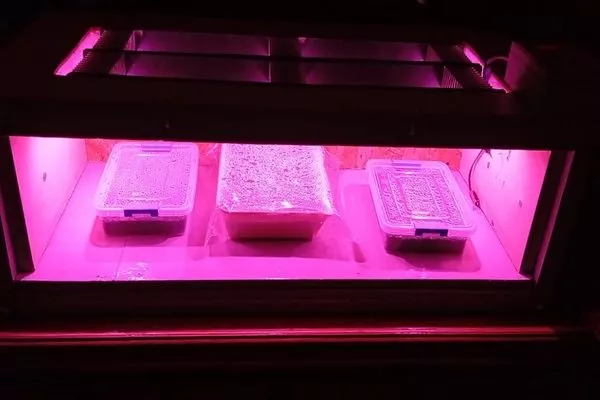
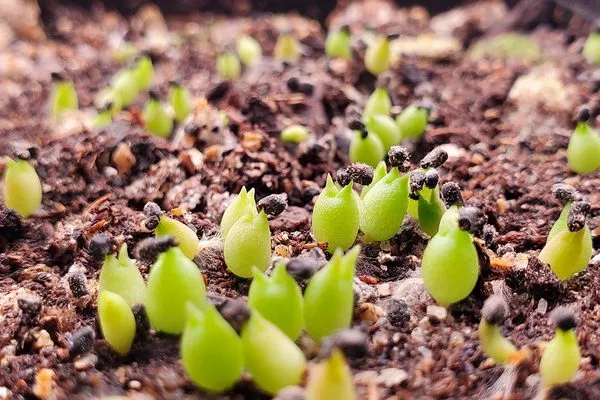 By creating the right conditions for seeds to germinate, you will have strong, healthy plants ready for the next stage of their life cycle.
Features of caring for sprouted cactus seeds
As soon as the first green shoots appear, a new stage of plant care begins. Now your goal is to properly prepare them for independent life outside the greenhouse.
What to do next:
- Adaptation to open space. Gradually open the lid or film, creating a slow transition from a confined space to fresh air. Allow the plants to acclimate to the new humidity and temperature levels.
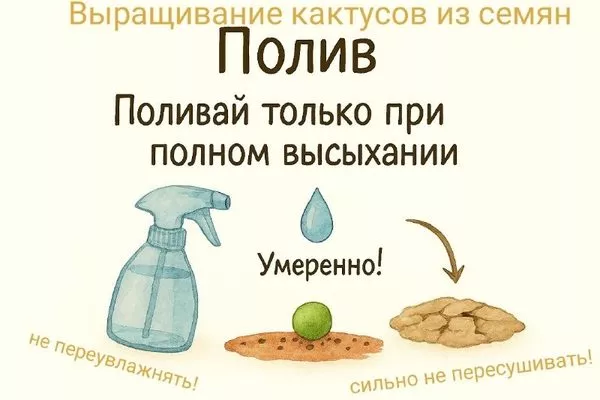
After two to three weeks from germination, remove the protective covering completely, allowing the plants to breathe completely freely. - Features of watering. Young cacti require regular, but small amounts of water. Test the top layer of soil with your finger: if it feels dry, it's time to water. Avoid overwatering, as excessive moisture can cause root problems and fungal diseases.
- Top dressing. Weak fertilizer solutions are added weekly to accelerate growth and strengthen the plant's immune system. Choose complex formulations specifically designed for cacti, halving the standard dose to avoid chemical burns.
- Soil condition monitoring. Check the soil regularly. If you notice signs of mold or foreign matter, promptly replace the top layers of the substrate with fresh, clean material.
- Fight against diseases. If signs of deformation, spotting, or wilting appear, address the problem immediately. Early intervention preserves plant vigor and prevents widespread crop losses.
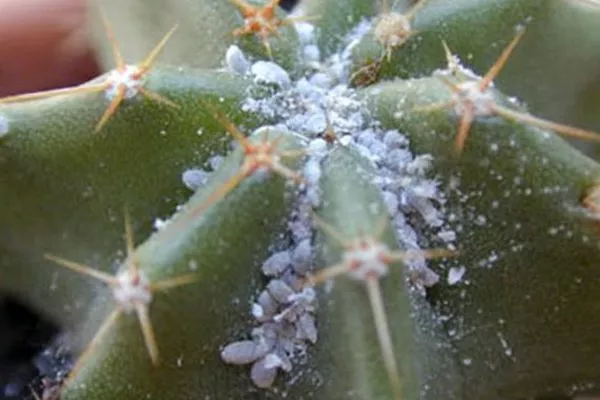
- Preventing pest attacks. Regular inspections will help detect the presence of parasites like spider mites or scale insects early. If a threat is detected, take immediate control measures with specialized products.
Rules for picking cactus seedlings and advice on further care
Three months after sowing, an important event occurs: transplanting the cactus seedlings. Each small plant requires its own container, appropriate for its size. For small plants, a small plastic cup with a capacity of about 100 ml is quite suitable.
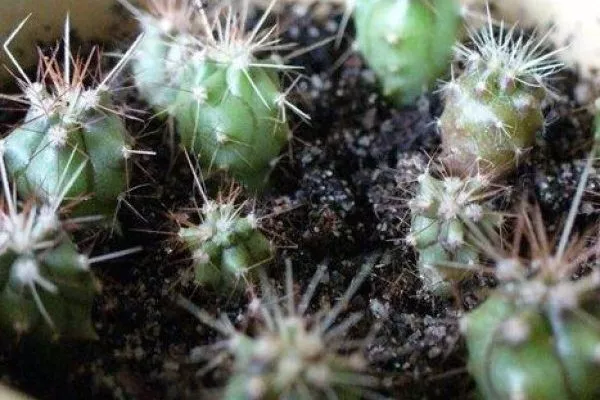
The main task is to ensure good ventilation and the absence of stagnant moisture:
- Pots should have drainage holes at the bottom, otherwise there is a risk of root rot. If your container doesn't have holes, be careful with watering: try to add minimal amounts to avoid overwatering.
- Pay special attention to long roots. It's recommended to pinch them off to direct their energy toward strengthening lateral shoots and promote vigorous growth of the plant itself.
Let's take a closer look at the diagram of the transplant itself:
- Place a drainage layer of expanded clay, broken brick or fine gravel on the bottom of the pot.
- Add a layer of soil similar to the one used when sowing the seeds over the drainage layer. Fill the pot to the very brim.
- In the center, make a small hole about 1 cm deep.
- Carefully transfer the cactus from the greenhouse along with the lump of soil, being careful not to damage the thin roots.
- Tamp the soil around the plant, add liquid fertilizer and water with warm water.
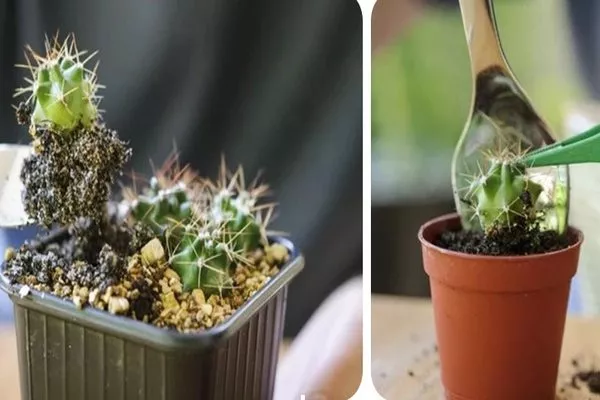
The first six months do not require any special care, except for the standard irrigation regime (you will find the maximum details about it Here). The fertilization schedule remains unchanged until autumn, after which watering is reduced to allow the plant to rest over the winter.
A house cactus grown from seeds won't bloom for at least five years. To produce buds, you'll need to create special conditions. conditions.
For future repotting, it's best to purchase ready-made soil specifically designed for cacti. While decorative colored sand is visually appealing, it's hard on the root system, becoming too dense and heavy over time. Read on to learn how to properly repot your prickly plant. here.
Experience shows that the key to successfully growing cacti from seed is carefully following all the steps, taking into account professional recommendations. By following these guidelines, you'll create your own collection of rare and beautiful cacti varieties.