
Choosing the right soil and pot are key aspects of successful cultivation domestic cactiThese unique plants, accustomed to extreme desert conditions, have specific requirements for soil composition and container quality. Misunderstanding cacti's needs can lead to developmental problems, disease, and even plant death.
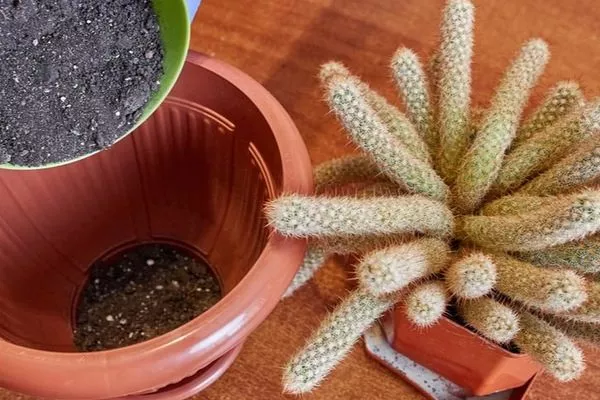
Features of the root system of cacti and succulents
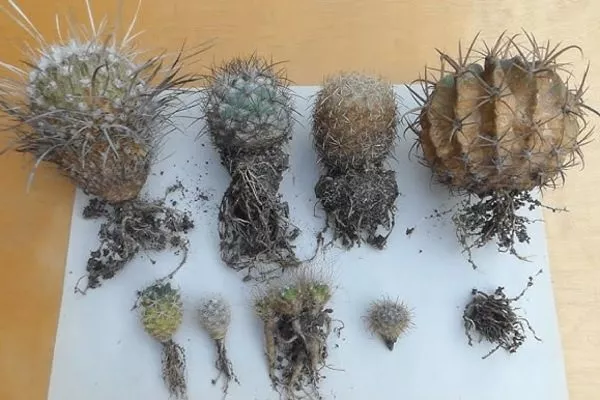
Cacti and succulent plants have a unique root structure that has developed as a result of adaptation to the specific natural conditions of their habitat.
Living primarily in desert regions, they face moisture deficits and unfavorable soil conditions—sandy or rocky soils. This circumstance has significantly influenced the development of their root system characteristics:
- Features of the root structure. Most members of these families have roots located shallow below the soil surface, allowing them to quickly absorb rainwater. Some species have long, branched rhizomes, allowing them to cover as much territory as possible.

- The ability to accumulate moisture. In addition to the ability to store water in the stem and leaf blades, the root system plays a key role in fluid accumulation. It is capable of instantly absorbing even small amounts of available moisture.
- Negative impact of excess moisture. Excess moisture is the main threat to the survival of cacti and succulents. Prolonged root contact with moisture causes tissue rot and can lead to the complete death of the plant.
Soil for cacti
The root systems of cacti and succulents require constant access to oxygen. Dense soil restricts air movement, which negatively impacts the plant's health.
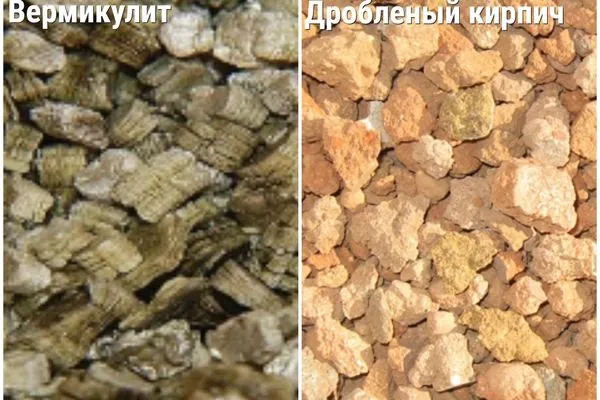
Large fractions of additives help improve the aeration properties of the soil:
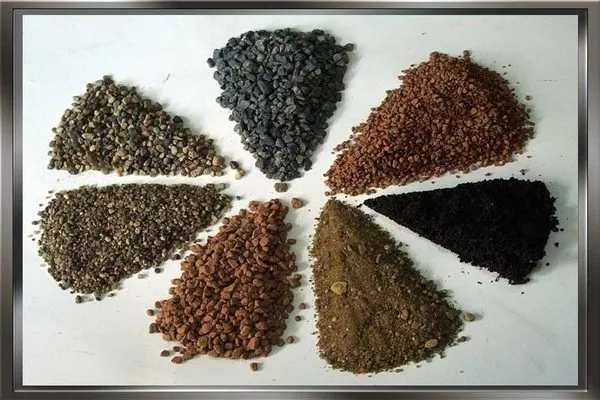
- Crushed brick – promotes the formation of optimal soil structure, increasing oxygen access to root zones.
- Vermiculite – a mineral product that expands during heat treatment, forming cavities in the ground that serve as reservoirs for air.
Soil structure and composition
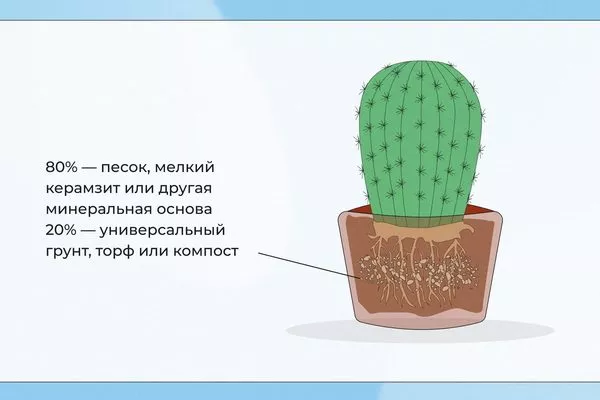
The soil that is ideal for growing cacti has a unique composition that includes predominantly inorganic ingredients.
Cacti are not adapted to highly nutrient-rich environments and do not thrive in soils rich in organic matter. Furthermore, their fine, shallow roots are designed to quickly collect moisture rather than penetrate deeply into the soil.
The optimal soil composition for cacti requires compliance with a number of requirements:
- predominance of inorganic components;
- minimal presence of organic particles;
- lack of tendency to retain moisture;
- ensuring free access of air to the roots;
- lightness and crumbliness of structure;
- quick drying;
- stability of the composition over time;
- neutral acidity level.
Preparing the soil for cactus transplants – the process is quite complex and ambiguous, since the optimal composition depends on many parameters, including the type of plant, its age, and other factors.
Various publications offer varied recommendations on preparing soil for cacti. Sometimes the advice varies significantly, but the authors often rely on their own practical experience, which has shown positive results. They typically recommend mixing the soil with sand and gravel.
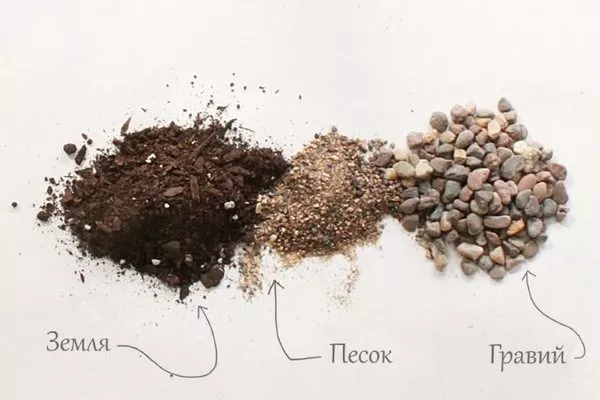
The basic components of traditional cactus mixtures remain the same, and must include the following:
- Leaf soil - Rich in nutrients, it's light and loose, and absorbs moisture quickly. It's harvested in early spring, when the snow begins to melt, collecting the top layer of soil beneath deciduous trees in forests or parks.
- Clay-turf soil – It has the ability to reliably retain moisture, while nutrients are slowly washed out. To obtain it:
- remove the top layers of grass and turf in areas overgrown with thick grass near the garden;
- folded in layers;
- watered with liquid animal waste;
- leave for at least one year (if this procedure seems complicated, you can simplify the task by simply carefully knocking the soil away from the roots of the turf).
- Old greenhouse soil mixture – It's used when the previous soil types are difficult to obtain. This mixture can be collected directly from the garden.
- Well-rotted manure (humus) – It is used in small quantities to enrich low-fertility soils. In the spring, fresh manure is placed in a special box or pit in the garden or plot, covered with a layer of leaves, and then topped with soil. It is then used the following spring.
- Coarse river sand – Sand gives the soil an airy and porous structure and is essential for any cacti. Sand can be collected from a riverbank or beach and thoroughly washed before use.
- Charcoal - It serves as an antiseptic and protects roots from disease. It is used in powdered form to treat damaged root areas and is added to the soil in small pieces. Charcoal is obtained by burning the branches of deciduous trees, preferably birch. The resulting charcoal residue is crushed by hand.
- Brick chips – Increases soil looseness and porosity, retaining additional moisture. Red brick is crushed into fine chips using a hammer; the brick itself can be found near construction sites or along city streets.
pH and Nutrient Recommendations
Most cacti and succulents thrive in slightly acidic or neutral soil (pH around 6.0-7.0). An imbalance of acidity or alkalinity can prevent the plant from properly absorbing essential nutrients.
You can regulate pH levels by adding special ingredients:
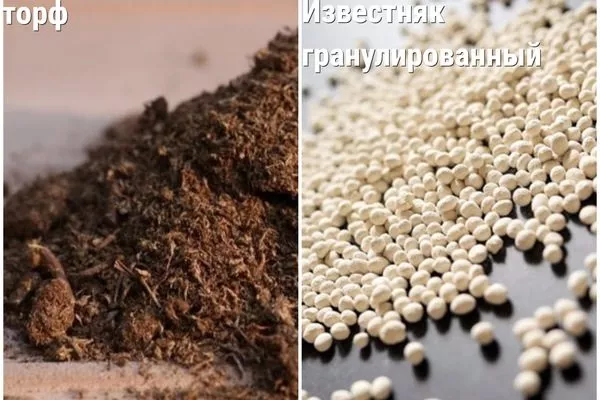
- Limestone - used to increase pH levels and reduce soil acidity.
- Peat - used to lower the pH when a more acidic environment is needed.
Although cacti and succulents don't require intensive fertilization, completely eliminating additional nutrients is undesirable. You can read about suitable fertilizers for these houseplants here. Here.
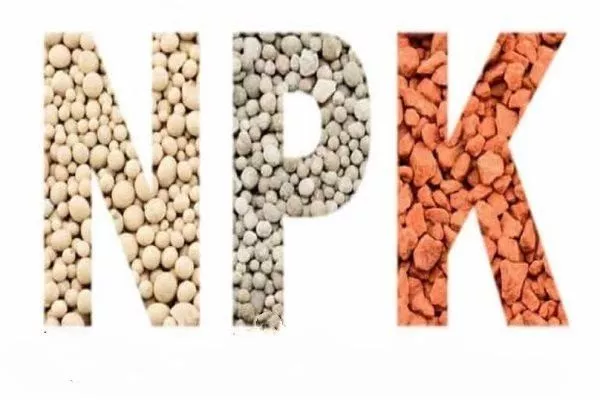
The basic composition of the fertilizer should include the following elements:
- Nitrogen (N) – It stimulates the development of young shoots, but excessive nitrogen content can cause weakening of the plant structure.
- Phosphorus (P) – has a positive effect on strengthening the root system and stimulating flowering.
- Potassium (K) – strengthens cell walls, increasing resistance to adverse environmental conditions.
The best substrate recipes
The selection of the optimal substrate for cacti is determined by the characteristics of a particular species, since the conditions of their natural growth can vary significantly.
A perfectly selected substrate for cacti combines a number of important components that provide favorable conditions for the growth and development of plants:
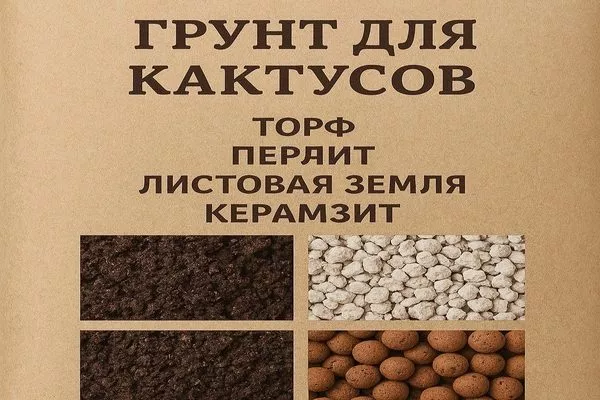
- Peat (about 40%): is responsible for maintaining the light structure of the soil and the ability to retain the required amount of moisture.
- Perlite or coarse sand (approximately 30%): promote better drainage and ensure sufficient air supply to the roots.
- Leaf soil (about 20%): enriches the soil with essential organic compounds.
- Finely crushed brick particles or expanded clay (up to 10%): improve the mechanical structure of the soil, preventing its compaction.
Additionally, you can enable:
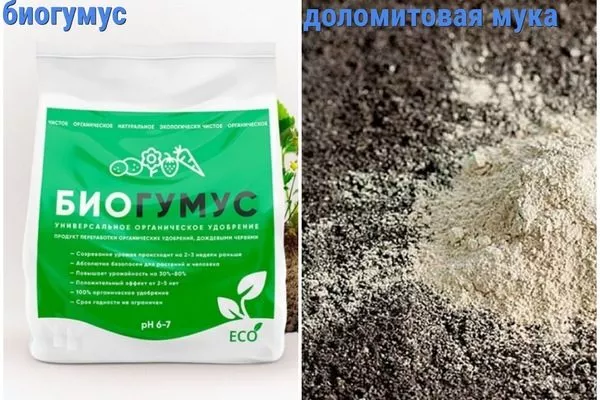
- Dolomite flour - to normalize the soil acidity level.
- Biohumus – a natural ingredient that enriches the soil with valuable nutrients.
There are also other universal recipes suitable for the vast majority of varieties:
- Universal option #1: a combination of equal parts fertile soil, coarse sand or small pebbles, and two parts perlite or pumice.
- Option #2: four parts coarse river sand, two parts brick chips, four parts sifted leaf or turf soil, one part zeolite and one part charcoal (preferably birch).
- Universal option #3: equal parts of specialized flower soil, coarse sand or gravel granules, and double the amount of pumice or perlite plus one part peat.
- Another universal recipe #4: four parts of a mixture of sand and gravel, three parts of humus, one part of coconut fiber, one part of pumice and one part of charcoal.
- Simple solution #5: two parts sand, one part brick chips, two parts regular soil and one part small pebbles.
Every gardener can choose a recipe that suits them based on the availability of certain components and their experience in plant care.
Drainage in a pot
Drainage for cacti plays a crucial role, especially in situations where there is uncertainty about the choice of pot size, when planting plants in pots with small drainage holes, or when creating compositions of several specimens in one container.
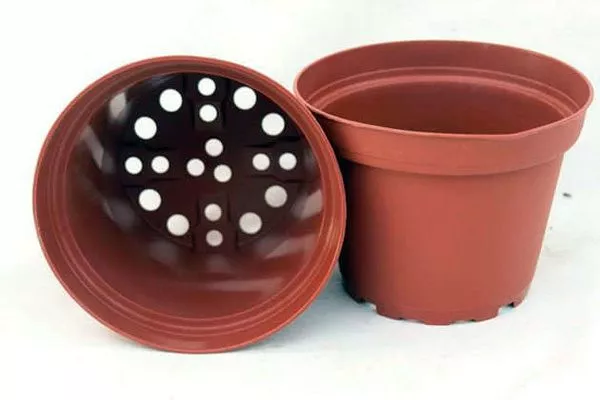
Having holes in the bottom of the pot does not in itself guarantee protection against moisture accumulation around the roots, since excess water will still accumulate in the tray, and timely removal of excess liquid is not always possible.
The following options are suitable as drainage material:
- expanded clay;
- small fragments of red brick rubble;
- fine granite chips;
- chopped polystyrene foam cubes;
- pieces of wine cork.
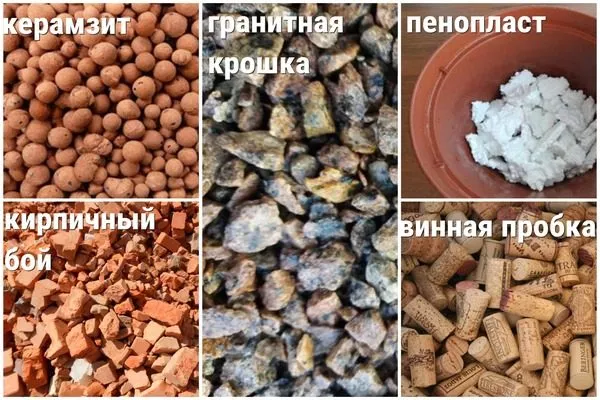
Using cork is most convenient due to its ease of cutting into pieces approximately 0.5 cm in size. However, during subsequent repotting, the used drainage material must be replaced, as it gradually accumulates salt deposits.
Before repotting, it's helpful to thoroughly water the cactus, making it easier to separate the old drainage material from the roots. Once all the old soil has been removed, leave the plant to rest in the shade with its roots exposed for a couple of hours.
Optimal characteristics of a cactus pot
Choosing the right plant pot is an important task that requires considering the characteristics of the material used. The two most common types are plastic and ceramic, each with its own advantages and disadvantages.
What material should I choose for a cactus pot?
Ceramic pots are characterized by good ventilation, allowing the soil to dry more quickly after watering. This property makes them ideal for regions with high humidity, such as St. Petersburg, where the soil tends to remain damp longer.
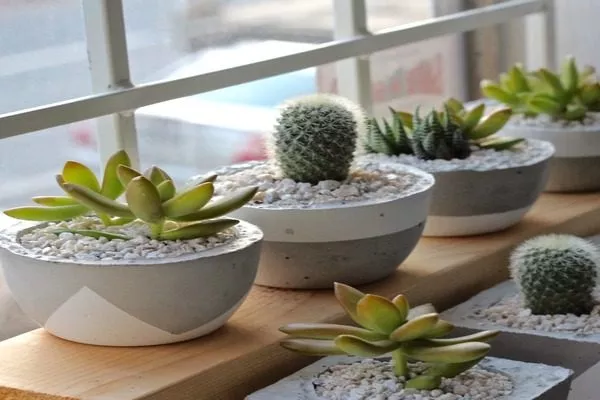
The unique feature of unglazed ceramics is their ability to breathe, allowing for additional moisture evaporation. The staff of the St. Petersburg Botanical Garden traditionally prefer this type of pottery, emphasizing the convenience of growing cacti in classic small ceramic pots.
Plastic containers are also becoming popular in household settings. They are characterized by smooth walls, which influences the direction of plant root growth.
Optimal dimensions
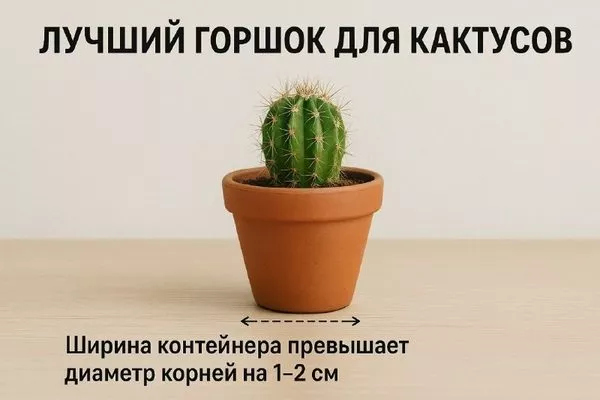
A characteristic feature of cacti and other succulents is the need for a minimal pot size, due to the small volume of soil required. The container size is chosen proportionally to the root system: the diameter of the pot should only slightly exceed the width of the root tuber, literally a couple of fingers' width on each side.
Important aspects:
- Sometimes, the plant itself appears large and massive, but its root system is small. In this case, using a small pot can make the plant unstable. However, a small pot is the optimal solution.
The plant can be strengthened by placing it in a larger diameter flowerpot or pot, filling the space between the walls with additional materials such as expanded clay or pebbles to provide greater stability. - A common mistake among beginning cactus growers is the desire to immediately plant the plants in large containers, so to speak, for future growth. But this is wrong, as it disrupts the balance of the water supply:
- In a small pot, the root system receives exactly as much moisture as it needs, whereas a large volume of soil leads to an excess of liquid.
- The top layer of soil dries out quickly, leaving a wet mass below, which provokes root diseases and, subsequently, the death of the plant.
- The main guideline when choosing a pot is the size of the plant's root system. Planting in a cramped pot slows the growth and development of the cactus, but an overly spacious pot can cause even greater damage to the plant's health.
Filling the voids in a large pot is difficult, and there is a high risk that moisture will remain in the lower layers, which will lead to root rot. - The optimal container is one whose width exceeds the diameter of the root tuber by 1-2 cm. For example, for an average Echinopsis a pot with a diameter of about 8-10 cm is suitable, and for milkweeds or rebutium – smaller diameters (about 5-7 cm).
- The pot shouldn't exceed the plant's height. A standard recommendation is a pot about half the cactus's height. For example, tall columnar cacti (Cerrus spp.) or rhipsalis (Rhipsalis spp.) thrive in low, wide pots that follow their contours.
Form
Choosing the right pot shape is a crucial factor in successfully growing cacti. Many novice growers make the mistake of relying solely on the appearance and beauty of the container, forgetting about the needs of the plants themselves.
Requirements
Let's figure out which pot shape is best to choose and why it matters:
- The pot's shape determines how well a plant can develop its root system. An unsuitable pot can restrict root growth or force it to grow in the wrong direction.
- A properly selected shape allows the soil to be better aerated and to be promptly freed from excess moisture, reducing the risk of root rot.
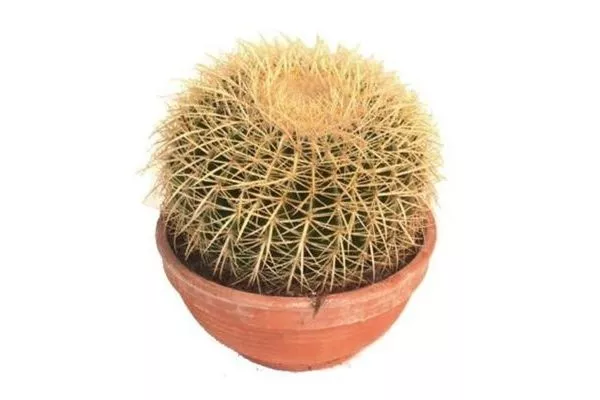
- A wide and low pot provides stability for large specimens, preventing them from tipping over.
Popular cactus pot shapes
There are many different types of containers suitable for growing cacti. Each type has its own characteristics, pros, and cons:
- Low and wide pots ("saucers"). Disadvantage: They can take up a lot of space on windowsills or shelves. Advantages:
- Ideal for most cacti whose roots spread primarily horizontally.
- It is easier to control soil moisture since the surface is less susceptible to waterlogging.
- Stability is ensured by a wide base.
- Classic cylindrical pot. Disadvantage: May promote moisture retention if the diameter is much wider than necessary. Advantages:
- Suitable for medium and tall cacti with a deeper root system.
- Convenient for placement on tables or stands.
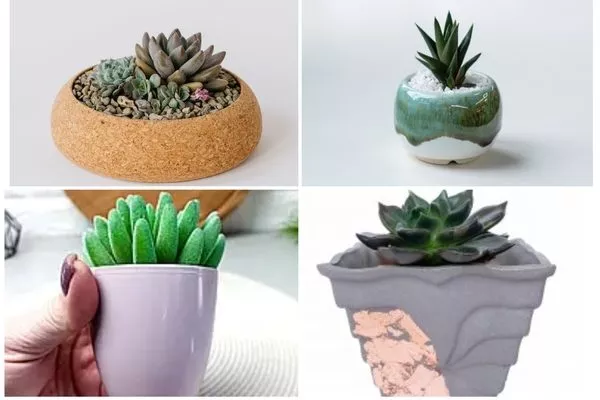
- Miniature round or square pots. Disadvantage: They limit the space for root development and are only suitable for the smallest varieties. Advantages:
- They look great on display cases and at exhibitions.
- Compact and space saving.
- Stepped or rectangular pots. Disadvantage: Careful monitoring of the soil's moisture and quality is required, as different levels affect the rate at which the soil dries out. Advantages:
- Allows you to organize compositions from several cacti of different sizes.
- Save space on the window or windowsill.
Recommendations for choosing a pot shape
Choosing the right pot shape is the key to successfully caring for your beloved prickly friends. Consider the needs of specific cacti species, provide comfort for the root system, and enjoy healthy-looking plants.
Key criteria:
- Choose a pot depending on the size and shape of the root system of a particular cactus variety.
- Always consider the height and diameter of the mature plant.
- Use unglazed ceramic or terracotta pottery as they allow for better air circulation and humidity regulation.
- Purchasing large and deep pots for growth is out of the question.
- The use of glass or metal containers that do not breathe well and retain heat is unacceptable.
Preparing the pot and soil
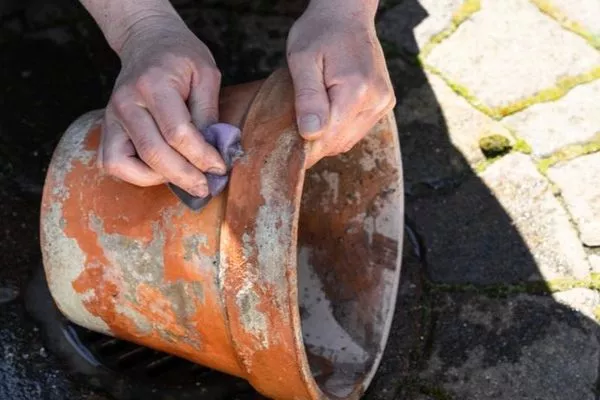
Before planting cacti and succulents, it's important to thoroughly prepare the container and soil. The container should be washed, disinfected with a potassium permanganate solution, and dried. Soil preparation is a more labor-intensive process, as it must be free of harmful microorganisms, insects, and fungi, especially if the soil was collected from natural soil.
Even experienced gardeners sometimes sterilize store-bought soil. The process involves the following steps:
- Pour a little water into the bottom of a deep saucepan so that it covers the bottom.
- Then place the prepared soil there.
- Close the lid and place the pan on the stove or in the oven.
- Stir occasionally, ensuring the internal temperature does not exceed 100°C. It's best to use a kitchen thermometer to monitor the temperature.
- After about half an hour, carefully remove the pan and let it cool naturally.
Filling the pot
The procedure for planting cacti and succulents is simple and consists of three main steps:
- First, place a drainage layer (such as expanded clay or gravel) at the bottom of the container, filling approximately 1/4 of its volume. It is recommended to pre-heat the drainage layer in an oven to prevent infection.
- After laying, add the previously prepared soil mixture.
- Place a decorative layer of small stones on top of the substrate or reuse the drainage material. This step is performed after the plant is placed in the container.
So, successful cacti cultivation begins with the proper selection of soil and pot. The main requirements for the substrate are good water permeability and low nutrient density, as most cacti thrive in dry, nutrient-poor environments. The pot should provide sufficient root space, good drainage, and adequate stability.