
Rebutias are South American cacti widely known to flower lovers. They are prized for their decorative qualities, vibrant blooms, and low maintenance. These spherical, spiky plants invariably delight the eye with their visual appeal, which is greatly enhanced during flowering.
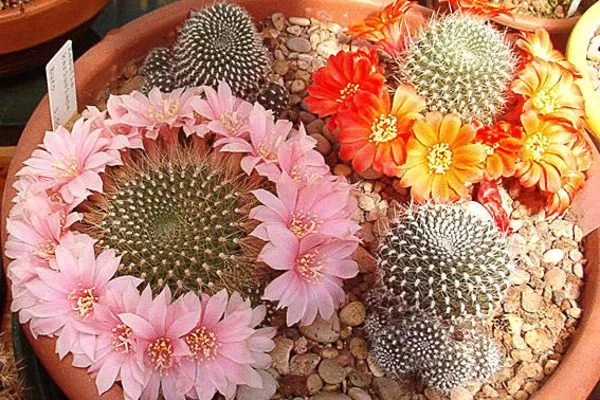
Introduction to the genus Rebutia
Rebutia (Latin: Rebutia) is a genus of South American cacti distinguished by their diverse species. They are named after the French cactus grower Pierre Rebut. Most rebutias are easy to care for, small in size, and bloom readily, making them very popular among indoor gardeners.
In summer, Rebutias thrive outdoors, in gardens, on terraces, and balconies. These cacti are ideal for those who choose plants that require little maintenance—they rarely need watering or feeding, and don't even need repotting—they can grow for long periods in poor soils without repotting.
You can read about other popular genera of the Cactaceae family Here.
Popular among collectors and gardeners
Rebutias are popular among collectors and gardeners due to their combination of low maintenance and visual appeal. Unlike many cacti, Rebutias bloom frequently and readily. These plants branch well and grow, forming entire colonies. Rebutias are easy to care for, making them suitable for beginning cactus growers.
History of discovery and classification
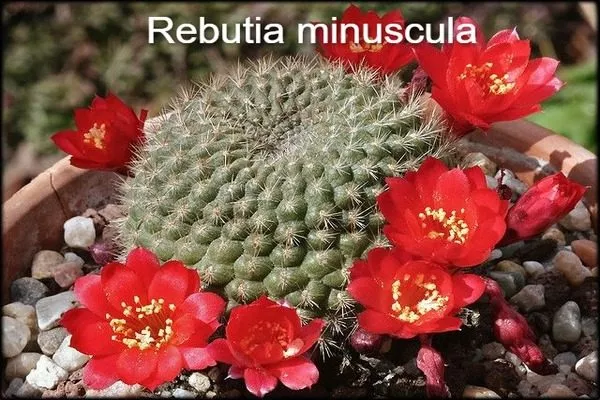
Rebutia was first described by the German professor of botany Karl M. Schumann in 1895. The type species of Rebutia (the original one, which has been grown in culture for a long time) is R. minuscula, cultivated since 1887. The classification of Rebutia has undergone numerous changes.
As of early 2025, according to the Plants of the World Online classification system—a project of the Royal Botanic Gardens, Kew—the genus Rebutia includes only three species: Rebutia fabrisii, Rebutia minuscula, and Rebutia padcayensis. Other species were previously included in the genus, but they have now been transferred to other genera in the Cactaceae family.
Botanical description
The appearance of Rebutias varies by species. These plants can differ in size, stem shape, and spine color, but there are some characteristics common to all members of the genus.
Botanical description of Rebutia:
- Appearance and body shapeMost Rebutias are small in size, many could even be called dwarf. The plants are spherical or slightly elongated. They are characterized by abundant branching and grow quite quickly, forming dense groups (clumps) of numerous cacti of varying sizes.
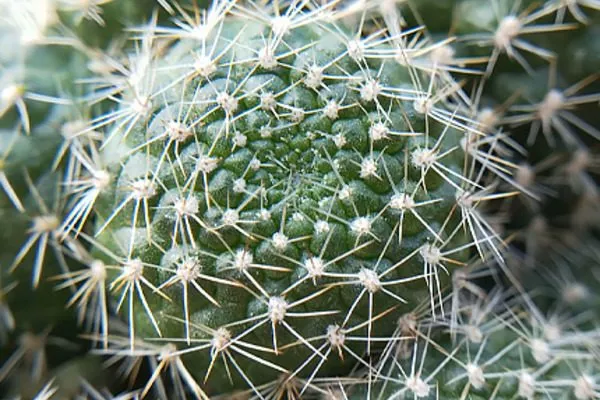
- Stem and areoles. Rebutias have green stems—the shade varies depending on the species—and rarely exceed 5 cm in diameter, up to 2 cm in dwarf species. The stem surface is covered with low tubercles arranged in spiral rows. In some species, the tubercles fuse, forming vertical ribs. Areoles are located on the tubercles; they are usually small and slightly pubescent.

- ThornsThey are numerous, thin, translucent, usually dull, and reminiscent of bristles. The length of the needles depends on the species—they can be very short, barely noticeable, medium, or unusually long.
- DimensionsThey depend on the type of Rebutia, but usually the height of these cacti does not exceed 7-8 cm—approximately twice the diameter.
- Periodicity and lifespan. Rebutias alternate between active and dormant periods. The latter are not particularly pronounced, beginning immediately after flowering and lasting approximately 1-1.5 months. The lifespan of different Rebutia species varies; some plants live only a few years, while others live much longer.
Flowering and fruiting
Rebutias are cacti that readily bloom indoors—one of the qualities that makes them widely grown indoors. Most Rebutia species are self-pollinating, requiring no pollinators.
Flowering and fruiting
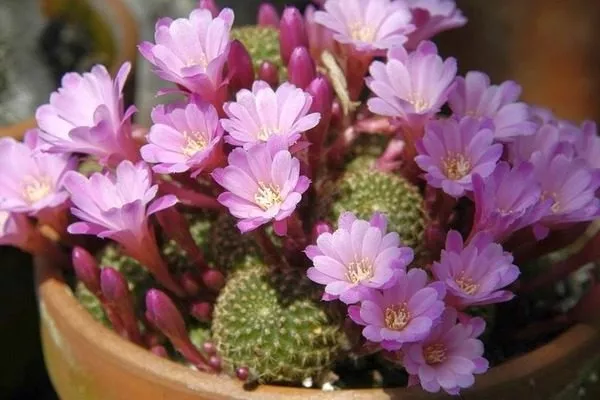
- Flowers. They are funnel-shaped and quite large, located along the sides of the stems. Rising on long tubes, they form a crown at the top. Rebutia flowers are most often brightly colored—orange, yellow-orange, orange-pink, and red—and less commonly, white, lilac, and purple.
- Bloom. Rebutias begin to bloom in their second or third year. Flower buds form in late February. Flowering typically occurs in the summer. Under optimal conditions, plants can bloom twice. Each flower lasts at least two days. The flowers open only in clear weather and close at night.
- Fruits and seeds. When flowering ends, fruits appear in the place of the flower. These are usually spineless and orange-red, pink, or yellow, depending on the species. When ripe, the fruits dry and burst, releasing the seeds.
Ecology and natural distribution
To ensure that exotic plants grow well at home, it is important to consider their natural habitat, as well as the natural conditions in which they exist.
Features of growth in nature:
- Area. Rebutias are native to the lands that today belong to Argentina and Bolivia. Their range extends from northern Argentina north to northern Bolivia, and east to the Chilean border.
- Natural conditions. Rebutias grow on rocky soils, in mountainous and steppe areas. These cacti prefer locations with plenty of direct sunlight. They prefer to grow at altitudes of 1-4.5 km above sea level. In these areas, the soil is poor and thin, and rainwater is practically not retained.
- ClimateRebutias grow at high altitudes, where the air is always fresh, and in winter, temperatures drop to +5…+10°C. Where rebutias grow, there are typically sharp daily temperature fluctuations and morning fog.
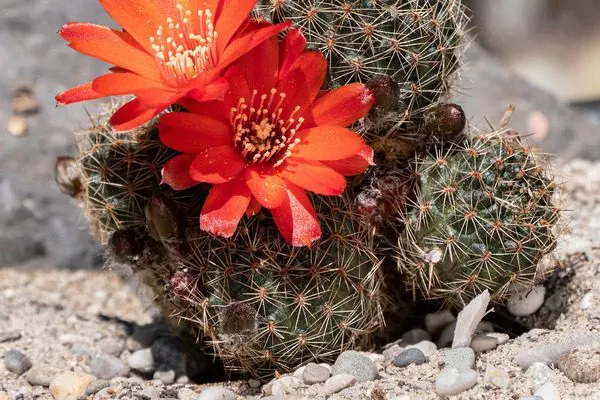
Rebutias adapt slowly to changing conditions. The plants' thin skin can be damaged by sunlight if they are "unaccustomed" to it over a long winter period.
Species composition and diversity
There are about 50 species of Rebutia. Flowering Rebutias are the most popular among cactus growers and general houseplant enthusiasts.
Rebutia miniscule
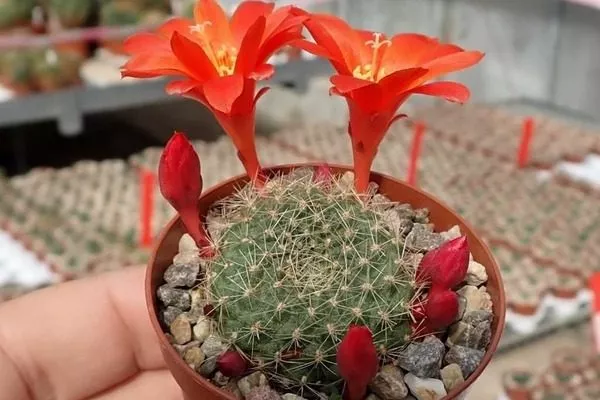
Also known as Rebutia minuscula, this miniature cactus has a spherical, light-green stem, flattened at the top, reaching approximately 5 cm in diameter. The stem is ribbed, with 16 to 20 tuberculate ribs. Thin spines grow from the areoles—approximately 30 from each. The spines are 2-3 mm long. The areoles lack central spines.
The flowers of the minuscule are red. They are about 4 cm in diameter, and the floral tube is 4 cm long. The flowers are located near the base of the stem. After flowering, the cactus produces fruits—pale red berries. Latin name: Rebutia minuscula.
Rebutia senile
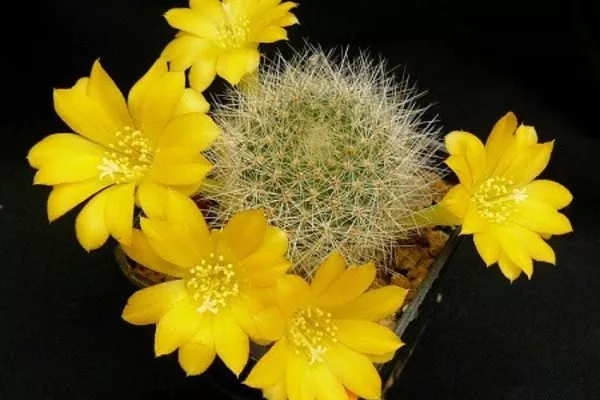
This self-fertile species is characterized by its compact size, decorative appearance, and abundant flowering. The cactus's rounded body reaches 5-10 cm in height and no more than 15 cm in diameter. The green stem, with a light waxy coating, is covered with bristly, glassy spines about 3 cm long.
The tubular flowers are white, red, or yellow. The plant blooms in spring, lasting approximately 2-3 days, depending on the lighting. Also known as golden-spined. Latin name: Rebutia senilis.
Rebutia Marsonera
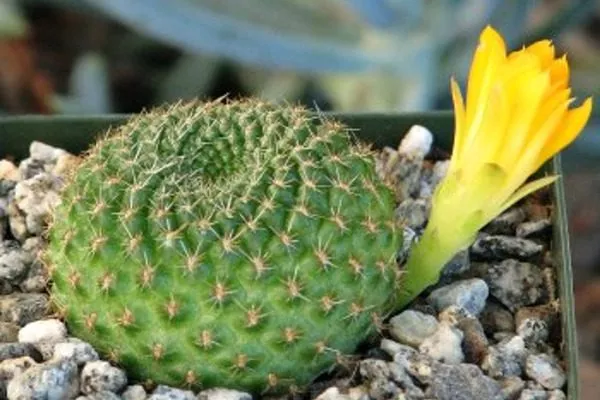
This spectacular cactus with bright red flowers is spherical in shape. It typically has several spherical stems fused together. The stem height and diameter are approximately 4 cm. It is covered with large areoles with white radial spines, no more than 1-2 mm long. This Rebutia has no central spines. Its Latin name is Rebutia marsoneri.
Dwarf Rebutia
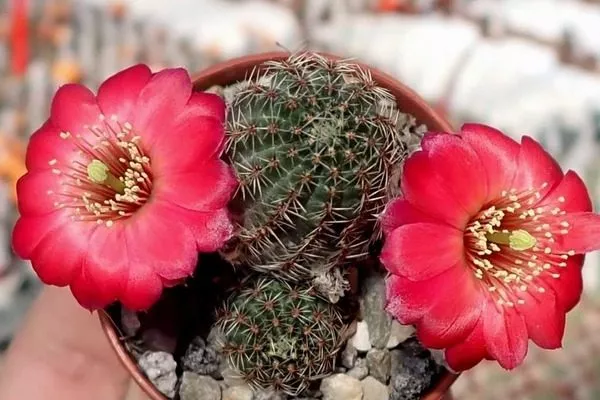
This species of Rebutia grows in colonies, and its oval or cylindrical stem is covered with numerous thin needles. The plant grows up to 4 cm tall. This species produces numerous offshoots and blooms very spectacularly. Its tubular flowers are pale pink or reddish. Dwarf Rebutias bloom in late spring or early summer. Latin name: Rebutia pygmaea.
Rebutia albiflora
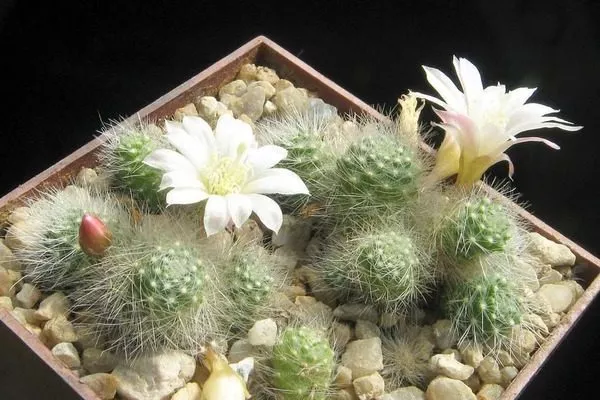
This cactus (Latin name: Rebutia albiflora) grows to form a dense clump. It consists of numerous spherical cacti, each approximately 2 cm in diameter. The plants' bodies are covered with soft, hair-like spines. There are so many of them that the stems appear whitish rather than green. The tubular flowers, with white or pinkish petals, are up to 2 cm in diameter.
Rebutia solar
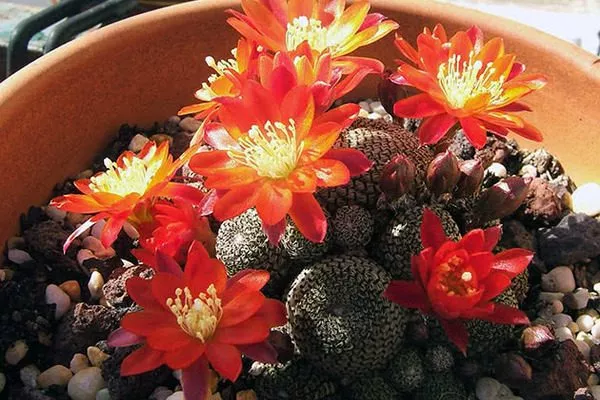
This profusely flowering cactus has a very small stem and enormous funnel-shaped flowers that rise above the plant thanks to their long peduncles. The stems of sun-loving rebutias are spherical, becoming slightly elongated over time. The surface of the stem is covered with small greenish-gray tubercles.
The ribs are low, with up to 40 on each stem. They are covered with brownish, pubescent areoles. Central spines are absent, and radial spines, silvery-white in color, are arranged in a comb-like pattern on the stems. Sunflower Rebutia blooms in summer. Latin name: Rebutia heliosa.
Rebutia pulvinosis
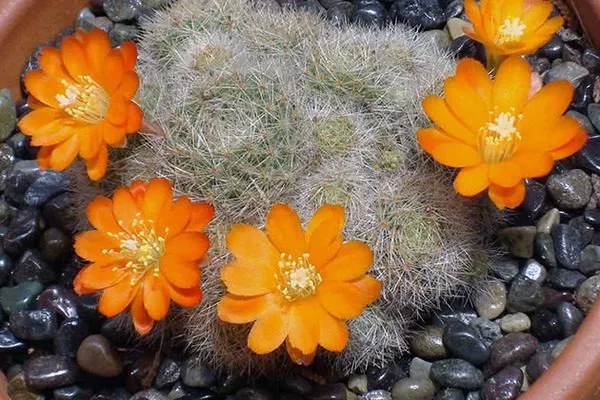
It has a spherical, light-green stem with a textured, ribbed, tuberculate surface. The tubercles are covered with oval areoles, from which grow short, hard spines—about 30 of each. Pulvinosa flowers are small, bright yellow or bright orange, and during flowering, they form a striking wreath around the cactus.
Latin name: Rebutia pulvinosa.
Growing and care
Rebutias, as befits cacti, are undemanding and hardy. However, they are accustomed to specific living conditions in the wild, so it's important to create a natural habitat for them. And it's not difficult at all.
Substrate and drainage
Rebutias are grown in well-drained, loose, and well-drained soils that allow water and air to pass through. You can use ready-made potting mixes for cacti and succulents, which are available at garden centers.
You can prepare the substrate for rebutia yourself:
- Mix garden soil (50%), high-moor peat (20%), and river sand (30%). Add finely crushed brick or clay shards.
- Mix turf soil, peat and humus - 2 parts each, add 1 part leaf soil and 4 parts sand.
A drainage layer can be placed underneath the pot, but this is not necessary if the soil is loose and contains broken brick or potting shards. However, a top drainage layer—usually made of gravel or small pebbles—is recommended to prevent soil erosion.
Choosing a pot
Rebutia cacti should be grown in tight containers so the substrate dries quickly after watering. Tall, narrow containers are ideal for these cacti, as their roots are branched and shallow, not deep.
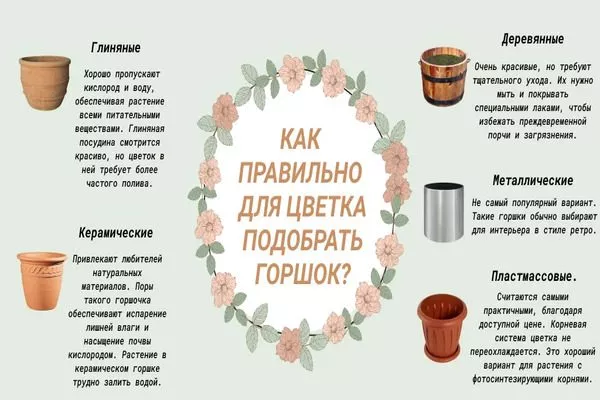
Tips for choosing pots for rebutias:
- A suitable material is plastic. It's lightweight, practical, and hygienic.
- Pots must have drainage holes. In addition to the main ones in the bottom, additional ones should be made at the bottom of the side walls.
- It is better to choose pots with a pull-out bottom - this will make replanting cacti more convenient.
It's best to choose a pot color that contrasts brightly with the stem color—this will make the rebutias look especially striking. Each time you repot, choose a container that's approximately 3-5 cm larger in diameter than the previous one.
Lighting
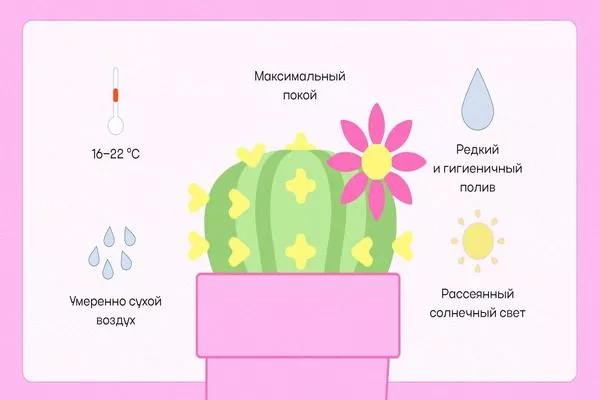
Rebutias are light-loving plants, preferring bright sunlight without shade. They thrive on south-facing windowsills, but east- and west-facing windowsills are also suitable. If daylight hours are short—less than 12 hours—rebutias should be supplemented with light, including grow lights or fluorescent lamps.
If you're growing Rebutia outdoors in the summer, choose a location that receives full sun for most of the day. The plant should receive at least six hours of direct sunlight.
Watering and humidity
Rebutia doesn't like dampness, but it's not very sensitive to overwatering, even if it happens occasionally. The stems shouldn't be exposed to water.
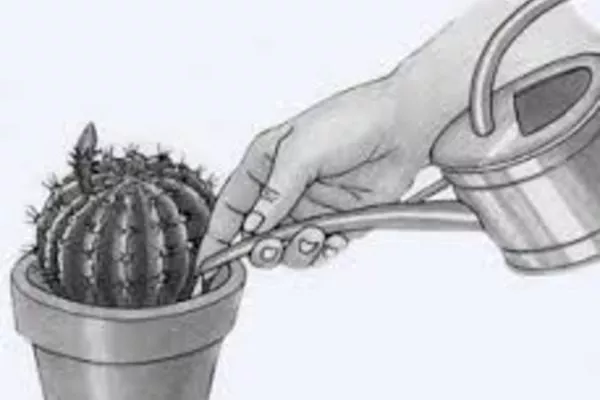
Watering frequency depends on the season and conditions, such as humidity and temperature. Most importantly, the frequency and amount of watering should be adjusted gradually to avoid stressing the plant.
How often to water rebutia:
- In summer — approximately once a week. If the plant is in direct sunlight, the frequency of watering can be increased.
- In winter Rebutias don't need watering. If the cactus is young, you can give it a few drops to support it during difficult times.
For watering, use warm water that has been left to stand for 24 hours. It should be approximately 2 degrees warmer than the room temperature. You can find more details on how to properly water a cactus here. Here.
If overwatered, the stem of a Rebutia plant will begin to rot, and corky growths may appear on it. If the water level is too low, the cactus will not bloom. To prevent the plant from rotting while outdoors, it should be protected from rain.
Temperature and ventilation
In summer, Rebutia thrives at temperatures between 25 and 35°C. In autumn and winter, cacti require a different environment. Maintain a temperature between 8 and 12°C. When purchasing a cactus, it's a good idea to check the optimal temperature—it may vary depending on the plant's species and habits.
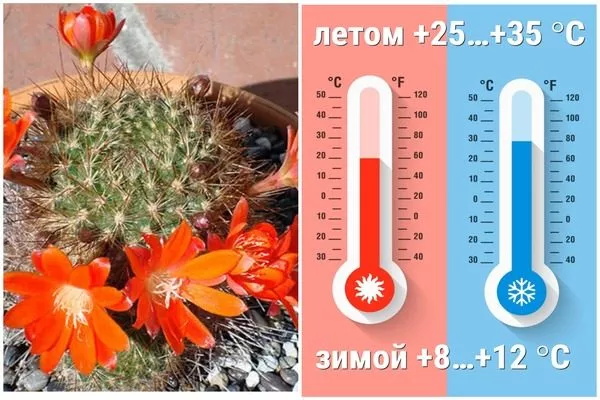
Rebutias need fresh air; they don't tolerate stale air. Therefore, the room where they grow should be regularly ventilated. You can open the window at night—rebutias tolerate daytime and nighttime temperature fluctuations very well, and in fact, they benefit from them.
Top dressing
Rebutias are fed in the spring and summer, during their active growth period. A ready-made mineral fertilizer with a complex of nutrients and low nitrogen content is applied to the roots. Organic fertilizers are not used for Rebutias. Cacti must be watered before fertilizing.
Rebutia require the following elements:
- Phosphorus — the growth of the root system and the health of plants in general depend on it.
- Potassium - affects plant flowering, helps absorb other elements, improves plant immunity, and increases winter resistance.
- Nitrogen — affects the growth of green mass. It is needed only in spring and in small quantities.
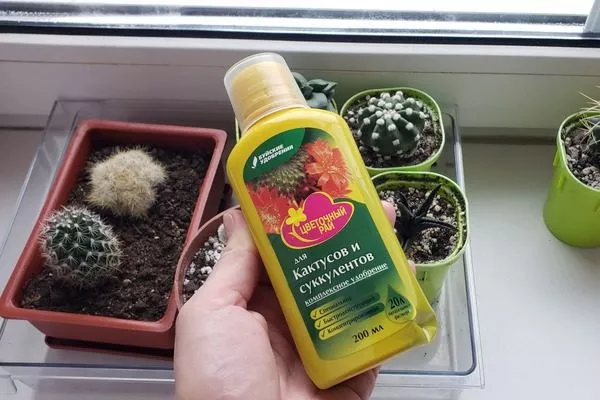
Nutrient deficiencies can lead to stunted growth, poor health, and poor plant appearance. However, excessive fertilizer application should be avoided—the dosage should be 50% of the normal concentration.
Foliar feeding (spraying with fertilizer solutions) is not used for rebutia, as it is ineffective for these small plants.
Transfer
Rebutias are rarely repotted—only when necessary. This happens when the cactus has clearly outgrown its pot or its root system has completely filled a small container. Young plants are repotted once a year, no more. Mature plants should be repotted once every three years. The best time to repot is spring.
If buds have already appeared on the rebutia, there's no need to repot it. It's recommended to postpone repotting until after flowering.
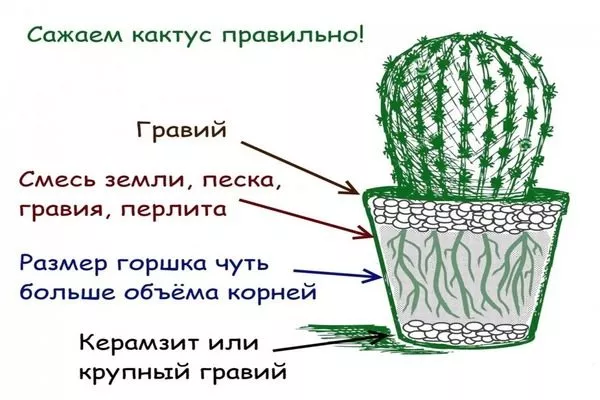
Features of rebutia transplantation:
- Don't water the cactus before repotting. The soil should be completely dry.
- Place drainage material at the bottom of the new pot, then transplant the cactus into it. Fill the remaining space with dry potting soil.
- The transplanted rebutia is placed in a bright and warm place.
- The plant should be watered for the first time after a week. For the next 2-3 months, be careful with watering to avoid overwatering the soil.
You will find maximum useful information and details on how to properly replant a cactus. Here.
Reproduction
Rebutias can be propagated vegetatively or by seed. The former is quicker and more effective, while the latter requires much more time and care.
Features of propagation by lateral shoots:
- In spring or summer, the offspring are separated from the mother plant. The separation site is sprinkled with crushed charcoal.
- The baby plant is dried for 24 hours, after which it is planted in a moistened substrate - sand or disinfected soil.
Features of propagation by seeds:
- The planting material is first disinfected in a weak solution of potassium permanganate—10 minutes is sufficient. The treated seeds are then air-dried.
- Cacti are sown in early spring. Suitable containers are shallow, wide bowls filled with a mixture of substrate and sand or rock granules.
- The seeds are sown at intervals of 2-3 cm so that the seedlings do not have to be replanted after emergence.
- The crops are kept in a room with a temperature of +15…+20 °C, regularly ventilating, spraying or watering the soil.
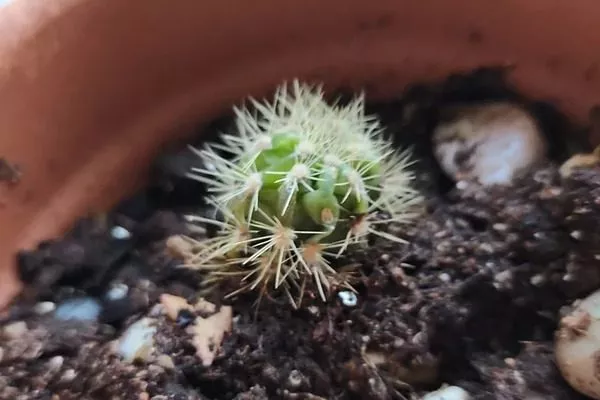
When the seedlings grow up, they are planted in individual pots.
Potential problems and how to deal with them
Despite the simplicity of cultivation techniques, various problems can arise when growing rebutias. These plants, like all others, can become diseased, be attacked by pests, and their appearance and health can deteriorate. It's important to recognize problems early and take appropriate measures.
Pests and protection against them
Rebutias can be attacked by various parasitic insects that feed on plant sap, weakening it and even causing death. Most commonly, rebutias are attacked by scale insects, spider mites, and mealybugs.
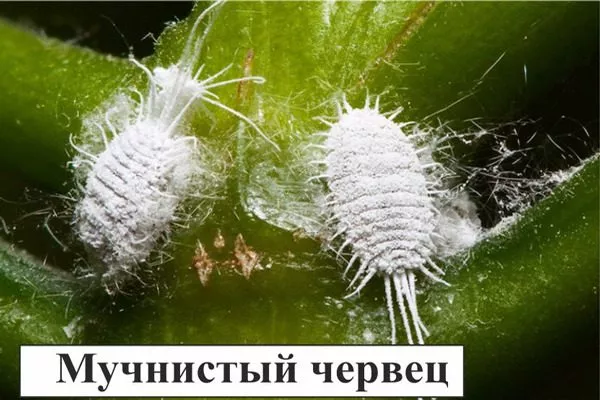
The following methods are used against insect pests:
- Mechanical. Parasitic insects are collected manually using tweezers, a brush, a cotton swab, or a napkin. This method is effective for small numbers of pests visible to the naked eye.
- ChemicalIf there are numerous pests, you can use specialized insecticides, and acaricides against ticks. For example, products such as Actellic and Fitoverm are suitable for scale insects and ticks.
- Folk remediesThey are used as an alternative to chemical agents. They don't offer a 100% guarantee, but they are completely safe:
- Potato tops infusion. 1 kg of chopped tops is steeped in 5 liters of warm water for approximately 4 hours. The decoction is effective against spider mites.
- Garlic infusion. Grind 200 g of garlic, add a small amount of water, and let steep for 24 hours. Spray the plants with the solution: dilute 60 g of the infusion in 10 liters of water.
As a preventative measure, it is recommended to regularly inspect cacti for pests and wipe them with a brush dipped in alcohol.
Diseases and their prevention
Rebutias have fairly good immunity, but under unfavorable circumstances they can be affected by fungal diseases.
The most common diseases of rebutia are:
- Stem rotIt usually develops when cacti are overwatered during the dormant period. Rot can also be triggered by applying too much nitrogen. Affected areas are removed, and the plant itself is sprayed with copper-containing fungicides, such as Bordeaux mixture, copper sulfate, HOM, or Abiga-Peak.
- Cork formations They appear when the cactus is exposed to mechanical stress, cold, or excessive watering during the warmer months. It is recommended to treat the Rebutia with chemicals, such as Actellic or Fitoverm.
Disease prevention in Rebutia involves regular inspections and adherence to a watering regime.
Other difficulties and solutions
Improper care and severe violations of agricultural practices can cause various problems in Rebutias. These problems typically negatively impact the appearance and health of the plants.
Some problems that may arise when growing Rebutia:
- The stems stretch out, losing their rounded shape due to a lack of light.
- The cactus isn't growing due to lack of repotting and fertilizing for over a year. The problem can also be caused by improper watering—sparse in the summer and/or heavy during the dormant period. Failure to properly care for the cactus in winter can also be a cause.
- Brown spots appeared due to drops falling on the stem and exposure to direct sunlight.
- The stem wrinkles and rots due to excessive watering during the wintering period.
- The spines turn yellow or discolored due to lack of nutrition or due to prolonged exposure to direct sunlight.
- Stem reddening—usually observed in spring. This is due to exposure to bright sunlight before the plant has adapted to it.
Use in culture and decorative design
Rebutia is widely used in decorative arrangements and interior design. The plant is especially suitable for wedding ceremonies, symbolizing pure love and serenity. In different cultures, rebutia is associated with specific feelings or events. In Japan, for example, it symbolizes peace and friendship, while in Russia, it symbolizes love and care.
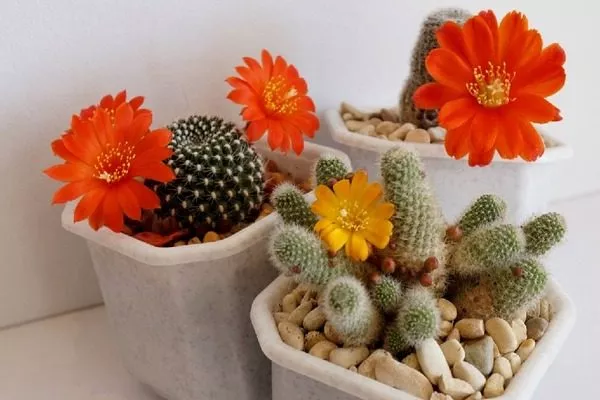
Rebutias look beautiful on windowsills and other areas with direct sunlight. This striking cactus can be used as a centerpiece on an office desk or coffee table.
Interesting facts and stories
Rebutia is a remarkable plant that has been cultivated indoors for centuries in many cultures around the world. It's no wonder that so many stories, legends, and myths are associated with this spectacular cactus.
Interesting facts about rebutia:
- In Japan, rebutia symbolizes peace and friendship, purity and sincerity of relationships.
- In Russia, rebutia is used during various holidays and celebrations as a symbol of love and care. This plant is a harbinger of tender feelings and serves as a reminder that even the smallest and most humble things can bring joy.
- There is a legend that a gift of rebutia brings good luck and happiness to the home, foretells good times and prosperity.
The Rebutia genus is popular among cactus and indoor gardening enthusiasts for good reason. It's an interesting and unique plant that fits perfectly into modern interiors. Sprawling clumps of round cacti with large, vibrant flowers look truly luxurious.